Assessment: The Anatomist's Eye & The Thinker's Toolkit (Architecture & IELTS Preparation)
Diagnostic Test: Architectural Fundamentals & IELTS Vocabulary
Module: The Anatomist's Eye & The Thinker's Toolkit (Continued)
Welcome to your diagnostic test! This assessment is designed to evaluate your understanding of fundamental architectural concepts and terminology, while also preparing you for the academic language demands of the IELTS exam. Many questions require precise understanding of vocabulary and the ability to interpret visual information, skills crucial for both architecture studies and IELTS Academic modules.
Instructions: For each question, choose the option (A, B, C, or D) that best answers the question. You have approximately 1.5 minutes per question. Avoid guessing if unsure, as your thought process is being evaluated.
Section 1: Architecture & Technical Vocabulary
Question 10
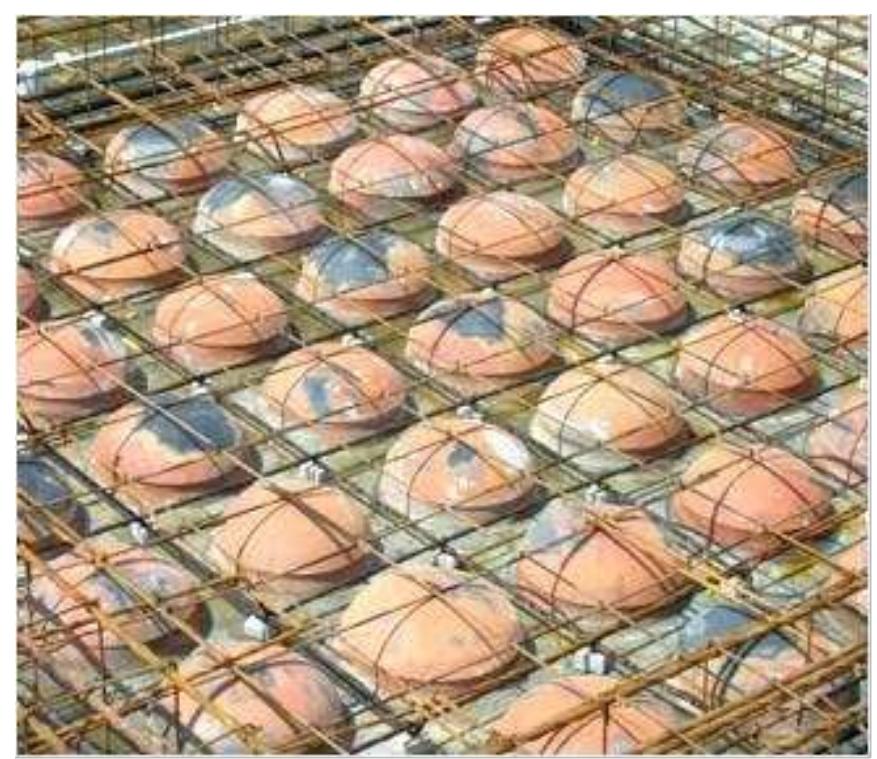
The image below shows a specific type of reinforced concrete roof slab construction. Choose the correct letter A, B, C or D. What is it called?
Question 11
Which of the following options most appropriately describes the primary function of the building component indicated by the arrow? Choose the correct letter A, B, C or D.

Question 12
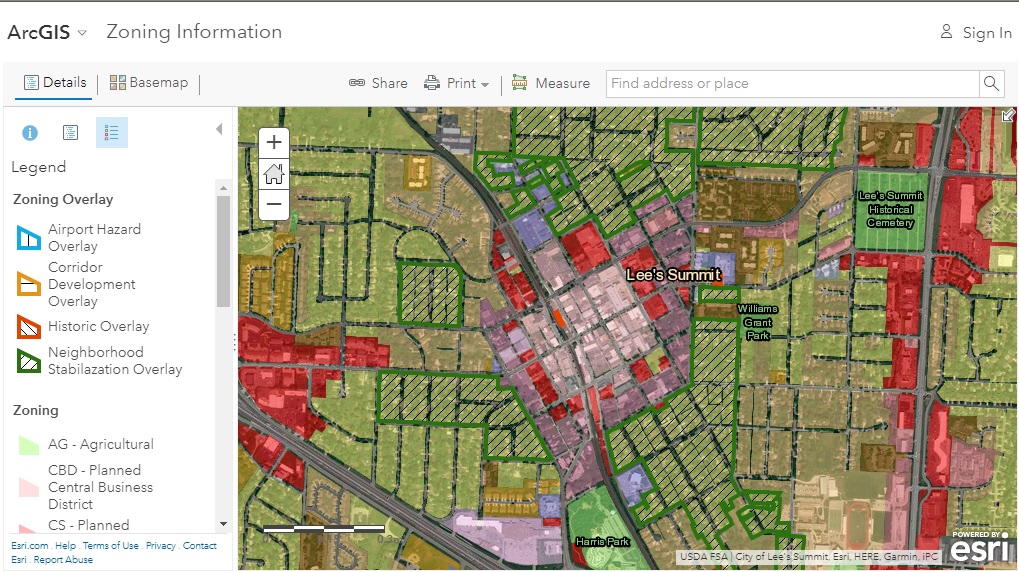
The diagram below uses a color-coding system to represent information about a city. Choose the correct letter A, B, C or D. What does this type of diagram typically illustrate?
Instructor's Assessment Guide [ACCESS RESTRICTED]
ANSWER KEY
Question 11: (A) Weather shed
Question 12: (B) Land use coding
Teacher's Assessment Notes: Question 10
1. Model Answer / Solution
2. Knowledge Points & Logic Dissection
- Core Knowledge Point (Structural Systems): Student must identify the key feature: a concrete grid structure where voids are filled with lighter, non-structural material (clay blocks) to reduce dead weight and concrete volume. This is a Filler Slab. (IELTS Connection: This tests specialized vocabulary, crucial for understanding academic texts in IELTS Reading, especially those describing technical processes or structures.)
- Core Knowledge Point (Comparative Structures): Student must differentiate from other types:
- Coffered Ceiling: Primarily decorative sunken panels, not a slab construction method with filler material.
- Pergola: An outdoor, freestanding garden structure.
- False Ceiling: A secondary, non-structural ceiling hung below the main slab.
- Logical Steps: 1. Observe concrete grid being filled with blocks. 2. Deduce function is to displace concrete. 3. Match this function to the term "Filler slab". 4. Eliminate other options based on their definitions.
3. Common Hurdles, Errors & Thought Patterns to Profile
- The "Visual Similarity" Trap: Choosing (B) Coffered ceiling due to the grid pattern. This error shows a focus on final appearance over the construction process. (IELTS Connection: Similar to distractor options in IELTS Listening/Reading where visually or audibly similar words are used to test precise comprehension.)
- General Term vs. Specific Term: Guessing (D) False ceiling if other terms are unknown. Shows a limited technical lexicon.
- Context Blindness: Choosing (C) Pergola indicates a fundamental misunderstanding of interior vs. exterior structures.
4. Rubric-Based Profile Analysis
| Performance Level | Student Profile & Characteristics | Observed Behavior / Likely Answer |
|---|---|---|
| Level 4: Construction Analyst | Understands the difference between structural systems and decorative finishes. Can interpret images of a construction process. | Selects (A). Can explain that the key is the use of filler material to displace concrete and articulate why it is different from a coffered ceiling. |
| Level 3: Typology Classifier | Has a solid vocabulary of structural terms and can correctly match the image to the name. | Selects (A). Correctly identifies the filler slab. |
| Level 2: Aesthetic Associator | Focuses on the visual pattern and confuses the construction system with a similar-looking decorative element. | Selects (B). Sees the grid and immediately associates it with a coffered ceiling. |
| Level 1: Novice Observer | Lacks the foundational vocabulary for ceiling and slab types. Relies on guesswork. | Selects (C) or (D). The choice lacks clear architectural or structural logic. |
Teacher's Assessment Notes: Question 11
1. Model Answer / Solution
2. Knowledge Points & Logic Dissection
- Core Knowledge Point (Functional Components): Student must identify the component as a projection designed to protect a window from rain and sun. The most precise term is "weather shed". (IELTS Connection: Emphasizes the importance of precise academic and technical vocabulary, essential for achieving higher bands in IELTS Reading and Listening.)
- Core Knowledge Point (Specificity in Terminology): Student must differentiate between the specific functional term and more general descriptions.
- Weather shed: Precisely describes function of shedding weather.
- Overhang: A general term; a weather shed is a *type* of overhang, but "weather shed" is more appropriate. (IELTS Connection: This distinction between general and specific terms is a common feature in IELTS vocabulary questions and comprehension tasks.)
- Aesthetic: A quality, not a component name.
- Security: The function of the window grill, not the component indicated.
- Logical Steps: 1. Analyze image: see a projection over a window. 2. Deduce its function is to block sun/rain. 3. Evaluate options; "Weather shed" is the most functionally specific term.
3. Common Hurdles, Errors & Thought Patterns to Profile
- General vs. Specific Trap: Choosing (C) Overhang. This is a very common error, indicating a general but not specialized vocabulary. (IELTS Connection: Directly mirrors IELTS vocabulary challenges where synonyms or broader terms are offered as distractors to test precision of meaning.)
- Misinterpreting the Arrow: Choosing (D) Security by confusing the shed with the nearby security grill. This shows a lack of careful observation.
- Function vs. Appearance: Choosing (B) Aesthetic demonstrates a weakness in understanding the practical drivers of architectural components.
4. Rubric-Based Profile Analysis
| Performance Level | Student Profile & Characteristics | Observed Behavior / Likely Answer |
|---|---|---|
| Level 4: Functional Analyst | Understands the primacy of function and differentiates between general categories (overhang) and specific names (weather shed). | Selects (A). Can explain why it is the most precise term over (C). |
| Level 3: Identifier | Has a solid working vocabulary of architectural components and their functions. | Selects (A). Correctly identifies the component's function. |
| Level 2: Generalist / Inaccurate Observer | Understands the general form but uses a less specific term, or misidentifies the indicated object. | Selects (C) or (D). Chooses the general term "overhang" or misinterprets the arrow. |
| Level 1: Novice Observer | Lacks foundational vocabulary for building components. Relies on abstract qualities or guesswork. | Selects (B) or guesses. Focuses on appearance ("Aesthetic") without clear functional logic. |
Teacher's Assessment Notes: Question 12
1. Model Answer / Solution
2. Knowledge Points & Logic Dissection
- Core Knowledge Point (Urban Planning): Student must recognize that color-coded city maps are the standard convention for representing zoning, which dictates permitted land use (residential, commercial, etc.). This is known as Land Use Coding. (IELTS Connection: Interpreting specialized diagrams and understanding their conventions is a key skill for IELTS Academic Reading, particularly tasks involving data interpretation and visual information.)
- Core Knowledge Point (Visual Literacy): Requires interpretation of a specialized diagram, understanding that different colors correspond to different categories of information at an urban scale.
- Logical Steps: 1. Analyze diagram: City map with areas assigned distinct colors. 2. Connect to urban planning: This is the standard visualization for zoning/land use. 3. Eliminate other options: Density is shown with color gradients (heat maps), not distinct solid colors. Vulnerable zones and coastal regulations are too specific and use different visual conventions.
3. Common Hurdles, Errors & Thought Patterns to Profile
- The "Literal Interpretation" Trap: Seeing red colors and associating them with danger, leading to (C) Vulnerable zones. This shows an everyday interpretation of color rather than professional convention. (IELTS Connection: This highlights a common error in IELTS where test-takers rely on general knowledge or literal interpretation rather than the specific context or academic convention presented in the text/diagram.)
- General vs. Specific Knowledge: Choosing (D) Density because they know it's an urban concept, but not knowing how it's specifically visualized.
- Lack of Exposure: The question requires knowledge beyond a single building. A wrong answer may indicate a need to broaden the student's thinking to an urban scale.
4. Rubric-Based Profile Analysis
| Performance Level | Student Profile & Characteristics | Observed Behavior / Likely Answer |
|---|---|---|
| Level 4: Urban Analyst | Understands fundamental urban planning concepts, including zoning and its standard visual representations. Differentiates how land use, density, and risk are mapped. | Selects (B). Can confidently explain what land use coding is. |
| Level 3: Concept Recognizer | Has been exposed to urban planning concepts and can correctly identify the diagram's purpose. | Selects (B). Correctly identifies the diagram. |
| Level 2: Intuitive Interpreter | Lacks specific knowledge of planning conventions and relies on everyday interpretations of the visual information. | Selects (C) or (D). Associates red with vulnerability (C) or a city map with density (D). |
| Level 1: Novice Observer | Has little to no exposure to urban planning concepts. Relies on guesswork. | Selects any option randomly. The choice lacks a logical connection to the diagram. |