Diagnostic Test: Visual & Philosophical Analysis
DIAGNOSTIC ASSESSMENT
Architecture Aptitude & Critical Thinking
This diagnostic test assesses your aptitude for architectural studies and your ability to comprehend, analyze, and articulate ideas, crucial skills for both academic success and the IELTS examination. Please read all instructions carefully before attempting each question.
Total Suggested Time: 40 minutes
Section A: Visual & Logical Reasoning
Question 1: The Classifier's Codex
Suggested Time: 15 minutes
The following four images show different architectural columns. Three share a fundamental, underlying system of design, while one is the logical exception.
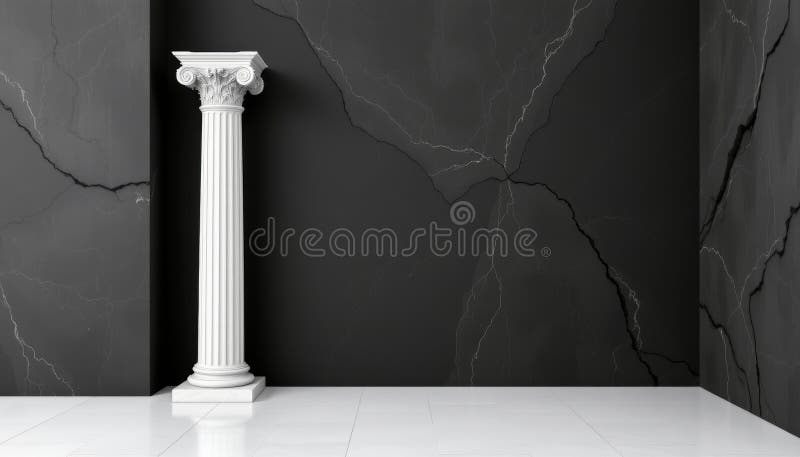


- Look at the four images of architectural columns (A, B, C, and D). Three of these columns belong to a common architectural system or typology, while one is a distinct exception. Identify the single image that is the "odd one out" from the group. Circle the letter (A, B, C, or D) that corresponds to your answer.
- In the space provided, write a concise justification (approximately 100-150 words). Your justification should clearly explain the shared architectural classification system that unites the three related columns and elaborate on why your chosen image is the logical outlier. Ensure your explanation focuses on the underlying system of design and historical typology, rather than superficial characteristics such as material or colour.
Section B: Philosophy & Application
Question 2: The Philosopher's Voice
Suggested Time: 25 minutes
Read the following quote from the famous 20th-century architect, Le Corbusier. Then, look at the two buildings presented.
- Le Corbusier (1923)
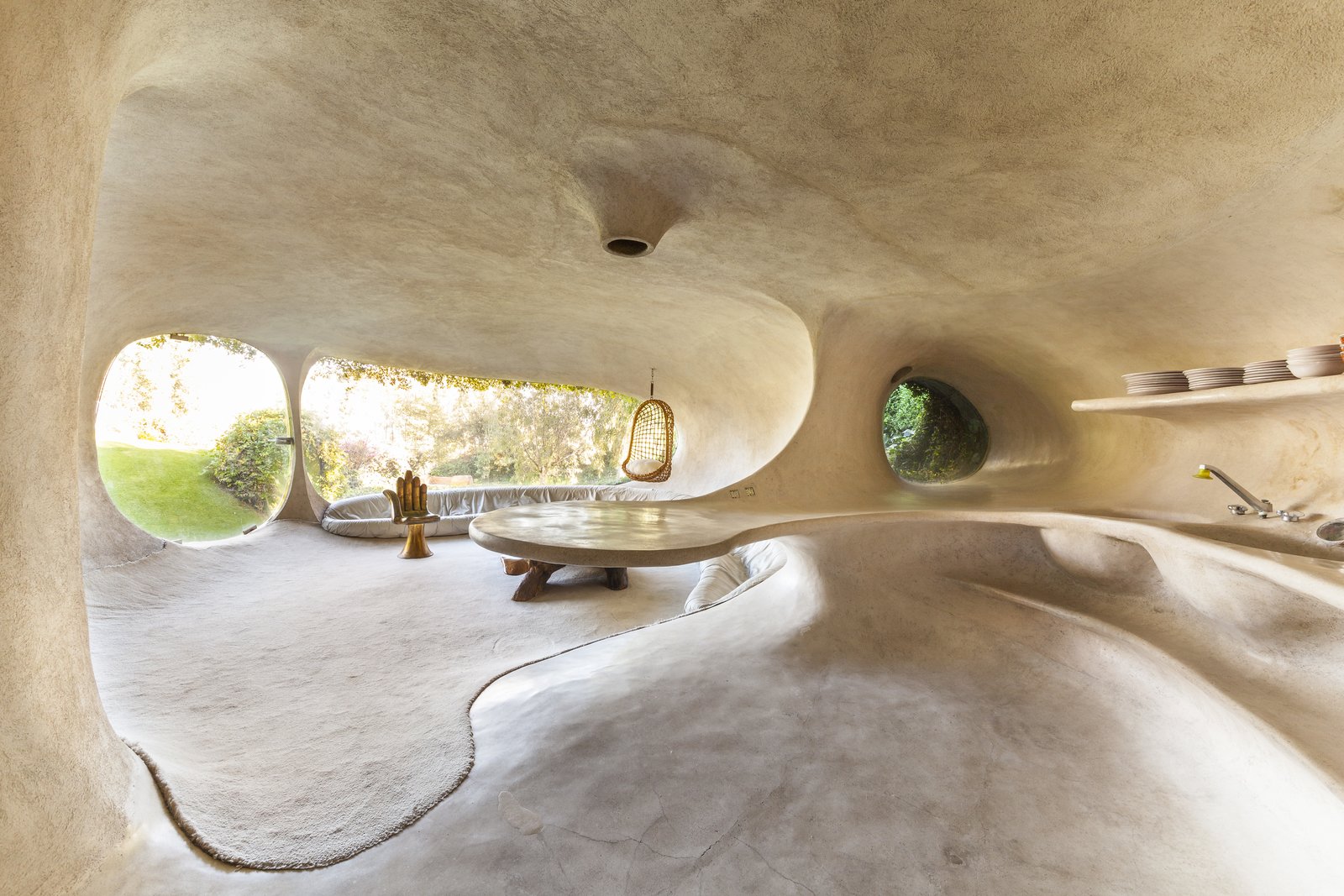
In the space provided, write a short response (approximately 150-200 words) that effectively addresses all three points below:
- Explain your understanding of Le Corbusier's statement, "A house is a machine for living in." What fundamental principle or "big idea" does he convey regarding the purpose and design of architecture?
- Consider the two buildings, Image X and Image Y. Which of these two structures do you believe more effectively embodies the architectural philosophy expressed in Le Corbusier's quote?
- Provide a clear justification for your selection. Support your answer by specifically referencing visual elements and design characteristics from the chosen building and explicitly linking them to the core idea of the quote.
INSTRUCTOR'S GUIDE & GRADING RUBRIC [CONFIDENTIAL]
Analysis for Question 1: The Classifier's Codex
1. Diagnostic Purpose & Knowledge Points
- Primary Skill: **Reading Comprehension (Visual Text) & Logical Deduction.** Assesses the ability to interpret visual architectural forms as 'text,' move beyond surface-level observation, and identify an underlying architectural system (the Classical Orders).
- Secondary Skill (Architectural Knowledge): Recognition of the three primary Greek Classical Orders (Doric, Ionic, Corinthian) versus an Egyptian column.
- Tertiary Skill (Language): Articulation of a logical argument using precise, comparative language.
- Cognitive Pattern Identification: Differentiates the "Surface Gazer" (focuses on superficial details) from the "System Hunter" (searches for the underlying rule).
- **IELTS Relevance:** Develops ability to extract specific information and infer meaning from visual stimuli, akin to interpreting non-linear texts in IELTS Reading. It also fosters the structured analytical writing required in IELTS Writing Task 1 (describing diagrams, processes).
2. Model Answer (Band 9+ / Expert Level)
The logical odd one out in the set is D.
The rationale is based on the classification of architectural orders. Images A, B, and C are all canonical examples of the Greek Classical Orders. The unifying principle among these three is their shared structural and proportional system, consisting of a base (in B and C), a shaft, and a distinct capital that defines their identity: the simple, robust Doric (A); the scroll-volute Ionic (B); and the ornate acanthus-leaf Corinthian (C). These orders represent a coherent, historically connected system of design developed in ancient Greece.
Image D, in contrast, exemplifies an Ancient Egyptian column. Its defining characteristic is its biomimetic form, with a capital designed to evoke a bundle of papyrus reeds. This places it in a completely different architectural, cultural, and historical lineage.
Therefore, the core distinction is systemic origin: while A, B, and C belong to the rational, human-scaled system of the Classical Orders, D belongs to an earlier, nature-inspired Egyptian typology. It's a difference between a codified system and a symbolic representation.
3. Common Errors & "Villain's Playbook"
- The "Surface Gazer" Trap: Choosing C because it's "the most fancy," or A because it's "the plainest." This response indicates a failure to see the shared system, focusing instead on subjective aesthetic quality.
- The "Vague Observer" Trap: Correctly identifying D as the outlier but providing a weak reason, such as "it looks different" or "the top part is weird." This shows basic visual perception but an inability to articulate the principles.
- The "Misclassification" Trap: Grouping A, B, and D together as "older" and excluding C as more "Roman." This shows an attempt at historical classification but a misunderstanding of the timeline.
4. Profiling Rubric & Analysis of Student Responses
| Criteria | Level 1: Novice Thinker | Level 2: Apprentice Analyst | Level 3: Expert Classifier |
|---|---|---|---|
| Logical Rationale | Explanation is based on superficial details (e.g., "it's fancier") or subjective feeling. Fails to identify the underlying system. | Correctly identifies the outlier but provides a simple or vague reason ("the top is different"). Logic is present but underdeveloped. | Clearly articulates the unifying system (The Classical Orders) and explains precisely how the outlier deviates from this system. |
| Architectural Vocabulary | Uses basic, everyday language ("top part," "fancy"). No use of specific architectural terms. | Attempts to use some architectural terms but may be imprecise (e.g., "the swirly one," "the leafy one"). | Deploys precise, high-level vocabulary with confidence (e.g., "Classical Orders," "capital," "Doric," "Ionic," "biomimetic," "typology"). |
| Argument Structure | Justification is a single, unsupported statement or a list of observations. | The justification has a basic structure but lacks deep explanation or a concluding summary. | The justification is a well-structured paragraph with a clear topic sentence, supporting evidence, and a concluding statement. |
Analysis for Question 2: The Philosopher's Voice
1. Diagnostic Purpose & Knowledge Points
- Primary Skill: **Reading Comprehension (Abstract Text) & Critical Application.** Assesses the student's ability to interpret and analyze a philosophical statement, extracting its main idea, and then apply this understanding as an analytical lens to visual architectural examples. This is directly transferable to IELTS Reading (interpreting complex ideas) and Writing (forming an argument based on an idea).
- Secondary Skill (Architectural Knowledge): Connects a key figure (Le Corbusier) and his philosophy (functionalism) to a canonical example of his work (Villa Savoye).
- Tertiary Skill (Language): Developing a complex argument that requires interpretation, comparison, and justification.
- Cognitive Pattern Identification: Differentiates the literal thinker from the metaphorical thinker; reveals if the student relies on personal feeling or reasoned analysis.
- **IELTS Relevance:** Directly practices skills for IELTS Reading (comprehending argumentative texts, identifying main ideas and specific details) and IELTS Writing Task 2 (developing an argument, presenting an opinion, and supporting it with justification and evidence, all within a specified word count).
2. Model Answer (Band 9+ / Expert Level)
Le Corbusier's statement, 'A house is a machine for living in,' encapsulates the core tenet of Modernist functionalism. The 'big idea' is that a building's primary value is its efficiency, logic, and performance in serving its inhabitants' needs, much like a well-designed machine. It prioritizes function over traditional ornamentation and historical styles.
Based on this philosophy, Building X (Villa Savoye) is the unequivocal embodiment of the quote.
This connection is evident in several of its key features. Its clean, geometric form and lack of decoration reject traditional aesthetics in favour of pure function. The use of industrial materials like reinforced concrete speaks to a machine-age ethos of precision. Furthermore, design elements like the open floor plan and ribbon windows are not arbitrary; they are rational solutions designed to maximize the entry of light and the efficiency of movement. The entire structure is elevated on 'pilotis' (columns), a logical move to separate the living functions from the damp ground. In every aspect, Villa Savoye is a meticulously reasoned system for residential life, perfectly aligning with the concept of a 'machine for living in.'
3. Common Errors & "Villain's Playbook"
- The "Literalist" Trap: Misinterpreting the quote to mean houses should have gears or look like robots. This indicates difficulty with metaphorical thinking.
- The "Feeling-Based" Trap: Choosing Building Y because it looks more "livable" or "cozy." This response prioritizes personal aesthetic preference over logical analysis of the philosophy presented.
- The "Weak Connection" Trap: Correctly identifying Building X but with a weak justification, such as: "It is the machine because it is white and square, like a machine." This shows correct intuition but an inability to connect specific architectural features to the philosophy.
4. Profiling Rubric & Analysis of Student Responses
| Criteria | Level 1: Novice Interpreter | Level 2: Apprentice Connector | Level 3: Expert Analyst |
|---|---|---|---|
| Quote Interpretation | Interprets the quote literally or misunderstands its core meaning. Focuses on the word "machine" in isolation. | Understands the basic idea (houses should be useful) but doesn't elaborate on the broader philosophy of functionalism. | Accurately explains the quote's meaning, linking it to the philosophy of functionalism, efficiency, and rejection of ornament. |
| Application & Justification | Choice of building is based on personal feeling ("I like Y better"). Justification is irrelevant to the quote. | Correctly identifies Building X but provides a superficial justification, linking only obvious features (e.g., "it's square"). | Correctly identifies Building X and provides a sophisticated justification, citing multiple, specific architectural features (pilotis, ribbon windows) and explaining their function. |
| Conceptual Vocabulary | Uses only basic, descriptive language ("white building," "grass roof"). | Uses some relevant terms like "modern" or "functional" but without depth or precision. | Deploys relevant conceptual vocabulary with confidence (e.g., "functionalism," "modernism," "ornamentation," "pilotis"). |