Aptitude Assessment: Material & Visual Analysis
APTITUDE ASSESSMENT
Section 2: Material Properties & Visual Reasoning
*This section assesses your ability to analyse architectural concepts and articulate your understanding in written English, relevant for IELTS Academic Writing Task 1.*
Question 8: Material Properties & Classification
Part A (Identification):
Rock wool, a material known for its excellent thermal and acoustic insulation properties, is shown below.
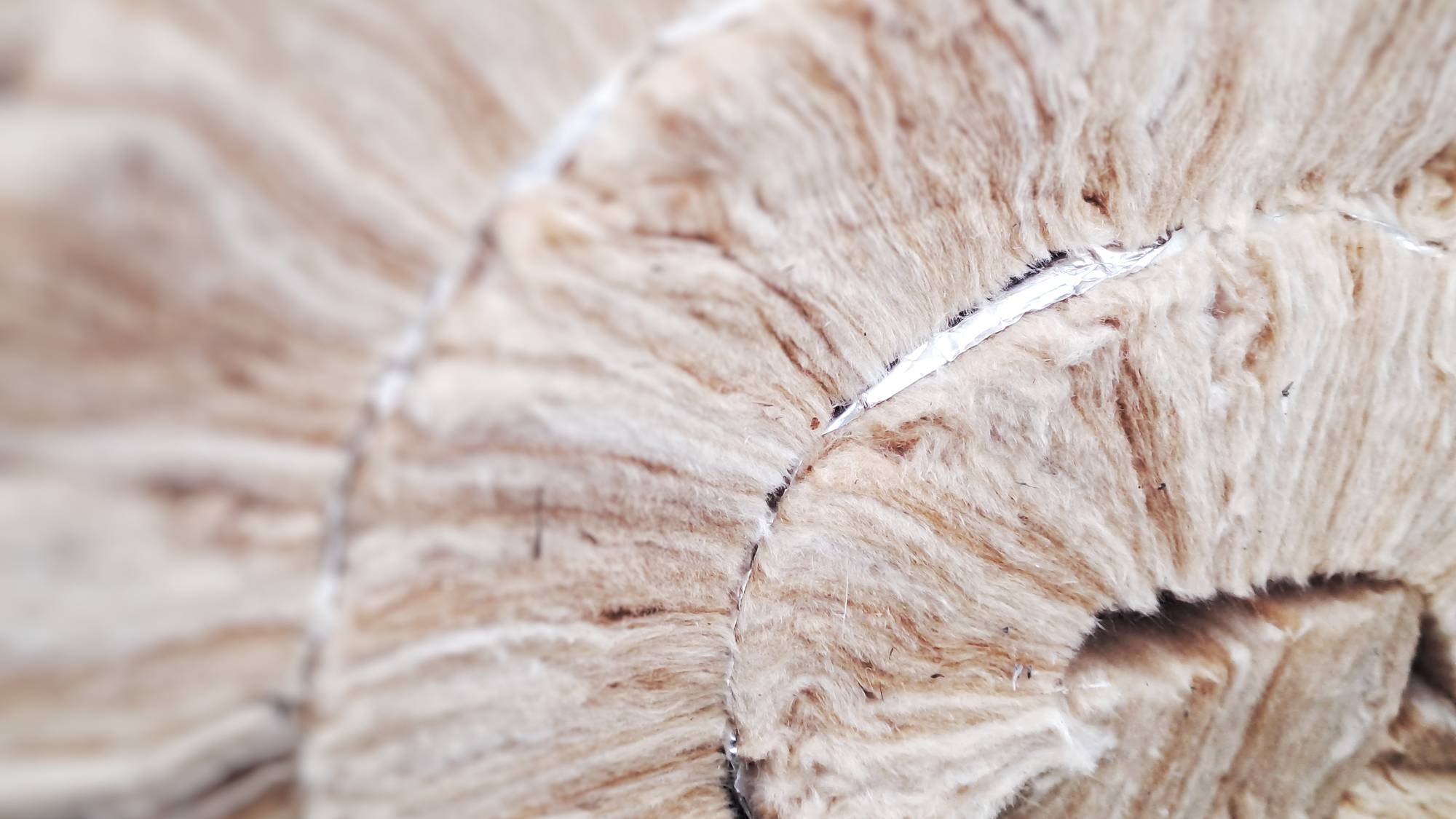
From a functional standpoint related to acoustics, rock wool belongs to which classification of absorbent materials?
Part B (Justification):
In your own words, and in approximately 80-100 words, explain the core physical principles that allow materials in the class you selected to be effective for both thermal (heat) and acoustic (sound) insulation. Focus on using precise academic vocabulary.
Question 9: Visual Reasoning & Stylistic Cohesion
Part A (Identification):
Examine the four buildings shown below. Three of them belong to a single, coherent architectural style or movement, while one is the "odd one out."

Image A

Image B

Image C

Image D
Which building does NOT belong to the same stylistic group as the others?
Part B (Justification):
In approximately 150-180 words, justify your answer. Begin by describing the key visual and material characteristics that unite the three related buildings, using appropriate architectural terminology. Then, clearly explain how the building you chose in Part A significantly differs from them in terms of form, material, and ornamentation.
INSTRUCTOR'S GUIDE & GRADING RUBRIC [CONFIDENTIAL]
Analysis for Question 8
Model Answer & Solution
Part A: (C) Porous Materials
Part B: The effectiveness of porous materials like rock wool comes from their physical structure, which is a dense mat of fibers with a vast network of tiny, interconnected pockets.
- For Thermal Insulation: These pockets trap millions of tiny air molecules. Air is a very poor conductor of heat, so this trapped air layer significantly slows down the transfer of heat from one side of the material to the other.
- For Acoustic Insulation: When sound waves hit the material, they penetrate these pockets and cause the trapped air molecules and the material's fibers to vibrate. This creates friction, which converts the sound energy into a very small amount of heat, thereby absorbing the sound and reducing its intensity.
Teacher's Notes: Profiling & Analysis
1. Knowledge Points Tested:
- Material Science (Archetype M): Can the student classify a common building material by its functional properties?
- Physical Principles (Archetype P): Do they understand the underlying physics of heat transfer and sound absorption?
- Vocabulary: Porous, fibrous, thermal conductivity, sound absorption, friction, energy conversion.
- Abstract Reasoning: Can the student connect a material's micro-structure to its macro-performance?
2. Core Logic & Thought Process:
- Step 1 (Visual/Term Association): The student sees the fibrous texture of rock wool and connects it to the idea of having many small holes or pores.
- Step 2 (Classification): They match this observation to the term "Porous Materials," eliminating the other options which rely on different principles (e.g., resonance).
- Step 3 (Principle Recall - Thermal): For Part B, they must recall why things with trapped air are good insulators. The core concept is that static air is a poor conductor of heat.
- Step 4 (Principle Recall - Acoustic): They must then recall how sound is absorbed. The core concept is not blocking or reflecting, but *absorbing* through the conversion of energy from sound to heat via friction.
- Step 5 (Synthesis): A strong answer synthesizes both points, clearly explaining the two distinct but related functions that arise from the single property of porosity.
3. Potential Hurdles & Common Errors (Villain's Playbook):
- The "Vague-ifier" Villain: The student explains the function without the principle. E.g., "It works because it has holes that stop the heat and sound." This is not entirely wrong, but it misses the *how* (trapped air, energy conversion).
- The "Function Confuser": The student might believe the material *blocks* sound like a solid wall, rather than *absorbing* it. They misunderstand the difference between soundproofing (isolation) and acoustic treatment (absorption).
- One-Sided Thinking: The student can explain the thermal insulation principle (trapped air) but cannot explain the acoustic principle, or vice versa. This reveals an incomplete understanding of the material's performance.
4. IELTS Connection (Writing Task 1 Relevance):
- This question tests the ability to explain a process or scientific principle clearly, similar to describing a diagram or process in IELTS Academic Writing Task 1.
- It requires precise use of vocabulary related to physics and materials, contributing to the 'Lexical Resource' criterion.
- The explanation must be coherent and logically structured, fulfilling 'Coherence and Cohesion' and 'Task Achievement' criteria.
Rubric for Profiling Student Logic (Question 8)
| Profile Type | Part A (Choice) | Part B (Justification) | Analysis |
|---|---|---|---|
| The Material Scientist | Correct (C) | Clearly and correctly explains BOTH the thermal principle (trapped air as an insulator) AND the acoustic principle (energy conversion via friction). | Excellent. A deep, multi-faceted understanding of material performance based on scientific principles. Can think beyond a material's name to its fundamental behavior. |
| The Functionalist | Correct (C) | Explains the general function well ("the fibers and air pockets trap heat and sound") but does not articulate the specific scientific principles. | Good practical understanding of what the material does, but lacks the deeper scientific 'why'. Their knowledge is application-based, not principle-based. |
| The One-Dimensional Thinker | Correct (C) | Provides a clear explanation for either the thermal OR the acoustic properties, but not both. | The student has a partial but not complete understanding of the material's full range of functions. Their knowledge in one area is good but needs to be broadened. |
| The Guesser | Correct (C) or Incorrect | The justification is vague, circular ("it's porous so it absorbs things"), or non-existent. | Indicates the student is likely guessing and has little to no knowledge of material science principles. |
Analysis for Question 9
Model Answer & Solution
Part A: (B) Image B
Part B: The three related buildings (A, C, and D) are all prominent examples of Brutalism. The characteristics that unite them are:
- Material: They all feature raw, exposed concrete (*béton brut*) as the primary exterior material, giving them a heavy, monolithic appearance.
- Form: They are characterized by massive, blocky, and powerfully expressed geometric forms. Their structures are often repetitive and clearly articulated on the facade.
- Ornamentation: There is a near-total absence of traditional decoration; the texture and form of the concrete itself serves as the primary aesthetic expression.
The "odd one out," Casa Batlló, is a key work of Catalan Modernisme (Art Nouveau). It differs from the Brutalist examples in almost every respect:
- Material: Its facade is a colourful mosaic of broken ceramic tiles and glass, not exposed concrete.
- Form: Its forms are organic, undulating, and skeletal, meant to evoke natural or fantastical shapes, rejecting the rigid geometry of the other buildings.
- Ornamentation: It is highly decorative and whimsical, with details like skull-and-bone-like balconies and a roof resembling a dragon's back. The ornamentation is integral to the design, not absent from it.
Teacher's Notes: Profiling & Analysis
1. Knowledge Points Tested:
- Architectural History: Can the student visually identify the core tenets of Brutalism and differentiate it from another style like Art Nouveau?
- Visual Analysis: Can they look past the different functions of the buildings (housing, library) to see the shared formal language?
- Abstract Reasoning: Can they form a "rule" based on three examples and identify the exception? This is a key analytical skill.
- Vocabulary: Brutalism, Art Nouveau, béton brut, monolithic, geometric, organic, facade, ornamentation.
2. Core Logic & Thought Process:
- Step 1 (Visual Scan & Grouping): The student observes all four images. They should quickly notice that three of the buildings (A, C, D) share a powerful, heavy, grey, concrete-based aesthetic, while one (B) is colourful, curvy, and fantastical.
- Step 2 (Rule Formulation): The student mentally forms a group based on the dominant pattern: "the concrete ones."
- Step 3 (Identifying the Outlier): The student identifies Building B as the one that does not fit the "concrete" rule.
- Step 4 (Articulating the Justification): This is the critical step. The student must translate their visual grouping into architectural language. A strong answer will name the unifying characteristics (exposed concrete, geometric forms) for the three and then describe the contrasting characteristics (colourful mosaic, organic forms) of the outlier.
- Step 5 (Advanced Synthesis): An exceptional student will name the styles (Brutalism, Art Nouveau) as the basis for their reasoning.
3. Potential Hurdles & Common Errors (Villain's Playbook):
- The "Functional" Trap: The student might try to group the buildings by function, noticing that A and D are residential towers while C is a library, and get confused because there is no clear functional outlier.
- The "Surface-Level" Glance: The student sees the pattern but can't explain it with precision. Their justification is "Three are grey and one is colourful." While true, this lacks the architectural substance to score highly.
- The "Over-thinker": A student might focus on a minor similarity between the wrong buildings and create an incorrect grouping, failing to see the much stronger, dominant stylistic connection.
4. IELTS Connection (Writing Task 1 Relevance):
- This question closely mirrors IELTS Academic Writing Task 1, where students are often required to compare and contrast visual information (e.g., charts, maps, or, in this case, architectural styles).
- It assesses the student's ability to identify key features, summarise information, and make clear comparisons using appropriate comparative language and architectural vocabulary ('Lexical Resource').
- The justification requires a well-organised response with clear paragraphing and cohesive devices, addressing 'Coherence and Cohesion' and 'Task Achievement' criteria.
Rubric for Profiling Student Logic (Question 9)
| Profile Type | Part A (Choice) | Part B (Justification) | Analysis |
|---|---|---|---|
| The Historian-Architect | Correct (B) | Correctly identifies the outlier and uses formal stylistic names (Brutalism, Art Nouveau). Clearly articulates the contrasts in material (béton brut vs. mosaic), form (geometric vs. organic), and philosophy (expressed structure vs. integrated ornament). | Excellent. Thinks and communicates at a high academic level. Connects visual evidence to historical and theoretical knowledge. |
| The Formal Analyst | Correct (B) | Correctly identifies the outlier and provides a clear, accurate description of the visual and material differences (e.g., "raw concrete and blocky shapes" vs. "colourful tiles and curved lines") but does not use formal style names. | Strong visual analysis skills and can articulate formal qualities well. Lacks the specific historical vocabulary but the core reasoning is sound. Highly coachable. |
| The Visual Recognizer | Correct (B) | Justification is vague and based on surface-level aesthetics ("it's the weird one," "it's more decorated," "it's not grey"). | Good intuitive pattern recognition but cannot deconstruct the 'why' into formal or material terms. Their reasoning is subjective and lacks analytical rigour. |
| The Muddled Reasoner | Incorrect (A, C, D) | Chooses the wrong outlier or provides a justification that is irrelevant or contradicts the visual evidence (e.g., claiming Casa Batlló is made of concrete). | Indicates a weakness in visual analysis and the ability to form logical groups based on shared characteristics. Needs foundational practice in formal analysis. |