Diagnostic Test: Architectural Principles
Diagnostic Assessment
Fundamental Principles of Design Composition
Instructions to Candidates
This assessment evaluates your understanding of fundamental architectural design principles and your ability to articulate these concepts. Read all instructions carefully before answering.
- Answer ALL questions.
- Write your answers clearly in the spaces provided.
- For Part B, ensure your justification is a single, grammatically correct sentence.
Question 4: The Designer's Lexicon - Principle & Application
Part A: Matching Principles to Diagrams (Questions 1-5)
For Questions 1-5, match each diagram (1-5) with the design principle (A-E) it best illustrates. Write the correct letter (A-E) next to each diagram number. You will use each letter only once.
 Diagram 1
A simplified elevation drawing of a classical colonnade, showing columns and the spaces between them repeating in a regular, measured sequence.
 Diagram 2
A simplified diagram showing a single, dominant large square surrounded by several smaller circles, immediately drawing the eye to the square.
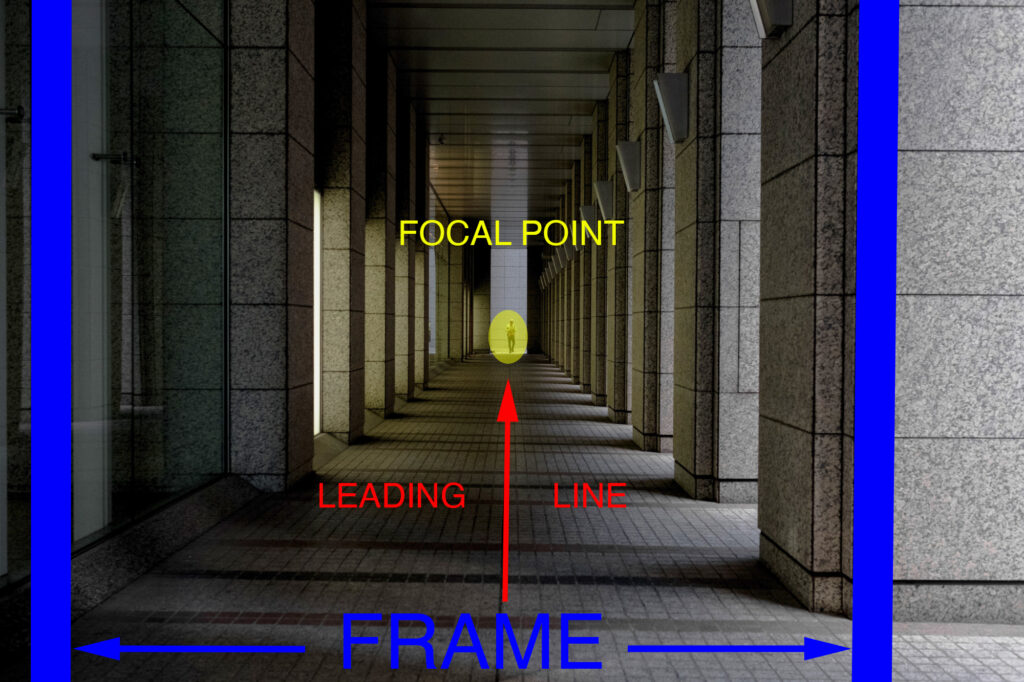 Diagram 3
A basic architectural plan showing a long, straight, powerful line leading from an entrance, through a series of spaces, to a focal point at the opposite end.
 Diagram 4
A photograph of a building facade made of dark, rough-textured brick, into which a single, large, smooth, bright white panel has been inserted.
 Diagram 5
A perfectly balanced, formal composition, where the left half is an exact mirror image of the right half.
- Axis
- Contrast
- Hierarchy
- Rhythm
- Symmetry
1:
2:
3:
4:
5:
Part B: Justification of a Principle (Question 6)
Choose ONE of your matches from Part A. In a single, grammatically correct sentence, explain clearly how the diagram you chose is a strong example of that design principle.
Instructor's Guide & Rubric [CONFIDENTIAL]
Instructor Materials: Question 4 Analysis
Model Answer / Solution
Part A: Correct Matches
- 1: D. Rhythm
- 2: C. Hierarchy
- 3: A. Axis
- 4: B. Contrast
- 5: E. Symmetry
Part B: Example Responses
- Principle Chosen: Hierarchy
Justification: The diagram demonstrates hierarchy because the central square is clearly the most important element, differentiated by its superior size and central placement relative to the other forms. - Principle Chosen: Contrast
Justification: The diagram uses contrast by juxtaposing a smooth, white element against a rough, dark one, creating strong visual interest through the opposition of texture and color.
Teacher's Notes (For Profiling)
1. Knowledge Points Tested:
- Design Theory: Understanding and recognition of fundamental, universal principles of architectural composition.
- Visual-Spatial Reasoning: The ability to decode abstract concepts from two-dimensional representations, crucial for interpreting plans and elevations.
- Analytical Articulation (IELTS Writing Skill): The skill of moving beyond simple recognition to explain the *mechanism* of a visual effect in Part B, requiring clear, concise, and grammatically correct English.
- Architectural Vocabulary (IELTS Lexical Resource): Correct and appropriate usage of specialized terms like Axis, Symmetry, Rhythm, Hierarchy, and Contrast in context.
2. Logical Pathways & Thought Patterns:
- Direct Conceptual Matching (Intuitive/Knowledge-Based): The student has a strong grasp of design vocabulary and immediately associates the terms with their classic visual representations. This is the ideal and most efficient pathway, reflecting strong foundational knowledge.
- Systematic Elimination (Logic-Analytic): The student starts with the principles they are most confident about (likely Symmetry and Rhythm), then carefully considers the remaining, more abstract options, demonstrating strategic problem-solving.
- Feature-Based Guessing (Surface-Level Analysis): The student lacks a firm grasp of the definitions and tries to guess based on superficial qualities (e.g., confuses Axis and Symmetry), indicating a need for deeper conceptual understanding.
- Tautological Reasoning (Weak Articulation - IELTS Coherence/Cohesion): In Part B, the student's justification is circular (e.g., "Diagram 5 is symmetry because it is symmetrical"). This shows rote memorization rather than deep understanding and a deficiency in explanatory writing.
3. Potential Hurdles & Common Errors:
- Axis vs. Symmetry: The most common conceptual error. Key distinction: an axis is a *line that organizes space or elements*, while symmetry is a *formal condition of mirrored balance around a line or plane*.
- Rhythm vs. Repetition: Students may see rhythm as simple repetition. The diagram shows *measured* repetition with intervals, which is the essence of rhythm – understanding this nuance is critical.
- Abstract Term Difficulty: Hierarchy and Axis are often the most difficult concepts for novices to grasp and articulate concisely.
- Weak Justification (IELTS Grammatical Range & Accuracy, Lexical Resource): The inability to explain *why* in Part B is a major red flag. A response like "because the two parts are different" for Contrast lacks analytical depth and precise vocabulary. Adhering to the single-sentence constraint while being explanatory tests concise writing.
Rubric for Assessment
| Dimension | Level 1: Novice | Level 2: Developing | Level 3: Proficient | Level 4: Expert |
|---|---|---|---|---|
| Matching Accuracy (Part A) | Correctly matches 0-1 principle. Answers appear random, indicating little to no understanding of basic principles. | Correctly matches 2-3 principles, often the most common ones (Symmetry, Contrast), but confuses abstract ones (Axis, Hierarchy). Demonstrates partial conceptual grasp. | Correctly matches 4-5 principles. May make one error on the most challenging pair. Shows strong foundational knowledge. | Correctly matches all 5 principles with confidence. Demonstrates complete and accurate understanding of core design principles. |
| Conceptual Articulation (Part B) (IELTS Task Achievement & Coherence) |
Justification is tautological ("It's an axis because it has an axis") or absent. Fails to explain the concept in own words or violates sentence limit. | Provides a very simple, literal description ("The two sides are the same"). Shows basic observation but no analytical explanation, and may struggle with the single-sentence constraint. | Provides a clear, concise sentence that correctly explains the relationship between the image and the principle, adhering to the length constraint. | Provides a precise and elegant explanation using specific design vocabulary (e.g., "bilateral symmetry," "organizing datum," "juxtaposition," "visual dominance"). Demonstrates advanced analytical and linguistic skills within the single-sentence limit. |
| Analytical Approach (IELTS Lexical Resource & Grammatical Range) |
Approach appears to be random guessing. Cannot differentiate between the concepts. Little evidence of structured thought. | Relies on recognizing 1-2 familiar examples but cannot reason through the less obvious ones. Vocabulary is basic; sentence structure is simple. | Systematically works through the options, using elimination for more challenging concepts. Justification uses appropriate vocabulary and demonstrates good grammatical control. | Demonstrates a clear, confident understanding of all terms, making immediate and accurate connections. The Part B justification reveals deep comprehension and mastery of architectural and descriptive language. |