Architectural & Structural Aptitude Assessment
A.S.A.P.
Architectural & Structural Aptitude Profile
Architectural Forms and Structural Principles
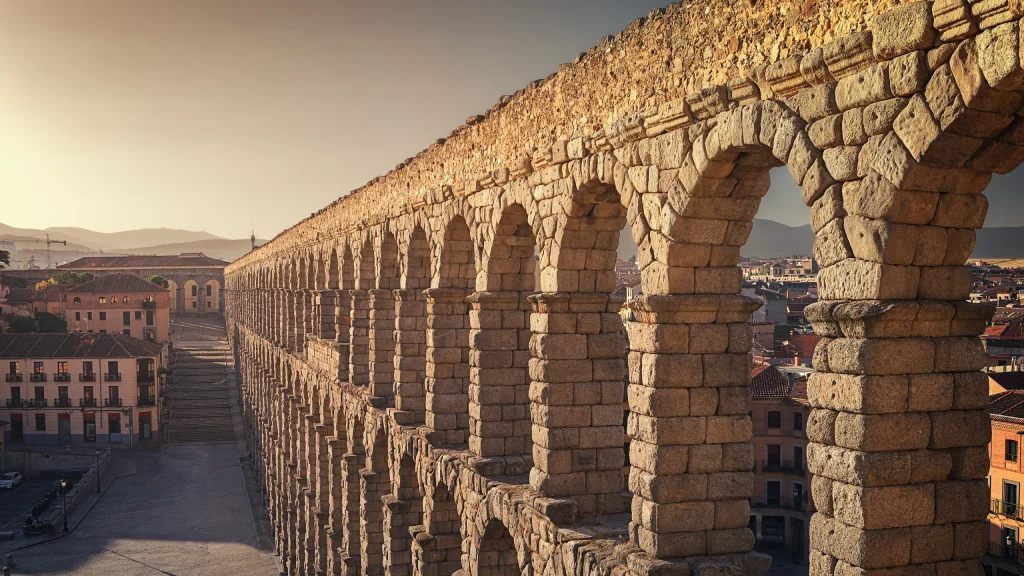
Throughout history, human ingenuity has shaped the built environment, employing various structural principles to create enduring and functional spaces. Ancient civilizations, notably the Romans, mastered the art of arch construction, which became a hallmark of their engineering prowess. The development of the semi-circular arch allowed them to span wider openings and support immense loads, evident in their aqueducts and coliseums. This form efficiently redirects compressive forces outwards and downwards, making it incredibly stable when built with suitable materials like stone and concrete.
In contrast, modern architecture frequently explores novel structural solutions to achieve dramatic aesthetic effects and functional requirements. One such principle is the cantilever, which allows a structural element, such as a beam or slab, to extend horizontally into space, supported at only one end. This creates a sense of lightness and defiance of gravity, enabling architects to design projecting balconies, dramatic roof extensions, and even entire building sections that appear to float. Understanding these fundamental principles is crucial for aspiring architects, as it forms the bedrock of both historical appreciation and innovative design.
Questions 1-2: Multiple Choice
Choose the correct letter, A, B, C or D.
Question 1
Refer to the passage and the image below. The image displays a classic example of Roman engineering. Which primary type of arch, as mentioned in the passage, is prominently used in its construction?
Question 2
According to the passage, the image below shows a common feature in modern high-rise buildings. Which primary structural principle, highlighted in the text, allows this element to project from the building façade without visible support from below?

Instructor's Guide & Student Profile Analysis [ACCESS RESTRICTED]
Instructor Materials: Question 1 Analysis
Solution Logic (IELTS & Architecture Focus):
- Step 1 (IELTS Reading - Scanning & Keyword Identification): The student should scan the passage for terms related to "Roman engineering" or "arch construction." The first paragraph explicitly mentions "Ancient civilizations, notably the Romans, mastered the art of arch construction... The development of the semi-circular arch allowed them to span wider openings..."
- Step 2 (Visual Geometric Analysis): The student must then observe the pure geometry of the arches in the image. Each arch forms a perfect half-circle.
- Step 3 (IELTS Reading - Matching Information & Architectural Terminology): The student must match the visual information (half-circle arches) with the keyword identified in the passage ("semi-circular arch") and confirm this against their architectural vocabulary.
- Step 4 (Elimination of Distractors - Architectural Knowledge): The student should be able to disqualify the other options based on their distinct shapes and historical contexts, which are not described as Roman in the passage or general architectural knowledge.
- A Pointed Arch (characteristic of Gothic architecture) is formed by two intersecting arcs meeting at a sharp point at the apex.
- A Horseshoe Arch (characteristic of Moorish/Islamic architecture) is wider than its springing point, with the curve continuing past the semi-circle.
- An Ogee Arch (characteristic of late Gothic architecture) has a distinctive S-shaped curve at its apex.
- Step 5 (Contextual Confirmation): The structure itself, a Roman aqueduct, is a classic example of where semi-circular arches were used for their immense compressive strength, confirming the choice.
Rubric for Student Profile Analysis:
| Answer Selection | Inferred Cognitive Profile (IELTS & Architecture) | Learning Style & Next Steps |
|---|---|---|
| B) Semi-circular Arch | Analytical Identifier & Effective Reader: The student correctly processes the visual data (geometry) and effectively uses scanning and keyword identification from the passage to match it to the correct term in their knowledge base. Demonstrates strong foundational architectural vocabulary and IELTS reading comprehension skills (matching information). | This student has a strong baseline. The next step is to challenge them with more complex passages and questions requiring inference (IELTS Reading: Inferring meaning) or summary skills. In architecture, test their ability to explain the structural and historical reasons behind the form, moving them from simple identification to deeper analysis. |
| A) Pointed Arch | Macro-form Thinker / Vocabulary Gap / Passage Overlook: The student might be responding to the overall directionality or general arch shape without precise analysis, or missed the specific descriptor in the passage. This indicates a need to refine their focus to individual structural elements, strengthen specific terminology, and improve careful reading for detail. | This student may be a "big picture" thinker, potentially rushing through the passage. They need practice in breaking down complex structures into their component parts and specific IELTS reading strategies like careful reading for specific details, not just skimming for general ideas. Use exercises that involve labeling elements of a building and identifying supporting text evidence. |
| C) or D) (Horseshoe/Ogee) | Visual Confusion / Rote Memorization Failure / Poor Information Retrieval: The student recognizes the need to apply a specific term but has incorrectly memorized shapes or failed to locate and use the explicit information in the passage. The visual difference between a semi-circular and a horseshoe arch can be subtle to the untrained eye. | This student needs targeted visual drills and explicit instruction in reading for specific details. Show them multiple, clear examples of each arch type side-by-side to reinforce the distinct geometric differences. For IELTS, practice questions requiring precise factual retrieval and matching terms from a text. Use the "Shape -> Story" keyword association (Roman, Gothic, Moorish). |
Instructor Materials: Question 2 Analysis
Solution Logic (IELTS & Architecture Focus):
- Step 1 (IELTS Reading - Scanning & Keyword Identification): The student should scan the passage for terms related to "modern architecture," "projecting from building," or "support." The second paragraph explicitly discusses "modern architecture" and introduces "One such principle is the cantilever, which allows a structural element... to extend horizontally into space, supported at only one end."
- Step 2 (Structural Analysis): The student must examine the image not for its appearance, but for how it is physically supported. They should observe that the balcony slab is projecting horizontally from the building face without visible support from below.
- Step 3 (IELTS Reading - Understanding Definition & Architectural Terminology): The student must match the observed condition in the image (projecting element supported at one end) with the definition provided in the passage for the "cantilever."
- Step 4 (Elimination of Distractors - Structural & Historical Knowledge):
- A Suspension System (not mentioned as a projecting element from a facade in modern high-rises in the passage) requires support from cables above (e.g., a suspension bridge), a different mechanism.
- A Post and Lintel system (a simple beam) requires support at both ends, which is not what the image shows.
- A Flying Buttress is a specific, external prop used in Gothic architecture (not modern high-rises as described) to counteract thrust from vaults, which is functionally and aesthetically incorrect here.
Rubric for Student Profile Analysis:
| Answer Selection | Inferred Cognitive Profile (IELTS & Architecture) | Learning Style & Next Steps |
|---|---|---|
| C) Cantilever | Structural Logician & Detail-Oriented Reader: The student correctly analyzes the support conditions, connects it to the explicit definition of "cantilever" in the passage, and applies the correct technical term. They demonstrate an ability to see and understand the "invisible forces" at play in a structure, combined with strong IELTS reading skills in understanding specific definitions and applying them to visual information. | This student thinks like an engineer and reads carefully. Challenge them with more complex structural systems and passages requiring deeper synthesis of information from different parts of a text. Ask them to identify cantilevers, beams, and suspension elements in a single, complex building to test for nuanced understanding, and to paraphrase or summarize the structural principles (IELTS Writing/Speaking preparation). |
| B) Post and Lintel | Pattern-Matcher with Flawed Logic / Superficial Reading: This is a common incorrect answer. The student is trying to apply a known structural pattern but either misinterprets the visual evidence or did not fully grasp the defining characteristic of "cantilever" from the passage (i.e., "supported at only one end"). They are thinking structurally, but their analytical model or reading comprehension is flawed. | This student needs to practice the "Where's The Support?" test rigorously and improve close reading for specific definitions. Show them clear diagrams comparing a beam (support at both ends) and a cantilever (support at one end), explicitly linking these to the passage's definitions. Emphasize that they must base their analysis only on the supports that are physically present and accurately interpret definitions from the text. |
| A) Suspension System | Conceptual Confusion / Misinterpretation of Text: The student misunderstands the fundamental principle of a suspension system (requiring tension from above) or misinterprets how the passage describes projecting elements. They may associate any "hanging" or projecting element with suspension, failing to grasp the specific mechanics described. | Use clear, contrasting examples, both visual and textual. Show an image of the Golden Gate Bridge next to the cantilever balcony, and provide textual descriptions highlighting the core difference in force direction. Ask them to draw arrows indicating the direction of the primary supporting forces (down the cables for suspension vs. into the wall for the cantilever). Reinforce careful reading of definitions. |
| D) Flying Buttress | Historical Knowledge Misapplication / Lack of Contextual Reading: The student is incorrectly applying a term from one architectural domain (Gothic) to another (Modernism) and fails to connect the image with the "modern architecture" context provided in the passage. This indicates a "siloing" of knowledge and a weakness in contextual application and reading for temporal cues. | Reinforce the link between form, structure, and historical period, and emphasize reading for contextual clues (e.g., "modern architecture" vs. "ancient civilizations"). Create a timeline matching key structural innovations (Roman Arch, Gothic Buttress, Steel Frame, Reinforced Concrete Cantilever) to their respective eras, explicitly noting where each is used. |