Examination Paper: Visual & Conceptual Analysis
Architectural Analysis Examination
IELTS-Integrated Architectural Visual Analysis: Writing Practice
This task is designed to assess your ability to observe, analyze, and describe visual information clearly and coherently, similar to skills required in IELTS Writing Task 1, while also inferring deeper concepts relevant to architectural studies.
Question 8: The Architect's Eye - Identifying Design Language
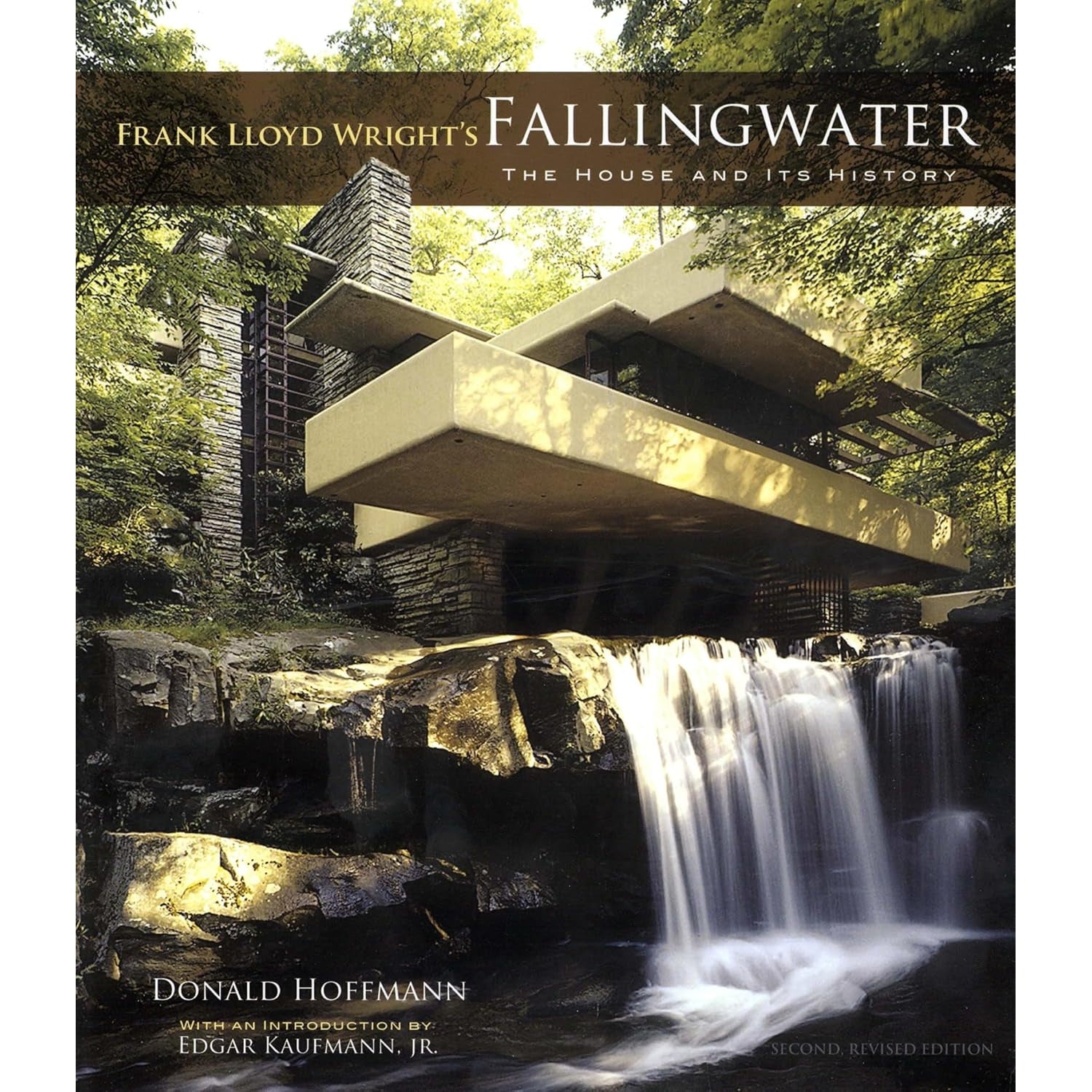 Building 1
A dramatic photo of Frank Lloyd Wright's "Fallingwater," showing cantilevered terraces over a waterfall and its strong horizontal lines integrated with natural stone.
Building 1
A dramatic photo of Frank Lloyd Wright's "Fallingwater," showing cantilevered terraces over a waterfall and its strong horizontal lines integrated with natural stone.
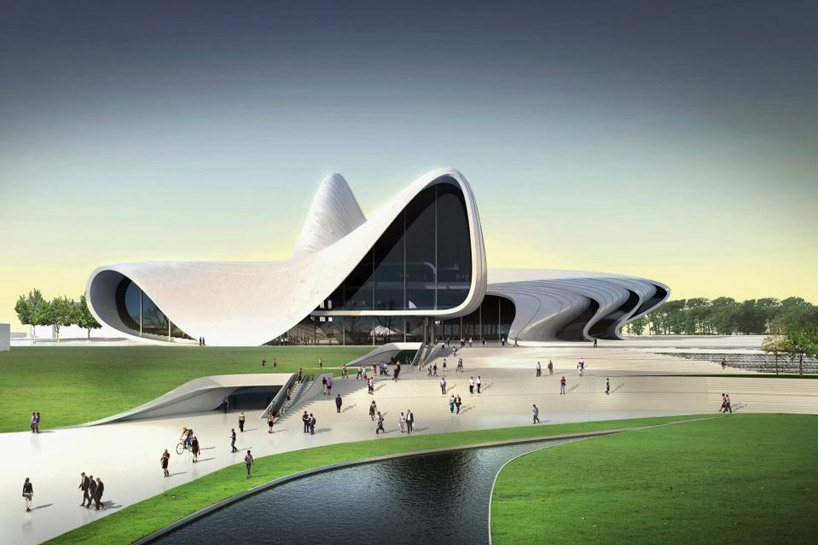 Building 2
A dynamic photo of Zaha Hadid's "Heydar Aliyev Center" in Baku, showcasing its fluid, curving, continuous form emerging from the surrounding plaza.
Building 2
A dynamic photo of Zaha Hadid's "Heydar Aliyev Center" in Baku, showcasing its fluid, curving, continuous form emerging from the surrounding plaza.
Analysis of Building 1
Analysis of Building 2
Instructor's Guide & Assessment Rubric [RESTRICTED]
Question 8: The Architect's Eye
Model Answer / Solution
Building 1 (Fallingwater):
- Form: The dominant features are strong, overlapping horizontal lines and flat planes that create a series of terraces, cantilevering dramatically over the waterfall. These are contrasted with rough, vertical elements made of natural stone. The overall composition is a dynamic assembly of perpendicular lines and planes.
- Relationship to Ground: The building is directly integrated into its natural landscape. It is built not just near, but *over* a waterfall, with its stone piers seeming to grow directly from the rock bed. Its horizontal terraces echo the natural rock ledges of the site, establishing a profound, almost symbiotic connection to the ground and its specific location.
- Big Idea: The architect's "big idea" appears to be the seamless integration of architecture and nature, a concept often called Organic Architecture. The goal was not to place a building *on* the landscape, but to make it *of* the landscape, blurring the lines between the built and natural environments to create a holistic living experience.
Building 2 (Heydar Aliyev Center):
- Form: This building is defined almost entirely by fluidity, continuous curves, and sweeping undulations. There are virtually no sharp angles or distinct edges. The form is a single, unified, ribbon-like gesture where walls blend into the roof, which then seamlessly blends into the surrounding plaza, creating a sculptural, flowing volume.
- Relationship to Ground: The building truly emerges from the ground. The plaza's surface itself seems to fold and sweep upwards in a continuous motion to create the building's walls and roof, before flowing back down to meet the earth. It does not have a traditional base or defined foundation; instead, it is an organic continuation of the urban landscape.
- Big Idea: The architect's "big idea" seems to be the creation of a continuous, dynamic, and futuristic space that entirely rejects rigid, conventional geometry. The goal is to express movement, fluidity, and a departure from the hierarchical and segmented structures of the past, embodying principles often associated with Parametricism and a sense of infinite possibility.
Teacher's Analysis
1. Knowledge Points & Skills Assessed:
- Visual Analysis & Vocabulary: Can the student deconstruct a complex 3D form into its core components (lines, shapes, planes, volumes)? Can they use precise descriptive and architectural language (e.g., "horizontal," "vertical," "cantilevered," "fluid," "sculptural," "undulating," "organic")? This directly assesses their **Architectural Vocabulary & Terminology** (Category I, Point 1).
- Conceptual Synthesis: Can the student move from describing *what* they see to inferring the *why*? This assesses their ability to understand architectural intent and the "big idea" behind a design, linking observations to abstract concepts.
- Comparative Logic: The task encourages a comparative mindset, forcing the student to identify and articulate differences in design language for two radically different buildings.
- Descriptive Writing Skills: The structured prompts and suggested word counts encourage detailed, coherent, and well-articulated written responses, directly aligning with **Descriptive Writing / Creative Essay** (Category I, Point 4).
Connection to IELTS Exam: This question integrates skills highly relevant to IELTS Academic Writing. Specifically:
- IELTS Writing Task 1 (Academic): The requirement to observe visual information (buildings instead of graphs/charts) and describe its key features, trends, and relationships accurately and coherently. Students must demonstrate strong lexical resource (using appropriate architectural vocabulary) and grammatical range and accuracy.
- IELTS Writing Task 2 (Academic): Inferring the "Big Idea" and explaining the reasoning requires analytical thinking and the ability to articulate complex ideas, similar to developing arguments in an essay. It assesses coherence, cohesion, and a clear point of view supported by observations.
2. The Mind Maze: Navigating Student Logic & Potential Errors:
- The "Literal Describer" Path: "Building 1 is made of stone and has balconies. It is next to water." "Building 2 is white and curvy, on a large flat area." This indicates a low level of visual analysis and limited descriptive vocabulary. They are listing obvious objects rather than analyzing formal qualities. Their IELTS Lexical Resource score would be low.
- The "Vague Concepts" Path (Common Error): "Building 1 is natural and old-fashioned." "Building 2 is modern and cool." These are not entirely wrong, but they lack the depth, precision, and architectural vocabulary required for strong analysis. The student has good intuition but lacks the specific language and analytical framework to articulate it effectively, impacting their IELTS Coherence and Lexical Resource.
- The "Name-Dropper" Path: Correctly identifies the architects' names or architectural styles (e.g., "Organic Architecture") but then provides a very weak or generic analysis. This suggests a reliance on memorization over genuine analytical skill and understanding.
- The "Design Analyst" Path (Ideal): Systematically describes formal language, then the contextual relationship, and uses these concrete observations as evidence to support their insightful interpretation of the "big idea." This approach demonstrates strong visual literacy, critical thinking, and advanced language skills, aligning well with high IELTS band descriptors for Task Achievement, Cohesion/Coherence, and Lexical Resource.
Rubric for Assessment
| Criteria | 4: Expert | 3: Proficient | 2: Developing | 1: Novice |
|---|---|---|---|---|
| Analysis of Form & Language (IELTS Lexical Resource) | Clearly and precisely describes the dominant formal and spatial characteristics of BOTH buildings using specific, sophisticated architectural vocabulary (e.g., planes, cantilevers, fluid, continuous, undulating). | Describes the key visual features of both buildings using mostly general but appropriate language (e.g., "straight lines," "curvy," "made of rock"). | Describes the features of only one building in detail, or the descriptions for both are vague and superficial (e.g., "has a roof," "is big"). Limited or incorrect architectural vocabulary. | Fails to identify the key formal characteristics of either building. Uses very basic or inappropriate vocabulary. |
| Analysis of Context & Ground (IELTS Task Achievement) | Clearly articulates the distinct, nuanced relationship each building has with its site (e.g., integrated with nature, growing from the ground, emerging from the plaza). | Describes the relationship to the ground in basic but accurate terms (e.g., "it's in the woods," "it's on a plaza," "it's built over water"). | Attempts to describe the context but the explanation is confused, generic, or largely similar for both buildings. Lacks specific detail. | Makes no attempt to describe the building's relationship to its site, or provides irrelevant information. |
| Inference of "Big Idea" (IELTS Task Achievement & Coherence) | Provides a sophisticated and well-supported inference about the architect's core concept for BOTH buildings, linking it directly and convincingly to the visual evidence. Demonstrates deep understanding. | Provides a reasonable inference for the "big idea" but it is stated in simple terms and is not always strongly supported by the previous analysis. Some conceptual depth is present. | The inferred "big idea" is incorrect, nonsensical, or based on a simple aesthetic judgment ("it looks cool"). Little to no connection to visual evidence. | Makes no attempt to infer the architect's intent, or provides a completely irrelevant response. |
| Clarity & Articulation (IELTS Cohesion/Coherence & Grammar) | The entire explanation is highly organized, coherent, and uses language with precision and confidence. Sentence structures are varied and grammatical errors are minimal. Follows word count guidance effectively. | The explanation is mostly clear and structured, but may lack strong transitions or contain some repetitive or imprecise phrasing. Some minor grammatical errors are present. Generally adheres to word count. | The explanation is disorganized, difficult to follow, and the connection between observation and inference is weak. Grammatical errors impede understanding. Struggles with word count. | The explanation is absent or consists of a few incoherent phrases. Grammatical errors are pervasive. Does not meet word count expectations. |
Overall Profile Synthesis (Teacher's Guide)
After the student has completed all questions in this diagnostic test, the teacher can synthesize the results to build a multi-dimensional profile of the student's architectural aptitude and language skills. The goal is not a single score, but a narrative that identifies strengths, weaknesses, and, most importantly, the student's dominant modes of thinking.
Step 1: Map the "Logic" Performance
Review the student's performance across the key logical domains tested. For this question (Q8), focus on:
- Stylistic & Formal Logic (Q8): Do they have an "Architect's Eye"? Can they analyze form and infer intent, or are they a "Literal Describer" who misses deeper architectural principles?
- Descriptive & Analytical Logic (Q8): How well do they break down complex visual information into understandable components and articulate the relationships between them?
Step 2: Identify Dominant Thought Patterns
Based on the mapping above, identify recurring patterns. For example:
- The Concrete Thinker: Excels at describing tangible objects but struggles with abstract reasoning about the "Big Idea" or conceptual connections. Their descriptions are factual but lack interpretive depth.
- The Abstract Visualist: Provides brilliant, insightful answers about style and form (Q8) and inferred ideas, demonstrating a great "eye" but might sometimes struggle with the precise technical vocabulary or structural articulation.
- The Memorizer: May correctly identify names/terms (if applicable in other questions) but provides weak explanations of the underlying logic or visual evidence, suggesting surface-level knowledge.
- The Developing All-Rounder: Performs moderately well across all areas, making some mistakes in vocabulary or logical flow but generally following the correct analytical path.
Step 3: Assess Language Foundation (with IELTS in Mind)
Evaluate the language used across all written answers, with a keen eye on IELTS criteria. Look for:
- Lexical Resource (Vocabulary): Do they use precise, technical vocabulary (cantilever, monolithic, lateral pressure, undulating, symbiotic) or rely on simple, general terms (balcony, rock, sideways force, curvy, blend)? Are they able to vary their vocabulary effectively?
- Cohesion and Coherence (Organization & Flow): Are their explanations logically structured, with clear topic sentences and supporting details? Do they use appropriate linking words and phrases to connect ideas smoothly? Is the overall message easy to follow?
- Grammatical Range and Accuracy (Sentence Structure & Error-Free Language): Is their sentence structure varied (simple, compound, complex sentences)? Is their grammar largely free of errors that impede communication?
This synthesis of cognitive skills and language proficiency provides a powerful, holistic profile that can be used to create a truly personalized and effective learning plan, specifically addressing both architectural aptitude and IELTS readiness.