Examination Paper: Architectural Analysis
Architectural Analysis Examination
General Instructions
This examination is designed to assess your comprehension of architectural concepts and your ability to articulate ideas clearly. Carefully read all instructions before attempting the questions.
- Time Limit: We recommend allocating approximately 30-40 minutes to complete both questions.
- Read Carefully: Pay close attention to the provided passages and image details for each question.
- Answer in Your Own Words: Where explanations are required, formulate your answers using your own words, drawing directly from the provided text and images.
- Word Count: Pay attention to any suggested word limits for explanation tasks.
- Clarity: Ensure your answers are clear, coherent, and directly address the question asked.
Question 4: The Logic of the Arch
One of the most significant architectural developments in human history was the 'Arch'. An arch compresses the tension caused by weight downwards and outwards, resulting in a stronger structure with large open gaps. The key feature of an arch is its curve, which prevents it from collapsing under its own weight. Arches are found in many different shapes and sizes but they all work on the same basic principle.
(A) The semi-circular arch: This arch form was extensively used by the Romans not only to construct buildings such as the Colosseum and Pantheon but also used by them in water management structures such as aqueducts and bridges. It forms a perfect half-circle.
(B) The pointed arch: The round arch was replaced by the pointed arch, which enabled the construction of lofty cathedrals all over Europe during medieval times. This architecture was referred to as Gothic. The key advantage of the pointed arch is that it directs the thrust of the weight it carries more vertically downwards than outwards.
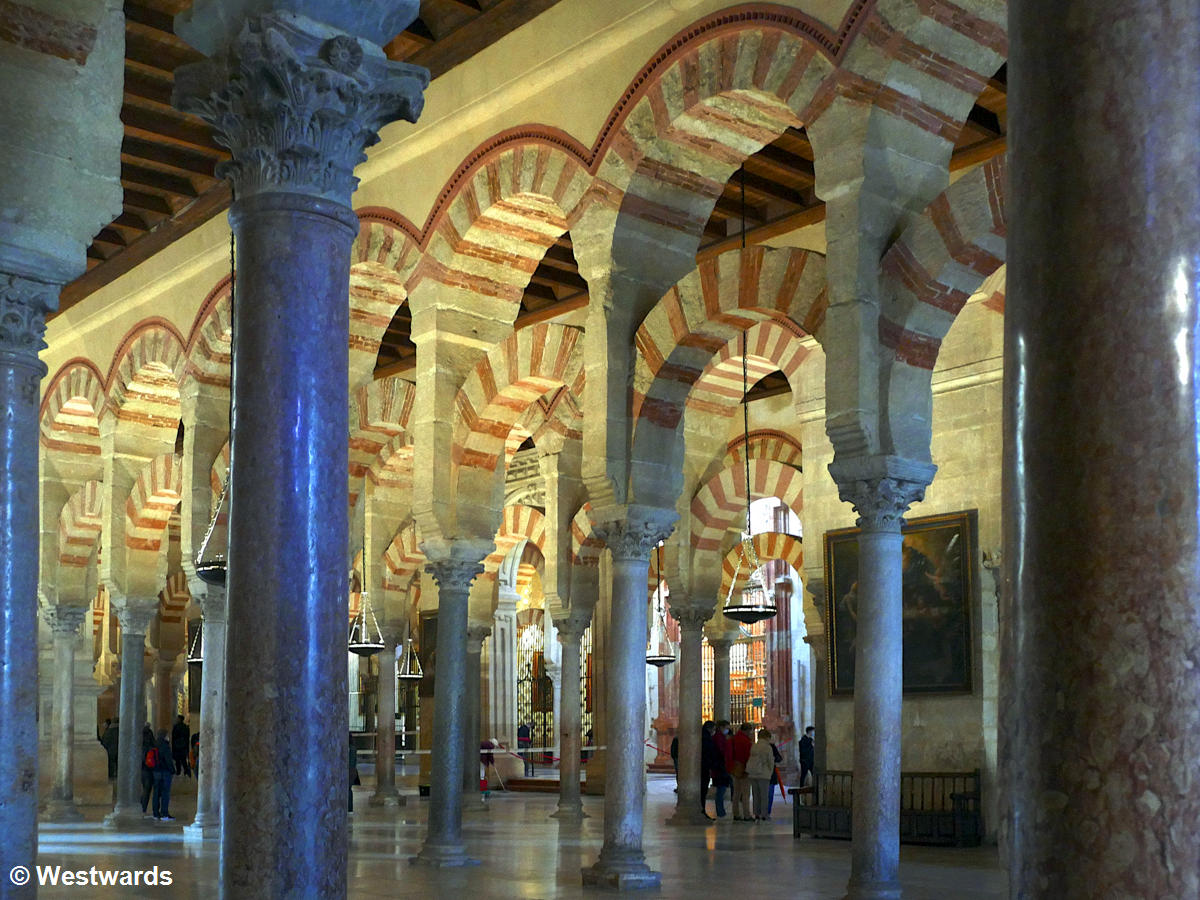
(C) The horseshoe arch: The characteristic arch type of Moroccan and western Islamic styles is the so-called horseshoe arch, an arch with a rounded top that bends ever so slightly inward at the side, exceeding a half-circle.
(D) The ogee arch: One of the most decorative arch forms is the ogee arch. An ogee is a decorative line formed by two connected curves forming an S-shaped curve. When combined in an arch they meet at a point, and because of its decorative nature, it is found across many styles of architecture.
Part A: Identification (Matching Information)
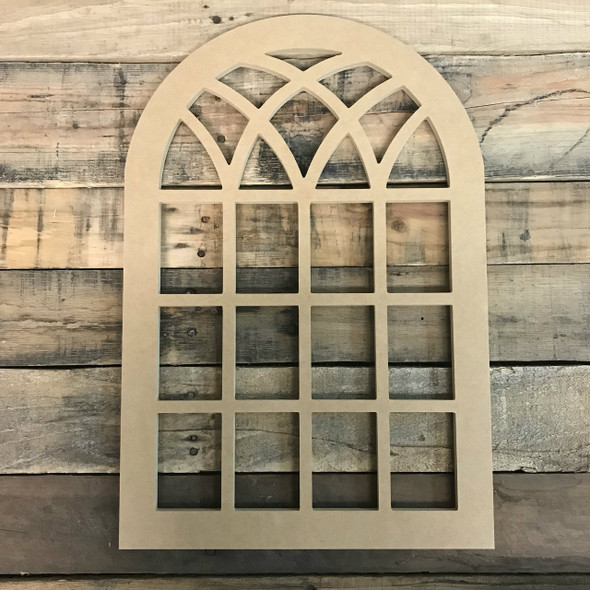
Below are four images of arches, labelled 1, 2, 3, and 4. Match each image to the correct arch type described in the passage above by writing the corresponding letter (A, B, C, or D) in the blank spaces provided.


Part B: Explanation (Short Answer)
Based on the information in the passage, explain the fundamental structural advantage of the pointed arch (B) over the semi-circular arch (A). Why was this specific advantage crucial for building the "lofty cathedrals" mentioned in the text?
Write your answer in the space below. You should use your own words and refer to the passage. Aim for approximately 50-70 words.
Question 5: The Logic of Material and Form

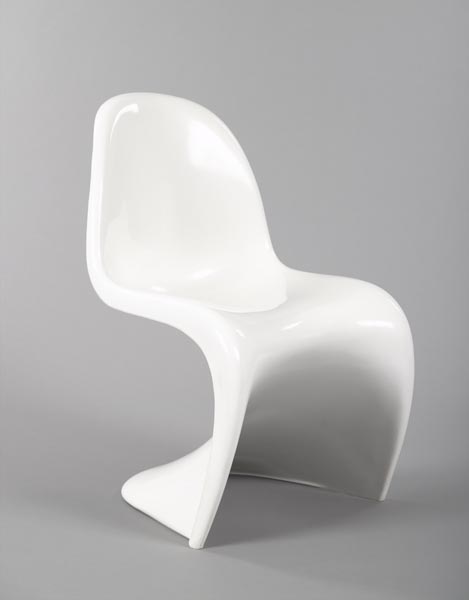
Explain why the flowing, continuous, cantilevered form of the Panton Chair (Image 2) would be structurally impossible or extremely difficult to create using the material (wood) and traditional construction methods of the chair in Image 1. What specific properties of plastic as a material enabled this revolutionary new shape?
Write your answer in the space below. Aim for approximately 80-120 words.
Instructor's Guide & Assessment Rubric [RESTRICTED]
Question 4: The Logic of the Arch
Model Answer / Solution
Part A: Identification
Image 1: B (Pointed Arch)
Image 2: A (Semi-circular Arch)
Image 3: C (Horseshoe Arch)
Image 4: D (Ogee Arch)
Part B: Explanation
Based on the passage, the fundamental structural advantage of the pointed arch over the semi-circular arch is how it manages the load it carries. The text states that a pointed arch "directs the thrust of the weight it carries more vertically downwards than outwards."
This was crucial for building "lofty cathedrals" for two main reasons. First, a semi-circular arch pushes a significant amount of force outwards, which requires very thick, heavy walls or buttresses to stop the arch from spreading and the walls from collapsing. By channelling the force more vertically, the pointed arch reduces this outward push. This meant that the supporting walls did not need to be as massive. Second, this vertical direction of force allowed builders to construct arches that were much taller and more slender for their width. This structural efficiency was the key that unlocked the ability to build the soaring, light-filled interiors characteristic of Gothic cathedrals, reaching heights that were impossible with the older Romanesque semi-circular arch technology.
Teacher's Analysis
1. Knowledge Points & Skills Assessed:
- IELTS Reading - Specific Information: Ability to locate and extract precise details from a descriptive text (e.g., arch definitions).
- Visual-Textual Synthesis: Capacity to match written descriptions of architectural forms with their corresponding visual representations.
- IELTS Reading - Understanding Main Ideas: Grasping the core structural principle of the arch and the comparative advantage of specific types.
- Critical Reasoning & Causal Analysis: Connecting a structural property (vertical thrust) to its practical architectural implications (enabling taller, thinner structures). This aligns with understanding cause-and-effect relationships in IELTS reading and explaining them in writing.
- IELTS Writing - Summarizing & Explaining: Articulating a technical concept clearly and concisely using own words, based on source text, which is similar to tasks requiring summary or explanation of given information.
- Architectural Vocabulary: Understanding and using terms like 'thrust', 'cantilever', 'semi-circular', 'pointed', 'Gothic', 'aqueduct', 'monolithic', 'joinery'.
2. The Mind Maze: Navigating Student Logic & Potential Errors:
- The "Shape Matcher" Path: Works well for A and B but may confuse C and D if they don't read the descriptions of "inward curve" vs. "S-curve" closely, highlighting attention to detail in reading.
- The "Surface-Level Explanation" Path (Common Error): Simply paraphrases the text: "The pointed arch was better because it directs thrust more vertically downwards." They state the 'what' but fail to explain the 'so what'—the consequence for the walls and overall structure. This shows a lack of deeper comprehension and analytical writing.
- The "Aesthetic Judgement" Path: Explains that the pointed arch is better because it "looks taller" or "is more graceful," describing the aesthetic outcome, not the structural cause. This indicates a focus on superficial observation over structural reasoning.
- The "Structural Thinker" Path (Ideal): Correctly identifies the vertical thrust and then explains its consequences: less outward force means less need for massive walls, which in turn allows for greater height and openness. This demonstrates strong critical reasoning and ability to synthesize information for a coherent explanation.
Rubric for Assessment
| Criteria | 4: Expert | 3: Proficient | 2: Developing | 1: Novice |
|---|---|---|---|---|
| Accuracy of Identification (Part A) | Correctly identifies all 4 arch types by matching the descriptions to the images. | Correctly identifies 3 of the 4 arch types, demonstrating good visual-textual synthesis. | Correctly identifies 2 of the 4 arch types, indicating some difficulty with detail or visual recognition. | Identifies 0 or 1 arch types correctly, suggesting poor comprehension or visual-textual matching. |
| Identification of Advantage (Part B) | Clearly and accurately identifies from the text that the advantage is directing thrust "more vertically downwards." | Attempts to explain the advantage but is imprecise or uses purely aesthetic terms, rather than the structural logic from the text. | Fails to identify the correct structural advantage from the text, or offers a vague/incorrect interpretation. | Does not attempt an explanation or provides an entirely irrelevant response. |
| Explanation of Consequence (Part B) | Clearly explains *why* vertical thrust is crucial—it reduces outward push, allowing for thinner, less massive walls and therefore greater height and openness in cathedrals. Demonstrates strong causal reasoning. | Mentions that it allows for taller buildings but does not clearly explain the link to reduced outward force on the walls, showing incomplete causal understanding. | Provides an incorrect or nonsensical explanation for why it is an advantage, or simply restates the advantage without elaboration. | Explanation is absent or incoherent, or significantly outside the suggested word count without justification. |
| Clarity & Use of Text | Explanation is clear, well-structured, coherent, and accurately synthesizes information from the passage without simply copying it. Adheres to suggested word count. | Explanation is mostly clear but may be a simple paraphrase of a sentence from the text, showing limited synthesis. May slightly exceed/fall short of word count. | Explanation is unclear, disorganized, or relies on information not present in the text, or ignores the word count. | Explanation is incoherent, extremely brief, or absent. |
Question 5: The Logic of Material and Form
Model Answer / Solution
The form of the Panton Chair is a direct result of the properties of moulded plastic, and it would be structurally impossible to replicate using traditional woodworking techniques for two main reasons related to the material's properties and construction methods.
- Wood's Limitations (Grain and Joinery): Wood is a natural material with a grain. It is very strong in compression along the grain, but relatively weak when subjected to bending forces (tensile stress) across the grain, especially in thin sections. The Panton Chair's form is a single, thin, cantilevered 'S' shape. To carve this from a single block of wood would be incredibly wasteful and the resulting chair would be extremely fragile. The thin, curved sections would have cross-grain weaknesses and would snap under a person's weight. Building it from smaller pieces would require numerous complex joints that would interrupt the smooth, flowing lines and fail under the design's complex stresses.
- Plastic's Advantages (Monolithic Form and Tensile Strength): Moulded plastic is an isotropic material, meaning it has uniform strength in all directions because it has no grain. Crucially, it has excellent tensile strength (ability to resist being pulled apart). The injection-moulding process allows plastic to be formed into a single, continuous, monolithic object. This seamlessness is its greatest structural advantage here. Forces are distributed smoothly across the entire form without weak points at joints. The plastic's tensile strength allows the thin seat to cantilever effectively, and the single-piece construction elegantly resolves all structural forces within one flowing shape.
In essence, the Panton Chair's form is impossible in wood because wood is an assembly of linear, grained parts requiring joints. The form is only possible in plastic because plastic can be shaped into a single, seamless object with the tensile strength needed to support a person in a cantilever.
Teacher's Analysis
1. Knowledge Points & Skills Assessed:
- Material Properties: Deep conceptual understanding of distinct material properties (e.g., wood's anisotropy and grain vs. plastic's isotropy and mouldability, comparative tensile strength).
- Structural Concepts: Understanding the implications of monolithic vs. joined structures and the forces (especially cantilever, tensile stress) acting on objects.
- Form-Material Relationship: The core architectural skill of articulating a clear, causal link between a material's inherent properties and the forms it can (or cannot) realistically take.
- IELTS Writing - Comparative Analysis: Ability to structure an argument by directly comparing and contrasting two different materials and their design consequences.
- Technical Vocabulary: Correct and effective use of architectural and material science terms such as "tensile strength," "monolithic," "joinery," "cantilever," "isotropic," "anisotropic," "compression," "grain".
- Critical Thinking: Moving beyond superficial observation to deep structural and material analysis.
2. The Mind Maze: Navigating Student Logic & Potential Errors:
- The "Surface-Level Description" Path: Describes visual differences ("plastic is curvy," "wood is not") instead of structural reasons. This shows a lack of analytical depth.
- The "Vague Properties" Path (Common Error): Uses imprecise terms like "plastic is more flexible" or "stronger" without the necessary technical specificity (e.g., differentiating between compressive and tensile strength). This highlights a need for more precise vocabulary and understanding of material science.
- The "Partial Logic" Path: Correctly explains wood's limitations ("it would break") but struggles to explain plastic's specific advantages, or vice-versa. This indicates an incomplete grasp of the comparative analysis required.
- The "Engineer's Apprentice" Path (Ideal): Immediately contrasts assembly of parts vs. a monolithic form. Correctly identifies wood's grain weakness and plastic's key enablers (isotropic nature, tensile strength, mouldability). This demonstrates a sophisticated understanding of form-material relationships.
Rubric for Assessment
| Criteria | 4: Expert | 3: Proficient | 2: Developing | 1: Novice |
|---|---|---|---|---|
| Analysis of Wood's Limitations | Clearly explains wood's structural weakness in this context, citing its grain and the inherent challenges of traditional joinery for such a form. | Identifies that wood would "break" or is not "bendable" enough, but does not clearly explain the concept of grain or the structural implications of joinery. | States that wood cannot be used but provides a vague or incorrect reason for its limitations. | Makes no attempt to explain wood's limitations for the given form. |
| Analysis of Plastic's Properties | Clearly explains the key advantages of plastic, such as its mouldability into a monolithic form and its high tensile strength, directly linking them to the chair's design. | Identifies a relevant property of plastic (e.g., "it's mouldable," "it's strong") but uses imprecise language and doesn't fully explain its structural significance. | Mentions plastic but provides an incorrect or irrelevant property, or offers a vague explanation. | Makes no attempt to explain plastic's enabling properties. |
| Connection between Material & Form | The explanation forms a clear, logical, and causal link, showing that the continuous, cantilevered form is a direct consequence of the material's properties and construction methods. Demonstrates strong comparative analysis. | The connection between material and form is implied but not clearly articulated; the argument may be incomplete or lack strong comparative points. | The explanation describes the material and the form as separate issues without connecting them logically or comparatively. | The connection is absent or the logic is flawed. |
| Clarity & Technical Vocabulary | Explanation is highly organized, coherent, and uses precise, appropriate technical terms (e.g., tensile, monolithic, cantilever, joinery, isotropic) correctly and effectively. Adheres to suggested word count. | Explanation is mostly clear and may use some correct terminology, but it may be used inconsistently or without full understanding. May slightly exceed/fall short of word count. | Explanation is disorganized or difficult to follow, and uses only basic, non-technical vocabulary. Ignores word count. | Explanation is incoherent, extremely brief, or absent. |