Examination Paper: Architectural Analysis
Architectural Analysis Examination
Question 3: The Logic of Time
IELTS Practice: This task assesses your ability to analyze visual information, apply logical reasoning, and articulate your conclusions clearly and coherently, similar to an IELTS Academic Writing Task 1 or Task 2.
Instructions: Below are four famous architectural monuments, labelled P, Q, R, and S. You should spend approximately 25 minutes on this question. Complete Part A and Part B.

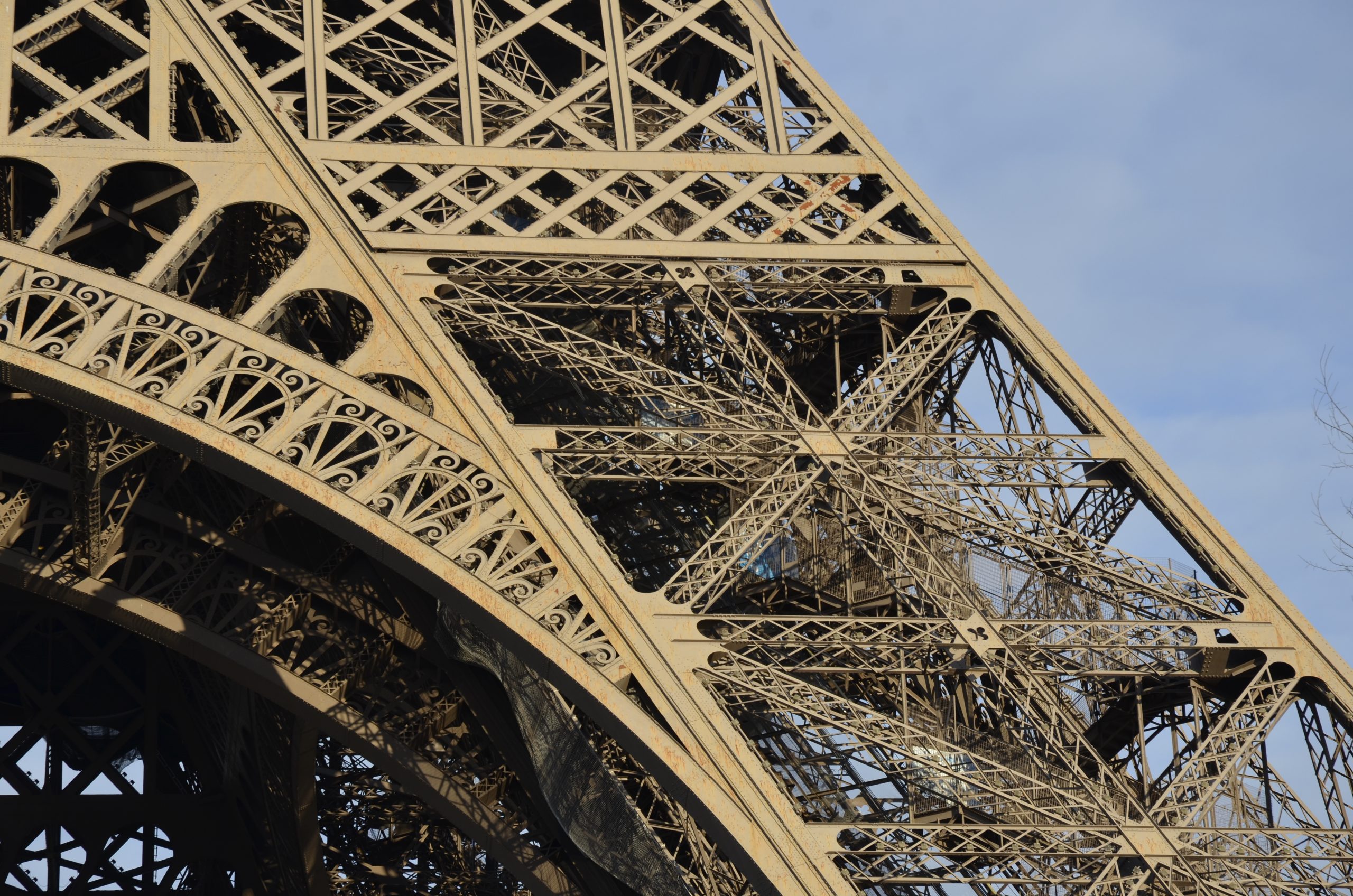


Part A: Sequencing
Arrange these four monuments in descending chronological order, meaning from the newest to the oldest. Write the corresponding letters in the correct order in the blanks below.
Part B: Explanation (Approximately 150-200 words)
This is a critical part of the question. In the space below, explain the logical reasoning you used to determine the sequence. You must not rely on memorized dates or general historical knowledge that is not evident in the images. Instead, your explanation must be solely based on the observable materials and structural systems depicted in each image.
As you explain, consider the following:
- What specific materials (e.g., carved rock, individual stone blocks, iron, concrete) are visible in each monument?
- How do the structural systems (e.g., monolithic carving, repeated arches, massive domes, lattice frames) function to support the building?
- How does the combination of materials and structural systems reflect the technological capabilities and historical era of construction?
- Clearly justify the chronological placement of each monument relative to the others.
Your explanation should be clear, well-organised, and use appropriate architectural terminology where possible. Aim for a response of approximately 150-200 words.
Instructor's Guide & Assessment Rubric [RESTRICTED]
Question 3: Instructor's Guide
Model Answer / Solution
Part A: Sequencing
Newest Q, S, R, P Oldest
Part B: Explanation
The correct descending chronological sequence can be logically deduced by analyzing the evolution of construction materials and structural engineering, which follows a clear historical progression from simpler to more complex technologies.
- Newest - Q (Eiffel Tower): This structure is made of wrought iron, a refined metal, assembled in a complex lattice framework. This method of construction, creating a lightweight, tall, skeletal structure, is a hallmark of the Industrial Revolution in the late 19th century. Metal frame technology is the most recent and technologically advanced among the four options.
- Second - S (Gol Gumbaz): This is a massive mausoleum built from stone masonry and brick, and its defining feature is its enormous dome constructed with interlocking techniques. This represents a highly sophisticated understanding of arch-based (arcuated) systems to create a large interior space. This type of advanced masonry construction predates the Industrial Age but is more complex than earlier Roman techniques. It is characteristic of the architecture of the Deccan Sultanates around the 17th century.
- Third - R (Roman Colosseum): The Colosseum is a classic example of Roman Imperial engineering (c. 1st century AD). It uses stone and an early form of concrete to create a massive structure based on the repeated use of the arch and vault. While revolutionary for its time, it relies on immense structural mass and compression. This technology is more foundational and predates the more intricate and comparatively lighter dome of Gol Gumbaz by over a thousand years.
- Oldest - P (Ellora Caves): This monument is fundamentally different. It is not a constructed building but a subtractive or monolithic one, meaning it was carved directly out of a single, solid rock cliff. This method is one of the most ancient forms of creating monumental space. It does not involve assembling materials but rather removing them, representing an earlier stage of technological development compared to the Roman system of constructing with arches and concrete.
Therefore, the logical order from newest to oldest is based on this technological timeline: Industrial iron frames (Q), followed by complex masonry domes (S), then foundational arch-and-vault masonry (R), and finally, the most ancient technique of rock-cut monolithic architecture (P).
Teacher's Analysis (Hidden from Student)
1. Knowledge Points & Skills Assessed:
- Chronological Reasoning: The core skill is the ability to order historical artifacts based on logic rather than memorization.
- Material and Structural Literacy: Can the student identify the primary materials (iron, masonry, rock) and structural systems (lattice frame, dome, arch-and-vault, monolithic/subtractive) from images?
- Technological Progression: Does the student have a conceptual understanding of the "tech tree" of construction: that carving is more ancient than building with blocks, which is more ancient than complex domes, which is more ancient than steel/iron frames?
- Deductive Logic & Articulation: Can the student form a coherent argument that links their visual observations (the "what") to their chronological conclusion (the "when")? This aligns with IELTS Writing Task 2 criteria for developing an argument.
- Vocabulary and Cohesion: The explanation requires precise architectural vocabulary (IELTS Lexical Resource) and a well-structured argument (IELTS Coherence and Cohesion).
2. The Mind Maze: Navigating Student Logic & Potential Errors:
- The "Memory-Based" Path (Major Error): The student's first instinct is to recall dates. If they don't know them, they guess or freeze. This reveals a student who learns history as a list of facts, not as a logical narrative. In an IELTS context, this would reflect poor task achievement if the prompt specifically asked for analysis of visuals.
- The "Aesthetics-Trap" Path: The student judges age based on visual complexity or condition. They might think the intricate carvings of Ellora (P) look more "advanced" than the "simple" arches of the Colosseum (R). This shows a surface-level analysis without connecting it to the underlying technology, leading to poor justification in an IELTS-style explanation.
- The "Middle-Muddle" Path (Common Error): The student correctly identifies the Eiffel Tower (Q) as newest and Ellora (P) as oldest, but swaps the order of the Colosseum (R) and Gol Gumbaz (S). This shows a grasp of the broad material timeline but lacks nuanced understanding of the evolution *within* masonry construction, indicating a lack of detail in their analytical thinking, similar to insufficient support in an IELTS essay.
- The "Material Timeline" Path (Ideal): The student follows the ideal logical path: Metal (Q) is newest. Carved rock (P) is oldest. Between the two masonry structures, the massive repeated arches (R) are a more foundational technology than the complex, large-span single dome (S). The sequence must be Q, S, R, P. This demonstrates strong critical reasoning, task achievement, and potential for a high score in an IELTS writing task.
Rubric for Assessment
| Criteria | 4: Expert | 3: Proficient | 2: Developing | 1: Novice |
|---|---|---|---|---|
| Accuracy of Sequence (Part A) | Correctly identifies the sequence as Q, S, R, P. | Makes one error, likely swapping the middle two (Q, R, S, P). | Makes two or more errors in the sequence. | The sequence is completely incorrect or random. |
| Quality of Reasoning (Part B) | Explanation is based entirely on a clear, logical deduction from materials and structural systems. Explicitly contrasts the technological differences between all four monuments. (Aligns with IELTS Task Achievement and Critical Thinking) | Explanation correctly uses material/structural logic for the newest (Q) and oldest (P) but is less clear or slightly inaccurate in differentiating the middle two (R and S). (Partial Task Achievement, some logical gaps) | Explanation relies on vague descriptions ("looks older") or uses material logic for only one or two of the monuments. May attempt to use memorized dates. (Limited Task Achievement, unclear reasoning) | Explanation is absent, incoherent, or based entirely on guessing or demonstrably false logic. (Minimal Task Achievement, no logical argument) |
| Architectural Vocabulary (Part B) | Uses precise and appropriate vocabulary consistently (e.g., "wrought iron," "lattice," "masonry," "monolithic," "arch," "dome"). (Aligns with IELTS Lexical Resource - Band 7+) | Uses some correct vocabulary but may be inconsistent or imprecise (e.g., calls everything "stone" or "brick"). (Adequate Lexical Resource - Band 5-6) | Uses very basic language ("metal," "rock") with little to no specific architectural terminology. (Limited Lexical Resource - Band 3-4) | Uses incorrect or no relevant vocabulary. (Insufficient Lexical Resource - Band 1-2) |
| Clarity of Explanation | The argument is highly organized, easy to follow, and effectively communicates the step-by-step deductive process. (Aligns with IELTS Coherence and Cohesion - Band 7+) | The explanation is mostly clear but may lack strong organization or contain some repetitive or slightly confusing sentences. (Generally coherent, some minor issues in cohesion - Band 5-6) | The explanation is disorganized, difficult to follow, and the connection between the evidence and conclusion is weak. (Lacks coherence and cohesion - Band 3-4) | The explanation is absent or consists of a few incoherent phrases. (Minimal coherence or cohesion - Band 1-2) |