Student Examination Paper
IELTS Academic Test Practice: Architecture & Design Principles
Diagnostic Test: Architecture & Spatial Reasoning
Time: Approximately 15 minutes
Instructions to Students:
Answer all questions. For each question, choose the correct letter, A, B, C or D, and write it on your answer sheet.
This section assesses your ability to understand and apply fundamental architectural concepts and terminology, similar to how you would interpret information and vocabulary in the IELTS Reading module.
Question 1: The Language of Structure - Biomimicry
The image below (Figure A) illustrates the intricate internal structure of a palm leaf, revealing its natural design for strength and flexibility. Architects frequently draw inspiration from such organic forms, a design methodology known as biomimicry. This approach aims to solve human challenges by emulating nature's time-tested patterns and strategies.

Now, examine the four distinct man-made structures presented below. Which one most accurately demonstrates the application of the primary structural principle observed in the palm leaf (Figure A) to achieve its inherent strength and stability?




Question 2: The Language of Structure - Modern Design Principles
The image displays the iconic MR Chair, a seminal piece of modern furniture design by Ludwig Mies van der Rohe. This chair's innovative design is notable for its minimalist aesthetic and the illusion of weightlessness, as it supports the sitter on a single, continuous frame that appears to 'float' without the necessity of traditional back legs. Understanding the structural ingenuity behind such designs is crucial for aspiring architects.
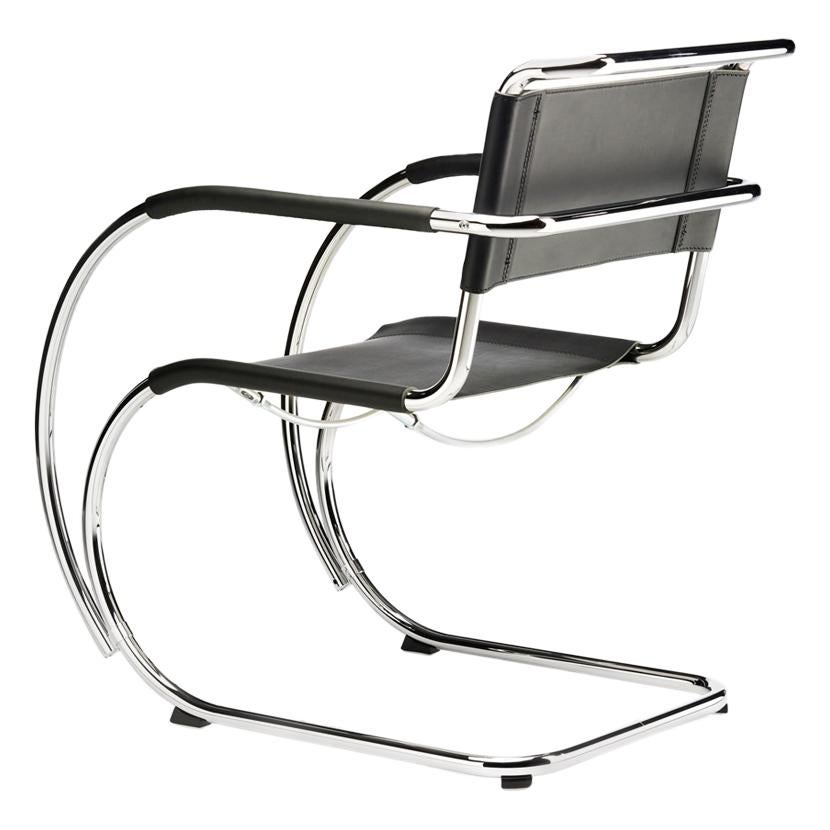
This innovative design is a quintessential example of which fundamental structural principle in architecture and design?
Instructor's Guide & Scoring Rubric [ACCESS RESTRICTED]
Note on IELTS Relevance: The analytical approach outlined below, focusing on understanding core concepts, identifying key information, and differentiating between related ideas, directly mirrors the skills required for success in the IELTS Academic Reading and Listening modules. Students' ability to articulate these concepts also contributes to their readiness for IELTS Writing and Speaking tasks, where clarity and precise vocabulary are highly valued.
Question 1 Analysis & Key
Question 1 Dissection
- Core Concept: Structural Analogy & Biomimicry. This question tests the student's ability to look beyond surface appearance and identify the underlying structural logic shared between a natural form and an architectural system.
- Knowledge Points:
- Definition and visual identification of a Folded Plate structure.
- Basic understanding of how introducing folds to a planar surface dramatically increases its rigidity and load-bearing capacity.
- The ability to differentiate this principle from the principles of shell structures (doubly curved compression), geodesic domes (triangulated network), and tensegrity (tension/compression interplay).
Step-by-Step Logic:
- Analyze the Natural Form (Figure A): The key feature of the palm leaf is its series of sharp, accordion-like folds. It is a thin, wide surface that would be flimsy if flat, but the folds give it rigidity. The core principle is that folding a plane creates structural depth and strength without adding mass.
- Analyze Structure 1 (Thin Concrete Shell): This structure is defined by its smooth, double curvature. It works primarily in compression. This is fundamentally different from the sharp folds of the palm leaf.
- Analyze Structure 2 (Folded Plate Structure): This roof is composed of multiple flat planes joined at sharp angles. Like the palm leaf, it creates a strong, rigid surface from thin elements by folding them. The visual and structural analogy is direct and clear.
- Analyze Structure 3 (Geodesic Dome): This structure's strength comes from distributing loads through a network of interconnected triangles. Its logic is based on triangulation, not folding a plane.
- Analyze Structure 4 (Tensegrity Bridge): This system uses isolated compression members floating within a continuous network of tension cables. Its logic is distinct from the principle of folded rigidity.
- Conclusion: Structure 2 is the only one that directly employs the same principle as the palm leaf.
Potential Pitfalls & Student Thought Patterns
- The "Shape Matcher" Trap (Intuitive-Visual Leap): A student might see the overall curved shape of the palm fan and incorrectly match it with the curved shell of Structure 1. This indicates a reliance on general visual intuition without analyzing the mechanics.
- The "Advanced Systems" Bias (Overcomplication): A student might recognize the geodesic dome (Structure 3) or the tensegrity bridge (Structure 4) as highly advanced systems and assume one must be the answer, without properly analyzing the core principle.
- Conceptual Confusion: A student may simply not know the difference between these systems, leading to a random guess.
Profiling Rubric: Question 1
| Student's Answer | Performance Level | Student Profile Descriptor & Analysis |
|---|---|---|
| B (Correct) | Exceeds Standard (4/4) | Analytical Thinker / Systems Recognizer: The student successfully deconstructed the problem, identified the core principle of "strength through folding," and correctly applied it to the architectural example. They can look past superficial similarities to find the underlying structural logic. |
| A | Developing (2/4) | Surface-Level Visual Matcher: The student likely fell for the "Shape Matcher" trap, associating the general curve of the leaf with the curve of the shell structure. This suggests a tendency to rely on immediate visual intuition without analyzing the mechanics. |
| C or D | Needs Improvement (1/4) | Knowledge Gap or Systems Bias: The student either has a fundamental gap in their knowledge of these structural systems or is biased towards what they perceive as a more complex answer. Their reasoning is likely to be vague. |
Question 2 Analysis & Key
Question 2 Dissection
- Core Concept: Identification of the Cantilever principle in a non-architectural object. This tests the student's ability to recognize a core structural concept and apply the correct terminology.
- Knowledge Points:
- Definition of a cantilever: a rigid structural element that projects horizontally from a single support.
- Ability to identify this principle in the chair's form.
- Ability to distinguish a cantilever from other structural principles.
Step-by-Step Logic:
- Analyze the Object's Structure: The key feature of the chair is that the seat and backrest are supported by a frame that is only fixed at the front/bottom. The seat projects horizontally into space without any vertical support at the back.
- Define the Options: A Catenary Arch is a hanging curve, Tensegrity balances tension/compression, a Folded Plate uses folds. A Cantilever is an element supported at only one end.
- Compare and Conclude: The chair's structural logic directly matches the definition of a cantilever. The text description ("without traditional back legs") is a major clue pointing to this principle.
Potential Pitfalls & Student Thought Patterns
- The "Curve Matcher" Trap: A student might see the curve of the chair's frame and incorrectly associate it with the curve of a Catenary Arch (A). This reveals a superficial understanding of an arch's function.
- Vocabulary Gap: The student may understand how the chair works but may not know the correct term "cantilever," leading to a guess.
- Overthinking: A student might try to analyze tension and compression in the chair and get confused, potentially guessing Tensegrity (B). This shows an attempt at deeper analysis but a misapplication of the concepts.
Profiling Rubric: Question 2
| Student's Answer | Performance Level | Student Profile Descriptor & Analysis |
|---|---|---|
| C (Correct) | Meets Standard (3/4) | Precise Terminologist: The student correctly identifies the structural principle and applies the precise academic term. This demonstrates a solid foundational knowledge of core structural concepts. |
| A | Developing (2/4) | Visual Association / "Curve Matcher": The student likely associated the chair's curve with an arch without understanding the functional difference. Needs to move from matching shapes to analyzing forces. |
| B | Developing (2/4) | Analytical Overreach: The student may have attempted a force analysis but misapplied the concepts, confusing the general presence of tension/compression with the specific system of Tensegrity. |
| D | Needs Improvement (1/4) | Fundamental Misunderstanding: There is no structural logic that connects the chair to a folded plate. This choice indicates a significant gap in understanding the definitions of the listed structural systems. |