Student Examination Paper
Architectural Analysis
IELTS Architecture Diagnostic Test
This section assesses your ability to understand architectural concepts and communicate them clearly, skills crucial for both academic success in architecture and excelling in the IELTS exam.
Section 1: Architectural Style Identification
Understanding Historical Architectural Styles
Throughout history, architectural styles have evolved, reflecting changes in technology, culture, philosophy, and societal needs. Each style possesses distinctive characteristics that allow architects and historians to classify buildings within a particular era. For instance, the transition from Romanesque to Gothic architecture in medieval Europe marked a significant shift, driven by advancements in structural engineering and a desire for more light and height in religious buildings. Key elements like the arch, buttress, and window forms are often the most telling indicators of a building's stylistic origins. A firm grasp of these elements is fundamental for any aspiring architect.
Questions 1-2
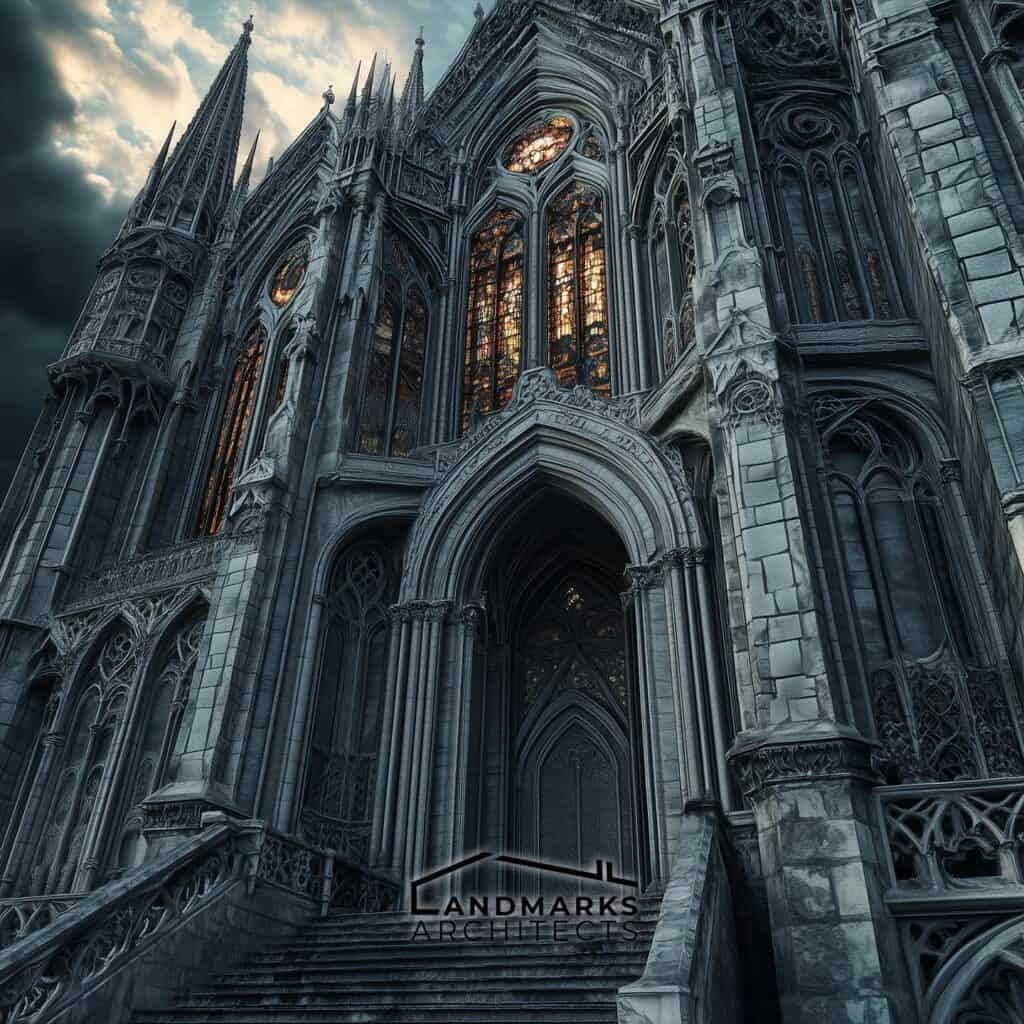
Look at the image below, which depicts a renowned historical building. Answer the questions that follow.
-
Question 1: Multiple Choice (Select the best answer)
Which of the following architectural styles best describes the building shown in the image?
-
Question 2: Short Answer (NO MORE THAN 80 WORDS)
Identify and describe three distinct architectural elements visible in the image that are characteristic of the style you selected in Question 1. Justify why these elements are indicative of that particular style, using academic language.
Instructor's Guide & Scoring Rubric [ACCESS RESTRICTED]
Questions 1-2 Analysis & Key
Question 1 Answer: C) Gothic
Question 2 Answer: The dominant architectural style is Gothic. This is evident from three key features visible on the exterior. First, the extensive use of pointed arches for windows and structural openings, which allowed for significant height and directed structural loads more efficiently. Second, the prominent flying buttresses, which are the external, arched supports counteracting the lateral thrust of the interior vaults. Third, the large, circular rose window, characterized by its intricate stone tracery and stained glass, is a quintessential Gothic element.
Teacher's Diagnostic Notes
1. Core Knowledge Points Tested:
- Architectural Stylistic Literacy (Question 1 & 2): The primary test is whether the student can correctly identify the "Gothic" style and distinguish it from other periods. This assesses foundational knowledge of architectural history.
- Visual-Lexical Connection & Architectural Vocabulary (Question 2): Can the student match visual evidence to the correct technical terminology (e.g., "pointed arch," "flying buttress," "rose window," "tracery")? This directly assesses their architectural lexicon, crucial for IELTS-level academic discourse.
- IELTS Reading Comprehension (Implicit in Passage & Prompt): Ability to understand instructions and integrate information from the brief introductory passage with the visual task.
- IELTS Writing Task 1 Skills (Question 2):
- Task Achievement: Ability to clearly identify and describe three distinct features, providing justification as requested, and adhering to the word count (80 words).
- Cohesion & Coherence: How well the descriptive paragraph is structured, uses linking words, and presents ideas logically.
- Lexical Resource: Use of a range of appropriate and precise architectural and academic vocabulary. Avoiding colloquialisms.
- Grammatical Range & Accuracy: Correct use of grammar, sentence structures, and punctuation to convey meaning effectively.
- Structure as Style: Understanding that stylistic elements are functional and aesthetic, rather than merely decorative. Explaining *why* an element is indicative of a style demonstrates deeper understanding.
- Synthesis and Argumentation: The ability to construct a coherent argument, making a claim (style identification) and supporting it with specific, well-described evidence.
2. Analysis of Student Logic & Thought Patterns:
This question reveals how a student organizes their historical, visual, and linguistic knowledge under exam conditions.
- The Integrated Architect & IELTS Pro (Ideal Path):
- **Question 1:** Rapidly identifies the style based on immediate visual cues.
- **Question 2:** Approaches the descriptive task strategically:
- Quickly outlines the core Gothic features in mind.
- Formulates precise, academic sentences for each, ensuring they explain the *indicative* nature.
- Monitors word count closely during drafting/review.
- Ensures smooth transitions and a logical flow, demonstrating strong IELTS writing skills.
- The Feature-Spotter & Competent IELTS Writer (Proficient Path):
- **Question 1:** Correctly identifies the style.
- **Question 2:** Identifies features correctly but might use slightly less precise or more descriptive language (e.g., "pointy windows" instead of "pointed arches"). Their justification might be functional but less eloquently articulated. They generally adhere to the word limit and structure well but may miss opportunities for higher-level vocabulary.
- The Vague Associator & Developing IELTS Learner (Beginning/Developing Path):
- **Question 1:** Might guess a broad historical period ("Medieval") or confuse with similar styles (e.g., Romanesque).
- **Question 2:** The justification will likely be based on general impressions (e.g., "It's tall," "lots of details") rather than specific architectural elements. Vocabulary will be general. They may struggle significantly with coherence, grammar, and adhering to the word count, demonstrating fundamental challenges in both architectural analysis and academic writing.
3. Common Hurdles & Misconceptions:
- Architectural Confusion: Confusing "Gothic" with "Romanesque" (rounded vs. pointed arches) or other later styles.
- Lexical Deficiency: Inability to recall or apply the correct technical terms for architectural elements, resorting to vague or inaccurate descriptions.
- IELTS Word Count Adherence: Either writing too much (lacking conciseness) or too little (insufficient detail), indicating poor planning for IELTS writing tasks.
- Lack of Justification: Merely listing elements without explaining *why* they signify the identified style, failing to address the "justify" part of the prompt.
- Informal Language: Using colloquialisms instead of appropriate academic vocabulary, a common pitfall in IELTS Writing Task 1.
- Grammatical Errors: Significant grammatical mistakes (e.g., subject-verb agreement, tense, sentence structure) that hinder clarity and lower overall writing score.
- Coherence Issues: Ideas presented in a disorganized manner, lacking clear linking phrases or logical progression.
Rubric for "IELTS Architectural Stylist" (Questions 1-2)
| Level | Question 1: Style Identification (MC) | Question 2: Descriptive Paragraph (Max. 80 words) | Diagnostic Profile & IELTS Relevance |
|---|---|---|---|
| Exemplary (4) | Correctly selects "C) Gothic". | Identifies three distinct, correct hallmark features using precise, academic terminology. Provides clear and accurate justification for each. Adheres strictly to word count. Displays excellent coherence, a wide range of academic vocabulary, and near-perfect grammatical accuracy. | Integrated Architect & IELTS Pro. Demonstrates strong visual analysis, extensive architectural vocabulary, excellent command of academic English for description, and strong adherence to IELTS writing conventions (Task Achievement, Cohesion/Coherence, Lexical Resource, Grammatical Range/Accuracy). |
| Proficient (3) | Correctly selects "C) Gothic". | Identifies two or three correct features, using mostly precise terminology, though some descriptions may be slightly less formal. Justifies adequately. Generally adheres to word count. Good coherence, sufficient vocabulary for the task, and mostly accurate grammar with minor errors. | Feature-Spotter & Competent IELTS Writer. Good visual recognition, reasonable architectural vocabulary. Generally good English writing skills, but may lack some nuance or full academic formality. Achieves most aspects of IELTS writing criteria. |
| Developing (2) | Correctly selects "C) Gothic". | Identifies only one or two correct hallmark elements or lists multiple features that are not unique/defining. Uses vague or common language. Justification is weak or absent. May struggle to adhere to word count or maintain coherence. Shows some grammatical errors impacting clarity. | Developing Analyst & IELTS Learner. Basic understanding of style, limited architectural vocabulary. Struggles with structured description and academic tone. May have grammatical errors impacting clarity and struggles with aspects of IELTS writing criteria. |
| Beginning (1) | Incorrectly identifies the style (e.g., Romanesque, Baroque) or uses a vague, non-stylistic term (e.g., Medieval). | The justification is based on general impressions ("it's old," "it's detailed") and fails to identify any correct, specific architectural elements. Shows significant grammatical or coherence issues, making the meaning unclear. Fails to meet word count or provide justification. | Vague Associator & Novice IELTS Writer. Lacks foundational architectural knowledge and visual analysis skills. English writing is basic, unsuited for academic description, and exhibits significant errors across all IELTS writing criteria. |