IELTS Architectural Design Assessment
Module: Sustainable Systems & Strategy - Reading & Writing Practice
ASSESSMENT PAPER
You are part of a team designing a new, multi-story university library in a dense, urban UK city. The client has a limited budget but wants the building to have the best possible long-term environmental performance and the lowest possible running costs. Consider the following strategies proposed by various team members.
Question 9: The Sustainability Strategist - Multiple Choice & Extended Response
Part 1: Multiple Choice (Select ONE letter A-D)
From an architectural design perspective, which strategy should be prioritized first because it will have the most fundamental and far-reaching impact on the building's lifetime energy consumption?
Strategies:
-
 a) Specifying locally-sourced, recycled building materials.
-
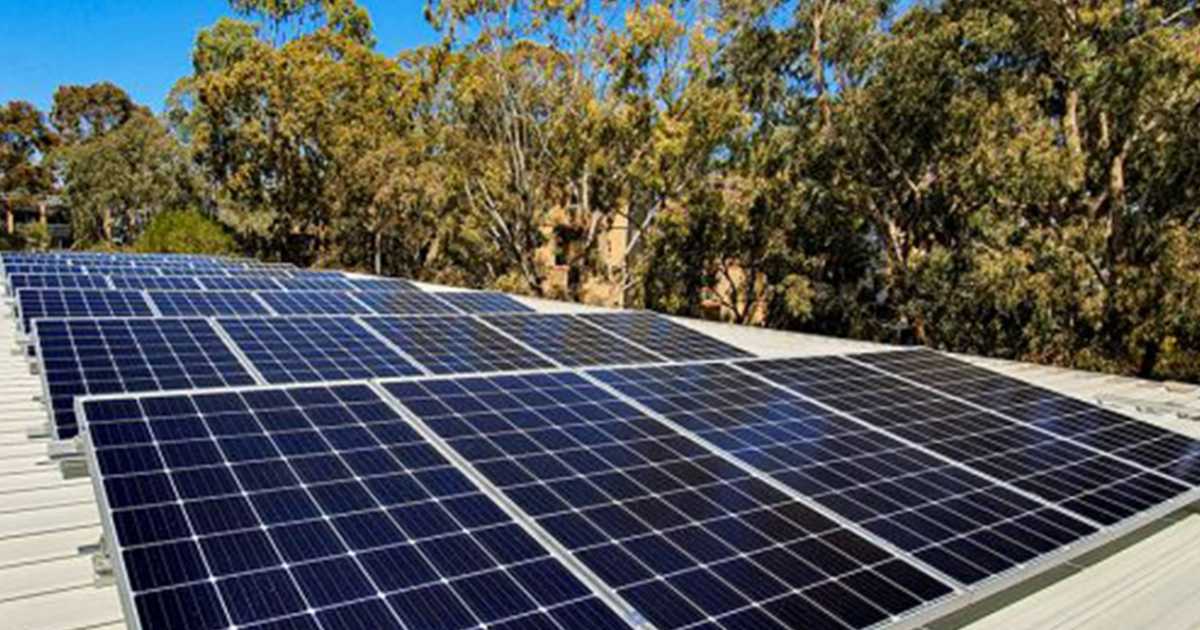 b) Integrating a large array of photovoltaic (solar) panels on the roof.
-
 c) Designing a sophisticated rainwater harvesting and greywater recycling system.
-
 d) Optimizing the building's orientation, form, and facade to maximize passive solar gain in winter and minimize it in summer.
Part 2: Extended Response (IELTS Writing Task 2 Style)
Provide a detailed technical explanation for your choice in Part 1. Outline why your selected strategy is demonstrably more critical than the others in achieving the client's goals of "best possible long-term environmental performance and the lowest possible running costs." You should also briefly address why the other options, while beneficial, are secondary to your primary choice in this context.
Write at least 150 words. Present a clear, well-structured argument, using appropriate architectural and environmental vocabulary.
CONFIDENTIAL: Tutor's Diagnostic Guide
Most Foundational Strategy: d) Optimizing the building's orientation, form, and facade...
Diagnostic Analysis for Architecture & IELTS
Objective & Knowledge Points
- Primary Architecture Objective: To assess the student's ability to think hierarchically about design decisions and to understand the difference between foundational passive design principles and supplementary active technologies in sustainable architecture.
- Primary IELTS Objective: To evaluate the student's capacity for extended, reasoned argumentation in English, focusing on Task Achievement (addressing all parts of the prompt), Coherence & Cohesion (logical flow, clear paragraphing), Lexical Resource (range and accuracy of vocabulary, especially technical terms), and Grammatical Range & Accuracy.
- Combined Knowledge Points Assessed:
- Understanding of Passive Design Principles (orientation, massing, shading, natural ventilation) as a primary strategy to reduce energy demand.
- Understanding of Active Design Systems (photovoltaics, mechanical systems) as technologies that meet the remaining energy demand.
- Understanding of Embodied Energy (materials' lifecycle impact) vs. Operational Energy (building's in-use energy consumption), and their relative importance in "long-term running costs."
- The concept of a "design hierarchy" or "order of operations" in sustainable design: first reduce demand (passive), then meet that reduced demand efficiently (active).
- Ability to formulate a clear thesis statement and support it with relevant technical details.
- Skill in comparing and contrasting different options effectively to justify a choice.
Logic & Thought Pattern Analysis
This question reveals whether a student approaches sustainability as a checklist of features or as an integrated design philosophy, and simultaneously assesses their ability to construct a persuasive, technically informed argument in English, similar to IELTS Writing Task 2.
- Ideal Thought Pattern (The "Holistic System Thinker" & "Proficient Communicator"):
- **Architectural Logic:** Analyzes the goal ("long-term performance," "lowest running costs") and correctly identifies operational energy as the key target. Categorizes the options into "demand reduction" (d) versus "resource management/generation" (a, b, c). Applies the hierarchy that reducing demand must precede meeting demand, logically concluding (d) is foundational.
- **IELTS Communication:** Presents a clear introduction stating the chosen strategy and its primary benefit. Develops paragraphs logically, explaining *how* passive design reduces energy, *why* this is more fundamental than the other options, and *how* the other options fit into a broader sustainable strategy (if applicable). Uses precise architectural vocabulary (e.g., 'thermal envelope', 'daylighting', 'mitigate heat gain') accurately and varies sentence structures.
- Common Error Pattern 1 (The "Technology Enthusiast"): Chooses (b) Photovoltaic panels.
- **Architectural Logic:** Focuses on generating "free energy" but misses the more powerful prior step of reducing the building's energy consumption in the first place.
- **IELTS Communication:** The explanation might be enthusiastic but lack depth in comparing the *impact hierarchy*. Vocabulary might be general rather than specific to design principles, and arguments may be less coherent in demonstrating relative importance.
- Common Error Pattern 2 (The "Materialist"): Chooses (a) Recycled materials.
- **Architectural Logic:** Correctly identifies the benefit of reduced embodied energy but fails to weigh this one-time impact against the continuous, 50+ year impact of operational energy, which is directly tied to "running costs."
- **IELTS Communication:** The explanation might focus solely on materials, failing to address the "running costs" aspect of the prompt sufficiently. It may not demonstrate strong comparative argumentation or use appropriate technical terms for energy performance.
- Common Error Pattern 3 (The "Single-Issue Thinker"): Chooses (c) Rainwater harvesting.
- **Architectural Logic:** Argues for water conservation without engaging directly with the prompt's specific focus on *energy performance* and *running costs*.
- **IELTS Communication:** The response demonstrates a misunderstanding of the task, focusing on a tangential issue. This would severely impact Task Achievement scores, even if the language itself is competent.
Model Answer & Rubric
Model Answer (IELTS Band 8+ / Architecture High Proficiency):
"The most foundational strategy is (d) Optimizing the building's orientation, form, and facade to maximize passive solar gain in winter and minimize it in summer. This approach is paramount because it directly addresses the building's inherent energy demand through fundamental architectural design, rather than relying on active systems or material choices alone.
Passive design strategies, such as proper orientation and efficient facade design, leverage natural forces to reduce the need for artificial heating, cooling, and lighting. By controlling solar heat gain and loss, enhancing natural ventilation, and optimizing daylighting, the building's operational energy requirements are drastically lowered from day one. This proactive reduction in demand represents the most significant and cost-effective method to achieve "lowest possible running costs" over the building's entire lifecycle. For instance, a well-oriented building with effective shading can significantly mitigate summer overheating, thus reducing reliance on air conditioning systems.
While the other strategies are certainly beneficial, they are largely supplementary. Specifying locally-sourced, recycled materials (a) reduces embodied energy and environmental impact during construction, but its effect on *long-term running costs* is indirect and less significant than operational energy savings. Integrating solar panels (b) is an excellent way to generate clean energy, but it is an *active* system that becomes more efficient and cost-effective when the overall energy demand has first been minimised through passive means. Similarly, a rainwater harvesting system (c) contributes to water conservation and reduces utility costs, but it does not directly impact the building's primary energy consumption for thermal comfort or lighting, which are the main drivers of running costs in a library setting. Therefore, establishing a robust passive design is the critical first step for sustainable, low-cost operation."
| Level | Performance Descriptor: Architectural & IELTS Assessment | Inferred Student Profile |
|---|---|---|
| Level 4 (Excellent) |
**Architectural:** Clearly articulates the principle of reducing energy demand *before* meeting it. Correctly identifies passive design as the foundational step. Uses precise comparative language and explains *why* the other options are secondary or less impactful on long-term running costs. **IELTS:** Achieves all parts of the task. Presents a clear, logical, well-developed argument with a wide range of accurate vocabulary (including technical terms) and complex grammatical structures. Ideas are effectively linked and flow naturally. Word count met/exceeded. |
Holistic System Thinker & Proficient Communicator |
| Level 3 (Good) |
**Architectural:** Correctly selects (d) and explains that it helps with heating and cooling naturally. The logic is sound but may lack the precise vocabulary of "operational energy," "demand reduction," or "design hierarchy." The comparison to the other options may be less direct. **IELTS:** Addresses the task adequately. Presents a clear purpose and generally well-organised ideas. Vocabulary is sufficient for the topic, though may lack variety or some precision. Grammatical errors are minor and do not impede meaning. Word count likely met. |
Developing Strategist & Competent Communicator |
| Level 2 (Developing) |
**Architectural:** Selects a secondary strategy (e.g., solar panels or recycled materials) and provides a valid but incomplete justification for it. Fails to compare the relative impact of the different strategies and misses the foundational importance of passive design. **IELTS:** Attempts to address the task, but some parts may be neglected or treated superficially. Organization may be inconsistent. Vocabulary may be limited or misused, hindering clarity. Grammatical errors may be frequent, occasionally obscuring meaning. May struggle with word count. |
Technology Enthusiast / Materialist & Limited Communicator |
| Level 1 (Needs Improvement) |
**Architectural:** The selection is illogical or the explanation is irrelevant, vague ("because it's good for the environment"), or blank. Shows a fundamental lack of understanding of core sustainable design principles. **IELTS:** Fails to address the task effectively. Ideas are disjointed, difficult to follow, or largely irrelevant. Vocabulary is very limited or inappropriate. Grammatical structures are rudimentary or contain severe errors, making the response difficult to understand. Significantly under word count. |
Knowledge Gap & Novice Communicator |