Architecture & IELTS Diagnostic Assessment
Section C: Applied Materials & Historical Analysis
ASSESSMENT MATERIALS
This diagnostic test is designed to evaluate your ability to apply knowledge of material properties and architectural history to specific contexts, and to articulate your reasoning clearly, similar to tasks in the IELTS exam. Answer each question accurately and concisely.
Suggested Time: 25 minutes for this section.
Your explanations will be assessed for clarity, coherence, and the appropriate use of academic and technical English vocabulary.
Question 7: The Climate-Conscious Engineer (Multiple Choice & Short Answer)
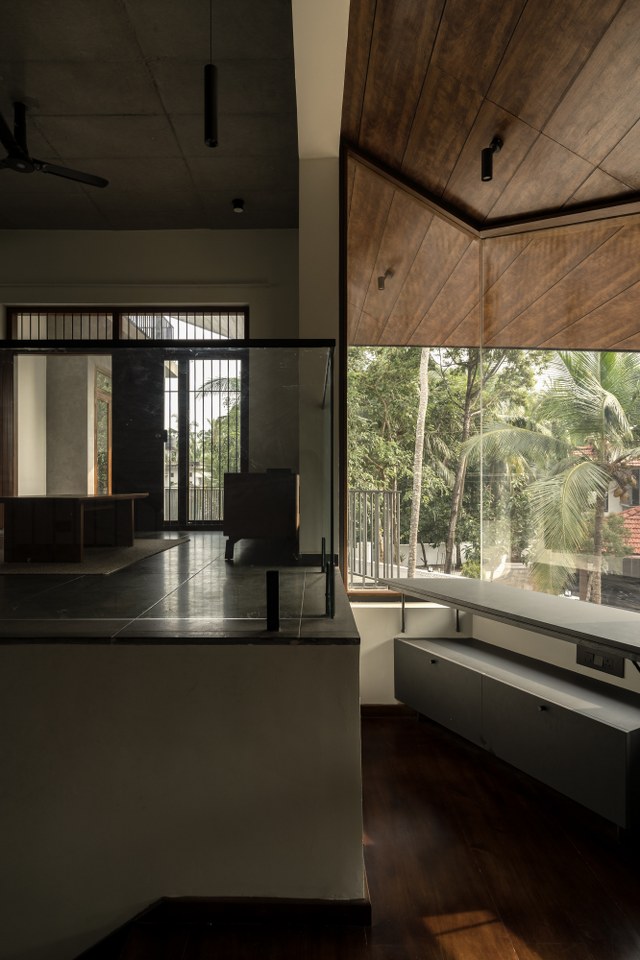
Task:
You are an architect designing a building with an exposed roof truss system on a tropical coast, right next to the sea. The environment is hot, humid, and has a high concentration of salt in the air from the sea spray.
From the list below, select the single most suitable material (A, B, C, or D) for the structural trusses to ensure long-term durability. Then, in the space provided, write a short paragraph (3-5 sentences) explaining the technical reason for your choice and critically analyzing why the other materials are less suitable for this specific environment. Focus on using precise architectural and material vocabulary.
Materials:
Technical Explanation (3-5 sentences):
Question 8: The Dome Analyst (Odd One Out & Sentence Completion)
Task:
Below are four famous landmark buildings. Three of them share a defining architectural feature that is central to their design and historical identity. One does not.
Identify the "odd one out" (A, B, C, or D) that does NOT prominently feature this shared architectural element. Then, in a single, clear sentence, state the specific structural or historical principle that effectively connects the other three buildings.

A) Hagia Sophia

B) The Taj Mahal

C) The White House

D) St. Paul's Cathedral
CONFIDENTIAL: Examiner's Guide & Rubric
Question 7 (Climate-Conscious Engineer):
Most Suitable Material: C) Aluminum
Question 8 (The Dome Analyst):
Odd One Out: C) The White House, Washington D.C.
Question 7 Diagnostic Analysis
Objective & Knowledge Points
- Primary Objective: To assess the student's ability to apply knowledge of material properties to a specific, challenging environmental context and to articulate a well-reasoned argument, similar to requirements in IELTS Writing Task 1.
- Knowledge Points Assessed:
- Understanding of corrosion (rusting) caused by salt (chlorides) and moisture.
- Comparative properties of Mild Steel, Cast Iron, and Aluminum regarding corrosion resistance and structural integrity.
- Understanding of organic material degradation (rot, insect damage) in hot, humid climates.
- Concept of selecting materials based on environmental performance and long-term durability.
- Ability to construct a coherent and well-reasoned argument, demonstrating **IELTS Coherence and Cohesion** and **Task Achievement**.
Logic & Thought Pattern Analysis
- Ideal Thought Pattern ("Contextual Analyst & Articulate Reasoner"): Identifies the primary threats as corrosion and decay from salt and humidity. Evaluates each material against this threat, recognizing that aluminum forms a protective oxide layer, while ferrous metals rust and untreated wood rots. Structures the explanation logically, using precise technical vocabulary to justify the choice and critique alternatives effectively, aligning with **IELTS Lexical Resource** and **Grammatical Range and Accuracy**.
- Common Error 1 ("Strength-First Thinker"): Chooses Mild Steel based solely on its common use and strength, completely ignoring the environmental context. This indicates a failure in **IELTS Task Response** for not addressing all aspects of the prompt.
- Common Error 2 ("Partial Logic"): Correctly eliminates steel for rust but incorrectly chooses wood, failing to consider wood's vulnerability to rot and insects in the specified climate. The explanation may lack a comprehensive understanding of all constraints, impacting **IELTS Task Achievement**.
- Common Error 3 ("Vague Reasoner"): Correctly selects Aluminum but provides a weak explanation like "it doesn't rust," without explaining the scientific mechanism (passivation/oxide layer). This demonstrates limited **IELTS Lexical Resource** and insufficient detail for **Task Achievement**.
Model Answer & Rubric
Model Answer (Level 4):
"Aluminum is the most suitable material for a coastal environment due to its excellent inherent corrosion resistance. Unlike mild steel and cast iron, which readily rust and degrade in the presence of chlorides and high humidity, aluminum forms a dense, passive, protective layer of aluminum oxide on its surface that effectively prevents further corrosion. Untreated wood is also unsuitable as the hot, humid conditions would render it highly susceptible to rot, fungal growth, and termite infestation, compromising structural integrity over time. Therefore, aluminum's superior durability and minimal maintenance requirements in this specific corrosive and humid environment make it the optimal choice for the roof trusses."
| Level | Performance Descriptor: Contextual Material Science (IELTS Focus) | Inferred Student Profile |
|---|---|---|
| Level 4 (Excellent) | Clearly identifies corrosion and decay as primary threats. Accurately explains *why* aluminum is resistant (oxide layer) and why other options fail in this specific context. The argument is scientific, precise, coherent, and uses a wide range of academic/technical vocabulary. (**High Task Achievement, Coherence & Cohesion, Lexical Resource, Grammatical Range & Accuracy**) | Contextual Analyst & Articulate Reasoner |
| Level 3 (Good) | Correctly selects aluminum, identifying that it "doesn't rust." Correctly eliminates steel/iron. Explanation for why wood is unsuitable may be present but less precise. Core logic is correct but lacks deep scientific detail or comprehensive vocabulary, and coherence may be satisfactory. (**Good Task Achievement, Adequate Coherence, Developing Lexical Resource**) | Developing Analyst & Clear Communicator |
| Level 2 (Developing) | Selects the wrong material based on a single, flawed principle (e.g., choosing steel for strength). The explanation shows a failure to consider the critical environmental factors of the problem. Limited vocabulary and structural issues may be present. (**Partial Task Achievement, Limited Lexical Resource**) | Strength-First Thinker & Limited Contextualizer |
| Level 1 (Needs Improvement) | The selection is random or the explanation is illogical, blank, or extremely basic. Demonstrates a fundamental lack of knowledge about material properties and inability to formulate a coherent response. (**Minimal Task Achievement, Very Limited English Proficiency**) | Knowledge Gap & Basic Communicator |
Question 8 Diagnostic Analysis
Objective & Knowledge Points
- Primary Objective: To assess the student's ability to perform visual and historical classification, moving beyond simple recognition to an understanding of an architectural element's significance, and to summarize this insight concisely, akin to IELTS Reading short-answer tasks.
- Knowledge Points Assessed:
- Visual recognition of iconic world architecture.
- Identification of a **dome** as a primary structural and symbolic element across different historical and cultural contexts.
- Distinguishing a building fundamentally defined by its dome from one that is not.
- Ability to synthesize key information into a single, grammatically correct and concise sentence, demonstrating **IELTS Grammatical Range and Accuracy** and **Lexical Resource** for succinct summary.
Logic & Thought Pattern Analysis
- Ideal Thought Pattern ("Symbolic Synthesizer & Concise Summarizer"): Visually scans the buildings, identifies the prominent domes on three of them, and notes the lack of a defining dome on the White House. Synthesizes that the dome serves a dual structural and symbolic purpose in the other three. Formulates a single sentence that accurately and precisely encapsulates this principle, demonstrating strong **IELTS Reading comprehension** (of visual information) and **Writing skill** (for summary).
- Common Error 1 ("List-Maker"): Correctly identifies the odd one out but gives a tautological principle: "The other three all have domes," failing to explain the significance. This shows a lack of analytical depth, impacting **IELTS Task Achievement** in providing a principle.
- Common Error 2 ("Geographic Classifier"): Ignores architectural form and classifies based on location, e.g., "The others are outside the United States." This indicates a fundamental misunderstanding of the task's architectural focus and a failure in **IELTS Reading comprehension** of the question's implicit context.
- Common Error 3 ("Grammatical/Clarity Issues"): Correctly identifies the odd one out and attempts a principle, but the sentence is unclear, grammatically incorrect, or too verbose, impacting **IELTS Grammatical Range and Accuracy** and **Coherence**.
Model Answer & Rubric
Model Answer (Level 4):
"The other three buildings are all monumental structures defined by the dominant use of a grand dome to span vast interior spaces and serve as a powerful symbolic and architectural focal point."
| Level | Performance Descriptor: Architectural Synthesis (IELTS Focus) | Inferred Student Profile |
|---|---|---|
| Level 4 (Excellent) | The principle is highly specific, referencing both the structural *and* symbolic/aesthetic importance of the dome as a defining feature. Uses precise architectural language and demonstrates excellent conciseness and grammatical accuracy. (**High Task Achievement, Lexical Resource, Grammatical Range & Accuracy**) | Symbolic Synthesizer & Concise Summarizer |
| Level 3 (Good) | The principle is correct but focuses on only one aspect (e.g., "The other three all use a dome to cover a large area") or is less precise ("The others are famous for their large domes"). The sentence is clear and grammatically sound. (**Good Task Achievement, Adequate Lexical Resource**) | Developing Synthesizer & Adequate Summarizer |
| Level 2 (Developing) | The principle is tautological ("The other three all have domes") or superficially descriptive. It identifies the feature but provides no analytical depth or significance. May contain minor grammatical errors. (**Partial Task Achievement, Limited Analytical Skill**) | List-Maker & Superficial Observer |
| Level 1 (Needs Improvement) | The odd-one-out is incorrect, or the principle is based on a non-architectural classification, is illogical, blank, or riddled with severe grammatical errors. (**Minimal Task Achievement, Very Limited English Proficiency**) | Knowledge Gap & Basic Comprehender |