Diagnostic Assessment
Section B: Material Science & Architectural Theory
ASSESSMENT MATERIALS
This diagnostic test is designed to evaluate your knowledge of material properties and foundational architectural theories, alongside your academic English proficiency.
For each question, read the text carefully and answer according to the specific instructions provided. Your ability to provide clear, logical reasoning and structured responses in English is a key component of this assessment, similar to the demands of the IELTS exam.
Question 5: Architectural Materials: An Expert's Choice (Short Answer)
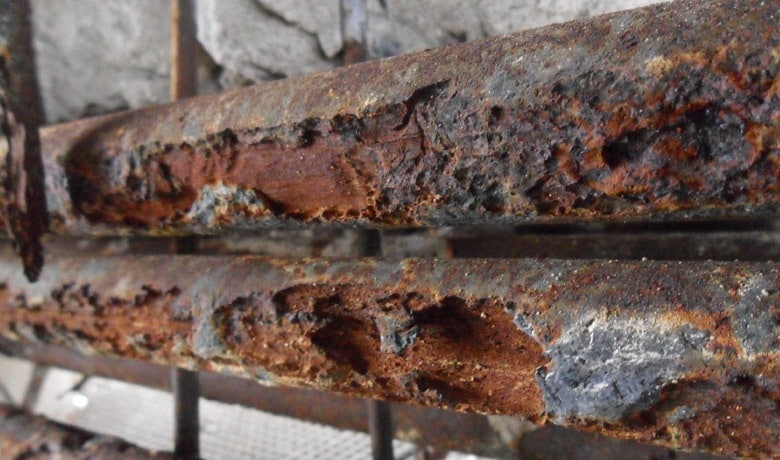
Instructions: Read the description of concrete materials below. For questions 5.1 and 5.2, follow the specific prompts. Write your answers in the spaces provided.
Concrete is a composite material formed from the combination of cement, water, aggregate (typically sand and gravel), and sometimes chemical admixtures. Its strength and durability make it a fundamental material in modern construction. However, the selection and quality of its constituents are paramount to its structural integrity, especially when steel reinforcement is embedded.
Below is a list of materials commonly associated with concrete production. Three of them are appropriate for creating a strong, durable structural concrete mix, provided they meet quality standards. One of them, however, is fundamentally unsuitable and would compromise the structural integrity.
Materials:
Question 5.2: Scientific/Technical Explanation (50-70 words):
Question 6: Le Corbusier's Principles: Identifying Core Concepts (Multiple Choice & Short Answer)
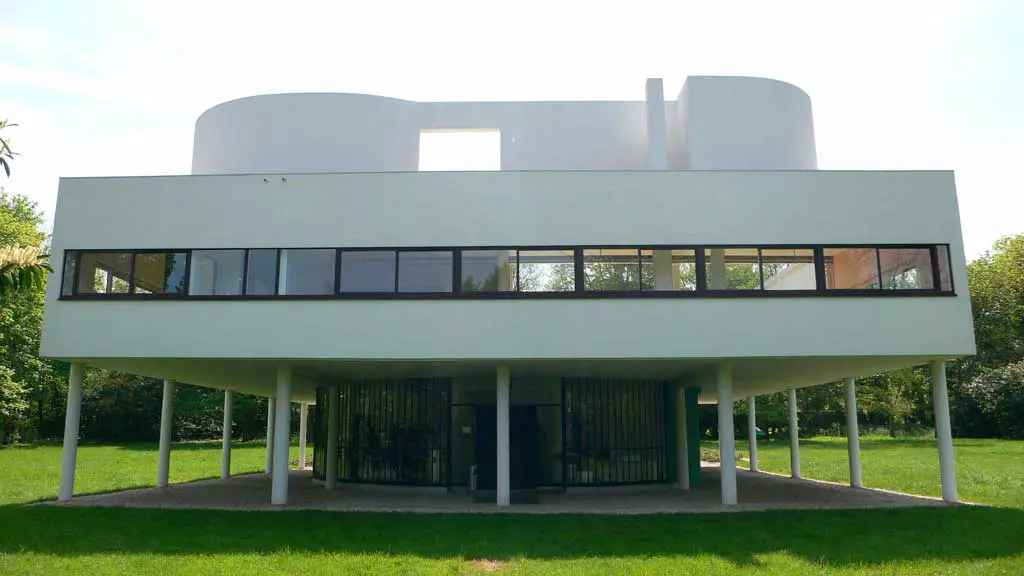
Instructions: Le Corbusier, a pioneer of modern architecture, established his "Five Points of Architecture" as a manifesto for a new style. The list below contains four architectural features. Read them carefully and answer questions 6.1 and 6.2.
Which of the following features (A-D) is NOT one of Le Corbusier's Five Points of Architecture?
CONFIDENTIAL: Examiner's Guide & Rubric
Question 5.1 (Material Scientist):
Unsuitable Material: C) Beach Sand
Question 6.1 (Modernist Manifesto):
Feature NOT in the Five Points: B) Load-Bearing Masonry Walls
Question 5 Diagnostic Analysis
Objective & Knowledge Points
- Primary Objective: To assess the student's ability to reason about the chemical and physical interactions between materials, a core competency for any architect, and to articulate this reasoning clearly in academic English.
- Knowledge Points Assessed:
- Basic components of a concrete mix (cement, aggregate, water).
- The role of aggregate, cement, and water.
- Understanding of chemical interactions: specifically, the corrosive effect of chloride (salt) on steel reinforcement (rebar) within concrete.
Logic & Thought Pattern Analysis
- Ideal Thought Pattern ("First-Principles Thinker"): Recognizes that structural concrete contains steel rebar. Identifies "Beach Sand" as the anomaly due to salt. Connects salt (chlorides) to the corrosion of the internal steel rebar, leading to expansion and structural failure. This demonstrates critical thinking and scientific reasoning.
- IELTS Writing Relevance: The explanation requires clear expression of cause and effect, appropriate academic vocabulary (e.g., 'corrosive', 'permeate', 'structural integrity', 'catastrophic failure'), and logical sentence structuring, which are key criteria for IELTS Writing Task 2 (Coherence & Cohesion, Lexical Resource, Grammatical Range & Accuracy, Task Achievement).
- Common Error 1 ("Visual Associator"): Guesses correctly but gives a weak reason like "it's too fine," or "has shells." This shows a lack of deep material knowledge and insufficient academic specificity in explanation.
- Common Error 2 ("Over-Simplifier"): Correctly identifies salt as the issue but provides a vague reason like "salt is bad for concrete" without the crucial link to the corrosion of the *steel reinforcement*. This lacks the precision and detail expected in academic writing.
Model Answer & Rubric
Model Answer (Level 4):
"Beach sand is unsuitable for structural concrete due to its high chloride content from sea salt. These chlorides are highly corrosive and will permeate the concrete, causing the embedded steel reinforcement (rebar) to rust and degrade over time. This internal corrosion leads to expansion, cracking, and ultimately, catastrophic structural failure. The other materials—Portland cement (binder), crushed stone (strong aggregate), and fresh water (for clean hydration)—are all essential for producing strong, durable concrete."
| Level | Performance Descriptor: Material Science Reasoning & IELTS Writing Skills | Inferred Student Profile |
|---|---|---|
| Level 4 (Excellent) | Explicitly and accurately identifies chlorides/salt as the problem, linking it precisely to steel reinforcement (rebar) corrosion and structural failure. The explanation is well-structured, uses precise academic vocabulary, and demonstrates strong coherence and grammatical control (IELTS Band 7+ equivalent). | First-Principles Thinker / Advanced Academic Writer |
| Level 3 (Good) | Correctly identifies beach sand and salt as the problem. Mentions that salt is "bad for the concrete" or "weakens it" but does not make the specific, crucial link to the steel rebar corrosion. The explanation is generally clear but may lack some academic precision or lexical range (IELTS Band 6 equivalent). | Developing Scientist / Competent Academic Writer |
| Level 2 (Developing) | Correctly identifies beach sand but gives a secondary or less critical reason, such as particle size, shape, or "dirtiness." The explanation is scientifically weak and misses the primary chemical reason. Language use may be basic, with some grammatical errors or limited vocabulary, impacting clarity (IELTS Band 5 equivalent). | Visual Associator / Limited Academic Writer |
| Level 1 (Needs Improvement) | Selects the wrong material or provides an illogical explanation. Demonstrates a fundamental lack of knowledge about the basic composition of concrete. The response is poorly organized, contains frequent grammatical errors, and lacks relevant vocabulary (IELTS Band 4 or below equivalent). | Knowledge Gap / Pre-Academic Writer |
Question 6 Diagnostic Analysis
Objective & Knowledge Points
- Primary Objective: To assess specific knowledge of a foundational architectural theory (Modernism) and the ability to distill related concepts into a unifying principle, demonstrating both comprehension and concise articulation.
- Knowledge Points Assessed:
- Recall of Le Corbusier's Five Points of Architecture.
- Understanding the *purpose* of the Five Points: to liberate the building from the constraints of traditional, load-bearing construction.
- Identification of "Load-Bearing Masonry Walls" as the traditional method Corbusier's system replaced.
Logic & Thought Pattern Analysis
- Ideal Thought Pattern ("Conceptual Historian"): Remembers that Corbusier's points were enabled by a reinforced concrete *frame*. Identifies Load-Bearing Walls as the opposite of this system. Synthesizes that the other three points are all consequences of separating the structural frame from the non-load-bearing enclosure. This requires both factual recall and conceptual understanding.
- IELTS Reading & Writing Relevance: This question tests the ability to identify specific information from a set of options (similar to IELTS Reading 'Multiple Choice' or 'Matching Information') and then to summarize a core idea concisely and accurately in a single sentence (related to IELTS Writing Task 1 summarization or sentence completion, focusing on Coherence & Cohesion and Grammatical Range & Accuracy).
- Common Error 1 ("Partial Memorizer"): Guesses correctly that (b) "sounds old-fashioned" but provides a weak connecting principle like, "The others are all part of the Five Points," which is a tautology, not an explanation. This shows rote memorization without deep comprehension.
- Common Error 2 ("Misclassifier"): Finds a superficial link, e.g., choosing "Roof Garden" as the odd one out because "the others are vertical elements." This misses the core structural and theoretical principle, demonstrating a lack of critical analysis.
Model Answer & Rubric
Model Answer (Level 4):
"The other three features are all design principles that arise from separating a building's structure from its enclosure, a liberation made possible by a modern reinforced concrete frame."
| Level | Performance Descriptor: Conceptual Synthesis & IELTS Skills | Inferred Student Profile |
|---|---|---|
| Level 4 (Excellent) | The principle clearly and accurately identifies the core concept: the separation of structure (frame) from enclosure (walls/facade), and identifies this as a modern approach. The answer is concise, grammatically correct, and uses appropriate academic vocabulary (IELTS Band 7+ equivalent for clarity and precision). | Conceptual Historian / Analytical & Precise Communicator |
| Level 3 (Good) | The principle is generally correct but less precise. It might state that the items "are all features of modern architecture" or "are supported by columns," capturing part of the idea. The sentence is understandable but may lack the elegance or full precision of academic English (IELTS Band 6 equivalent). | Developing Historian / Clear Communicator |
| Level 2 (Developing) | The principle is tautological ("The other three are all part of the Five Points") or relies on a superficial visual link. It fails to state the underlying architectural idea. The sentence may contain grammatical errors or be vaguely worded (IELTS Band 5 equivalent). | Partial Memorizer / Basic Communicator |
| Level 1 (Needs Improvement) | The odd-one-out is incorrect, or the principle is illogical, irrelevant, or blank. The response demonstrates significant difficulty in comprehension and expression (IELTS Band 4 or below equivalent). | Knowledge Gap / Struggling Communicator |