IELTS Architectural Skills
Diagnostic Assessment ModulePart I: Student Examination
IELTS Architectural Skills: Section A
This section assesses your foundational knowledge of architectural conventions and terminology, skills crucial for both an architecture degree and effective communication in an academic English environment like the IELTS exam. You will encounter questions that require you to interpret visual information and recall precise vocabulary. Choose the best option for each question.
Suggested time: Approximately 8-10 minutes for both questions.
Question 1
Instructions: Look at the four texture patterns (A, B, C, D) presented in the image below. These represent standard architectural graphic symbols. Your task is to identify which option correctly labels the pattern commonly used to denote 'wood' in architectural drawings.
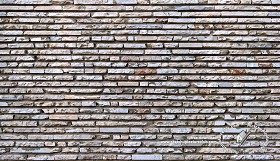
Which of the following patterns (A, B, C or D) best represents wood? Choose the correct letter.
Question 2
Instructions: Read the description provided below, which pertains to an important element of classical Greek and Roman temple architecture. From the given options, select the term that most accurately identifies this architectural element.
Which of the following terms precisely describes the **triangular upper part** of the front of a Greek or Roman temple, which is placed above the horizontal structure of the entablature and is typically filled with sculpture? Choose the correct letter, A, B, C or D.
ANSWER KEY
Question 1: D) C
Question 2: B) Pediment
QUESTION 1: TEACHER-FACING ANALYSIS
1. Knowledge Points & Skills Tested:
- Architectural Knowledge: Understanding and recognizing standard graphic conventions used in architectural drawings to represent common materials.
- Visual Literacy: The ability to decode abstract patterns and connect them to real-world materials, which is a form of reading non-verbal information.
- Attention to Detail: Differentiating between similar but distinct textures (e.g., stone masonry vs. wood grain).
- IELTS-Related Skill: This task directly relates to **IELTS Reading (Diagram Labelling/Matching Information to Diagrams)** where candidates must identify specific features or information based on visual cues. It also mirrors **IELTS Speaking Part 2 (Describing a picture/object)**, requiring students to interpret and articulate visual information, using precise vocabulary.
2. Model Answer & Solution Logic:
Correct Answer: D) C
Step-by-Step Logic (Visual Decoding for Architectural & IELTS Context):
- Understand the Task (IELTS Reading Strategy): The instruction requires identifying a specific pattern ('wood') from a set of visual options. This is akin to matching a descriptor to a visual.
- Analyze the Target Material: Recall the visual characteristics of wood, specifically its grain pattern.
- Evaluate Pattern A (Distractor Analysis): This simple grid/cross-hatch often represents insulation or a generic section fill, lacking the organic flow of wood. Misidentifying this shows a lack of specific graphic convention knowledge.
- Evaluate Pattern B (Distractor Analysis): Irregular, fitted shapes characterize rough stone masonry or rubble. While a natural material, it's distinct from wood grain. A student might confuse "natural" texture broadly.
- Evaluate Pattern C (Correct Identification): The flowing, parallel, and sometimes swirling lines are the universally accepted architectural graphic convention for wood grain in elevation or section. This matches the target.
- Evaluate Pattern D (Distractor Analysis): Regular, rectangular units in a running bond are the clear symbol for brickwork or ashlar stone masonry, not wood. This tests the ability to distinguish between common construction material representations.
- Conclusion: Pattern C is the only one that visually corresponds to the natural grain of wood and adheres to standard architectural graphic language, thus providing the correct answer.
3. Common Hurdles & Error Analysis (Villain's Playbook):
The Trap (The "Visual Guesser" Villain): The student has never formally learned these conventions and simply guesses based on a loose association. They might see the lines in D and think of planks, or the texture in B and think of rough bark, leading to an incorrect choice. This mirrors difficulties in IELTS Reading when students rely on keywords rather than a full understanding of the visual or textual context.
Why Students Fall for It: This happens when practical knowledge from working with actual wood hasn't been bridged to the abstract language of architectural drawing. They know what wood *is* but don't know how it is *drawn*. The test is specifically about the convention, not the material itself. In an IELTS context, this signifies a struggle with interpreting non-literal or symbolic representations.
Diagnostic Value:
- Choosing 'C' (Correct): Indicates the student is familiar with the fundamental graphic language of architecture. This demonstrates good visual literacy, a skill transferable to interpreting diagrams in IELTS Academic Reading.
- Choosing 'D': A common error. The student may associate the rectangular shapes with wooden planks or blocks, failing to recognize the more specific convention of running bond for masonry. This suggests an over-reliance on superficial resemblance rather than precise knowledge, a common pitfall in IELTS.
- Choosing 'A' or 'B': Suggests a pure guess or a significant misunderstanding. This indicates a gap in their foundational knowledge of architectural representation and weak visual discrimination skills.
4. Rubric & Student Profile Mapping:
| Response Level | Student's Answer & Reasoning | Inferred Thought Process / Profile (IELTS Link) |
|---|---|---|
| Level 4 (Exceeds) | D) C. The student can confidently identify the pattern as wood grain and could likely identify the other patterns as well (e.g., masonry, stone), demonstrating a comprehensive grasp of architectural graphic standards. | Graphically & Vocabularily Literate: Understands that architecture has a specific visual language and can describe it. They are well-prepared for IELTS tasks involving diagram interpretation and precise visual description (e.g., Speaking Part 2 'describe an object/place' or Reading 'label the diagram'). |
| Level 3 (Meets) | D) C. Student correctly identifies the wood pattern. | Accurate Recognizer: The student knows the correct convention, demonstrating a solid knowledge base. This indicates an ability to follow specific instructions and identify details, important for IELTS Reading accuracy. |
| Level 2 (Approaching) | B) D. The student mistakes the masonry pattern for wood planks. | Associative Guesser with Partial Understanding: The student is using logical association ("rectangles look like planks") but lacks the specific knowledge of the graphic standard. This suggests a tendency to generalize rather than focus on precise details, a weakness that can impact IELTS Reading scores. |
| Level 1 (Needs Dev.) | A) A or C) B. The student is guessing and cannot link any of the abstract patterns to real-world materials correctly. | Visually Uninitiated & Weak Detail Focus: Lacks foundational knowledge of architectural graphics. This highlights a need to develop basic visual interpretation skills, which are crucial for any IELTS task requiring attention to specific details. |
QUESTION 2: TEACHER-FACING ANALYSIS
1. Knowledge Points & Skills Tested:
- Architectural Knowledge: Precise vocabulary related to the classical orders of architecture. Differentiating between the key components of a temple front based on descriptive attributes.
- Positional & Functional Reasoning: Understanding not just what an element is, but *where* it is located in relation to other elements and its typical characteristics.
- Application of 'Define the Part' Protocol: Testing whether the student has a precise mental map of a classical facade and can attach the correct term to the correct part.
- IELTS-Related Skill: This tests **IELTS Reading (Multiple Choice, identifying specific information from a description)** and directly assesses the ability to understand and use **precise academic vocabulary (IELTS Lexical Resource criterion for Speaking and Writing)**. It's crucial for understanding complex texts and articulating ideas clearly.
2. Model Answer & Solution Logic:
Correct Answer: B) Pediment
Step-by-Step Logic (Applying the "Define the Part" Protocol in an IELTS Reading Context):
- Deconstruct the Description (Keyword Analysis for IELTS): The question provides multiple critical clues:
- "triangular upper part" -> This is the primary geometric and positional identifier.
- "above the horizontal structure of the entablature" -> Confirms its high, overarching position.
- "typically filled with sculpture" -> Provides a key functional/decorative characteristic.
- Evaluate Option A (Frieze - Distractor Analysis): While a frieze can be "filled with sculpture," it is consistently described as a "long, horizontal band," which contradicts the "triangular" aspect. This distracts students who only focus on one keyword.
- Evaluate Option B (Pediment - Correct Identification): The pediment is inherently the triangular gable at the top of a classical building. It perfectly matches *all* parts of the description: triangular, upper, above the entablature, and a common location for sculpture.
- Evaluate Option C (Architrave - Distractor Analysis): The architrave is the main beam or lowest horizontal part of the entablature. It is neither triangular nor at the very top. This tests basic positional understanding.
- Evaluate Option D (Stylobate - Distractor Analysis): The stylobate is the top step of the temple's base or platform. It is located at the very bottom of the structure, directly contradicting "upper part" and "above the entablature."
- Conclusion: By systematically matching all descriptive elements to the potential terms, 'Pediment' emerges as the only accurate fit. This process demonstrates analytical reading and precise vocabulary application.
3. Common Hurdles & Error Analysis (Villain's Playbook):
The Trap (The "Component Jumble" Villain): The student knows all four words are parts of a temple, but their mental map is jumbled. They might remember that a 'Frieze' has sculptures and incorrectly select it, ignoring the crucial "triangular" descriptor. This is akin to IELTS Reading questions where students pick an answer based on one matching keyword, but fail to check if *all* conditions in the question are met by the option.
Why Students Fall for It: This happens when vocabulary is learned as a list of words rather than as an interconnected system of form, function, and location. The student has memorized the names but not their specific locations and shapes. For IELTS, this indicates a struggle with understanding complex definitions and discriminating between closely related concepts.
Diagnostic Value:
- Choosing 'Pediment' (Correct): Indicates a precise and structured understanding of classical architectural vocabulary. This demonstrates strong lexical resource for IELTS, crucial for detailed descriptions and arguments in Speaking and Writing.
- Choosing 'Frieze': This is the most common incorrect answer. It shows the student has some knowledge (associating 'frieze' with sculpture) but lacks critical positional and formal knowledge. This reveals a "partial understanding" or "keyword matching" approach, which often leads to errors in IELTS Reading.
- Choosing 'Architrave' or 'Stylobate': Indicates a fundamental confusion and a significant gap in their knowledge of classical orders. This suggests a significant deficiency in both architectural vocabulary and descriptive comprehension, posing challenges across all IELTS sections.
4. Rubric & Student Profile Mapping:
| Response Level | Student's Answer & Reasoning | Inferred Thought Process / Profile (IELTS Link) |
|---|---|---|
| Level 4 (Exceeds) | B) Pediment. Student can confidently define 'pediment' and could also accurately describe what and where the other three elements are. This demonstrates a comprehensive and integrated understanding of architectural terms. | Architectural Linguist & Precision Communicator: Has a precise command of architectural vocabulary and understands the syntax of how components form a system. This aligns with a high score in IELTS Lexical Resource (using a wide range of vocabulary with accuracy) and overall comprehension. |
| Level 3 (Meets) | B) Pediment. Student correctly identifies the term based on the description. | Accurate Namer & Detail-Oriented Reader: Has successfully memorized the key terms and their corresponding shapes/locations. This is a solid, functional knowledge base, indicating an ability to extract specific details from a description, a key skill for IELTS Reading. |
| Level 2 (Approaching) | A) Frieze. The student associates "sculpture" with "frieze" but overlooks the "triangular" and "above the entablature" parts of the description. | Feature-Based Guesser & Partial Comprehender: Their knowledge is organized by single features (sculpture) rather than by the complete system of form and location. This signifies an IELTS Reading weakness where students often latch onto a single keyword match without verifying the entire context. |
| Level 1 (Needs Dev.) | C) Architrave or D) Stylobate. The student is unable to match the description to any term correctly and is likely guessing. | Vocabulary Novice & Limited Comprehension: Lacks the foundational vocabulary of classical architecture. This indicates significant challenges in understanding specialized texts (IELTS Academic Reading) and expressing complex ideas clearly (IELTS Speaking/Writing). |