IELTS-Style Architectural Principles
Diagnostic Assessment - Reading SectionSection 1: Architectural Concepts & Terminology
Part I: Student Examination
Question 1
In architecture, understanding fundamental structural elements is crucial for design and construction. Traditional building methods often rely on distinct principles to support loads and define space. One such method, the post-and-lintel system, employs vertical supports (like posts or columns) and horizontal beams to transfer weight. However, other structural forms, like arches and vaults, offer alternative ways to span wider openings and create expansive interiors through compressive forces.
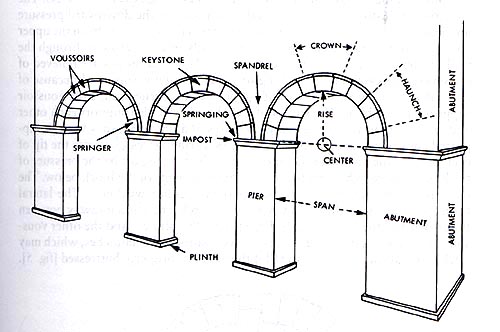
Term Set:
- Post
- Beam
- Column
- Vault
Which is the "odd one out" in terms of its primary structural principle?
Question 2
The concept of 'Green Architecture,' often referred to as sustainable or eco-friendly building, has gained significant traction in contemporary design. It extends beyond mere aesthetics, focusing on a holistic approach to minimize environmental impact throughout a building's lifecycle. This philosophy encompasses various strategies, from site selection and material choices to energy efficiency and water conservation, aiming to create structures that are both functional and environmentally responsible.

Green Architecture is promoted primarily because it is a design philosophy concerned with:
ANSWER KEY
Question 1: C) Vault
Question 2: C) reducing the negative environmental impact of buildings.
QUESTION 1: TEACHER-FACING ANALYSIS
1. Knowledge Points & Skills Tested:
- Architectural Knowledge: Differentiating between linear structural elements (post-and-lintel systems) and spanning structures that use curved forms.
- Categorical Reasoning: The ability to move beyond surface-level associations (e.g., "all are parts of a building") to identify a deeper, principle-based classification (e.g., "how they bear and distribute load").
- Application of 'Name the Club' Protocol: Testing whether the student can group three items by a shared, precise principle before identifying the outlier.
- IELTS-Related Skill: **Reading Comprehension (Identifying Main Idea/Specific Information)**: Extracting structural principles from the provided text to differentiate terms. Also, foundational logic for comparing and contrasting, essential for Speaking Part 3 and Writing Task 2.
2. Model Answer & Solution Logic:
Correct Answer: C) Vault
Step-by-Step Logic ("Name the Club" Protocol):
- Initial Scan: All four terms are structural components of buildings mentioned or implied in the passage. This is a surface-level connection and a potential trap.
- Form a Test Club: Take 'Post', 'Beam', and 'Column'.
- "Name the Club": Based on the passage, 'Post' and 'Column' are vertical linear elements, and 'Beam' is a horizontal linear element, all functioning within a trabeated or post-and-lintel system. The club's name is "Linear Structural Elements of a Post-and-Lintel System."
- Test the Fourth Member: Does 'Vault' fit? No. The passage states that vaults, like arches, "offer alternative ways to span wider openings... through compressive forces," indicating they are curvilinear spanning structures operating on a different principle than linear elements.
- Conclusion: The Vault is the anomaly because it is a curvilinear, compressive spanning structure, whereas the others are linear elements in a post-and-beam system, as differentiated by the text.
3. Common Hurdles & Error Analysis (Villain's Playbook):
The "Surface Scanner" Villain: The student sees four words and thinks, "These are all structural parts of a building." This is true but not the required level of analysis based on the underlying structural principles discussed, leading to confusion.
Diagnostic Value:
- Choosing 'Vault' (Correct): Indicates conceptual thinking, classifying objects based on underlying structural principles derived from the text. Demonstrates effective reading for specific details and higher-level comprehension.
- Choosing 'Beam': A common incorrect answer. A student might choose 'Beam' because it is horizontal while others are vertical. This shows an attempt at classification but relies on a simplistic attribute (orientation) rather than the structural system principle described.
- Choosing 'Post' or 'Column': Suggests confusion or a guess, indicating a weaker grasp of structural classification and/or inability to extract key differentiators from the passage.
4. Rubric & Student Profile Mapping:
| Response Level | Student's Answer & Reasoning | Inferred Thought Process / Profile |
|---|---|---|
| Level 4 (Exceeds) | C) Vault. Can articulate that a vault is a compressive, arched form for spanning, while the others are linear elements in a post-and-lintel system, directly referencing distinctions from the text. | Conceptual Architect & Proficient Reader: Sees the system behind the parts, understands elements are defined by how they work, and can synthesize information from a passage. |
| Level 3 (Meets) | C) Vault. Explains that it's "curved" while the others are "straight," reflecting the passage's description of 'arches and vaults' as alternatives. | Geometric Classifier & Literal Reader: Classifies by form as suggested by the text, a strong start but may not fully integrate the functional "why." |
| Level 2 (Approaching) | B) Beam. Explains that it's "the horizontal one," failing to use the passage's deeper structural distinctions. | Orientation-Based Sorter & Surface Reader: Attempts a logical rule but settles on a secondary characteristic, not fully engaging with the provided text for deeper understanding. Logic is present but lacks depth and textual basis. |
| Level 1 (Needs Dev.) | A) Post or D) Column, or provides a confused answer unrelated to the passage. | Surface-Level Associator & Disconnected Reader: Stuck on obvious similarities without finding a principle of exclusion, indicating difficulty in processing and applying information from a short academic text. |
QUESTION 2: TEACHER-FACING ANALYSIS
1. Knowledge Points & Skills Tested:
- Architectural Knowledge: Understanding the core definition and primary goal of Green Architecture, as presented in the text.
- Conceptual Reasoning (The 'Why'): Distinguishing between a core principle and a secondary characteristic or outcome based on textual analysis.
- Application of 'One-Sentence Mission Statement' Method: Identifying the answer that best represents the fundamental mission of the concept, as defined in the passage.
- IELTS-Related Skill: **Reading Comprehension (Identifying Main Idea/Purpose)**: The ability to understand the main purpose or central theme of an academic text, differentiating it from supporting details or misconceptions. This is a crucial skill for IELTS Reading section question types.
2. Model Answer & Solution Logic:
Correct Answer: C) reducing the negative environmental impact of buildings.
Step-by-Step Logic ("One-Sentence Mission Statement" Method):
- Define Core Concept from Text: The passage explicitly states Green Architecture "focus[es] on a holistic approach to minimize environmental impact throughout a building's lifecycle" and aims to create "environmentally responsible" structures.
- Evaluate Option A (high-tech materials): The passage mentions "material choices" as a "strategy," but not the *primary concern* itself. Green architecture can use high-tech or low-tech materials, but the goal is the impact, not the tech.
- Evaluate Option B (aesthetics): The passage states it "extends beyond mere aesthetics," clearly indicating this is not the primary concern.
- Evaluate Option C (reducing environmental impact): This directly aligns with the passage's statement: "minimize environmental impact." This *is* the mission statement.
- Evaluate Option D (lowering initial cost): The passage does not mention initial cost. While efficiency can lead to long-term savings, lowering *initial* cost is not the defining or primary concern of the philosophy itself.
- Conclusion: Option C is the only one that states the fundamental, universal principle as conveyed by the text.
3. Common Hurdles & Error Analysis (Villain's Playbook):
The "Example Confuser" Villain: The student mistakes a strategy or attribute (like using specific materials or achieving certain aesthetics) for the entire core concept. They fail to grasp the overarching philosophy presented in the text.
Diagnostic Value:
- Choosing 'C' (Correct): Shows a robust, principles-based understanding derived directly from the text. Demonstrates strong main idea identification skills.
- Choosing 'A': Indicates knowledge is based on specific, tech-focused examples, confusing a means with the end. Shows difficulty in distinguishing between main ideas and supporting details in the text.
- Choosing 'B': Confuses an architectural *style* or secondary consideration with a *philosophy's* primary goal, overlooking the explicit statement "extends beyond mere aesthetics."
- Choosing 'D': Shows a practical but misguided understanding, revealing a lack of nuance regarding life-cycle vs. initial costs, and not directly supported or negated by the passage itself, indicating an external assumption rather than textual inference.
4. Rubric & Student Profile Mapping:
| Response Level | Student's Answer & Reasoning | Inferred Thought Process / Profile |
|---|---|---|
| Level 4 (Exceeds) | C) Confidently identifies this as the core principle, directly quoting or paraphrasing the text, and could explain why others are not the primary concern. | Principled Thinker & Expert Text Analyst: Understands the hierarchy of ideas within a text and can define a concept by its core mission and explicitly dismiss distractors based on textual evidence. |
| Level 3 (Meets) | C) Correctly selects the main principle, indicating a general understanding of the text's purpose. | Accurate Definer & Competent Reader: Has correctly identified the main idea as conveyed by the text. A solid foundation in reading comprehension. |
| Level 2 (Approaching) | A) or B). Reasoning is tied to a specific example or a misinterpretation of "aesthetics" from the text. | Example-Based Reasoner & Detail-Focused Reader: Understanding is built on concrete examples or a misreading of supporting details rather than the abstract core concept of the passage. |
| Level 1 (Needs Dev.) | D) Makes a logical leap that efficiency must mean lower cost, demonstrating a failure to engage critically with the provided text. | Oversimplifier / Misconception-Prone & Superficial Reader: Applies simplistic logic or external assumptions that don't hold in this academic context, and fails to extract the primary information from the passage. |