Architectural Logic
Diagnostic Assessment
Diagnostic Test: Student Section
Question 1: Architectural Terminology & Logical Classification
Instructions: Read the architectural terms provided below. Three of these terms belong to a distinct functional category, while one is an exception. Your task is to identify this exception and logically explain your reasoning, similar to an analytical essay in IELTS.
- Identify the term that does not belong with the others.
- In the space provided, write a paragraph (approximately 50-70 words) explaining the underlying architectural logic that groups the three related terms together. Clearly state why the fourth term is the exception, using precise vocabulary and cohesive argumentation.
- A) Lintel
- B) Window
- C) Column
- D) Cantilever


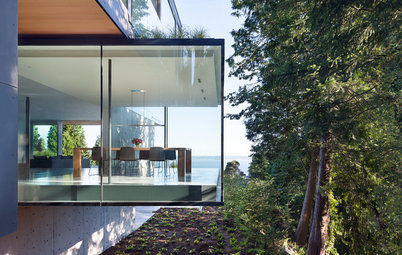
Question 2: Reading Comprehension - The Evolution of Biophilic Design
Instructions: Read the passage below about Biophilic Design. Then, answer questions 2.1 - 2.5 by writing TRUE, FALSE, or NOT GIVEN in the spaces provided. For questions 2.6 - 2.8, complete the sentences with NO MORE THAN THREE WORDS from the passage.
The Evolution of Biophilic Design
A. Biophilic design, a concept that integrates nature into the built environment, stems from the hypothesis that humans possess an innate tendency to connect with nature. This idea, popularised by biologist E.O. Wilson in the 1980s, suggests that our evolutionary history has instilled in us a deep psychological and physiological need for natural elements and processes. Early applications of biophilic principles were often rudimentary, focusing on potted plants or scenic views, but contemporary approaches are far more sophisticated, seeking to weave natural patterns and systems throughout architectural spaces.
B. The benefits of biophilic design are extensive and well-documented. In workplaces, studies have shown that employees in biophilically designed offices report higher levels of well-being, increased productivity, and fewer sick days. Educational institutions incorporating natural light, indoor greenery, and views of nature have observed improved concentration and reduced stress among students. Healthcare facilities utilizing these principles have reported faster patient recovery times and decreased reliance on pain medication. These outcomes underscore the profound impact of connecting with natural environments, even within urban settings.
C. Implementing biophilic design goes beyond mere aesthetics; it involves thoughtful consideration of various aspects. Key elements include direct connections to nature (e.g., natural light, vegetation, water features), indirect connections (e.g., natural materials, colours, patterns, biomorphic forms), and sensory experiences (e.g., sound of water, natural ventilation). Challenges remain, particularly in dense urban areas where space is limited and climate control can be complex. However, architects and urban planners are increasingly finding innovative solutions, such as vertical gardens, green roofs, and integrating public parks within high-rise developments, demonstrating a commitment to human-centred and ecologically responsible design.
Questions 2.1 - 2.5
Do the following statements agree with the information given in the reading passage?
Write:
TRUE if the statement agrees with the information
FALSE if the statement contradicts the information
NOT GIVEN if there is no information on this
Questions 2.6 - 2.8
Complete the following sentences using NO MORE THAN THREE WORDS from the passage for each answer.
Overall Test Classification
Category I: Language & Verbal Reasoning - 2. Reading Comprehension (Design Context)
Rationale: This diagnostic test primarily assesses the student's ability to interpret and analyze written information within an architectural context, which is fundamental for IELTS Reading. Question 1 requires a logical classification and justification, akin to analytical writing, relying on precise vocabulary (Architectural Vocabulary & Terminology). Question 2 is a direct IELTS Reading Comprehension task, focusing on understanding academic texts in a design context. Both tasks emphasize verbal reasoning and language proficiency crucial for university studies and the IELTS exam.
Question 1: Architectural Terminology & Logical Classification
Model Answer / Solution
- 1.1. The Odd One Out:
B) Window - 1.2. Explanation of Logic: The terms Lintel, Column, and Cantilever are all primary structural elements within architecture. Their fundamental function is to resist various loads and contribute to a building's stability. For instance, a column bears vertical compressive forces, while lintels and cantilevers manage horizontal spans. In contrast, a window is a non-load-bearing opening in a wall, primarily designed to admit light and air. It relies on structural components like a lintel for support.
Knowledge Points & Logic Dissection
This question is a cognitive test disguised as a vocabulary quiz. It forces the student to move beyond simple definitions and into the realm of abstract classification, a cornerstone of architectural and logical thinking.
- Core Knowledge (Architectural Vocabulary): The baseline test is whether the student knows the function and nature of a Lintel, Column, and Cantilever. Without this foundational vocabulary, they cannot begin to solve the puzzle.
- Abstract Classification (The Syllogism): The student must look at four distinct terms and deduce the underlying "unifying theory" or shared category. The mental process is: Hypothesis (These three seem to be about holding things up) → Conclusion (The unifying logic is "structural function." The window is the exception). This tests their ability to synthesize information and identify core relationships.
- Functional Reasoning (The "Job Description" Method): The strongest answers will not just state the category ("structural") but will explain what that category means.
- Superior Pathway: The group shares the function of load resistance. A column resists compression, a lintel resists bending over an opening, a cantilever resists bending in projection. A window's function is unrelated to load resistance, serving as an opening.
- Basic Pathway: They are all "parts that hold the building up." This is correct but less precise.
- IELTS Crossover (Comparison & Contrast Language, Cohesion & Coherence): The paragraph tests their ability to structure a logical argument using categorizing language ("can all be classified as," "are all primary structural elements"), contrastive conjunctions ("In contrast," "whereas"), and precise terminology ("structural element," "non-load-bearing," "resist loads"). The word count helps simulate IELTS writing constraints.
Villain's Playbook (Common Errors & What They Reveal for Q1)
- The "Surface Scanner": Groups items by their shape or orientation rather than fundamental function.
E.g., "The Column is the odd one out because it is vertical, while the Lintel and Cantilever are horizontal." This reveals literal, visual thinking and a failure to grasp deeper, functional logic. They see shape, not purpose. (Lack of critical reasoning).
- The "Functional Misfire": Identifies a functional difference, but not the primary or most encompassing one.
E.g., "The Cantilever is the odd one out because it's only supported at one end." While true, this misses the more fundamental classification of structural vs. non-structural elements. (Limited scope of analysis).
- The "Incomplete Logician": Correctly identifies the window but provides a weak, circular, or unsupported reason.
E.g., "The window is different because the other three are structural." This is a correct statement, but it doesn't explain *the logic* of *why* they are structural or *how* the window differs. It shows vocabulary recall without deep comprehension or argumentative skill. (Lack of coherence/cohesion and underdeveloped explanation).
- The "IELTS Word-Gapper": Uses vague, imprecise language, or struggles to connect ideas.
E.g., "The three things hold stuff. The window is for seeing." This demonstrates a critical lack of the lexical resource and grammatical range & accuracy needed for academic topics. (Low IELTS Band in Lexical Resource and Grammatical Range & Accuracy).
Question 2: Reading Comprehension - The Evolution of Biophilic Design
Model Answer / Solution
- 2.1. FALSE
- 2.2. NOT GIVEN
- 2.3. NOT GIVEN
- 2.4. NOT GIVEN
- 2.5. TRUE
- 2.6. innate tendency
- 2.7. faster patient recovery times
- 2.8. natural materials
Knowledge Points & Logic Dissection
This question directly assesses IELTS Reading skills, particularly for Academic Module texts. It combines True/False/Not Given (T/F/NG) and Sentence Completion question types, which are common hurdles for students.
- Skimming & Scanning: Students must quickly skim the passage to understand its general topic (Biophilic Design) and structure (sections A, B, C). For T/F/NG questions, they must scan for keywords from the statement to locate relevant sections of the text.
- Understanding Specific Information (T/F/NG):
- TRUE: Requires direct agreement between the statement and the passage. (e.g., Q2.5 - Passage C explicitly mentions "green roofs" as an "innovative solution" for urban areas).
- FALSE: Requires direct contradiction. (e.g., Q2.1 - Passage A states Wilson "popularised" the idea, not that he was the "first to propose" it).
- NOT GIVEN: Information is not present, or the passage doesn't provide enough detail to confirm or deny. (e.g., Q2.2 - "increased productivity" and "well-being" are mentioned, but "increased wages" is not; Q2.3 - "improved concentration and reduced stress" are mentioned, but "perform better academically" is a stronger claim not directly supported; Q2.4 - the passage lists examples of direct and indirect connections but doesn't compare their effectiveness or imply one is "more effective").
- Vocabulary in Context: Understanding words like "innate tendency," "rudimentary," "sophisticated," "extensive," "implementing," "aesthetics," "biomorphic forms."
- Sentence Completion (No More Than Three Words): This tests precise reading for detail and adherence to word limits. Students must find the exact phrase in the text that completes the sentence grammatically and semantically. (e.g., Q2.6 - "innate tendency" from Section A; Q2.7 - "faster patient recovery times" from Section B; Q2.8 - "natural materials" from Section C). This also checks their ability to identify synonyms or paraphrases from the question and locate the original phrasing in the text.
- Identifying Distractors: IELTS often uses similar-sounding phrases or partial truths to create 'False' or 'Not Given' options. Students need to be able to discern subtle differences in meaning.
Villain's Playbook (Common Errors & What They Reveal for Q2)
- The "Assumer/Inferer": Students mark "TRUE" or "FALSE" based on general knowledge or plausible inferences rather than strictly what is stated in the text.
E.g., For Q2.3, "improved concentration" might lead them to assume "perform better academically," resulting in "TRUE" instead of "NOT GIVEN." This indicates a failure to adhere to the strict evidence-based requirement of T/F/NG. (Lack of precision in reading, over-reliance on external knowledge).
- The "Keyword Hunter (Without Context)": Students find keywords in the statement within the passage but fail to read the surrounding context, leading to misinterpretation.
E.g., For Q2.1, they might see "E.O. Wilson" and "innate tendency" and assume he was first, missing "popularised by" vs. "first proposed." (Lack of careful contextual reading).
- The "Word Count Ignorer": For sentence completion, students write too many words, copying entire clauses instead of just the required phrase.
E.g., For Q2.7, writing "faster patient recovery times and decreased reliance on pain medication" instead of just "faster patient recovery times." (Lack of attention to instructions, common IELTS error).
- The "Synonym Seeker (Mistakenly)": In sentence completion, students try to rephrase the answer in their own words or use synonyms, instead of taking words directly from the text as required. This results in incorrect answers if the original words are not used. (Misunderstanding task requirements, common in IELTS).
- The "False-Positive Bias": Tendency to lean towards "TRUE" or "FALSE" even when information is "NOT GIVEN." This shows a discomfort with ambiguity or an inability to conclusively determine lack of information. (Weakness in analytical discernment).
Multi-Dimensional Rubric & Profiling Insights
| Dimension | Level 1: Novice (Band 5-6) | Level 2: Apprentice (Band 6-7) | Level 3: Articulate (Band 7-8) | Level 4: Architect-in-Training (Band 8+) |
|---|---|---|---|---|
| Q1: Term Identification | Incorrectly identifies the odd one out, likely based on superficial properties. | Correctly identifies the Window. | Correctly identifies the Window. | Correctly identifies the Window. |
| Q1: Logical Explanation | Provides a reason based on superficial properties (e.g., shape, orientation) or is highly vague. | Provides a simple, correct reason (e.g., "The others are structural") but lacks depth or precise contrasting language. Word count may be too low. | Clearly explains the shared logic (the function of support/load resistance) and articulates the difference, using some appropriate vocabulary and cohesive devices. Meets word count. | Clearly articulates the unifying classification (primary structural elements) and contrasts it precisely with the non-load-bearing function of the outlier. Uses sophisticated vocabulary and excellent cohesion, adhering to word count. |
| Q1: Functional Understanding | No clear grasp of structural function. | Demonstrates a basic understanding that some parts "hold things up." | Can describe the difference between structural and non-structural roles, inferring function. | Explains *how* the structural elements function (e.g., resisting specific types of loads) and the window's role within the building envelope, demonstrating deep understanding. |
| Q1: IELTS Lexical Resource & Cohesion | Basic vocabulary, simple sentences, weak argument. Lacks connecting phrases. | Uses some correct terms but struggles with contrastive language or sentence structure. Limited range of cohesive devices. | Uses good architectural vocabulary and effective contrastive language ("whereas," "in contrast") to build a clear, coherent argument. Good use of conjunctions. | Seamlessly uses precise, academic terms ("non-load-bearing," "resist loads," "compressive forces") to build a highly cohesive and sophisticated argument with varied sentence structures. |
| Q2: T/F/NG Accuracy | Scores 0-1 correct. Frequently confuses TRUE/FALSE/NOT GIVEN; relies on inference. | Scores 2-3 correct. Some accurate identification but still falls for distractors or assumes information. | Scores 4 correct. Demonstrates good ability to distinguish between stated information, contradictions, and absence of information. Occasional minor errors. | Scores 5 correct. Consistently identifies TRUE/FALSE/NOT GIVEN statements based on strict textual evidence, showing strong critical reading. |
| Q2: Sentence Completion Accuracy | Scores 0-1 correct. Struggles to locate specific details or disregards word limits. Answers are often grammatically incorrect or not from the text. | Scores 2 correct. Can locate some specific details but may struggle with exact phrasing or word limits (e.g., using 4 words instead of 3). | Scores 3 correct, adhering to word limits. Accurately extracts phrases from the text, demonstrating good scanning for specific information. | Scores 3 correct with perfect adherence to word limits. Demonstrates efficient scanning, precise extraction, and excellent attention to detail. |
| Q2: Reading Strategies | Reads word-by-word, struggles with main idea identification, gets lost in details. | Attempts skimming/scanning but is often inefficient, leading to slow processing or missing key information. | Applies effective skimming for main ideas and targeted scanning for specific information, generally understanding the flow of the text. | Expertly employs skimming for overview and highly efficient scanning for detail, demonstrating advanced comprehension strategies and critical evaluation of information. |