Diagnostic Test
Section E: Material, Tectonic & Functional Analysis
E-05
IELTS Preparation: Architecture & Design Analysis
▼
Questions 1-4
Analyze the images and information below to answer the questions.
Instructions: Read the questions carefully and write your answers in the space provided.
Answer all questions. You should spend about 5-7 minutes on this section.
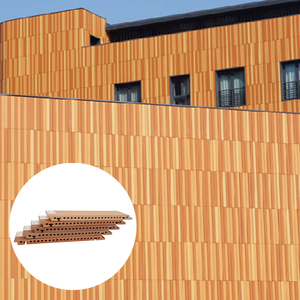
Image A: Modern Building Facade
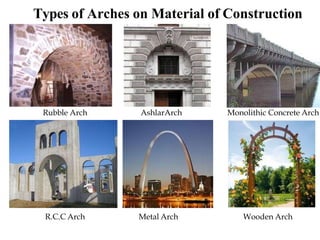
Image B: Structural Diagram
Beam • Column • Window • Foundation
Questions 4 A-C
- A. Frank Lloyd Wright
- B. Le Corbusier
- C. Edwin Lutyens
- I. "A machine for living in"
- II. Synthesis of Indo-Saracenic, Mughal, and European Classical styles
- III. Organic Architecture
End of Questions 1-4.
▼
Model Answer / Solution
1. Material Properties:
- Identification:
Terracotta/Architectural Clay Tile. - Reasoning (example, fulfilling word limit): Terracotta provides aesthetic warmth and durable weather resistance. (7 words)
2. Tectonic Logic:
- Choice:
Window. - Reasoning: The window is a non-structural element for openings, unlike the load-bearing beam, column, and foundation.
3. Architectural Terminology:
Lintel.
4. Design Philosophy (Matching):
- A. Frank Lloyd Wright →
III(Organic Architecture, integrating buildings with their site). - B. Le Corbusier →
I("A machine for living in," his functionalist approach). - C. Edwin Lutyens →
II(Synthesis of Indo-Saracenic, Mughal, and European Classical styles in his work, notably in New Delhi).
Dissection and Profiling Logic
- Knowledge Points Tested:
- Material Science: Recognition of a key building material (terracotta) and an understanding of its practical and aesthetic properties, articulated concisely.
- Tectonic & Structural Principles: The fundamental ability to differentiate between structural (load-bearing) and non-structural (infill) components through logical deduction.
- Architectural Vocabulary: Basic knowledge of standard building elements (Lintel) from visual cues.
- Architectural History & Theory: The ability to connect major 20th-century architectural figures with their core ideologies and key contributions, requiring conceptual understanding beyond mere recall.
- IELTS Skills Integration:
- **Following Instructions:** Adherence to strict word limits (e.g., "NO MORE THAN TEN WORDS", "ONE SENTENCE", "NO MORE THAN TWO WORDS").
- **Precision & Conciseness:** Ability to convey complex information clearly and directly, without unnecessary elaboration.
- **Matching Information:** Successfully associating items from two different lists based on specific criteria.
- **Vocabulary & Paraphrasing:** Demonstrating a range of architectural and descriptive vocabulary, and potentially rephrasing concepts.
- **Analytical Reasoning:** Justifying choices based on underlying principles (structural role, design philosophy).
- Logic & Thought Process for Model Answer:
- Materiality (Question 1): Visual identification of terracotta. Then, the student must brainstorm reasons (aesthetic, functional, environmental) and condense them into a single, succinct sentence adhering to the word count, demonstrating both architectural knowledge and English language control.
- Tectonics (Question 2): This requires applying the concept of "structural role" as the filter. Beam, Column, Foundation are load-bearing, while Window is an opening filler. The explanation must clearly state this distinction in one sentence.
- Terminology (Question 3): Direct visual identification and recall of "Lintel," ensuring the answer is within the two-word limit.
- Synthesis (Question 4): Matching requires recalling the primary philosophies or notable characteristics of each architect and linking them accurately. This tests the ability to associate key figures with their defining ideas, a common IELTS matching task.
Common Hurdles & Error Analysis (Potential Logic Mazes)
- The "Exceeding Word Count" Trap: In Question 1, the student writes a correct description but goes over ten words.
Diagnosis: The student understands the architectural concept but struggles with IELTS-specific constraints on conciseness and precise language control. They need practice in summarizing and editing for word count. This points to a weakness in **IELTS Writing Task 1/2 skills** (summary/report writing) and **vocabulary efficiency**.
- The "Vague Justification" Hurdle: In Question 2, the student correctly picks "Window" but explains, "It's different."
Diagnosis: The student has an intuitive grasp but lacks the academic vocabulary or logical precision to articulate *why* it's different in structural terms. They need to develop a more formal architectural lexicon and practice explaining technical concepts. This indicates a gap in **IELTS Speaking/Writing vocabulary** for technical subjects.
- The "Material Mix-up" Hurdle (revisited): In Question 2, the student gives a reason based on material (e.g., "Foundation is made of concrete") rather than structural role.
Diagnosis: The student's logic defaults to what things are made of instead of what things do. This is a critical distinction in architectural thinking. They need practice analyzing buildings through the lens of forces and structure. This also shows a lack of ability to discern the *key differentiator* required by the question prompt, relevant to **IELTS Reading detail comprehension**.
- The "History Trivia" Failure (revisited): The student cannot correctly match the architects to their philosophies in Question 4.
Diagnosis: This indicates that their architectural history knowledge is a "bag of facts" (names, dates, pictures) rather than a connected web of ideas. They are a "Trivia Collector" and need to practice explaining the concepts that drove these architects' work. This impacts their ability to process and match information efficiently, a direct **IELTS Reading skill**.
Rubric-Based Profile Mapping
| Performance Level | Student Profile: "The Quantum Architect" | Diagnostic Insights |
|---|---|---|
| Level 4: Excelling | The Tectonic Thinker & Precise Communicator: Answers all parts correctly, adhering perfectly to word/sentence limits. Justification in Q2 is based on structural roles, and reasoning in Q1 balances aesthetic and functional properties with concise, accurate language. Matching in Q4 is flawless. | Possesses a strong, precise architectural vocabulary and excellent command of English for academic purposes (IELTS Band 7.5+ equivalent for these question types). Understands the fundamental relationship between material, structure, and design intent, and can articulate it under strict constraints. Thinks like a practitioner and communicates like an academic. |
| Level 3: Proficient | The Knowledgeable Apprentice & Competent Communicator: Answers most parts correctly, but may slightly exceed word limits or provide a slightly less precise justification in Q1 or Q2 (e.g., focusing predominantly on aesthetics or using moderately less structural logic). Matching in Q4 is mostly correct with one minor error. | Good foundational architectural knowledge and decent English communication skills (IELTS Band 6.0-7.0 equivalent). Connections between different domains are present, but the articulation under pressure (word limits) needs refinement. Logic is present but may not always select the most architecturally salient principle or be expressed with maximal efficiency. |
| Level 2: Developing | The Visual Spotter & Emerging Communicator: Correctly identifies the material in Q1 and the lintel in Q3 but struggles with the structural logic in Q2 and/or the historical connections in Q4. Frequently struggles with word limits, or answers are too vague. | Rote memorization and visual identification are present, but underlying logical, theoretical frameworks, and academic English expression are weak (IELTS Band 5.0-5.5 equivalent). Can name parts but struggles to explain their function or context coherently, especially under constraints. Needs significant development in both architectural conceptual understanding and English academic writing/summarizing skills. |
| Level 1: Beginning | The Sightseer & Basic Communicator: Struggles to identify the material, the structural element, or the architects. Cannot provide a coherent justification for the odd one out or answers are largely incorrect/irrelevant. Ignores word limits. | Significant gaps in foundational architectural knowledge across materials, structures, and history, coupled with very limited ability to articulate ideas in academic English (IELTS Band 4.5 or below). Requires intensive focus on building a core architectural lexicon, understanding fundamental principles, and developing basic academic language skills for comprehension and expression. |