Diagnostic Test
Section C: Curatorial & Narrative Synthesis
Section Instructions
This section assesses your ability to interpret visual information, understand chronological relationships, and construct a coherent written argument, similar to tasks found in the IELTS Academic module. Read all instructions carefully and adhere to any word limits.
- Time Limit: Approximately 20 minutes
- Parts: Questions (a) and (b) are short-answer tasks. Question (c) requires a short written response.
- Word Count: Pay close attention to word limits specified for each question.
Question 3: From Earth to Machine
Look at the four images shown below. They represent different eras, functions, and scales in architectural history.
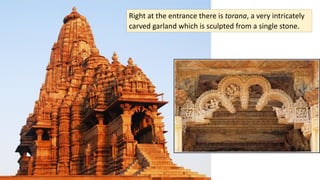
Image A

Image B

Image C
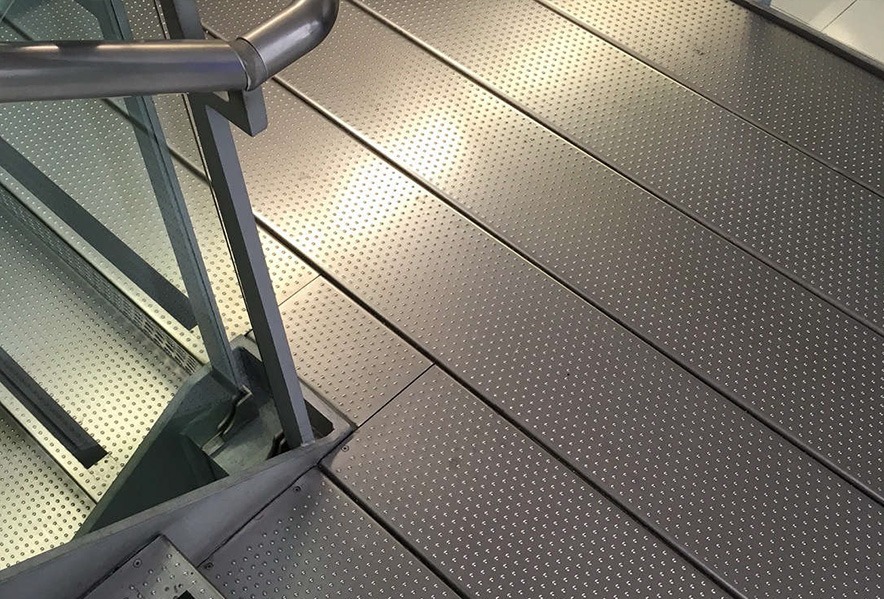
Image D
Instructions: Imagine you are a curator for an architectural exhibition. Analyze the four images to answer the following questions.
For each image (A-D), identify the specific building, feature, or material shown. Provide a location or historical period where relevant. Write NO MORE THAN FIVE WORDS AND/OR A NUMBER for the primary identification element in each case. Use the provided lines to add brief contextual information.
Model Answer / Solution
(a) Identification:
- Image A: Primary: Kandariya Mahadeo Temple. Context: Khajuraho, India (Medieval period, c. 1050 CE).
- Image B: Primary: Mohenjo-Daro street grid. Context: Indus Valley Civilization (c. 2500 BCE).
- Image C: Primary: Rajiv Gandhi Memorial. Context: Sriperumbudur, India (Modern Indian architecture, Charles Correa, 1990s CE).
- Image D: Primary: Checkered aluminum plate. Context: Industrial material (20th/21st century).
(b) Timeline:
BADC
(c) Thematic Curation:
This exhibit traces how architectural expression evolves from collective order to industrial precision. It begins with the earth-formed grid of the Indus Valley (B), a system for communal living. Millennia later, this gives way to the soaring, sculptural form of the Khajuraho temple (A), an expression of spiritual aspiration carved from stone. In the modern era, abstract forms and concrete are used in the Rajiv Gandhi Memorial (C) to express memory and nationhood. This evolution is enabled by modern technology, symbolized by the machine-precision of industrial materials like tread plate (D).
Dissection and Profiling Logic
- Knowledge Points Tested:
- Architectural History (Global/Indian): Identification of key sites from the Indus Valley Civilization, Medieval Indian temple architecture (Nagara style), and Post-Independence Modern Indian architects (Charles Correa).
- Material Science: Recognition of a common industrial building material.
- Urban Planning Concepts: Understanding the significance of an orthogonal city plan.
- Narrative Construction: The core challenge. Can the student weave these disparate elements—a city plan, a temple, a memorial, a material—into a single, coherent story? This directly tests the "Time-Weaver's Atlas" and "architectural storyteller" skills.
- Writing Skills (IELTS-aligned): Precise descriptive writing, adherence to word count, use of sequencing and transitional language ("It begins with...", "This gives way to..."), and articulating a conceptual argument in a condensed format (Task Achievement, Coherence and Cohesion, Lexical Resource, and Grammatical Range and Accuracy).
- Logic & Thought Process for Model Answer:
- Identification (Part a): This requires a broad base of architectural general knowledge, moving beyond the standard Western canon to include significant South Asian examples. The "NO MORE THAN FIVE WORDS AND/OR A NUMBER" constraint demands precision and concise recall.
- Sequencing (Part b): Simple chronological reasoning based on historical dates: Indus Valley (c. 2500 BCE) → Khajuraho Temples (c. 1050 CE) → Rajiv Gandhi Memorial (1990s CE) → Modern Material (20th/21st Century CE). Placing the material last is logical as it represents the contemporary technological context.
- Synthesis (Part c): This is the "Quantum Leap" that separates lower-level from higher-level thinking, now explicitly framed as an IELTS Writing task.
- Step 1: Internalize the given theme: "From Earth to Machine: The Story of Architectural Expression." The answer must adhere to this framework and fulfill the "Task Achievement" criterion.
- Step 2: Link B to A. The story starts with the most fundamental act of architecture: creating order for a community (the grid). This is about function. The narrative then moves to a building whose primary purpose is spiritual expression and sculptural form (the temple). The shift is from communal function to divine form, demonstrating "Coherence and Cohesion."
- Step 3: Link A to C. The link here is the idea of monumental expression. The temple uses traditional stone carving for a religious purpose. The memorial uses modern materials (concrete) and abstract forms for a secular, civic purpose (memory). The shift is from sacred monumentality to civic monumentality, maintaining the narrative flow.
- Step 4: Integrate D. The material is not just an object; it's a symbol of the underlying technology. The precision and abstraction of the memorial (C) are only possible because of industrial manufacturing processes, which D represents. D is the "enabler" of C, completing the "Earth to Machine" narrative and demonstrating appropriate "Lexical Resource" for architectural concepts.
Common Hurdles & Error Analysis
- The "Catalogue" Trap: The student aces parts (a) and (b) but for (c) simply describes each item in order, failing to create a thematic narrative. "First is an ancient city grid. Second is a medieval temple. Third is a modern memorial. Fourth is a metal plate."
Diagnosis: This student is a "Trivia Collector" or "List Maker." They can recall and organize facts but cannot synthesize them into a meaningful narrative, thus scoring low on "Task Achievement" and "Coherence and Cohesion" in an IELTS context. - The "Broken Timeline" Hurdle: The student incorrectly sequences the items, for example placing the modern memorial before the medieval temple.
Diagnosis: Indicates significant gaps in their mental timeline of architectural history. They may recognize styles but do not have a firm grasp of their chronological context. This affects the accuracy of their narrative in (c) and thus "Task Achievement". - The "Forced Connection" Failure: The student attempts a narrative in (c) but the logic is weak or nonsensical, such as "All of these are found in India" (ignoring D) or "They all use stone" (incorrect).
Diagnosis: The student understands the goal of synthesis but lacks the analytical depth to find a valid thematic thread. They grasp for superficial similarities, affecting "Coherence and Cohesion" and "Task Achievement." Their "Lexical Resource" might also be insufficient to articulate complex connections. - The "Word Count Overrun/Underrun" Hurdle: The student writes significantly outside the 60-80 word limit for part (c).
Diagnosis: Demonstrates a lack of attention to instructions, a key requirement for IELTS exams. For an overrun, it might also indicate an inability to synthesize and condense ideas effectively. For an underrun, it might show a lack of content generation or poor elaboration.
Rubric-Based Profile Mapping
| Performance Level | Student Profile | Diagnostic Insights |
|---|---|---|
| Level 4: Excelling | The Curator: Answers all parts correctly, demonstrating precise identification and accurate chronological ordering. The curatorial statement in (c) is insightful, thematic, and directly links all four items into a clear, persuasive narrative about the evolution of architectural expression and technology, adhering to word count and exhibiting strong IELTS writing qualities (Task Achievement, Coherence and Cohesion, Lexical Resource, and Grammatical Range and Accuracy). | Exceptional synthesis skills. Can think abstractly and build an argument using diverse visual evidence. Understands architecture as a cultural and technological narrative. High command of academic English and IELTS writing strategies. |
| Level 3: Proficient | The Historian: Answers (a) and (b) correctly, but may have minor inaccuracies in detailed identification. The statement in (c) makes a valid connection between B, A, and C based on their historical progression but struggles to meaningfully integrate the material (D) into the story. The narrative is present but less nuanced, potentially deviating slightly from word count or lacking some IELTS writing criteria. | Strong historical knowledge and good analytical skills. The main gap is in thinking about the role of materials/technology as a driving force in design, or articulating this effectively within constraints. Their logic follows history but not necessarily the underlying 'how' or 'why' with full IELTS precision. |
| Level 2: Developing | The List Maker: Answers most of (a) correctly but may struggle with the specific names or dates, or fails the word count constraint for identification. Gets the general chronology in (b) right. The answer for (c) is a simple description of the items, not a narrative, or fails significantly on word count. There are noticeable issues with IELTS writing criteria (e.g., weak cohesion, limited vocabulary, grammatical errors). | Fact-based knowledge is present but synthesis skills are undeveloped. The student sees the pieces but not the puzzle. Needs focused practice on explaining the "so what?" that connects precedents, and explicit instruction on IELTS writing structure and language use. |
| Level 1: Beginning | The Tourist: Cannot correctly identify two or more of the items, or fails the word count significantly for identification. The timeline in (b) is incorrect. The attempt at a narrative in (c) is confused, irrelevant, non-existent, or significantly outside the word count, exhibiting fundamental weaknesses across all IELTS writing criteria. | Foundational knowledge of non-Western and material architecture is very weak. The student is not yet equipped with the base knowledge required for this level of analysis, and their English proficiency significantly hinders their ability to understand prompts and articulate responses. |