Architectural Assessment Protocol
Module: Narrative Composition & Observational Drawing
Examination Paper: TASK 7
IELTS Academic Training Focus
This section assesses your ability to comprehend academic texts and articulate architectural ideas in English, vital skills for university study abroad.
Section 1: Reading Comprehension
Read the passage below and answer Questions 1-3. You should spend approximately 15 minutes on this section.
The Art of Urban Sketching: Capturing the Soul of a City
Urban sketching, a movement gaining significant traction globally, involves drawing on location, capturing scenes from everyday life in cities, towns, and villages. Far from being mere tourist souvenirs, these sketches serve as powerful narratives, offering immediate, unfiltered observations of the built environment and its inhabitants. For aspiring architects, urban sketching is more than just an artistic hobby; it is a critical tool for developing observational skills, understanding spatial relationships, and comprehending the human scale within design.
Unlike studio-based drawing, urban sketching demands rapid decision-making and an ability to distill complex scenes into their essential components. Artists must contend with changing light, moving subjects, and the ephemeral nature of public spaces. This discipline trains the eye to recognize patterns, textures, and the interplay of foreground, midground, and background, essential for architectural visualization. Moreover, by focusing on interactions between people and their environment, sketchers inherently develop a deeper appreciation for the social dynamics that shape urban design.
Marketplaces, in particular, offer a rich tapestry for urban sketchers. They are vibrant hubs of economic and social activity, presenting a dynamic interplay of human figures, temporary structures, goods, and a constant flow of energy. Capturing a market scene requires more than just drawing buildings; it demands an understanding of the narrative — the stories told by a vendor's gesture, a shopper's expression, or the arrangement of produce. Architects who practice urban sketching often find themselves better equipped to design spaces that are not only structurally sound but also resonate with human experience and foster community.
Questions 1-3: Multiple Choice (Choose ONE letter A, B, C or D.)
1. What is the primary purpose of urban sketching according to the passage?
2. Which of the following skills is NOT explicitly mentioned as being developed through urban sketching for aspiring architects?
3. Why are marketplaces considered particularly valuable subjects for urban sketchers?
TASK 7: The Urban Narrative (Drawing Assessment)
Scenario: You are standing in a bustling street market in your city at its busiest hour. The air is filled with the sounds of vendors calling out, shoppers haggling, and the smells of food and spices. The scene is a complex web of interactions, textures, and movements.
Your Task: Create a single, detailed pencil sketch that captures a narrative moment within this scene. Your drawing should not be a static architectural study of the buildings, but rather an immersive snapshot of the market's life and energy. You must establish a clear sense of depth by using foreground, midground, and background elements. Focus on the interactions between people, the different textures of goods and structures, and the overall atmosphere.
Visualize the Market: To inspire your sketch, consider a vibrant image of a bustling street market:

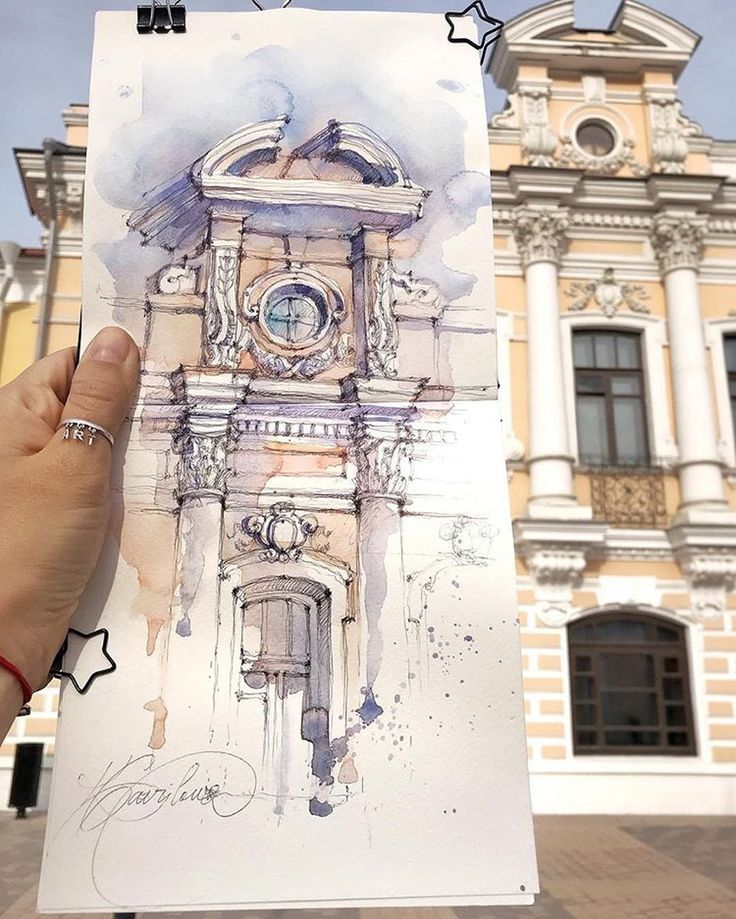
Sketch Inspiration: And an example of a detailed architectural narrative sketch:
This space is for planning and notes.
Your final drawing should be completed on the provided A4 or A3 paper.
Paper Size: A4 or A3
Time Limit for Drawing: 60 minutes
Section 2: Writing Task (Report on Your Drawing)
You should spend approximately 15 minutes on this task.
Write a short report (approximately 100-150 words) describing your drawing for Task 7. In your report, you should:
- Explain the specific narrative moment you chose to capture within the market scene.
- Describe how you utilized foreground, midground, and background elements to create a sense of depth.
- Comment on how you represented the overall atmosphere and various textures present in your sketch.
- Ensure your language is clear, concise, and uses appropriate architectural/descriptive vocabulary.
(Write your report here...)
CONFIDENTIAL: Instructor's Evaluation Guide
This section contains the model solution, rubric, and diagnostic analysis.
ACCESS RESTRICTED. Please enter password to proceed.
CONFIDENTIAL: Overall Diagnostic Summary & Profile Mapping
This section contains the synthesis of data from all tasks and defines student archetypes.
ACCESS RESTRICTED. Please enter password to proceed.