Architecture Aptitude & Academic English Assessment
This diagnostic test evaluates your foundational aptitude for architectural thinking, including spatial imagination and technical drawing skills. Simultaneously, it serves as a preparatory exercise for the IELTS Academic Writing module, assessing your ability to articulate complex ideas clearly and precisely in English.
Examination Paper: Question 4
Question 4: The Ant's Perspective
Part A: The Drawing Task (Suggested Time: 45 Minutes)
Scenario: Imagine you are the size of an ant. You are on the floor of a room, right at the base of a simple, four-legged wooden chair. A soft, ambient light fills the room, so there are no sharp, dramatic shadows.
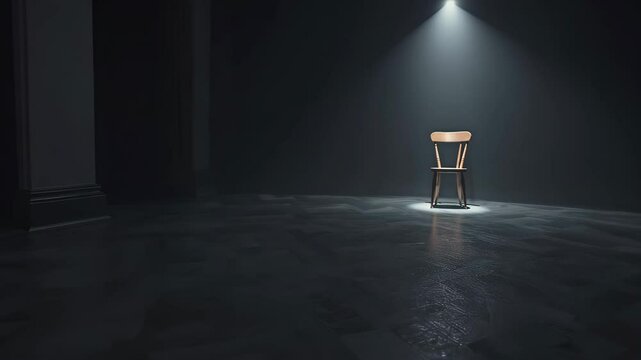
Your Task: Using a pencil, draw the view from this "ant's-eye" perspective, looking up at the chair. Your primary goal is to convey a sense of immense scale and verticality. You do not need to draw the entire chair. Instead, focus on:
- The dramatic, upward-rushing perspective of the nearest chair leg.
- The texture of the floor surface (e.g., wood grain, carpet fibres) in the immediate foreground.
- How the chair leg meets the floor, and the sense of weight and structure at that joint.
- The underside of the chair's seat, looming far above you.
- Creating a composition that makes a simple, everyday object feel like a monumental piece of architecture.
Drawing Area:
Part B: IELTS Academic Writing Task 1 - Report on a Visual Interpretation (Suggested Time: 15 Minutes)
You should spend approximately 15 minutes on this task.
The image above (your drawing from Part A) represents a unique spatial interpretation. Write a report for a university admissions committee summarising the key aspects of your visual representation from 'The Ant's Perspective'.
Your Task: In your report, you must:
- Explain the main idea or sensation (e.g., monumentality, vertigo, discovery) you aimed to create in your drawing.
- Briefly describe the process or key visual techniques (e.g., perspective shifts, rendering choices) you used to achieve this shift in scale and perspective.
- You must correctly use at least THREE of the following architectural/spatial vocabulary words in your response:
perspectivescalemonumentalityforeshorteningtectonics
Your response will be assessed on Task Achievement, Coherence and Cohesion, Lexical Resource, and Grammatical Range and Accuracy.
Write at least 100 words.
Response Area:
CONFIDENTIAL: Instructor's Evaluation Guide
This section contains the model solution, diagnostic analysis, and evaluation rubric.
ACCESS RESTRICTED. Please enter password to proceed.