Diagnostic Examination
Architectural Aptitude & Design Thinking Profile
Examination Paper: Questions 1-5
General Instructions for the Examination Paper
This diagnostic test assesses your architectural aptitude and English language proficiency, particularly your ability to understand visual information and articulate design concepts in academic English. Please read all instructions carefully.
- You will complete five tasks, each consisting of a drawing component and a written response.
- For the drawing tasks, use the provided "Drawing Area". You may use pencils, pens, or other suitable drawing tools.
- For the written responses, use the "Writing Area". Your responses should be clear, well-organised, and use appropriate academic vocabulary. Pay attention to grammar, spelling, and punctuation.
- Each written response has a minimum word count. Aim to exceed this if necessary to fully address the prompt.
- Approximate time per question: 20-25 minutes (15-20 for drawing, 5-8 for writing).
- Total recommended time for the paper: 100-125 minutes.
Question 1: The Spatial Maze
Task:
Draw a view of your kitchen as seen from the perspective of a small mouse sitting on the floor in a corner. Your goal is not to simply list the objects in the room, but to create a powerful sense of space and depth. Emphasize the towering scale of the furniture and the long distances from this low viewpoint using the principles of linear perspective.

Drawing Area:
IELTS Writing Task: Descriptive Analysis
Drawing upon your visual representation, describe the unique spatial qualities and the sense of scale you intended to convey from the mouse's perspective. Explain how your drawing techniques, such as the use of linear perspective and detail, were employed to emphasize these characteristics. Write at least 70 words.
Question 2: The Giant's Toy
Task:
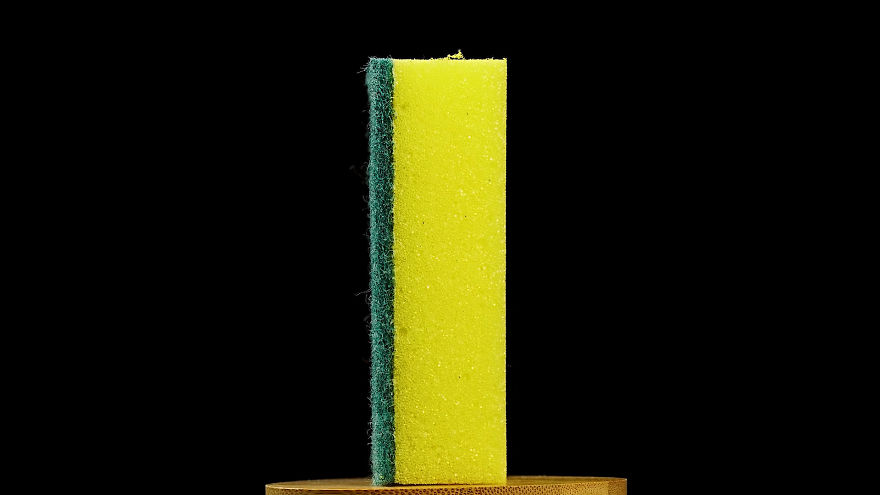
Choose one of the following common objects: a pair of eyeglasses, a stapler, or a set of keys. Imagine you are the size of an ant. Draw the object from this extreme, close-up, low-angle viewpoint. The object should fill the page and appear massive and monumental, like a piece of architecture. Do not draw the entire object if it doesn't fit; focus on a compelling composition.
Drawing Area:
IELTS Writing Task: Descriptive Analysis
Analyse your drawing, identifying the specific features of the chosen object that you magnified or highlighted to achieve a monumental, architectural effect. Discuss the compositional choices you made, such as cropping or viewpoint, and explain their impact on the perception of scale and form. Write at least 70 words.
Question 3: The Material Study
Task:
Arrange the following three items under a single, strong light source (like a desk lamp): a clear glass of water, a crumpled piece of aluminum foil, and a wooden block. Draw the three objects together. Your primary focus should be on accurately rendering how the light reflects, refracts, and is absorbed differently by each material. Capture the distinct textures of glass, metal, and wood.

Drawing Area:
IELTS Writing Task: Descriptive Analysis
Based on your observational study, describe the distinct visual properties of glass, aluminum foil, and wood when illuminated by a single light source. Focus on how light interacts with each material differently (reflection, refraction, absorption) and discuss the challenges you encountered in rendering these differences through shading and texture. Write at least 70 words.
Question 4: The Abstract Composition
Task:
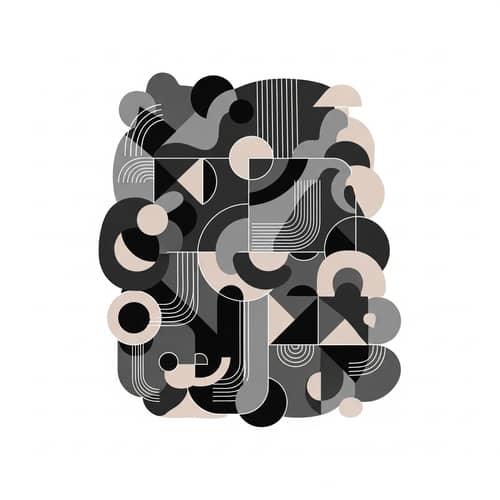
Look at a bicycle (or a detailed picture of one). Do NOT draw the bicycle. Instead, create a dynamic, abstract composition using only the elemental shapes and lines you see: circles from the wheels, triangles from the frame, short parallel lines from the spokes, etc. Overlap, resize, and rearrange these elements to create a balanced and interesting new image that captures the *essence* of a bicycle (e.g., speed, structure, repetition) without showing the object itself.
Drawing Area:
IELTS Writing Task: Descriptive Analysis
Reflect on your abstract composition inspired by the bicycle. Describe the primary concept or dynamic quality you aimed to represent (e.g., speed, complexity, structural elegance) using elemental shapes and lines. Explain how the arrangement, overlap, and scale of these abstract elements contribute to conveying this 'essence' without literal representation. Write at least 70 words.
Question 5: The Reflector
Task:
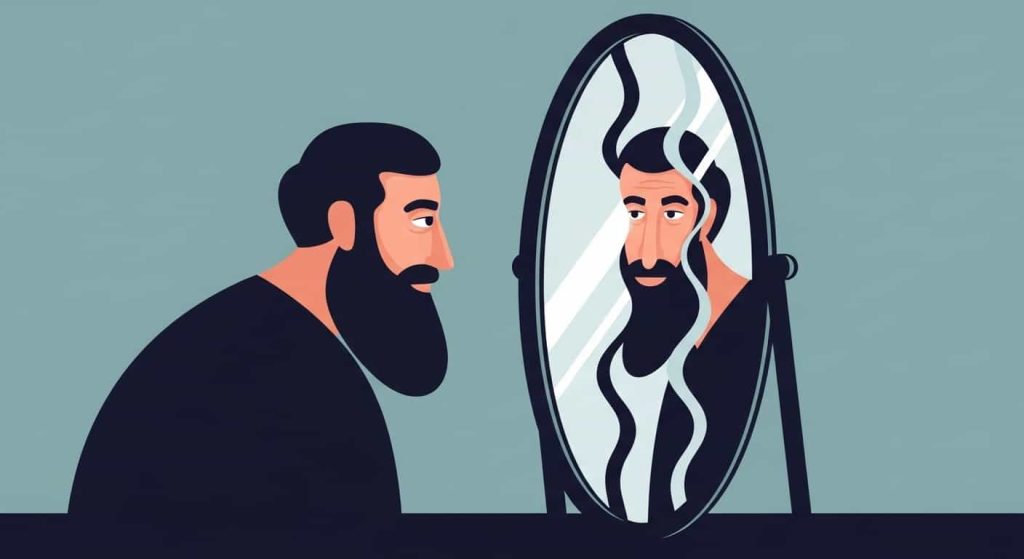
Make a pencil sketch of your own reflection in a mirror. Your drawing must include not only your face, but also at least one object visible behind you in the reflection and a part of the mirror's frame. The goal is to create a portrait that tells a story about a particular moment or mood (e.g., introspection, stress, confidence, fatigue).
Drawing Area:
IELTS Writing Task: Descriptive Analysis
Discuss the narrative or emotional atmosphere you intended to capture in your self-reflection sketch. Analyse how your depiction of facial expression, the interplay of light and shadow, and the inclusion of a specific background object work together to convey a particular moment or mood, such as introspection or contemplation. Write at least 70 words.
CONFIDENTIAL: Instructor's Guide & Synthesis Rubric
This section is restricted and contains evaluation rubrics and diagnostic analysis.
Please enter the password to view the content.