Diagnostic Test
Mission 2.2: The Practical Dreamer
Student Mission Briefing
Student Task
Objective: This mission tests your ability to think like a builder. A beautiful design is only a dream until you figure out how to actually build it. You will take your design from Mission 2.1 and make it practical by designing its connections and construction details.
Instructions: Read each part carefully and follow all instructions. You should aim for clarity, precision, and technical accuracy in your responses and drawings.
Scenario: Take your final design concept from Mission 2.1 (The Object Transformer). You will now zoom in on the technical details. How do the different parts of your design connect to each other and to the ground?
Part A: Material & Connection Brainstorm (10 minutes)
IELTS Type: Table Completion / Short Answer
Question 1-3: Look at your design. What primary materials do you envision for its construction? How are the pieces joined?
- Task: On a blank sheet of paper, complete the table below by listing the primary materials you envision for your design (e.g., concrete, steel, wood, glass). Then, for each material, sketch or describe two different ways the parts could be connected. In addition, briefly state why you chose these connection methods (10-20 words per justification).
| Material | Connection Method 1 (Sketch/Description) | Justification 1 | Connection Method 2 (Sketch/Description) | Justification 2 |
|---|---|---|---|---|
| [e.g., Steel] | [e.g., Bolting] | [e.g., Provides strong, demountable joint.] | [e.g., Welding] | [e.g., Creates permanent, seamless bond.] |
Part B: The "Fixing Methods" Visual Library (15 minutes)
IELTS Type: Diagram Labelling / Matching
Admissions tests require you to know some technical language. Let's build a quick reference guide.
- Question 4-7: On a new sheet, you are going to create a "visual library" of joining methods. For four of the terms listed below, you must draw a simple, clear diagram that shows what the connection looks like and how it works.
Provided Terms:
- Weld
- Rivet
- Mortise and Tenon Joint
- Dovetail Joint
- Bolted Flange Plate
- Gasket Seal
Part C: Final Detail Drawing (25 minutes)
IELTS Type: Process Description (Writing Task 1) / Justification (Speaking Part 3)
This is the key task. Choose the most important connection in your design from Mission 2.1 and produce a professional-style "detail drawing."
- Question 8: Select one critical joint from your design (e.g., where the object meets the ground, or where two different materials meet). On a new, clean sheet of paper, create a large, detailed, close-up drawing of this single connection.
- Your drawing must clearly communicate:
- The different parts and materials involved.
- The "fixing method" used (e.g., bolts, screws, welds).
- Labels and short notes (annotations) that explain how the joint is assembled and why you chose this method. (Aim for 3-5 clear annotations, 15-30 words each).
CONFIDENTIAL: Instructor's Guide & Rubric
Please enter the password to view the instructor's guide and evaluation rubric.
Diagnostic Test
Mission 3.1: The Global Icon Decoder
Student Mission Briefing
Student Task
Objective: Great architects have a strong "Global IQ." They understand the history of design and can recognize important buildings, objects, and the people who created them. This mission is a workout for your architectural and cultural literacy.
Instructions: Answer all questions as accurately and precisely as possible within the given time limits. Pay attention to spelling and clarity.
Scenario: You will be presented with a series of images of famous figures, landmarks, and objects. Your task is to identify them and, more importantly, to analyze the core ideas they represent.
Part A: Icon Flashcard Sprint (10 minutes)
IELTS Type: Short Answer / Matching Information
Questions 1-10: You will be shown a presentation of 10 images, each for only 15 seconds. Write down the name of the person, place, or object you see.


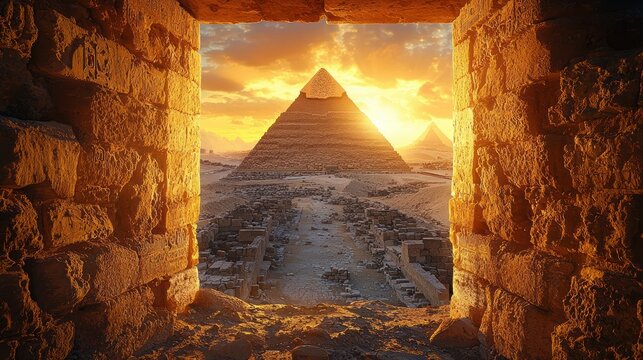


- Write down the name of the person, place, or object you see for each numbered image.
- Note: Only one answer per image is required.
Part B: The Keyword Challenge (15 minutes)
IELTS Type: Note Completion / Summarising Key Ideas
Recognition is the first step; analysis is the next.
- Questions 11-15: Choose five of the icons you correctly identified in Part A. For each of the five, write down three powerful keywords or short phrases (maximum 3 words per phrase) that capture the most important idea or quality of that icon.
| Icon Name | Keyword/Phrase 1 | Keyword/Phrase 2 | Keyword/Phrase 3 |
|---|---|---|---|
| [e.g., Eiffel Tower] | [e.g., Engineering Marvel] | [e.g., Parisian Landmark] | [e.g., Industrial Aesthetics] |
Part C: HK vs. The World - Conceptual Pairing (20 minutes)
IELTS Type: Argumentative Writing (Task 2) / Justification (Speaking Part 3)
The final task is to make connections across cultures and contexts. This tests your ability to think comparatively.
- Questions 16-17: Select two of the international icons from the list. For each one, you must match it with a specific Hong Kong building, place, or object that shares a similar function, concept, or idea. You must then write one or two sentences (approximately 30-50 words per pairing) explaining the logic behind your pairing.
Example of a weak pairing: "The Eiffel Tower and the ICC Tower, because they are both tall."
Example of a strong pairing: "The Eiffel Tower and the Peak Tram. The Eiffel Tower was a feat of engineering for its time, built to be a spectacular attraction for a world exposition. Similarly, the Peak Tram was a significant engineering achievement for its era, designed to provide access to and create a spectacular experience of Victoria Peak."
CONFIDENTIAL: Instructor's Guide
Please enter the password to view the instructor's guide.