An analysis of the PowerPoint slides and the provided textbook, "Oxford Primary Social Studies 1," indicates a strong opportunity to integrate the textbook's content into Lesson 2 of the "Public Speaking with Confidence" course.
The PowerPoint's title, "Lesson 2," suggests that foundational concepts were covered in Lesson 1. The textbook's **Unit 1: Family and culture** provides simple, personal, and highly relatable topics perfect for young, weak ESL learners to build their first presentation on. This content lowers the cognitive load, allowing students to focus on the *structure* and *delivery* of the presentation rather than complex subject matter.
I have selected and adapted two key sections from the textbook for this lesson:
1. **Section 1.1: My family (pages 6-7):** This serves as an excellent warm-up and vocabulary-building exercise. It introduces the core theme of talking about oneself and one's immediate circle in a safe, familiar context. The concepts of "belonging," feeling "safe," and "loved" are simple, positive emotions that students can easily connect with.
2. **Section 1.5: Everyone is different (pages 14-15):** This section is the cornerstone of the lesson. It directly provides the content and structure for the students' individual presentations. The "fact file" activity on page 15 is a perfect scaffold, breaking down the task of "talking about myself" into manageable chunks: physical appearance, personal details, and preferences (likes/dislikes). This structured approach is crucial for building confidence and ensuring every student has a clear roadmap for their presentation script.
The following HTML integrates these selected pages. It preserves the original visual style while enriching it with detailed teacher guidance, interactive student-facing visual aids, and comprehension-checking tools, all designed to support a 30-student class of Primary 3-4 ESL learners.
```html
Lesson 2: My Family & Me - Presentation Content
Lesson Integration Guide: Using Textbook Content for Presentation
Objective: To use the simple, relatable topics of "Family" and "Me" from the textbook as the content foundation for students' first individual presentation. This lesson focuses on generating and structuring content.
Lesson Flow (90-100 mins):
(20-25 mins) Vocabulary & Phonics Builder. Use the new phonics section below to pre-teach essential vocabulary for the presentation. This is crucial for weak students.
(10 mins) Warm-up & Introduction: "My Family". Use the first section to activate students' prior knowledge and introduce key vocabulary in a low-pressure way.
(25-30 mins) Content Building: "Everyone is Different". This is the core activity. Guide students to complete the 'fact file' about themselves. This fact file becomes the script/outline for their presentation.
(15-20 mins) Practice & Sharing. Have students practice saying their fact file sentences to a partner. This builds confidence before they present to a larger group in a later lesson.
(5 mins) Wrap-up & Comprehension Check. Use the "Check Your Skills" interactive popup to quickly assess if students understood the components of their presentation plan.
Goal: To equip students with the essential vocabulary and pronunciation skills needed for their "Me and My City" presentation. This section uses a phonics-based approach to make new words less intimidating.
Method:
Introduce the Sound: For each sound group, introduce the target sound first. Use the interactive trigger ??? to show the mouth shape. Model the sound clearly. Say: "Look! This is the 'ee' sound. My mouth is wide, like a smile. Eeeee. You try!"
Choral Drilling: Point to each word card. Say the word clearly 2-3 times. Have the students repeat as a whole class, then in smaller groups or rows. Keep the pace energetic.
Simple Activity: Guide students through the quick, fun activity to reinforce the connection between the sound, the spelling, and the meaning. This keeps them engaged.
Contextualize: End with the "Let's Make Sentences!" part to show them how to use these words in their presentation script. This bridges the gap from single words to meaningful communication.
Part 1: The Long 'ee' Sound (ee / ea) ???
Listen and say the words. They have the same sound!
green
tree
beach
Peak
tea
?? Activity: Listen! Clap if you hear the 'ee' sound. (Teacher says: "green", "cat", "beach", "dog", "Peak").
Part 2: The 'ar' Sound ???
Listen and say the words. Hear the 'ar' sound!
park
star
card
car
?? Activity: Point! Which word has the 'ar' sound? (Teacher shows pictures of a CAR and a CAT).
Part 3: The Action Ending '-ing' ???
We add '-ing' to action words (verbs) for hobbies. Listen and say.
hike -> hiking
shop -> shopping
read -> reading
swim -> swimming
?? Activity: Do the action! (Teacher says "shopping", students pretend to shop. Teacher says "swimming", students pretend to swim).
Let's Make Sentences!
Now, let's use our new words to talk about you and Hong Kong!
I like the green trees in the park. ???
I like going to the beach. ???
In my free time, I enjoy reading. ???
My favorite hobby is shopping. ???
Guidance Note: Sentence Building
Goal: To move students from single words to full sentences they can use in their speech. This is the most important step.
Instructions:
Read the first sentence aloud with expression.
Have the class repeat it (choral drilling). Ensure they stress the bolded words.
Click the ??? trigger to show the pictogram. Ask students "What do you see?" to confirm understanding.
Ask students to stand up and say one of the sentences to a partner. Encourage them to use gestures!
Goal: To get students thinking and talking about a familiar topic and to pre-teach essential vocabulary for their presentations.
Step-by-step Guide:
Display the page. Ask students: "What can you see in the pictures?" Elicit words like 'family', 'parents', 'grandparents', 'sisters', 'brothers', 'baby'. Write key words on the board.
Use the Interactive Trigger. Click the ??? icon next to the large family picture. The visual aid will pop up. Use it to model pointing and naming family members. Ask students: "Who is in your family?"
Think-Pair-Share. Ask students to think about their own family for 30 seconds, then turn to a partner and share one thing about their family in English (e.g., "I have one brother.").
Families
Some children live in a family with only their parents and their brothers and sisters.
Other children live in a family with other family members such as grandparents, uncles, aunts and cousins.
???
What our family gives us
Our family is where we belong.
In our family we feel safe and loved. ??
In a family we learn how to live together.
Activities
Guidance Note: From Written to Spoken Practice
Adaptation: The original activity is written. Adapt it for speaking practice to align with the presentation goal.
Instructions:
Read the sentences aloud. Have the class repeat after you (choral drilling).
Ask students to complete the sentences verbally with a partner. For example, "My mother's father is my... grandfather!"
For question 2, provide sentence starters on the board: "I feel..." (happy, safe, loved). "With my family, I feel..."
1. Say these sentences and choose the correct word from the box.
My mother's father is my __________.
My aunt is my father's __________.
My uncle's son is my __________.
sistercousingrandfather
2. Tell a friend how you feel when you are with your family.??
1.5 Everyone is different
Guidance Note: Main Task - Building the Presentation Script (25-30 mins)
Goal: For each student to create a structured "Fact File" about themselves. This file will serve as the direct source material for their individual presentation.
Critical Steps:
Introduce the Goal: Tell students, "Now, we will make a plan to talk about YOU! This will help you in your presentation."
Model, Model, Model: Before students start, create your own 'fact file' on the whiteboard. Talk through each point aloud. "My hair colour is brown. I like pizza. I don't like spiders." This provides a clear, achievable example.
Use the Interactive Checkpoints: Go through each bullet point in the 'Activities' box. Click on the corresponding checkpoint icon for each one. The popups will provide a simple visual cue for each piece of information they need to find. This breaks the task down into very small, manageable steps.
Circulate and Support: Walk around the room as students work. Help with vocabulary (e.g., spelling of favorite foods, colors) and encourage them. Praise their effort.
People have different talents
People are good at different things. We all enjoy doing different things. A mixture of people makes life interesting.
Everybody is special just because of who they are.
Activities
1. Work with a partner. Make a 'fact file' for yourself and present it to your class. It should include:
a picture of you (you can use a photo or a drawing) ??
your birth date ??
age ?
height ??
hair colour ??
eye colour ???
three likes ??
one dislike ??
Differentiation for Weaker Students
Provide a worksheet template of the 'fact file' with sentence starters:
My name is __________.
I am ___ years old.
My hair is __________.
My eyes are __________.
I like __________, __________, and __________.
I don't like __________.
This provides maximum support and ensures every student can produce the necessary content for their presentation.
```
(((((C:\Users\User\Desktop\14 Oct 2025\1510202565436\pdftoimages\Smart Phonics New Edition Student Book 5 (e-future) (Z-Library).png-000001.png))))) (((((C:\Users\User\Desktop\14 Oct 2025\1510202565436\pdftoimages\Smart Phonics New Edition Student Book 5 (e-future) (Z-Library).png-000002.png))))) (((((C:\Users\User\Desktop\14 Oct 2025\1510202565436\pdftoimages\Smart Phonics New Edition Student Book 5 (e-future) (Z-Library).png-000003.png))))) (((((C:\Users\User\Desktop\14 Oct 2025\1510202565436\pdftoimages\Smart Phonics New Edition Student Book 5 (e-future) (Z-Library).png-000004.png))))) (((((C:\Users\User\Desktop\14 Oct 2025\1510202565436\pdftoimages\Smart Phonics New Edition Student Book 5 (e-future) (Z-Library).png-000005.png))))) (((((C:\Users\User\Desktop\14 Oct 2025\1510202565436\pdftoimages\Smart Phonics New Edition Student Book 5 (e-future) (Z-Library).png-000006.png))))) (((((C:\Users\User\Desktop\14 Oct 2025\1510202565436\pdftoimages\Smart Phonics New Edition Student Book 5 (e-future) (Z-Library).png-000007.png))))) (((((C:\Users\User\Desktop\14 Oct 2025\1510202565436\pdftoimages\Smart Phonics New Edition Student Book 5 (e-future) (Z-Library).png-000008.png))))) (((((C:\Users\User\Desktop\14 Oct 2025\1510202565436\pdftoimages\Smart Phonics New Edition Student Book 5 (e-future) (Z-Library).png-000009.png))))) (((((C:\Users\User\Desktop\14 Oct 2025\1510202565436\pdftoimages\Smart Phonics New Edition Student Book 5 (e-future) (Z-Library).png-000010.png))))) (((((C:\Users\User\Desktop\14 Oct 2025\1510202565436\pdftoimages\Smart Phonics New Edition Student Book 5 (e-future) (Z-Library).png-000011.png))))) (((((C:\Users\User\Desktop\14 Oct 2025\1510202565436\pdftoimages\Smart Phonics New Edition Student Book 5 (e-future) (Z-Library).png-000012.png))))) (((((C:\Users\User\Desktop\14 Oct 2025\1510202565436\pdftoimages\Smart Phonics New Edition Student Book 5 (e-future) (Z-Library).png-000013.png))))) (((((C:\Users\User\Desktop\14 Oct 2025\1510202565436\pdftoimages\Smart Phonics New Edition Student Book 5 (e-future) (Z-Library).png-000014.png))))) (((((C:\Users\User\Desktop\14 Oct 2025\1510202565436\pdftoimages\Smart Phonics New Edition Student Book 5 (e-future) (Z-Library).png-000015.png))))) ((((((C:\Users\User\Downloads\Smart Phonics New Edition Student Book 5 (e-future) (Z-Library).pdf))))))
```html
Lesson 2: Vocabulary & Nonverbal Communication
Phonics & Vocabulary Introduction
Goal: To pre-teach and practice the pronunciation of key vocabulary needed for the final presentation. This section builds phonemic awareness, helping weak students decode and pronounce words confidently.
Methodology: This section is modeled directly on the phonics workbook. We group words by shared vowel sounds (e.g., ai/ay) to help students recognize patterns. The flow for each sound group is:
1. Introduce the sound.
2. Learn individual words with visual aids.
3. Practice using the words in simple, relevant sentences.
Teacher's Script (5 mins intro): "Good morning, class! For our final presentation, we will talk about ourselves and our amazing city, Hong Kong. To do a great job, we need to know how to say our words clearly. Today, we are going to be 'Sound Detectives'! We will learn some important sounds and words that will help us speak like superstars! Are you ready?"
Let's Learn Our Speech Words!
Teaching Sound Group 1: 'ay' and 'ai'
Focus: Long 'a' sound.
Script: "Look here! We have 'a' and 'y', and 'a' and 'i'. When we see them together, they make one sound: 'ayyyy'. Like in the word 'play'. Can everyone say 'ayyyy'?" (Drill 3 times). "Great! Now let's look at some 'ayyyy' words."
Instructions:
Click the '?' on each word card. This will trigger a visual prompt for students to listen and repeat.
Model the pronunciation clearly for each word: "Say. Pl-ay. Tr-ain. N-ame." Break down the sounds.
After learning the words, move to the sentences. Click the '?' on the sentences to prompt students to read along.
ay
ai
...have the same sound!
?
say
?
play
?
train
?
name
?
Hello, my name is...
?
I like to play in the park.
Teaching Sound Group 2: 'ee' and 'ea'
Focus: Long 'e' sound.
Script: "Next up, 'e' and 'e' together, and 'e' and 'a' together. They make the 'eeee' sound, like you are smiling big! 'eeee'. Like in 'see' or 'beach'. Let's say it: 'eeee'!" (Drill 3 times). "Let's learn some 'eeee' words for our speech."
ee
ea
...have the same sound!
?
see
?
feel
?
beach
?
eat
?
I feel happy in Hong Kong.
?
I love the beach.
Teaching Sound Group 3: 'ou' sound
Focus: The /aʊ/ diphthong.
Script: "This is the 'ou' sound. It sounds like you hurt yourself! 'Ow!' Can you make that sound? 'Ow!' Like in 'proud'. This is a very important feeling word. When you do a good job, you feel proud." (Drill sound 3 times).
ou
...makes the 'ow' sound!
?
proud
?
about
?
I am proud to live in Hong Kong.
?
Let me tell you about my city.
Lesson Integration Note
Topic: Reviewing Nonverbal Communication (Lesson 1 recap).
Transition Script: "Excellent work on our new speech words! Now we know *what* to say. Next, we need to learn *how* to say it with our bodies! Remember what we learned about nonverbal communication? Let's be detectives again and look at some pictures."
Connection to PowerPoint: The PowerPoint slides introduce the key vocabulary of nonverbal communication (facial expressions, gestures, eye contact, posture). This adapted textbook page provides concrete, relatable scenarios for students to identify and practice these concepts. It moves from abstract words to practical application.
Objective: Students will be able to identify different types of nonverbal cues (positive and negative) in various social situations and understand how they show feelings and intentions.
Classroom Setup: This page can be projected for the whole class or printed for group work. The interactive elements are designed for a smartboard or for the teacher to control on a projected screen, clicking the checkpoints to guide the discussion.
How Do We Behave?
Teacher's Script & Activity Flow (20-25 mins)
Introduction (2 mins): "Class, today we'll look at some pictures about good behaviour. Remember what we learned about nonverbal communication? How our bodies talk? Let's be detectives and find the clues in these pictures!"
Guided Exploration (15 mins): Go through each picture one by one.
Click the '?' checkpoint for each image to reveal the student-facing visual guide.
Use the script provided in the teacher notes for each image to ask guiding questions.
Encourage students to use the key vocabulary: "What is his *posture*?", "What is her *facial expression*?".
Role-Playing (5 mins): "Great job, detectives! Now, work with a partner. Choose one picture. Act it out! Show me the good (or not so good) behaviour with your face and body. No talking!" Have a few pairs demonstrate for the class.
Understanding Check (3 mins): Click the "Let's Check! ?" button at the end. Use the summary popup to quickly review the visual icons. "Point to the happy face. What does this mean? Point to the slumped body. How does this person feel?"
Script: "Look at this picture. The mother is waking up her son. How does she look? (Happy, kind). How do you know? (She is smiling). This is a happy facial expression. What is she doing with her hand? (Touching his head). Is it a hard push? (No, it's a gentle touch). This is a kind gesture. Are they looking at each other? (Yes). Good eye contact helps show we care."
?
Say thank you when people do things for us.
Guidance for 'Thank You'
Focus: Posture, facial expression.
Script: "Here, the father is giving the girl a plate. What do you think she is saying? (Thank you). Look at her face. Is she happy? (Yes, a happy facial expression). Now look at how she is sitting. Is she slouching or sitting up straight? (Sitting up straight). This is good posture. It shows she is respectful and polite."
Script: "Oh no! What happened here? (The boy broke the table). How does the boy feel? (Sad, sorry). Look at his facial expression. Now look at his body. Is he standing tall and proud? (No, his shoulders are down). This posture shows he feels bad about what he did. His body is saying 'I'm sorry' too. How does the father look? (Angry, not happy)."
Script: "What is the girl doing in this picture? (Helping, cleaning up). This is very good behaviour! Look at how she is focused on her toys. Her posture shows she is working carefully. The mother is watching. How do you think the mother feels? (Happy, proud). This is a great way to show you care for your family."
```
(((((C:\Users\User\Desktop\14 Oct 2025\1510202565436\pdftoimages\Smart Phonics New Edition Student Book 5 (e-future) (Z-Library).png-000016.png))))) (((((C:\Users\User\Desktop\14 Oct 2025\1510202565436\pdftoimages\Smart Phonics New Edition Student Book 5 (e-future) (Z-Library).png-000017.png))))) (((((C:\Users\User\Desktop\14 Oct 2025\1510202565436\pdftoimages\Smart Phonics New Edition Student Book 5 (e-future) (Z-Library).png-000018.png))))) (((((C:\Users\User\Desktop\14 Oct 2025\1510202565436\pdftoimages\Smart Phonics New Edition Student Book 5 (e-future) (Z-Library).png-000019.png))))) (((((C:\Users\User\Desktop\14 Oct 2025\1510202565436\pdftoimages\Smart Phonics New Edition Student Book 5 (e-future) (Z-Library).png-000020.png))))) (((((C:\Users\User\Desktop\14 Oct 2025\1510202565436\pdftoimages\Smart Phonics New Edition Student Book 5 (e-future) (Z-Library).png-000021.png))))) (((((C:\Users\User\Desktop\14 Oct 2025\1510202565436\pdftoimages\Smart Phonics New Edition Student Book 5 (e-future) (Z-Library).png-000022.png))))) (((((C:\Users\User\Desktop\14 Oct 2025\1510202565436\pdftoimages\Smart Phonics New Edition Student Book 5 (e-future) (Z-Library).png-000023.png))))) (((((C:\Users\User\Desktop\14 Oct 2025\1510202565436\pdftoimages\Smart Phonics New Edition Student Book 5 (e-future) (Z-Library).png-000024.png))))) (((((C:\Users\User\Desktop\14 Oct 2025\1510202565436\pdftoimages\Smart Phonics New Edition Student Book 5 (e-future) (Z-Library).png-000025.png))))) (((((C:\Users\User\Desktop\14 Oct 2025\1510202565436\pdftoimages\Smart Phonics New Edition Student Book 5 (e-future) (Z-Library).png-000026.png))))) (((((C:\Users\User\Desktop\14 Oct 2025\1510202565436\pdftoimages\Smart Phonics New Edition Student Book 5 (e-future) (Z-Library).png-000027.png))))) (((((C:\Users\User\Desktop\14 Oct 2025\1510202565436\pdftoimages\Smart Phonics New Edition Student Book 5 (e-future) (Z-Library).png-000028.png))))) (((((C:\Users\User\Desktop\14 Oct 2025\1510202565436\pdftoimages\Smart Phonics New Edition Student Book 5 (e-future) (Z-Library).png-000029.png))))) (((((C:\Users\User\Desktop\14 Oct 2025\1510202565436\pdftoimages\Smart Phonics New Edition Student Book 5 (e-future) (Z-Library).png-000030.png))))) ((((((C:\Users\User\Downloads\Smart Phonics New Edition Student Book 5 (e-future) (Z-Library).pdf))))))
```html
Lesson: My Family Presentation
Presentation Skills: Vocabulary & Content
Let's Learn Our Words!
Teacher's Guide: Vocabulary & Phonics Warm-up
Goal: To pre-teach and reinforce essential vocabulary and pronunciation for the "My Family" presentation and the final "Me and My City" showcase. This section uses a phonics-based approach inspired by the provided workbook to help weak students grasp sounds and spelling patterns.
Rationale: By grouping words with similar sounds (e.g., `a_e`, `i_e`), students can better predict pronunciation and build confidence. The activities are designed to be interactive and repetitive, moving from single words to full sentences, directly mirroring the final presentation script.
Lesson Flow Integration:
Before the "My Family" card (15-20 mins): Use this entire section as a warm-up. This front-loads the necessary language skills.
Phonics Section by Section: Go through each sound group. For each word:
Show the picture and say the word clearly. Have students repeat (choral drill).
Break down the sound (e.g., "n-ame... name").
Click the interactive trigger for a fun, animated reinforcement. Use the call-to-action prompts.
Activity Box: Use the "Let's Talk!" section for pair work. This gets students using the new words in context immediately.
Connect to the Goal: Constantly remind them, "We are learning these words for our presentation!" This gives their learning a clear purpose.
a_e
The 'Magic e' Sound (like in name)
Teaching 'Magic e' (a_e)
Explain that the 'e' at the end is silent but magically makes the 'a' say its name (the long 'A' sound). Use hand gestures: show the 'a', then jump your hand to the 'e' and make a "shhh" sign, then point back to 'a' and say "A!"
Go through each word: name and safe. Drill the pronunciation. For safe, connect it directly to the "My Family" lesson that follows. "Your family makes you feel... safe."
name
safe
Let's Talk!
My name is . My family makes me feel safe.
i_e
Another 'Magic e' Sound (like in like)
Teaching 'Magic e' (i_e)
Use the same "Magic e" explanation. The silent 'e' makes the 'i' say its name (the long 'I' sound). Drill the pronunciation for like and live.
Common Error Alert: Hong Kong students often pronounce 'live' (as in "I live in...") as 'leave'. Explicitly contrast these sounds. "l-i-ve, live. Not l-ea-ve." Use the interactive trigger which can help model the correct mouth shape.
like
live
Let's Talk!
I live in Hong Kong. I like to .
1.1 My family
Teacher's Guide: Lesson Integration
Goal: Use this textbook content as the foundation for students' first practice presentation on the topic "My Family". This lesson connects directly to the PowerPoint slides on "Eye Contact" and "Making Eyes!" (facial expressions) and the vocabulary just practiced.
Lesson Flow:
Warm-up (Now review): After the phonics section, this content serves as the application. Say, "Great! We learned `safe` and `live`. Now let's read about family."
Content Introduction (10 mins): Use this page to introduce the topic. Go through each section, using the interactive triggers to elicit vocabulary and check understanding. Many of the words (family members, safe, loved) are now familiar.
Presentation Skill Link (5 mins): Explicitly connect the content to presentation skills. Focus on the "What our family gives us" section. Ask students, "How should you look and sound when you say your family makes you feel 'loved' and 'safe'?" (Connect back to 'Making Eyes!' slide).
Guided Practice (10 mins): Model a simple presentation using the practiced words. E.g., "Hello everyone. My name is [Teacher's Name]. I live in Hong Kong. Today I will talk about my family. In my family, I have my father and mother. My family makes me feel safe and loved. I like my family. Thank you." Emphasize clear pronunciation of the target words.
Pair Practice (10 mins): Students work in pairs to practice their own short presentation using the model.
Families
Teacher's Guide: Section 1 - "Families"
Objective: Introduce and reinforce basic family vocabulary.
Execution:
Point to the title "Families" and ask, "What is a family?" Elicit simple answers.
Click the yellow interactive trigger . The "Family Words" pop-up will appear.
Go through each icon with the class. Say the word (e.g., "Father") and have students repeat. Use TPR (Total Physical Response) by pointing to yourself or students where applicable. Ask students, "Who is in your family? Do you have a brother? A sister?"
Use the call to action: "Okay, now point and say! Point to 'Mother'. Good! Point to 'Grandfather'." This is a quick comprehension check.
Some children live in a family with their parents and their brothers and sisters.
Other children live in a big family with other family members like grandparents, uncles, aunts and cousins.
What our family gives us
Teacher's Guide: Section 2 - "What our family gives us"
Objective: Connect the topic of family to feelings, setting the stage for expressive delivery in presentations.
Execution:
Read the text aloud. Emphasize the words safe and loved. (Connect back to the phonics practice for 'safe').
Click the yellow interactive trigger . The "Good Feelings" pop-up will appear.
Explain the icons. "This shield means 'safe'. Your family protects you. This heart means 'loved'. Your family loves you."
Crucial Link to Presentation Skills: Use the call to action. Say, "When you talk about your family in your presentation, you should show this feeling! Don't just say 'My family loves me.' Show it! Let's see your 'loved' face. Look at our 'Making Eyes!' slide. Which face is good for 'loved'? Yes, the 'Happy' face or 'In Love' face. Let's practice! Smile!"
Our family is where we belong. In our family we feel safe and loved.
In a family we learn how to live together.
Teacher's Guide: Summative Check
Objective: Quickly review the key concepts (family members, feelings) before moving to presentation practice.
Execution: After covering both sections, draw students' attention to the big question mark button at the bottom. Say, "Okay, let's play a memory game!" Click the button . The pop-up will appear. Point to each icon and ask students, "What's this?" or "What does this mean?". This is a fast, fun way to assess their recall of the core vocabulary needed for their presentation.
```
(((((C:\Users\User\Desktop\14 Oct 2025\1510202565436\pdftoimages\Smart Phonics New Edition Student Book 5 (e-future) (Z-Library).png-000031.png))))) (((((C:\Users\User\Desktop\14 Oct 2025\1510202565436\pdftoimages\Smart Phonics New Edition Student Book 5 (e-future) (Z-Library).png-000032.png))))) (((((C:\Users\User\Desktop\14 Oct 2025\1510202565436\pdftoimages\Smart Phonics New Edition Student Book 5 (e-future) (Z-Library).png-000033.png))))) (((((C:\Users\User\Desktop\14 Oct 2025\1510202565436\pdftoimages\Smart Phonics New Edition Student Book 5 (e-future) (Z-Library).png-000034.png))))) (((((C:\Users\User\Desktop\14 Oct 2025\1510202565436\pdftoimages\Smart Phonics New Edition Student Book 5 (e-future) (Z-Library).png-000035.png))))) (((((C:\Users\User\Desktop\14 Oct 2025\1510202565436\pdftoimages\Smart Phonics New Edition Student Book 5 (e-future) (Z-Library).png-000036.png))))) (((((C:\Users\User\Desktop\14 Oct 2025\1510202565436\pdftoimages\Smart Phonics New Edition Student Book 5 (e-future) (Z-Library).png-000037.png))))) (((((C:\Users\User\Desktop\14 Oct 2025\1510202565436\pdftoimages\Smart Phonics New Edition Student Book 5 (e-future) (Z-Library).png-000038.png))))) (((((C:\Users\User\Desktop\14 Oct 2025\1510202565436\pdftoimages\Smart Phonics New Edition Student Book 5 (e-future) (Z-Library).png-000039.png))))) (((((C:\Users\User\Desktop\14 Oct 2025\1510202565436\pdftoimages\Smart Phonics New Edition Student Book 5 (e-future) (Z-Library).png-000040.png))))) (((((C:\Users\User\Desktop\14 Oct 2025\1510202565436\pdftoimages\Smart Phonics New Edition Student Book 5 (e-future) (Z-Library).png-000041.png))))) (((((C:\Users\User\Desktop\14 Oct 2025\1510202565436\pdftoimages\Smart Phonics New Edition Student Book 5 (e-future) (Z-Library).png-000042.png))))) (((((C:\Users\User\Desktop\14 Oct 2025\1510202565436\pdftoimages\Smart Phonics New Edition Student Book 5 (e-future) (Z-Library).png-000043.png))))) (((((C:\Users\User\Desktop\14 Oct 2025\1510202565436\pdftoimages\Smart Phonics New Edition Student Book 5 (e-future) (Z-Library).png-000044.png))))) (((((C:\Users\User\Desktop\14 Oct 2025\1510202565436\pdftoimages\Smart Phonics New Edition Student Book 5 (e-future) (Z-Library).png-000045.png))))) ((((((C:\Users\User\Downloads\Smart Phonics New Edition Student Book 5 (e-future) (Z-Library).pdf))))))
```html
Lesson Integration: All About Me!
Teacher's Guide: New Vocabulary Section
Objective: To pre-teach and drill essential vocabulary for the "All About Me" & "My City" presentations using a phonics-based approach inspired by the provided workbook. This builds pronunciation confidence before asking students to generate ideas.
Rationale: Weaker ESL students often know a word's meaning but can't pronounce it, which makes them afraid to speak. By grouping words by sound (`ou/ow`, `i_e`, `ea/ee`), we follow a familiar, structured method that lowers anxiety. This section is a crucial scaffold before the main task.
Introduce the Goal (2 mins):
"Today, we will plan our presentation! But first, let's learn some 'power words' to make our presentation sound amazing! We will learn them with sounds, just like in our phonics book."
Work Through Each 'Sound Box' (15 mins total, ~5 mins per box):
"Look at our first sound: the 'ow' sound, like in 'house'. Let's listen and say. Ready? (Click trigger for 'proud' ??) Pr-oud. PROUD. Good! Now you say it. (Repeat for all words). Now, let's use these words. Look at the sentence: 'I am ____ to live in Hong Kong.' What word goes here? Yes, proud! Let's all say the sentence together: 'I am proud to live in Hong Kong!'"
Emphasize Physicality: Use the popups to prompt actions. When they say 'proud', ask them to stand tall. When they say 'like', ask for a thumbs up. This connects the word to a feeling and a gesture.
Pacing is key! Focus on choral drilling. Get the whole class repeating the sounds and words together. Celebrate good pronunciation with lots of praise. This is a warm-up, not a test.
??
Sounding Great: Your Presentation Words!
In this part, we will learn how to SAY words for our presentation:
Words about me.
Words about my city, Hong Kong.
??Sound Focus: The /a?/ Sound (like in house)
proud ??
loud ??
brown ??
town / city ??
?? Build a Sentence!
1. My hair is brown.
2. I am proud to live in my city.
3. I speak in a clear, loud voice.
??Sound Focus: The Long /a?/ Sound (like in like)
like??
nice??
lively ??
time??
?? Build a Sentence!
1. I like Hong Kong.
2. In my free time, I play games.
3. My friends are nice and lively.
??Sound Focus: The Long /i?/ Sound (like in bee)
features ??
beach ??
speak ??
friends* ??
*Sounds like 'frends'
?? Build a Sentence!
1. I like to speak English.
2. I play with my friends at the beach.
Teacher's Guide: From 'Facts' to 'Presentation'
Objective: To provide students with a simple, personal, and structured topic for their first individual presentation. This lesson adapts textbook content about personal identity into a planning tool for their presentation.
Rationale: Primary 3-4 ESL students, especially weaker ones, often struggle with *what* to say. By using the "All About Me" theme, we lower their cognitive load and anxiety. They are the experts on themselves! This allows them to focus on the *how* of presenting-the skills like using gestures, which were introduced in the PowerPoint slides.
Introduction (Bridge): Connect today's lesson to the presentation goal.
"Great job learning our new words! Now, what will you talk about in your presentation? The best topic is... YOU! Today, we will plan a presentation called 'All About Me!'"
Explore Differences (Page 1): Go through "People look different" and "People are different". Use the interactive triggers (??) to make it fun.
"(Click ?? next to 'look different') Everyone point to your eyes! Now your hair! Very good! (Click ?? next to 'People are different') Are you quiet ?? or lively ??? Show me with your face! You are all special!"
Celebrate Talents (Page 2): Discuss "People have different talents". This is crucial for building self-esteem.
"Everyone has a talent! Something you are good at. (Click ??) Maybe you like to draw ??, play soccer ?, or read books ??. What is your talent? Let's share!"
Main Task - Presentation Planning: Introduce the "Activities" box as their "Presentation Plan". Model how to fill it out, using the interactive triggers for each point.
"This is your plan! For 'three likes', you can say 'I like...' and use a big thumbs up gesture! ?? (Click the trigger). For 'one dislike', you can say 'I don't like...' and use a thumbs down. ?? Let's plan together!"
Check for Understanding: Use the "Let's Check!" button at the end.
"Okay, quiz time! (Click 'Let's Check!'). What does this emoji mean? (Point to ??). Show me the gesture! What about this one? (Point to ??). Excellent!"
Differentiation: For weaker students, ask them to only choose one "like" and draw it. For stronger students, encourage them to add another talent or like to their plan.
??
Topic Idea: Everyone is Different!
In this part, we will learn:
That every person is special.
That people are all different.
How to talk about ourselves.
People look different ??
We all look different. We have different physical features, like our eyes and hair.
People are different ??
People can be quiet, loud, calm or lively. People have their own personality. This is all the qualities that make them who they are.
??
Let's Plan Your Presentation!
People have different talents ??
People are good at different things. We all enjoy doing different things. A mixture of people makes life interesting. Everybody is special just because of who they are.
Your 'About Me' Presentation Plan
Use this fact file to plan what you will say. This will be the content of your presentation!
A picture of you (or a drawing) ??
Your hair colour??
Your eye colour??
Three likes (e.g., food, sport, colour) ??
One dislike??
Say It: proud
Stand up tall! ?? Say: I am PROUD!
Say It: loud
Use your big voice! ?? Say: LOUD!
Say It: brown
Point to something brown! Say: BROWN!
Say It: town
This is our city or town! Say: TOWN!
Say It: like
Show me thumbs up! Say: I LIKE it!
Say It: nice
Smile! ?? Say: That is NICE!
Say It: lively
Jump up and down! Say: I am LIVELY!
Say It: time
Point to a clock! Say: What TIME is it?
Say It: features
Point to your eyes and nose! Say: My FEATURES.
Say It: beach
Pretend to swim! Say: I like the BEACH!
Say It: speak
Open your mouth to talk! Say: I can SPEAK!
Say It: friends
Point to a friend! Say: My FRIENDS!
We Look Different!
Point to your EYES!
We Are Different!
Are you quiet or lively? Show me your face!
Your Talents!
What is your talent? Show me with your hands!
Picture Time!
Draw yourself. Big smile! ??
Hair Colour
What colour is your hair? Point to it!
Eye Colour
What colour are your eyes? Blink! ??
Three Likes!
What do you LIKE? Show me a thumbs up!
One Dislike
What you DON'T LIKE? Show me thumbs down!
Let's Check!
Teacher: Point to a picture and ask, "What does this mean?" or "Show me the action!"
```
(((((C:\Users\User\Desktop\14 Oct 2025\1510202565436\pdftoimages\Smart Phonics New Edition Student Book 5 (e-future) (Z-Library).png-000046.png))))) (((((C:\Users\User\Desktop\14 Oct 2025\1510202565436\pdftoimages\Smart Phonics New Edition Student Book 5 (e-future) (Z-Library).png-000047.png))))) (((((C:\Users\User\Desktop\14 Oct 2025\1510202565436\pdftoimages\Smart Phonics New Edition Student Book 5 (e-future) (Z-Library).png-000048.png))))) (((((C:\Users\User\Desktop\14 Oct 2025\1510202565436\pdftoimages\Smart Phonics New Edition Student Book 5 (e-future) (Z-Library).png-000049.png))))) (((((C:\Users\User\Desktop\14 Oct 2025\1510202565436\pdftoimages\Smart Phonics New Edition Student Book 5 (e-future) (Z-Library).png-000050.png))))) (((((C:\Users\User\Desktop\14 Oct 2025\1510202565436\pdftoimages\Smart Phonics New Edition Student Book 5 (e-future) (Z-Library).png-000051.png))))) (((((C:\Users\User\Desktop\14 Oct 2025\1510202565436\pdftoimages\Smart Phonics New Edition Student Book 5 (e-future) (Z-Library).png-000052.png))))) (((((C:\Users\User\Desktop\14 Oct 2025\1510202565436\pdftoimages\Smart Phonics New Edition Student Book 5 (e-future) (Z-Library).png-000053.png))))) (((((C:\Users\User\Desktop\14 Oct 2025\1510202565436\pdftoimages\Smart Phonics New Edition Student Book 5 (e-future) (Z-Library).png-000054.png))))) (((((C:\Users\User\Desktop\14 Oct 2025\1510202565436\pdftoimages\Smart Phonics New Edition Student Book 5 (e-future) (Z-Library).png-000055.png))))) (((((C:\Users\User\Desktop\14 Oct 2025\1510202565436\pdftoimages\Smart Phonics New Edition Student Book 5 (e-future) (Z-Library).png-000056.png))))) (((((C:\Users\User\Desktop\14 Oct 2025\1510202565436\pdftoimages\Smart Phonics New Edition Student Book 5 (e-future) (Z-Library).png-000057.png))))) (((((C:\Users\User\Desktop\14 Oct 2025\1510202565436\pdftoimages\Smart Phonics New Edition Student Book 5 (e-future) (Z-Library).png-000058.png))))) (((((C:\Users\User\Desktop\14 Oct 2025\1510202565436\pdftoimages\Smart Phonics New Edition Student Book 5 (e-future) (Z-Library).png-000059.png))))) (((((C:\Users\User\Desktop\14 Oct 2025\1510202565436\pdftoimages\Smart Phonics New Edition Student Book 5 (e-future) (Z-Library).png-000060.png))))) ((((((C:\Users\User\Downloads\Smart Phonics New Edition Student Book 5 (e-future) (Z-Library).pdf))))))
An excellent plan. I will now generate the complete HTML file, incorporating the new vocabulary page and all the requested features. The new content will be designed to be visually appealing, pedagogically sound for weak ESL learners, and seamlessly integrated with the original material. The teacher notes and interactive student guides will be woven throughout both the new and original sections.
```html
Lesson Plan - My Presentation Content
Let's Learn the Words!
12
Lesson Goal: This page is a pre-teaching vocabulary and phonics lesson. It's designed to equip students with the essential words and pronunciation skills they need for their 'All About Me' & 'Me and My City' presentations.
Methodology: The activities are modelled after the provided phonics workbook, grouping words by sound patterns to help weak learners. Each section should be taught with a 'Listen, Repeat, Practice' rhythm. Use lots of gestures and TPR.
1. The 'Bossy R' Sounds! (ar, or)
Objective: To teach the /ɑːr/ and /ɔːr/ sounds and link them to presentation topics like places and hobbies.
Pronunciation Focus: For 'ar', have students open their mouths wide like at the doctor's: "aaahhh" then add the /r/. For 'or', make lips round like an 'O'.
Step-by-step:
Point to the 'park' card. Say "p-ar-k, park". Have students repeat.
Do the same for 'sport'.
Read the practice sentence, pausing at the blanks. Elicit the answers from the class.
Click the interactive trigger ?? to show them HOW to use this idea in their presentation.
Let's learn words to talk about places and hobbies!
park
sport
I like to go to the park to play sports.
??
2. Action Words! (-ing)
Objective: To teach the '-ing' suffix for describing hobbies and activities (gerunds). This is high-frequency for the presentation script.
Activity Idea (TPR): Mime each action. Say "I am singing." Have the whole class mime and say it. Then transition to "I like singing." This helps them feel the meaning.
Script Link: Explicitly tell them: "In your presentation, you will say 'In my free time, I enjoy...' and then you use one of these words!"
Let's talk about what we like to do!
singing
drawing
shopping
In my free time, I enjoy singing and drawing.
??
My Special Presentation: All About Me!
13
Lesson Integration Goal: This page serves as the content-gathering and structuring tool for the students' "All About Me" presentation. Now that they have practiced the key vocabulary on page 12, they can start filling this in.
Connection to PPT & Vocab Page: Constantly link the content points here with the delivery skills from the PPT and the words they just learned. For example, when they talk about something they like, remind them to SMILE (body language) and use an '-ing' word (I like singing).
1. My Look ?
Objective: To help students formulate the first part of their presentation: a simple physical description. This is an easy and concrete starting point.
Step-by-step:
Read the sentence "We all look different..." aloud.
Ask students: "What makes us look different?" Elicit answers like 'hair', 'eyes', 'tall', 'short'.
Click the interactive trigger icon ?? to show the visual guide. Go through the sentence patterns "I have..." with the class.
Have students practice in pairs, describing their own hair and eyes to each other.
We all look different. We have different features, like our eyes and hair.
??
2. My Personality ??
Objective: To introduce the abstract concept of 'personality' in a simple, accessible way. Link personality to presentation delivery.
Step-by-step:
Read the text about personality aloud. Explain that 'personality' means "what you are like inside".
Click the interactive trigger icon ?? to show the emoji options.
Explain each emoji: ?? (quiet), ?? (lively), ?? (calm), ??? (loud). Connect back to the 'Making Eyes!' slide in the PPT.
Ask students to choose one that is most like them. Perform gestures for each word. A 'lively' person might jump a little, a 'calm' person might take a slow deep breath.
Crucial Link: Say, "When you give your presentation, your body language and posture should show your personality! If you say you are lively, don't slouch! Stand tall and smile!"
People have their own personality. This is who you are. Are you quiet, lively, calm, or loud?
??
3. My Talents ?????
Objective: Encourage students to identify and share something they are good at, building their confidence. This section is perfect for incorporating Total Physical Response (TPR).
Step-by-step:
Read the text about talents. Explain 'talent' means "something you are good at".
Click the interactive icon ?? to show the popup with more options. Connect these to the '-ing' words they just learned (singing, drawing).
Ask students to think about their own talent. "Raise your hand if you are good at drawing! Singing? Running?"
TPR Activity: Say "When you say your talent, show me! Don't just tell me!" Have students stand up and mime their talent as they say "I am good at..."
People are good at different things. We all enjoy doing different things. A mixture of people makes life interesting.
??
Objective: This is the main task. Students use this as a planner to write down the key points for their presentation script.
Guidance:
Frame this as their "Presentation Idea Map". Refer back to the words and sentences from page 12.
Go through each item. Model how to turn a point into a full sentence. E.g., For "Hair colour", you write "black". For the presentation, you say "I have black hair."
Encourage them to draw their picture first.
For 'Likes' and 'Dislike', click the ?? and ?? triggers to reinforce the link between the content and the expressive body language (smiling, making a face). Prompt them to use '-ing' words.
My Presentation Fact File
Use this to plan your presentation. Tell us about you!
?? A picture of you
?? Hair colour
??? Eye colour
?? Three likes ??
?? Your age
?? One dislike ??
?
Check for Understanding: After covering all sections, click this large question mark. The review popup will appear. Point to each icon and ask the class: "What's this? What do you say in your presentation for this part?" This is a quick, fun, low-pressure way to review and assess their recall of the key presentation components.
Talk about a park you like! "I like to visit Victoria Park."
What do you like doing? "I enjoy playing games."
Point to your hair. Say: "I have long hair." Point to your eyes. Say: "I have brown eyes."
?????????
Choose one. Stand tall! Say: "I am a lively person."
?????????
What is your talent? Show the action! Say: "I am good at singing."
??
Smile! Say: "I like dogs."
??
Make a face! Say: "I don't like homework."
Let's Review!
????
???
??
??
??
Teacher: Point to a picture. Ask students: "What do you say here?"
```
(((((C:\Users\User\Desktop\14 Oct 2025\1510202565436\pdftoimages\Smart Phonics New Edition Student Book 5 (e-future) (Z-Library).png-000061.png))))) (((((C:\Users\User\Desktop\14 Oct 2025\1510202565436\pdftoimages\Smart Phonics New Edition Student Book 5 (e-future) (Z-Library).png-000062.png))))) (((((C:\Users\User\Desktop\14 Oct 2025\1510202565436\pdftoimages\Smart Phonics New Edition Student Book 5 (e-future) (Z-Library).png-000063.png))))) (((((C:\Users\User\Desktop\14 Oct 2025\1510202565436\pdftoimages\Smart Phonics New Edition Student Book 5 (e-future) (Z-Library).png-000064.png))))) (((((C:\Users\User\Desktop\14 Oct 2025\1510202565436\pdftoimages\Smart Phonics New Edition Student Book 5 (e-future) (Z-Library).png-000065.png))))) (((((C:\Users\User\Desktop\14 Oct 2025\1510202565436\pdftoimages\Smart Phonics New Edition Student Book 5 (e-future) (Z-Library).png-000066.png))))) (((((C:\Users\User\Desktop\14 Oct 2025\1510202565436\pdftoimages\Smart Phonics New Edition Student Book 5 (e-future) (Z-Library).png-000067.png))))) (((((C:\Users\User\Desktop\14 Oct 2025\1510202565436\pdftoimages\Smart Phonics New Edition Student Book 5 (e-future) (Z-Library).png-000068.png))))) (((((C:\Users\User\Desktop\14 Oct 2025\1510202565436\pdftoimages\Smart Phonics New Edition Student Book 5 (e-future) (Z-Library).png-000069.png))))) (((((C:\Users\User\Desktop\14 Oct 2025\1510202565436\pdftoimages\Smart Phonics New Edition Student Book 5 (e-future) (Z-Library).png-000070.png))))) (((((C:\Users\User\Desktop\14 Oct 2025\1510202565436\pdftoimages\Smart Phonics New Edition Student Book 5 (e-future) (Z-Library).png-000071.png))))) (((((C:\Users\User\Desktop\14 Oct 2025\1510202565436\pdftoimages\Smart Phonics New Edition Student Book 5 (e-future) (Z-Library).png-000072.png))))) (((((C:\Users\User\Desktop\14 Oct 2025\1510202565436\pdftoimages\Smart Phonics New Edition Student Book 5 (e-future) (Z-Library).png-000073.png))))) (((((C:\Users\User\Desktop\14 Oct 2025\1510202565436\pdftoimages\Smart Phonics New Edition Student Book 5 (e-future) (Z-Library).png-000074.png))))) (((((C:\Users\User\Desktop\14 Oct 2025\1510202565436\pdftoimages\Smart Phonics New Edition Student Book 5 (e-future) (Z-Library).png-000075.png))))) ((((((C:\Users\User\Downloads\Smart Phonics New Edition Student Book 5 (e-future) (Z-Library).pdf))))))
```html
My Story: Talents and Values
Guiding the Vocabulary Builder
Overall Goal: To pre-teach and practice key vocabulary and sentence structures needed for the presentation plan. This builds confidence, especially in pronunciation for weak students.
Methodology: We are using a phonics and morphology-based approach, similar to the provided workbook. We break words into sounds and parts (`root` + `suffix`) to make them easier to decode and remember.
Pacing: Spend about 15-20 minutes on this entire section. Keep the pace brisk and focus on choral repetition.
Let's Learn Our Words! 🗣️
Part 1: The `-ful` Sound
Goal: Teach the suffix "-ful" and the value words "helpful" and "respectful".
Introduce the Suffix: Explain that `-ful` at the end of a word means "full of". So, `helpful` means "full of help".
Drill the Sound: Click the 👂 icon next to `-ful` and have the class repeat the sound /fʊl/ several times.
Build the Words:
Focus on "helpful". Drill the root word `help`. Then drill the full word `helpful`.
Use the interactive icons. Click 👂 for listening, 🎤 for speaking practice. Encourage them to write it in the air or notebooks when you click ✏️.
Repeat the process for "respectful". This is a harder word. Break it down: `re-spect-ful`. Clap the syllables.
Contextualize: Read the practice sentences aloud and have students repeat. Ask them to give a thumbs up if they are helpful.
Words ending in -ful👂
🤝help+ful👂🎤
I like to be helpful to my friends.
🙇respect+ful👂🎤
We should be respectful to our teachers.
Part 2: The `-ing` Sound (Action Words)
Goal: Teach the "-ing" suffix for activities/talents.
Introduce the Suffix: Explain that `-ing` can be added to action words (verbs) to talk about an activity. "I like to play." becomes "I like playing."
Drill the Sound: Click the 👂 icon and have the class repeat the /ɪŋ/ sound.
Explore the Words: Go through the grid. For each item:
Point to the picture. Ask, "What is this?"
Say the word clearly. Have them repeat.
Use the interactive icons for listen/speak practice for a few key words like `drawing` and `playing`.
Connect to the Lesson: Say, "These are all special talents! You will use these words in your presentation plan."
Words ending in -ing👂
drawing👂
playing👂
writing
singing
Part 3: Presentation Sentences
Goal: Practice the core sentences for their presentation to improve fluency and pronunciation.
Explain the Purpose: "These are the most important sentences for your speech! Let's practice them so you sound confident."
Sentence by Sentence Drill:
Read the first sentence: "Hello, my name is..."
Click the 👂 icon to show the "Listen" animation. Have them listen carefully to the intonation (voice going up and then down).
Click the 🎤 icon. Have the whole class repeat the sentence 2-3 times.
Ask a few individual students to say the sentence with their own name.
Repeat this process for all the key sentences. Pay special attention to "An im-por-tant va-lue to me is..." as it's long and complex.
Link to Final Task: "Great! Now you are ready to fill in your Presentation Plan!"
Objective: To help students generate personal and meaningful content for their presentation. This page serves as the foundation (the "what to say") before focusing on delivery skills (the "how to say it").
Connection to Lesson: This directly follows the vocabulary building section and the "Value Corners" warm-up. You are bridging the abstract idea of 'values' into their personal lives. It also represents the 7% "Content/Substance" from the Communication pie chart slide.
Lesson Flow:
Transition: Use a script like: "Great job with the words! Now, let's use those words to think about what makes YOU special for your presentation. We will look at your talents and your personal values."
Introduce "Talents": Use the first section to brainstorm. Encourage a broad definition of talent.
Introduce "Values": Use the second section to connect back to the warm-up and make it personal.
Complete the Plan: Guide students to fill out the "My Presentation Plan" at the end as their script outline.
🌟 My Story: What Makes Me Special? 🌟
Guiding "People have different talents"
Goal: Broaden the definition of "talent" beyond typical school subjects. Make every student feel they have a talent.
Step 1: Point to the pictures. Ask: "What is she doing? (Drawing). What is he doing? (Playing football). What is she doing? (Writing)."
Step 2: Say, "These are talents! A talent is something you are good at or enjoy doing."
Step 3: Point to the sparkling star icon. Say, "Let's find more talents! Click the star!" After they click, discuss the icons that appear. Ask students to point to a talent they have or want to have.
Step 4: After the discussion, click the "?" icon for the understanding check. Ask students to name the talent for each icon you point to.
People have different talents ✨
Everyone is good at different things. We all enjoy doing different things. This makes us special!
What is your special talent? ❓
Guiding "What is Important to You?"
Goal: Help students understand 'values' and connect them to their own lives, using vocabulary from the warm-up.
Step 1: Read the first paragraph aloud. Emphasize the keywords: important ideas and values.
Step 2: Connect to the warm-up. "Remember our warm-up game? We talked about being hardworking, helpful, brave, and respectful. These are values!"
Step 3: Point to the heart icon. Say, "Let's look at these values again. Click the heart!" Discuss the icons. Ask students to choose one value that is very important to them.
Step 4: Have them turn to a partner and share. "Tell your friend: 'To me, being helpful is important.'"
Step 5: Click the "?" icon to check their understanding of the value icons.
What is Important to You? (Values) 💖
If we say we value something, we mean that it is important to us. Ideas that are important to us, like being fair, honest, and showing respect, are called values.
Our values guide us to be good people.
Which value is important to you? ❓
Guiding "My Presentation Plan"
Goal: Consolidate students' ideas into a simple, structured plan for their presentation. This is the main output of the lesson.
Step 1: Introduce this section as their "Presentation Plan" or "My Story Map". Explain that this will help them remember what to say.
Step 2: Go through each part. Model how to fill it in on the board.
For "My Special Talent": "I will write 'drawing pictures'."
For "An Important Value": "I will choose 'helpful'."
For "My Story": This is the most challenging part. Scaffold heavily. "Think of one time you were helpful. A simple story! For example: 'I help my mom wash the dishes.' or 'I help my friend with homework.'" Brainstorm examples for other values as a class.
Step 3: Give students 5-7 minutes to fill in their own plan. Walk around and provide individual help, especially with the story part. Reassure them that simple sentences are perfect.
📝 My Presentation Plan 📝
Let's make a plan for your presentation! Fill in the blanks to tell your story.
Hello, my name is ______________________________.
My special talent is ______________________________.
An important value to me is ______________________.
My story is: ______________________________________________________________________.
Thank you!
What is your talent?
Kindness
Helping
Singing
Gaming
Caring
Sharing
Which value is important?
Hardworking
Honest
Brave
Respectful
Fair
Helpful
Let's Check! What is this talent?
Let's Check! What is this value?
Listen to the sound: -ful
Listen to the sound: -ing
Listen! help-ful
Your turn! Say the word: helpful
Listen! re-spect-ful
Your turn! Say the word: respectful
Listen! draw-ing
Listen! play-ing
Listen carefully: "Hello, my name is..."
Now you say it! "Hello, my name is [your name]."
Listen carefully: "My special talent is..."
Now you say it! "My special talent is [your talent]."
Listen carefully: "An important value to me is..."
Now you say it! "An important value to me is [your value]."
Listen carefully: "Thank you."
Now you say it! "Thank you."
```
(((((C:\Users\User\Desktop\14 Oct 2025\1510202565436\pdftoimages\Smart Phonics New Edition Student Book 5 (e-future) (Z-Library).png-000076.png))))) (((((C:\Users\User\Desktop\14 Oct 2025\1510202565436\pdftoimages\Smart Phonics New Edition Student Book 5 (e-future) (Z-Library).png-000077.png))))) (((((C:\Users\User\Desktop\14 Oct 2025\1510202565436\pdftoimages\Smart Phonics New Edition Student Book 5 (e-future) (Z-Library).png-000078.png))))) (((((C:\Users\User\Desktop\14 Oct 2025\1510202565436\pdftoimages\Smart Phonics New Edition Student Book 5 (e-future) (Z-Library).png-000079.png))))) (((((C:\Users\User\Desktop\14 Oct 2025\1510202565436\pdftoimages\Smart Phonics New Edition Student Book 5 (e-future) (Z-Library).png-000080.png))))) (((((C:\Users\User\Desktop\14 Oct 2025\1510202565436\pdftoimages\Smart Phonics New Edition Student Book 5 (e-future) (Z-Library).png-000081.png))))) (((((C:\Users\User\Desktop\14 Oct 2025\1510202565436\pdftoimages\Smart Phonics New Edition Student Book 5 (e-future) (Z-Library).png-000082.png))))) (((((C:\Users\User\Desktop\14 Oct 2025\1510202565436\pdftoimages\Smart Phonics New Edition Student Book 5 (e-future) (Z-Library).png-000083.png))))) (((((C:\Users\User\Desktop\14 Oct 2025\1510202565436\pdftoimages\Smart Phonics New Edition Student Book 5 (e-future) (Z-Library).png-000084.png))))) (((((C:\Users\User\Desktop\14 Oct 2025\1510202565436\pdftoimages\Smart Phonics New Edition Student Book 5 (e-future) (Z-Library).png-000085.png))))) (((((C:\Users\User\Desktop\14 Oct 2025\1510202565436\pdftoimages\Smart Phonics New Edition Student Book 5 (e-future) (Z-Library).png-000086.png))))) (((((C:\Users\User\Desktop\14 Oct 2025\1510202565436\pdftoimages\Smart Phonics New Edition Student Book 5 (e-future) (Z-Library).png-000087.png))))) (((((C:\Users\User\Desktop\14 Oct 2025\1510202565436\pdftoimages\Smart Phonics New Edition Student Book 5 (e-future) (Z-Library).png-000088.png))))) (((((C:\Users\User\Desktop\14 Oct 2025\1510202565436\pdftoimages\Smart Phonics New Edition Student Book 5 (e-future) (Z-Library).png-000089.png))))) (((((C:\Users\User\Desktop\14 Oct 2025\1510202565436\pdftoimages\Smart Phonics New Edition Student Book 5 (e-future) (Z-Library).png-000090.png))))) ((((((C:\Users\User\Downloads\Smart Phonics New Edition Student Book 5 (e-future) (Z-Library).pdf))))))
```html
Values and Good Behaviour
1.7
What is important to us?
Lesson Integration Note
Objective: To introduce the core concept of "Values" before the "Value Corners" activity from the PowerPoint. This page provides the essential vocabulary and framework for students.
Lesson Flow:
Warm-up (2 mins): Ask students, "What is important to you? Your family? Toys? Friends?" Write their ideas on the board.
Introduce 'Values' (3 mins): Direct students to the title. Explain that today they will learn about 'important ideas'. Read the first section about 'Values'. Use the interactive trigger to reinforce the meaning.
Define & Elicit (5 mins): Go through the example values: fair, honest, and respect. Use the interactive icons and simple gestures/examples for each. Ask students to give you a thumbs-up if they think being 'honest' is important.
Introduce 'Role Models' (2 mins): Explain 'Role Models' using the superhero icon as a visual aid. Ask, "Who is a good role model? Your mum? Your teacher? Spiderman?"
Transition: Say, "Great! Now we know what values are. Let's look at what these values look like every day..." and transition to the next page.
Values
Teacher's Script: "Class, look here. It says, 'If we say we value something, we mean that it is important to us.' This is a big word: Values. Let's say it together: Val-ues. Values are things we think are very, very good. Like being a good person."
If we say we value something, we mean that it is important to us. Ideas that are important to us, like being fair, honest, and showing respect, are called values.
Values in culture
Values become part of our culture because most people agree with them. Your school will encourage honesty and hard work as part of its culture.
Guiding Questions: "Look at this picture. What are these people doing? (Operating/helping someone). This shows they are helpful and they care. These are good values."
Doctors show the value of caring for others.
Guiding Questions: "Who is this? (A football player). He is trying his best! This shows hard work and perseverance (never give up!)."
Athletes show values like hard work.
Role models
Teacher's Script: "Role models are people who show good values. We want to be like them. Who is a good role model for you?" Elicit answers like 'my mum', 'my dad', 'my teacher'.
Role models set a good example.
4.1
Good behaviour in the home
Lesson Integration Note
Objective: To connect the abstract concept of "values" to concrete, everyday actions. This page provides clear, actionable examples for students.
Lesson Flow:
Bridge from Previous Page (1 min): Say, "We just learned about important ideas called 'values'. Now, let's see how we can SHOW these values. We show them with 'good behaviour'."
Picture Walk (8 mins): Go through each of the four pictures. For each one:
Ask "What is happening in this picture?"
Read the label (e.g., "greet people"). Click the trigger to show the visual cue.
Ask, "What value does this show? Is it Respect? Is it being Helpful?" Connect the action to a value word.
Ask students to role-play the action. "Show me how you greet your mum." "Show me how you say thank you."
Consolidate & Transition (2 mins): Summarise the four behaviours. Say, "See? Greeting, saying thank you, saying sorry, and helping are all ways to show good values. Now, let's learn some more value words for our game!" Transition to the new Phonics page.
At home we should:
Focus: Respect. Script: "Look here. When you wake up, you see your family. What do you do? You greet them! You say 'Good Morning!' This shows respect."
? greet people when we first meet them in the day
Focus: Respect / Gratitude. Script: "Here, dad gives his daughter food. What does she do? She says 'thank you'. This also shows respect."
? say thank you when people do things for us
Focus: Honesty / Responsibility. Script: "Oh no! The boy broke something. What should he do? He must say sorry. This shows he is honest and takes responsibility."
? say sorry if we do something wrong
Focus: Helpfulness / Responsibility. Script: "Look at this girl. She is cleaning her toys. She is being helpful. This is a very good value!"
? always be helpful and obedient in the home
Check for Understanding
After teaching both pages, use this button to launch the summary activity. This is a quick, low-pressure way to see if students can recall the meaning of the key visual icons.
Teacher's Script: "Okay everyone, let's play a memory game! I will show you some pictures. You tell me what they mean! Ready?" Point to each icon in the pop-up grid and elicit responses from the class. For example, point to the scales icon and ask, "What is this one?" Students should say "Fair!".
??
Let's Learn Our Words!
Pedagogical Rationale
This page is designed based on the principles observed in the phonics workbook. It breaks down difficult, multisyllabic vocabulary into manageable chunks based on sounds (phonics) and word parts (morphology). The goal is to build students' confidence in pronouncing and understanding the key vocabulary needed for the "Value Corners" game and their final presentation.
Methodology:
Grouping by Sound/Pattern: Words are grouped by suffixes (-ful, -ing), r-controlled vowels (ar), and vowel digraphs (a_e) to help students see patterns.
Syllable Clapping: For long words, we use a physical, kinesthetic approach. Breaking words into syllables and clapping them out makes them less intimidating and easier to remember.
Simple Definitions & Visuals: Every new word is paired with a simple, student-friendly definition and a clear icon, catering to visual learners.
Sentence Frames: Words are presented in simple, reusable sentence frames that students can directly apply in their speaking tasks.
Part 1: Words for Our Values
Teacher's Script: "Now, for our 'Value Corners' game, we need to learn some new words. Don't worry, we will learn them together, sound by sound!"
Ending with '-ful' (means "full of...")
When a word ends in -ful, it means it is "full of" that thing!
? He is full of respect. ? He is respectful.
? She is full of help. ? She is helpful.
The 'ar' Sound (like in car and farm)
Connect this sound to words students may already know. Write 'car', 'star', 'farm' on the board. Underline 'ar' and drill the sound. Then introduce 'hard'.
When you work very hard, you are hardworking.
Let's be Brave! (the 'a_e' sound, like in cake)
The magic 'e' at the end makes the 'a' say its name! Like in game, name, cake.
Someone who is not scared is brave.
Our Super Big Words! (Let's Clap! ??)
Instruction: This is the most crucial part. For each word, click the trigger, show the popup, and lead the class in clapping out the syllables. Do it slowly first, then at normal speed. Repetition is key. For example: "Ready? Re (clap) - spon (clap) - si (clap) - bi (clap) - li (clap) - ty (clap)! Again!"
Responsibility: This means you do your job and what you promise to do.
Perseverance: This means you never, ever give up!
Integrity: This means you are honest and do the right thing.
Part 2: Words for Our Speech
My Hobbies (the '-ing' sound)
Teacher's Script: "For your speech, you will talk about your hobbies. Many hobbies end with the sound '-ing'. Let's practice." Point to each word, say it, and have the class repeat. Ask simple questions: "Who likes shopping? Who likes swimming?"
In my free time, I like...
shopping,
dining,
hiking,
swimming,
reading, or
playing.
My Hong Kong
Let's learn words to talk about our amazing city!
Culture: This is about our food, our traditions, and how we live.
Landmarks: These are famous places, like The Peak or the Big Buddha.
Festivals: These are special holidays, like Chinese New Year!
Check for Understanding
Use this button for a final check on the new vocabulary. Ask students to match the icon to the word or concept. "Point to the picture for 'Perseverance' (Never Give Up)!"
Values = What is important! ??
Fair! You get one, I get one. Same-same.
Honest! Tell the truth.
Respect! Be nice to people.
Role Models! Be like a hero!
Say hello!
Say 'Thank You'!
Made a mistake? Say 'sorry'.
Help at home! Be a good helper!
Memory Game! What are these?
Respectful: Full of respect!
Helpful: Full of help!
Hardworking: Work very hard!
Brave: Not scared!
Responsibility
Do your job!
Perseverance
Never give up!
Integrity
Be honest!
shopping
dining
hiking
swimming
reading
playing
Culture (food, traditions)
Landmarks (famous places)
Festivals (special holidays)
What are these words?
Hardworking
Brave
Do your job (Responsibility)
Never give up (Perseverance)
Be honest (Integrity)
Culture
```
(((((C:\Users\User\Desktop\14 Oct 2025\1510202565436\pdftoimages\Smart Phonics New Edition Student Book 5 (e-future) (Z-Library).png-000091.png))))) (((((C:\Users\User\Desktop\14 Oct 2025\1510202565436\pdftoimages\Smart Phonics New Edition Student Book 5 (e-future) (Z-Library).png-000092.png))))) (((((C:\Users\User\Desktop\14 Oct 2025\1510202565436\pdftoimages\Smart Phonics New Edition Student Book 5 (e-future) (Z-Library).png-000093.png))))) (((((C:\Users\User\Desktop\14 Oct 2025\1510202565436\pdftoimages\Smart Phonics New Edition Student Book 5 (e-future) (Z-Library).png-000094.png))))) (((((C:\Users\User\Desktop\14 Oct 2025\1510202565436\pdftoimages\Smart Phonics New Edition Student Book 5 (e-future) (Z-Library).png-000095.png))))) (((((C:\Users\User\Desktop\14 Oct 2025\1510202565436\pdftoimages\Smart Phonics New Edition Student Book 5 (e-future) (Z-Library).png-000096.png))))) (((((C:\Users\User\Desktop\14 Oct 2025\1510202565436\pdftoimages\Smart Phonics New Edition Student Book 5 (e-future) (Z-Library).png-000097.png))))) (((((C:\Users\User\Desktop\14 Oct 2025\1510202565436\pdftoimages\Smart Phonics New Edition Student Book 5 (e-future) (Z-Library).png-000098.png))))) (((((C:\Users\User\Desktop\14 Oct 2025\1510202565436\pdftoimages\Smart Phonics New Edition Student Book 5 (e-future) (Z-Library).png-000099.png))))) (((((C:\Users\User\Desktop\14 Oct 2025\1510202565436\pdftoimages\Smart Phonics New Edition Student Book 5 (e-future) (Z-Library).png-000100.png))))) (((((C:\Users\User\Desktop\14 Oct 2025\1510202565436\pdftoimages\Smart Phonics New Edition Student Book 5 (e-future) (Z-Library).png-000101.png))))) (((((C:\Users\User\Desktop\14 Oct 2025\1510202565436\pdftoimages\Smart Phonics New Edition Student Book 5 (e-future) (Z-Library).png-000102.png))))) (((((C:\Users\User\Desktop\14 Oct 2025\1510202565436\pdftoimages\Smart Phonics New Edition Student Book 5 (e-future) (Z-Library).png-000103.png))))) (((((C:\Users\User\Desktop\14 Oct 2025\1510202565436\pdftoimages\Smart Phonics New Edition Student Book 5 (e-future) (Z-Library).png-000104.png))))) (((((C:\Users\User\Desktop\14 Oct 2025\1510202565436\pdftoimages\Smart Phonics New Edition Student Book 5 (e-future) (Z-Library).png-000105.png))))) ((((((C:\Users\User\Downloads\Smart Phonics New Edition Student Book 5 (e-future) (Z-Library).pdf))))))
An analysis of the provided PowerPoint slides indicates the lesson focuses on core values like **Responsibility, Perseverance, Respect, and Integrity** using situational examples relevant to Hong Kong students (e.g., returning a lost Octopus card). The goal is to equip students with the language and concepts to discuss these values in a presentation or discussion format.
The provided HTML materials, adapted from a textbook, introduce the general concepts of **'values'** and **'behaviour'**. However, for weak ESL learners, a dedicated pre-teaching stage for the specific, multisyllabic vocabulary of the core values is essential for success.
This enhanced version inserts a new, phonics-based vocabulary building module at the beginning of the materials. It directly addresses the difficult pronunciation of the core value words identified in the slides (**Responsibility, Perseverance, Respect, Integrity**). The methodology is drawn from the provided phonics workbook pages, focusing on:
1. **Sound and Syllable Grouping:** Breaking down long words into manageable chunks (e.g., Re-spon-si-bil-i-ty) and grouping words by common sounds or morphological parts (e.g., the `-ity` suffix).
2. **Visual Reinforcement:** Using clear, colourful "sound cards" and custom icons for each word, mirroring the flashcard approach.
3. **Kinesthetic Learning:** Encouraging students to tap out syllables to learn the rhythm and stress of each word.
4. **Contextualization:** Immediately linking the new words to simple definitions and sentence frames relevant to the lesson's "Value Corners" activity.
This new section acts as a crucial scaffold, building students' phonological awareness and confidence before they are asked to use these words in the main lesson activities. It seamlessly integrates with the original content, which now serves as the conceptual follow-up to this foundational vocabulary work.
```html
Lesson Handout: Our Values and Behaviour
Our Values and Behaviour
?? Overall Lesson Goal
Objective: To introduce students to the core concepts of 'values' and 'responsibility' so they can confidently participate in the "Value Corners" discussion. This handout provides the essential vocabulary and framework for that activity.
Pacing: This entire handout, including the new phonics section, should take approximately 25-30 minutes. The phonics part is crucial for weak students, so don't rush it.
??Let's Learn Our Value Words!
?? Vocabulary Warm-up (8-10 minutes)
Goal: To pre-teach and practice the pronunciation of the four core, multisyllabic value words for the "Value Corners" activity. Students' confidence in *saying* the words is key to their participation.
Introduce the Activity: "Today, we will talk about important ideas called Values. These words are big, but we can learn them! Let's be word detectives."
Follow the Cards: Go through each card one by one. Use the "I say, you say" method (choral drilling).
Emphasize Syllables: For the long words, physically tap your arm or the table as you say each syllable. Encourage students to do the same. This makes it a physical, memorable activity. Use the interactive popups to guide this.
Connect to Meaning: After practicing pronunciation, briefly explain the simple meaning provided on each card. "Respect means be kind." "Perseverance means never give up!"
Sound Focus: /re/ and /spect/
Respect??
It means: Be polite and kind.
Sound Focus: The "-ity" Ending
Integrity??
It means: Be honest and do the right thing.
Sound Focus: The "-ity" Ending
Responsibility??
It means: Do what you are supposed to do.
Sound Focus: The "Per-" Start
Perseverance??
It means: Never give up!
??1. What are Values?
?? Step 1: Introduce 'Values' (3-4 minutes)
Review: "We just learned some value words! Can you remember one? (Elicit 'respect', 'integrity' etc.) Very good! Now let's learn what 'values' are."
Read Aloud: Read the first paragraph clearly. Emphasize the word "important".
Elicit Examples: Ask the class: "What is important to you? Your family? Your friends? School?" This connects the abstract idea to their lives.
Introduce Key Vocabulary: Point to the highlighted words: values, fair, honest, respect. Say each word clearly and have students repeat it.
Use the Interactive Pop-up: Click the lightbulb icon ?? next to values. Guide students through the visuals. "Look! 'Values' are good ideas. Like being fair... see the scales? Same-same. Like being honest... telling the truth. And respect... being kind to others."
If we say we value something, we mean that it is important to us.
Ideas that are important to us, like being fair, honest, and showing respect, are called values??.
A role model?? is a person who sets a good example for others by showing good values.
??Activity: What Values Can You See?
??? Step 2: Picture Analysis (5-6 minutes)
Goal: Move from defining values to identifying them in situations. This is a direct scaffold for the "Value Corners" activity.
Whole-Class Interaction: Go through each picture one by one.
Picture 1 (Family): Ask, "What do you see? What are the children doing?" (Playing, sharing). "This shows the value of sharing and love." Click the ? icon to reveal the visual cue.
Picture 2 (Classroom): Ask, "What is the boy doing?" (Raising his hand). "This is good. He is showing respect to the teacher and other students." Click the ? icon.
Picture 3 (Helping): Ask, "What is happening here? Is this a good thing?" (Yes, helping an old man). "This shows the value of caring and being helpful." Click the ? icon.
Consolidate: After discussing all three, praise the students. "Excellent! You can see values everywhere!"
In our family ?
At school ?
In our community ?
??2. How Should I Behave?
?? Step 3: Link Values to Behaviour (3-4 minutes)
Crucial Connection: This is where you connect the 'ideas' (values) to 'actions' (behaviour).
Teacher Script: "So, we have values - good ideas. Now, let's talk about behaviour. Behaviour is what you DO. Your actions." Read the first paragraph.
Introduce 'Responsibility': Read the second paragraph. Click the brain icon ??. Explain the visual: "Responsibility is about CHOICE. You think... and you choose to do the right thing. You choose good behaviour."
Connect to PowerPoint: Say, "When you find a lost Octopus card, you have a choice. What is the responsible choice? This is responsibility!" This directly links to the lesson's main activity.
Behaviour is about the things we say and do. Good behaviour shows that we respect and care about people.
Responsibility?? means that we choose how to behave. It is our responsibility to make the right choice.
Good behaviour in the home
?? Step 4: Concrete Examples (4-5 minutes)
Goal: Provide students with concrete, script-like examples of good behaviour.
Picture Walk: Show the four pictures. For each one, ask "What is happening?"
Activate the Pop-ups: Click the speech bubble icon ?? for each picture. Have the students read the simple sentence in the pop-up aloud. "Good morning, Mum!" "Thank you, Dad!" etc.
Role-Play: Quickly have a few students stand up and act out one of the scenes with you or a partner. E.g., "Give me a pen." (Student gives pen). "Thank you!" This makes the language active.
Final Check: Use the final "Check Your Actions!" button. It's a quick recap of the whole page, asking students to sort ideas (values) from actions (behaviours). This is a great final formative assessment before moving to the main presentation task.
Greet people ??
Say thank you ??
Say sorry ??
Be helpful ??
Let's Say It!
Re
spect
Now, TAP your arm and SAY the word! Re-spect! Three times!
Let's Say It!
In
teg
ri
ty
TAP and SAY! In - teg - ri - ty! Three times!
Let's Say It! (Wow, so long!)
Re
spon
si
bil
i
ty
TAP and SAY slowly! Re-spon-si-bil-i-ty! Try it!
Let's Say It!
Per
se
ver
ance
TAP and SAY! Per - se - ver - ance! Three times!
Values = Good Ideas!
Fair: Everyone gets the same.
Honest: Tell the truth. (No lying!)
Respect: Be kind to others.
Role Model = Good Example!
We learn from good people, like a hero or a teacher.
Value: Sharing & Love ??
They are playing nicely and sharing toys.
Value: Respect ??
He waits his turn and respects the teacher.
Value: Caring & Helpful ??
He is helping someone who needs it.
Responsibility = You Choose!
You think, and then you choose to do the right thing.
"Good morning, Mum!"
"Thank you, Dad!"
"I am sorry!"
"I can help!"
Let's Check! What do these pictures mean?
(Teacher: Ask students to point to a picture and say the value.)
Fair
Honest
Sharing / Love
Helpful
Good Ideas or Good Actions?
(Teacher: Ask students, "Is this an idea (value) or an action (behaviour)?")
Being Fair
"Good morning!"
Greeting
Being Honest
"I'm sorry!"
Saying sorry
```
(((((C:\Users\User\Desktop\14 Oct 2025\1510202565436\pdftoimages\Smart Phonics New Edition Student Book 5 (e-future) (Z-Library).png-000106.png))))) (((((C:\Users\User\Desktop\14 Oct 2025\1510202565436\pdftoimages\Smart Phonics New Edition Student Book 5 (e-future) (Z-Library).png-000107.png))))) (((((C:\Users\User\Desktop\14 Oct 2025\1510202565436\pdftoimages\Smart Phonics New Edition Student Book 5 (e-future) (Z-Library).png-000108.png))))) (((((C:\Users\User\Desktop\14 Oct 2025\1510202565436\pdftoimages\Smart Phonics New Edition Student Book 5 (e-future) (Z-Library).png-000109.png))))) (((((C:\Users\User\Desktop\14 Oct 2025\1510202565436\pdftoimages\Smart Phonics New Edition Student Book 5 (e-future) (Z-Library).png-000110.png))))) (((((C:\Users\User\Desktop\14 Oct 2025\1510202565436\pdftoimages\Smart Phonics New Edition Student Book 5 (e-future) (Z-Library).png-000111.png))))) (((((C:\Users\User\Desktop\14 Oct 2025\1510202565436\pdftoimages\Smart Phonics New Edition Student Book 5 (e-future) (Z-Library).png-000112.png))))) (((((C:\Users\User\Desktop\14 Oct 2025\1510202565436\pdftoimages\Smart Phonics New Edition Student Book 5 (e-future) (Z-Library).png-000113.png))))) (((((C:\Users\User\Desktop\14 Oct 2025\1510202565436\pdftoimages\Smart Phonics New Edition Student Book 5 (e-future) (Z-Library).png-000114.png))))) (((((C:\Users\User\Desktop\14 Oct 2025\1510202565436\pdftoimages\Smart Phonics New Edition Student Book 5 (e-future) (Z-Library).png-000115.png))))) (((((C:\Users\User\Desktop\14 Oct 2025\1510202565436\pdftoimages\Smart Phonics New Edition Student Book 5 (e-future) (Z-Library).png-000116.png))))) (((((C:\Users\User\Desktop\14 Oct 2025\1510202565436\pdftoimages\Smart Phonics New Edition Student Book 5 (e-future) (Z-Library).png-000117.png))))) (((((C:\Users\User\Desktop\14 Oct 2025\1510202565436\pdftoimages\Smart Phonics New Edition Student Book 5 (e-future) (Z-Library).png-000118.png))))) (((((C:\Users\User\Desktop\14 Oct 2025\1510202565436\pdftoimages\Smart Phonics New Edition Student Book 5 (e-future) (Z-Library).png-000119.png))))) (((((C:\Users\User\Desktop\14 Oct 2025\1510202565436\pdftoimages\Smart Phonics New Edition Student Book 5 (e-future) (Z-Library).png-000120.png))))) ((((((C:\Users\User\Downloads\Smart Phonics New Edition Student Book 5 (e-future) (Z-Library).pdf))))))
An empty `` tag was detected. This is likely a mistake. I will do my best to preserve the intention of your request, but please be aware that the results may not be perfect.
```html
Lesson 2: Values and Behaviour
Word Power Up!
Vocabulary Warm-up Guide
Objective: To pre-teach and reinforce key vocabulary for the lesson using a phonics-based approach. This builds pronunciation confidence and comprehension for weaker students before they encounter these words in the main lesson.
Methodology: This section is inspired by the 'Smart Phonics' workbook. We group words by sound patterns to make pronunciation easier. For each group, follow this pattern:
Introduce the Sound: Point to the letters and model the sound clearly. Use choral drilling (e.g., "Listen... /iː/. Now you say it... /iː/!").
Introduce Words: Go through each word card. Say the word, have students repeat. Point to the image to solidify meaning.
Interactive Practice: Encourage students to click the interactive triggers. The visual cues will reinforce your instructions (e.g., asking them to say the word aloud).
Contextualize: Read the practice sentence together. Explain that they will use these words in today's lesson to talk about values and their speech.
Let's Learn: The Long 'ee' Sound!
ee & eaThey sound the same: /iː/
Teaching Tip: Long 'ee'
This sound is common in the lesson material. Linking them helps students decode new words.
Say: "Look! 'ee' and 'ea' are friends. They make the same sound. Let's make a big smile and say /iiiiii/! Like when you see cheese!"
greet ?
meet ?
team ?
peak ?
beach ?
speech ?
?? Let's say it together: "In my speech, I will talk about meeting my team at the beach." ?
Let's Learn: Big Idea Words!
Let's break down long words to say them easily!
Teaching Tip: Multisyllabic Words
These words are conceptually difficult and phonetically challenging. Breaking them into syllables and clapping them out makes them less intimidating.
Say: "This is a big word! Don't worry! We can chop it up. Look: Re-spon-si-bi-li-ty. Let's clap it! Re (clap) spon (clap) si (clap) bi (clap) li (clap) ty (clap)! Easy!"
re-spon-si-bil-i-ty ?
per-se-ver-ance ?
in-teg-ri-ty ?
?? These are important values!
Lesson 2: Values and Behaviour
Lesson Integration Guide
Objective: To introduce students to the concept of 'values' and connect them to everyday actions ('behaviour'). This content serves as the conceptual foundation for the 'Value Corners' activity in the PowerPoint.
Lesson Flow:
Warm-up (You are here): Use the 'Word Power Up!' section first, then this worksheet to introduce and define "values" and "responsibility." Go through each section before starting the PowerPoint activity.
Main Activity (PowerPoint): Begin the 'Value Corners' activity. Students will now have the vocabulary and understanding to participate more meaningfully.
Wrap-up (Presentation Link): After the activity, explicitly state the connection: "Today, we learned about values. For your presentation, you will tell a story about yourself. Your story should show a good value, like respect, honesty, or responsibility."
1. What is important to us?
Section 1: Introducing 'Values' (5-7 minutes)
Goal: Help students understand that a 'value' is a 'big idea' about what is important and good.
Read Aloud: Read the "Values" section text together as a class. Emphasize the keywords in bold.
Concept Check Question (CCQ): Ask simple questions to check understanding.
Say: "If I say I 'value' my family, does it mean my family is important or not important?" (Students: "Important!"). "Good! So, values are ideas that are important to us."
Say: "Look at the list: being fair, honest, showing respect. Are these good things or bad things?" (Students: "Good things!"). "Exactly! Values are important, good ideas."
Interactive Exploration: Direct students to click on the sparkle icon ? to see what these big ideas look like. Discuss each visual representation.
Values
If we say we value something, we mean that it is important to us.
Ideas that are important to us, like being fair, honest, and showing respect, are called values. ?
Role models
Role models set a good example. They show us good values. ??
Section 2: Values in Action (8-10 minutes)
Goal: Connect the abstract idea of 'values' to concrete, observable actions. This is a critical bridge for ESL learners.
Picture Walk: Before reading, ask students to just look at the three pictures.
Say: "Look at the first picture. What do you see?" (A family, playing). "Are they happy or sad?" (Happy). "Good. Now the second picture." (A student, in class). "What is she doing?" (Raising her hand).
Guided Interaction: Have students click on each picture one by one. As each overlay appears, read the text together. Reinforce the link: "The VALUE is love. The ACTION is playing together."
Personal Connection: Ask students to give their own examples. "How do you show respect at school? What action can you do?" (Listen to the teacher, help a friend). This prepares them for thinking of their own presentation stories.
2. Values in Action
We can see values in the things people do every day.
Section 3: Focusing on 'Responsibility' (5 minutes)
Goal: Define 'responsibility', a key value from the PowerPoint, using simple language.
Read Aloud & Define: Read the text. Simplify the definition.
Say: "Responsibility means we CHOOSE to do the right thing. It's making a good choice. Do you clean your room? That is your responsibility. Do you do your homework? That is your responsibility."
Link to Presentation: "In your presentation, you can tell a story about a time you were responsible. A time you made a good choice!"
3. How should I behave?
Responsibility
Responsibility means that we choose how to behave.
We choose to do and say the things we should, or the things we should not.
It is our responsibility to make the right choice.
Section 4: Good Behaviour Examples (10 minutes)
Goal: Provide very clear, simple, and relatable examples of responsible behaviour that students can easily understand and use as inspiration for their own stories.
Brainstorm First: Cover the pictures. Ask the class: "What is good behaviour at home? What good things can you do to help your family?" Write their ideas on the board.
Reveal and Match: Show the section. Read each point. See if their ideas match the book's ideas.
Interactive Activity: Have students click the checkmark ? for each picture. After each animation pops up, ask a student to make the sentence. For example, for the first one, a student could say: "I greet my mum in the morning. This shows respect."
Final Presentation Link: "Excellent! All of these are great ideas for your presentation story. You can talk about a time you said 'thank you', or a time you were helpful at home."
4. Good Behaviour in the Home
At home we should:
greet people when we first meet them in the day ?
say thank you when people do things for us ?
say sorry if we do something wrong ?
always be helpful in the home ?
```
(((((C:\Users\User\Desktop\14 Oct 2025\1510202565436\pdftoimages\Smart Phonics New Edition Student Book 5 (e-future) (Z-Library).png-000001.png))))) (((((C:\Users\User\Desktop\14 Oct 2025\1510202565436\pdftoimages\Smart Phonics New Edition Student Book 5 (e-future) (Z-Library).png-000002.png))))) (((((C:\Users\User\Desktop\14 Oct 2025\1510202565436\pdftoimages\Smart Phonics New Edition Student Book 5 (e-future) (Z-Library).png-000003.png))))) (((((C:\Users\User\Desktop\14 Oct 2025\1510202565436\pdftoimages\Smart Phonics New Edition Student Book 5 (e-future) (Z-Library).png-000004.png))))) (((((C:\Users\User\Desktop\14 Oct 2025\1510202565436\pdftoimages\Smart Phonics New Edition Student Book 5 (e-future) (Z-Library).png-000005.png))))) (((((C:\Users\User\Desktop\14 Oct 2025\1510202565436\pdftoimages\Smart Phonics New Edition Student Book 5 (e-future) (Z-Library).png-000006.png))))) (((((C:\Users\User\Desktop\14 Oct 2025\1510202565436\pdftoimages\Smart Phonics New Edition Student Book 5 (e-future) (Z-Library).png-000007.png))))) (((((C:\Users\User\Desktop\14 Oct 2025\1510202565436\pdftoimages\Smart Phonics New Edition Student Book 5 (e-future) (Z-Library).png-000008.png))))) (((((C:\Users\User\Desktop\14 Oct 2025\1510202565436\pdftoimages\Smart Phonics New Edition Student Book 5 (e-future) (Z-Library).png-000009.png))))) (((((C:\Users\User\Desktop\14 Oct 2025\1510202565436\pdftoimages\Smart Phonics New Edition Student Book 5 (e-future) (Z-Library).png-000010.png))))) (((((C:\Users\User\Desktop\14 Oct 2025\1510202565436\pdftoimages\Smart Phonics New Edition Student Book 5 (e-future) (Z-Library).png-000011.png))))) (((((C:\Users\User\Desktop\14 Oct 2025\1510202565436\pdftoimages\Smart Phonics New Edition Student Book 5 (e-future) (Z-Library).png-000012.png))))) (((((C:\Users\User\Desktop\14 Oct 2025\1510202565436\pdftoimages\Smart Phonics New Edition Student Book 5 (e-future) (Z-Library).png-000013.png))))) (((((C:\Users\User\Desktop\14 Oct 2025\1510202565436\pdftoimages\Smart Phonics New Edition Student Book 5 (e-future) (Z-Library).png-000014.png))))) (((((C:\Users\User\Desktop\14 Oct 2025\1510202565436\pdftoimages\Smart Phonics New Edition Student Book 5 (e-future) (Z-Library).png-000015.png))))) ((((((C:\Users\User\Downloads\Smart Phonics New Edition Student Book 5 (e-future) (Z-Library).pdf))))))
```html
Teacher's Edition: Presentation Vocabulary & Concepts
Let's Learn Our Speech Words!
🗣️
Phonics Introduction: Purpose & Strategy
Goal: To pre-teach and build confidence with the core vocabulary students will encounter in the main lesson and need for their final presentation. Many of these words are abstract or multi-syllabic, which are major hurdles.
Methodology: This page mimics the structure of a phonics workbook. It groups words by shared sounds (phonemes) and breaks down long words into syllables. This helps with decoding, pronunciation, and memorization.
Instructions:
Introduce each sound group: Say the sound clearly (e.g., "Let's learn the 'air' sound.").
Choral Drilling: For each section, have students repeat the sound, the example word, and then all the words in the grid several times. Point to the pictures as you say them.
Connect to Meaning: After drilling, briefly explain the meaning of each word using simple terms and gestures. Use the interactive triggers 💡 to help.
Practice Sentences: Read the sentences together. Have them suggest which word from the bank fits. This puts the vocabulary into a presentation context immediately.
The 'air' Sound (like in a chair 🪑)
air
➡️
fair
fair💡
share💡
care💡
Teaching 'air' Words
Pronunciation Focus: Emphasize that 'air' and 'are' can make the same sound here. Model the sound with an open mouth. These are key "values" words.
Activity Idea: Use gestures. For 'fair', show balanced hands. For 'share', pretend to give something to a student. For 'care', hug yourself or pretend to rock a baby. Ask students to copy the gestures when they say the word.
The Short 'e' Sound (like in an egg 🥚)
e
➡️
respect
respect 💡
helpful 💡
festival 💡
special 💡
Let's Make Sentences!
My favorite is Chinese New Year. ❓
It is good to be to our friends.
respect
helpful
festival
special
Let's Clap The Big Words! 👏
Teaching Multi-syllable Words
Problem: Students see a long word like "responsibility" and give up. It looks and sounds scary.
Solution: We break it down into small, easy "beats" or syllables. The "Clap the Word" technique is very effective.
Instructions:
Show the first word, "im-por-tant".
Say it slowly, clapping for each part: "im (clap) - por (clap) - tant (clap)".
Have the whole class do it with you, multiple times. Get louder and faster! Make it a fun game.
Repeat for all the words. This physical action helps with memory and pronunciation.
Briefly go over the simple definitions.
important
im●por●tant
Means it matters a lot! 💡
honesty
hon●est●y
To tell the truth. 💡
culture
cul●ture
Our food & festivals. 💡
role model
role●mo●del
A person we look up to. 💡
1.7 What is important to us?
💖
Lesson Integration & Objective
Goal: To equip students with the core concepts and vocabulary of "values" which they will use as the foundation for their individual presentations. This page serves as the primary source material for their content.
Connection to Previous Page: Say, "Great job with the word sounds! Now let's see those words in our book. You will see 'important', 'respect', 'fair', and many more!" This bridges the phonics work with reading comprehension.
Connection to PowerPoint: This page directly follows the "Value Corners" activity. Use this to formalize the ideas students discussed. Say, "Great job in Value Corners! You were talking about important ideas. The real name for these ideas is 'values'. Let's learn more so you can make an amazing presentation!"
In these lessons you will learn:
what values are
that values are part of culture
about some values that are important to us
how some people set a good example to others.
Teaching Strategy: Deconstructing for Presentation
Frame this entire page as a "toolbox" for their presentation. For each section, explicitly connect it to a part of their presentation structure.
"Values" section: This is the 'What is...?' part of their presentation. They learn to define their chosen value.
"Values in culture" section: This is the 'Why is it important?' part. It connects the value to school and society.
"Role models" section: This is the 'Example' part. They can talk about a personal role model who shows this value.
Encourage them to highlight or copy sentences they want to use in their script. Physically model this by writing sentence frames on the board.
Values 💡
If we say we value something, we mean that it is important to us. 💡
Ideas that are important to us, like being fair, honest, and showing respect, are called values. 💡
Section 1: Defining 'Values'
Activity (Choral Reading): Read the first paragraph aloud together as a class, multiple times. Because they have pre-learned the vocabulary on the phonics page, they should be more confident. Ask concept-checking questions: "So, if something is a 'value', is it important or not important?" (Important!) "Can you give me an example of a value from the book?" (Fair, honest, respect).
Presentation Link: Tell them: "This is how you start your presentation! If your value is 'honesty', you can say: 'Today I will talk about honesty. Honesty is a value. Values are ideas that are important to us.'" Write this sentence frame on the board and have them repeat it.
Interactive Trigger Guide: Click on the 💡, 💡, and 💡 icons with the students. Have them repeat the simple definitions. Ask them what the pictures in the popups mean. This visual reinforcement is critical for ESL learners.
Values in culture
Values become part of our culture because most people agree with them.
Your school will encourage honesty and hard work as part of its culture. 💡
Section 2: Connecting Values to School
Discussion Prompt: Ask the class: "How does our school show us that 'hard work' is important?" (e.g., homework, teacher says 'good job', getting stars/stamps). "How does our school show that 'honesty' is important?" (e.g., rule not to copy, telling the truth).
Presentation Link: Explain: "This is for the 'Why is it important?' part of your speech. You can say, 'Honesty is important at school. We should always tell the truth to our teachers and friends.'" Again, write the frame on the board.
Role models 💡
Role models set a good example.
Section 3: Introducing Role Models
Brainstorming: Ask students: "Who is a role model for you? It can be your mom, your dad, a singer, a superhero. Why?" Elicit a few answers. This personalizes the concept.
Presentation Link: This is a powerful tool for them. Say: "For the 'Example' part of your presentation, you can talk about your role model. For example: 'My role model is my mother. She shows honesty. She always tells the truth.' This makes your presentation very strong!"
🤔 What values are these people showing? 💡
Using the Images as Prompts
Think-Pair-Share: Put students in pairs. Assign each pair one picture.
Instruction:"Look at your picture. Talk with your partner. What value is the person showing? Is it sharing? Caring? Teamwork? Hard work?" Give them 1-2 minutes to discuss, then have pairs share their ideas with the class. Use this to generate more value-related vocabulary.
Presentation Link: "In your presentation, you can also give examples like these pictures. You can say, 'For example, when we share our toys with friends, we are showing the value of fairness.'"
🌍
What ideas or values are important in your culture?
Concluding Discussion
Activity: Use this question as a whole-class wrap-up. Ask students to think about Hong Kong. "What is an important value in Hong Kong?" Guide them towards ideas like respect for elders, working hard, being polite (e.g., on the MTR).
Homework/Next Step:"For your presentation, I want you to choose ONE value. It can be honesty, respect, hard work, or another one you like. Think about it for next lesson."
```
(((((C:\Users\User\Desktop\14 Oct 2025\1510202565436\pdftoimages\Smart Phonics New Edition Student Book 5 (e-future) (Z-Library).png-000016.png))))) (((((C:\Users\User\Desktop\14 Oct 2025\1510202565436\pdftoimages\Smart Phonics New Edition Student Book 5 (e-future) (Z-Library).png-000017.png))))) (((((C:\Users\User\Desktop\14 Oct 2025\1510202565436\pdftoimages\Smart Phonics New Edition Student Book 5 (e-future) (Z-Library).png-000018.png))))) (((((C:\Users\User\Desktop\14 Oct 2025\1510202565436\pdftoimages\Smart Phonics New Edition Student Book 5 (e-future) (Z-Library).png-000019.png))))) (((((C:\Users\User\Desktop\14 Oct 2025\1510202565436\pdftoimages\Smart Phonics New Edition Student Book 5 (e-future) (Z-Library).png-000020.png))))) (((((C:\Users\User\Desktop\14 Oct 2025\1510202565436\pdftoimages\Smart Phonics New Edition Student Book 5 (e-future) (Z-Library).png-000021.png))))) (((((C:\Users\User\Desktop\14 Oct 2025\1510202565436\pdftoimages\Smart Phonics New Edition Student Book 5 (e-future) (Z-Library).png-000022.png))))) (((((C:\Users\User\Desktop\14 Oct 2025\1510202565436\pdftoimages\Smart Phonics New Edition Student Book 5 (e-future) (Z-Library).png-000023.png))))) (((((C:\Users\User\Desktop\14 Oct 2025\1510202565436\pdftoimages\Smart Phonics New Edition Student Book 5 (e-future) (Z-Library).png-000024.png))))) (((((C:\Users\User\Desktop\14 Oct 2025\1510202565436\pdftoimages\Smart Phonics New Edition Student Book 5 (e-future) (Z-Library).png-000025.png))))) (((((C:\Users\User\Desktop\14 Oct 2025\1510202565436\pdftoimages\Smart Phonics New Edition Student Book 5 (e-future) (Z-Library).png-000026.png))))) (((((C:\Users\User\Desktop\14 Oct 2025\1510202565436\pdftoimages\Smart Phonics New Edition Student Book 5 (e-future) (Z-Library).png-000027.png))))) (((((C:\Users\User\Desktop\14 Oct 2025\1510202565436\pdftoimages\Smart Phonics New Edition Student Book 5 (e-future) (Z-Library).png-000028.png))))) (((((C:\Users\User\Desktop\14 Oct 2025\1510202565436\pdftoimages\Smart Phonics New Edition Student Book 5 (e-future) (Z-Library).png-000029.png))))) (((((C:\Users\User\Desktop\14 Oct 2025\1510202565436\pdftoimages\Smart Phonics New Edition Student Book 5 (e-future) (Z-Library).png-000030.png))))) ((((((C:\Users\User\Downloads\Smart Phonics New Edition Student Book 5 (e-future) (Z-Library).pdf))))))
```html
My Presentation Planner: My Family & My Home
Let's Get Ready for Our Speech!
Pedagogical Rationale: This section is a crucial preparatory step. Given the students' weakness in vocabulary and pronunciation, this phonics-based approach, inspired by the provided workbook, builds foundational skills and confidence. By grouping words by sound, we make pronunciation patterns explicit and easier to master. This directly addresses the lesson objective of delivering a presentation proficiently. The goal is to pre-teach essential vocabulary for the "My Family & My Home" presentation, so students can focus on content and structure later.
Sound Focus: The Long 'ee' Sound (as in speech) 👄
ee / ea
The letters 'ee' and 'ea' often make the same long sound. It sounds like the sound you make when you smile and say "cheese"!
Teacher's Script & Actions:
You can say: "Everyone, look here! We have a new sound. It's the 'ee' sound. Watch my mouth. EEE. Like you are smiling! Let's say it together. EEE!"
Action: Use a big, exaggerated smile when modeling the sound. Have students mirror you. Do a choral drill: "ee-ee-speech", "ee-ee-feel", "ee-ee-team".
speech
feel
see
team
Let's make sentences! 💡
In my speech, I will talk about my home.
I feel happy with my family.
We will work as a team.
Sound Focus: Rhyming Words 'are' (as in care & share) 🤝
are
These words rhyme! They end with the same 'air' sound. It's a sound you make with your mouth open and wide.
Teaching Tip: Focus on the concept of rhyming as a memory aid.
You can say: "Listen! Care... Share... They sound the same at the end! They are rhyming words. Let's clap them. CARE (one clap), SHARE (one clap). Good!"
Action: Encourage students to think of other words that might rhyme (e.g., hair, pear) even if they are not on the list, to reinforce the sound pattern.
care
share
Let's make sentences!
In my family, we care for each other.
I share my toys with my brother.
My Presentation Planner
Lesson Integration Guide: This worksheet is designed to bridge the PowerPoint slides on "What makes a good speech?" with practical content creation. After the phonics warm-up, students should be more confident with the key vocabulary. The goal is for students to use this planner to brainstorm and structure a simple, personal presentation. This activity focuses on the foundational skill of organizing thoughts before speaking.
Topic 1: My Family
Objective: To help students identify the members of their family and express simple facts about them. This forms the "Introduction" and "Point 1" of their presentation.
You can say: "Everyone, look at your paper. Our first presentation topic is... MY FAMILY! We just learned the words 'care' and 'share'. We do this in our family! Let's talk about who is in our family."
In your presentation, you can start by talking about the people in your family.
👨👩👧👦
Activity Guidance: Use the images to elicit vocabulary. Point to the smaller family, then the larger one. Ask simple questions like "How many people?". Use gestures. Encourage students to point to the picture that looks more like their family. The interactive popup provides scaffolding for this.
A family also gives us feelings, like love and safety. In our family, we feel safe and loved.
❤️
My Presentation Notes:
My mother's father is my ___________________.
My uncle's son is my ___________________.
When I am with my family, I feel ___________________.
Topic 2: My Home
Objective: To help students describe their home and what they do there. This will become "Point 2" of their presentation. It moves from 'who' to 'where' and 'what'.
You can say: "Great job with 'My Family'! Now, let's talk about YOUR HOME. A home is a special place. What does your home look like? What do you do in your home?"
Next, you can talk about your home. Homes can look very different. A home is a place where a family lives together.
🏠
Families do different things at home. We eat, we sleep, and we spend time together. At home, we learn to...
👍
Care for others.
Share our things.
Show respect.
Teaching Tip: For "Care, Share, Respect", use simple gestures or quick role-plays. For 'care', pretend to help someone who fell. For 'share', offer a pen to a student. For 'respect', model bowing or listening quietly when someone speaks. This makes abstract values concrete. Connect back to the phonics section where they practiced 'care' and 'share'.
My Presentation Notes:
In my home, my family likes to ___________________ together.
My home feels ___________________.
How to say "ee"?
Say it with me: EEE... SPEECH!
Rhyming Words Action!
When you hear rhyming words, give a thumbs up! 👍
Let's be speakers!
Stand up! Say the sentence with a BIG, CLEAR voice!
Who is in your family?
Point and say the names!
How does your family make you feel?
Make a happy face! 😊
What do these pictures mean?
Point and tell your teacher!
What does your home look like?
Point to a home like yours!
What happens at home?
Eat
Sleep
Love
Share
Let's do the action!
What do these pictures mean?
Point and tell your teacher!
```
(((((C:\Users\User\Desktop\14 Oct 2025\1510202565436\pdftoimages\Smart Phonics New Edition Student Book 5 (e-future) (Z-Library).png-000031.png))))) (((((C:\Users\User\Desktop\14 Oct 2025\1510202565436\pdftoimages\Smart Phonics New Edition Student Book 5 (e-future) (Z-Library).png-000032.png))))) (((((C:\Users\User\Desktop\14 Oct 2025\1510202565436\pdftoimages\Smart Phonics New Edition Student Book 5 (e-future) (Z-Library).png-000033.png))))) (((((C:\Users\User\Desktop\14 Oct 2025\1510202565436\pdftoimages\Smart Phonics New Edition Student Book 5 (e-future) (Z-Library).png-000034.png))))) (((((C:\Users\User\Desktop\14 Oct 2025\1510202565436\pdftoimages\Smart Phonics New Edition Student Book 5 (e-future) (Z-Library).png-000035.png))))) (((((C:\Users\User\Desktop\14 Oct 2025\1510202565436\pdftoimages\Smart Phonics New Edition Student Book 5 (e-future) (Z-Library).png-000036.png))))) (((((C:\Users\User\Desktop\14 Oct 2025\1510202565436\pdftoimages\Smart Phonics New Edition Student Book 5 (e-future) (Z-Library).png-000037.png))))) (((((C:\Users\User\Desktop\14 Oct 2025\1510202565436\pdftoimages\Smart Phonics New Edition Student Book 5 (e-future) (Z-Library).png-000038.png))))) (((((C:\Users\User\Desktop\14 Oct 2025\1510202565436\pdftoimages\Smart Phonics New Edition Student Book 5 (e-future) (Z-Library).png-000039.png))))) (((((C:\Users\User\Desktop\14 Oct 2025\1510202565436\pdftoimages\Smart Phonics New Edition Student Book 5 (e-future) (Z-Library).png-000040.png))))) (((((C:\Users\User\Desktop\14 Oct 2025\1510202565436\pdftoimages\Smart Phonics New Edition Student Book 5 (e-future) (Z-Library).png-000041.png))))) (((((C:\Users\User\Desktop\14 Oct 2025\1510202565436\pdftoimages\Smart Phonics New Edition Student Book 5 (e-future) (Z-Library).png-000042.png))))) (((((C:\Users\User\Desktop\14 Oct 2025\1510202565436\pdftoimages\Smart Phonics New Edition Student Book 5 (e-future) (Z-Library).png-000043.png))))) (((((C:\Users\User\Desktop\14 Oct 2025\1510202565436\pdftoimages\Smart Phonics New Edition Student Book 5 (e-future) (Z-Library).png-000044.png))))) (((((C:\Users\User\Desktop\14 Oct 2025\1510202565436\pdftoimages\Smart Phonics New Edition Student Book 5 (e-future) (Z-Library).png-000045.png))))) ((((((C:\Users\User\Downloads\Smart Phonics New Edition Student Book 5 (e-future) (Z-Library).pdf))))))
```html
Lesson Idea Generator: My Special Fact File
Lesson Warm-Up: Phonics for Confidence
Objective: To pre-teach and practice the pronunciation of key vocabulary needed for the presentation. Many weak students are hesitant to speak because they fear mispronouncing words.
Methodology: This section is directly inspired by the provided phonics workbook. It groups words by common vowel sounds (e.g., /aʊ/, /ɜːr/, /aɪ/) rather than by topic. This helps students see patterns in English spelling and sound, making pronunciation less intimidating and more predictable. By mastering the sounds, they can approach new words with more confidence.
?? Skill Focus: Phonics, Pronunciation, Vocabulary Acquisition, Building Confidence
Sound Stars: Words for My Speech
Let's Learn the Words for Your Presentation!
Good speakers know how to say words clearly. Let's practice some important words together. When you know the sounds, you can speak with confidence!
Step 1: The /aʊ/ sound (ou/ow) (10 mins)
Start with this common sound. Many students struggle with diphthongs. Explicitly teaching that 'ou' and 'ow' often make the same sound is a breakthrough for them.
"Look everyone! Today we are sound detectives! Our first sound is /aʊ/. Can you make a round mouth? /aʊ/! Good! Look, 'ou' and 'ow' can make the same sound. Let's learn some words for our speech."
ou/ow
Listen for the /aʊ/ sound, like in house or cow. ??
proud
town
brown
Let's Practice!
I am proud to live in Hong Kong.
I live in a big town called Shatin.
I have brown eyes.
Step 2: The /ɜːr/ sound (ir/er/ur) (10 mins)
This is another tricky but very common sound in English. The workbook page shows this exact combination. Highlighting that three different spellings make one sound simplifies the rule for them.
"Okay, next sound! This is the /ɜːr/ sound. Like a tiger: grrr! Look! 'ir', 'er', and 'ur' can all make this sound! Amazing! Let's try some words."
ir/er/ur
Listen for the /ɜːr/ sound, like in bird or turtle. ??
birthday
curly
teacher
Let's Practice!
My birthday is in June.
She has curly hair.
My teacher helps me.
Step 3: The /aɪ/ sound (i_e) (10 mins)
The "magic e" or split digraph is a foundational phonics rule. The words 'like', 'dislike', and 'live' are absolutely crucial for their presentation script. Focusing on this helps them master core sentences.
"Look at this! When 'e' is at the end, it makes the 'i' say its name! It says /aɪ/! This is Magic E! Let's see..."
i _ e
Listen for the long /aɪ/ sound, like in bike. ??
like
dislike
live
Let's Practice!
I like to play football.
I dislike spiders.
I live in Hong Kong.
Wrap-up & Transition
After finishing the phonics warm-up, praise the students for their great pronunciation work. Connect it directly to the next activity.
"Excellent work, Sound Stars! You can say so many new words. Now you are ready to talk about yourselves. Let's use these words to make our Fact File!"
Lesson Integration Guide: Content Generation for Presentation
Objective: To help students generate simple, personal, and relatable content for their upcoming presentation. This activity serves as the foundational "content gathering" step before you introduce the "Seven Steps to a Well-Structured Speech" from the PowerPoint.
Rationale: For weak ESL learners, the cognitive load of creating content AND learning a new presentation structure simultaneously is too high. By using this familiar "About Me" topic, we lower their affective filter and allow them to focus on the *structure* later, using content they have already prepared and feel confident about.
?? Skill Focus: Brainstorming, Scaffolding Content, Building Confidence
1.5 Everyone is different!
Your Goal: Create a "Fact File" for Your Presentation!
Before we learn how to give a great speech, we need great ideas! Let's find some ideas by talking about someone very special... YOU!
Step 1: The Hook - "Everyone is Special" (5 mins)
Start with the "People look different" section. Direct students' attention to the two pictures. Your goal is to establish the core idea that being different is good and that each student has unique qualities worth sharing.
"Look at the girl and the boy. Are they the same? No! She has curly hair, and he has straight hair. They are different. Different is interesting! You are all different, and you are all special. Today, we will talk about why YOU are special."
People look different
We all look different. We have different physical features, like our eyes and hair.
Did you know? Everyone has lines on their fingers called a fingerprint. All fingerprints are different! That's one way you are special!
People have different talents
Step 2: Introduce Talents (3 mins)
Use this section to broaden the concept of "special" from just looks to things people can do. This prepares them for the "likes" section in the fact file.
"Some people are good at drawing. Some are good at football. Some are good at writing. These are talents. Everyone has different talents. A mixture of people makes life interesting. Everybody is special!"
People are good at different things. We all enjoy doing different things. A mixture of people makes life interesting. Everybody is special just because of who they are.
Step 3: Guided Practice - The Fact File (15-20 mins)
This is the core of the activity. Introduce the "Activities" box as their "Presentation Idea Planner". Go through each item one by one. Click the interactive icon (e.g., '??') for each point. This will bring up a visual aid with sentence starters. Model the sentence, have the whole class repeat, and then ask a few students to give their own answers. This provides repetition and structured practice.
"Okay, let's make our plan! This is your Fact File. It will help you remember what to say in your presentation. Let's look at number 1, 'your birth date'. Hmmm, how can we say this? Let's click the lightbulb... AHA! It says 'My birthday is on...' Let's say it together! 'My birthday is on...'"
Activities: Make a 'Fact File' for Your Presentation!
Use these ideas to plan what you want to say about yourself.
a picture of you (you can use a photo or a drawing) ??
your birth date ??
age ??
height ??
hair colour ??
eye colour ??
three likes ??
one dislike ??
Step 4: Comprehension Check (5 mins)
After going through all the fact file points, use the "Check Your Ideas!" button below. A popup will appear with just the icons. Point to each icon and ask students what it means or what sentence they can say. This is a quick, fun way to assess their understanding of the content points before moving on.
"Great job, everyone! You have so many ideas. Now for a quick game. I will show you a picture, you tell me what to say! Ready?" (Click the button). "What about this one?" (Point to the cake icon). Elicit "My birthday is on..."
How to say /aʊ/
Start with a wide mouth (ah)... then make it round (ooh). /aʊ/!
How to say /ɜːr/
Keep your mouth relaxed. The sound comes from your throat. /ɜːr/!
How to say /aɪ/
Smile! Say the letter name: "I". That's the sound!
Picture of You!
You can say: "This is me!"
Your Birthday
You can say: "My birthday is on the 1st of May."
Your Age
You can say: "I am 9 years old."
Your Height
You can say: "I am 130cm tall."
Hair Colour
You can say: "I have black / brown hair."
Eye Colour
You can say: "I have brown / black eyes."
Three Likes
You can say: "I like playing games. I also like drawing. I really like ice cream!"
One Dislike
You can say: "I don't like doing homework."
What do these pictures mean?
```
(((((C:\Users\User\Desktop\14 Oct 2025\1510202565436\pdftoimages\Smart Phonics New Edition Student Book 5 (e-future) (Z-Library).png-000046.png))))) (((((C:\Users\User\Desktop\14 Oct 2025\1510202565436\pdftoimages\Smart Phonics New Edition Student Book 5 (e-future) (Z-Library).png-000047.png))))) (((((C:\Users\User\Desktop\14 Oct 2025\1510202565436\pdftoimages\Smart Phonics New Edition Student Book 5 (e-future) (Z-Library).png-000048.png))))) (((((C:\Users\User\Desktop\14 Oct 2025\1510202565436\pdftoimages\Smart Phonics New Edition Student Book 5 (e-future) (Z-Library).png-000049.png))))) (((((C:\Users\User\Desktop\14 Oct 2025\1510202565436\pdftoimages\Smart Phonics New Edition Student Book 5 (e-future) (Z-Library).png-000050.png))))) (((((C:\Users\User\Desktop\14 Oct 2025\1510202565436\pdftoimages\Smart Phonics New Edition Student Book 5 (e-future) (Z-Library).png-000051.png))))) (((((C:\Users\User\Desktop\14 Oct 2025\1510202565436\pdftoimages\Smart Phonics New Edition Student Book 5 (e-future) (Z-Library).png-000052.png))))) (((((C:\Users\User\Desktop\14 Oct 2025\1510202565436\pdftoimages\Smart Phonics New Edition Student Book 5 (e-future) (Z-Library).png-000053.png))))) (((((C:\Users\User\Desktop\14 Oct 2025\1510202565436\pdftoimages\Smart Phonics New Edition Student Book 5 (e-future) (Z-Library).png-000054.png))))) (((((C:\Users\User\Desktop\14 Oct 2025\1510202565436\pdftoimages\Smart Phonics New Edition Student Book 5 (e-future) (Z-Library).png-000055.png))))) (((((C:\Users\User\Desktop\14 Oct 2025\1510202565436\pdftoimages\Smart Phonics New Edition Student Book 5 (e-future) (Z-Library).png-000056.png))))) (((((C:\Users\User\Desktop\14 Oct 2025\1510202565436\pdftoimages\Smart Phonics New Edition Student Book 5 (e-future) (Z-Library).png-000057.png))))) (((((C:\Users\User\Desktop\14 Oct 2025\1510202565436\pdftoimages\Smart Phonics New Edition Student Book 5 (e-future) (Z-Library).png-000058.png))))) (((((C:\Users\User\Desktop\14 Oct 2025\1510202565436\pdftoimages\Smart Phonics New Edition Student Book 5 (e-future) (Z-Library).png-000059.png))))) (((((C:\Users\User\Desktop\14 Oct 2025\1510202565436\pdftoimages\Smart Phonics New Edition Student Book 5 (e-future) (Z-Library).png-000060.png))))) ((((((C:\Users\User\Downloads\Smart Phonics New Edition Student Book 5 (e-future) (Z-Library).pdf))))))
Lesson Integration: All About Me!
??
Sound It Out! Let's Learn Our Words
Phonics & Vocabulary Pre-teaching: This section is crucial for building the foundational vocabulary and pronunciation skills students need for their "All About Me" and "My City" presentations. The approach mirrors the phonics workbook by grouping words by sound.
Methodology:
Isolate the Sound: Introduce one sound at a time (e.g., /uː/ for 'oo'). Make the sound, show how your mouth moves, and have students copy.
Auditory Drill: Use the "Listen and Say" activity for choral and individual repetition. Use the checkpoints to provide extra, fun prompts.
Reading Practice: The "Read and Choose" activity connects the sound to written words in a simple context.
Sentence Building: The "Use it!" activity provides model sentences that students can directly adapt for their presentation script. This bridges phonics with the final task.
Pacing: Spend about 15-20 minutes on this section before moving to the main "Fact File" activity. It's a warm-up and a confidence builder.
The 'oo' sound (like in moon)
Goal: To teach the long /uː/ sound.
Instructions: Start by making the sound clearly: "oooh". Have students watch your mouth and repeat. Tell them, "When you see 'o-o', it often makes the 'oooh' sound."
Listen and Say ??
food??
school??
zoo??
room??
Read and Choose
Read the sentences aloud. Ask students to point to the correct picture and say the word. Then have them try to read the whole sentence. This builds reading confidence.
I like to eat yummy ______.
food / foot
We go to ______ on Monday.
school / pool
Use it! ??
Model these sentences with enthusiasm. Explain that these are "presentation sentences". Have them practice saying them to a partner.
"My favorite food is pizza."
"I go to Sunny School."
The 'ar' sound (like in car)
Goal: To teach the /ɑːr/ sound.
Instructions: Tell students to open their mouths wide like they are at the doctor: "Say ahhhh". Then add the 'r' sound: "arrrr". "Like a pirate!" This makes it memorable.
Listen and Say
park??
art??
start??
car??
Use it! ??
"I like to play in the park."
"Let's start the presentation!"
The 'sh' sound (like in ship)
Goal: To teach the /ʃ/ sound.
Instructions: Put your finger to your lips and say "Shhhhhh!". Tell them it's the 'be quiet' sound.
Listen and Say
shopping??
share??
show??
English??
Use it! ??
"I like to go shopping with my mum."
"I will show you my talent."
?
Step 1: Plan Your Topic - All About ME!
Lesson Connection: This activity sheet is designed to integrate directly with **Step 1: Plan the Topic** and **Step 2: Write an Ideas List** from the PowerPoint. The goal is to provide students with a concrete, personal, and engaging topic: themselves! The 'Fact File' activity serves as a structured brainstorming tool that will generate the core content for their presentation.
Objective: By the end of this activity, each student should have a list of personal facts, likes, dislikes, and talents they can use to build their presentation mind map and script.
Tip: Encourage students to use the words they just learned in the 'Sound It Out!' section (e.g., 'food', 'park', 'shopping').
Everyone is Different
We are all special! Let's find out what makes YOU special. We can talk about these things in our presentation.
Section 1: Warm-up & Vocabulary Building. Use this section to introduce simple descriptive words. The goal is to get students comfortable with observing and describing themselves and others. Keep it light and interactive.
People look different
We all look different. We have different physical features, like our eyes and hair.
People are different
People can be quiet, loud, calm or lively. This is our personality.
Section 2: Identifying Key Presentation Content. This is the most important part for content generation. Help students understand the word "talent". The goal is for every student to identify at least one or two things they are good at, which will become a key point in their presentation.
People have different talents
People are good at different things. We all enjoy doing different things. A talent is something you are good at. Everybody has a talent!
What are your talents?
Activity Checkpoint: Before moving to the main activity, click the 'Let's Check!' button. This will bring up a review popup. Ask students to point to an icon and tell you what it means (e.g., "What is this? ??" -> "Lively!"). This ensures they've grasped the key concepts before applying them. It's a quick, low-stakes formative assessment.
Activity: Make a 'Fact File' for Your Presentation!
This is your plan! Write down ideas about yourself. We will use these ideas to make your presentation amazing.
Activity Execution:
Model First: Project this section and fill out a 'Fact File' about yourself. Be expressive and use simple language. For "three likes," say "I like pizza, I like my dog, and I like reading books." This shows them what is expected.
Guided Practice: Guide students as they fill out their own. Circulate the room and help weaker students generate ideas. Use the interactive checkpoints to prompt them with visual cues. Refer them back to the 'Sound It Out' section for ideas.
Connect to Presentation: Explicitly say, "Great! This fact file is now your idea list for your presentation. Each line can be one sentence you say. For example: 'My name is [Name]. I am [Age] years old. I like to eat ice cream.'"
A picture of you: (You can draw in the box below!)
Draw yourself here!
Your age: _______________________
Your hair colour: ___________________
Your eye colour: ____________________
Three likes:
_______________________
_______________________
_______________________
One dislike:
_______________________
Your Turn!
??
Listen to the teacher. Point to the picture. Say the word LOUD!
f-oo-d... food!
??
Say: "My favorite food is..."
sch-oo-l... school!
??
Say: "I go to school."
z-oo... zoo!
??
Say: "I see a lion at the zoo."
r-oo-m... room!
??
Say: "This is my room."
p-ar-k... park!
??
Say: "Let's play in the park!"
ar-t... art!
??
Say: "I like art class."
st-ar-t... start!
??
Say: "Ready, set, start!"
c-ar... car!
??
Say: "The car is fast."
sh-opping... shopping!
??
Say: "I go shopping."
sh-are... share!
??
Say: "We share toys."
sh-ow... show!
??
Say: "Welcome to the show!"
Eng-li-sh... English!
??
Say: "I can speak English!"
What do you look like?
Straight Hair
Curly Hair
Brown Eyes
Black Eyes
Point and tell your friend about your hair and eyes!
How do you feel today?
??Quiet
??Lively
??Calm
???Loud
Point to the face that is like YOU!
What is your talent?
??Singing
??Dancing
??Swimming
??Painting
??Gaming
?Football
Point to your talent! Tell your teacher!
What are 3 things you LIKE?
??Pizza
??Ice Cream
??Dogs
??Cats
??Books
??Toys
Choose three and write them down!
What is something you DON'T LIKE?
??Broccoli
???Spiders
??Ghosts
???Rainy Days
Choose one and write it down!
Let's remember! What is this?
???
???
?
???
Point and tell your teacher the word!
What do these mean?
??Like or Dislike?
??Like or Dislike?
??What is it?
???What is it?
Let's check what you wrote in your Fact File!
(((((C:\Users\User\Desktop\14 Oct 2025\1510202565436\pdftoimages\Smart Phonics New Edition Student Book 5 (e-future) (Z-Library).png-000061.png))))) (((((C:\Users\User\Desktop\14 Oct 2025\1510202565436\pdftoimages\Smart Phonics New Edition Student Book 5 (e-future) (Z-Library).png-000062.png))))) (((((C:\Users\User\Desktop\14 Oct 2025\1510202565436\pdftoimages\Smart Phonics New Edition Student Book 5 (e-future) (Z-Library).png-000063.png))))) (((((C:\Users\User\Desktop\14 Oct 2025\1510202565436\pdftoimages\Smart Phonics New Edition Student Book 5 (e-future) (Z-Library).png-000064.png))))) (((((C:\Users\User\Desktop\14 Oct 2025\1510202565436\pdftoimages\Smart Phonics New Edition Student Book 5 (e-future) (Z-Library).png-000065.png))))) (((((C:\Users\User\Desktop\14 Oct 2025\1510202565436\pdftoimages\Smart Phonics New Edition Student Book 5 (e-future) (Z-Library).png-000066.png))))) (((((C:\Users\User\Desktop\14 Oct 2025\1510202565436\pdftoimages\Smart Phonics New Edition Student Book 5 (e-future) (Z-Library).png-000067.png))))) (((((C:\Users\User\Desktop\14 Oct 2025\1510202565436\pdftoimages\Smart Phonics New Edition Student Book 5 (e-future) (Z-Library).png-000068.png))))) (((((C:\Users\User\Desktop\14 Oct 2025\1510202565436\pdftoimages\Smart Phonics New Edition Student Book 5 (e-future) (Z-Library).png-000069.png))))) (((((C:\Users\User\Desktop\14 Oct 2025\1510202565436\pdftoimages\Smart Phonics New Edition Student Book 5 (e-future) (Z-Library).png-000070.png))))) (((((C:\Users\User\Desktop\14 Oct 2025\1510202565436\pdftoimages\Smart Phonics New Edition Student Book 5 (e-future) (Z-Library).png-000071.png))))) (((((C:\Users\User\Desktop\14 Oct 2025\1510202565436\pdftoimages\Smart Phonics New Edition Student Book 5 (e-future) (Z-Library).png-000072.png))))) (((((C:\Users\User\Desktop\14 Oct 2025\1510202565436\pdftoimages\Smart Phonics New Edition Student Book 5 (e-future) (Z-Library).png-000073.png))))) (((((C:\Users\User\Desktop\14 Oct 2025\1510202565436\pdftoimages\Smart Phonics New Edition Student Book 5 (e-future) (Z-Library).png-000074.png))))) (((((C:\Users\User\Desktop\14 Oct 2025\1510202565436\pdftoimages\Smart Phonics New Edition Student Book 5 (e-future) (Z-Library).png-000075.png))))) ((((((C:\Users\User\Downloads\Smart Phonics New Edition Student Book 5 (e-future) (Z-Library).pdf))))))
```html
Teacher's Edition: Planning Your Presentation Topic
Pedagogical Rationale: This entire "Word Power Station" is a crucial pre-teaching step. For weak ESL learners, encountering too many new words during the main task (planning a presentation) can cause cognitive overload and anxiety. By isolating key vocabulary and teaching it through a fun, phonics-based approach inspired by their workbooks, we build foundational confidence.
Overall Strategy:
Introduce Sound Group: Start each section by making the target sound yourself (e.g., "Arrr" like a pirate for 'ar'). Have the whole class repeat it. This is kinesthetic and auditory learning.
Word Introduction: Say each word clearly, pointing to the visual. Have students repeat chorally, then individually. Emphasize the highlighted phonics sound.
Sentence Practice: Read the sentence frame aloud, pausing at the blank. Ask students, "What word goes here?" Guide them to use the word bank. This bridges the gap from single words to meaningful context, directly preparing them for their presentation script.
Pacing: Spend about 15-20 minutes on this entire section before moving on to the topic planning materials. It's an investment that pays off in student confidence and participation later.
Get Ready to Speak! Your Word Power Station 🚀
Sound Group 1: The 'ar' Sound (like a pirate! 🏴☠️)
Execution: Start by saying "Aaaarrrr!" like a pirate. Ask students to do the same. Explain that when 'a' and 'r' are together, they make this sound. Go through each word, emphasizing the 'ar' sound. For the sentence practice, act out playing in a park with a partner to provide visual cues.
park
partner
Let's Make a Sentence! ✍️
I play in the with my . 💡
parkpartner
Sound Group 2: The 'sh' Sound (like "be quiet!" 🤫)
Execution: Put your finger to your lips and make a loud "Shhhhh!" sound. Have the class do it with you. Explain this is the sound 's' and 'h' make together. For 'share', use gestures of giving something. For 'shopping', pretend to carry bags. Link these directly to their speech: "You will SHARE your ideas. You can talk about SHOPPING in Hong Kong."
share
shopping
Let's Make a Sentence! ✍️
I my snacks. I go with my parents. 💡
shoppingshare
Sound Group 3: The Long 'ea' Sound (like "eeee!") 😁
Execution: Make a big, cheesy smile and say "eeeeee". Explain that 'e' and 'a' together often make this long sound. Connect the words to the task: "'Teacher', that's me! You will 'speak' to your parents. You can talk about the 'beach'."
beach
speak
teacher
Let's Make a Sentence! ✍️
My helps me . I like the . 💡
beachteacherspeak
Sound Group 4: Big Words! (Syllable Power 👏)
Execution: This is for pronunciation of multi-syllable words. Say "These are BIG words, but they are easy! We just say them in small parts."
For "pre-sen-ta-tion", model clapping for each part: PRE (clap) - SEN (clap) - TA (clap) - TION (clap). Have the whole class do it with you. Do this for all three words. The interactive triggers will reinforce this visually. These are the most important words for understanding the task.
pre-sen-ta-tion
au-di-ence
fes-ti-val
Lesson Integration Point: Now that students have been armed with some key vocabulary, they will be more confident to tackle the main task. Transition smoothly by saying, "Great job with the new words! Now let's use them to plan your amazing presentation. Remember, the first step is to find a great topic!" These materials are designed to follow your introduction of "Step #1: Plan the Topic," specifically the "Time, Audience, Research" framework from the PowerPoint slides.
Objective: To use these textbook pages as a springboard for the "Research" phase. The goal is for students to explore their own lives and interests to find a personal, engaging topic for their presentation. We are moving from the abstract idea of "planning" to the concrete action of "finding something to talk about."
Key Connection: The "Audience" is their parents. Remind students of this throughout. Ask: "What would your Mom and Dad love to hear about? Your friends? Your special talents? Let's find out!"
Finding Your Presentation Topic!
To give a great presentation, you need a great topic! Let's explore some ideas about YOU that you can share with your parents.
Part 1: Exploring "My Friends" (Page 12 Adaptation)
Goal: To help students see "My Friends" as a potential presentation topic. This is a very relatable and easy topic for P3-4 students.
Execution:
Read the title and text aloud. Ask students to think about their own friends.
Activate the Interactive Triggers: Click on the 💡 and 🤔 icons. Encourage students to follow the visual prompts. The goal is to generate personal content (e.g., "I play football with Tom," "I share snacks with Mary").
Link to Presentation Planning: Say, "Look! You already have ideas for a presentation about your friend! The 'Research' is thinking about *what* you do together. This is a great topic!"
1.4
My friends
It is good to have friends
We like to spend time with our friends. We can share our feelings with our close friends. They can help us and support us.
💡
What do you do with your friends?
We do many fun things together! We play games, we talk, and we learn together at school.
🤔
Part 2: Exploring "My Talents" (Page 15 Adaptation)
Goal: To broaden the topic ideas to include personal skills and hobbies. This helps students who might want to talk about something they are proud of.
Execution:
Discuss the pictures. Ask, "What is this girl good at? (Drawing) What about this boy? (Football)". Introduce the word "talent."
Activate Interactive Triggers: Click the icons next to each picture. The popups encourage students to identify their OWN talents. This is a direct topic-finding activity.
Link to Presentation Planning: Frame this as the core of their presentation. "Wow, you can draw a superhero! You could make a presentation called 'My Talent: Drawing Superheroes'. Your parents would love to see your drawings!"
The activity box is a perfect homework task to solidify their presentation plan. Guide them to fill it out as a "mini presentation script."
1.5
Everyone is different
People have different talents
People are good at different things. We all enjoy doing different things. Everybody is special just because of who they are.
Drawing 🎨
Sports ⚽
Writing ✍️
Activities
Work with a partner. Make a 'fact file' for yourself about your topic. It should include:
Your topic (e.g., My Best Friend, My Talent)
One picture (you can draw it!)
Three fun facts to say
Check for Understanding (CFU): This is a crucial step to ensure students have grasped the concept of "presentation topics."
When to use: After exploring both the "Friends" and "Talents" sections.
How to use: Click the "Check Your Ideas!" button. The popup will show the key icons. Ask students one by one, or in groups, to point to an icon and say what kind of presentation topic it represents. For example, pointing to the two stick figures: "This is for a presentation about my...?" (FRIEND). Pointing to the paintbrush: "This is for a presentation about my...?" (TALENT/DRAWING).
This is a low-pressure, visual way to confirm they can connect the abstract ideas to concrete examples.
💡
Choose from the word bank!
💡
Choose from the word bank!
💡
Choose from the word bank!
👏
Clap! PRE
👏
Clap! SEN
👏
Clap! TA
👏
Clap! TION
👏
Clap! AU
👏
Clap! DI
👏
Clap! ENCE
👏
Clap! FES
👏
Clap! TI
👏
Clap! VAL
💡
Think of ONE friend's name!
🤔
What do you do together? Play? Talk? Eat?
🎨
Can you draw? What do you like to draw?
⚽
Do you play sports? Which one is your favorite?
✍️
Do you like to write stories or poems?
🌟
Point and tell your teacher what these ideas are about!
Friends
Drawing
Sports
Writing
```
(((((C:\Users\User\Desktop\14 Oct 2025\1510202565436\pdftoimages\Smart Phonics New Edition Student Book 5 (e-future) (Z-Library).png-000076.png))))) (((((C:\Users\User\Desktop\14 Oct 2025\1510202565436\pdftoimages\Smart Phonics New Edition Student Book 5 (e-future) (Z-Library).png-000077.png))))) (((((C:\Users\User\Desktop\14 Oct 2025\1510202565436\pdftoimages\Smart Phonics New Edition Student Book 5 (e-future) (Z-Library).png-000078.png))))) (((((C:\Users\User\Desktop\14 Oct 2025\1510202565436\pdftoimages\Smart Phonics New Edition Student Book 5 (e-future) (Z-Library).png-000079.png))))) (((((C:\Users\User\Desktop\14 Oct 2025\1510202565436\pdftoimages\Smart Phonics New Edition Student Book 5 (e-future) (Z-Library).png-000080.png))))) (((((C:\Users\User\Desktop\14 Oct 2025\1510202565436\pdftoimages\Smart Phonics New Edition Student Book 5 (e-future) (Z-Library).png-000081.png))))) (((((C:\Users\User\Desktop\14 Oct 2025\1510202565436\pdftoimages\Smart Phonics New Edition Student Book 5 (e-future) (Z-Library).png-000082.png))))) (((((C:\Users\User\Desktop\14 Oct 2025\1510202565436\pdftoimages\Smart Phonics New Edition Student Book 5 (e-future) (Z-Library).png-000083.png))))) (((((C:\Users\User\Desktop\14 Oct 2025\1510202565436\pdftoimages\Smart Phonics New Edition Student Book 5 (e-future) (Z-Library).png-000084.png))))) (((((C:\Users\User\Desktop\14 Oct 2025\1510202565436\pdftoimages\Smart Phonics New Edition Student Book 5 (e-future) (Z-Library).png-000085.png))))) (((((C:\Users\User\Desktop\14 Oct 2025\1510202565436\pdftoimages\Smart Phonics New Edition Student Book 5 (e-future) (Z-Library).png-000086.png))))) (((((C:\Users\User\Desktop\14 Oct 2025\1510202565436\pdftoimages\Smart Phonics New Edition Student Book 5 (e-future) (Z-Library).png-000087.png))))) (((((C:\Users\User\Desktop\14 Oct 2025\1510202565436\pdftoimages\Smart Phonics New Edition Student Book 5 (e-future) (Z-Library).png-000088.png))))) (((((C:\Users\User\Desktop\14 Oct 2025\1510202565436\pdftoimages\Smart Phonics New Edition Student Book 5 (e-future) (Z-Library).png-000089.png))))) (((((C:\Users\User\Desktop\14 Oct 2025\1510202565436\pdftoimages\Smart Phonics New Edition Student Book 5 (e-future) (Z-Library).png-000090.png))))) ((((((C:\Users\User\Downloads\Smart Phonics New Edition Student Book 5 (e-future) (Z-Library).pdf))))))
```html
Lesson 2: Presentation Vocabulary Builder
Lesson Context & Objective: This is a brand new, phonics-based vocabulary primer page. Its sole purpose is to pre-teach essential words for the "My Friends" and "Me and My City" presentations. Given the students' weakness in pronunciation, we are using the phonics workbook's methodology of grouping words by sound.
Placement in Lesson: Use this page right at the start of the lesson, even before the "My friends" worksheet. It warms up their pronunciation and gives them the lexical tools they'll need. Think of it as "Step #1.5: Learn the Words" before "Step #2: Write an Ideas List".
Core Pedagogical Goal: To build confidence in pronunciation by showing students that many words share the same sound patterns. This moves them from memorizing individual words to understanding sound rules, which is a more sustainable learning strategy.
Execution Strategy:
Introduce the Concept: "Today, we will become Sound Stars! 🌟 We will learn new words for our presentation by looking at 'sound families'."
Tackle One Sound Family at a Time: Go through each box (e.g., 'The Magic "e" Family').
Model & Drill: Say the target sound clearly. Then, model each word (e.g., "n-i-ce... nice"). Have the class repeat chorally. Then, ask rows or individuals to repeat. Use hand gestures to emphasize the sound.
Use the Interactive Trigger: Click the 💡 icon next to each word. This is crucial for visual learners. It connects the word to its meaning. Ask students to perform the action in the popup ("Show me a NICE face!"). This kinesthetic link is vital.
Move to Sentence Building: The final section is the bridge to the main task.
Model the Sentence Frame: Read the first sentence aloud, leaving the blank empty. "My friend is..."
Elicit Words: "What words can we use? Look at our Sound Star words! Yes, 'nice'! 'My friend is nice'."
Pair Work: Have students practice making sentences with a partner. This low-stakes oral practice is essential before they are asked to write. Use the ✏️ trigger to show them the possibilities visually.
Sound Stars 🌟
Let's learn new words for our presentation!
The Magic "e" Family (long 'i' sound)
Focus: The /aɪ/ sound. This is a very common pattern in English.
Pronunciation Tip: Remind students the 'e' at the end is silent, but it makes the 'i' say its name. You can call it "magic e" or "bossy e".
Common Error: For 'live' (as in "I live in HK"), students may confuse it with 'live' (as in "live concert"). Clarify we are using the /ɪ/ sound here for this specific word, but it's grouped with `i_e` morphology. This is a "tricky word" moment. For `nice` and `like`, focus on the /aɪ/ sound.
Teacher Script: "Look! Magic 'e'! It makes the 'i' say its name! L-I-KE... LIKE! Your turn!"
nice
💡
like
💡
live
💡
time
💡
The 'R' Friends Family (ar / or sounds)
Focus: R-controlled vowels. /ɑːr/ and /ɔːr/.
Pronunciation Tip: For 'ar', tell them to open their mouth wide like they are at the doctor, "Say Ahhhh," then add the 'r'. For 'or', make their mouth a small 'o' shape.
Connection to Topic: These words are key for the "Me and My City" presentation. 'Park' and 'sports' are very common hobbies and places.
park
💡
smart
💡
sport
💡
The Vowel Teams Family (long 'a' and 'e' sounds)
Focus: Vowel digraphs. /eɪ/ and /iː/.
Pronunciation Tip: Use the classic rule: "When two vowels go walking, the first one does the talking." For 'play' and 'say', the 'a' says its name. For 'read' and 'beach', the 'e' says its name.
Classroom Action: For 'play', have students mime playing a game. For 'read', have them pretend to read a book. This reinforces meaning through Total Physical Response (TPR).
play
💡
say
💡
read
💡
beach
💡
Let's Build Sentences!
Focus: Application. This is where phonics becomes communication.
Objective: To move students from single words to simple sentence production, directly feeding into their presentation script.
Execution:
1. Model the first sentence: "My friend is..."
2. Ask students: "Which words can we use? From the red box? Yes! `nice`!"
3. Write on the board: My friend is nice.
4. Have students turn to a partner and say a sentence about their friend.
5. Repeat for the other two frames. This is guided practice for the main task.
My friend is .
✏️
We like to together.
✏️
In Hong Kong, I like the .
✏️
Lesson Context & Objective: This worksheet adapts content from the Oxford Social Studies textbook to serve a specific goal for our presentation course. We are moving beyond the textbook's social studies objective to use its concepts as a rich source of vocabulary and ideas for the students' "My Friend" presentations.
Link to PowerPoint: This page directly follows the "Step #2: Write an Ideas List" slide. The slide provides the initial spark (a list of words like 'nice', 'helpful', 'share'). This worksheet helps students organize those ideas into meaningful categories and expand them with more descriptive language.
Core Pedagogical Goal: To transition students from simple word lists to structured, descriptive sentences. We want them to go from saying "My friend is nice" to "My friend is nice because she is very caring and always listens to me. She is also good at drawing." This adds the depth needed for a high-scoring presentation.
Execution Strategy:
Connect to Prior Knowledge: After the phonics page, say: "Great job, Sound Stars! Now let's use our new words. Remember our ideas list for 'Friends'? Let's look at this page to find even MORE ideas and make our presentation super interesting!"
Go Section by Section: Tackle each of the four main sections on this page one at a time. Read the text aloud together.
Use the Interactive Triggers: The interactive popups are your teaching tool. Click on them to introduce key concepts visually. Use the "Call to Action" in each popup to make it an active learning moment (e.g., "Show me a caring face!", "Mime playing football!"). This kinesthetic approach helps weak ESL learners internalize the vocabulary.
Model, Model, Model: For each section, provide a clear sentence model on the whiteboard. For example, for Section 4, write: "My friend [friend's name] is very [personality word, e.g., funny]. He is good at [talent, e.g., playing football]." Have students practice this structure with their own ideas.
Final Check: Use the "Check Your Ideas!" button at the end as a fun, low-stakes review. It's a gamified way to check if they remember the vocabulary from the visual icons.
1.4
My friends
In this lesson, we will learn ideas for our presentation:
What makes a good friend.
What we do with our friends.
How to describe our friends to make our presentation great!
Section 1 Focus: Qualities of a Friend. The goal here is to brainstorm adjectives. The PPT list has 'nice' and 'helpful'. Let's expand on that.
Teacher Script: "What makes someone a good friend? Are they kind? Funny? We just learned the word `nice`! Click the icon to see some more ideas!"
Action: Click the trigger. After the popup appears, ask students to make a "caring" face or give a "thumbs up". Elicit the words "caring", "nice", "helpful". Connect these directly to their presentation script: "So, you can say, 'My friend is helpful.'"
It is good to have friends
We like to spend time with our friends. They make us happy.
What makes someone a friend?
Section 2 & 3 Focus: Actions with Friends. These sections are about verbs and activities. This is where we give them content for the "body" of their presentation.
Teacher Script: "What do you DO with your friends? Let's see... (click trigger 2). Yes! We play, we read, we eat! And how do you HELP your friends? (click trigger 3). We listen, we share, we help them. Great ideas for your presentation!"
Action: Use gestures heavily here. Mime playing, reading, eating, listening, and sharing. Have students copy you. This connects the English word to a physical action, which is very effective for ESL learners.
We can share our feelings with our friends. They can help us and support us.
What do you do with your friends?
How do you help your friends?
Section 4 Focus: Adding Detail (The 'Upgrade'). This is the most important part for scoring high. We are teaching them to go beyond simple facts and add descriptive details.
Teacher Script: "Okay, to make your presentation AMAZING, we need to add more details. Let's describe your friend. Is your friend quiet? Or very funny? (click trigger 4). What is your friend good at? (click trigger 5). Maybe they are good at drawing? Or football? Or writing?"
Scaffolding: Introduce the sentence frames: "My friend is... [funny/quiet/kind]." and "My friend is good at... [drawing/football/singing]." Practice these with the whole class. This provides a clear, achievable structure for them to use.
Our friends are special and different!
Everyone is different. People have their own personality. This makes them who they are. They can be quiet, loud, calm, or funny!
People also have different talents. They are good at different things. This makes life interesting!
Activity Time: Consolidation. Use this activity to bring everything together. Instead of just drawing, prompt them to prepare a mini-presentation.
Teacher Script: "Okay, now it's your turn! In your notebook, draw your friend. Then, write three sentences using our new ideas! One sentence about what makes them a good friend. One sentence about what you do together. And one sentence about their personality or talent! Then you can share with your partner."
Example on board:
1. My friend, Tom, is very kind. (Quality)
2. We play football together. (Activity)
3. He is very funny and is good at football! (Personality & Talent)
Activity: My Friend Fact File
1. Draw a picture of your friend.
2. Use the ideas from this page to write three sentences about your friend for your presentation.
3. Tell your partner about your friend!
Summative Check: The 'Check Your Ideas' Popup. This is a quick, engaging way to review the key vocabulary from the lesson before moving on.
Teacher Script: "Great work everyone! Before we finish, let's play a quick game. I will click the 'Check Your Ideas!' button. When you see the pictures, can you tell me the word? Ready?"
Action: Click the trigger. Point to each icon and elicit the corresponding word or concept from the class (e.g., Point to heart -> "caring", "kind"; Point to football -> "play together"; Point to laughing face -> "funny"). This reinforces the visual-verbal connection.
My friend is nice.
Show me a NICE face! 😊
I like my friend.
Give a thumbs up! 👍
I live in Hong Kong.
Point to the ground! You live here! 👇
I spend time with friends.
Point to your watch! ⌚
I play in the park.
Pretend to be a tree! 🌳
My friend is smart.
Point to your brain! 🧠
I like to play a sport.
Mime kicking a football! ⚽
I play with my friends.
Let's play! 🎮
I say "hello".
Wave and say "hello"! 👋
We read books.
Pretend to read a book! 📖
I like the beach.
Make a swimming motion! 🏊
Use a describing word!
nicesmart
Say: "My friend is nice."
Use an action word!
playread
Say: "We like to play."
Use a place word!
parkbeach
Say: "I like the park."
A good friend is... caring, helpful, nice!
Think! Is your friend caring? Give a thumbs up! 👍
With my friend, I... play, eat, share!
What do you do together? Mime it! ⚽️📖🍔
I help my friend... I listen!
Point to your ear! Show me you are a good listener. 👂
My friend is... funny, quiet, happy!
Make a funny face! 🤪😂
My friend is good at... sports, drawing, music!
What is your friend good at? Draw it in the air! 🎨🎶
What do these mean?
?
Teacher: Point to a picture and ask students what it means!
```
(((((C:\Users\User\Desktop\14 Oct 2025\1510202565436\pdftoimages\Smart Phonics New Edition Student Book 5 (e-future) (Z-Library).png-000091.png))))) (((((C:\Users\User\Desktop\14 Oct 2025\1510202565436\pdftoimages\Smart Phonics New Edition Student Book 5 (e-future) (Z-Library).png-000092.png))))) (((((C:\Users\User\Desktop\14 Oct 2025\1510202565436\pdftoimages\Smart Phonics New Edition Student Book 5 (e-future) (Z-Library).png-000093.png))))) (((((C:\Users\User\Desktop\14 Oct 2025\1510202565436\pdftoimages\Smart Phonics New Edition Student Book 5 (e-future) (Z-Library).png-000094.png))))) (((((C:\Users\User\Desktop\14 Oct 2025\1510202565436\pdftoimages\Smart Phonics New Edition Student Book 5 (e-future) (Z-Library).png-000095.png))))) (((((C:\Users\User\Desktop\14 Oct 2025\1510202565436\pdftoimages\Smart Phonics New Edition Student Book 5 (e-future) (Z-Library).png-000096.png))))) (((((C:\Users\User\Desktop\14 Oct 2025\1510202565436\pdftoimages\Smart Phonics New Edition Student Book 5 (e-future) (Z-Library).png-000097.png))))) (((((C:\Users\User\Desktop\14 Oct 2025\1510202565436\pdftoimages\Smart Phonics New Edition Student Book 5 (e-future) (Z-Library).png-000098.png))))) (((((C:\Users\User\Desktop\14 Oct 2025\1510202565436\pdftoimages\Smart Phonics New Edition Student Book 5 (e-future) (Z-Library).png-000099.png))))) (((((C:\Users\User\Desktop\14 Oct 2025\1510202565436\pdftoimages\Smart Phonics New Edition Student Book 5 (e-future) (Z-Library).png-000100.png))))) (((((C:\Users\User\Desktop\14 Oct 2025\1510202565436\pdftoimages\Smart Phonics New Edition Student Book 5 (e-future) (Z-Library).png-000101.png))))) (((((C:\Users\User\Desktop\14 Oct 2025\1510202565436\pdftoimages\Smart Phonics New Edition Student Book 5 (e-future) (Z-Library).png-000102.png))))) (((((C:\Users\User\Desktop\14 Oct 2025\1510202565436\pdftoimages\Smart Phonics New Edition Student Book 5 (e-future) (Z-Library).png-000103.png))))) (((((C:\Users\User\Desktop\14 Oct 2025\1510202565436\pdftoimages\Smart Phonics New Edition Student Book 5 (e-future) (Z-Library).png-000104.png))))) (((((C:\Users\User\Desktop\14 Oct 2025\1510202565436\pdftoimages\Smart Phonics New Edition Student Book 5 (e-future) (Z-Library).png-000105.png))))) ((((((C:\Users\User\Downloads\Smart Phonics New Edition Student Book 5 (e-future) (Z-Library).pdf))))))
```html
Lesson Materials: My Friends
?? Phonics Warm-up: Preparing for the Presentation
Objective: To pre-teach and practice the pronunciation of key vocabulary students will need for their 'Friends' mind map and their final presentation. By grouping words with similar phonics patterns, we make pronunciation easier for weak learners.
Method: Follow the "I Do, We Do, You Do" model for each sound group.
I Do (Model): Introduce the sound. Point to the highlighted letters. Say the sound clearly (e.g., "eeee"). Then model each word ("sp-ee-ch... speech").
We Do (Guided Practice): Ask the class to repeat the sound and each word after you (choral drilling). Use the interactive triggers to show fun visuals and reinforce the concepts.
You Do (Independent Practice): Ask students to say the words to their partners. Have them try to use the words in the example sentence.
Connection: Constantly link these words to the presentation task. Say things like, "You will use this word, 'speech', when you talk about your presentation." or "You can use 'share' and 'care' on your mind map about friends."
??Phonics Power-Up: Sounding Great!
ee The Long 'ee' Sound ?
speech
feelings
peers
In my speech, I will share my feelings with my peers.
are The 'air' Sound ?
share
care
Good friends share their toys and care for each other.
ay The Long 'ay' Sound ?
play
say
We play together and say nice things.
i_e The 'Magic e' Sound ?
nice
time
like
It is nice to spend time with friends you like.
??
1.4 My friends
?? Lesson Integration: From Textbook to Presentation
Objective: To use this textbook page as a source of ideas (an "idea bank") for the students' presentations about their friends. This bridges the gap between passive reading and active content creation.
Connection to PowerPoint: This material directly follows the "Brainstorming Rules" slide. You've taught them *how* to brainstorm; this page gives them *what* to brainstorm about. The ideas here should be added to their "Friends" mind map.
Flow:
Warm-up (2 mins): Ask students to look at the pictures on the page. "What are the children doing? Are they happy? Yes, they are with their friends!"
Guided Reading (5 mins): Read the sections aloud together. Focus on comprehension of key concepts like "share feelings," "support us," and "friendly way."
Interactive Exploration (8 mins): Guide students to click on the blue interactive triggers (?). Use the pop-up visuals to explain the ideas simply. For each one, ask: "Can you think of an example with YOUR friend?" This personalizes the content.
Mind Map Connection (5 mins): Explicitly connect this to their task. Say, "Great ideas! Now, let's add these to our mind map. One branch can be 'What Friends Do'. Another can be 'Where I Meet Friends'."
Check for Understanding (3 mins): At the end, use the red question mark trigger (?). Ask students to explain what each icon means in their own words. This is a quick, informal assessment.
It is good to have friends
? What makes someone a friend?
?
We like to spend time with our friends.
? What do you do with your friends?
We can share our feelings with our close friends. ? They can help us and support us. ?
Different friendship groups
We have friends at school. We may have friends in other places, like a club or sports team. ?
Being friendly with everyone
Not everyone is our friend, but we can behave in a friendly way towards everybody. ?
?? Presentation Language Scaffolding
Help students turn these ideas into full sentences for their presentation. Write these on the board:
"My friend is special because he/she is nice and fun." (from popup 1)
"I can talk to my friend when I am sad or happy." (from popup 2)
"My friend helps me when I fall down." (from popup 3)
"I have friends at school and on my football team." (from popup 4)
"It is important to be friendly and say 'hello' to everyone." (from popup 5)
Encourage them to practice these sentence patterns with their own ideas.
Activities
Draw a picture of yourself with a friend. Tell the class about your friend.
Write a list of things you can do to be friendly.
?
Smile and say "eeee"!
Your turn! Point to the words and say them!
Friends share and care!
Make a caring face to your friend!
Hooray for 'ay'!
Say to your friend: "Let's play!"
Magic 'e' is quiet...
...it makes the 'i' say its name! "EYE"
A friend is... kind!
Think: Why is your friend special?
Share feelings
I can tell my friend I am sad or happy.
Friends help!
How does your friend help you?
Friends are everywhere
Where do you meet your friends?
Be friendly!
Smile and say 'hello' to people.
Let's Review! What does it mean?
```
(((((C:\Users\User\Desktop\14 Oct 2025\1510202565436\pdftoimages\Smart Phonics New Edition Student Book 5 (e-future) (Z-Library).png-000106.png))))) (((((C:\Users\User\Desktop\14 Oct 2025\1510202565436\pdftoimages\Smart Phonics New Edition Student Book 5 (e-future) (Z-Library).png-000107.png))))) (((((C:\Users\User\Desktop\14 Oct 2025\1510202565436\pdftoimages\Smart Phonics New Edition Student Book 5 (e-future) (Z-Library).png-000108.png))))) (((((C:\Users\User\Desktop\14 Oct 2025\1510202565436\pdftoimages\Smart Phonics New Edition Student Book 5 (e-future) (Z-Library).png-000109.png))))) (((((C:\Users\User\Desktop\14 Oct 2025\1510202565436\pdftoimages\Smart Phonics New Edition Student Book 5 (e-future) (Z-Library).png-000110.png))))) (((((C:\Users\User\Desktop\14 Oct 2025\1510202565436\pdftoimages\Smart Phonics New Edition Student Book 5 (e-future) (Z-Library).png-000111.png))))) (((((C:\Users\User\Desktop\14 Oct 2025\1510202565436\pdftoimages\Smart Phonics New Edition Student Book 5 (e-future) (Z-Library).png-000112.png))))) (((((C:\Users\User\Desktop\14 Oct 2025\1510202565436\pdftoimages\Smart Phonics New Edition Student Book 5 (e-future) (Z-Library).png-000113.png))))) (((((C:\Users\User\Desktop\14 Oct 2025\1510202565436\pdftoimages\Smart Phonics New Edition Student Book 5 (e-future) (Z-Library).png-000114.png))))) (((((C:\Users\User\Desktop\14 Oct 2025\1510202565436\pdftoimages\Smart Phonics New Edition Student Book 5 (e-future) (Z-Library).png-000115.png))))) (((((C:\Users\User\Desktop\14 Oct 2025\1510202565436\pdftoimages\Smart Phonics New Edition Student Book 5 (e-future) (Z-Library).png-000116.png))))) (((((C:\Users\User\Desktop\14 Oct 2025\1510202565436\pdftoimages\Smart Phonics New Edition Student Book 5 (e-future) (Z-Library).png-000117.png))))) (((((C:\Users\User\Desktop\14 Oct 2025\1510202565436\pdftoimages\Smart Phonics New Edition Student Book 5 (e-future) (Z-Library).png-000118.png))))) (((((C:\Users\User\Desktop\14 Oct 2025\1510202565436\pdftoimages\Smart Phonics New Edition Student Book 5 (e-future) (Z-Library).png-000119.png))))) (((((C:\Users\User\Desktop\14 Oct 2025\1510202565436\pdftoimages\Smart Phonics New Edition Student Book 5 (e-future) (Z-Library).png-000120.png))))) ((((((C:\Users\User\Downloads\Smart Phonics New Edition Student Book 5 (e-future) (Z-Library).pdf))))))
```html
All About Me! Presentation Planner (Teacher's Edition)
All About Me!
My Presentation Planner
Lesson Integration & Objective
Goal: This worksheet serves as the primary brainstorming and scripting tool for the students' "All About Me" presentation. It directly supports the "Think & Speak" platform and the final performance. This entire document, including the new Phonics Power-Up section, is designed to be used *before* students write their final script.
Your Role: You are a facilitator. Guide students through each section, encouraging them to think about their own lives. For P3-4 ESL learners, focus on oral brainstorming first, then guide them to write single words or simple sentences.
Opening Script:
"Hello everyone! Today, we are going to talk about someone very, very special... YOU! But before we plan our speech, let's learn some new words so we can say amazing things! This paper will help us learn the words, and then plan our ideas for our presentation."
Phonics Power-Up!
Teaching the Phonics Power-Up Section
Rationale: This new section is CRITICAL for your students. Because they are weak in English, they lack the basic vocabulary to complete the planner. They also struggle with pronunciation. This section tackles both problems head-on by grouping essential presentation words by their sounds, just like in a phonics workbook. This builds their confidence and gives them the tools they need to succeed.
General Approach: For each sound group, follow these steps:
Introduce the Sound: Point to the sound boxes (e.g., `ee` `ea`). Say the sound clearly. Have the class repeat it several times (choral drilling).
Drill the Words: Go through each word in the Vocab Grid. Say the word, have them repeat. Use the 🔊 trigger to show the mouth animation and prompt them to say it. Connect the picture to the word's meaning.
Practice with Sentences: Read the example sentences aloud. Have students repeat. Emphasize the target words.
Activate: Click the 💡 trigger. This will pop up a call to action. Get students to turn to a partner and try to make their own sentence using one of the new words. This is a key step to move from passive learning to active use.
Sound Focus: ee and ea
Listen and repeat. ee and ea have the same /i:/ sound!
🔊
eat
🔊
read
🔊
beach
🔊
feel
🔊
peak
🔊
green
Let's use the words! 💡
1. I like to eat dim sum.
2. I feel happy in Hong Kong.
3. I go to the beach to swim.
Sound Focus: ar
Listen and repeat. ar makes the /ɑːr/ sound!
🔊
park
🔊
art
🔊
smart
🔊
Star Ferry
Let's use the words! 💡
1. I like to play in the park.
2. I am smart.
3. I like to draw. I like art.
Sound Focus: ay and ai
Listen and repeat. ay and ai have the same /eɪ/ sound!
🔊
play
🔊
say
🔊
train
🔊
day
Let's use the words! 💡
1. I play with my friends.
2. In my speech, I will say my name.
3. I take the train to school.
Part 1: My Family
Teaching Part 1: My Family
Time: 15-20 minutes.
Focus: Family members vocabulary and the feeling of belonging.
Introduce: Show the pictures. Ask students "Who is this?" Point to the parents, children, grandparents. Elicit vocabulary.
Brainstorm: Ask students to name people in their family. "Who is in your family? Mother? Father? Sister? Grandma?"
Interactive Trigger: Click on the `??` icon. The family tree will pop up. Model this on the board, drawing your own simple family tree. Ask students to think about their own.
Feeling Words: Emphasize the words `safe` and `loved`. Click the `??` icon to show the animation. Ask: "How does your family make you feel?" Elicit "happy," "loved." You can connect this to the word 'feel' we just learned!
Activity: Guide them through the "Draw your family" activity. Encourage them to label the people. For weaker students, they can just draw. For stronger students, they can write "This is my mother."
Check Understanding: At the end, click the "Let's Check!" button. Use the popup to review the key visual concepts with the class.
Who is in a family? ??
Some families have parents and children. Other families also have grandparents, uncles, aunts, and cousins.
What our family gives us ??
Our family is where we belong. In our family, we feel safe and loved. We learn how to live together.
My Family Tree
Draw your family in the box. Write who they are.
(Draw here)
In my family, I feel ____________________ .
Part 2: My Home
Teaching Part 2: My Home
Time: 15-20 minutes.
Focus: What a home is and what we do there.
Introduce: Use the text to explain that a home is a special place where we feel safe. Click the `??` trigger to show different types of homes and ask students what their home looks like. "Do you live in a flat? Or a house?"
Activities at Home: Discuss the question "What happens in a home?". Click the `??` trigger to show the activity icons. Ask students: "What do you do at home? Do you eat? Do you sleep? Do you play?" Connect back to the phonics words 'eat' and 'play'!
Values: Focus on the words `care`, `share`, and `respect`. Give simple examples. "I share my toys. I care for my brother."
Activity: Guide them to draw their favorite room and write two things they do there. Model an example: "This is my bedroom. I sleep and I read books."
Check Understanding: Use the "Let's Check!" button to review the icons for home types and home activities.
What makes a home? ??
A home is a place that feels special. It is where a family lives together. It is a place where we feel safe and loved.
What happens in a home? ??
At home, we do many things. We eat and drink. We sleep. We spend time together. We learn to care for others, to share, and to show respect.
My Wonderful Home
Draw your favourite room in your home. Write two things you do there.
(Draw here)
1. In my home, I ____________________ .
2. In my home, I ____________________ .
Part 3: About Me!
Teaching Part 3: About Me!
Time: 20-25 minutes.
Focus: Self-introduction vocabulary (personal details, personality, talents, likes/dislikes). This section is the core of their presentation script.
Strategy: Go through the "Fact File" line by line. Use the interactive triggers for each part to brainstorm ideas visually before they write.
Introduce: "Now, the most important part! Let's talk about YOU!"
Fact File - Name: Easy start. Get everyone to write their name.
Fact File - I am...: Click the `??` trigger. Talk about personality. "Are you quiet? Or are you lively?" Use gestures. You can remind them of the word 'smart' from our phonics practice. Help them choose one word.
Fact File - I can...: Click the `??` trigger. Talk about talents. "What are you good at? Can you draw? Can you play football?"
Fact File - I like...: Click the `??` trigger. Brainstorm things they like. "What do you like to eat? What do you like to play?" Encourage them to write one or two things.
Wrap-up: Explain that this "Fact File" is the introduction to their presentation. Practice reading it aloud. "Hello, my name is [Name]. I am [lively]. I can [draw]. I like [ice cream]."
Check Understanding: Use the final "Let's Check!" button to review all the icons from this section.
Everyone is different and special!
We all look different. We also have our own personality (we can be quiet or lively) and different talents (things we are good at)!
My Fact File
My Name:
I am...??
I can...??
I like...??
```
(((((C:\Users\User\Desktop\14 Oct 2025\1510202565436\pdftoimages\Smart Phonics New Edition Student Book 5 (e-future) (Z-Library).png-000001.png))))) (((((C:\Users\User\Desktop\14 Oct 2025\1510202565436\pdftoimages\Smart Phonics New Edition Student Book 5 (e-future) (Z-Library).png-000002.png))))) (((((C:\Users\User\Desktop\14 Oct 2025\1510202565436\pdftoimages\Smart Phonics New Edition Student Book 5 (e-future) (Z-Library).png-000003.png))))) (((((C:\Users\User\Desktop\14 Oct 2025\1510202565436\pdftoimages\Smart Phonics New Edition Student Book 5 (e-future) (Z-Library).png-000004.png))))) (((((C:\Users\User\Desktop\14 Oct 2025\1510202565436\pdftoimages\Smart Phonics New Edition Student Book 5 (e-future) (Z-Library).png-000005.png))))) (((((C:\Users\User\Desktop\14 Oct 2025\1510202565436\pdftoimages\Smart Phonics New Edition Student Book 5 (e-future) (Z-Library).png-000006.png))))) (((((C:\Users\User\Desktop\14 Oct 2025\1510202565436\pdftoimages\Smart Phonics New Edition Student Book 5 (e-future) (Z-Library).png-000007.png))))) (((((C:\Users\User\Desktop\14 Oct 2025\1510202565436\pdftoimages\Smart Phonics New Edition Student Book 5 (e-future) (Z-Library).png-000008.png))))) (((((C:\Users\User\Desktop\14 Oct 2025\1510202565436\pdftoimages\Smart Phonics New Edition Student Book 5 (e-future) (Z-Library).png-000009.png))))) (((((C:\Users\User\Desktop\14 Oct 2025\1510202565436\pdftoimages\Smart Phonics New Edition Student Book 5 (e-future) (Z-Library).png-000010.png))))) (((((C:\Users\User\Desktop\14 Oct 2025\1510202565436\pdftoimages\Smart Phonics New Edition Student Book 5 (e-future) (Z-Library).png-000011.png))))) (((((C:\Users\User\Desktop\14 Oct 2025\1510202565436\pdftoimages\Smart Phonics New Edition Student Book 5 (e-future) (Z-Library).png-000012.png))))) (((((C:\Users\User\Desktop\14 Oct 2025\1510202565436\pdftoimages\Smart Phonics New Edition Student Book 5 (e-future) (Z-Library).png-000013.png))))) (((((C:\Users\User\Desktop\14 Oct 2025\1510202565436\pdftoimages\Smart Phonics New Edition Student Book 5 (e-future) (Z-Library).png-000014.png))))) (((((C:\Users\User\Desktop\14 Oct 2025\1510202565436\pdftoimages\Smart Phonics New Edition Student Book 5 (e-future) (Z-Library).png-000015.png))))) ((((((C:\Users\User\Downloads\Smart Phonics New Edition Student Book 5 (e-future) (Z-Library).pdf))))))
```html
My Presentation Ideas: Culture & Celebrations (Teacher's Edition)
?? Page Goal: Pre-teach Key Vocabulary with Phonics
Rationale: Students are very weak and need foundational support before tackling the main content. This page uses a phonics-based approach (inspired by the workbook) to teach words related to the presentation topic ("Me and My City"). This builds both vocabulary and pronunciation confidence.
General Procedure: For each sound group, follow this pattern:
Introduce the Sound: Point to the letters (e.g., 'ee' and 'ea'). Say the sound clearly. Use the ?? trigger to prompt students to listen.
Drill the Sound: Have the whole class repeat the sound 3-5 times.
Introduce Words: Go through each phonics card. Say the word clearly. Use the ?? trigger to have students repeat. Connect the word to the lesson (e.g., "Victoria Peak is a famous place in Hong Kong.").
Activity Time: Guide students through the sentence practice. Model reading the sentence first. Use the ?? trigger to cue them to write or trace.
"Today, we will learn some new words for our presentation. First, let's learn some sounds. This will help us say the words correctly. Are you ready?"
Let's Learn Our Words!
The 'ee' / 'ea' Sound
?? Section 1: The /i??/ sound (long 'e')
Objective: To teach the /i??/ sound as in 'bee' and connect it to crucial presentation vocabulary like 'speak', 'speech', and Hong Kong places like 'Peak'.
"Look! The letters 'e-e' and 'e-a' make the same sound. They say /eeee/. Like in 'cheese'! Let's listen." (Click ??). "Now, you say it!"
ee and ea have the same sound!
??
speak ??
speech ??
Peak ??
beach ??
eat ??
team ??
The 'oa' Sound
?? Section 2: The /o??/ sound (long 'o')
Objective: To introduce the /o??/ sound, connecting it to the Dragon Boat Festival, a key cultural topic.
"Great job! Next sound. The letters 'o-a' make the sound /o?w/. Like in 'goat'. Listen carefully." (Click ??). "Your turn!"
The letters oa say "oh"!
??
boat ??
showcase ??
road ??
Big Presentation Words!
?? Section 3: Multi-syllable Words
Objective: To break down long, intimidating but essential words ('culture', 'presentation', 'celebration') into manageable chunks. Focus on the morphology, especially the '-tion' suffix.
"Now for some big, important words! Don't worry, they are easy if we break them into parts. Let's clap the parts together! First word: cul-ture. (Clap-clap). Your turn!" (Use ?? trigger to show clapping hands). "Next word: pre-sen-ta-tion. (Clap-clap-clap-clap). The end part 'tion' sounds like 'shun'."
cul - ture ???
(Food, festivals, and clothes are our culture.)
pre - sen - ta - tion???
(You will give a presentation.)
cel - e - bra - tion???
(Chinese New Year is a big celebration.)
?? Activity: Putting It All Together
Objective: To see the new vocabulary used in context. This reinforces meaning and models the sentences they will need for their own presentations.
"Let's read some sentences with our new words! I will read first, then you read with me. Then, you can try writing the words." (Use ?? trigger to show pencil).
Let's Make Sentences! ??
1. In my presentation, I will speak about Hong Kong.
2. I like to eat at the Dragon Boat Festival.
3. Our Hong Kong culture is a special celebration.
?? Page 1 Goal: Introduce "Culture" as a Presentation Topic
Connection to PowerPoint & Vocab Page: This page directly supports the "Idea Splash" activity and builds on the word 'culture' we just learned. The goal is to give students a simple, visual understanding of "culture" so they can talk about their own lives in Hong Kong.
Warm-up: Start by pointing to the title. Ask students to repeat the word "Culture" three times. "Remember this big word from our first page? Let's say it again: CUL-TURE!"
Introduce the Concept Simply: Use the script below. Click on the ?? trigger to show the visual icons. This helps them connect the abstract word "culture" to concrete things they know.
"Today, we are talking about our presentation. We will learn a new word: 'culture'. Culture means all the special things about a place, like Hong Kong. It's what we eat, what we wear, the music we listen to... Let's see!" (Click ?? icon).
Elicit Local Examples: After introducing the concept, use the ?? trigger next to the food images. Guide them to name Hong Kong foods. This makes the learning personal and relevant.
"Look at these foods from different places. What about Hong Kong? What special food do we have?" (Click ?? icon and elicit answers like dim sum, egg tarts, wonton noodles). "Great! That is part of Hong Kong's culture!"
1.6 What is our culture?
In this lesson, we will learn:
what the word 'culture' means
how food and clothes are part of a country's culture
to get ideas for our presentation!
What is 'culture'? ??
Culture is made up of many things, like art, music, dancing, food and clothes.
These are the special things that make a place, like Hong Kong, different and interesting!
Food from different cultures ??
Different foods are eaten in countries around the world.
Middle EasternMexicanAsian
Activities for My Presentation
1. Draw your favourite Hong Kong meal. ??
2. Talk with a friend about the clothes you like to wear for Chinese New Year. ???
?? Page 2 Goal: Brainstorm "Celebrations" for the Presentation
Connection to PowerPoint & Vocab Page: This page is perfect for the "Idea Splash" round on Food/Festivals. It uses the word 'celebration' which students have just practiced pronouncing. It gives them concrete examples of celebrations, helping them generate content for their speeches.
Activation: Start by asking a simple question. "What is your favorite day of the year? Is it your birthday? Is it Chinese New Year? These special, happy days are called 'celebrations'. Remember that big word? Cel-e-bra-tion!"
Family Celebrations: Use the ??????????? trigger to prompt discussion about personal family events. This helps them connect the topic to their own lives. "Families celebrate special things. What does your family celebrate? Your birthday? A new baby?" (Click ??????????? icon). "These are great ideas for your presentation!"
National/Local Celebrations: Focus on Hong Kong festivals using the ???? trigger. This is a key part of their cultural identity. "Hong Kong also has big celebrations for everyone! What do we do for Chinese New Year? What about Dragon Boat Festival?" (Click ???? icon).
Consolidation: At the end, use the "Let's Check!" trigger (?) to run a quick, fun review of the icons and vocabulary from all pages. This reinforces learning before they move on.
1.8 What do we celebrate?
Celebrations as part of culture
We celebrate when we feel happy, proud and excited about something. Around the world, people celebrate things in different ways.
Family celebrations ???????????
Families often celebrate special occasions, like the birth of a baby or a birthday.
Hong Kong celebrations ????
Many places have a special day for celebrations. People remember important times, like Chinese New Year or Dragon Boat Festival.
Activities for My Presentation
1. Tell a partner what happens on your favorite holiday in Hong Kong.
2. Write two sentences about your favorite celebration. Why do you like it?
End of Section ? Let's Check!
```
(((((C:\Users\User\Desktop\14 Oct 2025\1510202565436\pdftoimages\Smart Phonics New Edition Student Book 5 (e-future) (Z-Library).png-000016.png))))) (((((C:\Users\User\Desktop\14 Oct 2025\1510202565436\pdftoimages\Smart Phonics New Edition Student Book 5 (e-future) (Z-Library).png-000017.png))))) (((((C:\Users\User\Desktop\14 Oct 2025\1510202565436\pdftoimages\Smart Phonics New Edition Student Book 5 (e-future) (Z-Library).png-000018.png))))) (((((C:\Users\User\Desktop\14 Oct 2025\1510202565436\pdftoimages\Smart Phonics New Edition Student Book 5 (e-future) (Z-Library).png-000019.png))))) (((((C:\Users\User\Desktop\14 Oct 2025\1510202565436\pdftoimages\Smart Phonics New Edition Student Book 5 (e-future) (Z-Library).png-000020.png))))) (((((C:\Users\User\Desktop\14 Oct 2025\1510202565436\pdftoimages\Smart Phonics New Edition Student Book 5 (e-future) (Z-Library).png-000021.png))))) (((((C:\Users\User\Desktop\14 Oct 2025\1510202565436\pdftoimages\Smart Phonics New Edition Student Book 5 (e-future) (Z-Library).png-000022.png))))) (((((C:\Users\User\Desktop\14 Oct 2025\1510202565436\pdftoimages\Smart Phonics New Edition Student Book 5 (e-future) (Z-Library).png-000023.png))))) (((((C:\Users\User\Desktop\14 Oct 2025\1510202565436\pdftoimages\Smart Phonics New Edition Student Book 5 (e-future) (Z-Library).png-000024.png))))) (((((C:\Users\User\Desktop\14 Oct 2025\1510202565436\pdftoimages\Smart Phonics New Edition Student Book 5 (e-future) (Z-Library).png-000025.png))))) (((((C:\Users\User\Desktop\14 Oct 2025\1510202565436\pdftoimages\Smart Phonics New Edition Student Book 5 (e-future) (Z-Library).png-000026.png))))) (((((C:\Users\User\Desktop\14 Oct 2025\1510202565436\pdftoimages\Smart Phonics New Edition Student Book 5 (e-future) (Z-Library).png-000027.png))))) (((((C:\Users\User\Desktop\14 Oct 2025\1510202565436\pdftoimages\Smart Phonics New Edition Student Book 5 (e-future) (Z-Library).png-000028.png))))) (((((C:\Users\User\Desktop\14 Oct 2025\1510202565436\pdftoimages\Smart Phonics New Edition Student Book 5 (e-future) (Z-Library).png-000029.png))))) (((((C:\Users\User\Desktop\14 Oct 2025\1510202565436\pdftoimages\Smart Phonics New Edition Student Book 5 (e-future) (Z-Library).png-000030.png))))) ((((((C:\Users\User\Downloads\Smart Phonics New Edition Student Book 5 (e-future) (Z-Library).pdf))))))
```html
My Presentation Builder (Teacher's Edition)
Teacher Access
🎯 Overall Goal: Bridging Phonics, Vocabulary, and Presentation Content
This entire lesson sheet is a step-by-step guide to help students build their presentation. It starts with the most basic building blocks (sounds and words) and moves towards creating meaningful sentences about their culture. Your role is to connect each part, showing them how learning a sound helps them say a word, and how that word helps them tell their story.
Connect to Presentation Goal: Constantly remind students WHY they are learning these words.
"We are learning these words so you can be amazing speakers in your presentation! Every word is a tool for your speech."
Model, Drill, Praise: For each phonics section, model the sound clearly (exaggerate mouth movements). Have students repeat in chorus, then individually. Praise effort loudly and often.
From Sounds to Story: Explicitly link the phonics section to the content builder. "Great job with the 'ou' sound in 'proud'! Now, let's use that word to talk about something you are proud of in Hong Kong."
Let's Learn Our Presentation Words!
🧠 Section Goal: Foundational Phonics for Key Vocabulary
This new section is the absolute foundation. Students cannot say what they cannot pronounce. We are using a phonics-based approach to teach high-frequency words they will need for their presentation on Hong Kong. Focus on the *sound* and the physical act of producing it.
ou / ow
The 'ow' sound, like a friendly ghost! "Owwww!" 👻
🎯 Teaching the /aʊ/ sound (proud, about, how, now)
Goal: Teach the crucial /aʊ/ sound for presentation phrases like "Now, I will talk about..." and expressing feelings "I am proud."
Method:
Model the Sound: Open your mouth wide as if you are surprised, then round your lips. "OW!" Have students mirror your mouth shape. Use the ghost emoji as a fun visual hook.
Drill the Words: Point to each word in the grid. Say it slowly, then at normal speed. "pr-OW-d... proud." Have the class repeat. Use the interactive triggers to show them fun, visual meanings.
Contextualize: Read the "Practice your speech!" sentences. Have them repeat. This is a direct rehearsal. Emphasize how these are the *exact* sentences they can use.
"Everyone, make your mouth big like this! Say OW! Good! Now let's say 'proud'. I am PROUD of you! Let's click the little star and see what 'proud' looks like!"
proud ⭐
about ❓
how 🤔
now ⏰
Practice your speech! 🎤
Now, I will talk about Hong Kong. I am proud to live here.
Goal: Equip students with the most essential verbs to talk about themselves and their city. This isn't a single phonic rule, but a thematic group of high-utility words.
Method:
Introduce as "I" words: Explain that these words help us talk about ourselves. "I live...", "I like...", "I visit..."
Word Drill with Actions: For 'live', point to yourself and then the floor (I live here). For 'like', give a thumbs up. For 'visit', make a walking motion with your fingers. Kinesthetic learning helps!
Sentence Chaining: Build the sentences from the practice box one by one. Say "I live..." and have students complete it. Then "I like..." and have them complete it. This builds fluency and confidence.
"These are YOUR words, for talking about YOU! Let's do the actions. Show me 'like'! (Thumbs up). Show me 'visit'! (Walking fingers). Great! Now let's make a sentence... 'I like... [elicit dim sum]'."
live 🏠
like 👍
visit 🚶♂️
is ➡️
Tell us about you! 😊
I live in Hong Kong. I like dim sum. I visit parks.
1.6
What is our culture?
🧠 Section 1 Goal: Introduce "Culture" as a Key Presentation Concept
Here, we connect the words they just learned to bigger ideas. We want students to understand that when they talk about food, festivals, or clothes, they are talking about their culture.
Define "Culture" Simply: Read the first sentence aloud. Then, use the interactive trigger to reinforce the meaning visually and simply.
"What is 'culture'? A very important word! Let's read. 'Culture is made up of many things...' Let's see what these things are. Click the blue question mark!"
Activate Prior Knowledge: After clicking the trigger and naming the items (art, music, food, clothes), ask students to give Hong Kong examples for each. E.g., "What is some music from Hong Kong?" (Cantopop). "What food is from Hong Kong?" (They will shout out answers from the warm-up and the phonics page!).
What is 'culture'??
Culture is made up from many things, like art, music, dancing, food and clothes.
Food from our Culture 😋
🎯 Section 2 Goal: Develop Descriptive Language for Food
This is a core part of their presentation content. We move from naming a food to describing it using the sentence patterns they are learning.
Personalize the Content: We've used Hong Kong staples. Point to each one and elicit the name.
"Look at these yummy foods! We see these in Hong Kong. What is this? (Point to Dim Sum). Yes! Dim Sum! And this? (Point to Egg Tart). Egg Tart! And this? (Point to Sushi). Sushi! Hong Kong has food from all over the world!"
Use the Interactive Trigger: Click the '😋' emoji. The pop-up provides simple sentences. Have the students repeat after you. This is direct practice for their presentation script.
"Let's click the yummy face! Repeat after me: 'My favourite food is Dim Sum.'... 'It is a Chinese food.'... 'I love egg tarts.'... 'They are sweet.' Great! Now you can use these sentences in your presentation."
Paired Practice: Ask students to turn to a partner and use the sentence frames from the pop-up to talk about their own favourite food. E.g., "My favourite food is..."
Dim Sum (點心)
Egg Tarts (蛋撻)
Japanese Food
Clothes from our Culture 👕
🧠 Section 3 Goal: Introduce the Concept of 'Old' and 'New'
This is a simple way to introduce comparative language. This skill is valuable for adding more detail to their presentation. For example, "In the past, people wore cheongsams. Now, I wear a t-shirt."
Visual Comparison: Use the interactive trigger to show the contrast visually.
"Let's look at clothes. Click the t-shirt! We see a Cheongsam. This is an old, traditional dress. And we see modern clothes. This is what you wear now. Old... and new!"
What is the same, and what is different, about the clothes people wear?
Traditional Clothes (Cheongsam 旗袍)
Modern Clothes
1.8
What do we celebrate?
🎯 Section 4 Goal: Brainstorm and Structure Content about Festivals
This section builds directly on the "Festival" part of the warm-up. It provides a clear and relatable example (Chinese New Year) and helps them structure their thoughts on what makes a celebration special.
Elicit Ideas: Before reading, ask the class: "What do we celebrate in Hong Kong? When are you very happy and have a party?" (They might say birthdays, Christmas, Chinese New Year).
Focus on Chinese New Year: This is the most culturally significant and relatable festival for most students. Use the interactive trigger to bring it to life.
"Let's look at a big festival in Hong Kong... Chinese New Year! Click the fireworks! What do we see? A dragon dance! What do we do? We watch the dragon dance. What do we get? Red packets! Yay!"
Connect to Presentation: Frame the final activity as direct preparation.
"Okay, for your presentation, you can choose a festival you love. In Activity 1, let's write three things you do on that day. This will be your three points for your presentation! For example, for Chinese New Year, I can write: 1. I eat special food. 2. I get red packets. 3. I watch a lion dance."
Celebrations in Hong Kong
We celebrate when we feel happy, proud and excited. In Hong Kong, we have many special celebrations.
Family Celebrations 👨👩👧👦
Families often celebrate special occasions, like a birthday.
National Celebrations 🎆
A big celebration in Hong Kong is Chinese New Year.
Lion Dance (舞獅)
Activities: Plan Your Presentation!
Tell a partner about your favourite festival. What do you do?
Write three things about your favourite food or festival. This can be your 3 main points for your presentation!
```
(((((C:\Users\User\Desktop\14 Oct 2025\1510202565436\pdftoimages\Smart Phonics New Edition Student Book 5 (e-future) (Z-Library).png-000031.png))))) (((((C:\Users\User\Desktop\14 Oct 2025\1510202565436\pdftoimages\Smart Phonics New Edition Student Book 5 (e-future) (Z-Library).png-000032.png))))) (((((C:\Users\User\Desktop\14 Oct 2025\1510202565436\pdftoimages\Smart Phonics New Edition Student Book 5 (e-future) (Z-Library).png-000033.png))))) (((((C:\Users\User\Desktop\14 Oct 2025\1510202565436\pdftoimages\Smart Phonics New Edition Student Book 5 (e-future) (Z-Library).png-000034.png))))) (((((C:\Users\User\Desktop\14 Oct 2025\1510202565436\pdftoimages\Smart Phonics New Edition Student Book 5 (e-future) (Z-Library).png-000035.png))))) (((((C:\Users\User\Desktop\14 Oct 2025\1510202565436\pdftoimages\Smart Phonics New Edition Student Book 5 (e-future) (Z-Library).png-000036.png))))) (((((C:\Users\User\Desktop\14 Oct 2025\1510202565436\pdftoimages\Smart Phonics New Edition Student Book 5 (e-future) (Z-Library).png-000037.png))))) (((((C:\Users\User\Desktop\14 Oct 2025\1510202565436\pdftoimages\Smart Phonics New Edition Student Book 5 (e-future) (Z-Library).png-000038.png))))) (((((C:\Users\User\Desktop\14 Oct 2025\1510202565436\pdftoimages\Smart Phonics New Edition Student Book 5 (e-future) (Z-Library).png-000039.png))))) (((((C:\Users\User\Desktop\14 Oct 2025\1510202565436\pdftoimages\Smart Phonics New Edition Student Book 5 (e-future) (Z-Library).png-000040.png))))) (((((C:\Users\User\Desktop\14 Oct 2025\1510202565436\pdftoimages\Smart Phonics New Edition Student Book 5 (e-future) (Z-Library).png-000041.png))))) (((((C:\Users\User\Desktop\14 Oct 2025\1510202565436\pdftoimages\Smart Phonics New Edition Student Book 5 (e-future) (Z-Library).png-000042.png))))) (((((C:\Users\User\Desktop\14 Oct 2025\1510202565436\pdftoimages\Smart Phonics New Edition Student Book 5 (e-future) (Z-Library).png-000043.png))))) (((((C:\Users\User\Desktop\14 Oct 2025\1510202565436\pdftoimages\Smart Phonics New Edition Student Book 5 (e-future) (Z-Library).png-000044.png))))) (((((C:\Users\User\Desktop\14 Oct 2025\1510202565436\pdftoimages\Smart Phonics New Edition Student Book 5 (e-future) (Z-Library).png-000045.png))))) ((((((C:\Users\User\Downloads\Smart Phonics New Edition Student Book 5 (e-future) (Z-Library).pdf))))))
An analysis of the provided PowerPoint slides and textbook pages reveals a strong opportunity to connect the concepts of "culture," "food," and "festivals" to the lesson's theme of "Hong Kong City Life." The PowerPoint kicks off with a brainstorming session on these exact topics. The selected textbook pages (from Unit 1: Family and Culture) provide a foundational understanding of what culture is and how food and celebrations are integral parts of it.
This adapted material uses the textbook content as a springboard. It first introduces the general concept of 'culture' and then zooms into the specific, relatable examples of food and festivals, which directly align with the PowerPoint's warm-up activity. The goal is to give students a broader context and richer vocabulary before they focus specifically on Hong Kong for their presentations. The teacher notes, interactive elements, and understanding checks are designed to scaffold this learning process for Primary 3-4 ESL students, making abstract concepts concrete and engaging.
```html
My Hong Kong Culture: Food & Festivals
My Hong Kong Culture: Food & Festivals
Lesson Integration Guide
Objective: To introduce the concepts of 'culture', 'food', and 'festivals' as foundational knowledge for the main presentation task on "Hong Kong City Life". This worksheet bridges the textbook content with the lesson's practical goal.
Connection to PowerPoint: The PowerPoint starts with a fast-paced brainstorming game ("Food/Festival", "Place/Nature", "City Life"). This worksheet should be used *after* that warm-up. It provides structure and vocabulary to the ideas generated by students. It helps them organize their thoughts for their individual presentations.
Rationale: For P3-4 ESL students, abstract concepts like 'culture' are difficult. By grounding the definition in tangible examples they have already brainstormed (food and festivals), we make the concept accessible and directly useful for their presentation task.
📣 Let's Learn the Words!
Vocabulary & Pronunciation Guide
Objective: To pre-teach essential vocabulary for the "My Hong Kong" presentation, focusing on pronunciation challenges for weak ESL learners. This section uses a phonics-based approach inspired by the provided workbook.
Methodology: We group words by key sounds ('ar', 'ea') or endings ('-ing') to help students recognize patterns. We also break down multisyllabic words to make them less intimidating. This builds both vocabulary and pronunciation confidence.
Rationale: By tackling pronunciation systematically before students even start writing their scripts, we lower their anxiety about speaking. They will have a bank of words they can say correctly, which is a huge confidence booster and key to a successful presentation.
Sound Focus: The 'ar' Sound
ar
It sounds like a pirate: "Arrr!" 🏴☠️
Teaching the 'ar' Sound
Script: "Everyone, let's learn a new sound. Look! (Point to 'ar'). This is the 'ar' sound. Open your mouth wide and say 'arrr', like a pirate! Let's try it together: ar, ar, ar!"
Activity: Go through each vocab item. Click the pronounce trigger (🔊) to show the visual guide. Have students repeat each word three times.
Connection: "You can use these words to talk about places you like. 'I go to the park.' Or food you like: 'I like egg tarts.'"
park 🔊
tart 🔊
landmark 🔊
✏️ Practice Time!
Victoria Park is a big in Hong Kong.
I love to eat egg s.
Sound Focus: The 'ea' Sound
ea
It sounds like a long "eee", like when you smile! 😁
Teaching the 'ea' Sound
Script: "Our next sound is 'ea'. When you see 'e' and 'a' together, they make one sound: 'eee'. Make a big smile and say 'eee'! Like cheese!"
Activity: Go through the words. For "Peak", mime looking from a high place. For "beach", mime swimming. Make it kinesthetic.
Connection: "These words are for famous places in Hong Kong. You can say 'I visit Victoria Peak.' or 'I play at the beach.'"
Peak 🔊
beach 🔊
eat 🔊
✏️ Practice Time!
I like to at the .
Ending Focus: The '-ing' Ending
ing
We add '-ing' for action words (verbs)! Let's do it!
Teaching the '-ing' Ending
Script: "Look at this ending: i-n-g. It says 'ing'. We put this on the end of action words. Like shop... shopping! Hike... hiking! It means you are DOING the action."
Activity: Mime each action. For shopping, pretend to hold bags. For hiking, pretend to walk up a hill. Ask students "What do you enjoy doing?" and guide them to answer with "I enjoy..." + an "-ing" word.
Connection: "This is VERY important for your speech! When you talk about your hobbies, you will say 'I enjoy shopping' or 'I like hiking'."
shopping🔊
hiking🔊
visiting🔊
✏️ Practice Time!
In my free time, I enjoy .
Let's Clap Big Words! 👏
Some words are long. We can break them into small parts called syllables.
Teaching Syllables
Script: "Don't be scared of big words! We can chop them up! Look at 'festival'. Let's clap it together. FES-TI-VAL. (Clap three times). Three claps! Easy!"
Activity: For each word, say it slowly while clapping for each syllable. Have the whole class do it with you. Use the interactive trigger to show the clapping animation as a visual cue. This physical action helps them remember the word's rhythm.
Connection: "When you say these words in your speech, remember the claps! Say it slowly, part by part. Fes-ti-val. It will sound very clear!"
fes-ti-val👏
cul-ture👏
fa-vo-rite👏
1. What is 'Culture'?
Culture is made up from many things, like art, music, dancing, food and clothes. It is the special way of life for a group of people.💡
Teaching Strategy: Introducing 'Culture'
Script: "Everyone, look here. We have a big word: 'Culture'. We just practiced it! Let's clap it: CUL-TURE! (clap twice). Culture is just... our special way of life! It's the things we all do together. Let's see what things are part of culture. Click the lightbulb!"
Activity: Activate the interactive popup. Ask students to name one type of music they like, or their favourite food. Connect their answers back to the idea of culture. "See? That's part of our culture!"
Goal: To demystify the word 'culture' and make it a familiar, friendly concept.
2. Food is Part of Culture
Different foods are eaten in countries around the world. Look at these foods from different cultures.🗺️
Teaching Strategy: Connecting Global to Local
Activity: Before showing the interactive element, point to each picture and ask "Have you seen this before? What do you think it is?"
Interactive Element: Click the map icon to show where these foods come from. Emphasize that food tells a story about a place.
Key Question (Transition): After the popup, ask the class loudly and clearly: "These foods are from other places. What about OUR special Hong Kong food? What makes Hong Kong food special?" Elicit answers like Dim Sum, Egg Tarts, Wontons, etc. Write them on the board.
This activity uses the textbook examples to build a global context, then immediately pivots to the students' local experience. This makes the learning relevant and primes them with specific Hong Kong examples for their presentations.
Middle Eastern
Mexican
Asian
3. Festivals are Part of Culture
Teaching Strategy: Exploring Celebrations
Script: "Culture is not just food. We also have special days we celebrate! We call them festivals. Let's clap that word: FES-TI-VALS! On these days, we feel happy and excited."
Activity: Discuss the pictures. For fireworks, ask "When do we see fireworks in Hong Kong?" (Chinese New Year, National Day). For the lion dance, ask "What does this sound like? What is happening?"
Goal: To connect the abstract idea of 'celebration' to concrete sensory experiences (seeing fireworks, hearing drums) that students know. This helps them generate descriptive content for their presentations.
We celebrate when we feel happy, proud and excited. We sometimes celebrate to remember important events. Many cultures use fireworks as part of a celebration.🎆
Many countries have special celebrations. People remember the history of their country, or celebrate special traditions, like Chinese New Year.🦁
Your Turn! 🎨
Draw your favourite Hong Kong food OR your favourite Hong Kong festival. Get ready to talk about it!
Consolidation Activity
This drawing task is a pre-writing/pre-speaking activity. It allows students to choose a topic they are confident about and visualize their ideas before they have to speak. Encourage them to label their drawing with key English words (e.g., "dragon boat", "mooncake", "red packet"). This becomes a visual aid for their presentation practice.
Let's Say It!
Say it LOUD! 📣
Clap the Word!
Clap with me! 👏
What is Culture?
Culture is how we live!
🎵🍜💃👕
It's all our special things!
Food Around the World
Now... think about Hong Kong food! 🥟
Special Days!
We celebrate with a BANG!
Let's Celebrate!
What do you DO?
👀 Watch? 😋 Eat? 🎉 Play?
What did we learn about food?
Food is part of our...
🌏👨👩👧👦🎉❤️
culture!
What did we learn about festivals?
Festivals are special...
🥳🎆🎊📅
celebrations!
```
(((((C:\Users\User\Desktop\14 Oct 2025\1510202565436\pdftoimages\Smart Phonics New Edition Student Book 5 (e-future) (Z-Library).png-000046.png))))) (((((C:\Users\User\Desktop\14 Oct 2025\1510202565436\pdftoimages\Smart Phonics New Edition Student Book 5 (e-future) (Z-Library).png-000047.png))))) (((((C:\Users\User\Desktop\14 Oct 2025\1510202565436\pdftoimages\Smart Phonics New Edition Student Book 5 (e-future) (Z-Library).png-000048.png))))) (((((C:\Users\User\Desktop\14 Oct 2025\1510202565436\pdftoimages\Smart Phonics New Edition Student Book 5 (e-future) (Z-Library).png-000049.png))))) (((((C:\Users\User\Desktop\14 Oct 2025\1510202565436\pdftoimages\Smart Phonics New Edition Student Book 5 (e-future) (Z-Library).png-000050.png))))) (((((C:\Users\User\Desktop\14 Oct 2025\1510202565436\pdftoimages\Smart Phonics New Edition Student Book 5 (e-future) (Z-Library).png-000051.png))))) (((((C:\Users\User\Desktop\14 Oct 2025\1510202565436\pdftoimages\Smart Phonics New Edition Student Book 5 (e-future) (Z-Library).png-000052.png))))) (((((C:\Users\User\Desktop\14 Oct 2025\1510202565436\pdftoimages\Smart Phonics New Edition Student Book 5 (e-future) (Z-Library).png-000053.png))))) (((((C:\Users\User\Desktop\14 Oct 2025\1510202565436\pdftoimages\Smart Phonics New Edition Student Book 5 (e-future) (Z-Library).png-000054.png))))) (((((C:\Users\User\Desktop\14 Oct 2025\1510202565436\pdftoimages\Smart Phonics New Edition Student Book 5 (e-future) (Z-Library).png-000055.png))))) (((((C:\Users\User\Desktop\14 Oct 2025\1510202565436\pdftoimages\Smart Phonics New Edition Student Book 5 (e-future) (Z-Library).png-000056.png))))) (((((C:\Users\User\Desktop\14 Oct 2025\1510202565436\pdftoimages\Smart Phonics New Edition Student Book 5 (e-future) (Z-Library).png-000057.png))))) (((((C:\Users\User\Desktop\14 Oct 2025\1510202565436\pdftoimages\Smart Phonics New Edition Student Book 5 (e-future) (Z-Library).png-000058.png))))) (((((C:\Users\User\Desktop\14 Oct 2025\1510202565436\pdftoimages\Smart Phonics New Edition Student Book 5 (e-future) (Z-Library).png-000059.png))))) (((((C:\Users\User\Desktop\14 Oct 2025\1510202565436\pdftoimages\Smart Phonics New Edition Student Book 5 (e-future) (Z-Library).png-000060.png))))) ((((((C:\Users\User\Downloads\Smart Phonics New Edition Student Book 5 (e-future) (Z-Library).pdf))))))
```html
Public Speaking with Confidence - Lesson 2
Public Speaking with Confidence
Lesson 2
Ms Lauren
Welcome students to the course.
Guidance: Welcome the students warmly. Start with a big smile! Ask them how they are doing. This helps create a positive and safe learning environment from the very beginning. Briefly recap that today is Lesson 2 and we will be building on what we learned last time about being confident speakers.
01 Lesson 1 Review: Nonverbal Communication
Key Vocabulary Review ?
Let's remember our important words from last lesson!
Nonverbal Communication: using your face, hands, and body to share ideas without words.
Eye Contact: looking at your audience's eyes to show you are talking to them.
Gesture: moving your hands to help explain something.
Posture: how you stand or sit. Standing tall shows confidence!
Activity Idea (5 mins): Instead of just reading, turn this into a quick game. Call out a vocabulary word (e.g., "Posture!"), and have students demonstrate it. For "Gesture," ask them to show you a "hello" gesture or a "thumbs up." This active recall is much more effective for young learners. Praise good examples enthusiastically.
02 Warm Up: Value Corners
Let's Share Our Ideas!
We are going to talk about some situations and share our thoughts. Remember to speak clearly!
Example Situation: Returning a lost Octopus card.
Sentence Frame: "This shows integrity because it is the right thing to do."
Goal: This warm-up (15 mins) activates students' speaking skills in a low-pressure, structured way. It's not about right or wrong answers, but about expressing an opinion and justifying it.
Setup: Post four posters in the corners of the room: "Responsibility", "Perseverance", "Respect", "Integrity".
Execution:
Call out a situation (e.g., "Studying for an exam when you are tired").
Students walk to the corner with the value they think fits best.
In their corners, they form groups of three and use the sentence frame to explain their choice.
Circulate and listen, offering help with vocabulary. After a few minutes, ask one or two students from each corner to share their group's idea with the class.
03 Vocabulary Power-Up: Let's Learn Our Words!
My City, My Words 🏙️
Rationale: This new section is crucial for building the foundational vocabulary students need for their final "Me and My City" speech. We are using a phonics-based approach inspired by the provided workbook to help with pronunciation and retention, which is key for these weak ESL learners. Each part should take about 5-7 minutes.
ar 🚗 or 🌽
Teaching 'ar' and 'or': Explain that these sounds are different. Model the sounds clearly: 'ar' as in 'car' (open mouth wide for the doctor), 'or' as in 'fork' (make your mouth a small 'o' shape). Have students repeat multiple times. Use hand gestures to show the mouth shape.
Activity A: Listen and Say ?
park
star
card
sport
corn
store
Activity B: Let's Talk!
I like to play in the park.
I play sports at school.
My mom goes to the store.
er 👩🏫 ir 🐦 ur 🐢 = same sound!
Teaching 'er/ir/ur': Emphasize that these three spellings make the *same sound*: /ɜːr/. It's a "surprised" sound: "errr?". Have them practice the sound first, then introduce the words. This grouping by sound, despite different spellings, is a key phonics principle.
Activity A: Listen and Say ?
teacher
partner
bird
girl
nature
culture
Activity B: Let's Talk!
My teacher is kind.
I see a bird in the tree.
I love nature in Hong Kong.
oo 📖 vs oo 🌙 (two sounds!)
Teaching 'oo': This is tricky. Clearly separate the two sounds. Short 'oo' /ʊ/ as in 'book' (a quick, short sound). Long 'oo' /uː/ as in 'food' (a long sound, like a ghost says "ooooooh!"). Use word pairs to highlight the difference: look/food, cook/moon.
Activity A: Listen and Say ?
book
look
cook
food
school
shopping
Activity B: Let's Talk!
I read a book.
My favorite food is dim sum.
I go shopping with my family.
Clap the Big Words! 👏
Teaching Syllables: Explain that big words are made of small parts. We can clap the parts to help us say the word. Model this clearly and physically. "Fes-ti-val" (clap, clap, clap). Have the whole class do it together. This physical action dramatically improves pronunciation and recall.
Fes-ti-val (3)
Land-mark (2)
Fa-vo-rite (2)
Ac-ti-vi-ty (4)
04 Script Template: Let's Plan Your Speech!
Guidance (15 mins): Now students apply the vocabulary they just learned. Go through each part of the template. Have them fill it out in pairs first, brainstorming ideas. This is the "Idea List" and "Mind Map" stage in practice. Circulate and help them turn their ideas into simple sentences.
Part 1: Introduction
Greeting: Start with a friendly greeting. (e.g., Hello everyone!)
Your Name: Introduce yourself: “Hello, my name is .” ?
Location: Share where you live in Hong Kong: “I live in .”
Part 2: About You
Personal Details: Mention your age or grade: “I am years old.”
Interests: Briefly share your hobbies: “In my free time, I enjoy .”
Part 3: What You Love About Hong Kong
Drill Down: Encourage students to pick ONE idea for each category to keep their speech focused. Remind them of the vocabulary words we just practiced (park, food, sports, festival).
Culture: Talk about your favorite food. "My favorite food is ."
Landmarks: Mention a famous place you like. "I like to visit ."
Nature: Describe a park or beach you enjoy. "I enjoy going to the ."
Festivals: Share a special festival. "I celebrate ." ?
05 Homework
Practice Your Speech: Read your script out loud to your family. Try to use good posture and eye contact!
Think & Speak Platform: Complete the next lesson on the platform.
See you next class! 下節課見!
Parting Words: End the class on a high note. Praise their hard work today. Remind them that practicing a little bit every day is the secret to becoming a great speaker. Give out stickers or team points for good participation.
🔑
Teacher Notes
Look at your friend. Don't look at the floor!
Listen to the teacher. Then, say the word LOUD and CLEAR!
Listen! er, ir, ur sound the SAME! Isn't that cool?
'oo' has TWO sounds! Be careful! Listen to your teacher!
Say your name with a big, proud voice! "My name is [Your Name]!"
Think of a fun festival! Chinese New Year? Mid-Autumn Festival?
```
(((((C:\Users\User\Desktop\14 Oct 2025\1510202565436\pdftoimages\Smart Phonics New Edition Student Book 5 (e-future) (Z-Library).png-000061.png))))) (((((C:\Users\User\Desktop\14 Oct 2025\1510202565436\pdftoimages\Smart Phonics New Edition Student Book 5 (e-future) (Z-Library).png-000062.png))))) (((((C:\Users\User\Desktop\14 Oct 2025\1510202565436\pdftoimages\Smart Phonics New Edition Student Book 5 (e-future) (Z-Library).png-000063.png))))) (((((C:\Users\User\Desktop\14 Oct 2025\1510202565436\pdftoimages\Smart Phonics New Edition Student Book 5 (e-future) (Z-Library).png-000064.png))))) (((((C:\Users\User\Desktop\14 Oct 2025\1510202565436\pdftoimages\Smart Phonics New Edition Student Book 5 (e-future) (Z-Library).png-000065.png))))) (((((C:\Users\User\Desktop\14 Oct 2025\1510202565436\pdftoimages\Smart Phonics New Edition Student Book 5 (e-future) (Z-Library).png-000066.png))))) (((((C:\Users\User\Desktop\14 Oct 2025\1510202565436\pdftoimages\Smart Phonics New Edition Student Book 5 (e-future) (Z-Library).png-000067.png))))) (((((C:\Users\User\Desktop\14 Oct 2025\1510202565436\pdftoimages\Smart Phonics New Edition Student Book 5 (e-future) (Z-Library).png-000068.png))))) (((((C:\Users\User\Desktop\14 Oct 2025\1510202565436\pdftoimages\Smart Phonics New Edition Student Book 5 (e-future) (Z-Library).png-000069.png))))) (((((C:\Users\User\Desktop\14 Oct 2025\1510202565436\pdftoimages\Smart Phonics New Edition Student Book 5 (e-future) (Z-Library).png-000070.png))))) (((((C:\Users\User\Desktop\14 Oct 2025\1510202565436\pdftoimages\Smart Phonics New Edition Student Book 5 (e-future) (Z-Library).png-000071.png))))) (((((C:\Users\User\Desktop\14 Oct 2025\1510202565436\pdftoimages\Smart Phonics New Edition Student Book 5 (e-future) (Z-Library).png-000072.png))))) (((((C:\Users\User\Desktop\14 Oct 2025\1510202565436\pdftoimages\Smart Phonics New Edition Student Book 5 (e-future) (Z-Library).png-000073.png))))) (((((C:\Users\User\Desktop\14 Oct 2025\1510202565436\pdftoimages\Smart Phonics New Edition Student Book 5 (e-future) (Z-Library).png-000074.png))))) (((((C:\Users\User\Desktop\14 Oct 2025\1510202565436\pdftoimages\Smart Phonics New Edition Student Book 5 (e-future) (Z-Library).png-000075.png))))) ((((((C:\Users\User\Downloads\Smart Phonics New Edition Student Book 5 (e-future) (Z-Library).pdf))))))
```html
Lesson Material: Me and My City - Presentation Builder
Building Your 'Me and My City' Presentation!
Welcome, Teacher! Lesson Integration Guide
Overall Goal: This worksheet adapts content from the Social Studies textbook to directly help students prepare for their "Me and My City" presentation. The goal is to provide them with a structured way to brainstorm and script the key content areas mentioned in the PowerPoint slides.
Lesson Flow: This document is structured in two main parts. First, a **Vocabulary Booster** section using a phonics approach to pre-teach essential words. Second, the **Presentation Builder** which guides students to apply this vocabulary to build their script. Use the phonics section first to build confidence with pronunciation.
Using Interactive Elements: The clickable icons (e.g., 🔊) are designed to be student-facing. Use them to introduce topics visually and generate excitement. The popups are draggable and resizable, so you can move them around the screen during your lesson. The "Ready to Check?" buttons launch a mini-quiz popup to consolidate learning for each section.
🎤
My Presentation Words!
Section Goal: Vocabulary & Pronunciation Warm-up
Objective: To pre-teach and practice the pronunciation of key vocabulary needed for the presentation. Since students are weak, this phonics-based approach helps them decode words and build confidence before they have to use them in sentences.
Methodology: The activities are inspired by the "Smart Phonics" workbook. Each section focuses on a specific sound pattern. The flow is: 1. Introduce Sound -> 2. Learn Words -> 3. Practice Activity.
Teacher's Script (Overall Intro): "Hello everyone! Before we build our amazing presentation, let's learn some super words we can use! We will learn how they sound, so we can say them with confidence! Are you ready?"
The "long i" Sound: i_e
Phonics Focus: Long 'i' sound (i_e)
Concept: Teach the "magic e" or "silent e" rule where the 'e' at the end of the word makes the 'i' say its name (the long 'i' sound, like in "ice").
Teacher's Script: "Look here! We have the letter 'i'. It can make a short sound /i/ like 'igloo'. But when we add a magic 'e' at the end... POOF! The 'i' says its name! It says /aɪ/! Listen: l-i-ve... live! t-i-me... time! Let's try it together!"
like 🔊
time 🔊
live 🔊
pride 🔊
writing 🔊
Activity: Make a Sentence! 💡
Use the words to fill in the blanks.
1. In my free , I to do my .
2. I in Hong Kong and I have in my city.
Guidance: Do the first sentence together as a class. Ask students to suggest words. For #1, guide them to "time", "like", "writing". For #2, "live", "pride". Have them write the words on the lines in their books or on the screen if possible. Then, have them read the full sentence aloud in pairs.
The "long e" Sound: ea and ee
Phonics Focus: Long 'e' sound (ea/ee)
Concept: Teach that two vowels together often make a new sound, and in this case, `ea` and `ee` both make the long /iː/ sound (like in "bee" or "sea"). "When two vowels go walking, the first one does the talking!"
Teacher's Script: "Wow, look at this! Two letters, `e` and `a`, are together. And here, two `e`'s are together. They both make the SAME sound! They make a long 'eeee' sound. Like you are smiling! Let's try: p-ea-k... peak! s-ee... see! Your turn!"
sweet
🤝
peak
`ee` and `ea` have the same sound!
beach 🔊
sweet 🔊
see 🔊
feel 🔊
Activity: Match and Say! 💡
Draw a line from the picture to the word.
sweet
beach
Guidance: This is a simple visual matching activity. Have students draw a line connecting the picture to the correct word. After they match, have them say the word out loud. "Point to the picture... what is it? Beach! Good! Now find the word 'beach' and draw a line."
1
Part 1: About Me!
Part 1: About Me! (Prepares for 'Personal Introduction')
Objective: To help students generate ideas for their personal introduction, moving beyond just their name and age. They can now use the vocabulary they just practiced (like, writing, time, feel).
Connection to PPT: This section directly addresses "1. Personal Introduction" and "4. Personal Pride".
Teacher's Script: "Okay everyone, for your big presentation, the first thing you need to do is introduce yourself! Let's find out what makes YOU special. What do you look like? What are you good at? Let's make a 'fact file' all about you!"
Activity: Guide students through the page. Use the interactive 💡 and 🤔 triggers to start discussions. Have them complete the 'fact file' activity in pairs, which they can then use as a script for the opening of their presentation.
People are Different 🤔
We all look different. We have different hair and eyes. We also have our own personality. This is what makes us special! Some people are quiet, and some people are lively.
People have different talents 💡
People are good at different things. Some are good at drawing, some are good at sports, and some are good at writing. We all enjoy doing different things. A mixture of people makes life interesting!
Activity: My Fact File ✍️
Work with a partner. Make a 'fact file' card for yourself. This will help you in your presentation! It should include:
a picture or drawing of you
your hair colour
your eye colour
three things you like (e.g., I like ice cream, I like dogs, I like playing)
one thing you dislike
2
Part 2: Our Hong Kong Culture!
Part 2: Our Hong Kong Culture! (Prepares for 'Love for Hong Kong')
Objective: To help students brainstorm specific examples of Hong Kong culture, focusing on food. They can use words like 'sweet'.
Connection to PPT: This directly supports "2. Love for Hong Kong -> Culture: Discuss favorite foods, traditions".
Teacher's Script: "Great! Now let's talk about our city, Hong Kong! Hong Kong has a special culture. What is culture? It can be our art, our music, and our FOOD! Let's talk about yummy Hong Kong food. What's your favourite?"
Activity: Use the 😋 trigger to show pictures of local food and elicit vocabulary from students (dim sum, egg tart, etc.). Adapt the "Draw your favourite meal" activity to be "Draw your favourite Hong Kong meal".
What is 'culture'?
Culture is made up from many things, like art, music, dancing, food and clothes. It's what makes a place special.
Food from different cultures 😋
Different foods are eaten in countries around the world. Hong Kong has many special and delicious foods!
Activities
Draw your favourite Hong Kong meal. (e.g., Dim Sum, Wontons, Sweet and Sour Pork)
Talk with a friend about the clothes you like to wear.
3
Part 3: Our Hong Kong Festivals!
Part 3: Our Hong Kong Festivals! (Prepares for 'Love for Hong Kong')
Objective: To help students identify and describe key Hong Kong festivals. They can use words like 'see' and 'feel'.
Connection to PPT: This directly supports "2. Love for Hong Kong -> Festivals: Mention any special festivals and what they mean to you".
Teacher's Script: "We talked about food, now let's talk about fun times! Celebrations! Hong Kong has many exciting festivals. We celebrate when we feel happy and proud. What festivals do you know? What do you do? What do you see?"
Activity: Use the interactive triggers (🎆, 🧧, 🐲) to introduce vocabulary like fireworks, red packets (lai see), and dragon dance. Ask students to share what happens during these festivals. The activity "Tell a partner what happens" is direct practice for their presentation.
Celebrations as part of culture 🎆
We celebrate when we feel happy, proud and excited about something. Around the world, people celebrate things in different ways. In Hong Kong, many cultures use fireworks as part of a celebration.
Family celebrations 🧧
Families often celebrate special occasions. In Hong Kong, a very important family celebration is Chinese New Year. Families eat together and children get red packets!
National celebrations 🐲
Many places have a National Day or other big celebrations. People remember important times. In Hong Kong, we can see special events like dragon boat races or lion dances during festivals.
Activities
Tell a partner what happens when your family celebrates a special festival (like Chinese New Year or Mid-Autumn Festival).
Write some words about a Hong Kong celebration.
Say it LOUD!
l-i-ke... LIKE!
Say it LOUD!
t-i-me... TIME!
Say it LOUD!
l-i-ve... LIVE!
Say it LOUD!
p-r-ide... PRIDE!
Say it LOUD!
wr-i-ting... WRITING!
Say it with a SMILE!
b-ea-ch... BEACH!
Say it with a SMILE!
s-w-ee-t... SWEET!
Say it with a SMILE!
s-ee... SEE!
Say it with a SMILE!
f-ee-l... FEEL!
Look! Write! Speak!
Read the words. Write them. Say the sentence!
Connect the picture to the word!
Draw a line to match!
We are all special!
What about you? Point to your hair! Point to your eyes!
What can YOU do?
Show me! Mime your talent!
Let's make a card about YOU!
Write your name. Draw your face!
Yummy Hong Kong Food!
What's your favourite? Point!
BOOM! Fireworks!
When do we see fireworks in Hong Kong?
Lai See! Red Packets!
Which festival gives you lai see?
Dragon Dance!
What festivals have a dragon dance?
What am I? What can I do?
What food is this?
What do we see at festivals?
```
(((((C:\Users\User\Desktop\14 Oct 2025\1510202565436\pdftoimages\Smart Phonics New Edition Student Book 5 (e-future) (Z-Library).png-000001.png))))) (((((C:\Users\User\Desktop\14 Oct 2025\1510202565436\pdftoimages\Smart Phonics New Edition Student Book 5 (e-future) (Z-Library).png-000002.png))))) (((((C:\Users\User\Desktop\14 Oct 2025\1510202565436\pdftoimages\Smart Phonics New Edition Student Book 5 (e-future) (Z-Library).png-000003.png))))) (((((C:\Users\User\Desktop\14 Oct 2025\1510202565436\pdftoimages\Smart Phonics New Edition Student Book 5 (e-future) (Z-Library).png-000004.png))))) (((((C:\Users\User\Desktop\14 Oct 2025\1510202565436\pdftoimages\Smart Phonics New Edition Student Book 5 (e-future) (Z-Library).png-000005.png))))) (((((C:\Users\User\Desktop\14 Oct 2025\1510202565436\pdftoimages\Smart Phonics New Edition Student Book 5 (e-future) (Z-Library).png-000006.png))))) (((((C:\Users\User\Desktop\14 Oct 2025\1510202565436\pdftoimages\Smart Phonics New Edition Student Book 5 (e-future) (Z-Library).png-000007.png))))) (((((C:\Users\User\Desktop\14 Oct 2025\1510202565436\pdftoimages\Smart Phonics New Edition Student Book 5 (e-future) (Z-Library).png-000008.png))))) (((((C:\Users\User\Desktop\14 Oct 2025\1510202565436\pdftoimages\Smart Phonics New Edition Student Book 5 (e-future) (Z-Library).png-000009.png))))) (((((C:\Users\User\Desktop\14 Oct 2025\1510202565436\pdftoimages\Smart Phonics New Edition Student Book 5 (e-future) (Z-Library).png-000010.png))))) (((((C:\Users\User\Desktop\14 Oct 2025\1510202565436\pdftoimages\Smart Phonics New Edition Student Book 5 (e-future) (Z-Library).png-000011.png))))) (((((C:\Users\User\Desktop\14 Oct 2025\1510202565436\pdftoimages\Smart Phonics New Edition Student Book 5 (e-future) (Z-Library).png-000012.png))))) (((((C:\Users\User\Desktop\14 Oct 2025\1510202565436\pdftoimages\Smart Phonics New Edition Student Book 5 (e-future) (Z-Library).png-000013.png))))) (((((C:\Users\User\Desktop\14 Oct 2025\1510202565436\pdftoimages\Smart Phonics New Edition Student Book 5 (e-future) (Z-Library).png-000014.png))))) (((((C:\Users\User\Desktop\14 Oct 2025\1510202565436\pdftoimages\Smart Phonics New Edition Student Book 5 (e-future) (Z-Library).png-000015.png))))) ((((((C:\Users\User\Downloads\Smart Phonics New Edition Student Book 5 (e-future) (Z-Library).pdf))))))
```html
Lesson Integration: All About Me & My City
Vocabulary Foundation: "My Special Words"
Goal: To pre-teach essential vocabulary for the "Fact File" and the final "Me and My City" presentation. This page uses a phonics-based approach inspired by the workbook to help weak students grasp pronunciation and meaning simultaneously.
Methodology: We group words by sound families (e.g., ay/a_e, ee/ea) and morphology (e.g., -ing endings). Each section follows a Listen -> Practice -> Use structure.
Teacher's Script (Overall Intro): "Hello everyone! Before we talk about ourselves, let's learn some special words. These words will help you make a fantastic presentation! Let's be word detectives and look at the sounds!"
Pacing: Dedicate 20-25 minutes to this page. Go through each sound group systematically. Repetition is key!
1.0
My Special Words
Phonics Focus: The 'ay' / 'a_e' sound (Long A)
Goal: Teach the /e?/ sound as in 'play' and 'name'. Explicitly state that `ay` and `a_e` often make the same sound.
Teacher's Script:
(Point to 'ay') "Look here. This sound is 'ay'. Like in 'play'. Everyone, say 'ay'!" (Drill)
(Point to 'name') "This word is 'name'. The 'a' and 'e' work together to make the SAME sound. 'ay'!"
Activity: Go through each word card. "This is 'play'. p-l-AY. Play." (Clap syllables). Have students repeat. Use the interactive triggers to provide visual cues for students to listen and speak.
ay
Let's learn the 'ay' sound! ?
play
grade
name
Application: Sentence Building
Goal: Put the new words into context. This directly prepares them for the presentation script.
Teacher's Script: "Now, let's use the words! Look at the first sentence. 'My ___ is...' What word goes here? Yes, 'name'!" (Write it on the board). "Let's all say it together: 'My name is [Teacher's Name]'." Have students practice saying it with their own name.
1. My name is __________. ?
2. I am in grade __________. ?
Phonics Focus: The 'ee' / 'ea' sound (Long E)
Goal: Teach the /i?/ sound as in 'see' and 'beach'. Again, highlight that `ee` and `ea` make the same sound. These words are crucial for the "My City" part of the presentation.
Teacher's Script: "Next sound! This is 'eeeee'. Like a happy mouse! `ee` and `ea` make the same sound. Eeeee. Let's look. This is the 'Peak'. P-EA-K. Peak. This is the 'beach'. b-EA-ch. Beach." (Drill each word).
ee
Let's learn the 'ee' sound! ?
Peak
beach
read
3. In Hong Kong, I like to go to the beach. ?
4. I also like to read books. ?
Morphology Focus: Action words with '-ing'
Goal: Teach students to recognize and pronounce the '-ing' suffix for hobbies and activities. This is a very productive structure for them.
Teacher's Script: "Look at these words! They all end with I-N-G. 'ing'. This means you are DOING something. Play... playing! Read... reading! Shop... shopping! Let's say them together." (Drill pronunciation, emphasizing the action).
ing
Let's learn action words! ?
shopping
hiking
5. In my free time, I enjoy hiking. ?
Lesson Introduction: Everyone is Special!
Goal: To introduce the core theme of the lesson: self-identity. This page helps students build the foundational vocabulary to talk about themselves for their presentation.
Teacher's Script:
"Good morning, everyone! Today, we are going to learn how to talk about a very important person... YOU! Look around the room. Is everyone the same? No! Everyone is different, and that makes everyone special."
Go through the "In these lessons you will learn" box to set expectations. Keep it simple: "We will learn to talk about how we are special, how we are different, and why that is good."
Pacing: 5-7 minutes for this entire slide. The key is interaction, not just lecturing. Use the interactive elements to engage them.
1.5
Everyone is different
In these lessons you will learn:
to understand that each person is special
to understand that people are all different
to understand that people should be treated equally.
Part 1: Describing Appearance ("Looks")
Goal: To provide simple, concrete vocabulary for physical description. This is often the easiest starting point for young ESL learners.
Teacher's Script:
"Let's look at how people are different. First, we can look different." Point to the first image. "This girl has beautiful curly hair." Then point to the second. "And this boy has a happy smile!"
Activate the interactive element. "Let's click the yellow button to learn more words!" Guide them through the icons. "This is for hair. You can have long hair or short hair. What about eyes? You can have big eyes or small eyes."
Application: Ask students to describe themselves. "What about you, [Student's Name]? Do you have long hair or short hair?" This prepares them for the first line of their presentation.
People look different ?
We all look different. We have different physical features, like our eyes and hair.
Part 2: Describing Personality ("Feelings & Actions")
Goal: To introduce abstract but simple personality words. This adds depth to their self-description beyond just physical looks.
Teacher's Script:
"We are not just different on the outside. We are also different on the inside! This is called 'personality'."
Point to the illustrations. "Some people are quiet and like to read or draw calmly. Some people are lively and like to talk and play a lot! Both are good."
Activate the interactive element. "Click the yellow button! What do you see? A 'shhh' face for quiet. A 'haha' face for lively. Which one are you? Sometimes I am quiet, sometimes I am lively!"
Application: This builds the next sentence of their presentation. "I am a [quiet/lively] person."
People are different ?
People can be quiet, loud, calm or lively.
Did you know? Everyone has lines on their fingers. These leave a special mark called a fingerprint. All fingerprints are different. You are one of a kind!
Part 3: Describing Skills ("Talents")
Goal: To empower students by helping them identify and name their skills and hobbies. This is a very positive and confidence-building part of the lesson.
Teacher's Script:
"Everyone is good at something! These special skills are called 'talents'."
Go through the images. "This girl is good at drawing. This boy is good at football. And this girl is good at writing. We all enjoy doing different things."
Activate the interactive element. "Let's see the talents! We have art, sports, and writing. What are you good at? Raise your hand if you like drawing! Raise your hand if you like sports!"
Application: This is a key part of their presentation. "I like to [draw]. I am good at [playing football]."
People have different talents ?
People have their own personality. This is all the qualities that make them who they are. People are good at different things. We all enjoy doing different things. A mixture of people makes life interesting. Everybody is special just because of who they are.
Main Task: Building the Presentation "Fact File"
Goal: To synthesize all the learned vocabulary into a structured format that students can use as a script for their presentation.
Teacher's Script:
"Now it's time to make a 'fact file' about YOU! This will be your special paper for your presentation. Let's do it together."
Work through the list item by item on the board. "First, 'a picture of you'. You can draw a picture of yourself here later."
"Next, 'My hair colour is...'. Is your hair black? Brown? Write it here." Model the sentence structure. Do this for each point.
For likes/dislikes, brainstorm ideas on the board (e.g., Likes: pizza, blue, dogs. Dislikes: homework, spiders). Encourage them to think of their own.
Crucial Step: After they fill it out, have a few students stand up and read their fact file aloud. "My name is Tom. I have short hair. My eye colour is brown. I like dogs..." This is their first practice run!
Activity: Make a 'Fact File' for Yourself!
Use this to get ready for your presentation. Tell the class about YOU!
A picture of you:(you can draw this in the box below)
My hair colour is
My eye colour is
Three things I like:
One thing I dislike:
Consolidation: Understanding Check
Goal: To quickly review the key visual icons and vocabulary introduced in the lesson. This reinforces learning and allows you to spot any confusion.
Teacher's Script:
"Great job, everyone! Before we finish, let's play a quick game. I will show you some pictures, and you tell me what they mean!"
Click the "Check Your Knowledge!" button. The popup will appear.
Point to each icon one by one. "What is this? Yes, hair! What about this happy face? Right, lively! And this one? Football, for sports! You know all the words to describe yourselves. Fantastic!"
This is a low-pressure way to assess their comprehension of the new vocabulary.
```
(((((C:\Users\User\Desktop\14 Oct 2025\1510202565436\pdftoimages\Smart Phonics New Edition Student Book 5 (e-future) (Z-Library).png-000016.png))))) (((((C:\Users\User\Desktop\14 Oct 2025\1510202565436\pdftoimages\Smart Phonics New Edition Student Book 5 (e-future) (Z-Library).png-000017.png))))) (((((C:\Users\User\Desktop\14 Oct 2025\1510202565436\pdftoimages\Smart Phonics New Edition Student Book 5 (e-future) (Z-Library).png-000018.png))))) (((((C:\Users\User\Desktop\14 Oct 2025\1510202565436\pdftoimages\Smart Phonics New Edition Student Book 5 (e-future) (Z-Library).png-000019.png))))) (((((C:\Users\User\Desktop\14 Oct 2025\1510202565436\pdftoimages\Smart Phonics New Edition Student Book 5 (e-future) (Z-Library).png-000020.png))))) (((((C:\Users\User\Desktop\14 Oct 2025\1510202565436\pdftoimages\Smart Phonics New Edition Student Book 5 (e-future) (Z-Library).png-000021.png))))) (((((C:\Users\User\Desktop\14 Oct 2025\1510202565436\pdftoimages\Smart Phonics New Edition Student Book 5 (e-future) (Z-Library).png-000022.png))))) (((((C:\Users\User\Desktop\14 Oct 2025\1510202565436\pdftoimages\Smart Phonics New Edition Student Book 5 (e-future) (Z-Library).png-000023.png))))) (((((C:\Users\User\Desktop\14 Oct 2025\1510202565436\pdftoimages\Smart Phonics New Edition Student Book 5 (e-future) (Z-Library).png-000024.png))))) (((((C:\Users\User\Desktop\14 Oct 2025\1510202565436\pdftoimages\Smart Phonics New Edition Student Book 5 (e-future) (Z-Library).png-000025.png))))) (((((C:\Users\User\Desktop\14 Oct 2025\1510202565436\pdftoimages\Smart Phonics New Edition Student Book 5 (e-future) (Z-Library).png-000026.png))))) (((((C:\Users\User\Desktop\14 Oct 2025\1510202565436\pdftoimages\Smart Phonics New Edition Student Book 5 (e-future) (Z-Library).png-000027.png))))) (((((C:\Users\User\Desktop\14 Oct 2025\1510202565436\pdftoimages\Smart Phonics New Edition Student Book 5 (e-future) (Z-Library).png-000028.png))))) (((((C:\Users\User\Desktop\14 Oct 2025\1510202565436\pdftoimages\Smart Phonics New Edition Student Book 5 (e-future) (Z-Library).png-000029.png))))) (((((C:\Users\User\Desktop\14 Oct 2025\1510202565436\pdftoimages\Smart Phonics New Edition Student Book 5 (e-future) (Z-Library).png-000030.png))))) ((((((C:\Users\User\Downloads\Smart Phonics New Edition Student Book 5 (e-future) (Z-Library).pdf))))))
```html
Lesson 2: My Presentation Script
My Presentation Script: All About Me
Lesson Objective & Overview
Goal: Students will learn key vocabulary through phonics and then use it to draft and practice the first three parts of their "All About Me" presentation: the introduction, a personal "fact file," and a section about their family.
Method: This handout is a complete lesson flow. Start with the Phonics Fun section to pre-teach vocabulary and build pronunciation confidence. Then, move to the script template. Model each sentence structure, guide students to fill in their own information, and use the interactive visual aids to reinforce concepts and vocabulary. The focus is on building confidence through structured practice.
Pacing:
Phonics Fun (15 mins)
Part 1: Introduction (5-7 mins)
Part 2: My Fact File (15-20 mins)
Part 3: My Family (10-15 mins)
Let's Learn Our Words! (Phonics Fun)
How to use this Phonics Section
Purpose: This section is crucial for your weaker students. It directly teaches the sounds and words they will need for their presentation script. By learning the words in sound groups, they can improve pronunciation and remember vocabulary more easily.
Instructions:
Introduce the Sound: For each unit, point to the "Sound Focus" box. Say the sound clearly (e.g., "ay makes the /eɪ/ sound"). Have students repeat it 3 times.
Drill the Words: Go through each word card. Say the word, have the class repeat (choral drilling). Then, ask individual students to say the word. Use the interactive trigger (🔊) to show a visual and reinforce the meaning.
Practice the Sentence: Read the practice sentence aloud. Have students repeat it. Ask them to think of their own sentence using one of the words.
Listen and Repeat! The ay sound
play🔊
say🔊
day🔊
Let's Practice!
I like to play every day .🧐
Listen and Repeat! The ea sound
beach🔊
peak🔊
read🔊
Let's Practice!
I read at the beach .🧐
Listen and Repeat! The i_e sound
like🔊
live🔊
time🔊
hike🔊
Let's Practice!
I like to hike in my free time .🧐
Part 1: Introduction
Teaching the Introduction
Script: "Good morning, everyone! You know some new words now. Let's use them! The first part is the introduction. It's how we say hello! Let's practice. I'll go first: 'Hello, my name is [Your Name]. I live in Hong Kong.' Now, you try!'"
Activity:
Model the two sentences clearly. Write them on the board.
Have the whole class repeat after you (choral drilling).
Ask students to pair up and practice introducing themselves to their partner. Walk around and listen, offering corrections.
Use the interactive icons (🧐) to visually explain what each part means. Click on them and ask students what they see.
Greeting:"Hello,"🧐
Your Name:"my name is."🧐
Location:"I live in."🧐
Part 2: My Fact File
Teaching the Fact File
Connection: "Great! Now let's tell everyone some cool facts about you! This is your 'Fact File'. It's like your super-hero profile. We will fill this in together."
Activity:
Go through each item one by one. For each, provide the sentence starter. For example, for 'age', say "The sentence is 'I am ___ years old.' How old are you? Let's write it down."
Encourage students to draw their picture. This is a fun, low-pressure start.
Use the interactive icons (🧐) for each point. Click on them to show the visual cue. Ask students, "What is this? Right, it's a birthday cake! So what do we say here?" This helps them connect the concept to the language.
For "likes" and "dislikes", brainstorm some simple ideas on the board (e.g., Foods: apples, pizza; Activities: football, drawing; Colours: blue, red). Refer back to the phonics words they just learned!
After filling out the section, use the final checkmark icon (✅) to review.
Let's make a 'fact file' about you. Fill in the blanks!
(Draw in your notebook)🧐
🧐
🧐
🧐
🧐
✅
Part 3: My Family
Teaching "My Family"
Script: "Everyone has a family. Families can be big or small. Let's learn two words for two kinds of families. Look at the pictures."
Activity:
Show the two family types. Use the SVGs to help. Ask: "Who is in the first picture? Mum, dad, child. Small family." Then, "Who is in the second picture? Grandad, grandma... many people! Big family."
Introduce the key vocabulary: "nuclear family" and "extended family". Have them repeat the words.
Ask students about their own families. "Raise your hand, who lives with your grandparents?" This helps them connect the concept to their lives.
Model the sentence starters: "I have a [small/big] family." and "In my family, there are [number] people: my..."
Finally, teach the sentence "In my family, I feel safe and loved." Explain what "safe" and "loved" mean with gestures (a hug, a shield). Use the interactive icon to reinforce this emotional concept.
Use the final checkmark icon (✅) for a quick review of the family icons.
Your family is special. Some families are small. Some families are big.
Nuclear Family
A family with parents and children.
🧐
Extended Family
A family with grandparents, aunts, uncles, and cousins too.
🧐
In my family, I feel safe and loved.🧐
✅
```
(((((C:\Users\User\Desktop\14 Oct 2025\1510202565436\pdftoimages\Smart Phonics New Edition Student Book 5 (e-future) (Z-Library).png-000031.png))))) (((((C:\Users\User\Desktop\14 Oct 2025\1510202565436\pdftoimages\Smart Phonics New Edition Student Book 5 (e-future) (Z-Library).png-000032.png))))) (((((C:\Users\User\Desktop\14 Oct 2025\1510202565436\pdftoimages\Smart Phonics New Edition Student Book 5 (e-future) (Z-Library).png-000033.png))))) (((((C:\Users\User\Desktop\14 Oct 2025\1510202565436\pdftoimages\Smart Phonics New Edition Student Book 5 (e-future) (Z-Library).png-000034.png))))) (((((C:\Users\User\Desktop\14 Oct 2025\1510202565436\pdftoimages\Smart Phonics New Edition Student Book 5 (e-future) (Z-Library).png-000035.png))))) (((((C:\Users\User\Desktop\14 Oct 2025\1510202565436\pdftoimages\Smart Phonics New Edition Student Book 5 (e-future) (Z-Library).png-000036.png))))) (((((C:\Users\User\Desktop\14 Oct 2025\1510202565436\pdftoimages\Smart Phonics New Edition Student Book 5 (e-future) (Z-Library).png-000037.png))))) (((((C:\Users\User\Desktop\14 Oct 2025\1510202565436\pdftoimages\Smart Phonics New Edition Student Book 5 (e-future) (Z-Library).png-000038.png))))) (((((C:\Users\User\Desktop\14 Oct 2025\1510202565436\pdftoimages\Smart Phonics New Edition Student Book 5 (e-future) (Z-Library).png-000039.png))))) (((((C:\Users\User\Desktop\14 Oct 2025\1510202565436\pdftoimages\Smart Phonics New Edition Student Book 5 (e-future) (Z-Library).png-000040.png))))) (((((C:\Users\User\Desktop\14 Oct 2025\1510202565436\pdftoimages\Smart Phonics New Edition Student Book 5 (e-future) (Z-Library).png-000041.png))))) (((((C:\Users\User\Desktop\14 Oct 2025\1510202565436\pdftoimages\Smart Phonics New Edition Student Book 5 (e-future) (Z-Library).png-000042.png))))) (((((C:\Users\User\Desktop\14 Oct 2025\1510202565436\pdftoimages\Smart Phonics New Edition Student Book 5 (e-future) (Z-Library).png-000043.png))))) (((((C:\Users\User\Desktop\14 Oct 2025\1510202565436\pdftoimages\Smart Phonics New Edition Student Book 5 (e-future) (Z-Library).png-000044.png))))) (((((C:\Users\User\Desktop\14 Oct 2025\1510202565436\pdftoimages\Smart Phonics New Edition Student Book 5 (e-future) (Z-Library).png-000045.png))))) ((((((C:\Users\User\Downloads\Smart Phonics New Edition Student Book 5 (e-future) (Z-Library).pdf))))))
An analysis of the provided PowerPoint slides indicates that the lesson is focused on personal introductions, specifically covering personal details and hobbies/interests. The objective is to equip Primary 3-4 ESL students with the language and structure to create a compelling presentation about themselves.
The selected phonics workbook pages provide a clear, effective methodology for teaching new vocabulary to students with pronunciation difficulties. The strategy of grouping words by sound (`ow`/`ou`, `ir`/`er`/`ur`) allows students to master one sound and apply it to multiple words, which is highly effective for this demographic.
The newly created material below serves as a foundational vocabulary and pronunciation lesson. It precedes the existing "Everyone is Different" content. This new section takes the core sentences and words required for the presentation (from slides 46, 47, 48: "Hello, my name is...", "I am...", "I live in...", "I enjoy...") and teaches them using the phonics-based approach. This ensures students can confidently pronounce the basic building blocks of their speech before they move on to adding more complex ideas about personality and talents.
The original material has been seamlessly integrated after this new vocabulary section, creating a complete, scaffolded lesson plan.
***
```html
Lesson 2: My Introduction
Lesson Part 1: Vocabulary & Pronunciation Foundation
Objective: To teach and drill the core vocabulary and sentence structures needed for the self-introduction presentation. This section uses a phonics-based approach to help weak students overcome pronunciation difficulties.
Methodology: Following the phonics workbook, words are grouped by their vowel sounds. This helps students recognize patterns and apply them to new words. Each interactive trigger is designed to provide visual and auditory reinforcement.
Connection to PowerPoint: This page directly prepares students for the script template in Slides 46 & 47 ("Introduction" and "About You"). Complete this page *before* asking them to fill in their script.
Let's Learn the Words!
The Long /aɪ/ Sound
Teaching the /aɪ/ Sound
This is the most important sound group for the introduction.
Model the sound: Open your mouth wide and say "eye". Make it a long sound. Have students repeat "eye, eye, eye" three times.
Drill each word:
Click on the 🔊 for 'my'. Show them the mouth animation. Say "m-eye... my". Have them repeat.
Do the same for 'like', 'live', 'time'. Emphasize the final consonant sound for 'like' (/k/) and 'live' (/v/). Many students drop these sounds.
Concept Check: Point to yourself and ask "my or your?". Give a thumbs up and ask "like or dislike?". This checks comprehension.
my 🔊
live 🔊
like 🔊
time 🔊
The Long /eɪ/ Sound
Teaching the /eɪ/ Sound
Connect this sound to the letter 'A'. Say "A, B, C... the sound is /eɪ/".
Drill 'name': Click the trigger. Model "n-ame... name". Ask 2-3 students, "What is your name?".
Drill 'grade': Explain 'grade' means Primary 3 or Primary 4. Ask, "What grade are you in?".
name 🔊
grade 🔊
Let's Make Sentences!
Sentence Choral Drilling
This is the final step: putting the words together. The goal is fluency and confidence.
Model the full sentence: Say the first sentence clearly: "Hello, my name is [Your Name]." Use hand gestures.
Choral Drill: Have the whole class repeat the sentence frame: "Hello, my name is...". Do this 3 times.
Individual Practice: Use the interactive trigger for the blank space. It will prompt students to say the full sentence with their OWN name. Select a few students to say their sentence to the class. Give lots of praise!
Repeat this process for all three sentences. For "I enjoy...", elicit some hobbies from the Hobbies/Interests slide (Slide 48).
👋 Hello, my name is _______. 🎤
🏠 I live in Hong Kong.
😊 In my free time, I like to / I enjoy _______. 🎤
Lesson Part 2: Adding Detail - Personality & Talents
Objective: To transition students from listing basic facts to describing their personality and talents, adding depth to their self-introduction presentations.
This page builds directly on the vocabulary and sentences they just practiced. Now that they can say "I enjoy...", you will teach them how to describe *who they are* and what they are *good at*.
Transition Script:"Great! You can all introduce yourselves! Now, let's make your presentation more special. We will learn words to talk about your personality and your talents. This will make everyone want to listen!"
1.5
Everyone is different
In this part of the lesson you will learn:
to understand that each person is special
to find words to describe yourself
to talk about what you are good at (your talents)
People look different
We all look different. We have different physical features, like our eyes and hair.👀
Engaging with "People look different"
Activity (2 mins): Use the interactive trigger to show the visual. Then, do a quick Total Physical Response (TPR) activity. Say: "Everyone, point to your eyes! Now, point to your hair! Good!" This is a simple, low-pressure way to check comprehension of 'eyes' and 'hair'.
Language Focus: This section is a warm-up. The main goal is to introduce the idea of 'different'. Keep it brief and focused on the key vocabulary. You can ask a couple of students: "Do you have long hair or short hair?"
People are different
People can be quiet, loud, calm or lively.😃
Teaching Personality Words
Objective: Introduce simple personality adjectives that students can use in their presentations (e.g., "I am lively and I enjoy playing football.").
Procedure (5 mins):
Click the interactive trigger 😃 to show the personality icons.
Model each word with actions:
Quiet: Put your finger to your lips and whisper "I am quiet."
Lively: Wave your arms and say excitedly "I am lively!"
Calm: Take a deep breath and say slowly "I am calm."
Check Understanding: Ask the class: "Who is quiet? Raise your hand." and "Who is lively? Wave your hands!" This gets them involved and helps them self-identify.
Pair Work: "Tell your friend. Are you quiet or lively?"
Did you know? Everyone has lines on their fingers. These leave a special mark called a fingerprint. All fingerprints are different.
Connecting Hobbies to Talents
This section is the core of the lesson enhancement. Here, you will help students elevate "things I like" to "things I am good at" (talents).
Your Script:"Okay, so we know you LIKE to play football. But are you GOOD at playing football? If you are good, that is your talent. A talent is something special you can do well. Let's look at some talents!"
People have their own personality. This is all the qualities that make them who they are.
People have different talents
Drawing 🎨
Football ⚽
Writing ✍️
Activity: "Show Me Your Talent!"
Procedure (5-7 mins):
Go through each talent one by one using the interactive triggers.
After showing the "Drawing" visual, ask: "Who has a talent for drawing? Put your hand up!" Encourage them with the call to action ("Show me! Air draw!").
Do the same for "Football" and "Writing".
Brainstorm More Talents: Ask the class for other ideas. "What about singing? Dancing? Cooking?" Refer back to the Hobbies/Interests slide (Slide 48) and re-frame those activities as potential talents.
👉 People are good at different things. We all enjoy doing different things.
👉 A mixture of people makes life interesting.
👉 Everybody is special just because of who they are.
My Presentation Plan!
The "Fact File" Becomes the Presentation Plan
This is the key output of the lesson. Frame this activity as "Let's make a plan for your amazing presentation for your parents!" This is their script-writing time.
Procedure:
Model First: Draw a simple version of the fact file on the board and fill it in with your own information. Speak your thoughts aloud. "My picture... okay, I will draw myself. My birthday... it's January 1st. Three likes... I like reading, hiking, and eating ice cream. One dislike... I dislike spiders."
Guided Practice: Have students take out their notebooks or a piece of paper. Guide them through filling out each point one by one. Use the interactive triggers to help explain each item.
Circulate and Support: This is crucial. Walk around the room and help weaker students. Provide vocabulary, help them form simple sentences (e.g., "I like cats"). The goal is for every student to have a completed fact file draft by the end of the activity.
Make a 'fact file' for yourself. This is the plan for your speech. It should include:
a picture of you 🖼️
hair colour🎨
your birth date🎂
eye colour👁️
age#️⃣
three likes👍
height📏
one dislike👎
Check Your Memory!
Summative Check
Use the "Check Your Memory!" button at the end of the lesson. A panel with all the key icons will appear.
How to use: Point to an icon (e.g., the thumbs up 👍) and ask the class, "What does this mean?" (Students: "Like!"). Then, challenge them: "Good! Can you make a sentence? 'I like...'". This is a fast and fun way to review the key vocabulary and concepts from the lesson before they finalize their presentation scripts.
Watch my mouth: m-eye
Now you say it: my!
Bite your lip: l-i-vvv
Now you say it: live!
Tongue up for /k/: li-ke-k
Now you say it: like!
Lips together for /m/: ti-mm
Now you say it: time!
Open mouth: n-aye-m
Now you say it: name!
Wide smile: gr-ade
Now you say it: grade!
🗣️
Your turn!
Say: "Hello, my name is..."
⚽ 🎨 🎵
What do you like?
Say: "I enjoy..."
Eyes and Hair!
Point to your eyes and hair!
🤫 Quiet
🤸 Lively
😌 Calm
Are you quiet or lively? Tell a friend!
Talent: Drawing
Show me! Draw in the air!
Talent: Football
Show me! Pretend to kick a ball!
Talent: Writing
Do you like writing? Nod your head!
🖼️
Your Picture
Draw a happy face!
🎨
Hair Colour
What colour is your hair?
🎂
Your Birthday
When is your birthday?
👁️
Eye Colour
Are your eyes black or brown?
#️⃣
Your Age
How old are you?
👍
Three Likes
Tell me 3 things you like!
📏
Your Height
Are you tall or short?
👎
One Dislike
Tell me 1 thing you don't like.
🤫
🤸
😌
🎨
⚽
✍️
🎂
👍
👎
```
(((((C:\Users\User\Desktop\14 Oct 2025\1510202565436\pdftoimages\Smart Phonics New Edition Student Book 5 (e-future) (Z-Library).png-000046.png))))) (((((C:\Users\User\Desktop\14 Oct 2025\1510202565436\pdftoimages\Smart Phonics New Edition Student Book 5 (e-future) (Z-Library).png-000047.png))))) (((((C:\Users\User\Desktop\14 Oct 2025\1510202565436\pdftoimages\Smart Phonics New Edition Student Book 5 (e-future) (Z-Library).png-000048.png))))) (((((C:\Users\User\Desktop\14 Oct 2025\1510202565436\pdftoimages\Smart Phonics New Edition Student Book 5 (e-future) (Z-Library).png-000049.png))))) (((((C:\Users\User\Desktop\14 Oct 2025\1510202565436\pdftoimages\Smart Phonics New Edition Student Book 5 (e-future) (Z-Library).png-000050.png))))) (((((C:\Users\User\Desktop\14 Oct 2025\1510202565436\pdftoimages\Smart Phonics New Edition Student Book 5 (e-future) (Z-Library).png-000051.png))))) (((((C:\Users\User\Desktop\14 Oct 2025\1510202565436\pdftoimages\Smart Phonics New Edition Student Book 5 (e-future) (Z-Library).png-000052.png))))) (((((C:\Users\User\Desktop\14 Oct 2025\1510202565436\pdftoimages\Smart Phonics New Edition Student Book 5 (e-future) (Z-Library).png-000053.png))))) (((((C:\Users\User\Desktop\14 Oct 2025\1510202565436\pdftoimages\Smart Phonics New Edition Student Book 5 (e-future) (Z-Library).png-000054.png))))) (((((C:\Users\User\Desktop\14 Oct 2025\1510202565436\pdftoimages\Smart Phonics New Edition Student Book 5 (e-future) (Z-Library).png-000055.png))))) (((((C:\Users\User\Desktop\14 Oct 2025\1510202565436\pdftoimages\Smart Phonics New Edition Student Book 5 (e-future) (Z-Library).png-000056.png))))) (((((C:\Users\User\Desktop\14 Oct 2025\1510202565436\pdftoimages\Smart Phonics New Edition Student Book 5 (e-future) (Z-Library).png-000057.png))))) (((((C:\Users\User\Desktop\14 Oct 2025\1510202565436\pdftoimages\Smart Phonics New Edition Student Book 5 (e-future) (Z-Library).png-000058.png))))) (((((C:\Users\User\Desktop\14 Oct 2025\1510202565436\pdftoimages\Smart Phonics New Edition Student Book 5 (e-future) (Z-Library).png-000059.png))))) (((((C:\Users\User\Desktop\14 Oct 2025\1510202565436\pdftoimages\Smart Phonics New Edition Student Book 5 (e-future) (Z-Library).png-000060.png))))) ((((((C:\Users\User\Downloads\Smart Phonics New Edition Student Book 5 (e-future) (Z-Library).pdf))))))
```html
Lesson Enrichment: My Hong Kong Presentation
Phonics Power-Up!
Lesson Integration: Vocabulary Building for Presentation
Pedagogical Goal: To pre-teach and practice the essential vocabulary students will need for their "What You Love About Hong Kong" presentation. The methodology is directly inspired by the provided phonics workbook, grouping words by sound to make pronunciation easier for weak students.
Instructions:
Introduce this page as their "word toolkit" for building their amazing speeches.
Go through each sound group one by one.
For each word, click on the card to trigger the interactive popup. Lead the class in choral drilling.
Use the "Practice Sentences" section as a guided activity to put the new words into context, directly linking to their presentation script.
Let's learn the sounds and words for your great Hong Kong speech! Click on a card to learn!
Sound Group 1: 'ar' like in car 🚗
Teaching the 'ar' Sound
Goal: Connect this new vocabulary to a sound they may already know from the phonics workbook (Unit 7). This reinforces prior learning and builds confidence.
Your Script: "Everyone, look here! We see 'a' and 'r'. Together, they make the sound /ɑːr/. Like in c-ar. Let's practice with our new words for Hong Kong!"
Click on each card, drill the word, and have students make a connection. "A landmark is a famous place. A park is a place with trees and grass. Do you like to go to the park?"
park
landmark
Sound Group 2: 'ea' like in eat 🍎
Teaching the 'ea' Sound
Goal: Introduce the long 'e' digraph 'ea'. This sound is crucial for key verbs and nouns in their presentation.
Your Script: "Now for a new sound! 'e' and 'a' together make the sound /iː/. Like in ea-t. Let's try!"
Make the actions! For 'eat', pretend to eat. For 'beach', make a wave motion. For 'Peak', point upwards. Kinesthetic learning helps memory.
Connects to PowerPoint Slide: 49 & 52 "What You Love About Hong Kong"
These words directly populate the 'Nature' and 'Culture' sections of their idea list.
eat
beach
Peak
Sound Group 3: 'oo' like in food 🍜
Teaching the 'oo' Sound
Goal: Teach the long /uː/ sound from the 'oo' digraph, connecting to the phonics workbook (Unit 8). Distinguish it from the short 'oo' in 'book'.
Your Script: "Remember 'oo'? It can make two sounds. Today we learn the long sound: /uː/. Like in m-oo-n. And also... f-oo-d! What is your favorite food?"
This is a great chance to elicit examples like 'dim sum', 'egg tarts' from the previous HTML page.
food
Let's Build Sentences!
Application and Scaffolding
Goal: Bridge the gap from single words to full sentences. This is a direct rehearsal for their presentation script.
Your Script: "Great work! Now, let's be public speakers! Let's use our new words to talk about Hong Kong."
Read the sentence frame aloud, pausing at the blank.
Ask students to fill in the blank using one of the words they just learned. "I love to visit a famous... what? A landmark or a park?" Encourage them to say the full sentence.
Use the trigger next to the sentence to show the visual cues, helping weaker students make a choice.
1. I love to visit a famous . ?
2. My favorite place is the . ?
3. I like to yummy Hong Kong . ?
What You Love About Hong Kong
Lesson Integration: Introduction to Presentation Themes
Pedagogical Goal: To introduce the core themes of the presentation (Culture, Nature, Landmarks) using simple, foundational concepts from the textbook. This page combines ideas from two different units to create a cohesive starting point for the students' presentations.
Instructions:
Start by explaining that a presentation about Hong Kong needs good ideas. This sheet will help them find those ideas.
Read each section aloud, emphasizing the bold keywords.
Use the interactive triggers (?) as opportunities for pair discussion and brainstorming.
Connects to PowerPoint Slide: 49 & 52 "What You Love About Hong Kong"
This page directly provides the vocabulary and conceptual framework for the "Culture", "Landmarks", and "Nature" bullet points on the main slide.
Culture in Hong Kong
Culture is made up of many special things, like the food we eat, the clothes we wear, and the music we hear. ?
Hong Kong has its own special culture.
Teaching "Culture"
Goal: Help students understand 'culture' with concrete, local examples. Their task is to think of ONE thing for their presentation.
Your Script: "Culture means what is special about a place. Let's look at food. What is a special Hong Kong food? Click the yellow button!"
After triggering the popup, elicit answers like "Dim Sum," "Egg Tarts," "Milk Tea."
Encourage them to think about other parts of culture like special clothes (e.g., Cheongsam for Chinese New Year) or songs.
Our Environment: Nature & Landmarks
Our environment is everything around us. It has two parts: the natural environment and the built environment.
Teaching "Environment" as "Nature" vs. "Landmarks"
Goal: To create a clear distinction between the "Nature" and "Landmarks" sections of their presentation. This is a crucial organizing concept for them.
Your Script: "Look outside! We see mountains and we see buildings. The mountains are NATURE. The buildings are LANDMARKS. They are both part of our environment."
Use hand gestures to differentiate: a wavy line for mountains (nature) and a tall, straight shape for buildings (landmarks).
The natural environment includes all the living and non-living things that are natural, like hills, beaches, and forests. This is the 'Nature' in your presentation. ?
The built environment includes all the things that people have built, like big buildings, bridges, and statues. These are the 'Landmarks' in your presentation. ?
Formative Assessment Check
Click the "Let's Check!" button. The popup will show various icons. Ask students to identify them.
"Point to a landmark." (Student points to skyscraper). "Good! What is it?"
"Point to nature." (Student points to mountain). "Excellent!"
"Point to Hong Kong food." (Student points to dim sum). "Yummy! What is this called?"
This quick check ensures they understand the categories before moving on.
Hong Kong Festivals
Lesson Integration: Brainstorming for "Festivals"
Pedagogical Goal: To provide specific, visual examples of Hong Kong festivals to help students choose one for their presentation.
Instructions:
Read the main text to introduce the idea of 'celebrations'.
Focus on the two main examples: Chinese New Year and Mid-Autumn Festival.
Use the interactive triggers to show the key symbols of each festival and generate vocabulary.
Connects to PowerPoint Slide: 49 & 52 "What You Love About Hong Kong"
This page directly supports the "Festivals" bullet point, giving students concrete ideas and visuals.
Celebrations as Part of Culture
We celebrate when we feel happy and proud. We celebrate special days called festivals. Around the world, people celebrate things in different ways. In Hong Kong, we have many exciting festivals!
For Chinese New Year, we watch the dragon dance for good luck! ?
For Mid-Autumn Festival, we eat mooncakes and play with lanterns under the full moon. ?
Teaching the Festivals
Goal: Link the festival name to its key activities and symbols.
Your Script (CNY): "What festival is this? (Point to image) Chinese New Year! What do we see? A dragon! Let's click the button." After the popup, "ROAR! A dragon dance! What else do we do? We get red packets!"
Your Script (Mid-Autumn): "And this one? Mid-Autumn Festival! What do we eat? (Elicit 'mooncakes'). What do we play with? (Elicit 'lanterns'). Let's click the button to see."
Ask students: "Which festival do you like more? Why?" This encourages personal connection and prepares them for the presentation.
Formative Assessment Check
Click the "Let's Check!" button for festivals. The popup will show a dragon, red packet, mooncake, and lantern.
"Point to something for Chinese New Year."
"Point to something we eat at Mid-Autumn Festival."
This reinforces the association between the symbol and the festival.
p-ar-k
Say it! Park! 🗣️
land-mark
Say it! Landmark! 🗣️
ea-t
Let's eat! 냠냠! 😋
b-ea-ch
Go to the beach! 🌊
P-ea-k
Climb the Peak! ⛰️
f-oo-d
Yummy food! 🍜
Choose! Landmark or Peak?
Choose! Park or Beach?
Choose! eat & food
Think! 🤔 What is a yummy Hong Kong food?
Look! 👀 Point to a nature spot you like!
Wow! 🏙️ Say one famous landmark.
Roar! 🐉 This is a dragon dance!
Yummy! 🥮 Eat a mooncake!
```
(((((C:\Users\User\Desktop\14 Oct 2025\1510202565436\pdftoimages\Smart Phonics New Edition Student Book 5 (e-future) (Z-Library).png-000061.png))))) (((((C:\Users\User\Desktop\14 Oct 2025\1510202565436\pdftoimages\Smart Phonics New Edition Student Book 5 (e-future) (Z-Library).png-000062.png))))) (((((C:\Users\User\Desktop\14 Oct 2025\1510202565436\pdftoimages\Smart Phonics New Edition Student Book 5 (e-future) (Z-Library).png-000063.png))))) (((((C:\Users\User\Desktop\14 Oct 2025\1510202565436\pdftoimages\Smart Phonics New Edition Student Book 5 (e-future) (Z-Library).png-000064.png))))) (((((C:\Users\User\Desktop\14 Oct 2025\1510202565436\pdftoimages\Smart Phonics New Edition Student Book 5 (e-future) (Z-Library).png-000065.png))))) (((((C:\Users\User\Desktop\14 Oct 2025\1510202565436\pdftoimages\Smart Phonics New Edition Student Book 5 (e-future) (Z-Library).png-000066.png))))) (((((C:\Users\User\Desktop\14 Oct 2025\1510202565436\pdftoimages\Smart Phonics New Edition Student Book 5 (e-future) (Z-Library).png-000067.png))))) (((((C:\Users\User\Desktop\14 Oct 2025\1510202565436\pdftoimages\Smart Phonics New Edition Student Book 5 (e-future) (Z-Library).png-000068.png))))) (((((C:\Users\User\Desktop\14 Oct 2025\1510202565436\pdftoimages\Smart Phonics New Edition Student Book 5 (e-future) (Z-Library).png-000069.png))))) (((((C:\Users\User\Desktop\14 Oct 2025\1510202565436\pdftoimages\Smart Phonics New Edition Student Book 5 (e-future) (Z-Library).png-000070.png))))) (((((C:\Users\User\Desktop\14 Oct 2025\1510202565436\pdftoimages\Smart Phonics New Edition Student Book 5 (e-future) (Z-Library).png-000071.png))))) (((((C:\Users\User\Desktop\14 Oct 2025\1510202565436\pdftoimages\Smart Phonics New Edition Student Book 5 (e-future) (Z-Library).png-000072.png))))) (((((C:\Users\User\Desktop\14 Oct 2025\1510202565436\pdftoimages\Smart Phonics New Edition Student Book 5 (e-future) (Z-Library).png-000073.png))))) (((((C:\Users\User\Desktop\14 Oct 2025\1510202565436\pdftoimages\Smart Phonics New Edition Student Book 5 (e-future) (Z-Library).png-000074.png))))) (((((C:\Users\User\Desktop\14 Oct 2025\1510202565436\pdftoimages\Smart Phonics New Edition Student Book 5 (e-future) (Z-Library).png-000075.png))))) ((((((C:\Users\User\Downloads\Smart Phonics New Edition Student Book 5 (e-future) (Z-Library).pdf))))))
```html
My Hong Kong Presentation: Vocab & Ideas
My Hong Kong Presentation: Vocab & Ideas
Welcome, Teachers! Lesson Integration Guide.
Overall Objective: To equip students with the necessary vocabulary and ideas for their "Me and My City" presentation. This page is divided into two main parts:
Vocabulary Builder (Phonics First): We start by tackling difficult pronunciations using a phonics-based approach, inspired by the provided workbook. This builds confidence before they even see the topics.
Idea Helper: This section connects the vocabulary to the presentation themes from the PowerPoint (Culture, Festivals, Nature, Landmarks) and helps students brainstorm.
Recommended Flow: Start with the 'Let's Learn Our Words!' section. Go through each sound and word group slowly. Then, move to the 'My Hong Kong Story: Idea Helper' to apply this new vocabulary in a brainstorming context.
Let's Learn Our Words! 🗣️📝
Teaching Notes for 'Vocabulary Builder' (10-12 minutes)
Rationale: Many students struggle with long/unfamiliar words. By breaking them down into sounds (phonics) and parts (syllables), we make them manageable and improve pronunciation from the start. This builds a strong foundation for the speaking task.
Instructions:
Explain that you will learn some 'secret sounds' to help say big words.
Follow the steps for each subsection below. Use lots of choral drilling ("Everyone, say 'food'!") and check for understanding.
Use the interactive triggers to provide visual cues for mouth shapes and actions, which is very helpful for ESL learners.
The Long 'oo' Sound
(like a ghost saying "oooooh!")
👄
Teaching 'Long oo' (/u:/)
Goal: Students can identify and correctly pronounce the /u:/ sound in key vocabulary.
Steps:
Model the sound clearly. Say: "My turn: /u:/. Your turn." Have them round their lips like they're blowing a bubble. Use the 👄 trigger to show the mouth shape animation.
Introduce the words one by one: food, zoo, moon. Drill each word.
Ask simple questions: "What is your favorite food?", "What animal do you see at the zoo?", "When do you see the moon?"
Read the practice sentence and have students fill in the blank chorally.
food
zoo
moon
Let's practice: I like to eat yummy .
The Short 'oo' Sound
(a quick sound, like in "book")
👄
Teaching 'Short oo' (/ʊ/)
Goal: Students can differentiate the short /ʊ/ sound from the long /u:/ sound.
Steps:
Contrast with the long 'oo'. Say: "This sound is short and quick. My turn: /ʊ/. Your turn." Lips are more relaxed. Use the 👄 trigger to show this.
Introduce words: look, cook, book. The word 'look' is very important for their presentation ("Look at my picture of..."). Emphasize it.
Use TPR: For 'look', point to your eyes. For 'book', pretend to read. For 'cook', pretend to stir a pot.
Read the practice sentence and have students say the full sentence.
look
cook
book
Let's practice: Please at my picture.
Our Big Topic Words 👏
Teaching Multisyllabic Words
Goal: Students can pronounce the four key topic words clearly by breaking them into syllables.
Steps:
Introduce 'syllables' as 'word parts'. Say: "We can clap the parts of a big word to say it easily!"
Model with 'culture'. Say "cul-ture" while clapping twice. Have the class do it with you. Use the 👏 trigger to reinforce this visually.
Repeat for nature, festival, and landmark. Be energetic!
After clapping, say the whole word smoothly. "fes-ti-val... festival."
This builds phonological awareness and confidence in tackling long words.
Some words are long! Let's clap the parts to learn them.
cul-ture 👏
na-ture 👏
fes-ti-val 👏
land-mark 👏
Part 1: What is 'Culture'? 🍜🧧
Teaching Notes for 'Culture' Section (5-7 minutes)
Connection to PPT: This directly addresses the "Culture" point on the idea list (Slide 49/52).
Instructions:
Read the definition of 'culture' aloud. Emphasize keywords: food, clothes, music, art. Remind them of the 'long oo' sound in 'food'.
Engage with Interactive Triggers:
Click the '😋' trigger. When the popup appears, drag it next to the "Food from Hong Kong" box. Ask students: "What is this? (Dim Sum). What is this? (Egg Tart). What is your favorite Hong Kong food?" Write their answers (e.g., fish balls, noodles) on the whiteboard to create a word bank.
Click the '👕' trigger. Ask: "What special clothes do we wear for Chinese New Year?" Elicit or introduce "Cheongsam" (qipao).
Task: After the discussion, say, "Great! Now, think about your favourite Hong Kong food for your presentation."
Understanding Check: At the end, click the '❓' trigger. Ask students to point to each icon and say the word. This is a quick vocabulary recall check.
Culture is made up from many things that make a place special, like art, music, food and clothes. Let's think about Hong Kong's culture!
😋👕
Food from Hong Kong
Art and Music in Hong Kong
❓
Part 2: What do we Celebrate? 🎇🐲
Teaching Notes for 'Festivals' Section (5-7 minutes)
Connection to PPT: This section directly supports the "Festivals" idea point. Remind them of the word they just clapped: 'fes-ti-val'.
Instructions:
Read the text about celebrations. Ask students, "When do you feel happy and excited?"
Show the pictures. Point to the fireworks over the harbor and ask when we see this (Chinese New Year, National Day). Point to the lion dance.
Engage with Interactive Triggers:
Click the '🎇' trigger near the fireworks picture. Ask: "What sound do fireworks make? (Boom! Bang!)." This adds a fun, sensory element.
Click the '🐲' trigger near the lion dance picture. Ask students to mimic the lion dance movement with their hands. Ask "What colour is the lion?"
Task: Brainstorm other Hong Kong festivals on the board (e.g., Mid-Autumn Festival, Dragon Boat Festival). Tell students to choose ONE special festival for their presentation.
Understanding Check: Use the '❓' trigger. Ask students to identify the festival associated with each icon. "What festival has fireworks? What festival has a lion dance?"
We celebrate when we feel happy, proud, and excited about something. These special celebrations are called festivals! Many festivals are an important part of our culture.
🎇🐲
Fireworks for Celebrations
National Celebrations
❓
Part 3: Places in Hong Kong ⛰️🏙️
Teaching Notes for 'Places' Section (5-7 minutes)
Connection to PPT: This covers both "Nature" and "Landmarks". Remind them of the clapped words 'na-ture' and 'land-mark'. The distinction between 'natural' and 'built' is a very useful categorization tool for students.
Instructions:
Introduce the two key terms: Natural Environment and Built Environment. Use simple terms: "Natural means NOT made by people. Built means MADE by people."
Point to the pictures and ask for each: "Made by people? Yes or no?"
Engage with Interactive Triggers:
Click the '🏞️' trigger. Ask students to name some mountains or beaches in Hong Kong (Lion Rock, Repulse Bay).
Click the '🏢' trigger. Ask students to name some famous buildings or transport in Hong Kong (IFC, Star Ferry, Tram).
Task: Tell students to choose one natural place and one built place for their presentation.
Understanding Check: Use the '❓' trigger. This is a sorting game. Point to each icon and ask, "Natural or Built?" This reinforces the core concept of the section.
Our environment has two parts. The natural environment includes things that are not made by people, like mountains and rivers. The built environment includes all the things that people have built, like buildings and roads.
🏞️🏢
Built Environment (e.g., famous buildings, bridges)
❓
Make your mouth round!
Say "oooooh"
Relax your mouth!
Say "uh"
Clap with me!
cul
ture
Clap with me!
na
ture
Clap with me!
fes
ti
val
Clap with me!
land
mark
Think! What is your favorite Hong Kong food?
What special clothes do we wear?
Check! Point to the picture and say the word!
When do we see fireworks in Hong Kong?
What do you see at Chinese New Year?
Check! Tell me about the festival!
Go outside! What natural places can you see?
In the city! What built places can you see?
Check! Is it natural or built? Point and say!
```
(((((C:\Users\User\Desktop\14 Oct 2025\1510202565436\pdftoimages\Smart Phonics New Edition Student Book 5 (e-future) (Z-Library).png-000076.png))))) (((((C:\Users\User\Desktop\14 Oct 2025\1510202565436\pdftoimages\Smart Phonics New Edition Student Book 5 (e-future) (Z-Library).png-000077.png))))) (((((C:\Users\User\Desktop\14 Oct 2025\1510202565436\pdftoimages\Smart Phonics New Edition Student Book 5 (e-future) (Z-Library).png-000078.png))))) (((((C:\Users\User\Desktop\14 Oct 2025\1510202565436\pdftoimages\Smart Phonics New Edition Student Book 5 (e-future) (Z-Library).png-000079.png))))) (((((C:\Users\User\Desktop\14 Oct 2025\1510202565436\pdftoimages\Smart Phonics New Edition Student Book 5 (e-future) (Z-Library).png-000080.png))))) (((((C:\Users\User\Desktop\14 Oct 2025\1510202565436\pdftoimages\Smart Phonics New Edition Student Book 5 (e-future) (Z-Library).png-000081.png))))) (((((C:\Users\User\Desktop\14 Oct 2025\1510202565436\pdftoimages\Smart Phonics New Edition Student Book 5 (e-future) (Z-Library).png-000082.png))))) (((((C:\Users\User\Desktop\14 Oct 2025\1510202565436\pdftoimages\Smart Phonics New Edition Student Book 5 (e-future) (Z-Library).png-000083.png))))) (((((C:\Users\User\Desktop\14 Oct 2025\1510202565436\pdftoimages\Smart Phonics New Edition Student Book 5 (e-future) (Z-Library).png-000084.png))))) (((((C:\Users\User\Desktop\14 Oct 2025\1510202565436\pdftoimages\Smart Phonics New Edition Student Book 5 (e-future) (Z-Library).png-000085.png))))) (((((C:\Users\User\Desktop\14 Oct 2025\1510202565436\pdftoimages\Smart Phonics New Edition Student Book 5 (e-future) (Z-Library).png-000086.png))))) (((((C:\Users\User\Desktop\14 Oct 2025\1510202565436\pdftoimages\Smart Phonics New Edition Student Book 5 (e-future) (Z-Library).png-000087.png))))) (((((C:\Users\User\Desktop\14 Oct 2025\1510202565436\pdftoimages\Smart Phonics New Edition Student Book 5 (e-future) (Z-Library).png-000088.png))))) (((((C:\Users\User\Desktop\14 Oct 2025\1510202565436\pdftoimages\Smart Phonics New Edition Student Book 5 (e-future) (Z-Library).png-000089.png))))) (((((C:\Users\User\Desktop\14 Oct 2025\1510202565436\pdftoimages\Smart Phonics New Edition Student Book 5 (e-future) (Z-Library).png-000090.png))))) ((((((C:\Users\User\Downloads\Smart Phonics New Edition Student Book 5 (e-future) (Z-Library).pdf))))))
```html
My Presentation Planner: All About Me!
My Presentation Planner: All About Me!
💡 Overall Lesson Objective & Strategy
Goal: To help students gather and structure personal information for their individual presentation. This worksheet serves as a pre-writing and brainstorming tool, scaffolding their ideas from simple concepts (family, friends) to personal attributes (talents, likes).
Your Role: You are a facilitator. First, use the new **Vocabulary Warm-up** section to pre-teach and drill key words, focusing on pronunciation. Then, guide students through each planning section, encouraging them to think about their own lives. Use the interactive triggers (💡, ❓) to provide visual aids and conduct quick comprehension checks. The end goal is for each student to have a set of simple sentences they can use to build their presentation script.
Pacing: Spend about 20-25 minutes on the Vocabulary Warm-up. Then, spend about 15-20 minutes on each of the three main planning sections. Encourage pair-sharing before asking students to speak to the whole class to build confidence.
Let's Learn Our Presentation Words! 🗣️
🧑🏫 Teaching Guide: Vocabulary Warm-up
Objective: To pre-teach essential vocabulary for the presentation, focusing on correct pronunciation using a phonics-based approach. Since students are weak, building this foundation is crucial for their confidence.
Methodology: Go through each phonics group.
1. Introduce the Sound: Click the trigger icon (🔊) to show the "Say it loud!" popup. Model the target sound clearly (e.g., /eɪ/, /iː/). Have the whole class repeat after you (choral drilling).
2. Introduce the Words: Point to each word card. Say the word clearly and have students repeat. Connect the word to the picture.
3. Sentence Practice: Model a simple sentence using the word. For example, "My name is...". Have students repeat the sentence frame.
4. Reinforce: After each group, quickly point to the pictures and elicit the words from the students. This builds active recall.
Sound Group 1: The Long 'a' sound /eɪ/ 🔊
name
play
safe
Sound Group 2: The Long 'e' sound /iː/ 🔊
feel
read
beach
Sound Group 3: The Long 'i' sound /aɪ/ 🔊
like
live
time
Sound Group 4: Longer Words 🔊
fam-i-ly
spe-cial
ta-lent
Part 1: My Family 👨👩👧👦
🧑🏫 Teaching Guide: Part 1 - My Family
Objective: Students will identify their family members and express how their family makes them feel, using simple sentences.
Step 1 (5 mins): Start with a warm-up. Ask "Who is in your family?". Use the pictures to introduce/review vocabulary: parents, brother, sister, grandparents.
Step 2 (10 mins): Focus on the concept of 'belonging'. Read the text "Our family is where we belong..." aloud. Ask students how their family makes them feel. Click the lightbulb icon (💡) to show the visual prompt. Model the sentence: "My family makes me feel safe and loved." Have students repeat and personalize it.
Step 3 (5 mins): Use the "Let's Check!" trigger (❓) as a mini-quiz. Point to the icons in the popup and ask students "What does this mean?" or "What can you say in your presentation?". This reinforces the connection between the idea and the language needed to express it.
Who is in my family?
Some children live with their parents, brothers and sisters. This is their family.
Other children live with grandparents, uncles, aunts, and cousins too. This is their family.
What our family gives us 💡
Our family is where we belong. In our family we feel safe and loved. In a family we learn how to live together.
✍️ Presentation Practice: My Family
Let's write a sentence for your presentation!
Example: I live with my mom, dad, and little sister.
My family makes me feel happy and safe.
❓ Let's Check!
Part 2: My Friends 🧑🤝🧑
🧑🏫 Teaching Guide: Part 2 - My Friends
Objective: Students will identify their friends and describe shared activities.
Step 1 (5 mins): Transition smoothly by saying, "Great! After you talk about your family, you can talk about your friends!" Ask the class, "What makes someone a friend?".
Step 2 (10 mins): Use the prompt question and its trigger (💡). The visual will prompt them to think about 'who' their friends are and 'what' they do. Model sentences: "My best friend is [Name]. We like to play [activity]." Encourage students to turn to a partner and share their answers first.
Step 3 (5 mins): Do the "Let's Check!" activity (❓) to reinforce the key concepts for this section of their presentation.
It is good to have friends!
We like to spend time with our friends. We can share our feelings with our close friends. They can help us and support us.
We have friends at school, and maybe in other places like a sports team.
What do you do with your friends? 💡
✍️ Presentation Practice: My Friends
Let's write sentences for your presentation!
Example: My best friend's name is Peter.
We like to play football together.
❓ Let's Check!
Part 3: All About Me! ⭐
🧑🏫 Teaching Guide: Part 3 - All About Me
Objective: Students will describe themselves using key facts, likes, dislikes, and talents.
Step 1 (5 mins): Announce the final part of the presentation planner. "Now, the most important part... YOU!". Explain that they will talk about what makes them special.
Step 2 (15 mins): Go through the "My Fact File" list. For each point, model a full sentence. For "Talents," click the trigger (💡) to show the icons and help them brainstorm. Say, "Are you good at drawing? Soccer? Reading? Music?". Help them form the sentence "I am good at..." This is the core scripting part of the lesson. Circulate and provide individual help.
Step 3 (5 mins): Use the final "Let's Check!" (❓) to review all the icons from the entire worksheet. This is a great summative assessment to see if they remember the key components of their planned presentation.
People have different talents 💡
People are good at different things. We all enjoy doing different things. A mixture of people makes life interesting. Everybody is special!
✍️ My Presentation Fact File
Use this to plan the last part of your presentation!
My Name: My name is __________.
My Age: I am __________ years old.
Three Likes: I like __________, __________, and __________.
One Dislike: I don't like __________.
My Talent: I am good at __________.
❓ Final Check!
Listen and say it LOUD! /eɪ/ ... /eɪ/ ... /eɪ/ Now you say the words!
Listen and say it LOUD! /iː/ ... /iː/ ... /iː/ Now you say the words!
Listen and say it LOUD! /aɪ/ ... /aɪ/ ... /aɪ/ Now you say the words!
Clap the sounds! fa-mi-ly (👏-👏-👏) spe-cial (👏-👏) Now you try!
Your family makes you feel safe (🛡️) and loved (❤️). Say: "My family makes me feel happy."
What can you talk about?
Talk about your friends and what you do together. Say: "We like to play!"
What can you talk about now?
What are you good at?
Say: "I am good at drawing." or "I am good at sports."
Let's review! What can you talk about?
```
(((((C:\Users\User\Desktop\14 Oct 2025\1510202565436\pdftoimages\Smart Phonics New Edition Student Book 5 (e-future) (Z-Library).png-000091.png))))) (((((C:\Users\User\Desktop\14 Oct 2025\1510202565436\pdftoimages\Smart Phonics New Edition Student Book 5 (e-future) (Z-Library).png-000092.png))))) (((((C:\Users\User\Desktop\14 Oct 2025\1510202565436\pdftoimages\Smart Phonics New Edition Student Book 5 (e-future) (Z-Library).png-000093.png))))) (((((C:\Users\User\Desktop\14 Oct 2025\1510202565436\pdftoimages\Smart Phonics New Edition Student Book 5 (e-future) (Z-Library).png-000094.png))))) (((((C:\Users\User\Desktop\14 Oct 2025\1510202565436\pdftoimages\Smart Phonics New Edition Student Book 5 (e-future) (Z-Library).png-000095.png))))) (((((C:\Users\User\Desktop\14 Oct 2025\1510202565436\pdftoimages\Smart Phonics New Edition Student Book 5 (e-future) (Z-Library).png-000096.png))))) (((((C:\Users\User\Desktop\14 Oct 2025\1510202565436\pdftoimages\Smart Phonics New Edition Student Book 5 (e-future) (Z-Library).png-000097.png))))) (((((C:\Users\User\Desktop\14 Oct 2025\1510202565436\pdftoimages\Smart Phonics New Edition Student Book 5 (e-future) (Z-Library).png-000098.png))))) (((((C:\Users\User\Desktop\14 Oct 2025\1510202565436\pdftoimages\Smart Phonics New Edition Student Book 5 (e-future) (Z-Library).png-000099.png))))) (((((C:\Users\User\Desktop\14 Oct 2025\1510202565436\pdftoimages\Smart Phonics New Edition Student Book 5 (e-future) (Z-Library).png-000100.png))))) (((((C:\Users\User\Desktop\14 Oct 2025\1510202565436\pdftoimages\Smart Phonics New Edition Student Book 5 (e-future) (Z-Library).png-000101.png))))) (((((C:\Users\User\Desktop\14 Oct 2025\1510202565436\pdftoimages\Smart Phonics New Edition Student Book 5 (e-future) (Z-Library).png-000102.png))))) (((((C:\Users\User\Desktop\14 Oct 2025\1510202565436\pdftoimages\Smart Phonics New Edition Student Book 5 (e-future) (Z-Library).png-000103.png))))) (((((C:\Users\User\Desktop\14 Oct 2025\1510202565436\pdftoimages\Smart Phonics New Edition Student Book 5 (e-future) (Z-Library).png-000104.png))))) (((((C:\Users\User\Desktop\14 Oct 2025\1510202565436\pdftoimages\Smart Phonics New Edition Student Book 5 (e-future) (Z-Library).png-000105.png))))) ((((((C:\Users\User\Downloads\Smart Phonics New Edition Student Book 5 (e-future) (Z-Library).pdf))))))
```html
Public Speaking Lesson 2 Materials
2.1
Presentation Words: Say It Right!
Teacher's Guide: Vocabulary & Phonics Warm-up
Objective: To pre-teach and practice the pronunciation of key vocabulary for the lesson. Many students struggle with multi-syllable words and specific vowel sounds.
Methodology: This section uses a phonics-based approach, similar to the students' phonics workbooks. Words are grouped by shared sounds (e.g., long 'ee') or morphological endings (e.g., '-ture', '-tion') to make them easier to learn and pronounce.
Lesson Flow (15-20 mins):
Introduce the Goal: Tell students, "Today, we will be superheroes of sound! We will learn to say some big, important words for our presentation. Let's make our mouths strong!"
Go Through Each Sound Group:
Use a 'Listen and Repeat' method. Say the target sound first, then the word. Exaggerate the sound.
Use the interactive triggers to show visual aids for pronunciation or actions.
Have students practice in pairs after each group.
Sentence Practice: Read the final practice sentences aloud and have the class repeat chorally. This puts the words in context.
To give a great presentation, we need to say our words clearly. Let's practice some important words together!
Sound Group 1: The Long 'ee' Sound
Guidance: Long 'ee' sound /iː/
Action: Tell students to make a big smile when they say this sound. "Like you are taking a picture! Eeeee!"
Drill:
Point to 'speech'. Say "/sp/ /ee/ /ch/... speech!". Have students repeat 3x.
Point to 'feeling'. Say "/f/ /ee/ /l/ /ing/... feeling!". Have students repeat 3x.
Click the icon to show the "smile mouth" SVG as a visual cue.
speech
feeling
Sound Group 2: The '-ture' Ending
Guidance: '-ture' ending /tʃər/
Action: Explain that this word part often sounds like "cher". Break the words into two claps. "NA-(clap)-TURE-(clap)".
Drill:
Drill each word by clapping the syllables: `na-ture`, `cul-ture`, `pic-ture`.
Click the icon to show the "Clap the sound!" visual. Ask students to do the action.
nature
culture
Sound Group 3: The '-tion' Ending
Guidance: '-tion' ending /ʃən/
Action: This is a very common ending that always sounds the same: "shun". This is morphology. Help students see the pattern. Teach them to count the syllables on their fingers.
Drill:
Break down `introduction`: "Let's count! in-tro-duc-tion. Four parts!" Do this for all three words.
Click the icon. It shows a hand counting syllables. Ask students to copy the action.
Explain what each word means simply: `introduction` = start, `conclusion` = end, `communication` = talking.
introduction
conclusion
communication
Guidance: Putting It All Together
Action: Have students read these sentences aloud. This connects the vocabulary to the lesson's goal.
Drill:
Read the first sentence slowly. Have the whole class repeat.
Ask pairs to practice reading the sentences to each other.
Use the icon to prompt them. It's a visual "Now you say it!" cue.
Let's Practice Our Sentences!
1. My speech has an introduction and a conclusion.
2. I will talk about Hong Kong culture and nature.
3. Good communication is important.
2.2
Everyone is different
Teacher's Guide: Introduction & Connection
Objective: To introduce the theme that everyone is unique and special. This builds students' confidence and provides the foundation for their "About Me" presentation.
Connection to Presentation: Frame this section as a "discovery mission." Tell students: "Now that we know our presentation words, let's find the ideas! You are a detective looking for cool things about YOU! This page will help us find the clues."
Lesson Flow:
(5 mins) Warm-up & Introduction: Begin by asking simple questions like, "Is everyone's hair the same? No! Is everyone's favorite food the same? No!" This establishes the core idea of diversity. Use the interactive triggers on this page to guide the discussion.
(15-20 mins) Content Generation: Move to the second page ("People have different talents" and "Activities") to start building the actual content for their presentation script using the 'fact file' as a guide.
People look different
Guidance: "People look different"
Action: Click the icon. The popup will appear. Ask students to look at their friends. "Point to someone with long hair. Point to someone with short hair. We are all different, and that's great!" This is a simple, visual way to start the lesson and make the concept concrete.
We all look different. We have different physical features, like our eyes and hair.
Did you know? Everyone has lines on their fingers. These leave a special mark called a fingerprint. All fingerprints are different. You are one of a kind!
People are different
Guidance: "People are different" (Personality)
Action: Click the icon. Explain the concept of personality using the simple emojis. Ask the class, "Who is sometimes quiet? Raise your hand. Who is sometimes lively and loud? Raise your hand." Celebrate both answers to show that all personality types are good. This introduces the idea that their presentation can reflect who they are (e.g., a quiet student can give a calm, thoughtful presentation).
People can be quiet, loud, calm or lively. This is called your personality.
People have their own personality. This is all the qualities that make them who they are.
People have different talents
Guidance: "People have different talents"
Action: Click the icon. After the popup appears, ask students to share their own talents. "What are you good at? Maybe you can draw, or run fast, or you are a very kind friend!" This is a key part of their presentation content, as it builds self-esteem and gives them something positive to talk about.
People are good at different things. We all enjoy doing different things. A mixture of people makes life interesting. Everybody is special just because of who they are.
Activities
Teacher's Guide: The Presentation Fact File
This is the core activity. Frame this not as a worksheet, but as a "Presentation Plan." Each item is a key part of their speech.
Method:
Go through each item one by one.
Click the interactive trigger (, , etc.) for each item.
Read the sentence starter from the popup aloud (e.g., "My birthday is on...").
Have students repeat the sentence starter.
Give them 1-2 minutes to write down *their* answer on a piece of paper or in their notebook.
Circulate and help weaker students form their sentences. This step-by-step process builds their script piece by piece.
After completing the list, tell them: "Congratulations! You now have the script for your presentation!" This makes the task feel achievable and boosts confidence.
1. Let's make a 'fact file' for your presentation. This will be your script!
A picture of you: (Draw in your book)
Your birth date:
Age:
Height:
Hair colour:
Eye colour:
Three likes:
One dislike:
Guidance: Understanding Check
Action: After filling out the fact file, click the big icon. The summary popup will appear. This is a quick formative assessment.
Teacher Script:"Let's play a game! I will point to a picture, you tell me what to say. (Point to ) What do we talk about for this one? Yes! Your birthday! (Point to ) What about this one? Yes, things you like!" This reinforces the structure and helps them memorize their presentation plan.
Make a big smile! ??
na - ture Clap for each sound!
Count the parts on your fingers!
Your turn to speak! Be confident!
We are all different. That is cool! 😎👍
Are you quiet? Or lively? Both are great!
What are you good at? 🤔 This is your special talent!
Draw you! ✍️ Show your smile! In your talk, say: Hello, I'm...
When is your birthday? Say: My birthday is on...
How old are you? Say: I am ... years old.
Are you tall? Short? Say: I am tall.
What is your hair like? Say: I have short, black hair.
What colour are your eyes? Say: I have brown eyes.
What do you like? Food? Animals? Games? Say: I like...
What do you NOT like? Say: I don't like...
What do these mean?
👍
👎
```
(((((C:\Users\User\Desktop\14 Oct 2025\1510202565436\pdftoimages\Smart Phonics New Edition Student Book 5 (e-future) (Z-Library).png-000106.png))))) (((((C:\Users\User\Desktop\14 Oct 2025\1510202565436\pdftoimages\Smart Phonics New Edition Student Book 5 (e-future) (Z-Library).png-000107.png))))) (((((C:\Users\User\Desktop\14 Oct 2025\1510202565436\pdftoimages\Smart Phonics New Edition Student Book 5 (e-future) (Z-Library).png-000108.png))))) (((((C:\Users\User\Desktop\14 Oct 2025\1510202565436\pdftoimages\Smart Phonics New Edition Student Book 5 (e-future) (Z-Library).png-000109.png))))) (((((C:\Users\User\Desktop\14 Oct 2025\1510202565436\pdftoimages\Smart Phonics New Edition Student Book 5 (e-future) (Z-Library).png-000110.png))))) (((((C:\Users\User\Desktop\14 Oct 2025\1510202565436\pdftoimages\Smart Phonics New Edition Student Book 5 (e-future) (Z-Library).png-000111.png))))) (((((C:\Users\User\Desktop\14 Oct 2025\1510202565436\pdftoimages\Smart Phonics New Edition Student Book 5 (e-future) (Z-Library).png-000112.png))))) (((((C:\Users\User\Desktop\14 Oct 2025\1510202565436\pdftoimages\Smart Phonics New Edition Student Book 5 (e-future) (Z-Library).png-000113.png))))) (((((C:\Users\User\Desktop\14 Oct 2025\1510202565436\pdftoimages\Smart Phonics New Edition Student Book 5 (e-future) (Z-Library).png-000114.png))))) (((((C:\Users\User\Desktop\14 Oct 2025\1510202565436\pdftoimages\Smart Phonics New Edition Student Book 5 (e-future) (Z-Library).png-000115.png))))) (((((C:\Users\User\Desktop\14 Oct 2025\1510202565436\pdftoimages\Smart Phonics New Edition Student Book 5 (e-future) (Z-Library).png-000116.png))))) (((((C:\Users\User\Desktop\14 Oct 2025\1510202565436\pdftoimages\Smart Phonics New Edition Student Book 5 (e-future) (Z-Library).png-000117.png))))) (((((C:\Users\User\Desktop\14 Oct 2025\1510202565436\pdftoimages\Smart Phonics New Edition Student Book 5 (e-future) (Z-Library).png-000118.png))))) (((((C:\Users\User\Desktop\14 Oct 2025\1510202565436\pdftoimages\Smart Phonics New Edition Student Book 5 (e-future) (Z-Library).png-000119.png))))) (((((C:\Users\User\Desktop\14 Oct 2025\1510202565436\pdftoimages\Smart Phonics New Edition Student Book 5 (e-future) (Z-Library).png-000120.png))))) ((((((C:\Users\User\Downloads\Smart Phonics New Edition Student Book 5 (e-future) (Z-Library).pdf))))))
```html
Lesson Integration: My Family & My Home
Lesson Objective: Building Presentation Vocabulary with Phonics
Goal: To equip students with the essential vocabulary and pronunciation skills needed for their "Me and My City" presentation. Since the students are weak, we will use the systematic phonics approach from their workbooks to make learning new words less intimidating and more memorable.
Methodology: We group words by their vowel sounds (e.g., 'magic e', 'long ee'). This helps students see patterns in English, making it easier to decode and pronounce words correctly. Each section follows a simple 'Introduce Sound -> Learn Words -> Use in Sentences' flow.
Teaching Flow:
Warm-up: Start with a quick chant of the alphabet sounds.
Introduce Sound 1 (Magic 'e'): Use the animation popup 💡 to explain the concept visually. Emphasize that the 'e' at the end is silent but changes the vowel sound.
Drill Words: Go through each word in the "Magic 'e' Words" grid. Model pronunciation. Have students repeat in chorus, then in smaller groups. Use the popups 💡 to provide a visual and auditory model for each word.
Sentence Practice: Move to the "Let's Make Sentences!" section. Model the first sentence, "My name is...". Have students say it with their own name. This immediately connects the phonics lesson to their personal presentation.
Repeat for Sound 2 (Long 'ee' / 'ea'): This directly links to the phonics workbook page. Repeat the same process: introduce the sound, drill the words (beach, eat, Peak), and then practice the sentences.
🎤Speaking Power: Words & Sounds
Sound 1: The Magic 'e' 💡
Teaching the "Magic e" (Split Vowel Digraph)
Concept: This is a foundational phonics rule. The 'e' at the end of the word makes the earlier vowel say its name (long sound). For example, 'a' in 'name' says /eɪ/ not /æ/.
Action: Click the lightbulb icon 💡. An animation will pop up. While it plays, use your hands to act it out. Make one hand the 'e' and have it "jump" over the consonant to "zap" the vowel and make it say its name. Say, "The 'e' is magic! It's super quiet, but it gives all its power to the other vowel!"
Drill: Practice contrasting pairs: cap -> cape, pin -> pine, hop -> hope. This helps them hear the difference clearly.
a_e/i_e/o_e
name💡
grade💡
place💡
like💡
time💡
write💡
Sound 2: The Long 'ee' Sound 💡
Teaching 'ee' and 'ea'
Concept: "When two vowels go walking, the first one does the talking." This is a classic rule that works well for 'ee' and 'ea'. Both make the long /iː/ sound.
Action: Show the 'ee' / 'ea' images from the phonics book. Say "'e' + 'e' makes 'eeeeee'. Like a happy squeal! 'e' + 'a' ALSO makes 'eeeeee'. They are sound friends!" Use the popup 💡 to show the two letters joining to make one sound. Have students smile wide when they make the sound, as this naturally helps produce the correct pronunciation.
ee/ea
beach 💡
eat 💡
Peak 💡
Let's Make Sentences!
Bridging Phonics to Production
Goal: This is the most important step. Students must see how these individual words fit into the presentation they will give. This provides context and motivation.
Activity: Go through each sentence. Read it aloud. Ask students to choose a word from the grids above or one of their own ideas. For "I like to ____.", elicit hobbies (play, draw, read, etc.). Write their suggestions on the board. Then, have them practice saying the full sentence to a partner. The popups 💡 give them visual cues and ideas for what to say.
Hello, my name is ________. 💡
I am in grade ________. 💡
In my free time, I like to ________. 💡
A place I like in Hong Kong is the beach. 💡
Lesson Integration: "My Family" as Presentation Content
Objective: To help students brainstorm and structure the first part of their personal presentation: talking about their family. This section bridges the textbook content with the presentation skills taught in the lesson (like the "Freeze Frame" game).
Connection to PowerPoint: The concepts here (family size, feeling loved) are excellent prompts for non-verbal expression. Students can use gestures and facial expressions to communicate these ideas before they even use full sentences. This is a direct application of the body signal drill.
Teaching Flow:
Warm-up (Oral): Start by asking students, "Who is in your family?" Elicit vocabulary like 'mother', 'father', 'brother', 'sister'.
Introduce Concepts: Use the two large images to introduce "small family" and "big family". Avoid complex terms like nuclear/extended. Use the interactive popups to make it a physical, engaging activity.
Introduce Feelings: Move to the "What our family gives us" section. Focus on the core feelings: "safe" and "loved". Act these out with gestures (e.g., wrapping arms around oneself for "safe", putting hands on heart for "loved").
Practice with Freeze Frame: Use the prompts from this page for the Freeze Frame game. Call out: "Show me... a BIG family!", "Show me... feeling LOVED!". This connects the abstract concept to a physical action, which is crucial for memory and expression.
👨👩👧👦1.1 My family
Families
Guiding Questions & Interaction
Step 1: Point to the top picture. Ask, "How many people are in this family? Let's count." Count together. Then say, "This is a small family."
Step 2: Point to the bottom picture. Ask, "Wow, how many people here? Is this a small family or a big family?" Guide them to say "big family."
Step 3: Click the interactive trigger 💡. Use the visual aid to reinforce the concept and ask students to show you with their hands (small circle vs. big circle) what their family is like. This is a low-pressure way for everyone to participate.
Some children live in a family with only their parents and their brothers and sisters. 💡
Other children live in a family with other family members such as grandparents, uncles, aunts and cousins. 💡
What our family gives us
Teaching Abstract Concepts
Words like "belong", "safe", and "loved" are difficult. Don't just translate them. Use Total Physical Response (TPR).
For "belong": Bring students into a circle or group hug and say "We belong together. We are a group."
For "safe": Mime looking scared, then mime a parent hugging you and looking relaxed. Say "Now, I am safe."
For "loved": Make a heart shape with your hands over your chest.
The interactive trigger 💡 provides a simple, powerful visual to anchor the meaning of "safe and loved." Refer back to it often.
Our family is where we belong.
In our family we feel safe and loved. 💡
In a family we learn how to live together.
Activities for Your Presentation!
Adapting Activities for Presentation Practice
Convert the textbook's written tasks into speaking and acting practice.
Activity 1 (Vocabulary): Turn this into a quick game. Say "My mother's father is my...?" and have them shout "GRANDFATHER!". This builds vocabulary they can use in their presentation.
Activity 2 (Freeze Frame): This is the main task. Say: "Think about your family. How do you feel? Happy? Loved? Now, FREEZE! Show me that feeling with your face and body!" Give them 5 seconds to hold the pose. This is excellent practice for showing emotion during their presentation.
1. Word Game: Let's learn family words!
My mother's father is my grandfather.
My aunt is my father's sister.
My uncle's son is my cousin.
2. Freeze Frame Practice: When you are with your family, how do you feel? Show me your feeling with your body and face! (e.g., Happy, Safe, Loved)
Lesson Integration: "My Home" as Presentation Content
Objective: To expand students' presentation content to include their home environment and daily activities. This section provides concrete, descriptive details that are easy for young learners to talk about.
Connection to PowerPoint: The "What happens in a home?" section is the perfect opportunity to use the "Freeze Frame" game. The actions (eat, sleep, spend time together) are simple to act out and form the basis of descriptive sentences ("In my home, we eat dinner together.").
Teaching Flow:
Visual Brainstorm: Show the "Different homes" pictures. Ask simple questions: "Is this big or small?", "What colour is it?". This activates descriptive vocabulary.
Define 'Home': Read "What makes a home?" Focus on the feeling words again: "special", "safe", "loved". Connect this back to the previous section about family.
Main Activity (Freeze Frame): This is the core of this section. For each picture under "What happens in a home?", click the interactive trigger.
Click 💡 next to "They eat and drink."
Say, "Action Time! Show me you are eating yummy food! FREEZE!"
Praise students with expressive poses. Repeat for "sleep" and "spend time together".
Introduce Social Skills: Briefly cover "care", "share", and "respect". These can also be acted out. For "share", have two students mime passing a toy to each other.
🏠1.2 My home
Different homes
Homes can look very different from the outside.
Visual Literacy & Description
Use these images to practice descriptive language. Point to each picture and ask:
"Is this a house or an apartment (a flat)?"
"Is it tall or short?"
"What shapes do you see? (e.g., square, triangle)"
This builds a bank of simple words they can use to describe their own home in their presentation.
What makes a home?
A home is a place that feels special. It is where a family live together. It should be a place where people feel safe and loved.
What happens in a home?
Families do different things at different times.
Action-Based Learning (TPR / Freeze Frame)
This is your key link to the lesson's main activity. For each point, use the interactive trigger to launch the visual prompt, then have the whole class act it out. This makes learning active and memorable.
Script Example: "Look here! It says 'They eat and drink'. Let's practice. Click! 💡 Look at the picture. This boy is eating. Okay, everybody! Show me eating! 3, 2, 1, FREEZE!"
They eat and drink. 💡
They sleep. 💡
They spend time together. 💡
In our home we learn to live with other people:
We learn to care for others.
We learn to share. 💡
We learn to show respect.
```
(((((C:\Users\User\Desktop\14 Oct 2025\1510202565436\pdftoimages\Smart Phonics New Edition Student Book 5 (e-future) (Z-Library).png-000001.png))))) (((((C:\Users\User\Desktop\14 Oct 2025\1510202565436\pdftoimages\Smart Phonics New Edition Student Book 5 (e-future) (Z-Library).png-000002.png))))) (((((C:\Users\User\Desktop\14 Oct 2025\1510202565436\pdftoimages\Smart Phonics New Edition Student Book 5 (e-future) (Z-Library).png-000003.png))))) (((((C:\Users\User\Desktop\14 Oct 2025\1510202565436\pdftoimages\Smart Phonics New Edition Student Book 5 (e-future) (Z-Library).png-000004.png))))) (((((C:\Users\User\Desktop\14 Oct 2025\1510202565436\pdftoimages\Smart Phonics New Edition Student Book 5 (e-future) (Z-Library).png-000005.png))))) (((((C:\Users\User\Desktop\14 Oct 2025\1510202565436\pdftoimages\Smart Phonics New Edition Student Book 5 (e-future) (Z-Library).png-000006.png))))) (((((C:\Users\User\Desktop\14 Oct 2025\1510202565436\pdftoimages\Smart Phonics New Edition Student Book 5 (e-future) (Z-Library).png-000007.png))))) (((((C:\Users\User\Desktop\14 Oct 2025\1510202565436\pdftoimages\Smart Phonics New Edition Student Book 5 (e-future) (Z-Library).png-000008.png))))) (((((C:\Users\User\Desktop\14 Oct 2025\1510202565436\pdftoimages\Smart Phonics New Edition Student Book 5 (e-future) (Z-Library).png-000009.png))))) (((((C:\Users\User\Desktop\14 Oct 2025\1510202565436\pdftoimages\Smart Phonics New Edition Student Book 5 (e-future) (Z-Library).png-000010.png))))) (((((C:\Users\User\Desktop\14 Oct 2025\1510202565436\pdftoimages\Smart Phonics New Edition Student Book 5 (e-future) (Z-Library).png-000011.png))))) (((((C:\Users\User\Desktop\14 Oct 2025\1510202565436\pdftoimages\Smart Phonics New Edition Student Book 5 (e-future) (Z-Library).png-000012.png))))) (((((C:\Users\User\Desktop\14 Oct 2025\1510202565436\pdftoimages\Smart Phonics New Edition Student Book 5 (e-future) (Z-Library).png-000013.png))))) (((((C:\Users\User\Desktop\14 Oct 2025\1510202565436\pdftoimages\Smart Phonics New Edition Student Book 5 (e-future) (Z-Library).png-000014.png))))) (((((C:\Users\User\Desktop\14 Oct 2025\1510202565436\pdftoimages\Smart Phonics New Edition Student Book 5 (e-future) (Z-Library).png-000015.png))))) ((((((C:\Users\User\Downloads\Smart Phonics New Edition Student Book 5 (e-future) (Z-Library).pdf))))))
```html
Lesson: Being Happy & Preparing Our Speech
😃
5.5 Being happy
Vocabulary Introduction: The Phonics Approach
Rationale: This new section is designed to pre-teach essential vocabulary for the final presentation. Since the students are very weak, we are using a phonics-based approach inspired by their workbooks. This helps them decode words, improve pronunciation, and build confidence before they even see the main content.
Flow:
Start with the 'ee/ea' sound, as 'feel' is a key word for the lesson.
Move to the 'ay/ai' sound, which is crucial for words like 'play'.
Finish with a simple morphology lesson on compound words.
This sequence builds from basic sounds to word construction.
General Instruction: For each part, first model the sounds and words yourself. Use lots of Total Physical Response (TPR). Then, guide students through the interactive exercises. Encourage choral repetition for all new words.
Phonics Group 1: The Long /i:/ sound (ee/ea)
Objective: To teach and practice words with the 'ee' and 'ea' digraphs, which will be used to describe feelings and places (e.g., "I feel happy," "Victoria Peak," "the beach").
Sound Introduction (2 mins): Start by making a big smile and saying "eeee". Write 'ee' and 'ea' on the board and explain they often make the same sound.
Listen and Say (3 mins): Go through each word in the grid.
Model: Say the word clearly three times (e.g., "feel, feel, feel"). Do a simple action for each (hug yourself for 'feel', pretend to swim for 'beach', etc.).
Choral Repetition: Have the whole class repeat after you. Then have rows/groups repeat.
Guidance Popup: Instruct students to click the '👂' icon. Explain that it's a reminder to listen first, then speak.
Sentence Practice (4 mins): Read the sentences in the list aloud, saying "blank" for the space. Ask students which word from the word bank fits. Have them come up to the board to write it or have them write it in their notebooks. This connects the vocabulary to meaningful context.
Sound Focus: The Happy 'ee' Sound! (ee / ea) 👂
feel
Peak
beach
read
eat
Let's Make Sentences! ✍️
feel
Peak
beach
read
eat
I happy.
I like to books.
Let's go to the .
Victoria is in Hong Kong.
We can yummy food.
Phonics Group 2: The Long /eɪ/ sound (ay/ai)
Objective: To teach key action words and nouns for their presentation, such as 'play', 'say', and 'train' (for MTR).
Sound Introduction (2 mins): Write 'ay' and 'ai' on the board. Explain they often make the sound 'A', like in the first letter of the alphabet.
Listen and Say (3 mins): Follow the same modelling and choral repetition procedure as before. Use actions: pretend to play a game for 'play', use a hand puppet for 'say', and make train noises/motions for 'train'.
Sentence Practice (4 mins): Use the word bank and sentences to reinforce the words in context. This helps them move from single words to simple spoken phrases for their presentation.
Sound Focus: The Play Day 'ay' Sound! (ay / ai) 👂
play
say
day
train
Let's Make Sentences! ✍️
play
say
day
train
I like to with my friends.
We take the in Hong Kong.
Have a nice !
I "thank you".
Morphology Focus: Compound Words
Objective: To demystify longer words by showing students they are often made of smaller, familiar words. This is a key skill for building vocabulary and comprehension.
Introduce the Concept (2 mins): Explain that sometimes we can "glue" two small words together to make a new, bigger word. Use hand gestures to show two things coming together.
Guided Practice (5 mins): Go through the examples on the page.
Ask "What is this?" while pointing to the 'foot' icon. Elicit "foot". Do the same for 'ball'.
Say "foot... ball... football!" while clapping for each part and then sliding your hands together for the final word.
Repeat for 'land' + 'mark' and 'home' + 'work'. This makes the concept very physical and memorable.
Challenge (2 mins): Ask students if they can think of any other compound words (e.g., bedroom, classroom, basketball).
Word Building: Small Words Make Big Words! 🧩
foot
+
ball
=
football
land
+
mark
=
landmark
Lesson Integration: From Body Language to Content
Objective: To transition students from practicing non-verbal cues (like the "funny joke" FREEZE game from the PowerPoint) and the new vocabulary, to generating simple, personal content for their presentation. This page provides the 'what' to talk about, while the FREEZE game taught them 'how' to show it, and the phonics activity gave them the words.
Connection Script: "Great job with our new words! We learned 'feel', 'play', 'eat'... Now, let's use these words! What *makes* you feel happy? Let's look at some ideas. When you talk in your presentation, you can use these ideas. And when you talk about something that makes you happy, remember to show it with your face and your body!"
Are you happy?
We are happy when we feel positive, confident, relaxed and content.
If we feel unhappy, then we are worried or unsettled and life is less enjoyable.
Section 1: Activities We Enjoy (5-7 mins)
Goal: To help students identify common activities that bring joy and practice simple sentence structures using the newly learned vocabulary.
Brainstorm: Before showing the images, ask students, "What do you like to do?" Elicit answers using the new words: "play", "read", "eat".
Introduce Vocabulary: Point to the images and the text. Read the section title "Activities we enjoy" aloud. Explain that 'activities' are things we do.
Interactive Element: Guide students to click the '❓' trigger icon. When the popup appears, ask them "What is this?" for each icon. Model the sentence: "I feel happy when I play football." Have them repeat.
Personalization: Ask students to point to the icon in the popup that they like the most. Encourage them to say, "I like..." This directly prepares them for their presentation content.
Goal: To introduce slightly more abstract concepts of happiness: achievement and altruism.
Concept Check (Achievements): Ask "When you get 100 marks on a test, how do you feel?" Elicit "Happy!" Explain that this is an 'achievement'. Click the '❓' trigger. Ask them to make a "winning" pose, linking back to the body language drill.
Concept Check (Helping): Ask "When you help your mum, is she happy? Are you happy?" Explain that helping others also makes us happy. Click the '❓' trigger. Ask them to do the "high-five" action.
Scaffolding Language: Provide simple sentence frames on the board:
"I feel happy when I do well in..." (e.g., English, Music)
"I feel happy when I help..." (e.g., my friend, my dad)
This gives them direct structures to use for their presentation scripts.
Achievements ❓
We can feel happy when we finish a job, do well in something or make something.
Helping other people ❓
Doing something to make somebody else feel happy actually helps us to feel happy too!
The most important thing ❓
Getting on well with members of our family and with our friends is the thing that is most likely to help us feel happy.
Activity & Consolidation (10 mins)
Goal: To have students practice and verbalize their personal ideas, solidifying the content for their presentation.
Activity 1 (Pair Work): Have students turn to a partner and share one thing that made them happy today. Encourage them to use the sentence frames. Monitor and assist with vocabulary.
Activity 2 (Think-Pair-Share): Ask them to think of ONE thing they could do at home and ONE thing at school to make someone else happy. They think, tell their partner, and then you can ask a few pairs to share with the class. This reinforces the 'helping' concept.
Understanding Check: After the activities, use the '🤔' trigger. Project the popup and ask "What does this picture mean?" or "What makes us happy here?". This is a quick, low-stress check for understanding of the key concepts covered.
Activities 🤔
Make a list of things that made you feel happy today.
Write three things you could do in school and at home that would make other people happy.
Step 1: Listen to Teacher!
Step 2: You say the word!
Choose a word from the yellow boxes.
Write the word in the blank space!
Word 1 + Word 2 = A new BIG word!
Let's build words together!
Study!
Play!
Games!
Point to what YOU like to do!
Winning feels great!
Show me your 'I won!' happy face!
Helping makes our hearts happy!
Give your friend a high-five!
Family and friends are important.
Wave to your friends in the class!
Let's Check! What are these?
```
(((((C:\Users\User\Desktop\14 Oct 2025\1510202565436\pdftoimages\Smart Phonics New Edition Student Book 5 (e-future) (Z-Library).png-000016.png))))) (((((C:\Users\User\Desktop\14 Oct 2025\1510202565436\pdftoimages\Smart Phonics New Edition Student Book 5 (e-future) (Z-Library).png-000017.png))))) (((((C:\Users\User\Desktop\14 Oct 2025\1510202565436\pdftoimages\Smart Phonics New Edition Student Book 5 (e-future) (Z-Library).png-000018.png))))) (((((C:\Users\User\Desktop\14 Oct 2025\1510202565436\pdftoimages\Smart Phonics New Edition Student Book 5 (e-future) (Z-Library).png-000019.png))))) (((((C:\Users\User\Desktop\14 Oct 2025\1510202565436\pdftoimages\Smart Phonics New Edition Student Book 5 (e-future) (Z-Library).png-000020.png))))) (((((C:\Users\User\Desktop\14 Oct 2025\1510202565436\pdftoimages\Smart Phonics New Edition Student Book 5 (e-future) (Z-Library).png-000021.png))))) (((((C:\Users\User\Desktop\14 Oct 2025\1510202565436\pdftoimages\Smart Phonics New Edition Student Book 5 (e-future) (Z-Library).png-000022.png))))) (((((C:\Users\User\Desktop\14 Oct 2025\1510202565436\pdftoimages\Smart Phonics New Edition Student Book 5 (e-future) (Z-Library).png-000023.png))))) (((((C:\Users\User\Desktop\14 Oct 2025\1510202565436\pdftoimages\Smart Phonics New Edition Student Book 5 (e-future) (Z-Library).png-000024.png))))) (((((C:\Users\User\Desktop\14 Oct 2025\1510202565436\pdftoimages\Smart Phonics New Edition Student Book 5 (e-future) (Z-Library).png-000025.png))))) (((((C:\Users\User\Desktop\14 Oct 2025\1510202565436\pdftoimages\Smart Phonics New Edition Student Book 5 (e-future) (Z-Library).png-000026.png))))) (((((C:\Users\User\Desktop\14 Oct 2025\1510202565436\pdftoimages\Smart Phonics New Edition Student Book 5 (e-future) (Z-Library).png-000027.png))))) (((((C:\Users\User\Desktop\14 Oct 2025\1510202565436\pdftoimages\Smart Phonics New Edition Student Book 5 (e-future) (Z-Library).png-000028.png))))) (((((C:\Users\User\Desktop\14 Oct 2025\1510202565436\pdftoimages\Smart Phonics New Edition Student Book 5 (e-future) (Z-Library).png-000029.png))))) (((((C:\Users\User\Desktop\14 Oct 2025\1510202565436\pdftoimages\Smart Phonics New Edition Student Book 5 (e-future) (Z-Library).png-000030.png))))) ((((((C:\Users\User\Downloads\Smart Phonics New Edition Student Book 5 (e-future) (Z-Library).pdf))))))
```html
My Presentation: All About Me!
Let's Learn Our Words!
Practice these words to make your presentation amazing!
Teacher's Guide: Phonics for Presentation Vocabulary
Goal: This section is designed to pre-teach essential vocabulary for the "Me and My City" presentation. It uses a phonics-based approach inspired by the provided workbook to help weak ESL learners with pronunciation and word recognition.
Methodology:
Sound Grouping: Words are grouped by their core vowel sounds, not just by topic. This helps students see patterns in English pronunciation (e.g., `ee` and `ea` both make the /iː/ sound).
Listen and Repeat: For each section, introduce the sound first. Say the sound clearly, then say each word in the grid. Have students repeat after you (choral drilling).
Visual Connection: Point to the pictures as you say the words. The strong visual link is crucial for comprehension.
Sentence Context: After drilling individual words, move to the "Let's Practice!" sentences. Read each sentence and have the class repeat. This puts the new words into a meaningful context that is directly usable in their presentation script.
Interactive Reinforcement: Use the clickable triggers (??) as a fun check. Click one and ask a student to say the word or read the sentence. The popup provides a visual and auditory cue, which can also be used for individual practice or peer teaching.
Sound Group 1: The 'ee' / 'ea' sound
free
peak ??
beach
read
?? Let's Practice!
In my free time, I read. ??
I love Victoria Peak.
We can go to the beach.
Sound Group 2: The 'ay' / 'a_e' sound
play
name??
grade
?? Let's Practice!
My name is Sam.
I am in Grade Three.
I play football in my free time. ??
Sound Group 3: The short 'i' sound
live
visit
swim
city ??
?? Let's Practice!
I live in a big city. ??
I like to visit my grandma.
I can swim in the sea.
Sound Group 4: Important Words
Teacher's Note: Irregular Words
This section contains words with trickier or less common sound-spelling patterns for this level (e.g., the 'o' in 'love' sounds like 'u'). Teach these more as "sight words". Focus on whole-word recognition and pronunciation through repetition. The word 'food' fits the `oo` pattern which they may have learned, you can point that out as a connection to prior knowledge.
hello
love
food ??
enjoy
?? Let's Practice!
Hello, everyone!
I love my city.
I enjoy eating good food. ??
My Presentation: All About Me!
Let's plan a wonderful presentation to show everyone how special you are!
Teacher's Guide: Linking Content to Delivery
Overall Objective: This worksheet serves as the central bridge between the presentation *content* (what to say, based on the vocabulary just practiced) and the *delivery skills* (from the "Freeze Frame" PowerPoint activity). Students will brainstorm ideas about themselves while being prompted with visual cues for non-verbal communication.
Lesson Flow:
Warm-up: After the phonics vocabulary practice, briefly review the "Freeze Frame" game, reminding students of eye contact, posture, and gestures.
Introduction (5 mins): Introduce this worksheet as their "Super Presentation Planner". Explain that they will plan *what* to say and *how* to say it at the same time.
Guided Practice (15-20 mins): Go through each section together.
For "We Look Different," model describing a student (with their permission) using simple adjectives. Click the interactive trigger (??) to show the visual cue and explain its meaning.
For "We Are Different," discuss the simple personality words. Have students stand up and show a "quiet" pose vs. a "lively" pose.
For "We Have Different Talents," this is the key link. Explicitly say, "When you talk about your talent, you need to use your body! Just like our Freeze Frame game. Let's see the tip!" Click the trigger (??) and explain each icon's connection to good presenting.
Independent/Pair Work (10 mins): Let students fill out the "My Fact File" section. They should use the words they just learned in the phonics section. Circulate and help with vocabulary and sentence structure.
Review & Check (5 mins): Use the "Check Your Skills!" button at the end as a whole-class plenary. Click it to reveal the icon grid and quiz them on what each icon means for their presentation. This consolidates their learning in a fun, visual way.
Part 1: We Look Different
We all look different. We have different features, like our eyes and hair. This makes everyone special!
??
Did you know? Everyone has lines on their fingers called fingerprints. All fingerprints are different! You are one of a kind!
Part 2: We Are Different
People also have their own personality. Some people are quiet, and some are loud. Some are calm, and some are lively. This is what makes us who we are.
??
Part 3: We Have Different Talents
Everyone is good at different things. We all enjoy doing different things, like drawing, playing sports, or writing. A mix of people makes life interesting!
??
Teacher's Guide: The "Fact File" Activity
Pedagogical Goal: This is the core output of the lesson. Students transform abstract ideas about themselves into a concrete, simple script for their presentation. This scaffolding is essential for weak ESL learners.
Execution Steps:
Model First: Complete the first one or two items on the board about yourself. E.g., "My hair colour: My hair is black." "My age: I am 8 years old." Keep the sentences simple.
Provide Vocabulary: Refer back to the phonics page! Ask them "What word can we use here? From our word grid?". Write some extra useful words on the board for the "personality" section (e.g., happy, funny, quiet, friendly, shy).
Connect to Presentation: After they fill it out, have them practice reading their sentences aloud to a partner. Remind them to use the skills from the interactive popups (stand tall, look at your partner, use a big voice).
Differentiation: For stronger students, encourage them to add more detail (e.g., "I like swimming because it is fun."). For weaker students, focus on completing the simple sentences correctly. They can even draw their 'likes' instead of writing.
My Presentation Fact File
Use this to plan your amazing presentation! Write your ideas below.
?? Your Picture (draw yourself!)
(You can do this later!)
?? Hair Colour:
??
?? Eye Colour:
?? My Age:
?? My Personality:
??
?? Three Likes:
??
?? One Dislike:
?? My Talent:
??
Check Your Skills!
Listen & Repeat
Say: /p/ /iː/ /k/... peak! Victoria Peak is a famous place in Hong Kong.
Practice Time!
Read it loud and clear! Use a big voice for your presentation!
Listen & Repeat
The 'e' is silent! Say: /n/ /eɪ/ /m/... name. My name is...
Practice Time!
Action! When you say "play", pretend to play football! ⚽
Listen & Repeat
Two parts! ci-ty. /s/ /ɪ/ /t/ /iː/... city! Hong Kong is a big city.
Practice Time!
Point to yourself when you say "I live"! Use your hands!
Listen & Repeat
Yummy sound! /f/ /uː/ /d/... food! I like Chinese food.
Practice Time!
Show a happy face when you say enjoy! Smile! 😊
Look!
Use words to describe hair and eyes! "long black hair" or "big brown eyes".
Feelings!
How are you? Are you happy? Shy? Funny? Pick one word for you!
Presentation Skills!
When you talk, SHOW US! Use your body to make it fun!
Sentence Help!
Say: "My hair is short and black."
Sentence Help!
Say: "I am a friendly person."
Sentence Help!
Say: "I like to play football."
Sentence Help!
Say: "I am good at drawing." Then, show your friends a drawing pose! 🎨
What do these mean?
```
(((((C:\Users\User\Desktop\14 Oct 2025\1510202565436\pdftoimages\Smart Phonics New Edition Student Book 5 (e-future) (Z-Library).png-000001.png))))) (((((C:\Users\User\Desktop\14 Oct 2025\1510202565436\pdftoimages\Smart Phonics New Edition Student Book 5 (e-future) (Z-Library).png-000002.png))))) (((((C:\Users\User\Desktop\14 Oct 2025\1510202565436\pdftoimages\Smart Phonics New Edition Student Book 5 (e-future) (Z-Library).png-000003.png))))) (((((C:\Users\User\Desktop\14 Oct 2025\1510202565436\pdftoimages\Smart Phonics New Edition Student Book 5 (e-future) (Z-Library).png-000004.png))))) (((((C:\Users\User\Desktop\14 Oct 2025\1510202565436\pdftoimages\Smart Phonics New Edition Student Book 5 (e-future) (Z-Library).png-000005.png))))) (((((C:\Users\User\Desktop\14 Oct 2025\1510202565436\pdftoimages\Smart Phonics New Edition Student Book 5 (e-future) (Z-Library).png-000006.png))))) (((((C:\Users\User\Desktop\14 Oct 2025\1510202565436\pdftoimages\Smart Phonics New Edition Student Book 5 (e-future) (Z-Library).png-000007.png))))) (((((C:\Users\User\Desktop\14 Oct 2025\1510202565436\pdftoimages\Smart Phonics New Edition Student Book 5 (e-future) (Z-Library).png-000008.png))))) (((((C:\Users\User\Desktop\14 Oct 2025\1510202565436\pdftoimages\Smart Phonics New Edition Student Book 5 (e-future) (Z-Library).png-000009.png))))) (((((C:\Users\User\Desktop\14 Oct 2025\1510202565436\pdftoimages\Smart Phonics New Edition Student Book 5 (e-future) (Z-Library).png-000010.png))))) ((((((C:\Users\User\Downloads\Smart Phonics New Edition Student Book 5 (e-future) (Z-Library).pdf))))))
Lesson 2: Describing Your Favourite Food
Let's Talk About Food!
Teacher's Guide: Introduction & Link to Warm-up
Objective: To transition from the non-verbal "Freeze Frame" warm-up to building the vocabulary needed for the presentation. Students will learn words to describe their favorite foods.
Linking Script: "Wow, everyone! You showed me your favorite food using only your hands and faces! That was great! Now, let's learn some new English words so you can TELL everyone about your favorite food in your presentation. Are you ready? Let's learn to say the words right!"
Pacing: This new phonics section should take about 15-20 minutes. The goal is active pronunciation practice and building confidence with key vocabulary.
Say It Right! Food Words
Teacher's Guide: Phonics Warm-up
Objective: To teach key vocabulary for the presentation using a phonics-based approach, focusing on sounds that are difficult for Cantonese speakers. This builds pronunciation accuracy and confidence.
Methodology: This section is inspired by phonics workbooks. We group words by sound to help students see patterns. Use a "I say, you say" choral drilling method. Exaggerate the mouth movements for each sound and encourage students to copy you.
The 'ee' / 'ea' Sound ?
Teaching the 'ee' / 'ea' Sound
Introduce the Sound: Tell students, "Look at my mouth. When we say 'ee' or 'ea', we make a big smile! /i:/. Like in cheese!" Make a big, stretched smile. Have them repeat the sound /i:/ three times.
Drill the Words: Go through each word in the grid.
Point to the picture. Say the word clearly (e.g., "beef").
Have the whole class repeat ("beef").
Break it down: "b-ee-f... beef".
Ask a few individual students to say it. Praise them!
Connect to Hong Kong: For 'Peak' and 'beach', connect them to the final presentation. "In your speech, you can talk about Victoria Peak! Or a beautiful beach in Hong Kong!"
sweet ?
beef ?
eat ?
meat ?
beach ?
Peak ?
The 'sh' / 'ch' Sound ?
Teaching the 'sh' / 'ch' Sound
Introduce 'sh': Say, "This sound is like when we want someone to be quiet. Shhh! /?/ Your lips go forward. Shhh." Have them repeat the sound.
Introduce 'ch': Say, "This sound is like a train. Choo-choo! /t?/. It's a short, quick sound. Ch-ch-chicken."
Contrast the sounds: Say "shop... chop..." "ship... chip..." to highlight the difference. Use hand gestures: a long, smooth gesture for 'sh' and a short, sharp one for 'ch'.
Drill the Words: Follow the same procedure as the 'ee'/'ea' sounds, focusing on the correct mouth shape.
fish ?
shopping ?
cheese ?
chicken ?
Big Words! Let's Clap! ?
Teaching Multi-syllable Words
Objective: To break down long, intimidating words into manageable chunks (syllables) to improve pronunciation and retention. This is a very important skill for weak learners.
Introduce Syllables: Say, "Some words are long. We can make them easy by clapping the sounds!"
Model with 'delicious':
Say the whole word: "delicious".
Break it down while clapping: "de - (clap) - li - (clap) - cious (clap)". Do it slowly.
Have the whole class clap and say it with you three times.
Model with 'favourite': Repeat the process. "fa - (clap) - vou - (clap) - rite (clap)". Note: For P3/4, you can simplify to two claps: "fa-vourite". Choose what's best for your class.
Practice in a Sentence: "My favourite food is delicious!" Have them say it with lots of expression.
de-li-cious
fa-vou-rite
Let's Make a Sentence! ??
My food is .
(Use our new words!)
Food From Different Places ?
Teacher's Guide: Section 1 - Food from Different Places
Objective: To introduce students to the idea that foods can be categorized by their origin/culture. This helps them organize their thoughts for their presentation.
Engage with Pictures: First, just point to the three pictures. Ask students, "What do you see? Do you like this food?" Get them talking and pointing.
Introduce Vocabulary: Say the names of the cultures clearly: "Middle Eastern," "Mexican," "Asian." Have the class repeat after you. Use the clickable icons to reinforce the concepts visually and simply.
Interactive Activity: After going through the three examples, ask the whole class: "What about pizza? Where is pizza from? (Italy/Europe). What about french fries?" This helps them apply the concept.
Peer Interaction: Use the final question ("Which foods do you like to eat?") as a prompt for a quick pair-share. Give them 30 seconds to tell their partner.
Different foods are eaten in countries around the world. Let's look at some!
Middle Eastern 1
Mexican 2
Asian 3
Which foods do you like to eat? ??
Where Does Food Come From? ?
Teacher's Guide: Section 2 - Food Origins
Objective: To teach students simple, concrete ways to describe food based on its source (plants vs. animals). This provides them with sentence starters for their presentation (e.g., "My favorite food comes from plants.").
Concept Check: Hold up a picture of a carrot or an apple. Ask, "Does this grow on a plant?" Hold up a picture of a chicken leg. Ask, "Does this come from an animal?" Make it very clear and simple.
Vocabulary Drill: Point to the images on the page and say the words: "Plants," "Animals." Have them repeat. Click the interactive triggers to show the simple visual explanations.
Connect to Their Food: Ask students to think about their favorite food again. "Raise your hand if your favorite food comes from a PLANT." "Raise your hand if your favorite food comes from an ANIMAL." "What if it's both? Like a hamburger?" This encourages critical thinking.
Some of our food comes from plants.
These foods grow from the ground! ??
Some food comes from animals.
These foods are from animals like fish, cows, and chickens. ??
Objective: To quickly and visually assess if students grasped the main concepts from the worksheet.
How to Use:
Click the "Let's Check Our Learning!" button to open the big popup.
This is a whole-class activity. Point to one of the pictures inside the popup.
Ask simple questions:
(Pointing to the taco) "What is this? What kind of food?" (Answer: Taco / Mexican)
(Pointing to the growing plant) "Where does this food come from?" (Answer: From plants / From the ground)
(Pointing to the cow icon) "What food do we get from this animal?" (Answer: Meat / Milk / Yoghurt)
Keep it fast, fun, and positive. Praise all attempts. This builds confidence for the upcoming presentation practice.
(((((C:\Users\User\Desktop\14 Oct 2025\1510202565436\pdftoimages\Smart Phonics New Edition Student Book 5 (e-future) (Z-Library).png-000011.png))))) (((((C:\Users\User\Desktop\14 Oct 2025\1510202565436\pdftoimages\Smart Phonics New Edition Student Book 5 (e-future) (Z-Library).png-000012.png))))) (((((C:\Users\User\Desktop\14 Oct 2025\1510202565436\pdftoimages\Smart Phonics New Edition Student Book 5 (e-future) (Z-Library).png-000013.png))))) (((((C:\Users\User\Desktop\14 Oct 2025\1510202565436\pdftoimages\Smart Phonics New Edition Student Book 5 (e-future) (Z-Library).png-000014.png))))) (((((C:\Users\User\Desktop\14 Oct 2025\1510202565436\pdftoimages\Smart Phonics New Edition Student Book 5 (e-future) (Z-Library).png-000015.png))))) (((((C:\Users\User\Desktop\14 Oct 2025\1510202565436\pdftoimages\Smart Phonics New Edition Student Book 5 (e-future) (Z-Library).png-000016.png))))) (((((C:\Users\User\Desktop\14 Oct 2025\1510202565436\pdftoimages\Smart Phonics New Edition Student Book 5 (e-future) (Z-Library).png-000017.png))))) (((((C:\Users\User\Desktop\14 Oct 2025\1510202565436\pdftoimages\Smart Phonics New Edition Student Book 5 (e-future) (Z-Library).png-000018.png))))) (((((C:\Users\User\Desktop\14 Oct 2025\1510202565436\pdftoimages\Smart Phonics New Edition Student Book 5 (e-future) (Z-Library).png-000019.png))))) (((((C:\Users\User\Desktop\14 Oct 2025\1510202565436\pdftoimages\Smart Phonics New Edition Student Book 5 (e-future) (Z-Library).png-000020.png))))) ((((((C:\Users\User\Downloads\Smart Phonics New Edition Student Book 5 (e-future) (Z-Library).pdf))))))
An analysis of the provided PowerPoint slide and the textbook pages reveals a clear opportunity to create a scaffolded worksheet that helps students structure a presentation about their "Favorite Food." The PowerPoint slide introduces a warm-up activity focusing on non-verbal communication (gestures) related to food. This worksheet will build on that by providing the verbal content structure.
I have selected and adapted content from several pages of the "Oxford Primary Social Studies" textbook, specifically focusing on concepts from **Unit 1 (Everyone is different, Culture, Food)**, **Unit 3 (Food we grow)**, and **Unit 5 (Healthy foods)**. These elements have been woven together to form a logical, step-by-step guide for a short presentation.
The resulting HTML material is designed to be interactive and supportive for both teachers and young ESL learners. It includes:
1. **A structured presentation guide** that breaks down the talk into simple, manageable parts: Introduction, Naming the food and its origin, Describing ingredients, and Giving reasons.
2. **Teacher's Notes** integrated throughout, providing pedagogical guidance, scripting, and interaction strategies, accessible via a password.
3. **Student-facing animated visual aids** (draggable, scalable popups with SVGs) triggered by clickable icons. These provide visual cues and calls-to-action to help students remember key presentation points, even if the teacher's instruction is missed.
4. **A final "Understanding Check" tool** that allows the teacher to quickly review the key concepts and skills covered in the worksheet using the visual icons students have been interacting with.
This approach transforms static textbook content into a dynamic, engaging, and highly supportive learning tool tailored to the specific needs of Primary 3-4 ESL students preparing for a presentation.
***
```html
My Favourite Food Presentation
Sound Fun! Words for Our Speech
Teacher's Guide: Phonics Warm-Up
Goal: To pre-teach and practice key vocabulary and pronunciation for the "Me and My City" and "My Favourite Food" topics. These exercises are based on the phonics workbook methodology to help weak students grasp sounds systematically before they have to produce them in a speech.
Lesson Flow: Complete this phonics page before moving to the "My Favourite Food Presentation" planner. This builds a foundation of words and sounds they can use.
Methodology: For each sound group, follow this pattern:
Introduce the Sound: Say the sound clearly (e.g., "long eeee"). Use the "Listen and Say" section. Drill the words.
Practice Recognition: Use a simple activity like "Find and Circle" where you call out a word and they find it.
Practice in Context: Complete the "Write the Sentence" activity together to ensure comprehension.
Connect to Presentation: Constantly remind students why they are learning these words. Say things like, "You can use the word 'beach' when you talk about nature in Hong Kong!" or "Remember the 'eat' sound when you talk about your favourite food!"
A The 'ee' Sound! eaee
Teaching 'long e' (ee/ea)
Objective: Students will recognize and pronounce words with the 'ee' and 'ea' graphemes.
Listen and Say: Drill each word. Exaggerate the long 'eeeee' sound. Tell them to smile wide when they say it. Use the trigger icon to show them a visual of a smiling mouth.
Write the Sentence: Guide them through the sentences. Ask questions to check understanding, e.g., "What do we do with books? We read books." This links the word to its meaning.
Listen and say the words. They all have the same 'ee' sound! 🗣️
eat
beach
read
see
meet
street
Now, write the correct word in the blank. ✏️
I like to books in my free time.
We go to the to play in the sand.
B The 'ay' Sound! ayai
Teaching 'long a' (ay/ai)
Objective: Students will recognize and pronounce words with the 'ay' and 'ai' graphemes, which are very common in words about activities and transport.
Listen and Say: For 'train', make a "choo-choo" sound. For 'play', pretend to throw a ball. For 'say', cup your hand around your mouth. Action helps memory!
Write the Sentence: Connect these words directly to their presentation. "When you talk about your favourite activities, you can say 'I like to PLAY'." and "When you talk about Hong Kong, you can talk about the TRAIN (MTR)."
Listen and say the words. They all have the same 'ay' sound!
play
day
train
rain
Now, write the correct word in the blank. ✏️
I ride the to go to school.
In my free time, I like to with my friends.
C The 'igh' Sound! igh
Teaching 'long i' (igh)
Objective: Students will learn the tricky 'igh' trigraph, useful for describing the city.
Listen and Say: When teaching 'high', have students raise their hands up high. For 'night', pretend to sleep. For 'light', pretend to switch on a light.
Write the Sentence: This sentence is perfect for the "My City" theme. After they complete it, ask them to draw a picture of Hong Kong at night with high buildings and bright lights.
Listen and say the words. They all have the 'igh' sound!
light
night
high
Now, write the correct word in the blank. ✏️
At , the city has many bright s.
My Favourite Food Presentation
Teacher's Guide: Linking Activity to Presentation
Overall Goal: To transition students from the non-verbal "Freeze" game (shown on the PowerPoint) to structuring a simple verbal presentation. This worksheet provides a clear, step-by-step scaffold for their content. Now that they have practiced some key sounds and words on the phonics page, they should feel more confident.
Bridge the Gap: Start by saying, "Wow! You are all great actors! You showed me your favourite food without talking. We also learned some new words and sounds. Now, let's use those words to TELL everyone about your favourite food for our presentation!"
Worksheet Purpose: Explain that this sheet is their "secret plan" for a super presentation. They will fill it in and practice each step. The goal is confidence and clarity.
1 Let's Start!
Teaching Step 1: The Opening (5 mins)
Objective: Students will learn to start their presentation with a confident greeting and introduction.
Instructions: Read the sentences aloud. Model how to say "Hello everyone" with a smile and good eye contact. Have students fill in their names on the line.
Practice: Ask students to turn to a partner and practice saying the two opening sentences. Walk around and encourage them to smile.
Use the Trigger: Click on the 👋 icon together as a class. Tell them, "This is our secret signal! When you see this, remember to smile and wave!"
Say hello and tell us your name.
Hello everyone! My name is .
👋
2 What is your Favourite Food?
Teaching Step 2: Naming the Food & Origin (10 mins)
Objective: Students will name their favourite food and its country of origin.
Vocabulary Building: Point to the pictures. Elicit the names of foods they know. Ask, "Where does pizza come from? (Italy!) Where does sushi come from? (Japan!)" Introduce the concept that food comes from different "cultures" or "countries".
Scaffolding: Help students fill in the blanks. If they don't know the origin, you can provide a list of common foods and countries on the board (e.g., Hamburgers - America, Dim Sum - Hong Kong/China, Curry - India).
Use the Triggers:
Click the 🍕 icon. Explain, "This icon reminds you to say the name of your food clearly. For example, 'My favourite food is PIZZA.'"
Click the 🌍 icon. Explain, "This globe reminds you to tell us where it's from. 'It is from ITALY.'"
Tell us the name of your food and where it comes from.
My favourite food is .
🍕
It is a popular food from (country).
🌍
3 What's Inside?
Teaching Step 3: Describing Ingredients (10 mins)
Objective: Students will learn to name one or two simple ingredients.
Concept Check: Use the images to explain that food comes from plants or animals. Hold up a picture of a tomato. Ask, "Is this a plant or an animal?" (Plant!). Hold up a picture of an egg. "Plant or animal?" (Animal!).
Application: Ask students, "What is inside your favourite food?" Help them identify simple ingredients. For a hamburger, they could say "meat" and "bread". For pizza, "tomato" and "cheese". Connect to Phonics: Remind them of the word 'eat' from the phonics page. "What ingredients do you EAT in your pizza?"
Use the Trigger: Click the 🥕 icon. Say, "This reminds you to tell us what's inside! 'It is made from tomatoes and cheese.'" Mime pointing to the ingredients on an imaginary plate.
Tell us one or two things that are in your food.
It is made from and .
🥕
4 Why do you like it?
Teaching Step 4: Giving a Reason (5 mins)
Objective: Students will give a simple reason why they like the food.
Brainstorming: Ask the class, "Why do we like food?" Elicit words like "yummy," "delicious," "sweet," "tasty." Explain that food also gives us "energy" to run and play, like a superhero's power source!
Sentence Practice: Model the full sentence, putting emphasis on the feeling. "I like it because it is YUMMY and it gives me ENERGY!" Have the class repeat it together.
Use the Trigger: Click the ❤️ icon. Explain, "This heart and lightning bolt reminds you to share your feelings and talk about energy! It's the 'why' part!"
Tell us why you like it. Does it taste good? Does it make you strong?
I like it because it is (e.g. yummy) and it gives me energy to play!
❤️
Consolidation Activity: Drawing (5-10 mins)
Objective: To reinforce the topic and allow for creative expression.
Instructions: Tell students, "Great work! Now, in this box, draw a big, beautiful picture of your favourite food! Use lots of colours."
Extension: While they draw, you can walk around and ask individual students to practice their presentation lines with you. This is a great, informal assessment opportunity.
5 Your Turn to Draw!
Now, draw a picture of your favourite meal in the box below.
Final Review: Understanding Check (5 mins)
Goal: To quickly assess if students remember the function of each part of the presentation using the visual cues.
Instructions: Gather the students' attention. Say, "Let's play a memory game! I'm going to show you our secret icons. Can you tell me what you should DO or SAY when you see them?"
Execution: Click the "Check Your Skills!" button. The popup will appear. Point to each icon one by one.
Point to 👋: "What about this one?" (Expected: Say my name, smile, wave!)
Point to 🍕: "And this?" (Expected: Say the food's name!)
Point to 🌍: "This one?" (Expected: Say the country!)
Point to 🥕: "This?" (Expected: Say what's inside!)
Point to ❤️: "Last one!" (Expected: Say why I like it!)
Wrap-up: Praise them for remembering the steps. This builds their confidence for the actual presentation.
Smile and say "eeeee!"
Choose the right word. Write it down!
Start with a big SMILE! 😊 Say your name clearly.
Point to your picture. Say the name of the food: "PIZZA!"
Tell us the COUNTRY. For example: "It is from Italy." 🇮🇹
What is it made from? Say the INGREDIENTS!
Why do you like it? Is it YUMMY?😋 Does it give you ENERGY?⚡
Memory Check!
Teacher: Point to an icon and ask students what it means!
```
(((((C:\Users\User\Desktop\14 Oct 2025\1510202565436\pdftoimages\Smart Phonics New Edition Student Book 5 (e-future) (Z-Library).png-000021.png))))) (((((C:\Users\User\Desktop\14 Oct 2025\1510202565436\pdftoimages\Smart Phonics New Edition Student Book 5 (e-future) (Z-Library).png-000022.png))))) (((((C:\Users\User\Desktop\14 Oct 2025\1510202565436\pdftoimages\Smart Phonics New Edition Student Book 5 (e-future) (Z-Library).png-000023.png))))) (((((C:\Users\User\Desktop\14 Oct 2025\1510202565436\pdftoimages\Smart Phonics New Edition Student Book 5 (e-future) (Z-Library).png-000024.png))))) (((((C:\Users\User\Desktop\14 Oct 2025\1510202565436\pdftoimages\Smart Phonics New Edition Student Book 5 (e-future) (Z-Library).png-000025.png))))) (((((C:\Users\User\Desktop\14 Oct 2025\1510202565436\pdftoimages\Smart Phonics New Edition Student Book 5 (e-future) (Z-Library).png-000026.png))))) (((((C:\Users\User\Desktop\14 Oct 2025\1510202565436\pdftoimages\Smart Phonics New Edition Student Book 5 (e-future) (Z-Library).png-000027.png))))) (((((C:\Users\User\Desktop\14 Oct 2025\1510202565436\pdftoimages\Smart Phonics New Edition Student Book 5 (e-future) (Z-Library).png-000028.png))))) (((((C:\Users\User\Desktop\14 Oct 2025\1510202565436\pdftoimages\Smart Phonics New Edition Student Book 5 (e-future) (Z-Library).png-000029.png))))) (((((C:\Users\User\Desktop\14 Oct 2025\1510202565436\pdftoimages\Smart Phonics New Edition Student Book 5 (e-future) (Z-Library).png-000030.png))))) ((((((C:\Users\User\Downloads\Smart Phonics New Edition Student Book 5 (e-future) (Z-Library).pdf))))))
```html
Lesson 2: Vocabulary & Body Language
?? Let's Learn Super Speech Words! ??
Pedagogical Rationale: Pre-teaching Vocabulary with Phonics
Objective: This entire section is designed to front-load essential vocabulary for the "Me and My City" presentation. For very weak ESL learners, tackling both content (body language) and new vocabulary simultaneously is overwhelming. This phonics-based approach breaks down difficult words into manageable sounds, building pronunciation confidence before they are asked to use the words in context.
Methodology: We are borrowing directly from the provided phonics workbook. Each section isolates a specific sound found in key lesson vocabulary. This allows students to see patterns in words, making pronunciation less intimidating. The progression is from single sounds, to words, to full sentences—a classic scaffolding technique.
Before we learn the moves, let's learn the words!
Good sounds make great speeches!
Phonics Focus: Long 'ee' sound (10 mins)
Objective: To teach the /i:/ sound (long 'ee') and connect it to core presentation vocabulary.
Warm-up (Drill): Say, "Everyone, show me a big smile! Now say 'cheeeeese'!" Hold the 'ee' sound. Explain that this is the 'ee' sound.
Procedure:
1. Point to the 'ee' sound card. Drill the sound.
2. Go through each word card. Say the word slowly, stretching the 'ee' sound (e.g., "sp-ee-ch"). Have students repeat three times. Use the interactive triggers for visual reinforcement.
3. Read the practice sentence aloud. Have students repeat it in pairs.
Pronunciation Tip: Students may pronounce this sound too short. Encourage them to "smile" when they say it to naturally lengthen the vowel.
ee
The 'ee' sound is a big smile sound, like in "cheese"! ??
speech ??
greeting ??
feel ??
My speech will have a friendly greeting. ??
Phonics Focus: 'ow' /a?/ sound (10 mins)
Objective: To teach the diphthong /a?/ sound as in 'cow' and 'how', focusing on words related to their presentation content.
Warm-up (Drill): Pretend to lightly pinch your arm and say "Ow!" Get the students to copy the sound and the mouth shape (mouth opens wide then closes to a smaller circle).
Procedure:
1. Introduce the 'ow' sound card.
2. Go through each word. For "proud", connect it to feeling good about Hong Kong. For "how", frame it as a question word for planning their speech.
3. Practice the sentence. This sentence directly relates to the presentation's goal: expressing pride in their city.
Pronunciation Tip: This is a two-part sound. Have students place a hand on their jaw to feel it drop and then rise as they say "ow".
ow
The 'ow' sound is a surprise sound, like when you say "Wow!" ??
how??
proud ??
about ??
How I talk about my city makes me proud. ??
Morphology Focus: Syllable Clapping (10 mins)
Objective: To teach students how to break down long, intimidating words into manageable chunks (syllables). This is a crucial skill for decoding and pronunciation.
Activity: 'Clap the Word'
1. Explain that big words are just small words stuck together. We can find the parts by clapping.
2. Model with "au-di-ence". Say "au" (clap), "di" (clap), "ence" (clap). Do it slowly, then at normal speed.
3. Have the whole class stand up and clap the syllables for each word as you say it. The physical action reinforces the learning.
4. Use the interactive triggers to show the clapping animation as a visual guide.
Connection to Lesson: These are high-level but essential words for understanding the task (audience, confidence) and the topic (culture, festival). Mastering them makes students feel capable.
Big words are easy! Just clap the parts (syllables)!
au ? di ? ence ??
con ? fi ? dence ??
cul ? ture ??
fes ? ti ? val ??
?? Good Behaviour for Great Speeches! ??
Lesson Integration: From Vocabulary to Action
Objective: To transition from the phonics and vocabulary warm-up into a structured lesson on how body language (framed as 'good behaviour') is crucial for an effective presentation. Now that students are more confident with the key words, they can focus on the physical actions.
Your Role: Frame this worksheet as "Part 2" of becoming a super speaker. They have the words, now they need the "super moves."
Connection Script: Say, "Great job with the new words! You are ready to speak! Now, let's learn how to use our bodies to make our speeches super powerful. This is the secret to making the audience listen to you and smile!"
Key Concept: Continuously link "good behaviour" to "making the audience feel good/respected." This is an easy concept for P3-4 students to grasp.
In our 'Freeze' game, you used your body to talk without words!
Now, let's learn the secrets of using our bodies in a speech.
??Why is Body Language Important?
Section 1: Establishing the 'Why' (5-7 mins)
Objective: To help students understand that body language isn't just about moving, but about communicating respect and emotion to the audience.
Activity: Read the two points below aloud. For the first point, ask students to make a "happy face" and then a "sad face". Ask them, "Which face makes you want to listen more?"
Instructional Tactic: Use the interactive triggers ?? as a cue for a whole-class action. When you click the trigger and the animation appears, have the entire class perform the action shown (e.g., all give a thumbs up). This keeps them engaged and provides kinesthetic learning.
Your presentation is about what you say (your words) AND what you do (your body!).
Good body language makes your audience happy and want to listen! ??
Good body language shows you respect and care about your audience. ??
???????????Body Language for Your Family (and Audience!)
Section 2: Actionable Gestures (10-15 mins)
Objective: To teach four basic, positive presentation gestures by relating them to familiar, respectful actions from home.
Method: Go through each picture one by one. Read the new "presentation" caption. Click the interactive trigger to show the animation.
Practice Script (for 'Welcome Your Audience'):"Look at this picture. It says 'Welcome your audience.' Let's see the secret move! [Click ??]. Ah! Open arms and a big smile! Everyone stand up. Let's practice. On three, we say 'Hello everyone!' and open our arms like this. One... two... three!"
Repeat: Do this for all four actions. Constant practice in a low-stakes environment builds muscle memory and confidence.
Think about good manners at home. We can use these ideas to be great speakers!
Welcome your audience ??
Thank your audience ??
It's OK to make a mistake! ??
Use your hands to help explain ??
??Body Language for the Big Stage!
Section 3: Posture and Presence (5-7 mins)
Objective: To teach the importance of posture and eye contact for projecting confidence.
Activity - 'Superhero Stance': Before clicking the trigger, say: "We need to look confident, like a superhero! How does a superhero stand?" Elicit ideas (tall, strong). Then, click the 'Stand Tall' trigger. Have them all practice the "superhero stance" for 10 seconds.
Activity - 'Friendly Eyes': For eye contact, say: "It's scary to look at everyone. So, let's practice 'friendly eyes.' Find one friend, look at them, and give a small smile. Now find another friend and give them a smile." This breaks down eye contact into a less intimidating task.
When you are in front of the class or parents, stand proud and look friendly!
Stand tall and look confident! ??
Look at your audience. ??
Summative Check for Understanding (5 mins)
Objective: To quickly assess if students can recall the meaning of the visual cues taught in the lesson.
How to Use: Click the "Super Speaker Check!" button to bring up the popup. Point to each icon one by one and ask the class, "What does this one mean? Show me the action!" Or, ask individual students.
Rationale: This is a low-pressure, visual-based assessment. It confirms whether the core, non-verbal concepts have been understood. If they struggle with one, you can quickly re-teach it by clicking the original trigger again for a reminder.
Ready to be a Super Speaker?
Let's check your new superpowers!
```
(((((C:\Users\User\Desktop\14 Oct 2025\1510202565436\pdftoimages\Smart Phonics New Edition Student Book 5 (e-future) (Z-Library).png-000031.png))))) (((((C:\Users\User\Desktop\14 Oct 2025\1510202565436\pdftoimages\Smart Phonics New Edition Student Book 5 (e-future) (Z-Library).png-000032.png))))) (((((C:\Users\User\Desktop\14 Oct 2025\1510202565436\pdftoimages\Smart Phonics New Edition Student Book 5 (e-future) (Z-Library).png-000033.png))))) (((((C:\Users\User\Desktop\14 Oct 2025\1510202565436\pdftoimages\Smart Phonics New Edition Student Book 5 (e-future) (Z-Library).png-000034.png))))) (((((C:\Users\User\Desktop\14 Oct 2025\1510202565436\pdftoimages\Smart Phonics New Edition Student Book 5 (e-future) (Z-Library).png-000035.png))))) (((((C:\Users\User\Desktop\14 Oct 2025\1510202565436\pdftoimages\Smart Phonics New Edition Student Book 5 (e-future) (Z-Library).png-000036.png))))) (((((C:\Users\User\Desktop\14 Oct 2025\1510202565436\pdftoimages\Smart Phonics New Edition Student Book 5 (e-future) (Z-Library).png-000037.png))))) (((((C:\Users\User\Desktop\14 Oct 2025\1510202565436\pdftoimages\Smart Phonics New Edition Student Book 5 (e-future) (Z-Library).png-000038.png))))) (((((C:\Users\User\Desktop\14 Oct 2025\1510202565436\pdftoimages\Smart Phonics New Edition Student Book 5 (e-future) (Z-Library).png-000039.png))))) (((((C:\Users\User\Desktop\14 Oct 2025\1510202565436\pdftoimages\Smart Phonics New Edition Student Book 5 (e-future) (Z-Library).png-000040.png))))) ((((((C:\Users\User\Downloads\Smart Phonics New Edition Student Book 5 (e-future) (Z-Library).pdf))))))
```html
Lesson 2: My Family (Teacher's Version)
Lesson 2: Let me introduce... MY FAMILY
Lesson Goal & Rationale
Objective: To equip students with the core vocabulary and concepts to talk about their families. This handout serves as the foundation for their presentation script.
Rationale for Content Selection: We've chosen pages 6 & 7 from the 'Oxford Primary Social Studies' textbook because they perfectly match the presentation topic. We are preceding this with a new phonics-based vocabulary section inspired by the provided phonics workbook. This directly addresses students' pronunciation difficulties by grouping words into memorable sound families before they encounter them in context.
Overall Strategy: First, we will build phonological awareness with the new 'Family Sounds' section. Then, we use the textbook content to build a mind map or a simple script. The interactive elements are designed to make the vocabulary memorable and the concepts understandable for weak ESL learners.
Let's Learn Family Sounds!
Part 0: Phonics Warm-Up (20 mins)
Objective: To pre-teach essential family vocabulary by focusing on pronunciation. This builds confidence and lowers the affective filter before students see the main text.
Methodology: We are borrowing the sound-grouping approach from the phonics workbook. This helps students see patterns in English, which is crucial for weak learners. Repetition is key here.
Execution:
Introduce the Sound: For each group (e.g., "-er"), say the sound clearly. Exaggerate your mouth shape. Have students repeat the sound 3-5 times.
Introduce the Words: Point to each word card. Say the word clearly (e.g., "mo-ther"). Have the students repeat it. Do this for all words in the group. Use the interactive triggers to show visual cues.
Choral Drilling: Drill the words as a whole class, then in rows, then individually. Make it a fun rhythm. (e.g., "Father, Mother, Brother, Sister! *clap, clap*")
Sentence Practice: Read the sentences aloud. Have students repeat after you. Encourage them to use gestures (point to themselves for 'my', make a heart for 'love').
The "-er" Family Sound (like teacher) ?
father?
mother?
brother?
sister?
The "uh" Family Sound (like up) ?
love ?
cousin ?
uncle ?
Let's Make Sentences!
I love my mother. ?
This is my brother and my sister. ?
Part 1: Who is in your family? (15 mins)
Activate Prior Knowledge: Start by asking students "Who do you live with?". Elicit simple answers like 'mummy', 'daddy', 'brother'. Connect back to the phonics words they just learned. "Yes! Daddy is another word for **father**."
Introduce Vocabulary: Use the two pictures to introduce the difference between a small family and a big family. Point to the people in the pictures and say the words clearly: `parents`, `brother`, `sister`, `grandparents`, `uncle`, `aunt`, `cousins`.
Interactive Engagement: Encourage students to click on the '?' icons. The popups are designed to be a fun, visual reinforcement of the vocabulary. Guide them: "Let's click the magic star! What do you see? Yes! A father!"
Scripting Practice: Provide sentence frames on the board:
"In my family, there is my _______ and my _______." "I have _______ brother(s) and _______ sister(s)." "My grandparents live with us." / "My grandparents live in another house."
1.1 My Family
Families ?
Some children live in a family with only their parents and their brothers and sisters.
Other children live in a family with other family members such as grandparents, uncles, aunts and cousins.
A family with parents and children.?A family with grandparents.?
Part 2: What does your family give you? (15 mins)
Transition: Ask students, "How do you feel when you are with your family? Happy? Sad?". This moves the conversation from *who* is in the family to *how* the family feels.
Introduce Abstract Concepts: Read the sentences "Our family is where we belong." and "In our family we feel safe and loved." These can be difficult concepts. Use the interactive popups to explain them visually.
Explain with Gestures:
For 'belong': Hug yourself or make a circle with your arms. "You are part of the group. You fit."
For 'safe': Pretend to be a superhero protecting them. "Nothing can hurt you."
For 'loved': Make a heart shape with your hands. "Your family cares for you very much."
Scripting Practice: Add feeling words to their scripts.
"I love my family because..." "My family helps me feel safe and happy." "We like to spend time together."
Check Understanding: After exploring the popups, use the green checkmark trigger '✅' to open the summary quiz. Ask students to point to an icon and say the word. This is a quick, low-pressure assessment.
What our family gives us
Our family is where we belong.?
In our family we feel safe and loved.?
In a family we learn how to live together.
Let's check what we learned!✅
Part 3: Activity & Presentation Prep (10 mins)
Objective: To transfer the learned vocabulary and concepts into a structured format that directly helps them write their presentation script.
Instructions: First, model the activity on the board. Create your own example answers. For Q1, this reinforces the family member vocabulary. For Q2, it helps them practice using the 'feeling' words.
Scaffolding: For weaker students, allow them to draw their answers first, then label them. For Q2, they can use emojis (e.g., 😊, ❤️) and then you can help them write the word.
Peer Sharing: After they finish, have them turn to a partner and share one sentence. E.g., "My mother's father is my grandfather." or "With my family, I feel happy." This is crucial speaking practice.
Activities
Complete these sentences.
My mother's father is my _______________.
My aunt is my father's _______________.
My uncle's son is my _______________.
sistercousingrandfather
Write one word about how you feel with your family.
I feel ______________________.
Listen! This sound is /er/. Your tongue goes back a little. It's at the end of many family words!
Say: er... er... er...
This sound is /uh/, like in 'up' or 'sun'. Open your mouth just a little bit. It's a short, quick sound!
Say: uh, uh, uh
fa-ther
Also called: Dad, Daddy
Point to your father!
mo-ther
Also called: Mom, Mummy
Say "Hello, mother!"
bro-ther
A boy who has the same parents as you.
Do you have a brother?
sis-ter
A girl who has the same parents as you.
Do you have a sister?
love
Make a heart with your hands!
cou-sin
Your uncle or aunt's child.
Say hello to your cousin!
un-cle
Your mother or father's brother.
Wave to your uncle! 👋
Say it with feeling! ❤️
This is...
Now, point to your friends!
Family is all the people who love and care for you!
Let's learn who can be in a family!
This family has:
Father, Mother, Brother, Sister
Say: "I have a brother."
A big family can also have:
Grandfather, Grandmother, Cousin
Point to your grandparents!
Belong means you are an important piece of your family puzzle!
You fit perfectly!
In your family, you feel:
Loved
Safe
Say: "I feel loved. I feel safe."
What are these? Point and tell your teacher!
```
(((((C:\Users\User\Desktop\14 Oct 2025\1510202565436\pdftoimages\Smart Phonics New Edition Student Book 5 (e-future) (Z-Library).png-000041.png))))) (((((C:\Users\User\Desktop\14 Oct 2025\1510202565436\pdftoimages\Smart Phonics New Edition Student Book 5 (e-future) (Z-Library).png-000042.png))))) (((((C:\Users\User\Desktop\14 Oct 2025\1510202565436\pdftoimages\Smart Phonics New Edition Student Book 5 (e-future) (Z-Library).png-000043.png))))) (((((C:\Users\User\Desktop\14 Oct 2025\1510202565436\pdftoimages\Smart Phonics New Edition Student Book 5 (e-future) (Z-Library).png-000044.png))))) (((((C:\Users\User\Desktop\14 Oct 2025\1510202565436\pdftoimages\Smart Phonics New Edition Student Book 5 (e-future) (Z-Library).png-000045.png))))) (((((C:\Users\User\Desktop\14 Oct 2025\1510202565436\pdftoimages\Smart Phonics New Edition Student Book 5 (e-future) (Z-Library).png-000046.png))))) (((((C:\Users\User\Desktop\14 Oct 2025\1510202565436\pdftoimages\Smart Phonics New Edition Student Book 5 (e-future) (Z-Library).png-000047.png))))) (((((C:\Users\User\Desktop\14 Oct 2025\1510202565436\pdftoimages\Smart Phonics New Edition Student Book 5 (e-future) (Z-Library).png-000048.png))))) (((((C:\Users\User\Desktop\14 Oct 2025\1510202565436\pdftoimages\Smart Phonics New Edition Student Book 5 (e-future) (Z-Library).png-000049.png))))) (((((C:\Users\User\Desktop\14 Oct 2025\1510202565436\pdftoimages\Smart Phonics New Edition Student Book 5 (e-future) (Z-Library).png-000050.png))))) ((((((C:\Users\User\Downloads\Smart Phonics New Edition Student Book 5 (e-future) (Z-Library).pdf))))))
```html
Lesson 2: My Presentation - All About Me!
My Presentation: All About Me!
My Word Power! ??
Vocabulary Warm-up (20 minutes)
Objective: To pre-teach and practice key vocabulary for the presentation using a phonics-based approach. This builds confidence and helps with pronunciation.
Methodology: This section is inspired by the provided phonics workbook. We will group words by sounds and morphemes to help students see patterns.
Instructions: Go through each "Sound Group" one by one. Use the "Listen, Point, and Repeat" method for each word.
Say the sound: E.g., "Today, we will learn the '-er' sound. It sounds like /?r/."
Introduce the word: Point to the picture of 'mother'. Say "mother" clearly three times.
Drill: Have the whole class repeat "mother" three times. Then ask individuals.
Connect: Ask a simple question: "Who has a mother?" to make it personal.
Repeat for all words in the group, emphasizing the target sound.
Interactive Elements: The star icons ?? are for you to click. They provide visual, animated instructions for students. Use them to guide students through the activities even without speaking. This is great for visual learners and classroom management.
Before we plan our presentation, let's learn some important words. Let's say them loud and clear!
The -er Family Sound ??
Group 1: The "-er" Sound
Phonics Focus: The r-controlled vowel /?r/ spelled with 'er'. This is also a great chance to introduce the concept of a suffix that denotes a person/role, although you don't need to use that terminology.
Script:"Look at these words! They all end with the same sound. Listen... mother, father, brother, sister. They all have the '-er' /?r/ sound at the end. Let's say them together!"
Activity: For the sentence activity, model it first. Say, "Let's make a sentence. I will say... We play together." Then invite students to make their own sentences using the family words, e.g., "This is my sister."
mother
father
brother
sister
Let's make a sentence! ??
This is my ___________ .
The -ing Action Sound ??
Group 2: The "-ing" Suffix
Phonics Focus: The common morphological ending '-ing' used for hobbies (gerunds). The key is for them to recognize the sound and spelling pattern of this ending.
Script:"Now let's learn about things we like to do! All these words end with '-ing'. Listen... drawing, singing, reading. The sound is /??/. This ending means it's an action! Let's say them."
Activity: For the sentence activity, ask students to complete the sentence about themselves. "What do you like? I like reading. What about you, [student name]?" Go around the class and have students say "I like [hobby]."
drawing
singing
reading
swimming
What do you like? ??
I like ___________ .
Important Words! ??
Group 3: Key Vocabulary
Focus: These words are essential for the presentation but don't fit a neat phonics group. The goal here is simple recognition and understanding.
Script:"Here are some very important words for our presentation. This word is 'friend'. A friend is someone you play with. This word is 'play'. We play with friends. This word is 'share'. Good friends share toys..." Go through each word, explain its meaning simply, and have them repeat.
Activity: Read the sentences aloud together as a class. "Let's read sentence number 1: 'We can play together.' Good! Now number 2..." This reinforces the vocabulary in context.
friend
play
share
help
Let's Read! ??
1. We can play together.
2. A good friend can help.
3. It is nice to share.
Lesson Introduction (5 minutes)
Objective: Introduce the theme "All About Me" and explain that students will gather ideas for their individual presentation.
Connection: Show the PowerPoint title slide. Say, "Hello everyone! Look at these happy children. Today, we will talk about YOU. We just learned some new words. Now, let's use them! What makes you happy? Who is in your family? Who are your friends? We will learn how to tell everyone about ourselves in a great presentation for your parents!"
Setup: Ensure this HTML page is projected for the class to see. Explain that this is their "idea book".
Hello! Today, we will learn how to make a great presentation about a very special person... YOU! Let's find some good ideas to talk about.
Part 1: My Family ???????????
Topic 1: My Family (15 minutes)
Goal: Help students identify and describe their family members.
Vocabulary Focus:family, mother, father, brother, sister, grandparents. These were just pre-taught. Now is the time for them to apply the knowledge.
Activity 1 (Elicit): Show the pictures. Ask, "Is this family big or small?" Point to each picture and have students repeat "small family" and "big family".
Activity 2 (Interactive SVG): Click the ??????????? icon. When the family tree popup appears, model it for them. Point to the figures and say, "This is me. This is my mother. This is my father." Then, get students to do the 'call to action': ask them to draw their own family on a mini-whiteboard or in their notebooks.
Presentation Practice: Provide these sentence starters on the board for them to practice:
This is my family.
I have a [mother], a [father], and...
My family makes me feel [happy / loved].
Different Families
Some children live in a small family with their parents, brothers, and sisters.
Other children live in a big family with grandparents, uncles, aunts, and cousins too!
Every family is special.
What our family gives us ??
In our family, we feel safe and loved. Our family helps us and takes care of us. They make us feel happy!
?
Understanding Check: My Family
Action: Click the big question mark ? icon to open the assessment popup.
Script: Point to the family tree icon and ask, "What can you talk about with this picture?" (Elicit: My family, mother, father...). Then point to the heart icon and ask, "And this one? What feeling?" (Elicit: love, happy, safe). This quickly checks if they understood the two key ideas for this section of their presentation.
Part 2: My Friends ????????
Topic 2: My Friends (15 minutes)
Goal: Help students talk about their friends and the activities they do together.
Vocabulary Focus:friend, play, share, help, good friend. Reinforce the words from the "Important Words!" group.
Activity 1 (Brainstorm): Ask students, "Who is your best friend?" and "What do you play with your friends?" Write their ideas (e.g., football, games, Lego, dolls) on the board.
Activity 2 (Interactive SVG): Click the ???????? icon. When the popup with the two friends playing appears, ask students to point to the activity they like to do. "Do you play ball? Do you read books?" Encourage them to use the phrase "I play...".
Presentation Practice: Provide these sentence starters:
This is my best friend, [name].
We like to [play football] together.
My friend is [kind / funny].
It is good to have friends!
We like to spend time with our friends.
We can share our feelings and our toys with our friends. They can help us and we can help them.
?
Understanding Check: My Friends
Action: Click the question mark ? icon.
Script: Point to the icon of the friends playing. Ask, "This picture helps you remember to talk about...? " (Elicit: My friends). "And what you DO with them. What do you do?" (Elicit answers from the brainstorm, like 'play', 'share').
Part 3: I am Special! ??
Topic 3: I am Special! (15 minutes)
Goal: Help students identify their personal talents and hobbies to talk about. This is a key part of their individual presentation.
Vocabulary Focus:special, different, talent, I am good at..., I like to.... Connect back to the '-ing' words.
Activity 1 (Mime Game): Mime different talents (drawing, singing, kicking a ball). Have students guess the action. This makes learning the vocabulary fun. Use the words from the vocab warm-up.
Activity 2 (Interactive SVG): Click the ?? icon. When the trophy and hobby icons appear, ask students to come up and point to their talent. "Show me! What is your talent? What do you like?". Celebrate every child's choice.
Presentation Practice: These are the most important sentences. Have them practice with a partner.
I am special.
I am good at [drawing].
I like to [play football].
Everyone is different
People are good at different things. We all enjoy doing different things.
These are our talents. Your talents make you special!
?
Understanding Check: I am Special!
Action: Click the question mark ? icon.
Script: Show the popup. Point to the trophy. "What does this trophy mean?" (Elicit: I am good at something, my talent). Then point to the different hobby icons and ask the class, "What is this?" for each one (e.g., drawing, singing, football).
Your Presentation Plan!
Use these ideas to make your presentation amazing!
Part 1: Talk about your FAMILY.
Part 2: Talk about your FRIENDS.
Part 3: Talk about what makes YOU SPECIAL.
Wrap-up & Consolidation (5 minutes)
Action: Go over the "Your Presentation Plan!" summary box. Have the class read the three parts aloud together.
Homework/Next Steps: Ask students to go home and draw three pictures for their presentation: one for their family, one for their best friend, and one of their talent. This will be the basis for their script in the next lesson.
Final Encouragement: End on a positive note. "Great job everyone! You all have wonderful ideas for your presentation. I can't wait to hear all about you!"
Now YOU say it! Point and say!
Let's do the action!
Let's learn them! ??
Put a word in the blank space!
Tell your friend what you like!
Read the sentences with your teacher!
?? Draw YOUR family!
My family makes me feel happy ??
What can you talk about?
Tell your teacher!
What do YOU play with friends?
What can you talk about?
Tell your teacher!
What is YOUR talent? Point and say!
What do these pictures mean?
Tell your teacher!
```
(((((C:\Users\User\Desktop\14 Oct 2025\1510202565436\pdftoimages\Smart Phonics New Edition Student Book 5 (e-future) (Z-Library).png-000051.png))))) (((((C:\Users\User\Desktop\14 Oct 2025\1510202565436\pdftoimages\Smart Phonics New Edition Student Book 5 (e-future) (Z-Library).png-000052.png))))) (((((C:\Users\User\Desktop\14 Oct 2025\1510202565436\pdftoimages\Smart Phonics New Edition Student Book 5 (e-future) (Z-Library).png-000053.png))))) (((((C:\Users\User\Desktop\14 Oct 2025\1510202565436\pdftoimages\Smart Phonics New Edition Student Book 5 (e-future) (Z-Library).png-000054.png))))) (((((C:\Users\User\Desktop\14 Oct 2025\1510202565436\pdftoimages\Smart Phonics New Edition Student Book 5 (e-future) (Z-Library).png-000055.png))))) (((((C:\Users\User\Desktop\14 Oct 2025\1510202565436\pdftoimages\Smart Phonics New Edition Student Book 5 (e-future) (Z-Library).png-000056.png))))) (((((C:\Users\User\Desktop\14 Oct 2025\1510202565436\pdftoimages\Smart Phonics New Edition Student Book 5 (e-future) (Z-Library).png-000057.png))))) (((((C:\Users\User\Desktop\14 Oct 2025\1510202565436\pdftoimages\Smart Phonics New Edition Student Book 5 (e-future) (Z-Library).png-000058.png))))) (((((C:\Users\User\Desktop\14 Oct 2025\1510202565436\pdftoimages\Smart Phonics New Edition Student Book 5 (e-future) (Z-Library).png-000059.png))))) (((((C:\Users\User\Desktop\14 Oct 2025\1510202565436\pdftoimages\Smart Phonics New Edition Student Book 5 (e-future) (Z-Library).png-000060.png))))) ((((((C:\Users\User\Downloads\Smart Phonics New Edition Student Book 5 (e-future) (Z-Library).pdf))))))
```html
Teacher's Edition: My Favourite Person Presentation
My Favourite Person Presentation
Let's learn how to talk about our family and friends!
Lesson Overview & Objective
Goal: To equip students with the basic vocabulary and structure to deliver a simple presentation about a "Favourite Person" (family member or friend) and "My City". This lesson breaks down the task into manageable chunks: (0) Learning Key Words, (1) Choosing a person, (2) Finding Reason 1 (Feelings), and (3) Finding Reason 2 (Talents/Personality).
Connection to PowerPoint: This material provides the "Content" for the presentation structure introduced in the PowerPoint (Intro, Reason 1, Reason 2, Conclusion). The new Phonics section directly supports the vocabulary needed for both the "Favourite Person" and "Me and My City" themes from the slides. The activities are designed to help students fill in those blanks.
Methodology: Use a highly visual and interactive approach. The student-facing popups are crucial for weak ESL learners. Model everything. Use choral repetition for key sentences. Keep the pace energetic and positive.
0
Let's Learn the Words!
Phonics Warm-Up: The Foundation of Pronunciation
Why this section is first: We are front-loading the essential vocabulary using a phonics-based approach. Because the students are weak, tackling pronunciation head-on will build their confidence before they see the words in context. This section is directly inspired by the provided phonics workbook pages.
General Approach: For each sound group, (1) introduce the sound auditorily, (2) show the different spellings ('graphemes'), (3) practice the individual words with choral drilling, and (4) use the words in simple sentences. Use the interactive triggers extensively to model pronunciation.
The /ɜːr/ Sound er, ir, ur
Teaching the /ɜːr/ Sound
Script: "Listen everyone! We have a new sound. It's the 'er' sound. Look at my mouth: /ɜːr/. Your turn! Good! This sound can be spelled with 'e-r', 'i-r', or 'u-r'. They all make the same sound! Let's look at some words."
Activity: Go through each card. Say the word clearly, clap the syllables (e.g., "sis-ter", two claps). Have students repeat. Use the popup triggers to let students see and 'hear' the breakdown visually.
teacher
?
sister
?
person
?
girl
?
nurse
?
Practice Sentences
My favourit_ person is my teach_r. ?
The n_rse helps the g_rl. ?
The /ɑːr/ Sound ar
Teaching the /ɑːr/ Sound
Script: "Next sound! This is the 'ar' sound. Like a pirate! Arrr! Look: /ɑːr/. Let's say it together! This sound is in words for your Hong Kong presentation!"
Activity: Relate these words to the "My City" theme from the PowerPoint. "We can go to the p**ar**k in Hong Kong. My p**ar**tner and I will st**ar**t our presentation. You are all sm**ar**t!"
park
?
start
?
smart
?
Practice Sentence
My sm_rt p_rtner and I st_rt at the p_rk. ?
1
Who is your favourite person?
Part 1: Choosing a Topic (10 mins)
Objective: Students will choose one person to talk about and learn the English name for that family member.
Script: "Hello everyone! For our presentation, we will talk about our favourite person. Who can we choose? Look at the pictures. We can talk about our family! Your family can be small, or it can be very BIG! Let's learn the words for our family members."
Activity: Point to the images. Elicit who the people are. Use the interactive triggers to introduce the vocabulary visually. Encourage students to point to the person they want to talk about. Ask a few students, "Who is your favourite person?" and help them answer, "My favourite person is my mum."
Reinforcement: Connect back to the phonics lesson. "Look! 'broth**er**' and 'sist**er**' have our /ɜːr/ sound! Can you hear it?" This reinforces learning across contexts.
Families
Some children live in a family with only their parents and their brothers and sisters. 👨👩👧👦
Other children live in a family with other family members such as grandparents, uncles, aunts and cousins. 🏡
What our family gives us
Our family is where we belong. In our family we feel safe and loved. In a family we learn how to live together. ❤️
2
Why are they your favourite?
Part 2: Finding Reasons (15 mins)
Objective: Students will brainstorm two reasons for their presentation, focusing on feelings (from Part 1) and personality/talents.
Script: "Okay, you have your person! Now, *why* are they your favourite? A good presentation needs reasons. We already learned Reason 1: 'They make me feel loved.' Now for Reason 2! What is your person good at? What is their personality? Maybe they are **smart**! (referencing phonics word). Look here!"
Activity: Discuss the images of talents. Use the interactive triggers to introduce vocabulary and sentence patterns. "My dad is good at..." Then, introduce the "Presentation Plan" as a simple way to organize their ideas. Have them draw their plan on a mini whiteboard or paper. This is the scaffolding for their presentation script.
It is good to have friends
We like to spend time with our friends. We can share our feelings with our close friends. They can help us and support us. 🧑🤝🧑
People have different talents
People are good at different things. We all enjoy doing different things. A mixture of people makes life interesting.
Everybody is special just because of who they are. 🌟
Let's Plan Your Presentation!
Use the ideas to make a simple plan for your talk. This will help you remember what to say! 📝
Word Help!
Now YOU say it!
Word Help!
Listen and Repeat!
Word Help!
Say it loud!
Word Help!
Listen and Repeat!
Word Help!
Listen and Repeat!
Word Help!
Say it loud!
Word Help!
Listen and Repeat!
Word Help!
Now YOU say it!
Read Aloud!
Read Aloud!
Read Aloud!
My Family
Choose a person for your presentation!
My BIG Family
You have more choices!
Reason 1: Feelings!
This is a GREAT reason for your presentation!
Quiz Time!
What are the words for these people?
Talking About a Friend
You can also choose a friend! Why is your friend special?
Reason 2: Talents!
What is your person good at?
My Presentation Plan 🗺️
Quiz Time!
What do these pictures mean?
```
(((((C:\Users\User\Desktop\14 Oct 2025\1510202565436\pdftoimages\Smart Phonics New Edition Student Book 5 (e-future) (Z-Library).png-000061.png))))) (((((C:\Users\User\Desktop\14 Oct 2025\1510202565436\pdftoimages\Smart Phonics New Edition Student Book 5 (e-future) (Z-Library).png-000062.png))))) (((((C:\Users\User\Desktop\14 Oct 2025\1510202565436\pdftoimages\Smart Phonics New Edition Student Book 5 (e-future) (Z-Library).png-000063.png))))) (((((C:\Users\User\Desktop\14 Oct 2025\1510202565436\pdftoimages\Smart Phonics New Edition Student Book 5 (e-future) (Z-Library).png-000064.png))))) (((((C:\Users\User\Desktop\14 Oct 2025\1510202565436\pdftoimages\Smart Phonics New Edition Student Book 5 (e-future) (Z-Library).png-000065.png))))) (((((C:\Users\User\Desktop\14 Oct 2025\1510202565436\pdftoimages\Smart Phonics New Edition Student Book 5 (e-future) (Z-Library).png-000066.png))))) (((((C:\Users\User\Desktop\14 Oct 2025\1510202565436\pdftoimages\Smart Phonics New Edition Student Book 5 (e-future) (Z-Library).png-000067.png))))) (((((C:\Users\User\Desktop\14 Oct 2025\1510202565436\pdftoimages\Smart Phonics New Edition Student Book 5 (e-future) (Z-Library).png-000068.png))))) (((((C:\Users\User\Desktop\14 Oct 2025\1510202565436\pdftoimages\Smart Phonics New Edition Student Book 5 (e-future) (Z-Library).png-000069.png))))) (((((C:\Users\User\Desktop\14 Oct 2025\1510202565436\pdftoimages\Smart Phonics New Edition Student Book 5 (e-future) (Z-Library).png-000070.png))))) ((((((C:\Users\User\Downloads\Smart Phonics New Edition Student Book 5 (e-future) (Z-Library).pdf))))))
```html
Teacher's Edition: My Presentation - Vocabulary & Content
Vocabulary Pre-Teaching Strategy
Purpose: This section is designed as a warm-up or pre-teaching activity (approx. 20-25 mins). It front-loads essential vocabulary for the main presentation task, focusing on pronunciation challenges for weak ESL learners.
Methodology: It directly mirrors the phonics workbook's approach (grouping by sound, visual aids, simple practice) to create a familiar and low-anxiety learning environment.
Execution: Go through each phonics group sequentially. Use choral drilling, ask students to stand up and say the words, and use the interactive popups to inject energy and provide non-verbal cues. Connect every word back to the final presentation goal: "We are learning 'park' because you can talk about your favorite park in Hong Kong!"
Let's Learn Our Presentation Words!
Get ready to speak with great words!
Sounds We Know: ar & or
Teaching 'ar' and 'or' (5 mins)
Objective: Students will correctly pronounce words with 'ar' and 'or' relevant to their presentation topics (nature, activities).
Script for 'ar':"Everyone, look! 'a' and 'r' together make the 'ar' sound. Like a pirate! ARRR! Let's say it... ARRR. Now look at the car. c-ar, car. Good! Let's learn more 'ar' words for our presentation."
Activity: Read the words in the grid together. Then, have them do the fill-in-the-blank activity. Ask for volunteer answers. Use the interactive triggers to guide their pronunciation.
The 'ar' Sound 👄
ar
park
card
start
Let's practice! Say the sentence: "I like to go to the pk." 🎤
The 'or' Sound 👄
or
sport
corn
short
Let's practice! Say the sentence: "My favorite spt is football." 🎤
Sounds We Know: oo & oo
Teaching 'oo' sounds (7-8 mins)
Objective: Differentiate between the short /ʊ/ and long /uː/ sounds of 'oo'.
Key Concept: Physically demonstrate the difference. For short 'oo' (book), make a short, sharp motion with your hand. For long 'oo' (moon), make a long, drawn-out motion. This physical link helps memory.
Script:"Be careful! 'o-o' can make two sounds! First is short: 'oo' as in b-oo-k. Look at my mouth. It's fast. book! The second sound is long: 'oooo' as in m-oooo-n. See? Long sound! Let's practice both."
The 'oo' Sound (like in book) 🤏
oo
look
food
cook
The 'oo' Sound (like in moon) 📏
oo
school
zoo
pool
Let's practice! Say the sentence: "I like the fd at my schl." 🎤
Big Words for a Great Presentation!
Tackling Multi-syllable Words (8-10 mins)
Objective: Students will be able to pronounce key multi-syllable words by breaking them into smaller parts. This builds confidence and reduces anxiety about "difficult" words.
Activity - 'Syllable Clap': For each word, introduce the clapping game. "This is a long word, but it's easy! It has four parts. Let's clap for each part. Ready? PRE-SEN-TA-TION! Again!" Do this 3-4 times for each word.
Concept Check: After breaking down a word, ask simple questions to check meaning. For `culture`, ask "What is culture? Is dim sum culture? Yes! Is your school uniform culture? Yes!"
Let's break it down! 👏
Some words are long. We can say them part by part. Let's clap!
Presentation
pre
sen
ta
tion
Festival
fes
ti
val
Family
fa
mi
ly
Let's practice! Say the sentence: "My family loves the Mid-Autumn Festival." 💖
Lesson Integration Plan
Overall Goal: To use these textbook pages as a content springboard for the students' personal presentations. The lesson focuses on generating simple, personal, and meaningful sentences about their family and home.
Connection to Vocabulary Builder:"Great job with the new words! Now let's use them! You see the word 'family' here? We just practiced it! And when you feel 'safe and loved', you are 'happy'!" Actively link the previously learned vocabulary to this section.
Pacing: Allocate approximately 20-25 minutes for this section. Spend 10 mins on "Family" and 15 mins on "Home," including the interactive elements and comprehension check.
My Presentation: About Me!
Let's find great ideas to talk about in your presentation!
Part 1: My Family
Part 1: My Family (10 mins)
Objective: Students will be able to form and say at least two simple sentences about what their family means to them.
Introduction Script:"Everyone, today we will find ideas for our big presentation! The best topic is YOU! Let's start with something very important... our family. We just learned how to say 'fa-mi-ly'. Now, let's see what our family gives us. Let's read together."
Activity Flow:
Read the three sentences under "What our family gives us" aloud as a class.
Click on the interactive triggers one by one. For each popup, ask students what they see. E.g., (pointing to the 'Safe' SVG) "What is this? A shield! Yes! It means your family keeps you...?" (Elicit: SAFE).
After exploring the popups, move to the "Activities" section. Frame it as their turn to practice for their presentation.
For Activity 2, encourage pair-sharing. Walk around and listen, providing language support like "happy," "funny," "great," etc.
What our family gives us
Our family is where we belong. 🫂
In our family we feel safe and loved. 🛡️❤️
In a family we learn how to live together. 🤝
Activities: Your Turn!
Adapting the Activities for Speaking Practice
The original activities are for writing/grammar. We are adapting them for presentation practice.
Activity 1 (Modified): Instead of a fill-in-the-blanks, treat this as oral practice. Point to the sentences and have students say them. This builds confidence with key vocabulary (grandfather, cousin). You can ask: "Who is your mother's father?" to make it interactive.
Activity 2 (Core Task): This is the key content generation step. Model first: "When I am with my family, I feel HAPPY." Then ask students to think of their own feeling. Give them options on the board: happy, safe, warm, funny, excited.
Let's Speak! Read these sentences aloud. 🗣️
My mother's father is my grandfather.
My aunt is my father's sister.
My uncle's son is my cousin.
Think and Share! How do you feel with your family? Tell a friend one feeling.
Example: "I feel happy with my family."💬
Part 2: My Home
Part 2: My Home (15 mins)
Objective: Students will be able to describe their home using simple adjectives and state what makes it special to them.
Introduction Script:"Great job talking about your family! Now, where does your family live? In a HOME! Let's look at some different homes around the world. Your home is special. We will learn how to describe it."
Activity Flow:
Show the "Different homes" pictures. Click the interactive triggers to discuss each type. Ask students: "Who lives in a tall building? Who lives in a house?"
Read the "What makes a home?" section. Emphasize the connection to "family," "safe," and "loved," linking back to Part 1.
Use the final comprehension check as a fun review of both sections. Get students to stand up and explain the icons. Make it a team game.
Different homes
Homes can look very different from the outside.
🏢
🏡
🏠
🛖
🛖
What makes a home? ❓
A home is a place that feels special. It is where a family live together. It should be a place where people feel safe and loved.
```
(((((C:\Users\User\Desktop\14 Oct 2025\1510202565436\pdftoimages\Smart Phonics New Edition Student Book 5 (e-future) (Z-Library).png-000071.png))))) (((((C:\Users\User\Desktop\14 Oct 2025\1510202565436\pdftoimages\Smart Phonics New Edition Student Book 5 (e-future) (Z-Library).png-000072.png))))) (((((C:\Users\User\Desktop\14 Oct 2025\1510202565436\pdftoimages\Smart Phonics New Edition Student Book 5 (e-future) (Z-Library).png-000073.png))))) (((((C:\Users\User\Desktop\14 Oct 2025\1510202565436\pdftoimages\Smart Phonics New Edition Student Book 5 (e-future) (Z-Library).png-000074.png))))) (((((C:\Users\User\Desktop\14 Oct 2025\1510202565436\pdftoimages\Smart Phonics New Edition Student Book 5 (e-future) (Z-Library).png-000075.png))))) (((((C:\Users\User\Desktop\14 Oct 2025\1510202565436\pdftoimages\Smart Phonics New Edition Student Book 5 (e-future) (Z-Library).png-000076.png))))) (((((C:\Users\User\Desktop\14 Oct 2025\1510202565436\pdftoimages\Smart Phonics New Edition Student Book 5 (e-future) (Z-Library).png-000077.png))))) (((((C:\Users\User\Desktop\14 Oct 2025\1510202565436\pdftoimages\Smart Phonics New Edition Student Book 5 (e-future) (Z-Library).png-000078.png))))) (((((C:\Users\User\Desktop\14 Oct 2025\1510202565436\pdftoimages\Smart Phonics New Edition Student Book 5 (e-future) (Z-Library).png-000079.png))))) (((((C:\Users\User\Desktop\14 Oct 2025\1510202565436\pdftoimages\Smart Phonics New Edition Student Book 5 (e-future) (Z-Library).png-000080.png))))) ((((((C:\Users\User\Downloads\Smart Phonics New Edition Student Book 5 (e-future) (Z-Library).pdf))))))
My Home & My School - Presentation Skills
Enter Teacher Code
Phonics Warm-up: Building Presentation Vocabulary (25-30 mins)
Objective: To pre-teach and practice the pronunciation of key vocabulary needed for the "My Home & My School" topics and the final "Me and My City" presentation. This phonics-based approach helps weak students build confidence in saying the words correctly before they have to use them in sentences.
Introduction (3 mins): "Today, we are going to be word detectives! We will learn the secret sounds in words to help us speak like superstars for our presentation. When we know the sounds, the words are easy to say!"
Sound Box 1: 'ow' as in 'cow' (5 mins):
"Let's look at our first sound. It's the ow sound." Point to the letters. "It says 'ow!' like you hurt yourself. Ow!"
Click the interactive icon (🗣️). "Look! The picture shows how to make the sound. Open your mouth wide, then make it small. Let's try! Owwww." (Exaggerate the mouth shape).
Go through the words: "House... proud... town." Have students repeat each word three times (chorally, in groups, then individually).
Read the sentence: "I live in a big h-ou-se. I am pr-ou-d of my t-ow-n." Emphasize the target sound. Click the 'read aloud' icon (📣) to prompt pair practice. "Now, tell your friend the sentence!"
Sound Boxes 2, 3, 4 (12 mins total, 4 mins each): Follow the same procedure for the 'oo', 'ar', and 'air' sounds. Maintain a brisk pace. Use the interactive icons to guide student actions (mouth shapes, pair work).
Long Words - Syllable Clapping (5 mins):
"Some words are long, like a train! Let's break them up." Introduce 'family'.
"Watch me! Fa-mi-ly." Clap for each syllable. "Three claps!"
Click the clapping icon (👏). "Let's do it together! Ready? Fa... mi... ly!"
Repeat for 'community' and 'important'. This kinaesthetic activity helps with rhythm and pronunciation of multi-syllable words.
Wrap-up & Link (2 mins): "Great job, word detectives! Now you know how to say many important words. Let's look for these words in our lesson today. When you see one, give me a secret thumbs-up!" This keeps them engaged and connects the phonics practice to the main lesson.
🗣️ 1.1 My Presentation Words
Let's learn some important words for our presentation! Knowing the sounds helps us speak clearly and with confidence.
The 'ow' Sound (like in cow) 🗣️
house
proud
town
Let's Read! 📣
I live in a big house. I am proud of my town.
The 'oo' Sound (like in moon) 🗣️
school
food
room
Let's Read! 📣
I go to school. I like to eat food in my room.
The 'ar' Sound (like in car) 🗣️
park
smart
heart
Let's Read! 📣
I play in the park. My smart teacher has a big heart.
The 'air' Sound (like in chair) 🗣️
share
care
pair
Let's Read! 📣
I share my toys. I care for my family.
Let's Clap Long Words! 👏
fa - mi - ly (3 claps)
com - mu - ni - ty (4 claps)
im - por - tant (3 claps)
Lesson Integration: My Home & My Family (30-35 mins)
Objective: To help students brainstorm and structure simple sentences about their home life for their presentation. This section connects the abstract idea of "home" to concrete, relatable daily activities.
Warm-up & Link (5 mins): Start by asking "What is a home?". Elicit "family," "love," "my room." Then say: "Remember our new words? Which word means the place we live?" (Guide them to say "house" or "home"). "Good! Today we learn about our home. A home is a special place where we feel safe and loved." Write these on the board.
Activity 1: What happens at home? (15 mins):
Direct students to the "What happens in a home?" section. Say: "Let's look at what we do at home. What is happening in the first picture?" (They are eating). Remind them of the phonics word "food".
Introduce the first interactive icon. Your script: "Look at this little fork and spoon 🍽️. Let's click it! What does it say? 'I eat with my family.' Good! Now, can you make a sentence about you? What do YOU eat with your family? Maybe... 'I eat rice with my family.' or 'I eat chicken with my family.' Tell your partner!" Encourage them to speak in full sentences.
Repeat this process for each icon (sleep, spend time together). Encourage students to personalize the sentences. This models the core skill of taking a general idea and making it personal for their presentation.
Activity 2: Values at Home (10 mins): Focus on the four key values. "At home, we learn good things. We learn to care, share, and show respect." Use the interactive icons to give concrete examples. For 'share' and 'care', remind them of the 'air' sound from the phonics page. "Remember the sound? sh-air, c-air. Good job!" You can act it out with a student using a pencil.
Wrap-up & Check (5 mins): Use the 'Understanding Check' popup (❓). Click the icon and ask the class: "What does this picture mean?" (pointing to the family eating SVG). Guide them to say the full sentence: "We eat together." This reinforces the connection between the visual cue and the spoken sentence.
🏠 1.2 My home
In this lesson, you will learn:
What makes a place a "home".
To talk about what happens in your home.
To talk about how we learn to be good people at home.
What makes a home?
A home is a place that feels special. It is where a family live together. It should be a place where people feel safe and loved.
What happens in a home?
Families do different things at different times.
They eat and drink.
🍽️
They sleep.
😴
They spend time together.
❤️
In our home we learn to live with other people.
We learn to care for others. 💖
We learn to share. 🎁
We learn to show respect. 🙇
Activities
Draw your home and label the places that feel special.
Tell a friend what happens in your home on a typical day. Use the ideas from this page!
?
Lesson Integration: My School Community (30-35 mins)
Objective: To expand students' vocabulary about school and help them describe the roles of different people in their school community. This moves beyond just "teacher" and "student".
Introduction & Link (5 mins): Ask students: "Who works at our school?" They will likely say "teacher." Acknowledge this and say, "Yes! And what was our phonics word for a place we learn?" (Guide them to "school"). "A school is like a big family, with many people helping us. A school is not just a building, it's a community." Remind them of the clapping for 'com-mu-ni-ty'.
People Exploration (20 mins):
Go through the images on the "Different people belong to a school" page. Point to each person and ask if students know who they are.
Use the interactive icons as you introduce each role. Your script: "This is a teacher. Click the book icon 📚. What does a teacher do? A teacher teaches us. Good."
Continue for each role: "This is the head teacher. The head teacher is the boss of the school. This is the janitor. A janitor cleans the school." Use simple, clear definitions.
For each role, after presenting the model sentence, ask students to repeat it. Then, ask them to think about the people in THEIR school: "Who is our head teacher? What is her name?" This personalization is key for their presentation.
What we do at school (5 mins): Briefly cover the "What happens in school?" section to give them more ideas for their presentation, e.g., "We learn," "We play," "We make friends."
Wrap-up & Check (5 mins): Use the 'Understanding Check' popup (❓). Click the icon. A popup appears with all the people icons. Point to one, e.g., the janitor icon (broom). "Who is this? What does he do?" Students should respond: "A janitor. A janitor cleans the school." This checks their recall of both the role and the function.
🏫 1.3 My school
In this lesson, you will learn:
About the different people who belong to a school.
About the different things that happen in school.
To talk about your school.
Different people belong to a school
A school is not just a set of buildings. It is also the people who use them. All these people belong to the school community. Pupils (students) belong to the school too.
Teacher 📚
Head Teacher 👑
Librarian 📖
Receptionist 📞
Janitor 🧹
Security Guard 🛡️
What happens in school?
In school, we learn new skills. We learn how to be good friends. We agree to work hard and to respect other people.
Activities
Who helps you in your school? Tell a partner.
Write about two things that you do in school.
?
Open your mouth big, then small!
Say: OWWWWW!
Make your lips like a small circle!
Say: OOOOOO!
Open your mouth wide like a pirate!
Say: ARRRRR!
Keep your mouth relaxed!
Say: AIRRR!
Read it loud and clear!
Now tell your partner!
Clap the sounds in long words!
Let's try: IM - POR - TANT
I eat with my family.
Now, you say it!
I sleep in my bed.
Your turn!
We spend time together.
Can you say it?
I care for my family.
Let's be kind!
I share my toys.
Sharing is good!
I respect my elders.
Be polite!
Check! What are these?
A teacher teaches us.
Say it: Teacher!
The head teacher is the boss of the school.
Also called Principal!
A librarian helps us find books.
Let's read!
A receptionist answers the phone.
Hello?
A janitor cleans the school.
Keep it clean!
A security guard keeps us safe.
We are safe!
Check! Who are they?
(((((C:\Users\User\Desktop\14 Oct 2025\1510202565436\pdftoimages\Smart Phonics New Edition Student Book 5 (e-future) (Z-Library).png-000081.png))))) (((((C:\Users\User\Desktop\14 Oct 2025\1510202565436\pdftoimages\Smart Phonics New Edition Student Book 5 (e-future) (Z-Library).png-000082.png))))) (((((C:\Users\User\Desktop\14 Oct 2025\1510202565436\pdftoimages\Smart Phonics New Edition Student Book 5 (e-future) (Z-Library).png-000083.png))))) (((((C:\Users\User\Desktop\14 Oct 2025\1510202565436\pdftoimages\Smart Phonics New Edition Student Book 5 (e-future) (Z-Library).png-000084.png))))) (((((C:\Users\User\Desktop\14 Oct 2025\1510202565436\pdftoimages\Smart Phonics New Edition Student Book 5 (e-future) (Z-Library).png-000085.png))))) (((((C:\Users\User\Desktop\14 Oct 2025\1510202565436\pdftoimages\Smart Phonics New Edition Student Book 5 (e-future) (Z-Library).png-000086.png))))) (((((C:\Users\User\Desktop\14 Oct 2025\1510202565436\pdftoimages\Smart Phonics New Edition Student Book 5 (e-future) (Z-Library).png-000087.png))))) (((((C:\Users\User\Desktop\14 Oct 2025\1510202565436\pdftoimages\Smart Phonics New Edition Student Book 5 (e-future) (Z-Library).png-000088.png))))) (((((C:\Users\User\Desktop\14 Oct 2025\1510202565436\pdftoimages\Smart Phonics New Edition Student Book 5 (e-future) (Z-Library).png-000089.png))))) (((((C:\Users\User\Desktop\14 Oct 2025\1510202565436\pdftoimages\Smart Phonics New Edition Student Book 5 (e-future) (Z-Library).png-000090.png))))) ((((((C:\Users\User\Downloads\Smart Phonics New Edition Student Book 5 (e-future) (Z-Library).pdf))))))
```html
My School and My Friends - Presentation Builder
Let's Get Ready! Vocabulary Practice
?? Lesson Pacing: Vocabulary Warm-up (25 mins)
Objective: To pre-teach and practice key vocabulary and pronunciation for the presentation. This section is designed to be completed before the "Presentation Ideas" worksheet. It uses a phonics-based approach to help weak students tackle difficult words.
Part 1: Sounds We Know (10 mins): Focus on identifying and producing key vowel sounds found in the target vocabulary.
Introduce each sound group (e.g., "Today, let's look at the 'ee' and 'ea' sound. It makes a long /i:/ sound, like in cheese!").
Go through each card. Say the word clearly, exaggerating the target sound. Have the class repeat chorally, then ask individual students.
Use the interactive checkpoints ?? to show the mouth shape. Encourage students to copy the visual. This is crucial for pronunciation accuracy.
Part 2: Sentences & Hobbies (15 mins): Move from single words to sentence structures.
Read the "Words About Me" sentences aloud and have students repeat. Model filling in the blanks for yourself.
Introduce the "Fun Time!" hobby grid. Say each hobby aloud.
Use the interactive checkpoint ?? for "playing" as a model. When the overlay pops up, perform the action (pretend to play) and say the sentence "I like playing!". Encourage students to do the same (Total Physical Response). Then have them do it for other hobbies.
Connection: Constantly link these words back to the final goal. "You can use these words in your presentation!"
?? Part 1: Sounds We Know
Let's learn the sounds in our words! This will help us say them clearly in our presentation.
Long Vowel Sounds: ee / ea (sounds like 'cheese')
free??
Peak ??
beach ??
read ??
Long Vowel Sounds: ay / a_e (sounds like 'play')
play??
name ??
grade ??
?? Part 2: Words About Me
Let's practice sentences for our introduction!
?? Hello, my name is .
?? I am in Grade .
?? In my free time, I like to .
?? Part 3: Fun Time! (Hobbies)
What do you like to do? Say: "I like..."
playing??
reading??
swimming??
singing
drawing
dancing
homework
friends
My School Life Presentation Ideas
?? Lesson Integration: "My School Life" Brainstorming
Objective: To help students generate and structure ideas for their presentation on "My School Life". This worksheet adapts concepts from the "My School" and "My Friends" sections of the textbook to serve as a content creation tool.
Connection to PowerPoint: This sheet directly expands on the "What happens in school?" slide. It provides vocabulary and sentence starters for the activities mentioned there (learning, friends, play).
Teaching Strategy (25-30 mins):
Introduction (5 mins): Introduce the topic. "Today, we're going to be detectives and find all the interesting things about our school for our presentation! We will talk about what we do and who our friends are." Read the first section "What happens in school?" aloud.
Interactive Exploration (10 mins): Guide students to click on the emoji checkpoints (??, ????????, ??). Model the first one. Click the ?? icon. When the overlay appears, say "Look! We learn things. I learn English. What do you learn?" Elicit answers from students. Do this for each icon, encouraging them to say the simple sentences out loud.
Think-Pair-Share (5 mins): Have students turn to a partner and share one thing they do in school, using the ideas from the pop-ups. "I play football." or "I learn Chinese."
Transition: Move to the "My Friends" section, explaining that good presentations also share personal feelings and stories.
In school, we learn new things. We learn how to be good friends. We also learn how to play safely. School is a fun place to learn and grow!
?? We learn new skills.
???????? We learn to be good friends.
?? We learn to play safely.
My Best Friends
?? Lesson Integration: Adding Personal Details
Objective: To help students add personal and emotional details to their presentations by focusing on a specific friend. This makes their presentation more engaging and heartfelt.
Teaching Strategy (20-25 mins):
Introduction (5 mins): Read the "It is good to have friends" section. Ask the class: "Why is it good to have friends?" Elicit simple answers like "They are fun," "They help me."
Interactive Exploration (10 mins): Go through the clickable icons (??, ??). For ??, ask "How do you feel with your friend? Happy? Sad? Show me with your face!" For ??, ask "How do you help your friend? Do you share your snacks? Do you help with homework?"
Guided Practice (5-10 mins): Click the ?? icon. Show the "My Friend Fact File" overlay. Model how to fill it out on the whiteboard for a fictional friend. "My friend is Chan Tai Man. He likes to play football ?. He is funny." Then, ask students to think about their own best friend and say one thing.
Summative Check: Use the "Let's Check!" ? button at the end. Open the overlay and point to icons one by one. Ask students "What is this about?" (e.g., pointing to ?? -> "Learning!"). This confirms they understand the visual cues, which will help them remember the content structure.
? What makes someone a friend?
It is good to have friends. We like to spend time with our friends.
?? We can share our feelings with friends.
?? They help us and support us.
Activity: Describe your friend!
Let's make a fact file for your friend. Click the pencil! ??
Let's Check! ?
Sound Check! /i:/ ??
Smile! Say /i:/ like "cheese"!
fr-ee / P-ea-k / b-ea-ch
Now you try! "I read at the beach."
Sound Check! /e?/ ??
Open your mouth! Say /e?/ like "play"!
pl-ay / n-ame / gr-ade
Now you try! "My name is in Grade 3."
Let's Talk! ??
Action Time!
Pretend to kick a ball and say:
"I like playing football."
Let's Talk! ??
Action Time!
Pretend to read a book and say:
"I like reading books."
Let's Talk! ??
Action Time!
Move your arms like you are swimming and say:
"I like swimming."
We Learn! ??
In my presentation, I can say:
"I learn to read."
"I learn to write."
"I learn Maths."
"I learn to draw."
Good Friends! ????????
Good friends...
Talk together
Help each other
Share toys
Are kind
Play Safely! ??
Remember to...
No pushing!
No running inside!
Share the games.
Wait for your turn.
How I Feel ??
With my friend, I feel...
??????
"My friend makes me feel happy!"
Friends Help! ??
A good friend helps you.
I can say:
"My friend helps me with my homework."
"My friend shares snacks with me."
My Friend Fact File ??
My Friend: _________
He/She likes:
???????
He/She is:
Funny | Kind | Smart | Helpful
What do these mean? ?
????????????????
```
(((((C:\Users\User\Desktop\14 Oct 2025\1510202565436\pdftoimages\Smart Phonics New Edition Student Book 5 (e-future) (Z-Library).png-000091.png))))) (((((C:\Users\User\Desktop\14 Oct 2025\1510202565436\pdftoimages\Smart Phonics New Edition Student Book 5 (e-future) (Z-Library).png-000092.png))))) (((((C:\Users\User\Desktop\14 Oct 2025\1510202565436\pdftoimages\Smart Phonics New Edition Student Book 5 (e-future) (Z-Library).png-000093.png))))) (((((C:\Users\User\Desktop\14 Oct 2025\1510202565436\pdftoimages\Smart Phonics New Edition Student Book 5 (e-future) (Z-Library).png-000094.png))))) (((((C:\Users\User\Desktop\14 Oct 2025\1510202565436\pdftoimages\Smart Phonics New Edition Student Book 5 (e-future) (Z-Library).png-000095.png))))) (((((C:\Users\User\Desktop\14 Oct 2025\1510202565436\pdftoimages\Smart Phonics New Edition Student Book 5 (e-future) (Z-Library).png-000096.png))))) (((((C:\Users\User\Desktop\14 Oct 2025\1510202565436\pdftoimages\Smart Phonics New Edition Student Book 5 (e-future) (Z-Library).png-000097.png))))) (((((C:\Users\User\Desktop\14 Oct 2025\1510202565436\pdftoimages\Smart Phonics New Edition Student Book 5 (e-future) (Z-Library).png-000098.png))))) (((((C:\Users\User\Desktop\14 Oct 2025\1510202565436\pdftoimages\Smart Phonics New Edition Student Book 5 (e-future) (Z-Library).png-000099.png))))) (((((C:\Users\User\Desktop\14 Oct 2025\1510202565436\pdftoimages\Smart Phonics New Edition Student Book 5 (e-future) (Z-Library).png-000100.png))))) ((((((C:\Users\User\Downloads\Smart Phonics New Edition Student Book 5 (e-future) (Z-Library).pdf))))))
```html
Lesson Integration: My Friends
🔑
🎯 Lesson Plan Overview
Main Goal: Equip P3-4 ESL students with the core vocabulary and sentence structures needed to deliver a simple, confident presentation about friendship.
Lesson Flow:
Warm-up (Phonics): Start with the new "Word Builder Station". This pre-teaches essential words, focusing on pronunciation to overcome student hesitation.
Content Input (Idea Bank): Move to the "Let's Be Friends!" section. Students will now recognize the words and can focus on the *meaning* and *ideas*.
Practice & Output (Presentation Steps): Conclude with the "Presentation Practice Steps", where students actively use the learned vocabulary and sentence patterns to build their own speech.
Key Strategy: Scaffolding. We build from single sounds, to words, to ideas, to full sentences. This step-by-step process is crucial for weak learners.
🎙️ Phonics Warm-Up (15-20 mins)
Objective: To pre-teach and practice the pronunciation of key vocabulary for the presentation, using a phonics-based approach to build confidence.
Teacher's Script: "Good morning everyone! Before we talk about friends, let's become Word Experts! We are going to learn some new sounds and words. Let's look at our first sound!"
Action: Go through each sound group systematically. Use a multi-sensory approach: Say the sound, show the mouth shape (using the popups), have students repeat, then connect the sound to the words.
⭐ Word Builder Station ⭐
e
Listen to the 'eh' sound! 💡
friend
spend
help
Drill for 'eh' sound
Teacher's Script: "Look here! This is the 'eh' sound. Like in egg. Eh... eh... eh... Can you say it? Good! Now, let's read the words. F-r-ie-nd... friend! We spend time with friends. We help friends. Your turn to say the words!"
Action: Click the 💡 trigger. The popup shows the mouth shape. Exaggerate the mouth movement and have students copy you. Use TPR: for 'spend time', point to a watch; for 'help', extend a hand.
are
Listen to the 'air' sound! 💡
share
Drill for 'air' sound
Teacher's Script: "Next sound! This is 'air'. Like the air we breathe. Air... air... air... Now the word: sh-are... share! Good friends share toys."
Action: Use a gesture of giving something to practice 'share'. Make the sound long and clear. Ensure students open their mouths wide enough for the sound.
ay
Listen to the 'ay' sound! 💡
play
say
Sentence Building
Teacher's Script: "Wow, you are word experts! Now let's be SENTENCE experts! Let's put the words together. Read with me... 'I play with my friend.' Good! Next one... 'Good friends share toys.' Fantastic!"
Action: Point to each word/icon as you read the sentence. Have the whole class read it, then ask pairs to practice reading it to each other. Click the 💡 trigger for a pair-work prompt.
Let's Make Sentences! 💡
Iplay with myfriend.
Good friendsshare toys.
💡 Transition to Main Content
Bridge: Now that students have practiced the key vocabulary, they are ready to tackle the main lesson content with more confidence.
Teacher's Script: "Excellent work everyone! You know the sounds, you know the words, and you can make sentences! Now, let's use these expert words to create an amazing presentation about our friends. Let's look at our Idea Bank!"
My Presentation Idea Bank: Let's Be Friends!
🧠 Part 1: What is a Friend? (15 mins)
Objective: Students will be able to describe what friends are and what they do together using the vocabulary they just practiced.
Teacher's Script: "Okay everyone! Let's think... What is a friend? A friend is someone we like. What makes someone a good friend? Let's look at the first question."
Action: Read the question "What makes someone a friend?". Elicit a few ideas from students. Then, click the interactive trigger icon 💡 to show the visual answer. Go through each icon. Ask students, "What is this word?" They should recall "kind", "helps", "shares" from the phonics warm-up. This reinforces the learning.
It is good to have friends
We like to spend time with our friends. We can share our feelings with our close friends. They can help us and support us.
❓ What makes someone a friend?💡
❓ What do you do with your friends?💡
Teaching Tip: Total Physical Response (TPR)
Reinforce Learning: For the "What do you do with your friends?" popup, get students to act out the icons. For 'play', pretend to throw a ball. For 'read', open your hands like a book. For 'share', pretend to give a snack to a friend. This kinesthetic learning helps solidify the vocabulary for weaker students. Always say the word clearly as they do the action.
💖 Part 2: Everyone is Different & Special (20 mins)
Objective: Students will understand and be able to express that friends can be different, and that this is a good thing. This is the core message of their presentation.
Teacher's Script: "Look at your friends in this class. Are you all the same? No! Someone has long hair, someone has short hair. Someone likes drawing, someone likes running. Is that okay? YES! It's great! Good friends are all different. Let's learn how to say this in our presentation."
Action: Guide students through this section. Emphasize the pictures showing diversity. Use the interactive triggers to introduce simple sentences they can use, like "We look different. It's okay!" and "I can sing. You can draw. We are friends!". Connect this back to the theme of respect and kindness.
Everyone is different
We all look different. We have different physical features, like our eyes and hair. People also have their own personality and different talents. A mixture of people makes life interesting. Everybody is special!
🎨 People look different.💡
⚽ People have different talents.💡
✍️ Part 3: Your Presentation Practice (25 mins)
Objective: Students will formulate and practice simple sentences for their presentation, applying everything they have learned.
Action: Frame the "Activities" section as "Presentation Steps". This makes the task feel more important and goal-oriented.
Step 1 (Pair Work): Put students in pairs. Give them the sentence frame: "My friend is [Name]. We like to [play ball] together." Have them practice saying this to each other. Circulate and help with pronunciation.
Step 2 (Class Brainstorm): As a class, brainstorm a list of "Good Friend Rules" based on the lesson (e.g., Be kind, Help friends, Share toys). Write them on the board. Ask each student to choose ONE rule and practice saying "A good friend is someone who [helps others]."
Step 3 (Understanding Check): Before they leave, click the "Let's Check!" trigger. The popup will show all the icons from the lesson. Point to an icon and ask the class "What is this?" They should be able to recall the simple phrase (e.g., "Play!", "Help!", "Different hair!"). This is a quick, fun formative assessment.
📢 Presentation Practice Steps
1. Your Best Friend: Think about your friend. Prepare one sentence. Example: "My friend is Peter. We like to play together."
2. How to Be a Good Friend: Choose one idea from our lesson. Prepare one sentence. Example: "A good friend shares toys."
3. We Are All Special: Think about you and your friend. Prepare one sentence. Example: "I like drawing. My friend likes football. We are good friends!"
Make the 'eh' sound!
Listen: eh... eh... eh... Your turn!
Make the 'air' sound!
Listen: air... air... air... Say it with me!
Make the 'ay' sound!
Smile and say: AY... AY... AY!
Practice with your friend!
Point to your partner. Say the sentences. GO!
A friend is...
Kind / Helps / Shares
With my friends, I...
Play / Read / Talk
We all look different!
Different hair, eyes... It's OK!
We like different things!
I can draw. You can play. We are friends!
What does this picture mean?
```
(((((C:\Users\User\Desktop\14 Oct 2025\1510202565436\pdftoimages\Smart Phonics New Edition Student Book 5 (e-future) (Z-Library).png-000101.png))))) (((((C:\Users\User\Desktop\14 Oct 2025\1510202565436\pdftoimages\Smart Phonics New Edition Student Book 5 (e-future) (Z-Library).png-000102.png))))) (((((C:\Users\User\Desktop\14 Oct 2025\1510202565436\pdftoimages\Smart Phonics New Edition Student Book 5 (e-future) (Z-Library).png-000103.png))))) (((((C:\Users\User\Desktop\14 Oct 2025\1510202565436\pdftoimages\Smart Phonics New Edition Student Book 5 (e-future) (Z-Library).png-000104.png))))) (((((C:\Users\User\Desktop\14 Oct 2025\1510202565436\pdftoimages\Smart Phonics New Edition Student Book 5 (e-future) (Z-Library).png-000105.png))))) (((((C:\Users\User\Desktop\14 Oct 2025\1510202565436\pdftoimages\Smart Phonics New Edition Student Book 5 (e-future) (Z-Library).png-000106.png))))) (((((C:\Users\User\Desktop\14 Oct 2025\1510202565436\pdftoimages\Smart Phonics New Edition Student Book 5 (e-future) (Z-Library).png-000107.png))))) (((((C:\Users\User\Desktop\14 Oct 2025\1510202565436\pdftoimages\Smart Phonics New Edition Student Book 5 (e-future) (Z-Library).png-000108.png))))) (((((C:\Users\User\Desktop\14 Oct 2025\1510202565436\pdftoimages\Smart Phonics New Edition Student Book 5 (e-future) (Z-Library).png-000109.png))))) (((((C:\Users\User\Desktop\14 Oct 2025\1510202565436\pdftoimages\Smart Phonics New Edition Student Book 5 (e-future) (Z-Library).png-000110.png))))) ((((((C:\Users\User\Downloads\Smart Phonics New Edition Student Book 5 (e-future) (Z-Library).pdf))))))
```html
Lesson 2: My Special Self - Presentation Content Building
??
Lesson 2: My Special Self ??????????
?? Lesson Objective & Strategy
Main Goal: To help students generate and structure content for their "All About Me" presentation. This lesson is divided into two key parts: (1) equipping them with the necessary vocabulary and pronunciation skills, and (2) guiding them to use that vocabulary to build their presentation content.
Strategy: First, we'll use the new "Let's Learn Our Words" section to pre-teach key vocabulary using a phonics-based approach. This builds confidence and reduces cognitive load later. Then, we will adapt the textbook activities into a "Presentation Planner," linking the new words directly to the sentences they need to produce.
Your Role: You are a facilitator and a pronunciation model. Guide them through the phonics exercises first, then the brainstorming process. Constantly link their work back to the final goal: "This will be a great sentence for your presentation!"
Let's Learn Our Words! ??
?? Phonics Section Overview
Purpose: This section is crucial for our students who lack vocabulary and struggle with pronunciation. By grouping words with similar sounds, we make them easier to learn and remember. This proactive step ensures students have the tools they need *before* they start writing their presentation.
Script to start: "Hello everyone! Before we talk about our special selves, let's become Word Superstars! We are going to learn some new words that will make your presentation sound amazing. Let's start with our first sound!"
The Long 'e' Sound: ee / ea
?? Teaching the /i??/ Sound
Action: Model the long 'e' sound clearly. Stretch it out: "eeeeee". Have students look at your mouth. Use a mirror if available. Drill the sound chorally.
Script: "Look at my mouth. My lips are wide, like a smile. Eeeee. You try! Good! Now let's look at some words with the 'eeee' sound. First word is 'eat'. I like to eat pizza. What do you like to eat?"
Tip: After drilling the words, immediately put them into the target sentences from the presentation to reinforce their meaning and usage.
??
free
??
??
eat
??
??
greeting
??
Let's practice! ?? "In my free time, I like to eat."
??
The Long 'a' Sound: a_e / ay
?? Teaching the /e??/ Sound
Action: Model the long 'a' sound: "ayyyy". Explain that the 'magic e' at the end of a word like 'name' makes the 'a' say its name. For 'ay', explain it's often at the end of a word.
Script: "This sound is 'ay'. Like when you say the letter 'A'. Let's say it: 'ay'. Now look at this word: n-a-m-e. Name. The 'e' is quiet, but it tells 'a' to be strong! What is your name? My name is..."
??
name
??
??
grade
??
??
play
??
Let's practice! ?? "My name is [Ben]. I am in grade [3]. I like to play football."
??
The Long 'i' Sound: i_e
?? Teaching the /a??/ Sound
Action: Model the long 'i' sound: "iiiie". Point to your eye to create a mnemonic link. Again, emphasize the role of the 'magic e'.
Script: "This sound is 'i'. Just like when you point to your eye. Say it with me: 'i'. Look at l-i-k-e. Like. The 'e' is a secret agent! It makes the 'i' say its name. I like ice cream. What do you like?"
??
like
??
??
time
??
??
write
??
Let's practice! ?? "I like to write in my free time."
??
Big Words, Easy Sounds!
?? Tackling Multi-syllable Words
Action: Introduce clapping for syllables. This kinesthetic action helps students break down long words into manageable chunks. Model clapping for each word very clearly.
Script: "Wow, these are long words! But don't worry, they are easy. We can chop them into small pieces. Let's use our hands. Watch me: SPE-CIAL. (Clap-clap). Two claps! You try! SPE-CIAL. Good! Now let's say the whole word: special. You are all special!"
??
spe-cial
??
??
cul-ture
??
??
fa-vou-rite
??
Part 1: I Am Special! ?
?? Connecting to the Presentation
Now that students have been introduced to key vocabulary, we transition to content building. This first section, "I Am Special," builds the introduction and the first main point of their presentation.
Presentation Structure Link:
Introduction: "Hello, my name is ____." (using the 'name' word we just practiced).
Point 1: My Talents: "I am special. I am good at..."
Script to start: "Great job with the words! Now, let's use them. We will talk about YOU! Why are you special? What are you good at? Let's find out, so you can tell your parents all about it in your presentation!"
People have their own personality. This is all the qualities that make them who they are.
People have different talents ??
?? Brainstorming Talents
Action: Direct students to the images. Elicit the action in each picture (drawing, playing football, writing/studying). Then, click the lightbulb icon ?? to open the interactive overlay.
Script for overlay: "Look at all these talents! Wow! What can you do? Point to the picture. Let's say it together. 'I can...' or 'I am good at...'. For example, 'I am good at singing.' ??. Who is good at singing? Raise your hand!"
Differentiation: For stronger students, ask them to name a talent not on the list. For weaker students, focus on choral drilling of the phrases "I can..." and "I am good at..." with the icons. Connect back to the phonics words like 'playing' and 'writing'.
? People are good at different things. Everybody is special!
My Presentation Planner ?? ??
?? From Ideas to a Plan
Action: Frame this "Activities" box as their "Presentation Planner." Explain that this is where they will write down the ideas for their speech. Click the lightbulb icon ?? to show them what each point means visually.
Script: "This box is your special Presentation Planner! It will help you remember what to say. Let's look at what we need. First, a picture of you! Then, your birth date..."
Task: Have students fill out a simplified version of this on a worksheet or in their notebooks. Walk around and help them with spelling and ideas, especially for "likes" and "dislikes". Remind them of the 'like' word we just practiced.
Let's make a 'fact file' for your presentation. It should include:
a picture of you (you can use a photo or a drawing)
your birth date
age
height
hair colour
eye colour
three likes
one dislike
?
?? Understanding Check #1
Action: Click the large star icon ? to open the first understanding check popup. This is a quick recap of the key concepts and vocabulary from Part 1.
Script: "Okay, team! Time for a quick game. I will point to a picture, you tell me the word! Ready?" (Point to the paintbrush). "What's this?" (Elicit: 'Drawing' or 'Painting'). (Point to the heart). "What does this mean?" (Elicit: 'Likes'). "Excellent job! You are ready for Part 2!"
Part 2: My Culture & My Favourites! ??????
?? Connecting to the Presentation
This second section provides content for the second main point of their presentation, focusing on personal preferences like food, which is an easy and relatable topic.
Presentation Structure Link:
Point 2: My Favourite Things: "I like to eat..." (using words from the phonics section). My favourite food is...
Conclusion: "Thank you for listening."
Script to start: "Now, let's talk about more things you LIKE! We just learned that word! This will make your presentation very interesting. Let's talk about yummy food! My favourite is noodles."
Food from different cultures ??
Different foods are eaten in countries around the world.
?? Brainstorming Favourite Foods
Action: Ask students to identify the foods in the pictures. Then, click the lightbulb icon ?? to show them a wider variety of popular foods.
Script for overlay: "Look at all this food! Yummy! What is your favourite food? Point and say, 'I like pizza.' or 'My favourite food is noodles.' Let's go around the room. [Student A], what is your favourite food?"
Activity: This is a great opportunity for a simple pair-work activity. "Turn to your partner. Ask them, 'What is your favourite food?' Listen to their answer, then tell them yours."
? Which foods do you like to eat?
fr-ee
Say it loud!
/fri??/
Now say it 3 times! free, free, free
ea-t
Say it loud!
/i??t/
Now say it 3 times! eat, eat, eat
greet-ing
Clap the sounds! ?? ??
GREET - ING
Now say it fast! greeting
n-a-m-e
Say it loud!
/ne??m/
Now say it 3 times! name, name, name
g-r-a-d-e
Say it loud!
/gre??d/
Now say it 3 times! grade, grade, grade
p-l-ay
Say it loud!
/ple??/
Now say it 3 times! play, play, play
l-i-k-e
Say it loud!
/la??k/
Now say it 3 times! like, like, like
t-i-m-e
Say it loud!
/ta??m/
Now say it 3 times! time, time, time
w-r-i-t-e
The 'w' is silent!
/ra??t/
Now say it 3 times! write, write, write
spe-cial
Clap the sounds! ?? ??
SPE - CIAL
Now say it fast! special
cul-ture
Clap the sounds! ?? ??
CUL - TURE
Now say it fast! culture
fa-vou-rite
Clap the sounds! ?? ?? ??
FA - VOU - RITE
Now say it fast! favourite
Practice Time!
Let's say the sentence!
"In my free time, I like to eat."
Now, ask your friend!
Practice Time!
Fill in the blanks and say it!
"My name is _____. I like to play _____."
Now, tell your partner!
Practice Time!
Say the sentence!
"I like to write in my free time."
Great job!
What is YOUR talent?
Point and say: "I can..."
Singing
Drawing
Reading
Dancing
Swimming
Writing
My Fact File
These are the parts of your speech!
Picture
Birthday
Likes
Dislike
Let's Check! What is this?
What food do YOU like?
Point and say: "I like..."
Pizza
Noodles
Sushi
Hamburger
```
(((((C:\Users\User\Desktop\14 Oct 2025\1510202565436\pdftoimages\Smart Phonics New Edition Student Book 5 (e-future) (Z-Library).png-000111.png))))) (((((C:\Users\User\Desktop\14 Oct 2025\1510202565436\pdftoimages\Smart Phonics New Edition Student Book 5 (e-future) (Z-Library).png-000112.png))))) (((((C:\Users\User\Desktop\14 Oct 2025\1510202565436\pdftoimages\Smart Phonics New Edition Student Book 5 (e-future) (Z-Library).png-000113.png))))) (((((C:\Users\User\Desktop\14 Oct 2025\1510202565436\pdftoimages\Smart Phonics New Edition Student Book 5 (e-future) (Z-Library).png-000114.png))))) (((((C:\Users\User\Desktop\14 Oct 2025\1510202565436\pdftoimages\Smart Phonics New Edition Student Book 5 (e-future) (Z-Library).png-000115.png))))) (((((C:\Users\User\Desktop\14 Oct 2025\1510202565436\pdftoimages\Smart Phonics New Edition Student Book 5 (e-future) (Z-Library).png-000116.png))))) (((((C:\Users\User\Desktop\14 Oct 2025\1510202565436\pdftoimages\Smart Phonics New Edition Student Book 5 (e-future) (Z-Library).png-000117.png))))) (((((C:\Users\User\Desktop\14 Oct 2025\1510202565436\pdftoimages\Smart Phonics New Edition Student Book 5 (e-future) (Z-Library).png-000118.png))))) (((((C:\Users\User\Desktop\14 Oct 2025\1510202565436\pdftoimages\Smart Phonics New Edition Student Book 5 (e-future) (Z-Library).png-000119.png))))) (((((C:\Users\User\Desktop\14 Oct 2025\1510202565436\pdftoimages\Smart Phonics New Edition Student Book 5 (e-future) (Z-Library).png-000120.png))))) ((((((C:\Users\User\Downloads\Smart Phonics New Edition Student Book 5 (e-future) (Z-Library).pdf))))))
```html
Presentation Builder: All About Me!
Presentation Builder: All About Me!
Hello everyone! Today, we will learn how to make a great presentation about ourselves. We can talk about our family, our friends, and what makes us special! But first, let's learn some important words!
Let's Learn Our Words! (Phonics Practice)
🎯 Phonics Section Overview
Goal: To pre-teach and reinforce key vocabulary and pronunciation needed for the "All About Me" presentation. This section is crucial for weak ESL learners as it breaks down words into manageable phonetic chunks, building confidence before they have to produce the words in full sentences.
Methodology: This section is directly inspired by the "Smart Phonics" workbook. Each group focuses on a specific sound or morphological pattern. The flow is: 1. Introduce Sound -> 2. Learn Words -> 3. Practice in Sentences.
General Tips:
Audio Support: For each word, say it clearly twice. Have the whole class repeat after you (choral drilling). Then, ask individual students to repeat. Correct pronunciation gently.
Connect to Presentation: Constantly remind students where these words will be used. Say things like, "We are learning 'hiking' and 'swimming' for the 'Hobbies' part of your speech!"
Use the Interactive Popups: These are designed to be a student-led review or a teacher-led visual aid. Encourage students to click on them. Use them to reinforce sentence structure visually, which is very helpful for this level.
Action Words! (The 'ing' sound) 💡
👩🏫 Teaching the '-ing' Suffix
Objective: Students will learn to recognize and pronounce the '-ing' suffix and use it to talk about their hobbies and talents.
Concept: Explain that adding '-ing' to a 'doing' word (verb) can turn it into an activity (gerund). For example, the action 'swim' becomes the hobby 'swimming'.
Steps:
Introduce the Sound: Write '-ing' on the board. Make the sound clearly: /ɪŋ/. Explain it's a sound we add to the end of words for activities.
Model Words: Go through each word card. Say the base word, then the '-ing' word. E.g., "draw... draw-ing". "swim... swimm-ing". Clap the syllables.
Sentence Practice: Drill the sentences "I like..." and "I am good at...". These are the key frames for their presentation. Have them substitute different '-ing' words.
Use the Popup: Click the 💡 icon and show students the visual sentence builder. It helps them see how the sentence parts fit together.
drawing
swimming
hiking
reading
Let's Practice!
I am good at drawing.
I like swimming.
In my free time, I enjoy hiking.
The 'ar' Sound 💡
Listen! The sound is /ar/ like in car.
👩🏫 Teaching the 'ar' Sound
Objective: Students will learn to pronounce the /ar/ sound and use these words to talk about places in their city.
Concept: Explain this is an "r-controlled vowel". The 'r' changes the sound of the 'a'. Model the sound clearly, opening your mouth wide: /ar/.
Steps:
Model the Sound: Start with a known word like "car". Emphasize the /ar/ sound.
Drill the Words: Go through "park" and "market". Show pictures. Ask them where they can find a park or market in Hong Kong to make it relevant.
Sentence Connection: Explain that these words are perfect for the "What You Love About Hong Kong" part of their presentation. Practice the sentence "I like to go to the park."
park
star
card
The Long 'e' Sound (ee and ea) 💡
Listen! ee and ea have the same sound: /ē/.
👩🏫 Teaching 'ee' and 'ea'
Objective: Students will recognize that both 'ee' and 'ea' can represent the long /ē/ sound.
Concept: This is a classic phonics rule. "When two vowels go walking, the first one does the talking." While not always true, it's a useful mnemonic here. Show that 'ee' in 'green' and 'ea' in 'beach' sound the same.
Steps:
Introduce with Examples: Say "bee" and "sea" from the workbook. Have students listen for the same middle sound.
Sort Words: Write two columns on the board, 'ee' and 'ea'. As you introduce each word, ask students where it should go.
Sentence Building: Use the practice sentences to combine the words. "I can see the green tree." This reinforces both vocabulary and sentence structure.
beach
read
green
see
Let's Practice!
I go to the beach.
I like to read a book.
I can see a green tree.
Part 1: Talking About YOU! (What are you good at?)
🎯 Objective: Teach students phrases to describe their talents.
Goal: Students can say "I am good at..." followed by an activity.
Step-by-step Guide:
Engage: Ask the class, "What do you like to do? What are you good at?" Elicit simple answers like "drawing" or "football". Praise all attempts. Connect back to the '-ing' words we just learned!
Model: Point to the first picture and say clearly, "Look. She is good at drawing." Then point to the second, "He is good at football." Repeat for the third picture (writing).
Introduce the Sentence Frame: Write "I am good at _______." on the board. Say it aloud, pointing to yourself. E.g., "I am good at teaching."
Guided Practice: Encourage students to use the sentence frame. Ask a student, "What are you good at?" Help them reply, "I am good at [drawing]."
Interactive Popup: Tell students to click the "💡" icon. Explain that the pictures will help them remember the words and the sentence. Guide them through the visual cues in the popup.
Everybody is special! We are all good at different things. What are you good at?
💡
Let's check! Can you remember these words?
✅
Part 2: Talking About Your Family
🎯 Objective: Teach family vocabulary and the sentence "This is my...".
Goal: Students can identify and name their immediate family members.
Step-by-step Guide:
Introduce Topic: Say, "Now, let's talk about our families!"
Vocabulary & Modeling: Use the first picture of the smaller family. Point to each person and say, "This is the father. This is the mother. This is the brother. This is the sister." Have the class repeat each word.
Extend Vocabulary: Use the second picture of the larger family. Point out the grandparents. "This is the grandfather. This is the grandmother."
Practice the Frame: Ask students to think about their own families. "Who is in your family? Can you say, 'This is my mother'?"
Interactive Popup: Direct students to the "💡" icon. Show them how the icons in the popup match the people in the picture and help them build the sentence.
We all live in a family. Families can be big or small. Let's learn the words for people in our family.
💡
Let's check! Who are these people?
✅
Part 3: Talking About Your Friends
🎯 Objective: Teach how to introduce a friend and describe a shared activity.
Goal: Students can say, "This is my friend, [Name]. We like to [activity]."
Step-by-step Guide:
Brainstorm: Ask students, "What do you do with your friends?" Write their ideas on the board (e.g., play, talk, read, eat).
Model the Sentences: Say, "For my presentation, I can talk about my friend." Model the full structure: "This is my friend, [Teacher's friend's name]. We like to talk together."
Drill the Frame: Write "We like to _______." on the board. Practice it with different activities from the brainstorm list.
Pair Work: Have students turn to a partner and practice saying the two sentences about a real friend.
Interactive Popup: Use the "💡" icon to show the visual breakdown of the sentences. This reinforces the structure for weaker students.
Friends are important! We share our feelings and have fun with them. What do you do with your friends?
💡
We can share our feelings with our close friends.
They can help us and support us. It is good to have friends!
Let's check! What can you do with friends?
✅
```
(((((C:\Users\User\Desktop\14 Oct 2025\1510202565436\pdftoimages\Smart Phonics New Edition Student Book 5 (e-future) (Z-Library).png-000001.png))))) (((((C:\Users\User\Desktop\14 Oct 2025\1510202565436\pdftoimages\Smart Phonics New Edition Student Book 5 (e-future) (Z-Library).png-000002.png))))) (((((C:\Users\User\Desktop\14 Oct 2025\1510202565436\pdftoimages\Smart Phonics New Edition Student Book 5 (e-future) (Z-Library).png-000003.png))))) (((((C:\Users\User\Desktop\14 Oct 2025\1510202565436\pdftoimages\Smart Phonics New Edition Student Book 5 (e-future) (Z-Library).png-000004.png))))) (((((C:\Users\User\Desktop\14 Oct 2025\1510202565436\pdftoimages\Smart Phonics New Edition Student Book 5 (e-future) (Z-Library).png-000005.png))))) (((((C:\Users\User\Desktop\14 Oct 2025\1510202565436\pdftoimages\Smart Phonics New Edition Student Book 5 (e-future) (Z-Library).png-000006.png))))) (((((C:\Users\User\Desktop\14 Oct 2025\1510202565436\pdftoimages\Smart Phonics New Edition Student Book 5 (e-future) (Z-Library).png-000007.png))))) (((((C:\Users\User\Desktop\14 Oct 2025\1510202565436\pdftoimages\Smart Phonics New Edition Student Book 5 (e-future) (Z-Library).png-000008.png))))) (((((C:\Users\User\Desktop\14 Oct 2025\1510202565436\pdftoimages\Smart Phonics New Edition Student Book 5 (e-future) (Z-Library).png-000009.png))))) (((((C:\Users\User\Desktop\14 Oct 2025\1510202565436\pdftoimages\Smart Phonics New Edition Student Book 5 (e-future) (Z-Library).png-000010.png))))) ((((((C:\Users\User\Downloads\Smart Phonics New Edition Student Book 5 (e-future) (Z-Library).pdf))))))
My Awesome Presentation: All About Me! - Teacher's Edition
🌟 My Awesome Presentation 🌟
Let's learn how to talk all about ME!
Lesson Overview & Objective
Goal: To prepare students for their "All About Me" / "Me and My City" presentation by first equipping them with the necessary vocabulary and pronunciation skills. This lesson starts with a phonics-based vocabulary builder before moving on to content generation.
Structure: The lesson is broken down into two main parts.
1. Word Power (Vocabulary Building): Using a phonics approach inspired by the provided workbook, we will teach key words related to personal descriptions, hobbies, and feelings. This addresses the students' weakness in vocabulary and pronunciation head-on.
2. Content Creation: We will then use these words to help students generate ideas and fill in their "Fact File" for their presentation.
Key Principle: Build confidence with words first, then ideas. A student who can confidently pronounce "lively" is more likely to use it to describe themselves.
Unit 1.0: Our Presentation Words!
Part 0: Word Power Warm-up (20-25 mins)
Rationale: The students are weak in vocabulary and pronunciation. Directly jumping into content creation can be intimidating. This phonics-based warm-up, mirroring the methodology of their ESL workbooks, provides a familiar and structured way to learn the key words needed for the main task. It builds a foundation of confidence.
General Instruction: For each sound group, follow a "Listen, Repeat, Use" pattern.
1. Listen: Introduce the sound. Use the interactive trigger (e.g., 👄) to show the visual aid for the mouth shape. Model the sound clearly.
2. Repeat: Go through each vocab card. Say the word clearly 2-3 times. Have the students repeat chorally, then individually if time permits. Use gestures to explain the meaning.
3. Use: After practicing the words in a group, move to the "Let's Practice!" sentences. Read the sentence and have students suggest which new word fits in the blank.
The 'long i' sound (i_e, y) 👄
Teaching the 'long i' sound
Script: "Class, look here! We have the 'long i' sound. It sounds like the name of the letter 'I'. Listen... /aɪ/. My mouth is open wide. /aɪ/. Now you try! Let's look at some words with the /aɪ/ sound."
like
quiet
lively
time
Action words with '-ing' 🏃
Teaching the '-ing' suffix
Script: "Now let's look at some 'doing' words, or action words. Many of these words end with '-ing'. Listen: /ɪŋ/. The sound is at the back of my throat. Drawing. Speaking. Let's practice these hobbies!"
drawing
hiking
reading
shopping
Let's Practice!
Consolidation Activity
Instruction: Read the sentences aloud with the students. Ask them to fill in the blanks using the words we just learned. This directly links the vocabulary to the presentation structure they will be using later. Write their answers on the board.
Example: "For number 1, 'In my free ____, I enjoy ____'. What words can we use? Yes, 'In my free TIME, I enjoy READING'. Good job! Can we use another word? Yes, 'I enjoy HIKING'. Excellent!"
1. In my free , I enjoy .
2. I to go with my family.
3. For my personality, I think I am , but sometimes I can be !
Transition to Main Task
Script: "Great work everyone! Now you know some very important words for your presentation. Let's use these words to talk about ourselves. We are going to make our 'Fact File', which is the plan for our amazing presentation!"
Unit 1.5: Everyone is Different!
Part 1: Warm-up - We are all special! (5-7 mins)
Instruction: Start by showing the two pictures of the children. Ask simple questions to the class: "Are they the same?", "What is different? (e.g., hair, smile)". Use this to introduce the main idea: "Everyone is different, and that's great! Today, we will learn to talk about what makes YOU special for your presentation."
People look different
We all look different. We have different physical features, like our eyes and hair. In your presentation, you will show your picture and say your name!
Did you know? Everyone has lines on their fingers. These leave a special mark called a fingerprint. All fingerprints are different. You are one of a kind!
Part 2: My Personality - Who are you? (10-15 mins)
Instruction: Read the section "People are different". Focus on the keywords: quiet, loud, calm, or lively. Connect these back to the vocabulary warm-up. Say "Remember our 'long i' words? We practiced 'quiet' and 'lively'!" Explain these words using gestures and actions (e.g., whisper for 'quiet', jump for 'lively').
Activity: Click the emoji trigger (🤪) to show the visual aid. Ask students to point to the emoji that is most like them. Then, use sentence frames on the board: "I am _______." Encourage them to share with a partner first: "Tell your friend: are you quiet or lively?".
People are different 🤪
People have their own personality. This is all the qualities that make them who they are.
People can be quiet, loud, calm or lively. What about you? For your presentation, think about one word to describe yourself!
Part 3: My Talents - What can you do? (15 mins)
Instruction: Introduce the concept of "talents" - things we are good at. Use the images as examples. Say "She is good at drawing. He is good at football."
Activity: Click the star trigger (🌟) to show the talent icons. Go through each icon and elicit the activity (drawing, football, writing/reading, singing). Ask students to think about their own talent. "What are YOU good at?" Give them a minute to think. Then, have them draw their talent on a small piece of paper. This visual representation helps them remember and builds a concrete idea for their presentation.
Scaffolding Language: Provide the sentence starter: "I am good at ______." or "I like to ______." Refer back to the '-ing' words: "Remember our '-ing' words? You can say 'I am good at drawing' or 'I like reading'."
People have different talents 🌟
People are good at different things. We all enjoy doing different things. A mixture of people makes life interesting.
Everybody is special just because of who they are. What is your special talent? You can share it in your presentation!
Part 4: Main Task - Let's Make Your 'Fact File'! (20 mins)
Instruction: This is the core production phase. Explain that a 'fact file' is a list of important things about themselves. It will be the "map" for their presentation. Go through each point in the list from the textbook.
Activity Management:
Hand out a worksheet with the 'fact file' template.
Use the checklist trigger (📝) to show the visual guide. This helps them understand how the fact file becomes a presentation.
Guide students to fill in the information step-by-step. Circulate and help with spelling and vocabulary, reminding them of the words practiced at the start of the lesson.
For 'three likes', encourage them to use the ideas from the 'talents' and 'hobbies' sections (e.g., drawing, hiking, shopping). For 'one dislike', keep it simple (e.g., "I don't like spiders.").
This fact file IS their script. Reassure them that they can bring it with them for their presentation.
Activities: Make Your Presentation 'Fact File' 📝
Work with a partner. Make a 'fact file' for yourself and get ready to present it to your class. It should include:
a picture of you (you can use a photo or a drawing)
your birth date
age
height
hair colour
eye colour
three likes (things you like to do!)
one dislike (something you don't like!)
Say "I" !
Open your mouth wide!
/aɪ/
like... "eye" or "ice cream"!
Say "-ing" !
Sound from the back!
/ɪŋ/
like... "sing-ing" or "k-ing"!
Who Are You?
Are you...?
🤫 Quiet
🥳 Lively
😌 Calm
😂 Funny
Point to the emoji! Then say: "I am..."
What's Your Talent?
What are you good at?
🎨 Drawing
⚽ Sports
🎵 Music
📚 Reading
Draw your talent! Then say: "I like to..."
My Presentation Plan!
Part 1: 👋 Hello! My name is...
Part 2: 🎂 I am... years old.
Part 3: 👍 I like... (3 things!)
Part 4: 👎 I don't like...
Part 5: 🙏 Thank you!
Check Point!
What do these icons mean?
Personality
Talents
Teacher's Cue
Point to each icon and ask students: "When you see this 🤪, what do you talk about?" (Answer: Personality, feelings, like quiet/lively). "When you see this 🌟, what do you talk about?" (Answer: Talents, what you are good at).
(((((C:\Users\User\Desktop\14 Oct 2025\1510202565436\pdftoimages\Smart Phonics New Edition Student Book 5 (e-future) (Z-Library).png-000012.png))))) (((((C:\Users\User\Desktop\14 Oct 2025\1510202565436\pdftoimages\Smart Phonics New Edition Student Book 5 (e-future) (Z-Library).png-000013.png))))) (((((C:\Users\User\Desktop\14 Oct 2025\1510202565436\pdftoimages\Smart Phonics New Edition Student Book 5 (e-future) (Z-Library).png-000014.png))))) (((((C:\Users\User\Desktop\14 Oct 2025\1510202565436\pdftoimages\Smart Phonics New Edition Student Book 5 (e-future) (Z-Library).png-000015.png))))) (((((C:\Users\User\Desktop\14 Oct 2025\1510202565436\pdftoimages\Smart Phonics New Edition Student Book 5 (e-future) (Z-Library).png-000016.png))))) (((((C:\Users\User\Desktop\14 Oct 2025\1510202565436\pdftoimages\Smart Phonics New Edition Student Book 5 (e-future) (Z-Library).png-000017.png))))) (((((C:\Users\User\Desktop\14 Oct 2025\1510202565436\pdftoimages\Smart Phonics New Edition Student Book 5 (e-future) (Z-Library).png-000018.png))))) (((((C:\Users\User\Desktop\14 Oct 2025\1510202565436\pdftoimages\Smart Phonics New Edition Student Book 5 (e-future) (Z-Library).png-000019.png))))) (((((C:\Users\User\Desktop\14 Oct 2025\1510202565436\pdftoimages\Smart Phonics New Edition Student Book 5 (e-future) (Z-Library).png-000020.png))))) (((((C:\Users\User\Desktop\14 Oct 2025\1510202565436\pdftoimages\Smart Phonics New Edition Student Book 5 (e-future) (Z-Library).png-000022.png))))) ((((((C:\Users\User\Downloads\Smart Phonics New Edition Student Book 5 (e-future) (Z-Library).pdf))))))
```html
My Presentation Plan - Teacher's Edition
My Presentation Plan
Let's prepare an amazing presentation about YOU!
🗣️ Let's Learn Our Words! (Phonics Power-Up)
Vocabulary Warm-up: Phonics Approach
Time: 15-20 minutes
Objective: To pre-teach and practice the pronunciation of key vocabulary needed for the presentation script. By grouping words based on common phonics sounds (e.g., long 'a', long 'e'), we help students decode words more easily and build pronunciation confidence.
Execution Steps:
Introduce the concept: "Before we write, let's learn some power words! We will look at words that have the same sound to make them easy to say."
Go through each "Sound Group" one by one.
For each group:
Announce the target sound clearly (e.g., "This is the long 'ay' sound, like in 'play'.").
Choral Drill: Point to each word card, say the word, and have the class repeat. Do this 2-3 times. Emphasize the common sound.
Individual Practice: Ask a few students to say one or two words.
Use the clickable triggers (🗣️) as a fun way to reinforce meaning. Click one and say, "What's this? It's a cake! Let's say cake!" The popups are designed to guide them even if you don't give instructions.
Move to the "Let's Make Sentences" part. Read the gapped sentence and ask students which word fits best. This puts the vocabulary into context.
Keep it fast-paced and energetic! The goal is familiarity and confidence, not mastery at this stage.
Sound Group 1: The Long 'a' sound (ay / a_e)
These words have the same sound in the middle! It sounds like the letter 'A'. Listen: play, day, say, name, game, cake.
play 🗣️
day 🗣️
say 🗣️
name 🗣️
game 🗣️
cake 🗣️
Let's Make Sentences!
1. My is Sam.
2. I with friends.
3. We eat on my birth.
Sound Group 2: The Long 'e' sound (ee / ea)
Listen to the sound in these words. It's a long 'eeee' sound! feel, eat.
feel 🗣️
eat 🗣️
Let's Make Sentences!
1. I happy.
2. I like to noodles.
Sound Group 3: The Long 'i' sound (i_e)
This 'magic e' at the end makes the 'i' say its name! like, write.
like 🗣️
write 🗣️
Let's Make Sentences!
1. I drawing.
2. I my plan.
Overall Lesson Objective
Goal: To guide students in structuring the content for their individual English presentation. The lesson will break down the presentation into two key parts: "About Me" and "My Special Day."
Method: We will adapt content from the textbook to create simple, structured plans (or "scripts") that students can practice. The focus is on building confidence by providing clear, achievable steps. These materials are designed for Primary 3-4 ESL students in a 30-person class setting, preparing them for a presentation in front of parents.
Key Skills: Brainstorming personal information, organizing ideas sequentially, using simple sentence structures, and oral practice.
Part 1: All About Me!
Part 1 Guidance: "All About Me"
Time: 25-30 minutes
Objective: Students will create a simple 'fact file' about themselves which will serve as the script for the first part of their presentation.
Introduction (5 mins): Start with a warm-up. Ask the class, "What makes you special?" Elicit simple answers like "I can run fast," "I like drawing," "I have a brother." Introduce the idea that everyone is different and special. Remind them of the words they just learned, like "like" and "play".
Introduce "My Presentation Plan" (5 mins): Explain that the "Activities" box is their "secret plan" or "map" to make a great presentation. Frame it as filling in puzzle pieces about themselves.
Guided Practice (10-15 mins): Go through each point in the "My Presentation Plan" box.
For each point, click the emoji trigger (e.g., ✏️) to show the visual prompt. Ask the whole class the question shown in the prompt (e.g., "What is your name?").
Model your own answers on the board. For example, write "My name is Mr. Chan," "I am 9 years old," etc. This provides a clear sentence structure for them to follow.
Encourage students to draw their picture first, then write. For weaker students, focus on one-word answers or simple phrases. Walk around and assist.
Understanding Check (5 mins): Use the "Let's Check!" button. Project the popup and ask students to identify what each icon means. This reinforces the vocabulary and concepts.
People have their own personality. This is what makes you, YOU! People are also good at different things. These are your talents. A mix of different people makes the world interesting. Everyone is special!
My Presentation Plan
Let's make a 'fact file' for your presentation. This will be your script!
1
My Picture & Name: Draw a picture of you. Write your name.
✏️
2
My Age: How old are you?
🎂
3
My Likes: What are two things you like? (e.g., food, games, animals)
👍
4
My Talent: What is one thing you are good at? (e.g., drawing, running, singing)
🌟
Part 2: My Special Day!
Part 2 Guidance: "My Special Day"
Time: 20-25 minutes
Objective: Students will structure a short story about a family celebration to use in their presentation.
Introduction (5 mins): Ask students, "What is a happy day you remember?" or "What is your favourite holiday?". Show the pictures and discuss what is happening (e.g., wedding, Chinese New Year parade). Introduce the word "celebration." Connect back to the phonics words: "Is your special DAY your birthday? Do you eat CAKE? Do you PLAY games?".
Brainstorming with WH-Questions (10 mins): Explain that a good story answers simple questions. Go through the "My Story Plan" questions one by one.
Click the emoji triggers to show the visual prompts. Use them to elicit ideas from the class. For example, for "What day?", click the 📅 and ask "Is it your birthday? Christmas? Chinese New Year?".
Model a simple story on the board. "My special day is my birthday. I play with my family. We eat cake. I feel very happy." Highlight the vocabulary words they learned.
Encourage students to think of one special day and answer the questions. They can draw pictures in the writing area if they struggle with words.
Pair Practice (5-10 mins): Put students in pairs. The activity "Tell a partner what happens" is crucial. Have them use their story plan to tell their partner about their special day. This is low-stakes oral practice.
Understanding Check (5 mins): Use the "Let's Check!" button for this section to review the key storytelling elements (what, who, do, feel).
Families and countries have special days to celebrate. We celebrate when we feel happy, proud, or want to remember something important. Let's talk about a special celebration in your family!
My Story Plan
Tell a partner about a special day. Answer these questions to build your story.
1
What is the special day?
📅
2
Who do you celebrate with?
👨👩👧👦
3
What do you do and eat?
🎉
4
How do you feel?
😄
```
(((((C:\Users\User\Desktop\14 Oct 2025\1510202565436\pdftoimages\Smart Phonics New Edition Student Book 5 (e-future) (Z-Library).png-000023.png))))) (((((C:\Users\User\Desktop\14 Oct 2025\1510202565436\pdftoimages\Smart Phonics New Edition Student Book 5 (e-future) (Z-Library).png-000024.png))))) (((((C:\Users\User\Desktop\14 Oct 2025\1510202565436\pdftoimages\Smart Phonics New Edition Student Book 5 (e-future) (Z-Library).png-000025.png))))) (((((C:\Users\User\Desktop\14 Oct 2025\1510202565436\pdftoimages\Smart Phonics New Edition Student Book 5 (e-future) (Z-Library).png-000026.png))))) (((((C:\Users\User\Desktop\14 Oct 2025\1510202565436\pdftoimages\Smart Phonics New Edition Student Book 5 (e-future) (Z-Library).png-000027.png))))) (((((C:\Users\User\Desktop\14 Oct 2025\1510202565436\pdftoimages\Smart Phonics New Edition Student Book 5 (e-future) (Z-Library).png-000028.png))))) (((((C:\Users\User\Desktop\14 Oct 2025\1510202565436\pdftoimages\Smart Phonics New Edition Student Book 5 (e-future) (Z-Library).png-000029.png))))) (((((C:\Users\User\Desktop\14 Oct 2025\1510202565436\pdftoimages\Smart Phonics New Edition Student Book 5 (e-future) (Z-Library).png-000030.png))))) (((((C:\Users\User\Desktop\14 Oct 2025\1510202565436\pdftoimages\Smart Phonics New Edition Student Book 5 (e-future) (Z-Library).png-000032.png))))) (((((C:\Users\User\Desktop\14 Oct 2025\1510202565436\pdftoimages\Smart Phonics New Edition Student Book 5 (e-future) (Z-Library).png-000033.png))))) ((((((C:\Users\User\Downloads\Smart Phonics New Edition Student Book 5 (e-future) (Z-Library).pdf))))))
Lesson: Change Over Time (Teacher's Edition)
My Presentation: Change Over Time
Lesson Unit Overview
Topic: "Change Over Time". This lesson uses pages from the textbook to build a simple, structured presentation for Primary 3-4 ESL students.
Overall Objective: By the end of this lesson, students will be able to structure and deliver a short presentation about change, using simple comparative language ("In the past...", "Now..."), supported by personal and general examples. This lesson builds both content knowledge and pronunciation skills needed for the final "Me and My City" showcase.
Lesson Flow:
Warm-up & Phonics (15 mins): Use the "Our Speaking Sounds" section to pre-teach and drill pronunciation of key vocabulary for the lesson. This is crucial for weak students.
Hook (5 mins): Introduce the concept of "change" using the modern city image.
Vocabulary (10 mins): Define and practice "Past," "Present," and "Future."
Model 1 - Personal Change (15 mins): Guide students to talk about how they have changed since they were a baby. This will be the first part of their presentation.
Model 2 - World Change (15 mins): Use examples of transport to show how the world has changed. This forms the second part of their presentation.
Practice & Synthesis (10 mins): Use the "Understanding Check" to review concepts and let students practice their presentation sentences.
Part 0: Our Speaking Sounds
Teaching Goal: Foundational Pronunciation Practice (15 mins)
Rationale: The students are very weak in English, especially pronunciation. This section uses the phonics workbook methodology to break down difficult but essential words for this lesson and their final presentation. By grouping words by sound, we make them easier to learn and remember.
Instructions:
Introduce the Activity: Say, "Before we talk about our big ideas, let's practice some important sounds! This will make our speaking strong and clear."
Teach Sound Group 1 (a_e):
Point to the first group. Say: "This is the 'ay' sound, like in 'day'. Look: c-h-a-n-g-e. The 'e' at the end is magic! It makes the 'a' say its name: 'ay'!"
Go through each word: "change", "age", "place". For each word, click the checkpoint (??) to show the visual cue. Have students say the word and do the action shown in the pop-up. Drill them 3 times each. (e.g., "change, change, change!")
Teach Sound Group 2 & 3 (Short Vowels):
Introduce the short 'a' /æ/ (as in apple) for 'past' and 'fast'. Contrast it with the long 'a' /eɪ/ from the first group. Use the checkpoint visuals to help.
Introduce the short 'i' /ɪ/ (as in igloo) for 'live' and 'city'.
Drill these words similarly. Focus on making the sounds short and sharp.
Teach Sound Group 4 (Syllables):
Say: "Some words are long. We can break them into parts. Let's be word detectives and find the parts!"
Go to 'pre-sent'. Click the checkpoint. Say: "This word has two parts. Clap with me! PRE-SENT." (Clap twice). Do the same for 'fu-ture' and 'tra-vel'. This kinesthetic learning helps immensely.
Practice Sentences: Read the sentences in the practice box aloud. Have students repeat after you. Then, have them practice saying the sentences to a partner. This moves from single words to connected speech.
Sound Group 1: The 'ay' Sound (Magic 'a_e')
change??
age??
place??
Sound Group 2: Short Vowel Sounds
past ??
fast ??
live ??
city ??
Sound Group 3: Word Parts (Syllables)
pre·sent ??
fu·ture ??
tra·vel ??
Let's Make Sentences! ??
1. Things change over time.
2. In the past, cars were not fast.
3. I live in a big city.
Part 1: What is "Change"?
Teaching Goal: Introduce the Core Concept (5 mins)
Objective: To grab students' attention and introduce the theme of "change" in a visual and relatable way, activating their prior knowledge.
Step-by-Step Instructions:
Display the Image: Direct all students to look at the picture of the modern city.
Ask Engaging Questions:
Say: "Look at this beautiful city. What do you see?" (Elicit answers like: "lights", "tall buildings", "cars").
Say: "Is this city from a long, long time ago? From the PAST?" (Shake head 'no'). "Is this city from NOW? The PRESENT?" (Nod 'yes'). "Good! This is a modern city."
Introduce the Key Word:
Say: "Think about Hong Kong 100 years ago. Did it look like this?" (Elicit "No!"). "What has happened?"
Click the ?? checkpoint to reveal the animated "CHANGING!" visual.
Say: "Yes! It has CHANGED! Everything changes. Old things become new. Small things become big. This is called CHANGE. Today, our whole presentation is about... CHANGE!"
Anchor the Concept: Write the word "CHANGE" in big letters on the whiteboard. This visually reinforces the main topic of the lesson.
Look at the world around us. Some things are very old. Some things are very new.
??
In this unit we will learn:
How things change over time.
How new things change how we live.
Part 2: Past, Present, and Future
Teaching Goal: Introduce Key Time Vocabulary (10 mins)
Objective: To teach and solidify the meaning and pronunciation of "Past," "Present," and "Future" using physical gestures (Total Physical Response - TPR).
Step-by-Step Instructions:
Read Definitions with TPR:
Read "The time before now is the past." While saying "past," point clearly behind your shoulder. Have all students copy your gesture and say "past."
Read "things happening now are in the present." While saying "present," point to yourself or the floor beneath you. Have students copy and say "present."
Read "The time to come is the future." While saying "future," point forward with a sweeping motion. Have students copy and say "future."
Drill this several times: "Past!" (students point back), "Future!" (students point forward), "Present!" (students point to self). Make it a quick, fun game.
Use the Visual Timeline: Click the ? checkpoint to show the timeline. Reinforce the TPR. Say: "Look! The PAST (point behind) is the baby. The PRESENT (point to self) is you now, a big kid! The FUTURE (point forward)... we don't know! Maybe robots, maybe flying cars!"
Connect to Personal Change:
Focus on the picture of the mother and baby. Say: "Look at this baby. This is from the PAST. You were a baby in the past. Are you a baby now?" (Students will shout "No!").
Say: "That's right! You have CHANGED!" This links the core concept to their personal experience.
Introduce Presentation Sentence Frame: Click the ?? checkpoint to introduce the first key sentence pattern. Model it with clear, exaggerated intonation: "When I was a baby, I was smaaall. (use hands to show small). Now, I am biiig! (stretch arms out)." Have students repeat the full sentence with gestures. Then, ask them to turn to a partner and share one more idea (e.g., "...I could not walk. Now, I can run.").
Present, past and future ?
We say that things happening now are in the present.
The time before now is the past.
The time to come is the future.
How we change over time ??
The past is a long time ago. Look how much you have changed!
Part 3: The World Changes!
Teaching Goal: Model Comparative Language with Examples (15 mins)
Objective: To provide students with a clear model for the second part of their presentation, comparing past and present objects using the key phrases "In the past" and "Now".
Step-by-Step Instructions:
Identify the Objects: Show the two pictures. Ask: "What do you see in picture one?" (Elicit "horse"). "What do you see in picture two?" (Elicit "train").
Describe the Past: Click the first ?? checkpoint next to the horse picture. Say: "This is from the PAST. A long, long time ago, people used horses to travel. It was very... (draw out the word) s-l-o-o-o-w." (Move your hand very slowly through the air). Have students repeat "slow".
Describe the Present: Click the second ?? checkpoint next to the train picture. Say: "This is from the PRESENT. This is NOW! Now, we use trains. It is very... FAST!" (Move your hand quickly). Have students repeat "fast".
Introduce the Comparison Sentence Frame:
Say: "Now let's put it together to talk about the CHANGE!"
Click the final ?? checkpoint ("Compare!"). The sentence frame will appear.
Read it with a clear pause and different tones for the two parts: "(Loudly, slowly) In the past, people used horses. (Quickly, excitedly) Now, we use trains."
Write "In the past, ..." and "Now, ..." on the board. These are their essential "signal phrases".
Pair Practice: Have students practice this exact sentence in pairs. Then, challenge them with another example. Draw a candle and a lightbulb on the board. Ask them to create a new sentence: "In the past, people used candles. Now, we use lights."
Changes over time
Many things change. There are new ways to build and new ways to travel.
This is from the past. ??
This is from the present. ??
How can we talk about this change? ??
Let's Check! My Presentation Ideas ??
Teaching Goal: Review and Synthesize for Presentation (10 mins)
Objective: To check students' understanding of the key concepts and sentence structures, and to help them organize their ideas for their own presentation in a low-pressure, visual way.
Step-by-Step Instructions:
Frame the Activity:Say: "Great job! You are almost ready to be amazing speakers. Let's play a memory game to help you plan your presentation."
Launch the Check: Click the ?? checkpoint. The "Understanding Check" overlay will appear.
Interactive Q&A: Go through each icon in the overlay and ask the class what it means and what they can say about it. This is a crucial step to bridge the lesson content to their final output.
(Point to baby icon ??) "When you see this picture, what part of your speech is it? About the...?" (PAST!). "What is the magic sentence?" (Elicit: "When I was a baby...").
(Point to timeline icon ?) "What does this show us?" (PAST, PRESENT, FUTURE!). "Good job!"
(Point to horse/train icons ????) "What change does this show?" (Travel!). "What are the two magic phrases we use to compare?" (Elicit: "In the past..." and "Now...").
(Point to speaking icon ??) "This means it's your turn to speak with a strong, clear voice!"
Summarize and Motivate:Say: "Excellent! For your presentation, you will talk about YOU in the past, and you will talk about how the WORLD has changed. You know all the sentences you need!" This reinforces the structure and builds confidence.
You have learned many new ideas for your presentation. Let's review the special pictures that help us remember what to say.
(((((C:\Users\User\Desktop\14 Oct 2025\1510202565436\pdftoimages\Smart Phonics New Edition Student Book 5 (e-future) (Z-Library).png-000034.png))))) (((((C:\Users\User\Desktop\14 Oct 2025\1510202565436\pdftoimages\Smart Phonics New Edition Student Book 5 (e-future) (Z-Library).png-000035.png))))) (((((C:\Users\User\Desktop\14 Oct 2025\1510202565436\pdftoimages\Smart Phonics New Edition Student Book 5 (e-future) (Z-Library).png-000036.png))))) (((((C:\Users\User\Desktop\14 Oct 2025\1510202565436\pdftoimages\Smart Phonics New Edition Student Book 5 (e-future) (Z-Library).png-000037.png))))) (((((C:\Users\User\Desktop\14 Oct 2025\1510202565436\pdftoimages\Smart Phonics New Edition Student Book 5 (e-future) (Z-Library).png-000038.png))))) (((((C:\Users\User\Desktop\14 Oct 2025\1510202565436\pdftoimages\Smart Phonics New Edition Student Book 5 (e-future) (Z-Library).png-000039.png))))) (((((C:\Users\User\Desktop\14 Oct 2025\1510202565436\pdftoimages\Smart Phonics New Edition Student Book 5 (e-future) (Z-Library).png-000040.png))))) (((((C:\Users\User\Desktop\14 Oct 2025\1510202565436\pdftoimages\Smart Phonics New Edition Student Book 5 (e-future) (Z-Library).png-000042.png))))) (((((C:\Users\User\Desktop\14 Oct 2025\1510202565436\pdftoimages\Smart Phonics New Edition Student Book 5 (e-future) (Z-Library).png-000043.png))))) (((((C:\Users\User\Desktop\14 Oct 2025\1510202565436\pdftoimages\Smart Phonics New Edition Student Book 5 (e-future) (Z-Library).png-000044.png))))) ((((((C:\Users\User\Downloads\Smart Phonics New Edition Student Book 5 (e-future) (Z-Library).pdf))))))
```html
Lesson: Change Over Time
??
Sound School!
Section Rationale: Foundational Phonics for Presentation Success
Overall Goal: This new "Sound School" section is strategically placed before the main content to front-load essential vocabulary and pronunciation skills. Given the students' weakness, they cannot tackle the abstract concept of 'change' or structure a speech without first mastering the basic words they will need. This section builds confidence from the ground up.
Methodology: The approach is directly inspired by the provided phonics workbook. We group words by their vowel digraphs (ay, ee, ow). This helps students recognize sound patterns, which is a much more effective strategy for weak learners than memorizing individual words. Each section follows a simple, repeatable structure: 1. Introduce the sound, 2. Learn the words, 3. Use the words in a sentence.
Teacher's Role: Your job is to be the "Sound Conductor"! Be energetic. Use the teacher scripts provided in each note. Exaggerate the mouth movements for each sound. Use lots of TPR (Total Physical Response). The interactive triggers ?? are your backup; they visually demonstrate what you are doing, so even if students are lost, they have a visual guide to follow.
ay / ai The "AYE" Sound ??
Teaching the /e?/ Sound (as in "say")
Objective: Students will learn to pronounce the /e?/ sound correctly and use key words (`name`, `say`, `play`, `change`) in simple sentences related to their presentation introduction.
Connection Script: "Everyone, for your presentation, you need to say 'My name is...' and 'I like to play...'. Let's learn the sound in these words! It's the 'AYE' sound. Open your mouth and smile! AYE! AYE! AYE! Good job!"
Step 1 (Sound Intro): Click the trigger ??. Show students the mouth animation. Make the sound yourself, exaggerating the wide smile. Have them repeat "AYE" three times.
Step 2 (Word Drill): Go through each word card.
For name: Point to your chest. "My name."
For say: Put your hand near your mouth like you're talking. "I say hello."
For play: Pretend to throw a ball. "I play."
For change: Show one hand, then show the other hand. "It's a change."
Choral drill each word three times (Name! Name! Name!).
Step 3 (Sentence Practice): Move to the "Let's Practice!" section. Read the sentences aloud slowly. Have students repeat after you. Use the trigger ?? for the second sentence to show them exactly how it fits into their speech.
name
say
play
change
?? Let's Practice!
I can say my name.
I like to play. ??
ee / ea The "EEE" Sound ??
Teaching the /i?/ Sound (as in "see")
Objective: Students will learn to pronounce the long /i?/ sound and use key words (`speech`, `read`, `beach`, `clean`) for describing their activities and presentation.
Connection Script: "Great! Your 'AYE' sound is beautiful! Now for another sound. To make a good speech, we need to read our script. Both words have the 'EEE' sound! Pull your lips back like a big smile. EEE! EEE! EEE!"
Step 1 (Sound Intro): Use the trigger ?? to show the mouth animation. Demonstrate the sound yourself. This sound is very common in English, so mastering it is a big win.
Step 2 (Word Drill):
For speech: Pretend to be a speaker at a podium. "My speech."
For read: Pretend to hold a book. "I read."
For beach: Make a wave motion with your hand. "Go to the beach."
For clean: Pretend to wipe something. "It is clean."
Drill each word. Listen for students who say "bitch" instead of "beach" and gently correct the vowel length. "Longer sound... beeeeach."
Step 3 (Sentence Practice): Guide them through the practice sentences. For the second sentence, click the trigger ?? to connect it to the 'My City' theme. Ask them: "What beaches do you know in Hong Kong?"
speech
read
beach
clean
?? Let's Practice!
I will read my speech.
I like to see the cleanbeach. ??
ow / ou The "OWW" Sound ??
Teaching the /a?/ Sound (as in "cow")
Objective: Students will learn to pronounce the /a?/ diphthong and use key words (`house`, `proud`, `about`, `now`) for the main body of their presentation.
Connection Script: "Last one, and it's a fun one! It's the sound you make when you touch something hot... OWW! Try it! OWW! We need this sound to talk about your house, and to say you are proud! Open your mouth big, then make it small. OWW!"
Step 1 (Sound Intro): Click the trigger ??. The mouth animation is key here, showing the big-to-small movement. Do it slowly and dramatically.
Step 2 (Word Drill):
For house: Make a roof shape with your hands over your head. "My house."
For proud: Puff out your chest and put hands on hips. "I am proud."
For about: Point around the room. "Talk about things."
For now: Point to the ground. "Right now."
This sound can be difficult. Listen carefully and correct students who are not opening their mouths wide enough at the start of the sound.
Step 3 (Sentence Practice): Practice the sentences. The trigger ?? on the last sentence is very important. It links these abstract words directly to a powerful, emotional statement they can use in their conclusion, which helps them score points with the audience (parents!).
house
proud
about
now
?? Let's Practice!
I will talk about my house.
Now, I am proud to live in Hong Kong. ??
2.1
Time and change
Lesson Integration: Presentation Part 1 - "My Story"
Goal: To introduce the first part of the students' presentation: their personal story. Use this page to teach the concepts of past, present, and future in a personal context.
Connection Script: "Everyone, look at this! Today, we are going to be storytellers, and the story is about YOU! Your presentation will be like a movie about your life. We need to learn how to talk about your past (when you were a baby), your present (you, today!), and your future (what you want to be!). This page will give us the first magic words for your presentation."
Activity 1 (Warm-up): Before showing the page, ask students "How old are you now?". Then ask, "Were you always this big? No! You were a baby!". This activates prior knowledge.
Activity 2 (Core Task): Guide them through the text. Use the first clickable icon ?? to explain the three time concepts visually. Reinforce with TPR (Total Physical Response): point back for past, point to self for present, point forward for future.
Activity 3 (Personalization): Use the second clickable icon ?? on the baby picture. Encourage students to think about their own baby photos. Ask them to share one word to describe themselves as a baby (e.g., "small", "cute", "crying"). Homework: "Ask your parents to show you a baby picture and tell you a story about it. We will share next class!"
Language Focus: Simple past tense ("I was small."), simple present ("I am a student."), and future with "will" or "want to be" ("I will be a doctor.").
Present, past and future ??
We say that things happening now are in the present. You are reading this page in the present. The time before now is the past. The time to come is the future.
How we change over time
The past stretches back to the day you were born and even before you were born!
??
?
How have you changed since you were a baby?
2.2
Objects change over time
Lesson Integration: Presentation Part 2 - "My World Is Changing!"
Goal: To expand the presentation content beyond personal history to observations about the world. This helps students add more detail and interesting facts. It introduces the powerful concept of "invention".
Connection Script: "Great! You have your personal story. Now, let's add more cool details to your presentation. Let's be detectives and look at how things around us change too! Like our phones, our TVs, and even our brooms! We will learn a very important word: invention. Using this word will make you sound very smart in your presentation!"
Activity 1 (Brainstorm): Ask students to name one thing in their home that uses electricity. Then ask, "Did your grandparents have this when they were kids? Maybe not!" This introduces the idea of technological change.
Activity 2 (Vocabulary): Use the clickable icon ?? to visually define "invention". This is a key vocabulary item. Have them repeat it three times: "In-ven-tion".
Activity 3 (Analysis): Use the clickable icon ?? on the cleaning tools picture. The visual overlay helps them understand the concept of improvement (slow -> fast). Ask them to work in pairs and think of one more example. (e.g., letter -> phone call, fan -> air conditioner).
SBA Link: "In your presentation, you can have a part called 'My Favourite Invention'. You can say something like, 'My favourite invention is the smartphone. In the past, people wrote letters. It was slow. Now, we use smartphones. It is fast.'"
How objects change over time
New things are always being found or made. We use these to improve items or to make new ones. These are called new inventions. ??
??
?
These items are all used for cleaning a house. How are they different?
Summative Check: "Memory Game"
Goal: To quickly assess if students have grasped the key visual concepts from the lesson before moving on.
Execution: Click the purple "Memory Game" trigger ??. The popup will show all the main icons. Ask students one by one or in groups: "Point to the picture for 'past'. Good. Now, what does the lightbulb mean? 'Invention'! Excellent." This is a fun, low-pressure way to review and check for understanding.
Finished this part? Let's check what we remember!
??
Memory Game! ??
Point and tell your teacher what these mean!
?? Past
????? Present
????? Future
?? Invention
??????
Change: Old to New!
```
(((((C:\Users\User\Desktop\14 Oct 2025\1510202565436\pdftoimages\Smart Phonics New Edition Student Book 5 (e-future) (Z-Library).png-000045.png))))) (((((C:\Users\User\Desktop\14 Oct 2025\1510202565436\pdftoimages\Smart Phonics New Edition Student Book 5 (e-future) (Z-Library).png-000046.png))))) (((((C:\Users\User\Desktop\14 Oct 2025\1510202565436\pdftoimages\Smart Phonics New Edition Student Book 5 (e-future) (Z-Library).png-000047.png))))) (((((C:\Users\User\Desktop\14 Oct 2025\1510202565436\pdftoimages\Smart Phonics New Edition Student Book 5 (e-future) (Z-Library).png-000048.png))))) (((((C:\Users\User\Desktop\14 Oct 2025\1510202565436\pdftoimages\Smart Phonics New Edition Student Book 5 (e-future) (Z-Library).png-000049.png))))) (((((C:\Users\User\Desktop\14 Oct 2025\1510202565436\pdftoimages\Smart Phonics New Edition Student Book 5 (e-future) (Z-Library).png-000050.png))))) (((((C:\Users\User\Desktop\14 Oct 2025\1510202565436\pdftoimages\Smart Phonics New Edition Student Book 5 (e-future) (Z-Library).png-000052.png))))) (((((C:\Users\User\Desktop\14 Oct 2025\1510202565436\pdftoimages\Smart Phonics New Edition Student Book 5 (e-future) (Z-Library).png-000053.png))))) (((((C:\Users\User\Desktop\14 Oct 2025\1510202565436\pdftoimages\Smart Phonics New Edition Student Book 5 (e-future) (Z-Library).png-000054.png))))) (((((C:\Users\User\Desktop\14 Oct 2025\1510202565436\pdftoimages\Smart Phonics New Edition Student Book 5 (e-future) (Z-Library).png-000055.png))))) ((((((C:\Users\User\Downloads\Smart Phonics New Edition Student Book 5 (e-future) (Z-Library).pdf))))))
```html
Lesson 2: Building Your Presentation Content
First, Let's Practice Our Words!
Great speakers use clear sounds!
Let's learn how to say our presentation words perfectly. Listen, look, and say it loud!
Vocabulary Warm-up: Phonics First
Rationale: This entire section is designed to pre-teach essential vocabulary using a phonics-based approach, mirroring the provided workbook. This is crucial for weak ESL learners as it builds phonemic awareness and pronunciation confidence *before* they have to use the words in a high-stakes context like a presentation.
Overall Strategy: Go through each "Sound Focus" group. Model the sound, have students repeat, then drill the words. Use the interactive overlays to make the abstract concept of sounds more concrete and fun.
Sound Focus 1: The 'ay' sound (like in 'play') 📣
name
grade
safe
play
Teaching the /eɪ/ Sound (a_e, ay)
Objective: To teach the "long a" sound.
Instruction:
Click the speaker icon 📣 to show the mouth animation. Say "Look! This is how we make the 'ay' sound. Make your mouth wide, like you are smiling. Aaaaay." Drill the sound.
Go through each card. "This is N-AY-M. Name. Your turn!"
Presentation Link: Explicitly connect these words to their script. "In your presentation, you will say 'My name is...' and 'I am in grade...'. Let's practice saying that now."
Sound Focus 2: The 'ar' sound (like in 'car') 📣
park
part
star
start
Teaching the /ɑːr/ Sound (ar)
Objective: To teach the 'ar' r-controlled vowel sound.
Instruction:
Click the speaker icon 📣. Say "Open your mouth big, like you are at the doctor. Aaaaaarrrr." Drill the sound.
Go through each card. "P-AR-K. Park. Your turn!"
Presentation Link: "When you talk about Hong Kong, you might talk about a beautiful park. Or, you can say 'Let me start my presentation.'"
Sound Focus 3: Let's Clap The Syllables! 👏
fam-i-ly
hap-py
spe-cial
en-joy
Teaching Multi-syllable Words
Objective: To break down longer words to make them less intimidating and easier to pronounce.
Instruction:
Introduce the concept of "word parts" or "claps" (syllables). Click the clap icon 👏 and demonstrate clapping for each word.
"Let's clap for 'family'. FAM (clap) I (clap) LY (clap). Three claps!" Have the whole class do it together.
Drill each word using the clapping method. This kinesthetic link is very effective.
Presentation Link: "These are very important words! You will talk about your family, how you feel happy, what you enjoy, and what is special about you!"
Practice Time: Let's Make Sentences! 💬
In my free time, I enjoy
.
drawing
singing
running
reading
Contextual Sentence Practice
Objective: To move from single words to meaningful sentences, directly preparing them for their script.
Instruction:
Read the sentence frame aloud, pointing to the words. "In my free time, I enjoy..."
Click on one of the pills, for example, "drawing". The word will appear in the blank. Read the full sentence: "In my free time, I enjoy drawing."
Have the class repeat. Then, go through the other pills.
Ask students to stand up and say a full sentence about what they enjoy. "Peter, what do you enjoy?" Guide them to answer in a full sentence.
Let's Build Your Awesome Presentation!
Hello everyone!
Today, we will find amazing words and ideas for your presentation. We will talk about you, your family, and your friends! Let's get started!
Lesson Kick-off: Setting the Stage
Objective: To frame this lesson as a fun and creative "building" activity for the students' final presentation. This reduces anxiety and promotes engagement.
Instruction: Read the introduction with a very positive and energetic tone. Use hand gestures like building blocks. Ask, "Who wants to make a SUPER presentation for your parents?" to build excitement. Now that they have practiced the words, remind them to use their clear sounds!
Presentation Skill Link: Emphasize that a good presentation starts with good ideas. Say, "Today, we are idea detectives! We will find the best ideas to put in our presentation."
Part 1: Who is in your family?
Families are special! Some families are small. Some families are big. Who is in your family? 👨👩👧👦
Content Block 1: Family Members
Objective: To review basic family vocabulary and help students identify their own family structure.
Instruction:
Point to the pictures. Ask "Is this family big or small?". Elicit "small" and "big".
Ask students, "Is your family big or small?". Have them raise hands.
Click the family icon 👨👩👧👦 to show the 'Family Words' overlay. Go through the icons, drilling the pronunciation of each family member.
Presentation Skill Link: Provide clear sentence starters. Write on the board:
"Hello! Let me talk about my family."
"I have a (big / small) family."
"In my family, there is my (mom, dad...)."
Have students practice saying these sentences aloud. Remind them of the "fam-i-ly" syllable clap.
Our family is where we belong. In our family, we feel safe and loved. A family gives us many good things! ❤️
Content Block 2: Family Feelings
Objective: To introduce abstract concepts of 'love' and 'safety' in a simple, tangible way. This adds emotional depth to their presentation.
Instruction:
Read the text, emphasizing "safe" and "loved". Use gestures: hug yourself for 'safe', place a hand on your heart for 'loved'. Remind them of the 'ay' sound in 'safe'.
Ask students, "How does your family make you feel?". Accept simple answers like "happy".
Click the heart icon ❤️ to show the 'Family Feelings' overlay. Explain what each icon means (Heart is love, Shield is safe, etc.). Ask them to point to the icons that show what their family gives them.
Presentation Skill Link: Help them add feeling to their speech.
"My family gives me love."
"They help me. I feel safe."
"We are a happy family."
This is a great way for them to score higher on delivery and content.
Part 2: What makes YOU special?
Everybody is special! We are all good at different things. These are our talents. What are your talents? What do you like to do? 🌟
Content Block 3: Talents and Likes
Objective: To help students identify their own strengths, talents, and preferences to build the core "About Me" part of their presentation.
Instruction:
Point to the picture. Ask "What is she doing?" (drawing), "What is he doing?" (playing football). Introduce the word "talent". Remind them of the syllable clapping for 'special'.
Ask the class, "What are you good at? Who is good at running? Drawing? Singing?". Get them to share.
Click the star icon 🌟 to launch the 'My Talents & Likes' overlay. Use it as a brainstorming tool. Go through the icons and ask "Do you like this? Thumbs up or thumbs down?".
Presentation Skill Link: This section is key for their individual presentation. Provide these sentence structures:
"Now, I will talk about me."
"I am good at (drawing)."
"I like to (play games)."
"I don't like (homework)."
Encourage them to choose one or two things to talk about.
Part 3: Who are your friends?
It is good to have friends! We can share our feelings with our friends. They help us and support us. What do you do with your friends? 🧑🤝🧑
Content Block 4: Friends and Activities
Objective: To help students articulate what friendship means and what activities they share with friends.
Instruction:
Ask "Who is your best friend?". Let a few students answer.
Read the text. Ask "What do you do with your friends?". Elicit simple answers: "play", "talk", "eat".
Click the friends icon 🧑🤝🧑 to show the 'Fun with Friends' overlay. Ask students to point to the pictures of things they do with their friends.
Presentation Skill Link: This is another personal and engaging part of the presentation.
"I also want to talk about my friends."
"My best friend is (name)."
"We like to (play football) together."
"He/She is a good friend."
Summative Checkpoint
Objective: To quickly assess if students remember the key vocabulary and concepts introduced through the interactive icons. This is a low-pressure way to check for understanding.
Instruction:
After covering all three sections, gather the students' attention and say "Okay, let's play a memory game!".
Click the "🤔 Memory Check!" button.
The overlay will pop up. Point to each icon one by one and ask the class "What is this? What does it mean?". For example, point to the heart and ask "What feeling is this?" (love). Point to the football and ask "What is this?" (play football).
Make it a fun, quick-fire game. Praise them for remembering. If they forget, quickly re-teach.
Sound Tip: 'ay'
Make your mouth wide, like a smile!
Say it with me: AY!
Sound Tip: 'ar'
Open your mouth wide!
Say it with me: AR!
Let's Clap!
👏
Long words have small parts. We can clap the parts to say them right!
Let's clap the words together!
Family Words
Mom
Dad
Brother / Sister
Grandma / Grandpa
Point and say!
Family Feelings
What does your family give you?
Love
Safe
Help
Happy
My Talents & Likes
What are you good at? What do you like?
Running
Drawing
Singing
Dancing
Choose your favourites!
Fun with Friends
What do you do together?
Talk & Laugh
Play Games
Do Homework
Share Snacks
Memory Check!
Tell your teacher what these pictures mean!
```
(((((C:\Users\User\Desktop\14 Oct 2025\1510202565436\pdftoimages\Smart Phonics New Edition Student Book 5 (e-future) (Z-Library).png-000056.png))))) (((((C:\Users\User\Desktop\14 Oct 2025\1510202565436\pdftoimages\Smart Phonics New Edition Student Book 5 (e-future) (Z-Library).png-000057.png))))) (((((C:\Users\User\Desktop\14 Oct 2025\1510202565436\pdftoimages\Smart Phonics New Edition Student Book 5 (e-future) (Z-Library).png-000058.png))))) (((((C:\Users\User\Desktop\14 Oct 2025\1510202565436\pdftoimages\Smart Phonics New Edition Student Book 5 (e-future) (Z-Library).png-000059.png))))) (((((C:\Users\User\Desktop\14 Oct 2025\1510202565436\pdftoimages\Smart Phonics New Edition Student Book 5 (e-future) (Z-Library).png-000060.png))))) (((((C:\Users\User\Desktop\14 Oct 2025\1510202565436\pdftoimages\Smart Phonics New Edition Student Book 5 (e-future) (Z-Library).png-000062.png))))) (((((C:\Users\User\Desktop\14 Oct 2025\1510202565436\pdftoimages\Smart Phonics New Edition Student Book 5 (e-future) (Z-Library).png-000063.png))))) (((((C:\Users\User\Desktop\14 Oct 2025\1510202565436\pdftoimages\Smart Phonics New Edition Student Book 5 (e-future) (Z-Library).png-000064.png))))) (((((C:\Users\User\Desktop\14 Oct 2025\1510202565436\pdftoimages\Smart Phonics New Edition Student Book 5 (e-future) (Z-Library).png-000065.png))))) (((((C:\Users\User\Desktop\14 Oct 2025\1510202565436\pdftoimages\Smart Phonics New Edition Student Book 5 (e-future) (Z-Library).png-000066.png))))) ((((((C:\Users\User\Downloads\Smart Phonics New Edition Student Book 5 (e-future) (Z-Library).pdf))))))
```html
Lesson 2: My Presentation About My Friends
1.4 My friends
Using this page to plan your presentation!
Lesson Integration: From Textbook to Presentation
Objective: To transform this textbook page into a structured brainstorming tool for the students' "My Friends" presentation. We will break down the presentation into four simple parts: 1. Introduction, 2. What we do, 3. Where we meet, 4. Conclusion.
Connection to PowerPoint: This material directly supports the "Content & Structuring" slides. The teacher should project the presentation structure from the PowerPoint first, then use this page to fill in the content for each part.
Instructional Flow:
Introduce the Topic: "Today, we will talk about our friends. This is your topic for your big presentation!"
Vocabulary Warm-up: Go through the "Let's Learn the Words!" section below. This is critical for weak students.
Model the Structure: Go through each section on this page (Part 1, 2, 3, 4), explicitly linking it to a part of the presentation.
Use Interactive Popups: Click the 💡 icons to show students visual cues. These help them remember key vocabulary and ideas.
Practice Orally: After each section, have students practice saying one or two sentences in pairs. E.g., "My friend is kind. We play football together."
Use Assessment Popup: At the end, use the 🏆 popup to check if they remember what each icon means.
In this lesson, we will learn:
how to describe a friend.
how to talk about things we do with friends.
how to structure a simple presentation.
Let's Learn the Words! 🗣️
Phonics-Based Vocabulary Introduction
Rationale: This section is designed to pre-teach essential vocabulary using the phonics methodology from the workbook. By grouping words by sound, we help students with pronunciation and retention, building their confidence before they start writing.
Method: For each phonics group, use the "I say, you say" method.
"Everyone, look and listen. The 'ar' sound. /ar/. Like in 'car'. Now you say it: /ar/. Good! Let's say the word: p-ar-k. Park. Your turn!"
Engagement: Encourage students to do the actions shown in the pictures as they say the words (e.g., pretend to play, pretend to talk). Use the interactive popups to guide them through the activities.
ar sound (like in car) 💡
park
start
Let's practice! We st in the p.
oo sound (like in book) 💡
book
look
good
My friend is a friend. We at a .
Action Words (doing things together) 💡
share
talk
play
We games. We . We feelings.
Part 1: Introduction - It is good to have friends 💡
Part 1: Crafting the Introduction
Goal: Teach students a simple, effective opening. The goal is a clear topic sentence.
Teacher's Script Suggestion:"Everyone, this is the start of your presentation. The introduction. First, you say hello. Then, you tell us your topic. Let's practice. 'Hello everyone. Today, I will talk about my friends.' Very good! Now, click the lightbulb to see what makes a good friend."
Activity: Ask students to think of one word to describe their best friend (e.g., happy, kind, funny). Write these words on the board. This builds their vocabulary. Connect back to the 'good' from the phonics exercise.
What makes someone a friend?💡
We like to spend time with our friends. A good friend is someone who is kind and fun.
Part 2: Body 1 - What we do together 💡
Part 2: Developing the Body Paragraph
Goal: To help students add details and examples. They need to move from "I have a friend" to "I have a friend, and we do X, Y, and Z."
Teacher's Script Suggestion:"This is the middle of your presentation. The body. Here you give details. What do you DO with your friends? Remember our 'Action Words'? We can 'play', 'talk', and 'share'. Look at the picture. They are sharing feelings. Do you share feelings? What else? Do you play? Do you study? Tell me more!"
Visual Learning: After clicking the 💡, point to each icon in the popup (football, book, etc.) and elicit the activity from the students. Have them make a sentence, e.g., "We play football."
What do you do with your friends?
We can share our feelings with our close friends. They can help us and support us.💡
How do you help your friends?
Part 3: Body 2 - Where we have friends 💡
Part 3: Adding More Detail
Goal: To broaden their thinking about friendships beyond one single context. This adds depth to their presentation.
Teacher's Script Suggestion:"Great! Now, let's add more information. Where do you have friends? Only at school? No! Maybe you have friends in the 'park' (refer back to phonics word), or at your swimming class, or on your basketball team. This makes your presentation more interesting!"
Different friendship groups
We have friends at school. We may have friends in other places, like a club or sports team.
Part 4: Conclusion - Being a good friend 💡
Part 4: Writing a Strong Conclusion
Goal: Teach students how to end their presentation clearly. A simple summary and a "thank you" is perfect for this level.
Teacher's Script Suggestion:"This is the end. The conclusion. You can say one last important idea, like 'It is important to be a good friend.' And what do we always say at the end? 'Thank you!' Let's practice."
Being friendly with everyone
Not everyone is our friend, but we can behave in a friendly way towards everybody.
Your Presentation Task! 🏆
Wrap-Up Activity & Assessment
Goal: Consolidate learning and give students a clear, actionable task to prepare their presentation. The 🏆 trigger is for your final check for understanding.
Instruction: Read the two tasks aloud. For Task 1, give them 5 minutes to draw their friend. For Task 2, pair them up and have them practice telling their partner about their friend using the structure learned (Intro, Body, Conclusion). Walk around and provide support.
Using the Assessment Popup (🏆):"Okay class, let's check! (Click 🏆). Look at the pictures. Point to the microphone 🎤. What does this mean? (Elicit: 'Topic / Introduction'). Good! Point to the football ⚽. What can you say? (Elicit: 'We play football'). Excellent!" Do this for all icons.
Draw a picture of yourself with a friend. Describe your friend to the class.
Tell your partner two things you can do to behave in a friendly way.
```
(((((C:\Users\User\Desktop\14 Oct 2025\1510202565436\pdftoimages\Smart Phonics New Edition Student Book 5 (e-future) (Z-Library).png-000067.png))))) (((((C:\Users\User\Desktop\14 Oct 2025\1510202565436\pdftoimages\Smart Phonics New Edition Student Book 5 (e-future) (Z-Library).png-000068.png))))) (((((C:\Users\User\Desktop\14 Oct 2025\1510202565436\pdftoimages\Smart Phonics New Edition Student Book 5 (e-future) (Z-Library).png-000069.png))))) (((((C:\Users\User\Desktop\14 Oct 2025\1510202565436\pdftoimages\Smart Phonics New Edition Student Book 5 (e-future) (Z-Library).png-000070.png))))) (((((C:\Users\User\Desktop\14 Oct 2025\1510202565436\pdftoimages\Smart Phonics New Edition Student Book 5 (e-future) (Z-Library).png-000072.png))))) (((((C:\Users\User\Desktop\14 Oct 2025\1510202565436\pdftoimages\Smart Phonics New Edition Student Book 5 (e-future) (Z-Library).png-000073.png))))) (((((C:\Users\User\Desktop\14 Oct 2025\1510202565436\pdftoimages\Smart Phonics New Edition Student Book 5 (e-future) (Z-Library).png-000074.png))))) (((((C:\Users\User\Desktop\14 Oct 2025\1510202565436\pdftoimages\Smart Phonics New Edition Student Book 5 (e-future) (Z-Library).png-000075.png))))) (((((C:\Users\User\Desktop\14 Oct 2025\1510202565436\pdftoimages\Smart Phonics New Edition Student Book 5 (e-future) (Z-Library).png-000076.png))))) (((((C:\Users\User\Desktop\14 Oct 2025\1510202565436\pdftoimages\Smart Phonics New Edition Student Book 5 (e-future) (Z-Library).png-000077.png))))) ((((((C:\Users\User\Downloads\Smart Phonics New Edition Student Book 5 (e-future) (Z-Library).pdf))))))
```html
Lesson 2: My Family & My Home
🔑
1
Family and culture
Pre-Lesson Phonics Warm-Up Rationale
Purpose: This new phonics section directly addresses the known weaknesses of the students: vocabulary and pronunciation. By isolating key sounds from the lesson's vocabulary, we can build their confidence before they see the words in context.
Methodology: The approach is borrowed directly from effective primary ESL phonics workbooks. It groups words by sound patterns, not just topic, which helps students decode and pronounce new words more easily.
Execution: Spend about 15-20 minutes on this section. Keep the pace lively. Use lots of Total Physical Response (TPR) – for example, make a house shape with your hands, hug yourself for "loved," etc. Encourage choral repetition.
📢 Sound Fun: Let's Learn Our Words! 📢
🏠The 'ou' /aʊ/ Sound (like in house)
house ?
proud ?
Teaching the /aʊ/ Sound
Challenge: This diphthong (two vowel sounds combined) can be difficult. Students might pronounce "house" as "ha-ss".
Drill: Model the sound clearly. Start with "ow!" as if you are hurt. Then put a sound at the beginning: /h/ + /aʊ/ = /haʊs/.
Script:"Everyone, listen! Owww! Your turn! Good! Now, /h/.. /aʊ/... house! Great! Let's try /p/.. /r/.. /aʊd/.. proud! Very good! This word is important. You will say 'I am proud to live in Hong Kong!'"
I am proud of my house. ?
❤️The 'o' /ʌ/ Sound (like in son)
loved ?
mother ?
brother ?
Teaching the /ʌ/ (Schwa) Sound
Challenge: This is a very relaxed, short sound. Students often over-pronounce it, saying "moh-ther" instead of "muth-er".
Drill: Tell them it's a "lazy" sound. Make your mouth very relaxed. It's the sound in "up". Practice "up, loved, mother, brother".
Script:"This sound is super easy and lazy! Just open your mouth a little. Uh. Uh. Like 'up'. Let's try. l-uh-vd. Loved! M-uh-ther. Mother! Br-uh-ther. Brother! You need these words to talk about your family!"
My mother and brother feel loved. ?
👨👧👦The 'a' /ɑː/ Sound (like in car)
father ?
park ?
Teaching the /ɑː/ Sound
Drill: This is the 'open mouth' sound. Tell students to open their mouths wide like they are at the doctor. "Say Ahhhhh".
Script:"Open wide! Aaaah! Good! Now, f-ah-ther. Father! P-ah-k. Park! You can talk about your father, and about going to the park in Hong Kong!"
My father goes to the park. ?
1.1 My family
In these lessons you will learn:
what makes a family
what it is like to be part of a family.
Lesson Goal: Content for Presentation Part 1
Objective: Use this section to help students brainstorm and structure the first part of their presentation: "My Family".
Focus: Vocabulary acquisition (family members) and expressing simple ideas about their own family. This is not about memorizing the textbook, but using it as a launchpad for personal content.
Connection: Remind students of the words we just practiced in "Sound Fun". Ask them, "Who did we learn about? Mother, brother, father!"
Presentation Skill Link: Explain that a good presentation starts with a topic they know well. Their family is a perfect starting point!
"Everyone, today we're talking about families. This will be the first big idea in your presentation. You will introduce your family to everyone. We already know some words, let's learn more!"
Families
Some children live in a family with only their parents and their brothers and sisters. 🗣️
Other children live in a family with other family members such as grandparents, uncles, aunts and cousins. 🗣️
What our family gives us
Our family is where we belong.
In our family we feel safe and loved. 🗣️
In a family we learn how to live together.
?
Activity: My Family Map
Goal: Help students apply the vocabulary to their own lives. Transition from passive learning to active creation for their presentation.
Instruction: Give each student a piece of paper. Ask them to draw themselves in the middle. Then, based on the vocabulary discussed (parents, grandparents, etc.), they should draw the people in their family around them and label them.
Presentation Practice:"Great drawings! Now, point to your picture and practice saying, 'This is my family. This is my mother. This is my father. This is me.' You can say this in your presentation!"
Connecting Emotion: Use the "safe and loved" concept. Remember the word "loved" from our Sound Fun activity?
"How does your family make you feel? Happy? Loved? You can add this to your presentation. 'My family makes me feel happy.' or 'My family makes me feel loved.'"
```
(((((C:\Users\User\Desktop\14 Oct 2025\1510202565436\pdftoimages\Smart Phonics New Edition Student Book 5 (e-future) (Z-Library).png-000078.png))))) (((((C:\Users\User\Desktop\14 Oct 2025\1510202565436\pdftoimages\Smart Phonics New Edition Student Book 5 (e-future) (Z-Library).png-000079.png))))) (((((C:\Users\User\Desktop\14 Oct 2025\1510202565436\pdftoimages\Smart Phonics New Edition Student Book 5 (e-future) (Z-Library).png-000080.png))))) (((((C:\Users\User\Desktop\14 Oct 2025\1510202565436\pdftoimages\Smart Phonics New Edition Student Book 5 (e-future) (Z-Library).png-000082.png))))) (((((C:\Users\User\Desktop\14 Oct 2025\1510202565436\pdftoimages\Smart Phonics New Edition Student Book 5 (e-future) (Z-Library).png-000083.png))))) (((((C:\Users\User\Desktop\14 Oct 2025\1510202565436\pdftoimages\Smart Phonics New Edition Student Book 5 (e-future) (Z-Library).png-000084.png))))) (((((C:\Users\User\Desktop\14 Oct 2025\1510202565436\pdftoimages\Smart Phonics New Edition Student Book 5 (e-future) (Z-Library).png-000085.png))))) (((((C:\Users\User\Desktop\14 Oct 2025\1510202565436\pdftoimages\Smart Phonics New Edition Student Book 5 (e-future) (Z-Library).png-000086.png))))) (((((C:\Users\User\Desktop\14 Oct 2025\1510202565436\pdftoimages\Smart Phonics New Edition Student Book 5 (e-future) (Z-Library).png-000087.png))))) (((((C:\Users\User\Desktop\14 Oct 2025\1510202565436\pdftoimages\Smart Phonics New Edition Student Book 5 (e-future) (Z-Library).png-000088.png))))) ((((((C:\Users\User\Downloads\Smart Phonics New Edition Student Book 5 (e-future) (Z-Library).pdf))))))
```html
Lesson Idea: Objects Change Over Time
🎤
2.1 Words for Your Speech!
Lesson Rationale: Pre-teaching Vocabulary
Goal: To front-load essential vocabulary for the "Me and My City" presentation. Since students are weak, building their word bank and pronunciation confidence first is crucial for success.
Methodology: This section is inspired by the phonics workbook. We group words by their core vowel sounds (e.g., /eɪ/ in 'name', 'grade', 'place'). This helps students see patterns in pronunciation, making new words less intimidating. We then move to multi-syllable words, teaching them to break words down ('chopping').
Pacing: Dedicate a solid 20-25 minutes to this page. The investment here will pay off significantly in the later activities. Focus on choral drilling, pair practice, and making it a fun, game-like experience.
In this lesson you will learn:
Words to talk about yourself and your city.
How to pronounce words with the same sounds.
How to say sentences for your presentation.
The /eɪ/ Sound (like in cake) 🍰
Teaching the /eɪ/ Sound
Script: "Everyone, look here! This is the /eɪ/ sound. It's in the word 'cake'. Can you say 'cake'? Good! Let's find this sound in other words. When you see a_e, it often makes the /eɪ/ sound."
Action: Click on the triggers for each word. Exaggerate the mouth shape for the /eɪ/ sound (a smile). Have students repeat each word three times: once normally, once loudly, once in a whisper. This keeps them engaged.
name
grade
place
change
Let's Practice! Say the sentences. 🎤
Sentence Practice (Pair Work)
Instructions: "Now, find a partner! Partner A, say the first sentence and put your name in the blank. Partner B, you say the second sentence. Then swap!"
Scaffolding: Walk around and listen. Help pairs who are struggling. Model the sentences clearly on the board. For 'famous place', quickly elicit examples from students (e.g., "The Peak!", "Disneyland!").
1. Hello, my is ____________.
2. This is a famous in Hong Kong.
The /iː/ Sound (like in tree) 🌳
Teaching the /iː/ Sound
Script: "Okay, next sound! This is the long 'eeee' sound, like in 'tree'. Say 'tree'! Your mouth is wide, like a big smile! Let's look at words with the ee and ea sound."
Action: Use hand gestures. For 'free time', mime looking at a watch and relaxing. For 'beach', make a wave motion with your hand.
free time
beach
easy
Let's Practice! Say the sentence. 🎤
In my , I go to the .
Let's Chop the Big Words! 👏
Teaching Syllabification
Rationale: Long words are scary for weak learners. Teaching them to 'chop' or 'clap' the words into smaller parts makes them manageable. This is a key skill for both reading and speaking.
Script: "Wow, big words! Don't worry! We can chop them! Let's be word ninjas! Ready? The first word is 'in-ven-tion'. Let's clap it! (Clap three times). In-ven-tion! Your turn!"
Action: Lead the class in clapping the syllables for each word. Click the interactive triggers to show the clapping animation. This makes it a physical, memorable activity (Total Physical Response - TPR).
in-ven-tion
fes-ti-val
tra-di-tion
cul-ture
Let's Practice! Say the sentence. 🎤
Mid-Autumn is a fun in Hong Kong.
🕰️
2.2 Objects change over time
Lesson Integration Strategy
Goal: Now that students have some vocabulary, use this content as a concrete example to teach the 'Compare and Contrast' presentation structure. They will learn to talk about a topic by discussing 'What was it like in the past?' and 'What is it like now?'.
Connection to PowerPoint: This lesson directly provides the 'Content' and 'Structure' mentioned in the PowerPoint. The structure is PAST vs. PRESENT. The content is 'changing objects'.
Pacing: Spend about 15-20 minutes on these two pages. The focus is on modelling language and structure, not memorizing facts.
In these lessons you will learn:
that the objects we use every day change over time
that new objects are always being made
how the objects we have change the way we live
that we should take care of the things we have.
Engaging the Students (Introduction)
Step 1: Warm-up. Before showing this page, hold up a picture of a very old, black rotary phone. Ask students: "What is this? Do you have one at home?" They will likely say no. Then show your smartphone. "This is a phone today. Wow! Different!" This immediately introduces the concept of change over time.
Step 2: Review Vocabulary. Point to the word 'change' on this page and ask, "What sound does a-n-g-e make?" Connect back to the /eɪ/ sound they just learned. Do the same for 'inventions'. Ask them to clap it.
How objects change over time
New things are always being found or made. We use these to improve items or to make new ones. These are called newinventions. 💡
Teaching "Inventions"
Script: "Look at this word, 'inventions'. Remember? Let's clap it! IN-VEN-TIONS! An invention is a new idea! (Click the '💡' trigger). See? A new idea makes a new thing. A phone was an invention. A car was an invention. Can you think of an invention?"
Action: Have students click the trigger on their own devices if possible, or do it on the main screen. Encourage them to say "Invention!" when they see the lightbulb.
🧹 These items are all used for cleaning a house. How are they different? 🤔
Modelling Compare & Contrast Language
Focus: Use the images to model the presentation structure.
Script: "Let's look. (Point to the straw broom). This is from the past. It is slow. Hard work. (Point to the vacuum). This is from the present. It is fast. It is easy! The vacuum is a great invention. It helps us."
Action: Click the `🤔` trigger. Ask students to describe what they see in the pop-ups. "Look at the man in the past. Is he happy? No. Look at the man in the present. Is he happy? Yes! The invention makes life better."
The things we have can change the way we live
Deepening Understanding: Impact
Lesson Point: A good presentation doesn't just describe change; it explains the *impact* of that change ('how it changes the way we live'). This is a higher-order thinking skill.
Script: "So, we have a new invention. So what? Why is it important? Let's see. Look at the television."
📺 What difference do you think television has made to people's lives? 🧐
🚗 People had to get around before cars were invented. How do you think they did this? 🧐
Guided Practice & Brainstorming
For the TV: Click the trigger. "In the past, TV was black and white. Small! Now, in the present, it is big and colourful! We can watch movies. We can play games. It changes how we have fun at home."
For the Car: Click the trigger. "In the past, no cars! People used horses. (Make horse trotting sounds). It was very slow. Now, we have cars. We can go to school, go to the park, go to the beach. Fast! Cars change how we travel."
Link to Presentation: "So in your presentation, you say: 1. The object. 2. What it was like in the past. 3. What it is like now. 4. How it changed our lives." Write these 4 steps on the board.
Consolidation Activity: Understanding Check
Purpose: This is a quick, fun way to check if students have grasped the core 'past vs. present' and 'slow vs. fast' concepts before they start the main activity.
Instructions: Click the 'Check Your Ideas!' button. The overlay will pop up. Say, "Okay everyone, let's play a game! I point, you say 'Past' or 'Present'!" Point to each icon and have the class shout out the answer. Then, "Now, I point, you say 'Slow' or 'Fast'!" This reinforces the key comparative adjectives.
Looking after our belongings
We should take care of the things we have because then they will last longer.
Activities
Adapting the Activity for Presentation Practice
Modify the task: Instead of just describing or drawing, turn this into a mini-presentation prep task.
Instructions: "Now it's your turn to be a presenter! With your partner, choose ONE thing. It can be a phone, a computer, a game, or a school bag. Think about... 1. What was it like in the past? 2. What is it like now? Draw the 'past' and 'present' versions. Then, prepare to tell the class for 1 minute. Remember the 4 steps!"
Scaffolding: Give them sentence starters on the board: "My object is a ____.", "In the past, it was ____.", "Now, it is ____.", "It changed our lives because ____."
Describe one item in your classroom to a partner.
Draw an object from your home or school. Write a few words on how you take care of it.
Say /eɪ/ (ay)! Smile!
Say /iː/ (ee)! Big smile!
Your turn! Say it LOUD! 🗣️
Clap the word! 3 claps!
Invention = a new idea!
PAST Slow & Hard 😥
➡️
PRESENT Fast & Easy! 😄
PAST Black & White ⚫️⚪️
➡️
PRESENT Colourful! 🌈
PAST Horse 🐴 = Slow
➡️
PRESENT Car 🚗 = Fast!
Point and say: Past or Present? Slow or Fast?
```
(((((C:\Users\User\Desktop\14 Oct 2025\1510202565436\pdftoimages\Smart Phonics New Edition Student Book 5 (e-future) (Z-Library).png-000089.png))))) (((((C:\Users\User\Desktop\14 Oct 2025\1510202565436\pdftoimages\Smart Phonics New Edition Student Book 5 (e-future) (Z-Library).png-000090.png))))) (((((C:\Users\User\Desktop\14 Oct 2025\1510202565436\pdftoimages\Smart Phonics New Edition Student Book 5 (e-future) (Z-Library).png-000092.png))))) (((((C:\Users\User\Desktop\14 Oct 2025\1510202565436\pdftoimages\Smart Phonics New Edition Student Book 5 (e-future) (Z-Library).png-000093.png))))) (((((C:\Users\User\Desktop\14 Oct 2025\1510202565436\pdftoimages\Smart Phonics New Edition Student Book 5 (e-future) (Z-Library).png-000094.png))))) (((((C:\Users\User\Desktop\14 Oct 2025\1510202565436\pdftoimages\Smart Phonics New Edition Student Book 5 (e-future) (Z-Library).png-000095.png))))) (((((C:\Users\User\Desktop\14 Oct 2025\1510202565436\pdftoimages\Smart Phonics New Edition Student Book 5 (e-future) (Z-Library).png-000096.png))))) (((((C:\Users\User\Desktop\14 Oct 2025\1510202565436\pdftoimages\Smart Phonics New Edition Student Book 5 (e-future) (Z-Library).png-000097.png))))) (((((C:\Users\User\Desktop\14 Oct 2025\1510202565436\pdftoimages\Smart Phonics New Edition Student Book 5 (e-future) (Z-Library).png-000098.png))))) (((((C:\Users\User\Desktop\14 Oct 2025\1510202565436\pdftoimages\Smart Phonics New Edition Student Book 5 (e-future) (Z-Library).png-000099.png))))) ((((((C:\Users\User\Downloads\Smart Phonics New Edition Student Book 5 (e-future) (Z-Library).pdf))))))
```html
Lesson Integration: Food and Presentation Skills
My Favourite Food & My City
Let's learn the words and ideas for our great presentation!
Lesson Overview & Strategy
Overarching Goal: Equip very weak P3-4 ESL students with the necessary vocabulary and content structure to deliver a simple, confident presentation on "Me and My City".
Pedagogical Approach: We will use a phonics-based approach to tackle pronunciation challenges head-on. By grouping words with similar sounds (e.g., `meat`, `beach`, `Peak`), students can learn pronunciation patterns, not just individual words. This builds confidence and reduces anxiety.
Lesson Flow (Integrated):
Vocabulary & Phonics First (20-25 mins): Start with the new "Let's Learn the Words!" section. This pre-teaches essential vocabulary needed for the content that follows. It's crucial for weak learners to feel they have the language tools before tackling concepts. Use the interactive icons extensively to keep them engaged.
Content Exploration (15 mins): Move to "Part 1: Where does food come from?". This serves as a concrete example to brainstorm ideas for their presentation. Link the newly learned vocabulary (e.g., `meat`, `farmer`) to this section.
Presentation Link & Practice (10 mins): Use the "Activity" and "Sentence Practice" sections to explicitly bridge the learned vocabulary and content into the final presentation script. Model and drill the sentence frames repeatedly.
Let's Learn the Words!
Phonics Section Rationale
Why start with phonics? Our students struggle with pronunciation and lack core vocabulary. This section, inspired by the phonics workbook, directly addresses these weaknesses. By teaching words in sound groups, we make pronunciation predictable and easier to master. These specific words are pulled directly from the presentation requirements (slides 42, 49) and the food lesson.
How to teach this section:
Introduce each sound group one by one. Say the sound clearly (e.g., "This is the long 'ee' sound").
Go through each word card. Point, say the word, and have the class repeat 3 times (choral drilling). Emphasize the target sound.
Use the interactive 'speaker' icon 🔊 to provide a visual cue and an opportunity for a fun, animated instruction.
Finally, practice the words in the context of the "Sentence Practice" at the end. This moves from word-level to sentence-level production.
Sound Group 1: The 'ee' sound /iː/
meat
beach
Peak
Sound Group 2: The 'ar' sound /ɑːr/
farmer
park
Sound Group 3: The 'i' sound /aɪ/
Teaching Note: The /aɪ/ Sound
This group introduces two spellings for the same sound: `i` and `i_e` (magic 'e'). Explain this simply: "Sometimes 'i' says /ɪ/ (like 'in'), but sometimes it says its name, /aɪ/! The 'e' at the end can make 'i' say its name." Don't get too technical. Just model the pronunciation clearly.
live
time
like
pride
Let's Practice Our Sentences!
Drilling the Sentences
This is the most critical part of the lesson for their final presentation. The goal is fluency and confidence with these key phrases.
Drilling Technique: "Backward Buildup"
For a sentence like I like to go hiking., start from the end.
Teacher: "hiking." (Students repeat)
Teacher: "go hiking." (Students repeat)
Teacher: "to go hiking." (Students repeat)
Teacher: "like to go hiking." (Students repeat)
Teacher: "I like to go hiking." (Students repeat)
This technique helps with rhythm and intonation. Use the 'microphone' icon 🎤 to signal that it's their turn to speak.
I live in Hong Kong.
My favourite food is meat.
I like Victoria Peak.
In my free time, I go to the park.
Part 1: Where does food come from?
Teaching Part 1: Plants vs. Animals
Goal: To establish the two main sources of food. Keep the language very simple. Now you can connect back to the vocabulary you just taught.
Instructions:
Point to the title and say, "Where does food come from? Let's find out!"
Focus on the "Some of our foods are plants" section. Point to the onion, tomato, and lettuce. Say "These are plants. They grow in the ground." Use gestures: pretend to plant a seed and watch it grow.
Ask students to click the '💡' icon next to the vegetables. The visual aid will reinforce the concept of growing from the ground. Get them to do the call to action: "Point to a plant food!"
Move to the "Some food comes from animals" section. Point to the fish, meat, yoghurt, and eggs. Ask them: "What is this?" while pointing to meat. They should now be able to say meat. Say "Meat comes from animals." Make animal sounds (moo, cluck-cluck) to make it fun and memorable.
Have them click the '💡' icon next to the animal products. This will show the source animals. Get them to do the call to action: "Make a cow sound! Moo!"
Some of our foods are plants.
Some food comes from animals.
Part 2: Who helps us get our food?
Teaching Part 2: The Role of Farmers
Goal: To introduce the concept of 'farmers' and their jobs, connecting them to both plant and animal food sources.
Instructions:
Introduce the word "Farmers". Point to the word and ask students to say it. Connect it to the 'ar' sound you just taught. Say, "A farmer helps us get food."
Point to the picture of the tractor. Say, "Farmers grow plants." Ask students what the farmer is doing (harvesting, cutting the plants). Click the '💡' icon to show the step-by-step process. This visual story helps them understand the work involved. Encourage them to do the action: "Pretend to drive a tractor!"
Point to the picture of the farmer with goats. Say, "Farmers also raise animals." Explain that 'raise' means 'take care of'. Click the '💡' icon to show how animals give us food like milk.
Presentation Bridge: Model the sentence: "A farmer grows the wheat to make my bread." or "A farmer raises the chicken for my favourite nuggets." This gives them a clear sentence structure for their presentation.
Farmers
Farmers grow food to sell. They look after the plants and harvest the crop.
Some farmers also raise animals. They make sure the animals have all the food and water they need.
Activity Adaptation for Presentation Practice
Goal: Convert the textbook activities into direct, scaffolded practice for the presentation.
Instructions:
Activity 1 (Think-Pair-Share): Instead of just listing foods, frame it as "Choose your presentation topic!". Pair them up. Student A tells Student B: "My favourite food is ____." Student B tells Student A: "My favourite food is ____." This is low-stakes speaking practice using the sentence frame they learned.
Activity 2 (Categorizing): This is the core of the lesson. After they choose their food, they must decide if it's from a plant or an animal. Draw two columns on the board: 'PLANT 🌱' and 'ANIMAL 🐮'. Have students come up and write their favourite food in the correct column. This reinforces the main concept visually and kinesthetically.
Activity: Get Ready For Your Presentation!
Choose Your Food: Work with a friend. Tell your friend your favourite food. Example: "My favourite food is noodles."
Where does it come from? Is your food from a plant or an animal?
Food from plants 🌱
Food from animals 🐮
Using the "Let's Check!" Tool
This is a summative review activity. After covering all the content, click this button. A popup will appear with the key visual icons from the lesson.
How to use it:
Point to the first icon (🌱) and ask the class, "What is this? What does it mean?" Elicit the answer: "Food from plants!"
Point to the second icon (🐮) and ask, "And this? What does it mean?" Elicit: "Food from animals!"
Continue for the farmer and tractor icons. This quickly checks if they remember the core visual language of the lesson. It's a fun, no-pressure way to review before they start writing their presentation scripts.
🐑 Listen & Say: "eeeeee"
🏴☠️ Listen & Say: "arrrr"
👁️ Point to your eye & Say: "eye"
Your Turn!
🗣️ Say it loud: "I live in Hong Kong."
😋
Your Turn!
🗣️ Rub your tummy & say the sentence!
Your Turn!
🗣️ Point up high & say the sentence!
🌳🏃♀️
Your Turn!
🗣️ Pretend to run & say the sentence!
It grows from the ground!
👉 Point to a plant food on the page!
🐮🐷🐔🐟
It comes from an animal!
🐮 Make a cow sound! "Moooo!"
Farmers work hard to grow plants!
🚜 Pretend to drive a tractor!
👨🌾 ❤️ 🐐
Farmers take care of animals.
👉 Point to the farmer on the page!
What do these mean?
🌱
Food from...?
🐮
Food from...?
👨🌾
Who is this?
🚜
What does a farmer do?
```
(((((C:\Users\User\Desktop\14 Oct 2025\1510202565436\pdftoimages\Smart Phonics New Edition Student Book 5 (e-future) (Z-Library).png-000100.png))))) (((((C:\Users\User\Desktop\14 Oct 2025\1510202565436\pdftoimages\Smart Phonics New Edition Student Book 5 (e-future) (Z-Library).png-000102.png))))) (((((C:\Users\User\Desktop\14 Oct 2025\1510202565436\pdftoimages\Smart Phonics New Edition Student Book 5 (e-future) (Z-Library).png-000103.png))))) (((((C:\Users\User\Desktop\14 Oct 2025\1510202565436\pdftoimages\Smart Phonics New Edition Student Book 5 (e-future) (Z-Library).png-000104.png))))) (((((C:\Users\User\Desktop\14 Oct 2025\1510202565436\pdftoimages\Smart Phonics New Edition Student Book 5 (e-future) (Z-Library).png-000105.png))))) (((((C:\Users\User\Desktop\14 Oct 2025\1510202565436\pdftoimages\Smart Phonics New Edition Student Book 5 (e-future) (Z-Library).png-000106.png))))) (((((C:\Users\User\Desktop\14 Oct 2025\1510202565436\pdftoimages\Smart Phonics New Edition Student Book 5 (e-future) (Z-Library).png-000107.png))))) (((((C:\Users\User\Desktop\14 Oct 2025\1510202565436\pdftoimages\Smart Phonics New Edition Student Book 5 (e-future) (Z-Library).png-000108.png))))) (((((C:\Users\User\Desktop\14 Oct 2025\1510202565436\pdftoimages\Smart Phonics New Edition Student Book 5 (e-future) (Z-Library).png-000109.png))))) (((((C:\Users\User\Desktop\14 Oct 2025\1510202565436\pdftoimages\Smart Phonics New Edition Student Book 5 (e-future) (Z-Library).png-000110.png))))) ((((((C:\Users\User\Downloads\Smart Phonics New Edition Student Book 5 (e-future) (Z-Library).pdf))))))
```html
Lesson Idea: Where Does Our Food Come From?
Let's Get Ready! Sound Check! ??
Pedagogical Rationale: Pre-teaching Vocabulary with Phonics
Goal: This section is a crucial warm-up designed to front-load essential vocabulary for the main lesson. For weak P3-4 ESL learners, pronunciation is a major barrier to confidence. By breaking down words into their phonetic components, we are not just teaching vocabulary, but also empowering them to decode and pronounce words independently.
Methodology: We are borrowing the systematic phonics approach from the provided workbook. We group words by their core vowel sounds (e.g., ee/ea, ar, oo). This helps students see patterns in English, making the language feel less random and more predictable.
Instructional Flow:
Introduce the Sound: Start each section by clearly articulating the target sound (e.g., "eeeee"). Use the interactive popup to show the mouth shape.
Word Drilling: Go through the words in the grid. Say the word, have students repeat. Use Total Physical Response (TPR) - e.g., for 'grow', start low and raise your hands. For 'food', pretend to eat.
Sentence Context: Read the "Let's Make Sentences!" part aloud. Have the whole class repeat. This moves them from single words to meaningful chunks of language they can use in their presentation.
Syllable Clapping: For multi-syllable words, the clapping activity is key. It makes pronunciation a fun, kinesthetic activity and helps them tackle longer, more intimidating words.
The Long 'ee' Sound ??
Teaching the 'ee'/'ea' Sound
Objective: Students will recognize that both 'ee' and 'ea' can make the same long 'ee' sound and pronounce key vocabulary (seed, eat, meat, wheat) correctly.
Steps:
Click the speaker icon (??) to show the mouth animation. Exaggerate the "smile" shape of your mouth and say "eeeee". Have students copy you.
Go through the sound boxes: "s...ee...d... SEED". "m...ea...t... MEAT". Emphasize that the sound is the same.
Drill the words in the grid using flashcards or by pointing. Ask: "What is it?" Elicit the word.
Choral read the sentences. Say "My turn: We eat meat." then "Your turn!".
s-ee-d ? seed
ea-t ? eat
Look! 'ee' and 'ea' can make the same sound!
seed
eat
wheat
meat
Let's Make Sentences!
We eat food from plants. ??
The 'ar' Sound (like a pirate!) ??
Teaching the 'ar' Sound
Objective: Students will be able to pronounce 'farmer' clearly, a key word for their presentation.
Steps:
Make it fun! Say "Let's be pirates! Arrr! Arrr!". Click the interactive icon to reinforce this.
Introduce the word "farm". Then add the "-er" ending: "farm... er... farmer!". Explain that an "-er" at the end often means a person who does something.
Drill 'farmer' and 'car'.
Read the sentence. Have them repeat. Ask "Who helps us get food?". They should answer "A farmer!".
f-ar-m ? farm
farmer
car
Let's Make Sentences!
A farmer grows our food. ??????
The 'oo' Sound ??
Teaching the 'oo' Sound
Objective: To correctly pronounce the most important word of the lesson: 'food'.
Steps:
Click the icon. Make the "oooo" sound, like a ghost, pushing your lips forward. Have students copy.
Drill the word 'food' repeatedly. This MUST be automatic.
Introduce the sentence structure "My favourite food is...". Have each student say the sentence, filling in the blank with a simple food (e.g., apple, egg). This is direct practice for their presentation script.
f-oo-d ? food
food
moon
Let's Make Sentences!
My favourite food is pizza. ??????
Let's Clap Big Words! ??
Teaching Syllabification
Objective: To help students break down longer words into manageable chunks, reducing pronunciation anxiety.
Steps:
Explain that big words are just small sounds put together.
Model the first one: "an-i-mal". Clap for each part: (clap) an - (clap) i - (clap) mal.
Have the whole class do it with you. Make it a rhythmic, fun activity.
Repeat for 'to-ma-to'. This physical action (clapping) creates a strong memory link to the word's structure.
??
an - i - mal
??
to - ma - to
My Favourite Food! ??????
Lesson Integration & Objective
Main Goal: To use these pages as the 'content gathering' and 'brainstorming' step for the students' individual presentation on "My Favourite Food". By the end of this activity, each student should have chosen a food and identified two simple facts about it.
Connection to Presentation Structure: This content directly builds the 'body' of their presentation. We are giving them the building blocks for a simple, effective script:
Slide 1 (Intro): "Hello everyone. My name is [Name]. Today I will talk about my favourite food. My favourite food is [pizza]." (Vocab from Phonics page)
Slide 2 (Body 1 - Origin): "Pizza comes from [plants]... The tomato is a plant." (Information from this page)
Slide 3 (Body 2 - Helpers): "Farmers help grow the food for my pizza." (Information from this page and Phonics page)
Slide 4 (Conclusion): "I love pizza. It is yummy. Thank you!"
This structure is simple, repetitive, and achievable for P3-4 ESL learners.
Where does food come from?
Teaching Strategy: Activating & Sorting
Objective: To teach the two main sources of food (plants and animals) in a simple, visual way.
Step-by-Step Instructions:
Warm-up (5 mins): Start with a fun, energetic question. "Put your hands up! What did you eat for breakfast today?" Write a few answers on the board (e.g., bread, egg, milk).
Introduce the 'Big Question' (2 mins): Point to the food items on the board. Ask, "But... where does bread come from? Where do eggs come from? Today, we will be food detectives and find out!"
Guided Exploration (10 mins): Go through the "Plants" and "Animals" sections below.
For each section, first look at the pictures on the page. Ask students to name the foods they see.
Click the interactive emoji icon (e.g., ??) next to the text. Use the popup as a visual aid. Follow the call to action in the popup ("Point to a plant food!"). This turns passive learning into an active task.
Do the same for the "Animals" section. Reinforce the concept by sorting the breakfast items from the warm-up into 'Plant' or 'Animal' categories on the board.
Some of our foods are plants. They grow from the ground!
We eat different parts of plants. ??
Grains like wheat make yummy bread!
Some food comes from animals.
Can you name these foods? ??
Farmers
Teaching Strategy: Introducing a Community Helper
Objective: To introduce the word 'farmer' and their role in providing food. This adds a 'people' element to their presentation, making it more engaging.
Step-by-Step Instructions:
Introduce the 'Who' Question (3 mins): Ask the class, "So, food comes from plants and animals. But *who* helps us get the food? Who works hard to grow the plants and look after the animals?" Elicit answers. Introduce the word "Farmer". Write it on the board and practice pronunciation (refer back to the phonics page if needed!).
Visual Explanation (5 mins): Use the pictures on this page. Point to the farmer on the tractor and say "This farmer is growing plants." Point to the other picture and say "This farmer is looking after animals."
Interactive Reinforcement (3 mins): Click the tractor emoji (??) and show the popup. Guide students to follow the simple animation and say the call-to-action phrase together: "Thank you, farmer!". This builds positive association and is a great phrase for their presentation.
Farmers grow food to sell. They plant seeds and look after the plants.
Some farmers also raise animals. They make sure the animals have food and water.
Farmers help us get food! ??
Let's Check! ?
Activities for Your Presentation!
Application & Presentation Prep
Objective: To transition from learning to doing. This is the direct preparation task for their presentation.
Step-by-Step Instructions:
Model the Task (5 mins): Tell the class, "Now it's your turn to be a food expert for your presentation!" Draw your favourite food on the board (e.g., an apple). Say "My favourite food is an apple." Ask the class: "Is an apple from a plant or an animal?". They should say 'plant'. Write under your drawing: "It comes from a plant." Then ask, "Who helps grow the apple?". They should say 'farmer'. Write: "A farmer grows it." You have just modeled the entire task.
Individual Work (10-15 mins): Give each student a piece of paper or a worksheet. Instruct them to do the tasks in the 'Activities' box. Walk around the class, helping students with vocabulary and sentence structure. For weaker students, focus only on the drawing and identifying 'plant' or 'animal'.
Pair & Share (5 mins): Ask students to turn to a partner and show them their drawing, saying one sentence, e.g., "I like bananas. It is a plant." This is a crucial first step for oral practice.
Work with a friend. Tell your friend your favourite foods.
Choose ONE food for your presentation. Is it from a plant or an animal?
Draw a picture of your favourite food. Label your picture!
Point to one. Is it for plant food or animal food? Who is this?
```
(((((C:\Users\User\Desktop\14 Oct 2025\1510202565436\pdftoimages\Smart Phonics New Edition Student Book 5 (e-future) (Z-Library).png-000001.png))))) (((((C:\Users\User\Desktop\14 Oct 2025\1510202565436\pdftoimages\Smart Phonics New Edition Student Book 5 (e-future) (Z-Library).png-000002.png))))) (((((C:\Users\User\Desktop\14 Oct 2025\1510202565436\pdftoimages\Smart Phonics New Edition Student Book 5 (e-future) (Z-Library).png-000003.png))))) (((((C:\Users\User\Desktop\14 Oct 2025\1510202565436\pdftoimages\Smart Phonics New Edition Student Book 5 (e-future) (Z-Library).png-000004.png))))) (((((C:\Users\User\Desktop\14 Oct 2025\1510202565436\pdftoimages\Smart Phonics New Edition Student Book 5 (e-future) (Z-Library).png-000005.png))))) (((((C:\Users\User\Desktop\14 Oct 2025\1510202565436\pdftoimages\Smart Phonics New Edition Student Book 5 (e-future) (Z-Library).png-000006.png))))) (((((C:\Users\User\Desktop\14 Oct 2025\1510202565436\pdftoimages\Smart Phonics New Edition Student Book 5 (e-future) (Z-Library).png-000007.png))))) (((((C:\Users\User\Desktop\14 Oct 2025\1510202565436\pdftoimages\Smart Phonics New Edition Student Book 5 (e-future) (Z-Library).png-000008.png))))) (((((C:\Users\User\Desktop\14 Oct 2025\1510202565436\pdftoimages\Smart Phonics New Edition Student Book 5 (e-future) (Z-Library).png-000009.png))))) (((((C:\Users\User\Desktop\14 Oct 2025\1510202565436\pdftoimages\Smart Phonics New Edition Student Book 5 (e-future) (Z-Library).png-000010.png))))) ((((((C:\Users\User\Downloads\Smart Phonics New Edition Student Book 5 (e-future) (Z-Library).pdf))))))
```html
Lesson Integration: Dealing with Waste
4.6 Dealing with waste
In these lessons you will learn:
what waste is
how we should handle waste.
words to talk about saving our Earth.
Lesson Integration Plan: "Dealing with Waste" for Presentation
Objective: To use this content as a foundation for students' individual presentations on the topic "Let's Save Our Earth!". The goal is to equip them with simple, clear ideas and vocabulary.
Lesson Flow Connection: This material fits into the 'Content Building' stage of the lesson series. After learning presentation structure (Introduction, Body, Conclusion), students will use these pages to gather ideas for the 'Body' paragraphs of their speech. The structure of these two pages naturally provides a "Problem -> Solution" framework, which is excellent for a persuasive presentation.
Introduction (Problem): Use the content on the second page ("What is waste?") to explain the problem.
Body (Solution): Use the content on the third page ("Recycling") to propose a solution.
Conclusion (Call to Action): Encourage students to end their presentation with a simple call to action, e.g., "Let's recycle together!".
The **new phonics section** has been added to pre-teach essential vocabulary. Since the students are weak, tackling pronunciation first is crucial. This will build their confidence to use these words in their presentations. Please complete the phonics section before moving on to the main text.
Teaching the Phonics Section
Goal: To build phonological awareness and correct pronunciation of key vocabulary before students encounter them in the reading text. This front-loading is essential for weak learners. The activities are designed to be fun, interactive, and directly linked to their final presentation task.
Methodology: Follow the phonics workbook approach: Introduce Sound -> Practice Words -> Use in Sentences. Use a multi-sensory approach (hear, see, say, do).
Let's Learn Our Words!
Sound Focus: Magic 'e' (a_e)
Step 1: Introduce the 'Magic e' rule simply. Say, "Look! This is magic 'e'. It's very quiet... shhh. But it has a magic power! It makes the 'a' say its name: 'AYE'!" Use a pointer or your finger to "jump" from the 'e' over the consonant to tap the 'a'.
Step 2: Go through each card. Say the word clearly: "/w/ /aye/ /s/ /t/... waste". Have students repeat three times (choral repetition). Use the interactive trigger to show the visual rule.
Step 3: Use Total Physical Response (TPR). For waste, pretend to throw something away. For space, spread your arms wide. For save, pretend to hug something precious. For make, pretend to build with your hands.
Sound Focus 1: Magic 'e' (a_e makes the /e??/ sound) ??
waste
space
save
make
Sound Focus: The 'er' sound (ir/ur)
Step 1: Explain that 'ir' and 'ur' are friends and often make the same sound: /er/. Make the sound with a growl like a tiger to make it fun: "grrrr, dirrrty, urrrth".
Step 2: Introduce the words with TPR. For dirty, pinch your nose and make a disgusted face. For Earth, make a big circle with your arms and smile. Connect this to the lesson theme immediately: "Is waste dirty? YES! Is our Earth beautiful? YES!"
Sound Focus 2: The 'er' Sound (ir, ur make the /??r/ sound) ??
dirty
Earth
Practice: Choose and Write
Goal: To check for understanding and use the words in a simple context.
Step 1 (Whole Class): Read the word bank aloud together. Then read the first sentence, making a "hmmm" sound at the blank. Ask the class, "What word fits? Save, waste, dirty, or space?". Get them to shout the answer. Write it on the board.
Step 2 (Paired/Individual Work): After modeling, have students complete the rest on their own or with a partner. Walk around and monitor.
Step 3 (Review): Use the "Check Answers" interactive button to review as a class. Celebrate correct answers with applause.
Let's Practice! Choose and Write.
savewastedirtyspace
1. We must not our beautiful Earth.
2. Let's work together to the planet!
3. Rubbish on the street is very .
4. Landfills take up a lot of .
Presentation Sentence Builder
Goal: The most important step! Directly bridge the phonics practice to the final presentation output. These are "ready-to-use" sentences for their scripts.
Step 1: Explain that they can use these sentences in their speech. This makes the learning immediately relevant.
Step 2: Drill each sentence.
Model: Say the "Problem" sentence with a serious, worried expression. Say the "Solution" sentence with a bright, hopeful, and strong voice.
Choral Drill: Have the whole class repeat after you, copying your tone and actions (e.g., pointing finger for "Waste is a problem," thumbs up for "We can save our Earth").
Group Drill: Boys vs. Girls, or Row 1 vs. Row 2. Make it a fun competition to see who can say it with the most passion.
Final Link: Conclude by saying, "Great! Now you have perfect sentences for your presentation about saving the Earth!"
For Your Presentation! ??
Problem: Waste is a problem. It is dirty.
Solution: We can save our Earth. We can make it clean!
Teaching Part 1: Introducing the Problem
Goal: Students should understand what "waste" is and why it's a problem, using simple, memorable terms. Now that they've practiced the vocabulary, this should be easier.
Step-by-step Guide:
Engage (Warm-up): Before reading, show students a real (clean) plastic bottle and a piece of crumpled paper. Ask: "What is this? What do we call this after we use it?" Guide them to the new word: "waste".
Vocabulary Check: Point to the word 'waste' in the text. Ask them to pronounce it. They should know it from the phonics exercise. Do the same for 'dirty'. This reinforces the earlier learning.
Guided Reading: Read the first paragraph aloud slowly. Pause and ask concept-checking questions: "Paper can be waste. Yes or no?""An old, broken toy can be waste. Yes or no?"
Discuss the Image: Direct attention to the landfill picture. Use the interactive trigger (??). Ask sensory questions: "Look at the picture. Is it beautiful?" (No!)"Is it clean or dirty?" (Dirty!). This builds an emotional connection to the problem.
Presentation Link: Connect back to the 'Presentation Sentences'. Say: "Remember our sentence? 'Waste is a problem. It is dirty.' This picture shows the problem.". This reinforces the structure of their speech.
What is waste? ???
Waste is material we don't need or can't use.
Packaging, paper, food and drinks containers often become waste.
When items wear out or break they are thrown away. Modern societies produce a lot of waste.
Dealing with waste
Waste is dirty and smelly and takes up a lot of space. ??
Solid waste is sometimes put in places called landfill sites.
Teaching Part 2: Introducing the Solution
Goal: Students should understand "recycling" as a positive action and the solution to the waste problem.
Step-by-step Guide:
Transition: Start with a hopeful tone. "Waste is a big, dirty problem... BUT! We can help! We can be superheroes and save the Earth!". This creates excitement.
Introduce Vocabulary: Write "recycle" on the board. Explain it simply: "Recycle means 'use again'." Use the interactive trigger (??) to show the cycle visually. Have students trace the recycling symbol in the air.
Analyze the Image: Look at the picture of the boy recycling. Use the interactive trigger (?). Ask: "What is the boy doing? Is this good or bad?". Praise the action heavily: "Yes! Very good! He is helping to save the Earth."
Brainstorm & Personalize: Ask the class: "What can we recycle?". Elicit 'paper', 'plastic bottles', 'cans'. Draw these on the board inside a big recycling symbol. Ask, "Do you have a recycling bin at home? What colour is it?"
Presentation Link: Connect to the 'Presentation Sentence' again. "Remember our solution sentence? 'We can save our Earth. We can make it clean!' Recycling is how we do it!". Practice this idea with them.
Summative Check: Use the "Let's Check!" button at the end of the page to conduct a quick, fun review of the key visual concepts. This is crucial for reinforcement.
Re-using or recycling can help cut down on waste. ??
Some materials can be recycled - this means they are used again. ?
```
(((((C:\Users\User\Desktop\14 Oct 2025\1510202565436\pdftoimages\Smart Phonics New Edition Student Book 5 (e-future) (Z-Library).png-000013.png))))) (((((C:\Users\User\Desktop\14 Oct 2025\1510202565436\pdftoimages\Smart Phonics New Edition Student Book 5 (e-future) (Z-Library).png-000014.png))))) (((((C:\Users\User\Desktop\14 Oct 2025\1510202565436\pdftoimages\Smart Phonics New Edition Student Book 5 (e-future) (Z-Library).png-000015.png))))) (((((C:\Users\User\Desktop\14 Oct 2025\1510202565436\pdftoimages\Smart Phonics New Edition Student Book 5 (e-future) (Z-Library).png-000016.png))))) (((((C:\Users\User\Desktop\14 Oct 2025\1510202565436\pdftoimages\Smart Phonics New Edition Student Book 5 (e-future) (Z-Library).png-000017.png))))) (((((C:\Users\User\Desktop\14 Oct 2025\1510202565436\pdftoimages\Smart Phonics New Edition Student Book 5 (e-future) (Z-Library).png-000018.png))))) (((((C:\Users\User\Desktop\14 Oct 2025\1510202565436\pdftoimages\Smart Phonics New Edition Student Book 5 (e-future) (Z-Library).png-000019.png))))) (((((C:\Users\User\Desktop\14 Oct 2025\1510202565436\pdftoimages\Smart Phonics New Edition Student Book 5 (e-future) (Z-Library).png-000020.png))))) (((((C:\Users\User\Desktop\14 Oct 2025\1510202565436\pdftoimages\Smart Phonics New Edition Student Book 5 (e-future) (Z-Library).png-000022.png))))) (((((C:\Users\User\Desktop\14 Oct 2025\1510202565436\pdftoimages\Smart Phonics New Edition Student Book 5 (e-future) (Z-Library).png-000024.png))))) ((((((C:\Users\User\Downloads\Smart Phonics New Edition Student Book 5 (e-future) (Z-Library).pdf))))))
```html
Good Behaviour Lesson (Teacher's Version)
Lesson Warm-up: Phonics & Vocabulary Building
Goal for this Page: To explicitly teach key vocabulary and pronunciation for the lesson and the final presentation. Many students struggle with decoding and pronunciation, so this phonics-based approach helps them build confidence before they see the words in context.
Methodology: This page is inspired by the ESL phonics workbook. We group words by common sounds (e.g., `/eɪ/`, `/ɔɪ/`, `/ʃ/`) to help students recognize patterns. The process for each sound should be:
Introduce Graphemes: Show them the letters. "Look. `ai` and `ay` make the /eɪ/ sound."
Drill Words (with TPR): Go through each word. "Listen. `raise`. Your turn. `raise`." Use actions (Total Physical Response) to link meaning. For `raise`, everyone raises a hand. For `play`, pretend to throw a ball.
Interact: Use the clickable triggers (e.g., 🗣️) to reinforce the meaning and action. Tell them, "Click the face! Let's do the action!"
Pacing (Approx. 20-25 mins):
`/eɪ/` sound (6-7 mins): Introduce sound, drill words with TPR.
`/ɔɪ/` sound (6-7 mins): Repeat the process.
`/ʃ/` sound (5 mins): Repeat the process.
Sentence Practice (5 mins): Choral reading of the sentences to put words into context.
🎤 Let's Learn Our Speech Words! 🎤
ai / ay
...have the same sound! It's the 'long a' sound.
Teaching the /eɪ/ sound (ay/ai)
Script: "Okay everyone, look here! Let's learn a new sound. Listen carefully... /eɪ/... /eɪ/... `say`. The letters `a` `i` and `a` `y` make this sound. Let's look at some words."
TPR Actions:
raise: Students physically raise one hand.
play: Students pretend to play with a ball or a friend.
say: Students cup a hand around their mouth as if speaking.
Use these actions every time you drill the words to build a strong mind-body connection to the vocabulary.
raise 🗣️
play🗣️
say🗣️
oi / oy
...have the same sound! Like a happy sound!
Teaching the /ɔɪ/ sound (oy/oi)
Script: "Great job! Next sound. Listen... /ɔɪ/... /ɔɪ/... `enjoy`. The letters `o` `i` and `o` `y` make this sound. It's a fun sound! Let's try some words."
TPR Actions:
voice: Students point to their throat/mouth area.
enjoy: Students smile widely and rub their tummy as if enjoying food.
point: Students use their index finger to point at something.
voice 🗣️
enjoy🗣️
point 🗣️
sh
...makes the 'be quiet' sound!
Teaching the /ʃ/ sound (sh)
Script: "Last one! This is the quiet sound. Listen... /ʃ/... /ʃ/... `share`. When you see `s` and `h` together, they make this sound. Shhhh!"
TPR Actions:
share: Students hold out their hands as if giving something to a friend.
show: Students hold their palms up and open, as if presenting something.
This sound is critical for 'share' and 'show', which are important presentation verbs.
share 🗣️
show 🗣️
Sentence Practice: Putting It All Together
Goal: Transition from single words to meaningful sentences. This bridges the gap between phonics and contextual understanding.
Instructions:
Read the first sentence aloud clearly: "Let's read number 1 together. We... share... our... toys."
Have the whole class repeat the sentence (choral reading).
Ask a student or group to read it. Praise their effort.
Use the clickable trigger (👂) to launch the "Listen and Repeat" animation. Say, "Click the ear! Now you say it loud!" This reinforces autonomous practice.
Repeat for all sentences. Connect them to the next part of the lesson: "Great reading! We will use these sentences to talk about good behaviour."
📝 Let's Make Sentences! 📝
We share our toys with friends. 👂
I raise my hand to say something. 👂
We play nicely at school. 👂
I enjoy my time with friends. 👂
Lesson Objective & Connection to Presentation Skills
Goal for this Page: To provide students with simple, relatable content on "Good Behaviour" that they can use as a model for their own presentations. The lesson focuses on generating ideas and practicing key vocabulary in a structured way.
Connection to Final Presentation: Explain to students, "Today, we are learning about good behaviour. This is a practice topic for your big presentation! You will learn how to introduce a topic, give examples, and conclude. The ideas we talk about today can be used in your own speech." This page provides the 'what' (content) and your teaching will model the 'how' (presentation structure).
Pacing (Approx. 25-30 mins for this page):
Introduction (3-5 mins): Brainstorm "What is good behaviour?"
At School (10 mins): Discuss the two examples, use the interactive popups.
In Public (10 mins): Discuss the two examples, use the interactive popups.
Wrap-up (2-3 mins): Quick review using the "Check Your Understanding" tool.
😇 How to Show Good Behaviour 😇
Activating Prior Knowledge & Setting the Scene
Script: "Hello everyone! Look at the title. 'How to Show Good Behaviour'. What is 'good behaviour'? Can you give me an example? (Elicit ideas like 'be quiet', 'help mum', 'do homework'). Yes! You are all right! Good behaviour is being kind and nice. Let's learn more."
Tip: Keep this introduction short and interactive. The goal is just to get them thinking about the topic before diving into the specific examples. Use lots of positive reinforcement for their answers.
Good behaviour is about being kind and respectful to other people. When we show good behaviour, everyone feels happy and safe. Let's learn how to be great in different places!
🏫 At School 🏫
Section 1: At School - Focus on Classroom Actions
Teaching Strategy: Focus on concrete actions. Use a "See, Think, Say" approach.
SEE: "Look at the first picture. What do you see?" (Elicit: a playground, children playing). "Look at the second picture. What do you see?" (Elicit: a classroom, children, teacher, hands up).
THINK: "In the playground, how can we be good friends?" (Elicit: share, play together, don't push). "In the classroom, why do they raise their hands?" (Elicit: to talk, to ask a question, to be polite).
SAY: Model the presentation language. "For the playground, you can say: 'At school, we should play nicely with our friends.'" For the classroom, "You can say: 'In class, we must raise our hand to speak.'" Write these model sentences on the board. Encourage students to repeat them.
INTERACT: Use the clickable triggers (🤝, 🙋) to launch the animated popups. Make it a game: "Let's click the lightbulb and see the secret message! Now, let's all do the action!" This reinforces the concept kinesthetically.
Play nicely and share with friends.🤝
Raise your hand to speak.🙋
🌍 In Public 🌍
Section 2: In Public - Expanding the Context
Teaching Strategy: Connect school behaviour to the wider world. Emphasize that the same values (respect, kindness) apply everywhere.
Connect: Say, "Good behaviour is not just for school. We need it everywhere! 'In public' means places like restaurants, parks, or the MTR."
SEE & THINK: "Look at the picture of the family eating. What are they doing?" (Elicit: eating quietly, sitting nicely). "Why is this important?" (Elicit: so other people can enjoy their food, not noisy). "Now look at the boy helping the old man. What is he doing?" (Elicit: helping, being kind). "How do you think the old man feels?" (Elicit: happy, thankful).
SAY: Model the presentation language. "When you talk about being in public, you can say: 'In public, we should be quiet and polite.'" and 'We can also help other people.'" This teaches them transition words like 'also'.
INTERACT: Use the clickable triggers (🤫, ❤️). For the 'helping' icon, ask students to share ideas on how they can help others (e.g., hold a door, pick up something someone dropped). This generates more content for their presentations.
Behave quietly in restaurants.🤫
Be kind and help others.❤️
```
(((((C:\Users\User\Desktop\14 Oct 2025\1510202565436\pdftoimages\Smart Phonics New Edition Student Book 5 (e-future) (Z-Library).png-000025.png))))) (((((C:\Users\User\Desktop\14 Oct 2025\1510202565436\pdftoimages\Smart Phonics New Edition Student Book 5 (e-future) (Z-Library).png-000026.png))))) (((((C:\Users\User\Desktop\14 Oct 2025\1510202565436\pdftoimages\Smart Phonics New Edition Student Book 5 (e-future) (Z-Library).png-000027.png))))) (((((C:\Users\User\Desktop\14 Oct 2025\1510202565436\pdftoimages\Smart Phonics New Edition Student Book 5 (e-future) (Z-Library).png-000028.png))))) (((((C:\Users\User\Desktop\14 Oct 2025\1510202565436\pdftoimages\Smart Phonics New Edition Student Book 5 (e-future) (Z-Library).png-000029.png))))) (((((C:\Users\User\Desktop\14 Oct 2025\1510202565436\pdftoimages\Smart Phonics New Edition Student Book 5 (e-future) (Z-Library).png-000030.png))))) (((((C:\Users\User\Desktop\14 Oct 2025\1510202565436\pdftoimages\Smart Phonics New Edition Student Book 5 (e-future) (Z-Library).png-000032.png))))) (((((C:\Users\User\Desktop\14 Oct 2025\1510202565436\pdftoimages\Smart Phonics New Edition Student Book 5 (e-future) (Z-Library).png-000033.png))))) (((((C:\Users\User\Desktop\14 Oct 2025\1510202565436\pdftoimages\Smart Phonics New Edition Student Book 5 (e-future) (Z-Library).png-000035.png))))) (((((C:\Users\User\Desktop\14 Oct 2025\1510202565436\pdftoimages\Smart Phonics New Edition Student Book 5 (e-future) (Z-Library).png-000036.png))))) ((((((C:\Users\User\Downloads\Smart Phonics New Edition Student Book 5 (e-future) (Z-Library).pdf))))))
```html
Lesson 2: Everyone is Different! (Teacher's Guide)
🔑
Phonics Warm-Up: Building Blocks for the Presentation
Goal: This phonics page is designed to pre-teach essential vocabulary for the "All About Me" presentation. By grouping words with similar sounds, we help weak students decode and pronounce them correctly, building their confidence before they even start writing their scripts.
Methodology: This page directly mimics the structure of primary phonics workbooks. It focuses on isolating a sound, presenting vocabulary visually, and then using the words in simple, relevant sentences. This scaffolded approach is crucial for ESL learners with limited vocabulary.
Pacing: Dedicate 15-20 minutes to this page. 5-7 mins per phonics section. The goal is accurate pronunciation and basic comprehension, not mastery.
Words for My Presentation! 🗣️
Phonics Focus: Long 'i' sound (i_e)
Objective: To teach words related to personality and actions using the 'magic e' rule. This sound is common in English and mastering it is a big step.
Execution:
Point to the i_e and the wand (🪄). Explain that the 'e' at the end makes the 'i' say its name (/aɪ/).
Say each word clearly: live-ly, qui-et, like, write. Have students repeat after you (choral drilling).
Use the "Listen & Say" trigger (🗣️) as a visual cue. The sticker reinforces the two-step process: listen first, then speak.
Dramatically act out 'lively' (jump around) and 'quiet' (finger to lips). Ask students: "Are you lively or quiet?"
Read the practice sentences. Emphasize the target words. This connects the vocabulary directly to their presentation script.
i_e Magic 'e' Sound 🪄 🗣️
lively
quiet
like
write
I am a lively boy. Sometimes, I am quiet.
I like to write about my friends.
Phonics Focus: Long 'a' sound (ai/ay)
Objective: To teach key descriptive words for their appearance and hobbies.
Execution:
Introduce the sound: "When two vowels go walking, the first one does the talking." Explain that ai and ay both make the long /eɪ/ sound.
Drill the words: str-ai-ght, h-air, pl-ay-ing.
Use the "Point & Say" trigger (👆) to make it interactive. The sticker prompts a physical action. Ask students to point to their own hair and say "hair." Then ask someone with straight hair to stand up.
Read the sentences. Have them repeat. Ask: "Do you have straight hair?" "Do you like playing?"
ai / ay 'A' in the Rain 🌧️ 👆
straight
hair
playing
I have short, straighthair.
I like playing football.
Activity: Presentation Sentence Builder
Objective: To combine the newly learned vocabulary into the exact sentence structures they will use in their presentation. This is the bridge from phonics to production.
Execution:
Read the title with excitement: "Let's Build Your Speech!"
Model the first sentence. Point to "I am..." then point to "lively". Say clearly: "I am lively."
Have students take turns making sentences. E.g., "Student A, make a sentence with 'I have...'"
Use the "Make a sentence!" trigger (🛠️). The sticker shows a simple visual formula (Icon + Icon = Sentence), reinforcing the concept of combining parts.
This is a great opportunity for pair work. Have them practice making sentences with a partner before sharing with the class.
Let's Build Your Speech! 🛠️
I am...
I have...
I like...
→
→
→
lively / quiet / special
straight hair / long hair
playing / writing / reading
Lesson Integration: From Page to Presentation
Goal: Use this page as the foundation for the "All About Me" section of the students' presentation. The objective is to help them identify unique things about themselves (looks, personality, talents) and structure them into simple sentences.
Connection to PowerPoint: This page directly supports slides on "Who am I?" or "My Special Talents". It provides the specific content and vocabulary students will need to speak about themselves confidently.
Pacing: Allow 20-25 minutes for this page. 10 mins for teacher-led exploration (using the popups) and 15 mins for the 'Fact File' activity.
1.5 Everyone is different
In these lessons you will learn:
to understand that each person is special
to understand that people are all different
to understand that people should be treated equally.
Section 1: Physical Differences
Execution (5 mins):
Read the title "People look different" and the text aloud. Emphasise the words different, eyes, and hair.
Use the two pictures of the children to ask simple questions: "Does she have straight hair or curly hair?", "Are their eyes the same?"
Click the "LOOK!" trigger point (👀). The popup will appear. Use it as a visual aid. Point to the icons and say the words clearly: "Curly hair", "Straight hair". Ask students to point to their own hair.
This part builds basic descriptive vocabulary for their presentation, e.g., "I have short, black hair."
People look different 👀
We all look different. We have different physical features, like our eyes and hair.
Did you know?
Everyone has lines on their fingers. These leave a special mark called a fingerprint. All fingerprints are different.
Section 2: Personality Differences
Execution (5 mins):
Read "People are different". Explain that this is about *inside*, not *outside*. Use simple gestures: point to your head and heart.
Introduce the vocabulary: quiet, loud, calm, lively. Act out each word dramatically. Be very quiet (🤫), then jump around and be lively (🤸).
Click the "FEELINGS!" trigger point (😊). Use the emoji icons to reinforce the meaning.
Engage the class: "Who is lively today? Stand up!", "Who is quiet? Raise your hand."
This helps them with sentences like "I am a lively boy." or "Sometimes, I am quiet."
People are different 😊
People can be quiet, loud, calm or lively. People have their own personality. This is all the qualities that make them who they are.
Section 3: Different Talents (The Core of the Presentation)
Execution (5 mins):
This is the most important section. Read "People have different talents" with excitement.
Explain that a 'talent' is something you are good at and enjoy. Use the pictures as examples: drawing, football, writing.
Click the "TALENTS!" trigger point (🌟). This is the key visual tool.
Go through each icon in the popup. "This is drawing. Who likes to draw?" "This is singing. Let's sing a little song!" Make it very interactive.
Encourage students to think about their own talents. This section directly feeds into the most interesting part of their presentation: "My special talent is..."
People have different talents 🌟
⭐️ People are good at different things. We all enjoy doing different things. A mixture of people makes life interesting. Everybody is special just because of who they are.
Main Activity: The 'Fact File' Presentation Plan
Execution (15 mins):
Frame this as "Making Your Presentation Plan!" Say: "This 'fact file' will help you write your speech. It has all the important ideas about YOU!"
Go through each bullet point. For each one, provide a sentence starter on the whiteboard.
Picture of you → "This is me."
Your birth date → "My birthday is on..."
Age → "I am ... years old."
Height → "I am ... cm tall."
Hair/Eye colour → "I have ... hair and ... eyes."
Three likes → "I like..." (relate back to talents)
One dislike → "I don't like..."
Have students work in pairs first to tell each other their facts. This is crucial speaking practice. Then, they can write them down on a worksheet you provide. Monitor and help with vocabulary.
Activities
1 Work with a partner. Make a 'fact file' for yourself and present it to your class. It should include:
a picture of you (you can use a photo or a drawing)
your birth date
age
height
hair colour
eye colour
three likes
one dislike
2 Draw a picture of yourself and two friends. Write about a friend and describe his/her personality.
Summative Check: Icon Review
Execution (End of Activity):
Before finishing, click the big question mark at the bottom of the page.
The summary popup will appear. This is a quick, fun review.
Point to icons and have the class shout out the word. "What's this?" (points to 🎤) -> "SINGING!". "What about this?" (points to 🤫) -> "QUIET!".
This consolidates the new vocabulary in a low-pressure way and ensures they remember the key concepts they can use in their presentation.
❓
👂
1. Listen!
→
👄
2. Say!
👆
Point to your hair and say the word!
🙋+🤸="I am lively!"
Your turn! Make a sentence!
How do you look?
Point to your hair and eyes!
How do you feel?
🤫🤸🧘😄
Are you quiet or lively today?
What is your talent?
Show me your special talent!
What does it mean?
🤫🤸
Tell your teacher the name of each icon!
```
(((((C:\Users\User\Desktop\14 Oct 2025\1510202565436\pdftoimages\Smart Phonics New Edition Student Book 5 (e-future) (Z-Library).png-000037.png))))) (((((C:\Users\User\Desktop\14 Oct 2025\1510202565436\pdftoimages\Smart Phonics New Edition Student Book 5 (e-future) (Z-Library).png-000038.png))))) (((((C:\Users\User\Desktop\14 Oct 2025\1510202565436\pdftoimages\Smart Phonics New Edition Student Book 5 (e-future) (Z-Library).png-000039.png))))) (((((C:\Users\User\Desktop\14 Oct 2025\1510202565436\pdftoimages\Smart Phonics New Edition Student Book 5 (e-future) (Z-Library).png-000040.png))))) (((((C:\Users\User\Desktop\14 Oct 2025\1510202565436\pdftoimages\Smart Phonics New Edition Student Book 5 (e-future) (Z-Library).png-000042.png))))) (((((C:\Users\User\Desktop\14 Oct 2025\1510202565436\pdftoimages\Smart Phonics New Edition Student Book 5 (e-future) (Z-Library).png-000043.png))))) (((((C:\Users\User\Desktop\14 Oct 2025\1510202565436\pdftoimages\Smart Phonics New Edition Student Book 5 (e-future) (Z-Library).png-000044.png))))) (((((C:\Users\User\Desktop\14 Oct 2025\1510202565436\pdftoimages\Smart Phonics New Edition Student Book 5 (e-future) (Z-Library).png-000046.png))))) (((((C:\Users\User\Desktop\14 Oct 2025\1510202565436\pdftoimages\Smart Phonics New Edition Student Book 5 (e-future) (Z-Library).png-000047.png))))) (((((C:\Users\User\Desktop\14 Oct 2025\1510202565436\pdftoimages\Smart Phonics New Edition Student Book 5 (e-future) (Z-Library).png-000048.png))))) ((((((C:\Users\User\Downloads\Smart Phonics New Edition Student Book 5 (e-future) (Z-Library).pdf))))))
```html
Lesson Integration: The Environment
??
Lesson Objective & Strategy (Vocabulary Building)
Goal: To pre-teach and practice essential vocabulary for the "Me and My City" presentation. Since students struggle with pronunciation, we are using a phonics-based approach inspired by their workbook. This builds confidence and helps them decode words during their speech preparation.
Methodology: Words are grouped by their core vowel sounds (e.g., /ar/, /ea/, /ou/, /ur/). This isn't about teaching phonics rules from scratch, but about using sound patterns to make pronunciation predictable and easier to remember.
Pacing: 25-30 minutes for this entire page.
Execution Guide:
Introduction (3 mins): Tell students, "Today, we will learn some POWERFUL words for our speech about Hong Kong!" Explain that you will learn them in sound groups to make them easy to say.
Go Through Each Sound Section (5 mins per section):
Introduce the Sound: Point to the phonics header (e.g., Sound 1: /ar/). Click the interactive popup ?? to show the anchor word (e.g., 'car'). Drill the sound: "ar, ar, ar".
Introduce Words: Go to the first word (e.g., 'park'). Say it clearly: "p-ar-k, park". Have students repeat. Click the interactive popup ?? for the word to do a fun action. Repeat for all words in the section.
Practice Sentences: Read the sentences in the "Let's Talk!" box. Have students repeat them. Ask them to make a new sentence with one of the words. Praise all attempts.
Consolidation Activity (5 mins): Use the "Let's Practice!" box at the end. Read the questions aloud and have students call out the answers. This is a quick, fun way to check if they can use the words in context, directly preparing them for the script-writing phase.
Words for My City!
Sound 1: The ar Sound (like in car) ??
Focus on a wide open mouth for the /ar/ sound. Contrast it with other sounds. The words 'park' and 'market' are essential for the 'Nature' and 'Culture/Activities' parts of their speech.
park ??
market ??
?? I play in the park.
?? We buy food at the market.
Sound 2: The ea Sound (like in sea) ??
The /i?/ sound in 'ea' is long. Tell students to smile when they say it. 'Beach' and 'Peak' are specific Hong Kong landmarks/nature spots they can use. 'Reading' is a common hobby.
beach ??
Peak ??
?? We swim at the beach.
?? Victoria Peak is a famous place.
Sound 3: The ou Sound (like in house) ??
This directly links to the phonics workbook. 'Proud' is a key feeling word for their conclusion. 'About' is a high-frequency word they need for structuring their speech.
proud ??
about ??
?? I am proud of my city.
?? My speech is about Hong Kong.
Lesson Objective & Strategy
Goal: To introduce and practice key vocabulary related to the environment (natural, built, hills, rivers, forests, deserts). This content serves as a foundation for students' presentations on "My Favourite Place."
Pacing: 15-20 minutes for this page.
Connection to Presentation: Frame this entire section as "finding words for your presentation." Tell them, "Today, we learn words to describe places. You can use these words to tell everyone about your special place!"
Execution:
Warm-up (2 mins): Ask students to look out the window (or a picture of Hong Kong). Ask: "What can you see? Buildings? Trees? Mountains?" This activates their prior knowledge.
Introduce "Physical features" (5 mins): Read the heading and the text. Use the first interactive popup ?? to explain "physical" in simple terms (see, touch). Then, go through each picture one by one. Say the word clearly, have students repeat it (choral drilling). Use the interactive popups for each image to reinforce meaning with simple actions.
Natural vs. Built (5 mins): After covering the four words, draw two columns on the board: `Natural` ?? and `Built` ???. Ask students to categorize the four pictures. "Is a forest natural or built?" (Natural). "Is a big city natural or built?" (Built). Brainstorm other examples they know in Hong Kong (e.g., Victoria Park - mostly built, but has natural things; Lion Rock - natural).
Consolidation (3 mins): Use the "Let's Check!" Understanding Popup at the end of the page. Ask different students to identify the icons. This is a quick, low-stakes formative assessment.
4.3 What is the environment?
Physical features
??
Physical features are parts of the natural environment such as hills, rivers, deserts and forests.
Vocabulary & Pronunciation Focus
Drill these words. Many ESL learners struggle with the 'th' in "physical" and the 'r' sounds.
phys-i-cal fea-tures: Break it down. Emphasize it means "things we can see and touch."
hills: Simple. Like a small mountain.
riv-ers: Practice the /r/ sound.
des-erts: Watch for confusion with "desserts" (cake!). Use the context of "hot and dry."
for-ests: Focus on the 'or' sound.
Use the popups to provide a visual and kinesthetic link to each word. The actions (pointing, making a wave, feeling hot, being a tree) are crucial for memory retention in young learners.
Hills ???
Rivers ??
Deserts ???
Forests ??
Adapting Activities for Presentation Skills
Goal: To move from vocabulary recognition to production. The activities here are directly adapted to be pre-presentation tasks. The focus is on speaking and organizing simple ideas.
Execution:
Introduce the Task (2 mins): Read the `Activities` title. Use the interactive popup to signal that it's their turn to be creative (`Draw ?? and Talk ??!`). Explain that they will prepare for a mini-presentation.
Activity 1 - Individual Prep (10 mins): Guide them through this task.
First, tell them: "Think of your favourite place in Hong Kong. Is it a park? The beach? A mall?"
Instruct them to draw it. Circulate to help with ideas.
Use the interactive popup for Activity 1 to show the 3 steps: Draw, Think, Say. Model the thinking process on the board. For example, for "Hong Kong Park": Draw: a picture of the park. Think: Built. But has natural things. Trees, water. Say: "My favourite place is Hong Kong Park. It is built. It has trees and a river."
Activity 2 - Pair Practice (8 mins): Put students in pairs. This is crucial for building confidence.
Explain the roles: Speaker and Listener. The Speaker shows their picture and says their sentences. The Listener must listen and ask ONE question.
Model a good question: "Why do you like it?" or "Are there animals in the forest?"
Use the popup for Activity 2 to visually explain the interaction.
Let them practice. After 4 minutes, have them switch roles. Your job is to facilitate, not correct every error. Praise effort and use of new vocabulary.
Activities
??
Draw and label your favourite place. Is it a natural or a built environment? Prepare to tell the class about it.
??
Scaffolding for Activity 1
For weaker students, provide sentence starters on the board:
My favourite place is __________.
It is a __________ (natural / built) place.
I can see _________ (hills / rivers / forests / trees).
I like it because it is _________ (beautiful / fun / quiet).
This structure is the core of their final presentation, so practicing it here is vital.
Work in pairs. Tell your partner about your favourite place. Your partner will ask you one question.
??
Sound: /ar/
Like in c-ar! Open your mouth wide!
Say: AR... AR... AR...
Park
A place to play!
Pretend to go down a slide!
Market
A place to buy food.
Pretend to choose an apple!
Sound: /ea/
Like in s-ea! Smile when you say it!
Say: EEE... EEE... EEE...
Beach
Sand and water!
Let's swim!
Peak
The top of a mountain.
Point up high!
Sound: /ou/
Like in h-ou-se!
Say: OW... OW... OW...
Proud
Feeling very happy about something.
Stand up straight and smile!
About
When you talk "about" something, you are not talking about other things.
Point to your speech topic!
Physical?
Things you can SEE ?? and TOUCH ???!
Look around the room!
Hill
A small mountain. Let's say it: hill!
Point to the hill! ??
River
Water flows to the sea. Let's say it: river!
Make a river with your hand! ??
Desert
Very hot and dry! ?? Let's say it: desert!
Pretend you are hot! ??
Forest
Lots and lots of trees! ?? Let's say it: forest!
Be a tall tree! ??
What's this?
Point and say the word!
Your Turn!
Let's get ready to make something great!
Draw ?? and Talk ??!
Get Ready to Talk!
Follow the 3 Steps!
1. Draw
??
2. Think
??
3. Say
My favourite place is...
Talk to a Friend!
One friend talks. One friend asks a question?
Let's practice!
```
(((((C:\Users\User\Desktop\14 Oct 2025\1510202565436\pdftoimages\Smart Phonics New Edition Student Book 5 (e-future) (Z-Library).png-000049.png))))) (((((C:\Users\User\Desktop\14 Oct 2025\1510202565436\pdftoimages\Smart Phonics New Edition Student Book 5 (e-future) (Z-Library).png-000050.png))))) (((((C:\Users\User\Desktop\14 Oct 2025\1510202565436\pdftoimages\Smart Phonics New Edition Student Book 5 (e-future) (Z-Library).png-000052.png))))) (((((C:\Users\User\Desktop\14 Oct 2025\1510202565436\pdftoimages\Smart Phonics New Edition Student Book 5 (e-future) (Z-Library).png-000053.png))))) (((((C:\Users\User\Desktop\14 Oct 2025\1510202565436\pdftoimages\Smart Phonics New Edition Student Book 5 (e-future) (Z-Library).png-000054.png))))) (((((C:\Users\User\Desktop\14 Oct 2025\1510202565436\pdftoimages\Smart Phonics New Edition Student Book 5 (e-future) (Z-Library).png-000055.png))))) (((((C:\Users\User\Desktop\14 Oct 2025\1510202565436\pdftoimages\Smart Phonics New Edition Student Book 5 (e-future) (Z-Library).png-000057.png))))) (((((C:\Users\User\Desktop\14 Oct 2025\1510202565436\pdftoimages\Smart Phonics New Edition Student Book 5 (e-future) (Z-Library).png-000058.png))))) (((((C:\Users\User\Desktop\14 Oct 2025\1510202565436\pdftoimages\Smart Phonics New Edition Student Book 5 (e-future) (Z-Library).png-000059.png))))) (((((C:\Users\User\Desktop\14 Oct 2025\1510202565436\pdftoimages\Smart Phonics New Edition Student Book 5 (e-future) (Z-Library).png-000060.png))))) ((((((C:\Users\User\Downloads\Smart Phonics New Edition Student Book 5 (e-future) (Z-Library).pdf))))))
```html
Lesson Adaptation: Public Speaking Vocabulary
Objective: To front-load essential vocabulary for the "Me and My City" presentation. This section uses a phonics-based approach to help weak ESL learners with pronunciation and decoding of key terms before they encounter them in the main lesson.
When to use this: Use these pages at the very beginning of the lesson, right after the introduction (Slide 1). This is a dedicated vocabulary-building segment that directly prepares students for the scriptwriting and speaking tasks later on.
Teacher Script: "Hello everyone! Before we talk about our big presentation, let's learn some new words. Learning these words will make speaking much easier! We're going to be sound detectives and learn how to say these words perfectly. Are you ready?"
Let's Learn Our Speech Sounds!
Section Guide: Phonics Warm-up
Pedagogical Goal: Build phonemic awareness for common sounds in the target vocabulary. Associating sounds with fun actions (TPR) helps with memory and pronunciation.
Execution Strategy:
For each section (ar, sh), first say the sound clearly: "/ar/", "/sh/".
Have the students repeat the sound 3 times.
Introduce the action. For 'ar', pretend to be a pirate. For 'sh', put a finger to your lips.
Read each word aloud, and have students repeat. Point to the highlighted letters.
Read the practice sentence, emphasizing the target word. Have the class read it together.
arThe Pirate Sound!
start
park
partner
We start our speech in the park with a partner.
??
shThe Quiet Sound!
share
shopping
showcase
Let's share what we bought from shopping at the showcase.
??
Big Words for Big Speeches!
Section Guide: Syllable Clapping
Pedagogical Goal: To demystify long, intimidating words by breaking them into manageable chunks (syllables). The physical act of clapping engages kinesthetic learners and improves pronunciation and rhythm.
Execution Strategy:
Introduce the first word: Presentation. Say it slowly and clearly.
Tell students: "This is a long word! Let's clap it together to make it easy!"
Model the clapping: Clap and say each syllable distinctly: "Pre - sen - ta - tion". Get the whole class to do it with you several times. Use the interactive trigger to provide a visual cue.
Repeat this process for Introduction and Conclusion.
Explain the meaning simply: "Presentation is your big speech. Introduction is the start. Conclusion is the end."
Let's clap the parts of the word!
Presentation
pre
sen
ta
tion
??
Introduction
in
tro
duc
tion
??
Conclusion
con
clu
sion
??
Words for 'Me and My City'
Section Guide: Thematic Vocabulary
Pedagogical Goal: To directly teach the content words students will need for their speeches, grouping them by category to aid understanding and recall.
Execution Strategy:
Go through each category: Places, Activities, Culture.
For each word, show the picture, say the word, and have students repeat. Ask simple questions like "What is this?" to check understanding.
Move to the "Let's Make Sentences!" box. Read the sentence frames aloud.
Use the interactive trigger to show students how to fill in the blanks using words from the categories above.
Ask students to make their own sentences in pairs. "Tell your partner: What do you like to visit?" "Tell your partner: What do you enjoy?"
?? Places in Hong Kong
city
park
beach
landmarks
?? Fun Activities
visit
shopping
hiking
celebrate
?? Let's Make Sentences!
I love Hong Kong. I like to visit the ___________. I enjoy ___________ with my friends. My favourite festival is ___________.
??
Lesson Integration Plan: "Change Over Time"
Objective: To use a concrete, real-world concept (how objects and travel have changed) as a mental model or "scaffold" for the more abstract lesson concept: how stories and characters have changed over time.
When to use this: Use these pages as a warm-up activity right after the lesson introduction. It primes the students' minds to think about "past vs. present" before applying it to movies.
Teacher Script: "Good morning, everyone! Today we're going to talk about stories. We'll see how old stories, like Snow White, are different from new stories, like Frozen. But first, let's warm up our brains! Let's think about our world. Is our world today the same as the world long, long ago? No! Things change! Let's look at some pictures to see how much things have changed..."
Changes over time
Section Guide: Changes in Travel
Pedagogical Goal: To establish the core vocabulary of change: 'past', 'present', 'old', 'new', 'slow', 'fast'. This visual comparison is very effective for ESL learners.
Execution Strategy:
Elicit Observations: Show the three pictures. Ask simple questions: "What do you see in picture 1? Is it fast or slow?" (Elicit 'slow'). "What do you see in picture 3? Is it fast or slow?" (Elicit 'fast').
Introduce Key Concepts: Use the interactive triggers. Click on the horse-and-cart picture's trigger. When the 'slow' visual appears, do a slow-motion action. Click on the train picture's trigger. When the 'fast' visual appears, do a fast 'whoosh' action. This is Total Physical Response (TPR).
Bridge to Stories: After discussing the pictures, make the connection explicit. "Just like travel changed from slow to fast, stories also change! Old stories had characters who moved slowly, waiting for help. New stories have characters who act fast and solve their own problems!"
Many things change as time passes. There are new ways to build and new ways to travel.
??
??
? These photographs are from different times. How can we tell which is the oldest and which is the newest?
Check for Understanding
Use the "Check Your Ideas!" button below to consolidate learning for this section. The pop-up will show the icons you just demonstrated. Ask students to explain what each icon means in their own simple words. For example, point to the snail and ask, "Does this mean past or present? Slow or fast?"
?? Check Your Ideas!
2.2
Objects change over time
Section Guide: The Power of Inventions
Pedagogical Goal: Introduce the concept of 'invention' and how new objects make life 'easier' or 'better'. This connects to how new stories often have 'better' or more 'modern' solutions to problems.
Execution Strategy:
Introduce "Invention": Write the word on the board. Explain it simply: "An invention is something new that helps us."
Demonstrate the Concept: Use the images. Ask, "Which one is more work? The old broom or the new vacuum cleaner?" Click the interactive trigger on the old broom. When the "hard work" visual appears, mime being tired and wiping sweat. Then click the trigger on the vacuum cleaner. When the "easy & shiny" visual appears, mime effortless cleaning and smile.
Bridge to Stories: "Inventions make our lives easier. In stories, characters also find new inventions or new ideas to solve problems. In old stories, the only 'invention' to wake up a princess was a prince's kiss. In new stories, like Maleficent, they 'invent' a new idea: a mother's love can also be true love! It's a new, better way."
How objects change over time
New things are always being found or made. We use these to improve items or to make new ones. These are called new inventions.
??
??
? These items are all used for cleaning a house. How are they different?
Activities
Tell the class two things that have changed since your parents were children.
Draw an object from your home. Write how an invention makes it better than the old object.
Check for Understanding
Use the "Check Your Ideas!" button. The popup will show the 'hard work' and 'easy life' icons. Ask students to connect them to the pictures. "Which picture is for this tired person? Why? Which picture is for this happy person? Why?" This checks their grasp of cause and effect.
?? Check Your Ideas!
Say it! ??
Say it like a pirate!
Say it! ??
Make a quiet wind sound!
Let's Clap! ??
Clap the word! 4 times!
Let's Clap! ??
Clap the word! 3 times!
Fill it in! ??
Pick a word! Say the sentence!
The Past ??
Long ago, travel was SLOW.
Like a horse... ??
The Present ?
Now, travel is FAST!
WHOOSH! ????
What do they mean? ??
Point and tell your teacher!
Past / Slow
Present / Fast
Old Way ??
Cleaning was HARD WORK.
So tiring... ??
New Way ?
Inventions make life EASY!
So fast and clean! ??
What do they mean? ??
Point and tell your teacher!
Hard Work
Easy / Better
```
(((((C:\Users\User\Desktop\14 Oct 2025\1510202565436\pdftoimages\Smart Phonics New Edition Student Book 5 (e-future) (Z-Library).png-000062.png))))) (((((C:\Users\User\Desktop\14 Oct 2025\1510202565436\pdftoimages\Smart Phonics New Edition Student Book 5 (e-future) (Z-Library).png-000063.png))))) (((((C:\Users\User\Desktop\14 Oct 2025\1510202565436\pdftoimages\Smart Phonics New Edition Student Book 5 (e-future) (Z-Library).png-000064.png))))) (((((C:\Users\User\Desktop\14 Oct 2025\1510202565436\pdftoimages\Smart Phonics New Edition Student Book 5 (e-future) (Z-Library).png-000065.png))))) (((((C:\Users\User\Desktop\14 Oct 2025\1510202565436\pdftoimages\Smart Phonics New Edition Student Book 5 (e-future) (Z-Library).png-000066.png))))) (((((C:\Users\User\Desktop\14 Oct 2025\1510202565436\pdftoimages\Smart Phonics New Edition Student Book 5 (e-future) (Z-Library).png-000068.png))))) (((((C:\Users\User\Desktop\14 Oct 2025\1510202565436\pdftoimages\Smart Phonics New Edition Student Book 5 (e-future) (Z-Library).png-000069.png))))) (((((C:\Users\User\Desktop\14 Oct 2025\1510202565436\pdftoimages\Smart Phonics New Edition Student Book 5 (e-future) (Z-Library).png-000070.png))))) (((((C:\Users\User\Desktop\14 Oct 2025\1510202565436\pdftoimages\Smart Phonics New Edition Student Book 5 (e-future) (Z-Library).png-000072.png))))) (((((C:\Users\User\Desktop\14 Oct 2025\1510202565436\pdftoimages\Smart Phonics New Edition Student Book 5 (e-future) (Z-Library).png-000073.png))))) ((((((C:\Users\User\Downloads\Smart Phonics New Edition Student Book 5 (e-future) (Z-Library).pdf))))))
```html
Lesson Enrichment: Protecting Our World
🔑
Lesson Integration Guide: Presentation Content Building
Overall Objective: To equip students with the necessary vocabulary and conceptual framework to build a simple, structured presentation on an environmental topic. These materials are designed to be integrated into the "Content Gathering" phase of your presentation skills lesson.
Connection to PowerPoint Slides: These textbook pages serve as the "raw material" for the presentation structure taught in the slides (e.g., Problem -> Solution). You will guide students to extract key ideas from these pages and put them into their own presentation format.
ESL Focus for P3-4: The language is kept very simple. Focus on choral drilling of key terms: resources, waste, and recycling. Use extensive Total Physical Response (TPR) for these concepts (e.g., rubbing hands together for 'using' resources, throwing something away for 'waste', and making a circular motion for 'recycling').
Unit 4: Citizenship
Section Guide: Introducing "Resources"
Objective: To introduce the concept of 'resources' as the first key idea for the presentation. Students should understand that we use many things from the Earth every day.
Pacing: 10-15 minutes.
Execution Strategy:
Activate Prior Knowledge: Start by asking students to look around the classroom. Ask "What do we use in this room? A lamp? A book? An air-con?" List their answers on the board.
Introduce the Key Word: Point to the list and say, "All these things are RESOURCES." Have them repeat the word resources three times. Explain it in simple terms: "Resources are things we use."
Use the Visuals: Direct them to the picture on the page. Ask them to point to different resources. Use the interactive trigger `✨` to launch the student-facing animation to reinforce the concept visually and provide a clear call to action.
Teacher Script: "Everyone, look at the picture. This is a home. What things do you see? Yes, a TV, a lamp, a sofa. These things use energy, like electricity. The paper for the books comes from trees. These are all called... (gesture to class) RESOURCES! Good. Now, we must use resources carefully. We must not waste them. Let's see how we can help..."
How should we use our resources?
All the things we use are called resources. ✨ These include water and food, and energy like electricity. Objects such as tables, chairs and paper are also resources.
We must use all resources carefully and never waste them.
Section Guide: Introducing "Waste"
Objective: To introduce the concept of 'waste' as the "problem" part of the presentation. This naturally follows from using resources.
Pacing: 10-15 minutes.
Execution Strategy:
Create a Link: Bridge the previous topic to this one. "When we use resources, sometimes we make... WASTE." Write the word waste on the board. TPR: Mime throwing something in a bin.
Discuss the Image: Show the picture of the landfill. Ask simple questions: "Is this place clean? No! Is it nice? No! It is full of waste. Waste is dirty and smelly."
Personal Connection: Ask students, "What waste do you make at home? Plastic bottles? Paper? Food?" This makes the concept relatable. Use the interactive trigger to provide a strong visual metaphor for the problem of waste.
Teacher Script: "Okay, we use resources. But what happens after we use them? Look at this picture. Oh no! So much trash! This is called WASTE. Say it with me: WASTE. When you finish a drink, the plastic bottle becomes waste. Waste is a big problem. But... we can help! Let's see the solution."
Dealing with waste
What is waste?😢
Waste is material we don't need or can't use. Packaging, paper, and food containers often become waste. When things break, they are thrown away. Modern societies produce a lot of waste. Waste is dirty and smelly and takes up a lot of space.
Solid waste is sometimes put in places called landfill sites.
Section Guide: Introducing the "Solution" - Recycling
Objective: To introduce 'recycling' as the clear solution to the problem of waste. This will form the core of their presentation's call to action.
Pacing: 15 minutes.
Execution Strategy:
Present the Solution: "We have a big problem: WASTE! But we have a super solution: RECYCLING!" Write recycling on the board. TPR: Use your hands to make a big circle, symbolizing the cycle.
Explain the Concept Simply: Use the image and the interactive popup to explain that recycling means "making old things into new things." Use a real-life example. Hold up a plastic bottle and say "This is waste." Then hold up a recycled product (like a fleece jacket or a pen) and say "Recycling makes this old bottle into a new jacket! It's magic!"
Activity Integration: The "Activities" box on this page is perfect. Have students work in pairs to brainstorm items they can recycle at school (paper, plastic bottles, cans). This immediately transitions from learning to application.
Teacher Script: "Look! This boy is helping. He is not throwing the paper in the normal trash. He is putting it in the special green bin. This is the RECYCLING bin. When we recycle, we can help our Earth. We can make it clean. Recycling is a very important action!"
Re-using or recycling can help cut down on waste. ♻️
Some materials can be recycled - this means they are used again.
Let's Check!
Can you remember the big ideas? Click the checkmark! ✅
Using the "Let's Check!" Activity
Objective: To conduct a quick, formative assessment of the key concepts (Resources, Waste, Recycling) before moving on.
Execution:
Click the checkmark icon to bring up the summary popup with all the key visual icons.
Go through each icon one by one. Point to the "Save Water" icon and ask, "What is this? What should we do?" Elicit the answer "Save water!"
This is a low-pressure way to check for understanding and reinforce the vocabulary in a gamified manner. Use this as a fun review before students start structuring their own presentations.
Phonics Page 1: Building Foundational Vocabulary
Objective: To pre-teach and reinforce essential vocabulary for the lesson using a phonics-based approach. This page focuses on single-syllable words grouped by vowel sounds, mirroring the methodology of the provided phonics workbook.
Execution Strategy:
Introduce each section by its sound. For example, say "This is the 'ay' sound, like in 'play'. It can be spelled a-e. Listen: w-a-s-t-e... waste."
Choral Drilling: Have the entire class repeat each word after you 3-5 times. Use the interactive triggers 🗣️ as a visual cue for students to speak.
Use TPR: Act out the words. For `waste`, mime throwing something away. For `clean`, mime wiping a surface. For `green`, point to something green.
Sentence Practice: After drilling the individual words in a section, read the practice sentence together. Have students read it to a partner. This builds fluency and contextual understanding.
Word Power for Our Speech!
Sound Group 1: The 'a_e' sound (like in cake)
Focus on the long 'a' sound. Explain that 'waste' is the problem, and it takes up 'space'. The visual contrast helps memory.
waste🗣️
space🗣️
Too much waste takes up a lot of space. 👀
Sound Group 2: The 'ee' / 'ea' sound (like in tree)
This is a positive and solution-oriented sound group. Connect the color of the recycling bin (`green`) with the goal (`clean` Earth).
green 🗣️
clean 🗣️
The green bin helps to keep our Earth clean. ✨
Phonics Page 2: Tackling Big Words
Objective: To demystify multi-syllable words by breaking them into smaller, manageable chunks (syllables). This builds pronunciation confidence for the key academic vocabulary of the lesson.
Execution Strategy:
Introduce Syllable Clapping: Explain that big words are made of small parts. Say "We can clap the parts! Listen: re-cy-cling. (Clap three times)". Model this for each word.
Class Activity: Have students stand up. As you say each part of the word, they clap. This kinesthetic learning is highly effective. The 👏 triggers provide a visual guide for this.
Connect to Presentation Structure: The 'Problem-Solution' activity at the bottom directly links the new vocabulary to the final presentation task. Emphasize this connection. "In your speech, you will talk about a PROBLEM and a SOLUTION."
Big Words Made Easy!
Let's Clap the Words!
For these key terms, focus on rhythm and stress. For example, in re-SOUR-ces, the stress is on the second syllable. Model this clearly.
re - sour - ces 👏
(things we use)
re - cy - cling 👏
(make old things new)
prob - lem 👏
(something bad 😟)
so - lu - tion 👏
(the answer! 💡)
Let's Practice Our Speech!
This is a crucial step to bridge vocabulary learning with the final presentation task. Have students practice these sentences in pairs. Encourage them to use hand gestures: a sad face for 'problem' and a happy, bright idea gesture for 'solution'.
The problem is too much waste. 🗣️
The solution is recycling. 🗣️
```
(((((C:\Users\User\Desktop\14 Oct 2025\1510202565436\pdftoimages\Smart Phonics New Edition Student Book 5 (e-future) (Z-Library).png-000074.png))))) (((((C:\Users\User\Desktop\14 Oct 2025\1510202565436\pdftoimages\Smart Phonics New Edition Student Book 5 (e-future) (Z-Library).png-000075.png))))) (((((C:\Users\User\Desktop\14 Oct 2025\1510202565436\pdftoimages\Smart Phonics New Edition Student Book 5 (e-future) (Z-Library).png-000076.png))))) (((((C:\Users\User\Desktop\14 Oct 2025\1510202565436\pdftoimages\Smart Phonics New Edition Student Book 5 (e-future) (Z-Library).png-000077.png))))) (((((C:\Users\User\Desktop\14 Oct 2025\1510202565436\pdftoimages\Smart Phonics New Edition Student Book 5 (e-future) (Z-Library).png-000079.png))))) (((((C:\Users\User\Desktop\14 Oct 2025\1510202565436\pdftoimages\Smart Phonics New Edition Student Book 5 (e-future) (Z-Library).png-000080.png))))) (((((C:\Users\User\Desktop\14 Oct 2025\1510202565436\pdftoimages\Smart Phonics New Edition Student Book 5 (e-future) (Z-Library).png-000082.png))))) (((((C:\Users\User\Desktop\14 Oct 2025\1510202565436\pdftoimages\Smart Phonics New Edition Student Book 5 (e-future) (Z-Library).png-000083.png))))) (((((C:\Users\User\Desktop\14 Oct 2025\1510202565436\pdftoimages\Smart Phonics New Edition Student Book 5 (e-future) (Z-Library).png-000084.png))))) (((((C:\Users\User\Desktop\14 Oct 2025\1510202565436\pdftoimages\Smart Phonics New Edition Student Book 5 (e-future) (Z-Library).png-000085.png))))) ((((((C:\Users\User\Downloads\Smart Phonics New Edition Student Book 5 (e-future) (Z-Library).pdf))))))
```html
Lesson 2: Everyone is Different - My Presentation
Let's Get Ready to Speak!
1.5a
🎯 Phonics & Vocabulary Warm-up
Goal: To pre-teach and reinforce key vocabulary students need for their "About Me" and "My City" presentations. The focus is on pronunciation and confidence.
Method: This page uses a phonics-based approach, grouping words by common sounds. This helps weak students decode words and improves their pronunciation.
Instructional Flow:
Introduce each 'Sound Focus' box. Drill the sound, then the words.
Do the 'Use Your Words!' activity together to practice spelling and context.
Finally, use the 'Make Your Sentences!' section to bridge the vocabulary into the final presentation script.
Key Message to Students: "Today, we will learn some special words for our presentation. When you know the sounds, the words are easy to say!"
1. Learn the Sounds and Words
Sound Drill: /eɪ/
Sound: Long 'a' sound, as in 'rain'.
Action (TPR): Pretend to write your name in the air.
Instruction: "Say it with me: /eɪ/... /eɪ/... /eɪ/. Good! Now, let's say the words. name... grade... straight."
Reinforcement: Ask students, "What is your name? What grade are you in?"
ai / a_e
name
grade
straight
💡
Sound Drill: /iː/
Sound: Long 'e' sound, as in 'tree'.
Action (TPR): Cup your hand to your mouth and pretend to speak.
Instruction: "Listen! /iː/... /iː/... /iː/. Your turn! Let's say the words. speak... speech... beach."
Reinforcement: Ask students, "Do you like the beach? We will give a speech!"
ee / ea
speak
speech
beach
💡
Sound Drill: /aɪ/
Sound: Long 'i' sound, as in 'bike'.
Action (TPR): Give a big thumbs up for 'like'. Pretend to hike with walking arms.
Instruction: "Smile and say /aɪ/... /aɪ/... /aɪ/! Great! Now the words: live... like... hike."
Clarification: "In our speech, we say 'I live in Hong Kong' with the /ɪ/ sound, but we learn 'live' with 'like' and 'hike'. Let's focus on like and hike for the /aɪ/ sound today." (A simplification for weak learners). "Let's practice: I like to hike."
i_e
live
like
hike
💡
Sound Drill: /aʊ/
Sound: 'ou' sound, as in 'house'.
Action (TPR): Pretend to shout 'OW!' because you pinched your finger.
Instruction: "Let's make a surprised sound! /aʊ/... /aʊ/... /aʊ/! Now let's use it in words: loud... proud... brown."
Reinforcement: "Speak loud and proud! Is your hair brown?"
ou / ow
loud
proud
brown
💡
2. Use Your Words! ✍️
Guided Practice: Contextualizing Vocabulary
Objective: Move from single words to simple sentences. This directly builds the foundation for their presentation script.
Method:
Read the first sentence aloud: "My ____ is Peter." Ask students, "Which word from our word bank fits here?". Elicit "name".
Complete the first one together on the board.
Have students try the rest in pairs. Encourage them to say the sentences out loud to their partner after writing.
Circulate and check for understanding and pronunciation. Help struggling students by pointing to the pictures in the sound boxes above.
1. My name is Peter.
2. I like to speak English.
3. Her hair is long and straight.
4. I feel proud of my drawing.
5. We go to the beach on Sunday.
beachproudnamespeakstraight
3. Make Your Sentences! 🎬
Application: Script Building
Objective: This is the direct link to the final presentation. Students use the vocabulary to create their own personal sentences.
Method:
Model, Model, Model! Complete the sentences about yourself first. "My name is [Teacher's Name]. I live in Hong Kong. I am proud to be your teacher. I like to read."
Explain that these are the sentences they will say in their presentation. This gives the activity a clear purpose.
Give students a worksheet or have them write in their notebooks. Provide support with spelling and ideas.
Peer Practice: Once they have written their sentences, have them stand up and practice saying them to a partner. This is a low-stakes first rehearsal.
This is for YOUR presentation!
1. My name is ________________________ .
2. I live in _________________________ .
3. I like ___________________________ . (e.g., to hike, the beach, my brown dog)
4. I am proud of ____________________ . (e.g., my family, Hong Kong, my speech)
1.5 Everyone is different
1.5
📖 Lesson Objective & Connection
Goal: To equip students with the basic vocabulary and structure needed for a simple "About Me" presentation. This lesson serves as the content-gathering and scripting phase.
Your Role: Be a facilitator. Elicit ideas from students rather than just telling them. Connect everything back to the final goal: "This will help you in your presentation for your parents!"
Link to Previous Lesson: "We just learned some new words and sounds. Now, let's use them to talk about YOU! The main character today is YOU!"
People look different 👀
🎨 Activating Schema & Vocabulary Building
Step 1: Point to the two pictures. Ask simple questions: "Is she a boy or a girl?", "What about him?".
Step 2: Focus on differences. Use gestures. Point to your hair and ask, "What about her hair? Is it the same as my hair?". Elicit/teach words like long, short, curly, straight, black, brown. Do the same for eyes.
Step 3: Click the 👀 icon. Let the visual popup appear. Use it to reinforce the vocabulary. Get students to point to their own features and say the words. E.g., "I have short, black hair."
We all look different. We have different physical features, like our eyes and hair.
People are different 🎭
🏃♀️ Introducing 'Personality'
Concept Check: Explain that "different" isn't just about how we look, but also how we act. This is our 'personality'. Use simple terms: "It's about what you are like."
Total Physical Response (TPR): Read the words 'quiet, loud, calm, lively'. For each word, do an action.
Quiet: Put a finger to your lips. 🤫
Loud: Cup your hands around your mouth and pretend to shout. 📣
Calm: Take a slow, deep breath. 🧘
Lively: Jump on the spot. 🤸♀️
Interaction: Click the 🎭 icon. Show the emojis. Ask students, "Are you quiet or loud? Show me!" Let them do the actions. This makes the abstract concept of personality concrete and fun.
People can be quiet, loud, calm or lively.
People have different talents 🌟
🧠 Brainstorming Hobbies and Skills
Define 'Talent': Explain "talent" in simple terms: "Something you are good at. Something you like to do."
Picture Talk: Point to the images on the page (or in the popup). Ask "What is she doing? (Drawing)". "What is he doing? (Playing football)".
Personalization: Click the 🌟 icon. After discussing the icons, ask the class: "What are YOUR talents? Who likes to sing? Who likes to run?". Get them to raise their hands. This builds their confidence and gives them ideas for their presentation.
People are good at different things. We all enjoy doing different things. A mixture of people makes life interesting. Everybody is special just because of who they are.
Activities
📝 The Core Task: Building the Presentation Script
Goal: This is the most crucial part of the lesson. Students will use this "fact file" as the script for their presentation.
Step 1: Introduce the 'Fact File': Call it their "Presentation Plan" or "My Special Paper". Go through each point one by one.
Step 2: Use the Interactive Tool: Click the 📝 icon. Project this visual script builder. Explain each part clearly. Model it yourself: "Hello, my name is Mr. Chan. I have short hair and brown eyes..." etc.
Step 3: Guided Practice: Give students a worksheet that mirrors the structure in the popup. Walk around and help them fill in the blanks. Encourage them to draw pictures. For weak students, provide word banks (e.g., [drawing, singing, reading] for 'likes').
Emphasis: Remind them that this is their script. "You will read this paper for your presentation. It will help you!"
1. Work with a partner. Make a 'fact file' for yourself and present it to your class. It should include: 📝
a picture of you (you can use a photo or a drawing)
your birth date
age
height
hair colour
eye colour
three likes
one dislike
Let's Check Our Memory!
🤔
🎮 Formative Assessment
Purpose: This is a quick, low-stakes check to see if students remember the meaning of the key concepts and icons we've used. It's a review before they start practicing their presentations.
How to Use: Click the 🤔 icon. The popup will appear with all the icons. Point to an icon, for example, the 🤫 emoji. Ask the class, "What is this? What does it mean?". Students should say "quiet". Go through a few key icons like the heart (likes), thumbs down (dislike), and some talent icons. This reinforces the vocabulary they need for their presentation.
Keep it Fun: Make it a game. "Who can tell me this one?". Give points or praise.
```
(((((C:\Users\User\Desktop\14 Oct 2025\1510202565436\pdftoimages\Smart Phonics New Edition Student Book 5 (e-future) (Z-Library).png-000086.png))))) (((((C:\Users\User\Desktop\14 Oct 2025\1510202565436\pdftoimages\Smart Phonics New Edition Student Book 5 (e-future) (Z-Library).png-000087.png))))) (((((C:\Users\User\Desktop\14 Oct 2025\1510202565436\pdftoimages\Smart Phonics New Edition Student Book 5 (e-future) (Z-Library).png-000088.png))))) (((((C:\Users\User\Desktop\14 Oct 2025\1510202565436\pdftoimages\Smart Phonics New Edition Student Book 5 (e-future) (Z-Library).png-000090.png))))) (((((C:\Users\User\Desktop\14 Oct 2025\1510202565436\pdftoimages\Smart Phonics New Edition Student Book 5 (e-future) (Z-Library).png-000092.png))))) (((((C:\Users\User\Desktop\14 Oct 2025\1510202565436\pdftoimages\Smart Phonics New Edition Student Book 5 (e-future) (Z-Library).png-000093.png))))) (((((C:\Users\User\Desktop\14 Oct 2025\1510202565436\pdftoimages\Smart Phonics New Edition Student Book 5 (e-future) (Z-Library).png-000094.png))))) (((((C:\Users\User\Desktop\14 Oct 2025\1510202565436\pdftoimages\Smart Phonics New Edition Student Book 5 (e-future) (Z-Library).png-000095.png))))) (((((C:\Users\User\Desktop\14 Oct 2025\1510202565436\pdftoimages\Smart Phonics New Edition Student Book 5 (e-future) (Z-Library).png-000096.png))))) (((((C:\Users\User\Desktop\14 Oct 2025\1510202565436\pdftoimages\Smart Phonics New Edition Student Book 5 (e-future) (Z-Library).png-000097.png))))) ((((((C:\Users\User\Downloads\Smart Phonics New Edition Student Book 5 (e-future) (Z-Library).pdf))))))
```html
Lesson Integration: School Rules
4.7
Words for Our Speech
Pre-teaching Vocabulary Strategy
Purpose: This new page is designed to pre-teach and practice the key vocabulary students will need for the "School Rules" presentation task. By using a phonics-based approach inspired by the workbook, we can build their pronunciation confidence and word recognition skills before they tackle the main task.
Flow: Start with this page as a warm-up. Move from sounds (phonemes) to words, then to sentences. This scaffolding is essential for weaker learners.
Listen to the Sounds
Activity 1: Phonemic Awareness
Action: Go through each sound group. Say the target sound clearly (e.g., "long oo sound says /uː/"). Have students repeat the sound.
Script: "Let's learn some new words. First, let's listen to the sounds. Look at the first box. This is the 'oo' sound. It says /uː/. Like in m**oo**n. Everyone, say /uː/!"
Drill: Click on each word card. Say the word aloud clearly (e.g., "school"). Have the class repeat chorally, then ask individual students. Use the interactive triggers to provide extra visual support.
Let's practice the sounds in our new words. Listen and say the word.
school
rules
raise
safe
Big Words, Easy Sounds!
Activity 2: Decoding with Morphology
Concept: Teach the `-tion` suffix as a chunk. This is a powerful reading and pronunciation skill.
Script: "Look at these long words! They look difficult, but there is a secret. They all end with the same sound! Look: T-I-O-N. This part always says 'shun'. Let's chant: T-I-O-N says 'shun'!"
Action: Clap on the final syllable (`-tion`) for each word to build rhythm. Have students do it with you. Use the interactive trigger to reinforce the concept visually.
Some big words have a special ending that always sounds the same!
Intro-duction
Pre-sen-tation
Con-clusion
Let's Make Sentences
Activity 3: Application in Context
Goal: Bridge the gap from single words to meaningful sentences, directly preparing them for the presentation script.
Action: Read the first sentence aloud, pausing at the blank. Ask students "What word goes here?". Elicit the answer. Complete the sentences together as a class.
Script: "Great job! Now let's use our new words. Look at number 1. 'In our ______, we must follow the rules.' What is the missing word? Is it 'school' or 'raise'? Yes, 'school'!"
Connection: Explicitly state: "These sentences are just like the sentences you will use in your presentation! This is your practice!" Use the trigger to show how these sentences fit into the presentation structure.
Now, let's use our new words to make sentences for our speech.
1. In our , we must follow the rules.
2. To speak, please your hand.
3. A good has an introduction, a main body, and a conclusion.
4.8
School rules
Lesson Integration Goal
Main Objective: To use the familiar topic of "School Rules" as a concrete example to teach the 3-part structure of a presentation (Introduction, Main Body, Conclusion).
Skill Focus: Brainstorming content, organizing ideas logically, and using simple topic-specific vocabulary.
Connection to PowerPoint: This page serves as the 'content' for the 'structure' taught in the PowerPoint. You will model how to take information from this page and put it into the "Intro, Body, Conclusion" template.
Prerequisite: Students should have completed the '4.7 Words for Our Speech' activity to be ready for this task.
Action: Read the title "School rules" aloud. Ask a hook question.
Script: "Everyone, look at our topic today: 'School rules'. We just learned this word! Imagine our school has NO rules. What will happen in the classroom? What about in the playground? (Elicit answers like 'noisy', 'running', 'fighting'). Yes, it would be crazy! So, rules are very important. Today, we will learn how to make a presentation about our school rules."
Why: This activates prior knowledge and establishes the relevance of the topic, making students more engaged. It sets the stage for using this topic for their presentation practice.
Rules at home
Rules at home are usually about showing respect, looking after people's belongings and staying safe. Are the rules in class and in school about the same things?
Step 2: Compare & Contrast to Deepen Understanding (3 mins)
Action: Read the paragraph "Rules at home...". Guide students to click the icon.
Script: "The book asks a good question. Are rules at home and rules at school the same? Let's click the scales icon. What's one rule at home? (e.g., 'Finish homework'). What's one rule at school? (e.g., 'Wear uniform'). Are they the same? No. What about 'Be polite'? Is that a rule at home AND at school? (Yes!). So some are different, some are the same."
Why: This comparison helps students think more deeply about the concept of 'rules' in different contexts. This analytical skill is useful for developing the 'main body' of a presentation with richer content.
Action: Direct students to the image. Ask them to identify the good behaviours (rules being followed). Encourage them to click the interactive triggers on the image.
Script: "Now look at this picture. This is a good classroom. What rules are the students following? Let's see... Click the hand. What rule is this? (Students say 'Raise your hand'). Good! We learned 'raise' today! Click the ear. What rule? ('Listen to the teacher'). Excellent! These ideas are the Main Body of your presentation. We can have Point 1: Raise your hand. Point 2: Listen to the teacher. Point 3..."
Modeling Presentation Structure: Explicitly connect these points to the presentation structure. "For our presentation, we can say: 'In the main body, I will talk about three classroom rules. First, we must raise our hand. Second, we must listen to the teacher...'"
Action 2: After exploring the individual points, click the icon to check their understanding.
Script for Check: "Okay, let's check! I will point to a picture. You tell me the rule. Ready?" (Point to each icon in the check-up popup and have students call out the rule).
Which classroom rules are being followed here?
Step 4: Putting It All Together - The Presentation Script (5 mins)
Goal: Co-construct a simple presentation script based on the brainstormed ideas.
Action: Use the whiteboard. Draw three boxes labelled: Introduction, Main Body, Conclusion.
Script & Whiteboard Work:
"Okay, let's make our presentation! Introduction: We need to say hello and say our topic. How about: 'Good morning everyone. Today, my presentation is about school rules.'" (Write in the 'Introduction' box).
"Main Body: We already have our ideas! (Point to the brainstormed list). 'There are many important rules. First, we must raise our hand to speak. Second, we should listen to the teacher. Third, we must not run in the hallway.'" (Write these points in the 'Main Body' box).
"Conclusion: We need to finish. Let's say why rules are good and say thank you. How about: 'In conclusion, following rules helps us learn and stay safe. Thank you for listening.'" (Write in the 'Conclusion' box).
Why: This provides a complete, tangible model that students can see, understand, and replicate. They move from isolated ideas to a coherent, structured piece of discourse.
```
(((((C:\Users\User\Desktop\14 Oct 2025\1510202565436\pdftoimages\Smart Phonics New Edition Student Book 5 (e-future) (Z-Library).png-000098.png))))) (((((C:\Users\User\Desktop\14 Oct 2025\1510202565436\pdftoimages\Smart Phonics New Edition Student Book 5 (e-future) (Z-Library).png-000099.png))))) (((((C:\Users\User\Desktop\14 Oct 2025\1510202565436\pdftoimages\Smart Phonics New Edition Student Book 5 (e-future) (Z-Library).png-000102.png))))) (((((C:\Users\User\Desktop\14 Oct 2025\1510202565436\pdftoimages\Smart Phonics New Edition Student Book 5 (e-future) (Z-Library).png-000103.png))))) (((((C:\Users\User\Desktop\14 Oct 2025\1510202565436\pdftoimages\Smart Phonics New Edition Student Book 5 (e-future) (Z-Library).png-000104.png))))) (((((C:\Users\User\Desktop\14 Oct 2025\1510202565436\pdftoimages\Smart Phonics New Edition Student Book 5 (e-future) (Z-Library).png-000105.png))))) (((((C:\Users\User\Desktop\14 Oct 2025\1510202565436\pdftoimages\Smart Phonics New Edition Student Book 5 (e-future) (Z-Library).png-000106.png))))) (((((C:\Users\User\Desktop\14 Oct 2025\1510202565436\pdftoimages\Smart Phonics New Edition Student Book 5 (e-future) (Z-Library).png-000107.png))))) (((((C:\Users\User\Desktop\14 Oct 2025\1510202565436\pdftoimages\Smart Phonics New Edition Student Book 5 (e-future) (Z-Library).png-000108.png))))) (((((C:\Users\User\Desktop\14 Oct 2025\1510202565436\pdftoimages\Smart Phonics New Edition Student Book 5 (e-future) (Z-Library).png-000109.png))))) ((((((C:\Users\User\Downloads\Smart Phonics New Edition Student Book 5 (e-future) (Z-Library).pdf))))))
```html
Lesson: Everyone is Different
🎙️ Pre-Lesson Vocabulary & Phonics Warm-up
Objective: To pre-teach and drill pronunciation of key vocabulary needed for the main lesson and final presentation. This section is crucial for weak learners to build confidence before they are asked to produce language.
Pacing: 15-20 minutes.
🧠 Pedagogical Rationale: We are using a 'thematic phonics' approach. Instead of teaching abstract phonics rules, we group essential vocabulary from the lesson thematically (About Me, My Talents) and then highlight a common sound or morphological feature (like the 'long i' sound or the '-ing' suffix). This makes the learning concrete, immediately applicable, and mirrors the methodology of effective ESL phonics programs like the 'Smart Phonics' workbook. By tackling pronunciation challenges first, students can focus on meaning and fluency in the main activity.
Teacher's Script & Steps:
Introduction: "Good morning everyone! Today we will talk about YOU! But first, let's learn some important words for our presentation. We will be Word Detectives and Sound Masters!"
Go through each group:
Group 1 (Long 'i'): "Look at this sound. It's the 'long i' sound. It sounds like... 'eye'. My turn: /aɪ/. Your turn!" (Drill the sound). "Now let's look at some /aɪ/ words." Go through each card, emphasizing the sound. Use the interactive trigger to show the mouth animation.
Group 2 (-ing): "Now for our action words! When we do something, we add '-ing' at the end. My turn: 'draw... drawing'. Your turn!" (Drill). Use the trigger to show the fun animation. Ask students to mime each action.
Group 3 (My Face): "Last one, easy words! Let's say them together with big clear voices." Drill 'hair' and 'eyes'. Use the trigger to have them point to their own faces.
Sentence Practice: After each group, read the practice sentence aloud clearly. Have the class repeat it two or three times (choral drilling). Ask for a few brave volunteers to say it alone.
Wrap-up: "Great job, Sound Masters! Now you know the words to talk about YOU!"
🎙️
Get Ready to Speak! Our Words & Sounds
The 'long i' sound (/aɪ/) 💡
I
like
lively
quiet
Let's say it! "I like to be lively."
Action Words! (ending in -ing) 💡
drawing
writing
playing
Let's say it! "I am good at drawing and writing."
Words for My Face 💡
hair
eyes
Let's say it! "I have black hair and brown eyes."
🎯 Overall Lesson Objective & Rationale
Objective: To equip students with the vocabulary and sentence structures needed to describe themselves (physical appearance, personality, talents) for their individual presentation.
Pacing: This section should take approximately 30-40 minutes.
Connection to Presentation: This lesson directly builds the core content for a presentation titled "All About Me". Each section corresponds to a part of their speech. Remind them of this connection throughout the lesson.
🧠 Pedagogical Rationale: The topic "Everyone is different" is highly motivating for young learners as it focuses on them. It builds self-awareness and provides a natural context for descriptive language. Using visuals, actions (pointing), and interactive elements caters to different learning styles and keeps engagement high, which is crucial for weak ESL learners.
🌍
1.5 Everyone is different
In this lesson you will learn:
to understand that each person is special.
to understand that people are all different.
to understand that people should be treated equally.
📌 Section 1: People look different
Objective: Students will learn and use simple vocabulary for physical features (eyes, hair).
Teacher's Script & Steps:
Engage: "Look everyone! We all look different. Some are tall, some are short. Let's look at our faces. We have eyes and hair." (Point to your own eyes and hair).
Recall Vocabulary: "Remember our 'Words & Sounds' warm-up? What is this?" (Touch your hair). Elicit 'hair'. "What are these?" (Point to eyes). Elicit 'eyes'. Praise them for remembering.
Model Sentences: "I have black hair. I have brown eyes." Write these sentences on the board.
Interactive Practice: Click the 💡 trigger. When the popup appears, use it to guide students. "Look! Eyes! Hair! What colour are your eyes? What colour is your hair?" Go around and ask a few students, helping them form sentences like "I have black hair."
Presentation Link: "Great! In your presentation, you can say, 'Hello everyone. I have black hair and brown eyes.' This is a great start!"
People look different 💡
We all look different. We have different physical features, like our eyes and hair.
📌 Section 2: People are different (Personality)
Objective: Students will learn simple adjectives to describe personality (quiet, loud, calm, lively).
Teacher's Script & Steps:
Introduce Concept: "We not only LOOK different, we ACT different too! This is our 'personality'. Some people are very quiet..." (Put finger to lips like 'shhh'). "...and some people are very lively!" (Do a little jump or dance).
Recall & Use Gestures: "We learned 'quiet' and 'lively' already! Do you remember the 'long i' sound in them? Let's say them: qu-i-et, live-ly." Use gestures for each word and have students copy you. Introduce 'calm' (take a deep breath) and 'loud' (cup hands around mouth as if shouting).
Interactive Practice: Click the 💡 trigger. "Look at the faces! This one is quiet (🤫). This one is lively (🥳). Which one are you?" Have students point to the emoji that best describes them.
Model Sentences: "I am a calm person. My friend is lively." Ask students: "Are you quiet or lively?"
Presentation Link: "In your presentation, after you talk about your hair and eyes, you can say, 'I am a lively person.' Very good!"
People are different 💡
People can be quiet, loud, calm or lively.
Did you know?
Everyone has lines on their fingers. These leave a special mark called a fingerprint. All fingerprints are different.
📌 Section 3: People have different talents
Objective: Students will learn to talk about their talents and hobbies (drawing, sports, writing).
Teacher's Script & Steps:
Introduce 'Talents': "What are you good at? What do you like to do? These are your 'talents'."
Elicit Examples: "Remember our '-ing' action words? Look at this girl. She is good at... draw-ing. This girl is good at... writ-ing. This boy is good at playing... sports."
Interactive Practice: Click the 💡 trigger. "Let's see the talents! Drawing (🎨), playing football (⚽), writing (✍️). What are YOU good at? Point!"
Model and Practice: Use the sentence frame "I am good at ______." or "I like to ______." Have students complete the sentence about themselves, using the '-ing' words we practiced. Ask them to mime their talent.
Presentation Link: "This is a very fun part of your presentation! You can say, 'I am good at drawing. I like to play football.' And you can even show a picture of your drawing!"
People have different talents 💡
People have their own personality. This is all the qualities that make them who they are.
People are good at different things. We all enjoy doing different things. A mixture of people makes life interesting. Everybody is special just because of who they are.
📌 Activity & Consolidation
Objective: To consolidate learning and structure the information into a "fact file" which will serve as a script for their presentation.
Teacher's Script & Steps:
Introduce the 'Fact File': "Now, let's make a 'Fact File' about YOU! This will help you with your presentation. It's like your special information card."
Guided Practice: Guide them through each point in the 'fact file'. Provide a worksheet with the headings (Picture, Hair colour, Eye colour, My Personality, My Talents, My Likes/Dislikes) for them to fill in. Remind them to use the words we learned today.
Check for Understanding: Use the 'Review Time!' trigger (🌟). "Okay, let's check! What is this? (Point to hair icon). And this? (Point to 🥳). Good job! You know all the words to talk about YOU!" This confirms they understand the key vocabulary before they start writing.
Peer Sharing: Have students work in pairs to share their fact files. "Tell your friend about you. Say 'I have brown hair. I am a quiet person. I like to draw.'" This is crucial speaking practice.
Activities 🌟 Review Time!
Work with a partner. Make a 'fact file' for yourself and present it to your class. It should include:
a picture of you (you can use a photo or a drawing)
hair colour
eye colour
your personality (e.g., quiet, lively)
three likes (your talents or hobbies)
one dislike
Draw a picture of yourself and two friends. Write about a friend and describe his/her personality.
Say /aɪ/ !
Try it! Say: I ... like!
Add -ing!
Now YOU do the action! Mime 'drawing'!
Point and Say!
Point to YOUR hair! Point to YOUR eyes!
My Looks!
Point to your hair! Point to your eyes!
Who am I?
🤫
🥳
😌
🗣️
Which one are you? Point!
My Talents!
🎨
⚽
✍️
What are you good at? Show me!
Let's Review!
What do these pictures mean?
🤫🥳🎨⚽
```
(((((C:\Users\User\Desktop\14 Oct 2025\1510202565436\pdftoimages\Smart Phonics New Edition Student Book 5 (e-future) (Z-Library).png-000001.png))))) (((((C:\Users\User\Desktop\14 Oct 2025\1510202565436\pdftoimages\Smart Phonics New Edition Student Book 5 (e-future) (Z-Library).png-000002.png))))) (((((C:\Users\User\Desktop\14 Oct 2025\1510202565436\pdftoimages\Smart Phonics New Edition Student Book 5 (e-future) (Z-Library).png-000003.png))))) (((((C:\Users\User\Desktop\14 Oct 2025\1510202565436\pdftoimages\Smart Phonics New Edition Student Book 5 (e-future) (Z-Library).png-000004.png))))) (((((C:\Users\User\Desktop\14 Oct 2025\1510202565436\pdftoimages\Smart Phonics New Edition Student Book 5 (e-future) (Z-Library).png-000005.png))))) (((((C:\Users\User\Desktop\14 Oct 2025\1510202565436\pdftoimages\Smart Phonics New Edition Student Book 5 (e-future) (Z-Library).png-000006.png))))) (((((C:\Users\User\Desktop\14 Oct 2025\1510202565436\pdftoimages\Smart Phonics New Edition Student Book 5 (e-future) (Z-Library).png-000007.png))))) (((((C:\Users\User\Desktop\14 Oct 2025\1510202565436\pdftoimages\Smart Phonics New Edition Student Book 5 (e-future) (Z-Library).png-000008.png))))) (((((C:\Users\User\Desktop\14 Oct 2025\1510202565436\pdftoimages\Smart Phonics New Edition Student Book 5 (e-future) (Z-Library).png-000009.png))))) (((((C:\Users\User\Desktop\14 Oct 2025\1510202565436\pdftoimages\Smart Phonics New Edition Student Book 5 (e-future) (Z-Library).png-000010.png))))) ((((((C:\Users\User\Downloads\Smart Phonics New Edition Student Book 5 (e-future) (Z-Library).pdf))))))
```html
Lesson Idea: My 'Being Happy' Presentation
5.4
Let's Learn Our Words!
🎯 Objective: Introduce Long 'e' Sound (ee/ea)
Focus: Teach the digraphs 'ee' and 'ea' make the same sound, like in 'bee' and 'sea'. This is a foundational phonics rule that helps decode many words.
Teacher's Script:
"Look everyone! We have 'e-e' and 'e-a'. When you see them together, they make a long sound... 'eeeeee'! It's like you are smiling big! EEEEEE!" (Model the sound and a big smile).
"Let's say the words. Listen and repeat: f-ee-l... feel! ach-ie-ve-ment... achievement! b-ea-ch... beach! You hear the 'eee' sound in all of them!"
Activity: Point to each word card. Have students chorus-read the word, then the sentence. Encourage them to over-pronounce the 'eee' sound.
Rationale: Grouping by sound pattern, as shown in the phonics workbook, simplifies decoding for weak learners. They learn a rule they can apply to new words. Starting with a simple, common sound builds confidence.
ee/ea
The Long 'e' Sound 👄
feel
I feel happy today.
achievement
Winning is a great achievement.
beach
We play on the beach.
🎯 Objective: Introduce Short 'a' Sound (a)
Focus: Teach the short 'a' sound, like in 'apple'. This sound is very common.
Teacher's Script:
"Now for a new sound! This is the letter 'a'. It makes the 'a' sound. Open your mouth wide! 'a... a... a... apple!'" (Model the sound and mouth shape).
"Let's try these words. H-a-ppy... happy! F-a-mily... family! L-a-ndmark... landmark! Say it with me!"
Drill: "When I say the word, you shout the 'a' sound! Ready? Happy!" (Students: "a!"). "Family!" (Students: "a!"). This makes it a fun game.
Rationale: Isolating the phoneme helps students hear it clearly within the word. The physical action of opening the mouth wide reinforces the sound production.
a
The Short 'a' Sound 😲
happy
Playing makes me happy.
family
I love my family.
landmark
The Big Buddha is a landmark.
🎯 Objective: Syllabification for Long Words
Focus: Teach students how to break down multi-syllable words to make them easier to pronounce.
Teacher's Script:
"Oh no! Look at these BIG, LONG words! Are they scary? No! We can chop them into small parts. It's easy!"
"Let's be Word Ninjas! We will clap for each part. Look at the first word: 'im-por-tant'. Ready? Clap with me! IM! (clap) POR! (clap) TANT! (clap). Three claps!" (Model this for each word).
"Now you try! Click the clapping hands icon and clap with the animation. It's a game!"
Rationale: Syllabification is a crucial skill for decoding longer words. Using kinesthetic learning (clapping) anchors the concept and makes it memorable and fun, reducing anxiety around intimidating vocabulary.
👏
Let's Clap the Big Words! 👏
im-por-tant
Friends are important.
fes-ti-val
I like the Dragon Boat Festival.
cul-ture
Hong Kong has a rich culture.
🎯 Objective: Apply Vocabulary in Sentences
Focus: Move from single words to meaningful sentences, directly preparing students for their presentation script.
Teacher's Script:
"Great job with the words! Now, let's be super speakers! We will make sentences. This is what you will say in your presentation."
"Look at the word bank. These are our magic words. Let's read them: positive, enjoy, friends, helping."
"Now look at number 1. 'I ______ playing football.' Which word fits? Yes! Enjoy! I enjoy playing football. Now, you write it down."
Activity: Go through each sentence as a class. Have students suggest the correct word before they write it. After completing, have them practice reading the full sentences with a partner.
Presentation Link: These sentences are direct models for their final presentation. Mastering them here is a huge step toward a successful final output.
✍️
Let's Make Sentences! 🧩
I playing football.
I feel when I win a prize.
others makes me happy.
My family and are important.
helpingpositiveenjoyfriends
5.5
Being Happy Presentation
🚀 Overall Lesson Goal: Structuring a Presentation on 'Being Happy'
Objective: To use the theme of "Being Happy" as a content scaffold for students to build a simple, personal, and effective presentation. This lesson moves from brainstorming ideas to structuring them for delivery.
Pacing: This entire page can form the basis of one 45-minute lesson segment.
Teacher's Role & Script (Introduction):
"Good morning, everyone! Today, we are going to learn how to make a great presentation. Our topic is something everyone loves... BEING HAPPY! 😄"
"We just learned some new words. Now, we will use 'idea helpers' to find things to talk about, so your presentation will be interesting and easy to make!"
Pedagogical Rationale: Starting with a positive and universally relatable topic like "happiness" lowers the affective filter. It makes students more willing to share and participate because they are talking about their own positive experiences. The concept of "idea helpers" frames the content points as tools, empowering students.
Are you happy?
We are happy when we feel positive, confident, and relaxed. If we feel unhappy, we are worried. Let's learn to talk about what makes us feel good!
💡 Idea Helper 1: Activities
Objective: To help students generate the first main point of their presentation: an activity they enjoy.
Pacing: 10 minutes.
Teacher's Role & Script:
"First, let's think about things we LIKE TO DO. What activities make you happy? Look at the pictures. This girl likes to study. This boy likes football."
"Now, click the little play button (▶️). Look at the pictures inside. What do you see? A ball, a book, a game! These are all fun activities."
Instruction: "I want you to think of ONE activity that makes you happy. Turn to your partner and say, 'I am happy when I [play football].' Go!"
Presentation Link: This directly becomes the first sentence of their body paragraph. Model it: "First, activities make me happy. For example, I am happy when I play with my dog."
Activities we enjoy ▶️
We can enjoy doing different things.
🌟 Idea Helper 2: Achievements
Objective: To guide students to the second main point: feeling proud of something they did well.
Pacing: 10 minutes.
Teacher's Role & Script:
"Next! Sometimes we feel happy because we did a GREAT JOB! This is an 'achievement'. Maybe you got 100 on a test, or drew a beautiful picture. That makes you feel proud and happy!"
"Click the star (⭐) and see the ideas. A trophy, a medal, a good grade! These are all achievements."
Instruction: "Think about something you are good at. Tell your group, 'I feel happy when I [get a good grade].' or 'I am good at [drawing].'"
Presentation Link: This forms the second point. Model it: "Second, I feel happy when I achieve something. For example, I was very happy when I won the running race."
Achievements ⭐
We feel happy when we do well in something.
❤️ Idea Helper 3: Helping Others
Objective: To introduce the third main point: the positive feeling from being kind and helpful.
Pacing: 5 minutes.
Teacher's Role & Script:
"Our third idea helper is a secret... being kind to OTHERS makes US happy! When you help someone, you both feel good. It's like magic!"
"Click the heart icon (❤️). It shows us ways to be kind: sharing, helping a friend."
Instruction: "Quickly think, how can you help someone today? Maybe share your snack? Or help your mum?"
Presentation Link: This is a more advanced point, showing empathy. Model it: "Third, helping others makes me happy. Yesterday, I helped my friend carry her books and I felt very good."
Helping other people ❤️
Making someone else happy makes us happy too!
👨👩👧👦 Idea Helper 4: Important People
Objective: To help students formulate a concluding idea for their presentation.
Pacing: 5 minutes.
Teacher's Role & Script:
"Finally, what is the MOST important thing for happiness? It's not toys or games... it's PEOPLE! Our family and our friends make us feel loved and happy."
"Click the people icon (👨👩👧👦) to see. Family and friends are number one!"
Presentation Link: This is the perfect conclusion. Model it: "But the most important thing that makes me happy is my family and friends. They are the best! Thank you for listening."
The most important thing 👨👩👧👦
Getting on well with our family and friends is the thing most likely to help us feel happy.
📝 Your Presentation Task
Objective: To consolidate all the ideas into a practical presentation planning task.
Pacing: 15 minutes.
Teacher's Role & Script:
"Okay, super job everyone! Now it's time to be a presentation SUPERSTAR! Look at the 'Your Presentation Plan' box."
"You will use our four idea helpers to make your own plan. Number 1: Write one activity you enjoy. Number 2: Write one thing you are good at. Number 3: Write one way you can help someone."
"Let's do it together on the board first." (Teacher models filling out the plan with their own examples). "Now, it's your turn on your worksheet!"
Extension: "When you finish, practice saying your presentation to your partner. Remember to say 'First...', 'Second...', 'Third...', and 'The most important thing is...'."
Pedagogical Rationale: This activity provides a clear, structured writing frame (scaffolding) that directly translates the brainstorming into a presentation outline. This bridges the gap between idea generation and content production, which is a major hurdle for weak ESL learners.
Your Presentation Plan ✔️
1. Activity: Write one thing that made you feel happy today. (e.g., I played basketball.)
2. Achievement & Helping: Write two things you could do in school and at home to make other people (and you!) happy. (e.g., At school, I can help the teacher. At home, I can help clean my room.)
```
(((((C:\Users\User\Desktop\14 Oct 2025\1510202565436\pdftoimages\Smart Phonics New Edition Student Book 5 (e-future) (Z-Library).png-000014.png))))) (((((C:\Users\User\Desktop\14 Oct 2025\1510202565436\pdftoimages\Smart Phonics New Edition Student Book 5 (e-future) (Z-Library).png-000015.png))))) (((((C:\Users\User\Desktop\14 Oct 2025\1510202565436\pdftoimages\Smart Phonics New Edition Student Book 5 (e-future) (Z-Library).png-000016.png))))) (((((C:\Users\User\Desktop\14 Oct 2025\1510202565436\pdftoimages\Smart Phonics New Edition Student Book 5 (e-future) (Z-Library).png-000017.png))))) (((((C:\Users\User\Desktop\14 Oct 2025\1510202565436\pdftoimages\Smart Phonics New Edition Student Book 5 (e-future) (Z-Library).png-000018.png))))) (((((C:\Users\User\Desktop\14 Oct 2025\1510202565436\pdftoimages\Smart Phonics New Edition Student Book 5 (e-future) (Z-Library).png-000019.png))))) (((((C:\Users\User\Desktop\14 Oct 2025\1510202565436\pdftoimages\Smart Phonics New Edition Student Book 5 (e-future) (Z-Library).png-000020.png))))) (((((C:\Users\User\Desktop\14 Oct 2025\1510202565436\pdftoimages\Smart Phonics New Edition Student Book 5 (e-future) (Z-Library).png-000022.png))))) (((((C:\Users\User\Desktop\14 Oct 2025\1510202565436\pdftoimages\Smart Phonics New Edition Student Book 5 (e-future) (Z-Library).png-000024.png))))) (((((C:\Users\User\Desktop\14 Oct 2025\1510202565436\pdftoimages\Smart Phonics New Edition Student Book 5 (e-future) (Z-Library).png-000026.png))))) ((((((C:\Users\User\Downloads\Smart Phonics New Edition Student Book 5 (e-future) (Z-Library).pdf))))))
```html
Lesson 2: Presentation Idea Bank & Vocabulary Builder
Pacing: 20-25 minutes for this entire phonics section.
This section is designed to pre-teach essential vocabulary for the final "Me and My City" presentation. Given the students' low proficiency and pronunciation difficulties, a structured phonics approach is used. This method, inspired by the workbook, groups words by sound patterns, making them easier to decode, pronounce, and remember.
🧠 Pedagogical Rationale:
By focusing on sound-symbol correspondence (e.g., 'ai' makes the /eɪ/ sound), we build foundational reading skills and pronunciation accuracy. This reduces anxiety and cognitive load when students later incorporate these words into their speeches. The visual and kinesthetic activities (via interactive triggers) cater to different learning styles and create strong memory anchors.
aianday
...have the same /eɪ/ sound!
✅ Segment 1 Objective: Master the /eɪ/ sound in 'ai'/'ay' words.
👨🏫 Teacher's Role & Script:
1. Introduce the Sound: "Everyone, look here! This is 'ai' (point) and this is 'ay' (point). They are friends! They make the SAME sound. The sound is /eɪ/... like in the letter 'A'. Can you say it? /eɪ/... /eɪ/... /eɪ/... Excellent!"
2. Word Drilling: Go through each card. "Look at the picture. It's a... train! Listen: t-r-ai-n... train. Everyone, say train!" Repeat for 'play', 'say', and 'trail'. Use the interactive icons to make it fun and physical.
🎤 Presentation Link:
Connect this directly to their task. "In your speech, you can talk about Hong Kong. You can say: 'I take the train.' Or 'I like to play in the park.' Or 'I can walk on a hiking trail.' These are great words for your speech!"
train
play
say
trail
i _ e
The Magic 'e' makes 'i' say its name: /aɪ/!
✅ Segment 2 Objective: Understand and pronounce the long /aɪ/ sound.
👨🏫 Teacher's Role & Script:
1. Introduce Magic 'e': "This is very special! Look! We have 'i' and 'e'. The 'e' at the end is quiet, shhhh! It's a magic 'e'. It tells the 'i' to say its name. The name of 'i' is... /aɪ/! Let's say it: /aɪ/."
2. Word Drilling: "Look here: t-i-m-e. The 'e' is magic! So we say /aɪ/. T-ime... time! Your turn!" Do the same for 'hike', 'dine', and 'live'. For 'live', explain "When we talk about our home, we say 'I live... (/lɪv/)' but here it's about life /laɪv/. Let's focus on the /aɪ/ sound in 'time', 'hike', 'dine'." *Correction: For this level, it's better to teach 'live' as a sight word later and focus on the consistent pattern here. Let's swap 'live' with 'pride'.*
🎤 Presentation Link:
"These are VERY useful! You can say: 'In my free time, I like to hike.' Or 'I like to dine with my family.' Or 'I have pride in Hong Kong.' See? Perfect for your speech!"
time
hike
dine
pride
Let's Practice! Read and Choose.
My Presentation Idea Bank: How to Be Healthy!
🎯 Lesson Segment Objective: Content Generation for Presentation
Pacing: 15-20 minutes for this entire page.
This page serves as the core content brainstorming for the students' presentations on "How to Be Healthy." The goal is not just to read, but to actively identify key ideas, vocabulary, and supporting points they can use in their speech. Frame this activity as "finding treasure" for their presentation.
🧠 Pedagogical Rationale:
For weak ESL learners, providing a structured "idea bank" like this reduces the cognitive load of having to invent content from scratch. They can focus their mental energy on language production and presentation delivery. The visual and interactive elements help anchor abstract concepts (like 'energy' or 'flexible') in concrete, memorable actions and images.
Idea 1: Eat Healthy Food!
✅ Objective: Identify 'Food' as a key point and find reasons.
Pacing: 7-10 minutes.
👨🏫 Teacher's Role & Script:
1. Introduce the Topic: "Okay everyone, for our presentation, our first BIG IDEA is 'Eat Healthy Food'. Let's find some reasons WHY this is important. Look at the text."
2. Guided Reading & Interaction: Read the first sentence together: "Food gives us the energy we need to move and to be strong." Then, point to the little interactive icon. "Click the icon! Let's see the secret message!" Guide them through the visual pop-up activity. Do the same for the second sentence and its icon.
🎤 Presentation Link:
Model how this translates into their speech. Say: "So, in your presentation, you can say: 'Good morning everyone. Today, I will talk about how to be healthy. First, we should eat healthy food. Why? Because food gives us energy!'" Write this simple structure on the board.
Food helps us to have healthy skin, eyes, teeth and hair.
Food gives us the energy we need to move and to be strong.
Eating the right food can stop us from getting ill.
Eating properly helps us to stay healthy, enjoy playing and learn better in school.
Idea 2: Exercise is Important!
✅ Objective: Identify three benefits of exercise as supporting details.
Pacing: 7-10 minutes.
👨🏫 Teacher's Role & Script:
1. Transition: "Great! So we have our first idea. What's our second BIG IDEA for our presentation? Yes! 'Exercise is important.' Now, let's find three reasons WHY exercise is important."
2. Elicit and Interact: Go through each point (heart, stronger, flexible). Read each one aloud. Click the interactive trigger icon next to each one and have the students perform the simple action (jump, flex, stretch). This kinesthetic link is vital for memory.
🎤 Presentation Link:
Model the next part of the presentation structure. "After you talk about food, you can say: 'Second, we should exercise. Exercise is good for us. It helps our heart. It makes us strong. And it makes us flexible.' This gives you three good details for your presentation body!"
Exercise helps our heart. It makes the heart beat faster and become stronger.
Exercise makes us stronger. It helps our muscles grow.
Exercise makes us flexible. It helps you bend and stretch.
🤔 Objective: Consolidate learning and check for understanding.
Pacing: 3-5 minutes.
👨🏫 Teacher's Role & Script:
"Okay, fantastic work! We have found all our ideas. Now for the final challenge! Click the 'Check My Ideas!' button. Can you remember what each picture means? Point to a picture and tell me or your partner one word about it. For example, point to the heart and say 'strong heart!'"
🧠 Pedagogical Rationale:
This is a quick, low-stakes formative assessment. By decontextualizing the icons from the text, you can check if students have truly associated the visual cue with the concept. This reinforces the vocabulary and helps them internalize the key points for their presentation. It's also a fun game-like activity to end the segment.
```
(((((C:\Users\User\Desktop\14 Oct 2025\1510202565436\pdftoimages\Smart Phonics New Edition Student Book 5 (e-future) (Z-Library).png-000027.png))))) (((((C:\Users\User\Desktop\14 Oct 2025\1510202565436\pdftoimages\Smart Phonics New Edition Student Book 5 (e-future) (Z-Library).png-000028.png))))) (((((C:\Users\User\Desktop\14 Oct 2025\1510202565436\pdftoimages\Smart Phonics New Edition Student Book 5 (e-future) (Z-Library).png-000029.png))))) (((((C:\Users\User\Desktop\14 Oct 2025\1510202565436\pdftoimages\Smart Phonics New Edition Student Book 5 (e-future) (Z-Library).png-000030.png))))) (((((C:\Users\User\Desktop\14 Oct 2025\1510202565436\pdftoimages\Smart Phonics New Edition Student Book 5 (e-future) (Z-Library).png-000032.png))))) (((((C:\Users\User\Desktop\14 Oct 2025\1510202565436\pdftoimages\Smart Phonics New Edition Student Book 5 (e-future) (Z-Library).png-000033.png))))) (((((C:\Users\User\Desktop\14 Oct 2025\1510202565436\pdftoimages\Smart Phonics New Edition Student Book 5 (e-future) (Z-Library).png-000035.png))))) (((((C:\Users\User\Desktop\14 Oct 2025\1510202565436\pdftoimages\Smart Phonics New Edition Student Book 5 (e-future) (Z-Library).png-000036.png))))) (((((C:\Users\User\Desktop\14 Oct 2025\1510202565436\pdftoimages\Smart Phonics New Edition Student Book 5 (e-future) (Z-Library).png-000038.png))))) (((((C:\Users\User\Desktop\14 Oct 2025\1510202565436\pdftoimages\Smart Phonics New Edition Student Book 5 (e-future) (Z-Library).png-000039.png))))) ((((((C:\Users\User\Downloads\Smart Phonics New Edition Student Book 5 (e-future) (Z-Library).pdf))))))
```html
Lesson 2: Content for Presentation - How to be Healthy!
Content for Presentation: How to be Healthy and Happy!
Today, we will learn some ideas for your presentation. Let's find out how to stay healthy! First, let's learn some new words and sounds.
Lesson Integration Overview
? Overall Objective: To provide students with structured, comprehensible content on the topic of "Health and Wellbeing" which they can use to build their individual presentations. This lesson focuses on idea generation and vocabulary building, starting with foundational phonics.
?? Teacher's Opening Script: "Good morning, everyone! Remember we are preparing for our big presentation for your parents. Today, we are going to learn about a great topic: How to be Healthy and Happy! To speak well, we need to say our words clearly. So first, we will practice some sounds and words. Then, we will look at some ideas you can talk about."
?? Pedagogical Rationale: For weak ESL learners, providing a clear content scaffold is crucial. This lesson structure begins with a phonics-based vocabulary primer before introducing the content. This "bottom-up" approach builds pronunciation confidence first, making students more willing and able to engage with the thematic content that follows. They often struggle with *what* to say, not just *how* to say it. These pages act as a visual and linguistic springboard, breaking down a large topic into manageable chunks and providing the core vocabulary they need to succeed.
?
Let's Learn the Words!
Vocabulary Pre-teaching: Phonics Approach
? Objective: To pre-teach and drill the pronunciation of key vocabulary for the lesson, grouping words by common sounds to aid memory and pronunciation accuracy.
?? Pacing: 15-20 minutes
?? Rationale: This section is directly inspired by the phonics workbook methodology. By focusing on sound-symbol correspondence (e.g., 'ea' makes the /i:/ sound), students gain tools to decode words instead of just memorizing them. This is far more effective for weak learners and builds long-term skills. The use of visuals, repetition, and physical actions (clapping) caters to multiple learning styles.
Sound Group 1: The Long 'ee' Sound (as in tree)
?? Teacher's Script: "Look everyone! This is the 'ee' sound. We can make it with the letters 'e-a'. Listen: h-ea-l-thy. Healthy. Your turn! (Drill 'healthy'). Now this word: en-er-gy. This 'e' also makes a long 'ee' sound. Energy. Your turn! (Drill 'energy'). Click the circle to see what to do!"
healthy
??
energy
Sound Group 2: The 'o' Sounds (as in go)
?? Teacher's Script: "Now for the 'o' sounds! Look, 'o-o' makes an 'oo' sound. F-oo-d. Food. Good! And 'o-w' makes an 'oh' sound. Gr-ow. Grow. Let's say it together! Now, look at 'strong' and 'body'. They have a short 'o' sound. Str-o-ng. B-o-dy. Let's practice!"
food
grow
??
strong
body
Let's Clap Big Words!
?? Teacher's Script: "Some words are long! They are big words. We can clap to help us say them. Look at 'exercise'. Let's clap it: ex-er-cise. (Clap 3 times). Three claps! Now, 'energy'. en-er-gy. (Clap 3 times). Good! Last one, 'muscles'. mus-cles. (Clap 2 times). Excellent! Click the circles to see the claps!"
?? Rationale: Breaking down multisyllabic words is a critical skill. The physical act of clapping (TPR) makes the abstract concept of syllables concrete and memorable. It also adds a fun, kinesthetic element to the lesson.
exercise
??
energy
muscles
Let's Make Sentences!
?? Teacher's Script: "Now let's use our new words! Look at sentence number 1. Let's read it together. 'We eat healthy food to grow strong.' Very good! Let's read sentence number 2..." (Continue for all sentences, doing choral reading).
Guidance: Have students point to each word as they read. After reading, ask simple comprehension questions like "What helps us grow strong?" (Healthy food). This connects pronunciation to meaning.
1. We eat healthy food to grow strong.
?
2. Exercise gives my body lots of energy.
1
Health and wellbeing
Part 1: Brainstorming the Main Idea
? Objective: To introduce the main presentation topic and brainstorm key sub-topics using the cover page as a visual anchor.
?? Pacing: 5-7 minutes
?? Teacher's Script: "Look at this page. Our topic is 'Health and Wellbeing'. That means being healthy and happy! We just practiced the word 'healthy'. What do you see in the picture? (Elicit 'running', 'children', 'school', 'happy'). Yes! Running is one way to be healthy. It is good exercise! Let's click the orange circles to get more ideas."
Guidance: Use this page as a mind map. After clicking the interactive elements, write the key words "Exercise" and "Happy" on the board. This visually reinforces the structure of their future presentation.
?? Rationale: Starting with a broad, engaging image activates students' prior knowledge. The interactive popups provide simple, memorable icon-based summaries that are easier for ESL learners to process than text alone. This turns a passive cover page into an active brainstorming tool.
In this unit you will learn:
why we need food and exercise
how to keep healthy
how to feel safe and be happy
??
??
How do you stay healthy and happy?
2
Healthy Foods
Part 2: Content Point 1 - Food
? Objective: To teach students how to talk about the importance of food using simple, structured sentences and the vocabulary they just practiced.
?? Pacing: 10-12 minutes
?? Teacher's Script: "Okay, for our presentation, the first thing we can talk about is... FOOD! We just learned this word. F-oo-d. Look here (point to baby/boy picture). We can say: 'Food helps us to grow.' Everyone, repeat! Good. Now look here (point to playground). We can say: 'Food gives us energy to play.' Remember 'energy'? Let's say it again! Now let's click the orange circles to learn more."
Guidance: Write the model sentences on the board. Drill them. After using the interactive elements, ask students: "So, why is food important?" and guide them to use the new vocabulary: "It helps us grow," "It gives us energy," "It stops us from getting sick."
?? Rationale: This section explicitly provides and models the exact sentences students can use, recycling the vocabulary from the phonics primer. This direct instruction reduces anxiety and builds confidence. The combination of images, simple text, and interactive icons creates multiple entry points for understanding. Repetition and choral drilling are key for this level.
Why do we need food?
Food helps us to grow.
??
Food gives us the energy we need to move and to be strong.
?
What should we eat?
We should eat different foods every day. Eating properly helps us to stay healthy.
Eating the right food can stop us getting ill.
???
Check Your Ideas: Food
3
Why is exercise important?
Part 3: Content Point 2 - Exercise
? Objective: To teach students how to talk about the benefits of exercise.
?? Pacing: 10-12 minutes
?? Teacher's Script: "Great! After we talk about food, the second thing we can talk about is... EXERCISE! Remember? ex-er-cise! (clap 3 times). Look at the pictures. Let's learn two important ideas. (Point to heart diagram/animation). We can say: 'Exercise helps our heart.' (Put hand on chest). And (point to muscle icon), we can say: 'Exercise makes our muscles stronger.' (Flex muscles). Let's click the orange circles to see these ideas again!"
Guidance: Incorporate Total Physical Response (TPR). Have students mime a beating heart and flex their muscles when they say the sentences. This physical connection aids memory and makes the lesson more engaging.
?? Rationale: Simplifying the content to two core, high-impact messages ("strong heart," "strong muscles") makes it achievable for students to remember and reproduce. The use of TPR connects language to physical action, a highly effective strategy for young ESL learners.
What is exercise?
When we exercise we move our bodies.
Exercise helps our heart
Exercising makes the heart beat faster and it becomes stronger.
??
Exercise makes us stronger
Exercising helps muscles grow and become strong.
??
Check Your Ideas: Exercise
Listen... ?? Say... ?? Repeat!
Say it LOUD and CLEAR!
Clap the sound! ex-er-cise! ?? ?? ??
Point to the words! Read with me! ??
Exercise makes you healthy!
Be safe and happy!
Food helps you GROW!
Food gives you ENERGY!
Healthy food protects you!
Strong HEART!
Strong MUSCLES!
What do these pictures mean?
What do these pictures mean?
```
(((((C:\Users\User\Desktop\14 Oct 2025\1510202565436\pdftoimages\Smart Phonics New Edition Student Book 5 (e-future) (Z-Library).png-000040.png))))) (((((C:\Users\User\Desktop\14 Oct 2025\1510202565436\pdftoimages\Smart Phonics New Edition Student Book 5 (e-future) (Z-Library).png-000042.png))))) (((((C:\Users\User\Desktop\14 Oct 2025\1510202565436\pdftoimages\Smart Phonics New Edition Student Book 5 (e-future) (Z-Library).png-000043.png))))) (((((C:\Users\User\Desktop\14 Oct 2025\1510202565436\pdftoimages\Smart Phonics New Edition Student Book 5 (e-future) (Z-Library).png-000044.png))))) (((((C:\Users\User\Desktop\14 Oct 2025\1510202565436\pdftoimages\Smart Phonics New Edition Student Book 5 (e-future) (Z-Library).png-000046.png))))) (((((C:\Users\User\Desktop\14 Oct 2025\1510202565436\pdftoimages\Smart Phonics New Edition Student Book 5 (e-future) (Z-Library).png-000047.png))))) (((((C:\Users\User\Desktop\14 Oct 2025\1510202565436\pdftoimages\Smart Phonics New Edition Student Book 5 (e-future) (Z-Library).png-000048.png))))) (((((C:\Users\User\Desktop\14 Oct 2025\1510202565436\pdftoimages\Smart Phonics New Edition Student Book 5 (e-future) (Z-Library).png-000050.png))))) (((((C:\Users\User\Desktop\14 Oct 2025\1510202565436\pdftoimages\Smart Phonics New Edition Student Book 5 (e-future) (Z-Library).png-000052.png))))) (((((C:\Users\User\Desktop\14 Oct 2025\1510202565436\pdftoimages\Smart Phonics New Edition Student Book 5 (e-future) (Z-Library).png-000053.png))))) ((((((C:\Users\User\Downloads\Smart Phonics New Edition Student Book 5 (e-future) (Z-Library).pdf))))))
Here is the enhanced HTML teaching material. The new phonics and vocabulary page has been added at the beginning, designed to scaffold students for their final presentation on "Me and My City" as outlined in the slides. It follows the methodology of the provided phonics workbook, complete with detailed teacher notes and interactive student-facing elements.
```html
Lesson: How to Stay Healthy & My City Presentation
🎯 Objective: Pre-teach Key Vocabulary for "Me and My City" Presentation
Goal: To build students' phonemic awareness and pronunciation confidence with essential words for their final presentation. This page directly addresses their vocabulary and pronunciation weaknesses before they start scripting.
Pacing: 20-25 minutes. This is foundational work, so don't rush it.
👨🏫 Teacher's Script & Actions:
Introduction: "Today, we will learn the special words for our big speech about Hong Kong! Let's become sound detectives!"
Sound Group 1 (ar/or):
You say: "Look at the first sound. ar. It makes an /ɑːr/ sound, like a pirate! Arrr! Say it with me: /ɑːr/!"
Drill each word: Point to park. "p-ar-k... park." Get them to repeat. Click the 🗣️ icon to show the action. Do the same for start.
Do the same for the or sound: "This is /ɔːr/. Like you see something amazing. Awwww! /ɔːr/!" Drill store and sport.
Practice the sentences together. Have them stand up and say the sentence with a gesture (e.g., pretend to run for 'park').
Sound Group 2 (Long Vowels):
You say: "Now for magic 'e'! When 'e' is at the end, it makes the other vowel say its name! So 'a' says A, and 'i' says I."
Drill the words: "n-A-me... name." "gr-A-de... grade." "l-I-ke... like." "pr-I-de... pride." Use hand gestures to trace the letters in the air.
Click the interactive icons to reinforce meaning and get students to personalize it ("My name is...").
Read the sentence practice as a whole class, then ask for volunteers.
💡 Pedagogical Rationale:
This page uses a Systematic Phonics Approach, mirroring the provided workbook. By grouping words with similar phoneme-grapheme correspondences (e.g., all 'ar' words), we help students decode and encode words more effectively. This reduces cognitive load for weak learners. The interactive elements provide immediate, visual reinforcement and a Call to Action, engaging students kinetically and ensuring they understand the meaning, not just the sound.
Let's Learn Our Speech Words!
Learn and practice the sounds in our speech words.
Learn to say sentences for our presentation.
Sound Group 1: The 'ar' and 'or' sounds
park 🗣️
start 🗣️
store 🗣️
sport 🗣️
I love to visit the park.
I go to the store for shopping.
Sound Group 2: Long Vowels (Magic 'e')
name🗣️
grade🗣️
like🗣️
pride🗣️
Hello, my name is ________.
I like Hong Kong because I feel pride.
🎯 Objective: Introduce Presentation Point 1 - "Eating Healthy Food"
Goal: Equip students with the core vocabulary and concepts for the first part of their presentation on health. They will learn to explain *why* food is important using simple cause-and-effect language.
Pacing: 10-15 minutes.
👨🏫 Teacher's Script & Actions:
Warm-up: Start by rubbing your tummy and saying "I'm hungry! I need... FOOD!" Ask students, "What's your favourite food?" to activate their existing vocabulary.
Introduce "Energy": Point to the first text block. You say: "Look. Food gives us... ENERGY!" (Say 'energy' with a big, powerful voice). "What is energy? Energy helps us run... jump... play!" (Do the actions). Click the ⚡ icon to show the animation.
Introduce "Strong": Point to the picture of the strong boy. You say: "Food also makes us STRONG." (Flex your muscles). "Healthy food makes healthy skin, healthy eyes, healthy teeth!" (Point to each body part).
Introduce "Fighting Sickness": Point to the sick child. You say: "Oh no, she is sick. But good food helps her GET BETTER." (Make a sad face, then a happy face). "It helps us fight the bad germs!" Click the ➕ icon to reinforce this.
Introduce "Variety": Point to the picture of different foods. You say: "What should we eat? Hamburgers every day? No! We should eat DIFFERENT foods. Eat a rainbow!" Click the 🌈 icon. "This makes our body very, very happy and strong."
💡 Pedagogical Rationale:
This approach uses Total Physical Response (TPR) by linking words like 'energy,' 'strong,' and 'run' to physical actions. This is crucial for low-proficiency ESL learners as it aids comprehension and memory. The interactive icons serve as digital flashcards, providing visual reinforcement that the teacher can trigger to maintain class engagement and support students who may have missed the verbal explanation.
5.1 Healthy foods
Learn about how our body uses food.
Learn how to have a healthy diet.
Why do we need food?
Food gives us the energy we need to move and to be strong. ⚡
Food helps us to get better when we are ill. Eating the right food can stop us getting ill in the first place. ➕
Food helps us to have healthy skin, eyes, teeth and hair.
What should we eat? 🌈
We should eat different foods every day.
Eating properly helps us to stay healthy, enjoy playing and learn better in school.
🎯 Objective: Introduce Presentation Point 2 - "Doing Exercise"
Goal: Teach students the vocabulary and concepts for the second part of their presentation. They will learn to explain *why* exercise is important, focusing on the heart, muscles, and flexibility.
Pacing: 10-15 minutes.
👨🏫 Teacher's Script & Actions:
Bridge from Food:You say: "Okay, we need healthy food. What ELSE do we need to be healthy? Look! We need... EXERCISE!" (Do a jumping jack).
Introduce "Heart":You say: "Exercise helps our HEART." (Point to your chest). "When you run, your heart beats fast. Thump-thump-thump! This makes your heart strong." Click the ❤️ icon. Get students to jump on the spot for 10 seconds, then put their hands on their chests to feel their heartbeats.
Introduce "Stronger":You say: "Exercise makes us STRONGER." (Flex muscles again). "It helps our muscles grow." Click the 💪 icon. Ask students to show you their "strong muscles".
Introduce "Flexible": (Referencing content from the next page in the textbook). You say: "Exercise also makes us FLEXIBLE. It helps us bend and stretch." (Try to touch your toes). "Can you do this?" Click the 🤸 icon and have the whole class try to touch their toes.
Consolidate: "So, for our presentation, we can say: 'To be healthy, we eat good food AND we do exercise!' This is a great plan!"
💡 Pedagogical Rationale:
This section continues the use of TPR and builds a clear, memorable structure for the students' presentations (Point 1 + Point 2). By making the learning physical and interactive, students are more likely to retain the key vocabulary (*heart, stronger, flexible*) and connect it to its meaning. The review task at the end of this page serves as a cumulative check of understanding for the entire "How to Stay Healthy" topic, preparing them for scripting their presentation.
5.2 Why is exercise important?
Learn how we are able to exercise.
Learn how exercise helps us to stay healthy.
What is exercise?
There are all types of exercise. When we exercise we move our bodies and we breathe more quickly and deeply.
Exercise helps our heart ❤️
The heart pumps blood around the body. Exercising makes the heart beat faster and it becomes stronger.
Exercise makes us stronger 💪
Exercising helps muscles grow and become strong.
Exercise makes us flexible 🤸
Exercising helps you bend and stretch. This helps you do things and feels good too!
```
(((((C:\Users\User\Desktop\14 Oct 2025\1510202565436\pdftoimages\Smart Phonics New Edition Student Book 5 (e-future) (Z-Library).png-000054.png))))) (((((C:\Users\User\Desktop\14 Oct 2025\1510202565436\pdftoimages\Smart Phonics New Edition Student Book 5 (e-future) (Z-Library).png-000055.png))))) (((((C:\Users\User\Desktop\14 Oct 2025\1510202565436\pdftoimages\Smart Phonics New Edition Student Book 5 (e-future) (Z-Library).png-000057.png))))) (((((C:\Users\User\Desktop\14 Oct 2025\1510202565436\pdftoimages\Smart Phonics New Edition Student Book 5 (e-future) (Z-Library).png-000058.png))))) (((((C:\Users\User\Desktop\14 Oct 2025\1510202565436\pdftoimages\Smart Phonics New Edition Student Book 5 (e-future) (Z-Library).png-000059.png))))) (((((C:\Users\User\Desktop\14 Oct 2025\1510202565436\pdftoimages\Smart Phonics New Edition Student Book 5 (e-future) (Z-Library).png-000060.png))))) (((((C:\Users\User\Desktop\14 Oct 2025\1510202565436\pdftoimages\Smart Phonics New Edition Student Book 5 (e-future) (Z-Library).png-000063.png))))) (((((C:\Users\User\Desktop\14 Oct 2025\1510202565436\pdftoimages\Smart Phonics New Edition Student Book 5 (e-future) (Z-Library).png-000064.png))))) (((((C:\Users\User\Desktop\14 Oct 2025\1510202565436\pdftoimages\Smart Phonics New Edition Student Book 5 (e-future) (Z-Library).png-000065.png))))) (((((C:\Users\User\Desktop\14 Oct 2025\1510202565436\pdftoimages\Smart Phonics New Edition Student Book 5 (e-future) (Z-Library).png-000066.png))))) ((((((C:\Users\User\Downloads\Smart Phonics New Edition Student Book 5 (e-future) (Z-Library).pdf))))))
```html
Presentation Skills: Strong & Happy
Overall Lesson Plan Guide
Lesson 2 Goal: To move from understanding nonverbal communication to brainstorming and structuring a simple presentation. This lesson bridges the gap between body language (Lesson 1) and content creation (future lessons).
Methodology Flow: 1. Vocabulary Warm-up (NEW Phonics Section): Build confidence and pronunciation of key words needed for the brainstorming session.
2. Content Brainstorming (Existing "Exercise/Happy" pages): Use familiar topics to generate ideas and practice simple sentence structures.
3. Connect to Final Presentation: The skills and vocabulary from these practice pages are directly transferable to the final "Me and My City" presentation.
🗣️
Let's Learn Our Presentation Words!
Vocabulary Phonics Section Guide
Rationale:
Students are very weak and struggle with pronunciation. Using a phonics-based approach, similar to their primary school workbooks, makes learning new vocabulary less intimidating. It builds their confidence to say the words correctly, which is crucial for a presentation. We are grouping words they will need for their 'Healthy & Happy' and 'Me and My City' presentations by their core sounds.
Introduction:
You say: "Today, we will learn some super words for our presentation! We will learn the sounds so we can say them like a superstar! Are you ready?"
The 'ar' Sound (like in car 🚗)▶️
Teacher's Script & Method ('ar' sound):
You say: "Look! This is the 'ar' sound. It sounds like 'aaaaaar'. Like a pirate! Say it with me: aaaaaar." (Make it fun).
Action: Point to each word card. Say the word clearly, exaggerating the 'ar' sound. "p-AR-k". Have the whole class repeat three times. Use the interactive triggers to show students how to break down the word and use it in a sentence. This visual aid is crucial if they don't catch your explanation.
park 💡
heart 💡
start 💡
star💡
Let's make a sentence! "I love to visit the ."
The 'or' Sound (like in horse 🐴)▶️
Teacher's Script & Method ('or' sound):
You say: "Next sound! This is the 'or' sound. 'O-r'. 'or'. Like when you see something yummy! 'Or, or, or!'"
Action: Repeat the process. Point, say, and have students repeat. Emphasize how 'strong' has this sound. Then, guide them to make the practice sentence. "What makes you strong? A sport makes me strong! Good!"
sport 💡
strong 💡
corn 💡
Let's make a sentence! "Playing a makes me strong."
The 'oo' Sound (It has TWO sounds!)▶️
Teacher's Script & Method ('oo' sounds):
You say: "Be careful! 'oo' has two sounds! A long sound 'oooooo' like a ghost, and a short sound 'uh'."
Action: First, model the long sound with 'food'. "Looooong sound: f-OO-d. Ooooo." Have them repeat. Then, model the short sound with 'good'. "Short sound: g-oo-d. uh. good." The visual popups are essential here to reinforce the two different sounds. Use the sentence practice to check for understanding.
Objective: To use these textbook pages as a springboard for students to brainstorm and structure a simple, personal presentation on the topic of "How I Stay Healthy and Happy."
Rationale: This topic is highly relatable for P3-4 students. It allows them to talk about their own lives, which is easier and more motivating than abstract subjects. It promotes positive self-reflection and uses simple, high-frequency vocabulary which you have just pre-taught in the phonics section.
Teacher's Script & Method:
Part 1: Introduce the Topic (Exercise).
You say: "Everyone, look at our topic today: 'Why is exercise important?' We are going to find ideas for YOUR presentation! What is your favourite sport or exercise? Let's find some words to talk about it."
Action: Use the interactive triggers . Click on them one by one. Ask students to repeat the simple sentences: "My heart is strong." "My body is strong." "I feel happy!" This builds their sentence bank.
Part 2: Introduce the Second Topic (Happiness).
You say: "Great! Now let's talk about being happy. What makes you happy? Let's look at some ideas for your presentation."
Action: Go through the "Being Happy" section. Click on the triggers and elicit personal examples. "When do you feel like you won a trophy? After you finish your homework? Good!" "Who do you like to help? Your mom? Your friend? Tell me about it."
Part 3: Check Understanding.
You say: "Let's play a game! I will show you a picture, and you tell me the secret message."
Action: Click on the 'Check Your Ideas!' trigger at the end of each section. Point to an icon in the pop-up and have a student say the sentence it represents (e.g., Point to ❤️, student says "Exercise makes my heart strong."). This is a fun, low-stakes assessment.
Connecting to Presentation Structure:
Guide students to structure their presentation:
1. Introduction: "Hello everyone, today I will talk about how I stay healthy and happy."
2. Body Paragraph 1 (Exercise): "I like to [play football]. It makes my heart strong. It makes my body strong." (Using ideas from the first page).
3. Body Paragraph 2 (Happiness): "I also feel happy when I [help my mum]. It makes her happy and it makes me happy too." (Using ideas from the second page).
4. Conclusion: "This is how I stay healthy and happy. Thank you."
🏃♀️
Why is exercise important?
What is exercise? 💡
There are all types of exercise. When we exercise we move our bodies and we breathe more quickly and deeply.
Exercise helps us! 💡
Exercise helps our heart.💡 The heart pumps blood around the body. Exercising makes the heart beat faster and it becomes stronger.
Exercise makes us stronger.💡 Exercising helps muscles grow and become strong.
Exercise makes us flexible.💡 Exercising helps you bend and stretch. This helps you do things and feels good too!
Exercise makes us feel good.💡 Exercising has an effect on your brain too and it makes you feel happier!
Check Your Ideas! ✅
😊
Being Happy
Are you happy?
We are happy when we feel positive, confident, relaxed and content.
Activities we enjoy 💡
Achievements 💡
We can feel happy when we finish a job, do well in something or make something.
Helping other people 💡
Doing something to make somebody else feel happy actually helps us to feel happy too!
Check Your Ideas! ✅
Say the sound: 'aaaaaar'
p - ar - k
🗣️ Now say the sentence: "I play in the park."
h - ear - t
🗣️ Now say the sentence: "My heart is strong."
st - ar - t
🗣️ Now say the sentence: "Let's start the presentation."
st - ar
🗣️ Now say the sentence: "I see a star in the sky."
Say the sound: 'or'
sp - or - t
🗣️ Now say the sentence: "Football is a fun sport."
str - o - ng
🗣️ Now say the sentence: "Exercise makes me strong."
c - or - n
🗣️ Now say the sentence: "I like to eat corn."
Two sounds for 'oo'!
👻 oooo
📚 uh
Listen to your teacher!
f - oo - d (long)
🗣️ Now say the sentence: "My favourite food is pizza."
sch - oo - l (long)
🗣️ Now say the sentence: "I go to school every day."
g - oo - d (short)
🗣️ Now say the sentence: "I feel good today."
l - oo - k (short)
🗣️ Now say the sentence: "Look at the picture."
My presentation topic: Exercise!
Choose ONE exercise you like to do!
Say it loud: "My heart is strong!"
Say it loud: "My body is strong!"
Say it loud: "I can bend and stretch!"
Say it loud: "Exercise makes me HAPPY!"
What does this mean? Tell your teacher!
❤️
💪
🤸
😄
What do YOU enjoy doing?
Say it loud: "I am proud when I finish my work!"
Say it loud: "I feel happy when I help others!"
What makes you happy? Tell your teacher!
🎮
🏆
🤝
```
(((((C:\Users\User\Desktop\14 Oct 2025\1510202565436\pdftoimages\Smart Phonics New Edition Student Book 5 (e-future) (Z-Library).png-000068.png))))) (((((C:\Users\User\Desktop\14 Oct 2025\1510202565436\pdftoimages\Smart Phonics New Edition Student Book 5 (e-future) (Z-Library).png-000069.png))))) (((((C:\Users\User\Desktop\14 Oct 2025\1510202565436\pdftoimages\Smart Phonics New Edition Student Book 5 (e-future) (Z-Library).png-000070.png))))) (((((C:\Users\User\Desktop\14 Oct 2025\1510202565436\pdftoimages\Smart Phonics New Edition Student Book 5 (e-future) (Z-Library).png-000072.png))))) (((((C:\Users\User\Desktop\14 Oct 2025\1510202565436\pdftoimages\Smart Phonics New Edition Student Book 5 (e-future) (Z-Library).png-000073.png))))) (((((C:\Users\User\Desktop\14 Oct 2025\1510202565436\pdftoimages\Smart Phonics New Edition Student Book 5 (e-future) (Z-Library).png-000075.png))))) (((((C:\Users\User\Desktop\14 Oct 2025\1510202565436\pdftoimages\Smart Phonics New Edition Student Book 5 (e-future) (Z-Library).png-000076.png))))) (((((C:\Users\User\Desktop\14 Oct 2025\1510202565436\pdftoimages\Smart Phonics New Edition Student Book 5 (e-future) (Z-Library).png-000077.png))))) (((((C:\Users\User\Desktop\14 Oct 2025\1510202565436\pdftoimages\Smart Phonics New Edition Student Book 5 (e-future) (Z-Library).png-000079.png))))) (((((C:\Users\User\Desktop\14 Oct 2025\1510202565436\pdftoimages\Smart Phonics New Edition Student Book 5 (e-future) (Z-Library).png-000080.png))))) ((((((C:\Users\User\Downloads\Smart Phonics New Edition Student Book 5 (e-future) (Z-Library).pdf))))))
```html
Teacher's Edition: Everyone is Different
1.5
Everyone is different
In these lessons you will learn:
to understand that each person is special
to understand that people are all different
to understand that people should be treated equally.
Lesson Pacing: Vocabulary First!
Rationale: The following "Sounding Great!" phonics section is placed here deliberately. For P3-4 ESL students with weak vocabulary and pronunciation, pre-teaching key words is crucial for their success and confidence in the main activities.
Time Allocation: Spend about 15-20 minutes on this phonics warm-up. It will pay off later when students can access the main text more easily.
Teacher Script (Transition to Phonics)
You say: "Today we will talk all about YOU! But first, let's learn some new words so we can sound great! We will be sound detectives and learn some secret codes in English words."
Sounding Great! Let's Learn Our Words
Section Overview: Phonics-Based Vocabulary Building
Main Goal: To teach and practice the pronunciation of key vocabulary from the lesson ('Everyone is Different') and the final presentation ('Me and My City') using a phonics-based approach inspired by the provided workbook.
Methodology: Each sound group follows a simple pattern:
Introduce the target sound with a fun hook.
Drill the sound.
Introduce words with pictures (I say, you say).
Practice words in simple sentences.
Engage students in a short pair-work activity.
Sound Focus: The 'ar' Sound /ɑːr/ 🔊
Teaching the /ɑːr/ Sound
Objective: To master the /ɑːr/ sound and learn 'park', 'smart', and 'star'. These words are useful for describing places ('park'), oneself ('smart'), and interests.
Teacher Script & Activity
Hook: "Everyone, today we will make the pirate sound! Look at me. Open your mouth wide for 'ahhh', then pull your tongue back... ARRR! Let's all be pirates! Ready? ARRR!"
Drill Words: "Great! Now let's look at the words. First one is p-ar-k. Park. (Pretend to go down a slide). Your turn. Park! ... Good! Next one is sm-ar-t. Smart. (Point to your head). Your turn. Smart! ... Last one is st-ar. Star. (Make a star with your fingers). Your turn. Star!"
Sentence Practice: "Now let's read together. Ready? I am a smart boy in the park." Have the class read it with you twice.
Pair Work: "Okay, now turn to your friend. Point to the pictures and say the words. Go!" Monitor and help pairs.
park
star
smart
Let's Say It! 👄
Open your mouth big and say "ah", then pull your tongue back. Arrr!
Read Together
I am a smart boy. I see a star in the park.
Talk to your friend! 🗣️
Sound Focus: The 'er' Sound /ɜːr/ 🔊
Teaching the /ɜːr/ Sound
Objective: To teach the common /ɜːr/ sound found in 'girl', 'curly', and 'person'. These words are essential for self-description.
Teacher Script & Activity
Hook: "This is a lazy sound. Your mouth is very relaxed. Just say 'uhhh' and curl your tongue. Errr. Like you are thinking... 'Errr...'."
Drill Words: "Let's try the words. G-ir-l. Girl. (Point to a girl). Your turn! ... Good! C-ur-ly. Curly. (Make curly shapes with your finger near your hair). Your turn! ... Great! P-er-son. Person. (Point to yourself). Your turn!"
Sentence Practice: "Let's read the sentence. That person is a girl with curly hair." Read it twice with the class.
Pair Work: "Now, look at your friend. Is your friend a boy or a girl? Does your friend have curly hair? Tell your friend: 'You are a person!'"
person
curly
girl
Let's Say It! 👄
Relax your mouth and say "uh", then curl your tongue. Errr.
Read Together
That person is a girl with curly hair.
Talk to your friend! 🗣️
Sound Focus: The 'ou' Sound /aʊ/ 🔊
Teaching the /aʊ/ Sound
Objective: To teach the /aʊ/ sound in 'loud' and 'house', connecting to personality and where one lives.
Teacher Script & Activity
Hook: "This is the 'ouch' sound! Pretend you pinched your finger. Say 'Ow! Ow! Ow!'. That's the sound!"
Drill Words: "Okay, let's try. L-ou-d. Loud. (Cup hands around mouth like you're shouting). Your turn! ... Good! H-ou-se. House. (Make a roof shape with your hands). Your turn! ... Great!"
Sentence Practice: "Let's read! My house is not loud." Read together.
Pair Work: "Now, show your friend the 'loud' action. Show your friend the 'house' action. Good!"
house
loud
Let's Say It! 👄
Start with "ah" then make your mouth a small circle "oo". Ow!
Read Together
My house is not loud.
Show your friend! 🗣️
Lesson Integration Strategy: "What Makes Me Special?" Presentation
Main Goal: Use this textbook content as a brainstorming and structuring tool for students' individual presentations. The theme will be "What Makes Me Special?".
Connection to PowerPoint: This activity directly follows the "Homework Review" slide. Frame this as the main content-building part of Lesson 2. Tell students, "Today, we will find amazing things about ourselves to share in our presentation!"
Teacher Script (Introduction)
You say: "Everyone, look at our book. It says 'Everyone is different'. That's true! We are all special. You are special, and you are special! Today, we will learn about all the things that make YOU special. This will help you make a wonderful presentation for your parents."
People look different 👀
Section 1: Physical Differences
Objective: To introduce simple descriptive vocabulary for physical features and build confidence by starting with easy, observable facts.
Teacher Script & Activity
You say: "First, we all LOOK different. Look at the pictures. The girl has curly hair. The boy has straight hair. We just learned 'curly'! Good job! They are both special."
Activate the Popup: "Let's click the eye icon 👀 and see more examples!" Use the pop-up to teach the vocabulary.
Pair Work (1 min): "Now, look at your partner. Tell your partner ONE thing that is different. For example, 'You have short hair. I have long hair.' Go!"
Rationale: This simple, low-pressure pair work gets them speaking immediately and using the target vocabulary in a personal context.
We all look different. We have different physical features, like our eyes and hair.
Did you know?
Everyone has lines on their fingers. These leave a special mark called a fingerprint. All fingerprints are different.
People are different 😊
Section 2: Personality Differences
Objective: To introduce simple adjectives for personality and help students identify their own traits.
Teacher Script & Activity
You say: "We are also different on the inside. This is our 'personality'. Look at the pictures. Some people are quiet, some are loud. Hey, we learned 'loud'! It's all okay! Everyone is special."
Activate the Popup: "Let's click the happy face 😊 to learn some personality words." Use the icons to explain the meaning visually.
Whole Class Activity: "Let's think of more words. What about... 'funny'?" (Make a funny face). "'Shy'?" (Pretend to be shy). Add these to the board.
Connect to Presentation: "In your presentation, you can say, 'I am a funny person' or 'I am a quiet person'."
People can be quiet, loud, calm or lively.
People have their own personality. This is all the qualities that make them who they are.
People have different talents ⭐
Section 3: Talents - The Core Message
Objective: To help students identify a personal talent they can showcase in their presentation. This is the most important part for building confidence.
Teacher Script & Activity
You say: "Everyone has a special TALENT. A talent is something you are good at. Look at the pictures. This girl is good at drawing. This boy is good at football. This girl is good at writing. They all have a talent!"
Activate the Popup: "Let's click the star ⭐ and see more talents! What is YOUR talent?" Encourage students to point to the icon that matches their talent.
Brainstorm: "What other talents can we think of? Singing? Dancing? Swimming? Running fast? Being a good friend is also a talent!" Write their ideas on the board.
Presentation Link: "This is the most exciting part of your presentation! You will tell everyone, 'My talent is...' and you can even show us!"
People are good at different things. We all enjoy doing different things. A mixture of people makes life interesting. Everybody is special just because of who they are.
Activities ✏️
Section 4: The Presentation Plan
Objective: To transform the 'fact file' activity into a structured planning worksheet for the "What Makes Me Special?" presentation.
Teacher Script & Activity
You say: "Okay, now it's time to plan YOUR presentation! Look at this activity. We will make a 'fact file'. This is your secret plan for your amazing speech!"
Activate the Popup: "Click the pencil ✏️. This shows you the parts of your plan."
Guided Practice: Go through each point. Model it on the board with your own example. "My three likes are: reading, pizza, and my cat. My one dislike is spiders!" Make it fun and personal.
Instruction: "Now, work with your partner. Help each other fill this out. This paper is your map for your presentation. Don't lose it!" Hand out a simple worksheet based on this fact file.
Work with a partner. Make a 'fact file' for yourself and present it to your class. It should include:
a picture of you (you can use a photo or a drawing)
your birth date
age
height
hair colour
eye colour
three likes
one dislike
Draw a picture of yourself and two friends. Write about a friend and describe his/her personality.
Ready to check what we learned?
🧠
Final Check for Understanding
Objective: To quickly and visually assess if students grasp the key concepts (looks, personality, talent) before moving on.
Teacher Script & Activity
You say: "Great job everyone! Let's play a quick game. I will click the brain icon 🧠."
Activate the Summary Popup: "I will point to a picture. You tell me the word! Ready?"
Execution: Point to the eye icon. Elicit "look different". Point to the happy face. Elicit "personality". Point to the star. Elicit "talent". Point to the pencil. Elicit "plan" or "fact file".
Wrap-up: "Excellent! You know all the special things about you. Next time, we will use your 'fact file' to write your presentation speech. Well done!"
Listen to 'ar'
Listen!
🏴☠️
It sounds like a pirate! Arrr!
How to Say 'ar'
Say it with me!
1. Open mouth: "ah". 2. Curl tongue back: "rrr".
Your Turn!
Talk to your friend!
Point to a picture. Say the word! "Park!"
Listen to 'er'
Listen!
🤔
It sounds like you are thinking. Errr...
How to Say 'er'
Say it with me!
1. Relax mouth: "uh". 2. Curl tongue back: "rrr".
Your Turn!
Talk to your friend!
Point to a friend. Say: "You are a person!"
Listen to 'ou'
Listen!
😫
It sounds like 'Ouch!' Ow!
How to Say 'ou'
Say it with me!
1. Start with "ah". 2. Close lips to "oo".
Your Turn!
Show your friend!
Make the action for 'loud' and 'house'!
We Look Different
Look at your friend!
What is different?
Eyes
Hair
We Are Different
What are you like?
Point to a feeling!
Lively
Quiet
Calm
We Have Talents
What is your talent?
Show me!
Singing
Drawing
Football
Writing
Your Presentation Plan
Use this to make your speech!
This is your special map.
Your ideas
Important info
Check Your Brain!
What does it mean?
Point to a picture and tell your teacher!
```
(((((C:\Users\User\Desktop\14 Oct 2025\1510202565436\pdftoimages\Smart Phonics New Edition Student Book 5 (e-future) (Z-Library).png-000082.png))))) (((((C:\Users\User\Desktop\14 Oct 2025\1510202565436\pdftoimages\Smart Phonics New Edition Student Book 5 (e-future) (Z-Library).png-000083.png))))) (((((C:\Users\User\Desktop\14 Oct 2025\1510202565436\pdftoimages\Smart Phonics New Edition Student Book 5 (e-future) (Z-Library).png-000084.png))))) (((((C:\Users\User\Desktop\14 Oct 2025\1510202565436\pdftoimages\Smart Phonics New Edition Student Book 5 (e-future) (Z-Library).png-000085.png))))) (((((C:\Users\User\Desktop\14 Oct 2025\1510202565436\pdftoimages\Smart Phonics New Edition Student Book 5 (e-future) (Z-Library).png-000087.png))))) (((((C:\Users\User\Desktop\14 Oct 2025\1510202565436\pdftoimages\Smart Phonics New Edition Student Book 5 (e-future) (Z-Library).png-000088.png))))) (((((C:\Users\User\Desktop\14 Oct 2025\1510202565436\pdftoimages\Smart Phonics New Edition Student Book 5 (e-future) (Z-Library).png-000090.png))))) (((((C:\Users\User\Desktop\14 Oct 2025\1510202565436\pdftoimages\Smart Phonics New Edition Student Book 5 (e-future) (Z-Library).png-000092.png))))) (((((C:\Users\User\Desktop\14 Oct 2025\1510202565436\pdftoimages\Smart Phonics New Edition Student Book 5 (e-future) (Z-Library).png-000093.png))))) (((((C:\Users\User\Desktop\14 Oct 2025\1510202565436\pdftoimages\Smart Phonics New Edition Student Book 5 (e-future) (Z-Library).png-000094.png))))) ((((((C:\Users\User\Downloads\Smart Phonics New Edition Student Book 5 (e-future) (Z-Library).pdf))))))
```html
Lesson Activity: Good Behaviour & Vocabulary
Teacher's Guide: Vocabulary & Phonics Warm-up
Lesson Objective & Rationale
This phonics-based vocabulary warm-up is crucial for weak ESL learners. Before tackling the main text on 'Good Behaviour', we must pre-teach key vocabulary. By breaking words down into sounds (phonemes) and syllables, we make pronunciation achievable and less intimidating. This builds confidence and improves reading fluency for the main activity.
Goal: Students will be able to recognize, pronounce, and understand the basic meaning of key words like show, share, care, park, public, and respect before they encounter them in context.
Step-by-Step Execution Plan (15-20 mins)
Introduction (1 min): "Hello everyone! Before we read about being good presenters, let's learn some new sounds and words. This will make us super readers! Are you ready?"
Section 1: 'sh' Sound (4 mins): Focus on the 'sh' sound. Use the interactive trigger to show the mouth animation. Exaggerate the 'shhh' sound. Have students copy you. Drill each word: "show", "shop", "share". Use Total Physical Response (TPR):
For 'show', pretend to show something to a friend.
For 'shop', pretend to push a shopping trolley.
For 'share', pretend to give a snack to a friend.
Section 2: 'are' Sound (4 mins): Introduce the /ɑːr/ sound. A fun hook is to act like a pirate ("Arrr!"). Drill "care", "share", "park". Explain the meaning with simple gestures (heart for 'care', pointing to a park).
Section 3: Clapping Words (5 mins): This is vital for multi-syllable words. Lead the class in a clapping rhythm for "re-spect", "pub-lic", "ges-ture". Click the trigger to show the clapping hands. Make it a fun chant. This kinesthetic link is very effective for memory.
Section 4: Sentence Practice (5 mins): Read the sentences together. Have students guess the missing word. Use the interactive triggers if they need clues. Ask volunteers to read the full sentences aloud. This bridges the gap from single words to contextual understanding.
This textbook page provides the CONTENT ('what' to say) for the presentation skills you are teaching. The PowerPoint slides focused on Nonverbal Communication ('how' to say it), and the Phonics page we just completed taught them the key words.
Your Goal: To have students practice their presentation skills (eye contact, posture, gestures) using the simple, relatable topic of 'Good Behaviour', now that they are confident with the vocabulary.
Introduction Script
Say this to the class: "Great job with our new sounds and words! Now we know 'respect', 'care', and 'public'. Let's use these words! We will read this page together. As we read, remember to use your face, your hands, and your body to make your presentation interesting!"
Pedagogical Rationale
For weak ESL learners, providing a structured, simple topic removes the cognitive load of content creation. The pre-teaching of vocabulary via phonics removes another major barrier. This allows them to focus entirely on the target skill: presentation delivery. The interactive popups provide visual reinforcement, aiding comprehension and retention.
4.2
Good Behaviour
Good Behaviour at School
Good behaviour at school always shows that we respect and care for other people.
👀
Guiding a Mini-Presentation
Activity: Show Me, Don't Just Tell Me
After reading the sentence above, select a few students.
You say: "Come to the front. You are now a presenter! Tell us this sentence: 'Good behaviour shows respect and care'."
Connect to Phonics: "Remember our clapping? 're-spect'. And our pirate sound? 'c-are'. Say it clearly!"
Coach them on nonverbal cues: "Great! Now say it again, but this time, look at three different students (eye contact). Stand up straight (posture). Use your hands to show 'care' (e.g., gentle gesture)."
Activate the popup (👀) to show the visual idea. Ask students what the pictures mean.
How should we behave with all the children in school? 🤝
How should we behave towards the adults in school? 🙋♀️
Image-Based Interaction
Teaching Script
Use these images as prompts for pair work. This is a low-stakes practice before presenting to the class.
Instructions for students: "Look at the first picture. With your partner, think of one rule for the playground. Use our new word 'share'! (Wait 30 seconds). Now, look at the second picture. How can you 'show respect' in the classroom?"
Follow-up: Ask pairs to share their rule. Again, encourage them to stand up and present their idea clearly, using good posture.
Good Behaviour in Public
When we are outside of school, in places like a park, a shop, or on the MTR, this is called being 'in public'. Our behaviour in public lets people know what kind of person we are. It is important to show our best self.
🏙️
What behaviour can you see in the classroom picture? How does it help children learn?
Deepening Understanding
Connecting to Real Life
The concept of 'public' can be abstract. Remind them of the 'pub-lic' clapping activity. Connect it to their daily lives (MTR, park, Wellcome). This makes the learning relevant.
The question box is a direct comprehension check. Turn it into a 'Think-Pair-Share' activity.
Think: (15 secs) Students think alone.
Pair: (30 secs) They discuss with a partner.
Share: (1 min) Ask a few pairs to present their answer to the class. This is another presentation practice opportunity!
Summative Assessment
Using the Review Popup
Click the "Let's Review!" button to open the summary popup. This is a quick, fun way to check if they understood the visual cues from the lesson.
You say: "Look at the pictures! What does picture number 1 mean? Can someone show me the action? What about picture number 2?"
This is a non-verbal check for understanding, which is perfect for this lesson's theme and for lower-proficiency students.
How to make the 'sh' sound
Put your finger on your lips. 🤫 Say: Shhh...
What is 'care'?
You CARE. ❤️ Be nice to others.
Clap with me!
Let's CLAP! Re-SPECT! 👏
What's the word?
We care for other people.
What's the word?
We behave well in a park or shop.
What's the word?
We show respect to teachers.
Be Kind!
Respect & Care
Playground Rules
Play Nicely & Share
Classroom Rules
Listen & Raise Hand
In Public
Be Polite. Be good.
What do these mean?
```
(((((C:\Users\User\Desktop\14 Oct 2025\1510202565436\pdftoimages\Smart Phonics New Edition Student Book 5 (e-future) (Z-Library).png-000095.png))))) (((((C:\Users\User\Desktop\14 Oct 2025\1510202565436\pdftoimages\Smart Phonics New Edition Student Book 5 (e-future) (Z-Library).png-000096.png))))) (((((C:\Users\User\Desktop\14 Oct 2025\1510202565436\pdftoimages\Smart Phonics New Edition Student Book 5 (e-future) (Z-Library).png-000097.png))))) (((((C:\Users\User\Desktop\14 Oct 2025\1510202565436\pdftoimages\Smart Phonics New Edition Student Book 5 (e-future) (Z-Library).png-000099.png))))) (((((C:\Users\User\Desktop\14 Oct 2025\1510202565436\pdftoimages\Smart Phonics New Edition Student Book 5 (e-future) (Z-Library).png-000102.png))))) (((((C:\Users\User\Desktop\14 Oct 2025\1510202565436\pdftoimages\Smart Phonics New Edition Student Book 5 (e-future) (Z-Library).png-000103.png))))) (((((C:\Users\User\Desktop\14 Oct 2025\1510202565436\pdftoimages\Smart Phonics New Edition Student Book 5 (e-future) (Z-Library).png-000104.png))))) (((((C:\Users\User\Desktop\14 Oct 2025\1510202565436\pdftoimages\Smart Phonics New Edition Student Book 5 (e-future) (Z-Library).png-000105.png))))) (((((C:\Users\User\Desktop\14 Oct 2025\1510202565436\pdftoimages\Smart Phonics New Edition Student Book 5 (e-future) (Z-Library).png-000106.png))))) (((((C:\Users\User\Desktop\14 Oct 2025\1510202565436\pdftoimages\Smart Phonics New Edition Student Book 5 (e-future) (Z-Library).png-000107.png))))) ((((((C:\Users\User\Downloads\Smart Phonics New Edition Student Book 5 (e-future) (Z-Library).pdf))))))
```html
Teacher's Edition: My Friends & Me
??
NEW Page: Phonics and Vocabulary Warm-up ("Sounding Great")
Pedagogical Rationale
This new page serves as a critical pre-teaching step. For weak ESL learners, tackling new vocabulary involves two major hurdles: pronunciation and meaning. This activity, inspired by the phonics workbook, isolates the challenge of pronunciation first. By grouping words with the same phonetic sounds (e.g., /eɪ/ in name, play), we help students recognize patterns, making pronunciation predictable and less intimidating. Once they are confident with the sounds, they can focus their cognitive energy on understanding and using the words in context on the following pages.
Teaching Method & Script
Use this page as the very first activity to build a strong foundation.
Introduction: Start with energy! "Good morning, everyone! To make a great presentation, we need to sound great! Today, we will learn some important words and practice their sounds. Let's look at our first page, 'Sounding Great'!"
Drill Sounds and Words:
Focus on one sound box at a time. Point to the "The 'ay' Sound" box. "This is the 'ay' sound. Listen: /eɪ/. Like in the word 'play'."
Click the interactive trigger ?? next to the header. Say, "Look! The picture shows you how to make the sound. Let's try it together! /eɪ/, /eɪ/, /eɪ/."
Go through the words in the box. "First word: n-ame, name." Exaggerate the vowel sound. Have students repeat each word multiple times (choral drilling). Use the icons to briefly link to meaning. "Name! What is your name?"
Repeat this process for all sound boxes. Keep the pace brisk and engaging.
Practice in Sentences:
Move to the "Let's Say It!" section. "Now, let's use our new words in sentences! This is what you will say in your presentation!"
Read the first sentence clearly: "My name is ______." Click the trigger ?? next to it. Say, "Look! Say it loud and proud! Now you say it to your partner! Go!"
Do this for all sentences. This immediately connects the phonics drill to the final lesson output, giving students a clear reason for the activity.
Connecting to PowerPoint & Main Lesson
This page directly prepares students for the content in both the PowerPoint and the subsequent HTML pages. When they later encounter the 'fact file' (Page 2) or the script template (PPT slide 46), they will have already practiced the key vocabulary (name, age, like, share, friend). Refer back to this page if they struggle with pronunciation later. Say, "Remember the 'ay' sound? Let's say 'name' together again." This reinforcement is key to building long-term retention and confidence.
Sounding Great: My Presentation Words
Let's learn to say the words for our presentation.
Listen to the sound.
Say the word.
Use the word in a sentence!
?? The 'ay' Sound ??
name
play
age
?? The 'eye' Sound ??
like
kind
my
?? The 'air' Sound ??
share
hair
?? The 'e' Sound ??
friend
help
special
Let's Say It!
1. My name is ___________.??
2. I am __________ years of age.??
3. I like to play with my friend.??
4. He is a kind friend. I share my toys.??
Check Your Sounds!
Page 1: Brainstorming Presentation Content on "Friendship"
Teaching Method & Script
The goal of this page is to help students generate ideas for their presentation. The topic is "My Best Friend," a simple and relatable theme. You will connect the abstract concept of 'friendship' to concrete sentences they can use.
Introduction: Start by saying, "Today, we will get ideas for our presentation. The topic is 'My Best Friend'. Look at this page. It gives us many ideas about friends!"
Interactive Exploration: Go through the page section by section. When you reach an interactive trigger (the yellow circle), click it. For example, next to "What makes someone a friend?", click the trigger. The visual overlay will appear. Say, "Look! A friend SHARES. A friend is NICE. We can say in our presentation: 'My best friend is nice. He shares his toys with me.'" Write this model sentence on the board.
Guided Practice: Do this for all triggers. Encourage students to repeat the model sentences. For the "share our feelings" trigger, you could say, "Good friends listen. I can say: 'I talk to my friend when I am sad.' This is a great sentence for your presentation!"
Connecting to PowerPoint Slides
This is the perfect moment to link back to the "Making Eyes!" slide. After discussing "sharing feelings," ask students: "When you tell your friend you are sad, what is your face like?" (Elicit "sad face"). "What is your friend's face like?" (Elicit "caring" or "listening" face). This reinforces that content (what we say) and delivery (how we look) are connected.
Pedagogical Rationale
For weak ESL learners, moving from reading comprehension to speech production is a huge leap. Using visual triggers with simple, modeled sentences provides a crucial scaffold. It breaks down the task into manageable chunks: Idea (from textbook) -> Visual Cue (animation) -> Model Sentence (teacher's script) -> Student Production. This structured approach builds confidence and provides them with usable language they can directly apply in their presentations.
1.4 My friends
In this lesson, we will get ideas to talk about:
what a friend is
why friends are important
how we should be a good friend
It is good to have friends
What makes someone a friend? ??
We like to spend time with our friends.
What do you do with your friends? ??
We can share our feelings with our close friends. They can help us and support us.
How do you help your friends? ??
Being friendly with everyone
Not everyone is our friend, but we can be friendly to everybody. This means we are kind and we say "hello". ??
Let's Check! What do these pictures mean?
Page 2: Building a "Fact File" for Presentation
Teaching Method & Script
This page directly provides the structure for their presentation: a 'fact file' about themselves. The goal is to turn these points into full sentences.
Frame the Activity: Say, "Great! We have ideas about friends. Now, let's make a presentation about YOU! This page helps us make a 'fact file'. A fact file has information about you."
Model Sentence Building: Go through the "fact file" points in the Activities box. Point to "a picture of you" and say, "First, we say our name. 'Hello, my name is [Your Name].'" Point to "age" and model, "'I am [number] years old.'" Write these sentence starters on the board.
Use Interactive Triggers: When you get to "talents," click the trigger. Say, "A talent is something you are good at. Look! Drawing, football, writing. For your presentation, you can say: 'I am good at football.' or 'I like drawing.'" This connects the abstract word 'talent' to concrete, visual examples.
Connecting to PowerPoint Slides
Link back to the "Eye Contact" slide. Say, "When you are in front of the class, you are telling everyone about YOU. You are special! So, we need good eye contact. Look at your friends. Look at your teacher. Show everyone you are confident!" This connects the personal content of their presentation to the confident delivery style you're teaching.
1.5 Everyone is different
In this lesson, we will get ideas to talk about:
that each person is special
that people are all different
People look different
We all look different. We have different physical features, like our eyes and hair. ??
People have different talents
People are good at different things. We all enjoy doing different things. A mixture of people makes life interesting. Everybody is special just because of who they are. ??
Activity: Make a 'fact file' for your presentation!
Use these ideas to talk about yourself:
your name
your age
hair colour ??
eye colour
three things you like??
one thing you dislike??
Let's Check! What are your talents and likes?
Listen! ?? ay... ay... ay. Now you try! ????
Listen! ?? eye... eye... eye. Your turn! ????
Listen! ?? air... air... air. You say it! ????
Listen! ?? eh... eh... eh. Let's hear you! ????
Stand up! ?? Say it with a big, friendly voice!
Tell your partner your age! ??
Mime it! ?? Pretend to play with a friend.
Use your hands! ?? Show me how you share.
Point to the picture and say the word!
A friend is kind. A friend shares things.
I play games with my friend. It is fun!
I help my friend. My friend helps me.
Say "hello" and smile at everyone.
What is a good friend?
Point to a picture and tell me!
I have straight hair. My friend has curly hair. We are both special!
I like to draw. My friend likes football. What do you like to do?
Sentence: "My hair is [black/brown/...]".
Sentence: "I like to eat ice cream."
Sentence: "I do not like broccoli."
Tell me about you!
Point to a picture and make a sentence.
```
(((((C:\Users\User\Desktop\14 Oct 2025\1510202565436\pdftoimages\Smart Phonics New Edition Student Book 5 (e-future) (Z-Library).png-000108.png))))) (((((C:\Users\User\Desktop\14 Oct 2025\1510202565436\pdftoimages\Smart Phonics New Edition Student Book 5 (e-future) (Z-Library).png-000109.png))))) (((((C:\Users\User\Desktop\14 Oct 2025\1510202565436\pdftoimages\Smart Phonics New Edition Student Book 5 (e-future) (Z-Library).png-000113.png))))) (((((C:\Users\User\Desktop\14 Oct 2025\1510202565436\pdftoimages\Smart Phonics New Edition Student Book 5 (e-future) (Z-Library).png-000114.png))))) (((((C:\Users\User\Desktop\14 Oct 2025\1510202565436\pdftoimages\Smart Phonics New Edition Student Book 5 (e-future) (Z-Library).png-000115.png))))) (((((C:\Users\User\Desktop\14 Oct 2025\1510202565436\pdftoimages\Smart Phonics New Edition Student Book 5 (e-future) (Z-Library).png-000116.png))))) (((((C:\Users\User\Desktop\14 Oct 2025\1510202565436\pdftoimages\Smart Phonics New Edition Student Book 5 (e-future) (Z-Library).png-000117.png))))) (((((C:\Users\User\Desktop\14 Oct 2025\1510202565436\pdftoimages\Smart Phonics New Edition Student Book 5 (e-future) (Z-Library).png-000118.png))))) (((((C:\Users\User\Desktop\14 Oct 2025\1510202565436\pdftoimages\Smart Phonics New Edition Student Book 5 (e-future) (Z-Library).png-000119.png))))) (((((C:\Users\User\Desktop\14 Oct 2025\1510202565436\pdftoimages\Smart Phonics New Edition Student Book 5 (e-future) (Z-Library).png-000120.png))))) ((((((C:\Users\User\Downloads\Smart Phonics New Edition Student Book 5 (e-future) (Z-Library).pdf))))))
```html
Teacher's Edition: My Friends & Me
??
NEW Page: Phonics and Vocabulary Warm-up ("Sounding Great")
Pedagogical Rationale
This new page serves as a critical pre-teaching step. For weak ESL learners, tackling new vocabulary involves two major hurdles: pronunciation and meaning. This activity, inspired by the phonics workbook, isolates the challenge of pronunciation first. By grouping words with the same phonetic sounds (e.g., /eɪ/ in name, play), we help students recognize patterns, making pronunciation predictable and less intimidating. Once they are confident with the sounds, they can focus their cognitive energy on understanding and using the words in context on the following pages.
Teaching Method & Script
Use this page as the very first activity to build a strong foundation.
Introduction: Start with energy! "Good morning, everyone! To make a great presentation, we need to sound great! Today, we will learn some important words and practice their sounds. Let's look at our first page, 'Sounding Great'!"
Drill Sounds and Words:
Focus on one sound box at a time. Point to the "The 'ay' Sound" box. "This is the 'ay' sound. Listen: /eɪ/. Like in the word 'play'."
Click the interactive trigger ?? next to the header. Say, "Look! The picture shows you how to make the sound. Let's try it together! /eɪ/, /eɪ/, /eɪ/."
Go through the words in the box. "First word: n-ame, name." Exaggerate the vowel sound. Have students repeat each word multiple times (choral drilling). Use the icons to briefly link to meaning. "Name! What is your name?"
Repeat this process for all sound boxes. Keep the pace brisk and engaging.
Practice in Sentences:
Move to the "Let's Say It!" section. "Now, let's use our new words in sentences! This is what you will say in your presentation!"
Read the first sentence clearly: "My name is ______." Click the trigger ?? next to it. Say, "Look! Say it loud and proud! Now you say it to your partner! Go!"
Do this for all sentences. This immediately connects the phonics drill to the final lesson output, giving students a clear reason for the activity.
Connecting to PowerPoint & Main Lesson
This page directly prepares students for the content in both the PowerPoint and the subsequent HTML pages. When they later encounter the 'fact file' (Page 2) or the script template (PPT slide 46), they will have already practiced the key vocabulary (name, age, like, share, friend). Refer back to this page if they struggle with pronunciation later. Say, "Remember the 'ay' sound? Let's say 'name' together again." This reinforcement is key to building long-term retention and confidence.
Sounding Great: My Presentation Words
Let's learn to say the words for our presentation.
Listen to the sound.
Say the word.
Use the word in a sentence!
?? The 'ay' Sound ??
name
play
age
?? The 'eye' Sound ??
like
kind
my
?? The 'air' Sound ??
share
hair
?? The 'e' Sound ??
friend
help
special
Let's Say It!
1. My name is ___________.??
2. I am __________ years of age.??
3. I like to play with my friend.??
4. He is a kind friend. I share my toys.??
Check Your Sounds!
Page 1: Brainstorming Presentation Content on "Friendship"
Teaching Method & Script
The goal of this page is to help students generate ideas for their presentation. The topic is "My Best Friend," a simple and relatable theme. You will connect the abstract concept of 'friendship' to concrete sentences they can use.
Introduction: Start by saying, "Today, we will get ideas for our presentation. The topic is 'My Best Friend'. Look at this page. It gives us many ideas about friends!"
Interactive Exploration: Go through the page section by section. When you reach an interactive trigger (the yellow circle), click it. For example, next to "What makes someone a friend?", click the trigger. The visual overlay will appear. Say, "Look! A friend SHARES. A friend is NICE. We can say in our presentation: 'My best friend is nice. He shares his toys with me.'" Write this model sentence on the board.
Guided Practice: Do this for all triggers. Encourage students to repeat the model sentences. For the "share our feelings" trigger, you could say, "Good friends listen. I can say: 'I talk to my friend when I am sad.' This is a great sentence for your presentation!"
Connecting to PowerPoint Slides
This is the perfect moment to link back to the "Making Eyes!" slide. After discussing "sharing feelings," ask students: "When you tell your friend you are sad, what is your face like?" (Elicit "sad face"). "What is your friend's face like?" (Elicit "caring" or "listening" face). This reinforces that content (what we say) and delivery (how we look) are connected.
Pedagogical Rationale
For weak ESL learners, moving from reading comprehension to speech production is a huge leap. Using visual triggers with simple, modeled sentences provides a crucial scaffold. It breaks down the task into manageable chunks: Idea (from textbook) -> Visual Cue (animation) -> Model Sentence (teacher's script) -> Student Production. This structured approach builds confidence and provides them with usable language they can directly apply in their presentations.
1.4 My friends
In this lesson, we will get ideas to talk about:
what a friend is
why friends are important
how we should be a good friend
It is good to have friends
What makes someone a friend? ??
We like to spend time with our friends.
What do you do with your friends? ??
We can share our feelings with our close friends. They can help us and support us.
How do you help your friends? ??
Being friendly with everyone
Not everyone is our friend, but we can be friendly to everybody. This means we are kind and we say "hello". ??
Let's Check! What do these pictures mean?
Page 2: Building a "Fact File" for Presentation
Teaching Method & Script
This page directly provides the structure for their presentation: a 'fact file' about themselves. The goal is to turn these points into full sentences.
Frame the Activity: Say, "Great! We have ideas about friends. Now, let's make a presentation about YOU! This page helps us make a 'fact file'. A fact file has information about you."
Model Sentence Building: Go through the "fact file" points in the Activities box. Point to "a picture of you" and say, "First, we say our name. 'Hello, my name is [Your Name].'" Point to "age" and model, "'I am [number] years old.'" Write these sentence starters on the board.
Use Interactive Triggers: When you get to "talents," click the trigger. Say, "A talent is something you are good at. Look! Drawing, football, writing. For your presentation, you can say: 'I am good at football.' or 'I like drawing.'" This connects the abstract word 'talent' to concrete, visual examples.
Connecting to PowerPoint Slides
Link back to the "Eye Contact" slide. Say, "When you are in front of the class, you are telling everyone about YOU. You are special! So, we need good eye contact. Look at your friends. Look at your teacher. Show everyone you are confident!" This connects the personal content of their presentation to the confident delivery style you're teaching.
1.5 Everyone is different
In this lesson, we will get ideas to talk about:
that each person is special
that people are all different
People look different
We all look different. We have different physical features, like our eyes and hair. ??
People have different talents
People are good at different things. We all enjoy doing different things. A mixture of people makes life interesting. Everybody is special just because of who they are. ??
Activity: Make a 'fact file' for your presentation!
Use these ideas to talk about yourself:
your name
your age
hair colour ??
eye colour
three things you like??
one thing you dislike??
Let's Check! What are your talents and likes?
Listen! ?? ay... ay... ay. Now you try! ????
Listen! ?? eye... eye... eye. Your turn! ????
Listen! ?? air... air... air. You say it! ????
Listen! ?? eh... eh... eh. Let's hear you! ????
Stand up! ?? Say it with a big, friendly voice!
Tell your partner your age! ??
Mime it! ?? Pretend to play with a friend.
Use your hands! ?? Show me how you share.
Point to the picture and say the word!
A friend is kind. A friend shares things.
I play games with my friend. It is fun!
I help my friend. My friend helps me.
Say "hello" and smile at everyone.
What is a good friend?
Point to a picture and tell me!
I have straight hair. My friend has curly hair. We are both special!
I like to draw. My friend likes football. What do you like to do?
Sentence: "My hair is [black/brown/...]".
Sentence: "I like to eat ice cream."
Sentence: "I do not like broccoli."
Tell me about you!
Point to a picture and make a sentence.
```
(((((C:\Users\User\Desktop\14 Oct 2025\1510202565436\pdftoimages\Smart Phonics New Edition Student Book 5 (e-future) (Z-Library).png-000001.png))))) ((((((C:\Users\User\Downloads\Smart Phonics New Edition Student Book 5 (e-future) (Z-Library).pdf))))))
------------------------
```html
Lesson Integration: Presentation Behaviour & Vocabulary
This lesson is structured to build student confidence from the ground up. We know these students are weak in vocabulary and pronunciation. Directly asking them to prepare a speech is intimidating. Therefore, we follow a clear progression:
Build Phonological Awareness (NEW Vocabulary Page): We start by isolating and teaching the sounds of key, difficult words using a phonics-based approach. This lowers the affective filter and gives them the tools to pronounce words like "presentation" and "responsibility" correctly and confidently. This is the foundation.
Build Stage Confidence (Behaviour Pages): Once they can *say* the words, we teach them *how* to act on stage. By linking abstract concepts like 'posture' to familiar ideas like 'good behaviour', we make stage presence accessible and less scary.
Build Content (Slides & Scripting): Only after building their confidence in pronunciation and presence do we move to the actual content of their speech. By this point, they are much better equipped to succeed.
Lesson Flow
"Before we can be great speakers, we need to know our words! Let's become 'Word Masters' first. We will learn some new, powerful words for our presentation. We will learn how they sound, so we can say them with confidence!"
Vocabulary Phonics Page (NEW): Spend a significant amount of time here (~20-25 mins). Use the listen-and-repeat drills heavily. Make it a fun, sound-focused activity.
Presentation Behaviour Pages: Use these pages to transition from "how we say things" to "how we show things" with our bodies.
Vocabulary Page Guide: Super Speech Sounds (⏰ 20-25 mins)
Rationale: Phonics for Confidence
The goal of this page is NOT vocabulary memorization. It is pronunciation confidence. We are borrowing the methodology from the "Smart Phonics" workbook—grouping words by sound and morphology—to tackle difficult but essential vocabulary for the final presentation. By making them successful at pronouncing these "big words," we empower them for the rest of the lesson.
Teaching Method & Script
Treat this like a phonics lesson. Use lots of choral drilling (Listen and repeat!), individual repetition, and positive reinforcement.
The 'shun' Sound: "Look at these words. They all have the same ending sound! It sounds like 'shun'. Listen: presenta-tion, communica-tion, intro-duc-tion. Your turn!" Use the interactive trigger (?) to reinforce the sound. Have them chant "T-I-O-N says shun!"
The 'cher' Sound: "This ending is a bit tricky. It sounds like 'cher'... like a cherry! 🍒 Listen: post-ure, gest-ure, cult-ure. Your turn!" Use the trigger to show the cherry and make the connection. Drill the ending first ("cher, cher, cher"), then the whole word.
Clap the Big Words: "These words are long, but not scary! We can clap them! Ready?" Lead the class in clapping the syllables for Responsibility (Re-spon-si-bi-li-ty - 6 claps!), Confidence (Con-fi-dence - 3 claps!), and Audience (Au-di-ence - 3 claps!). "Wow, great job! Now let's say it fast!" The trigger popup is crucial here to visually guide them.
Sentence Practice: After drilling the words, put them in context. "Now let's be real presenters! Say the whole sentence with me." Read the sentences with clear, confident intonation. Have them repeat as a class, then in pairs. The trigger popup encourages them to practice aloud.
V1
Super Speech Sounds
-tion
The "shun" Sound
Presentation
?
Communication
?
Introduction
?
-ure
The "cher" Sound
Posture
?
Gesture
?
Culture
?
👏
Let's Clap the Big Words!
Responsibility
(Re-spon-si-bi-li-ty)
?
Confidence
(Con-fi-dence)
?
Audience
(Au-di-ence)
?
Now, Let's Make Sentences!
1. My introduction is about my city. 🎤
2. I will stand with good posture. 🎤
3. I speak with confidence to the audience. 🎤
Page 1 Guide: Your Presentation Responsibility (⏰ 10-15 mins)
Teaching Method & Script
Objective: To connect the idea of 'responsibility' to presentation delivery. Students should understand they have choices that make their presentation better or worse.
Introduce the Big Idea: "Everyone, look at this. It says 'How to Behave in a Presentation'. When you are on stage, you are the boss! You choose how you act. This is your responsibility." (Connect back to the vocab page).
Discuss 'Behaviour': Point to the 'Behaviour' section. "Behaviour is what you say and do. For a presentation, this is your body language, your posture, and your voice." Click the interactive trigger (?). Use the popup to show the visual contrast. Ask students: "Which one is good behaviour for a presentation? The smiling one or the sad one?"
Discuss 'Responsibility': Point to the 'Responsibility' section. "Responsibility means YOU choose! You choose to stand tall. You choose to smile." Click the interactive trigger (?). Use the popup to reinforce that it's their choice.
Connect to Actions: Go through the four image boxes. Re-frame each one for presentations:
Greet people: "How do you greet your audience? You smile and say 'Good morning'!" (Click trigger ?)
Say thank you: "What do you say at the end of your presentation?" (Elicit "Thank you.")
Say sorry if wrong: "What if you forget a word? Is it a big problem?" (Elicit "No.") "Right! You don't need to say sorry. Just take a breath and keep going. Be confident!" (Click trigger ? to show this).
Be helpful: "How can you be helpful to your audience? By speaking clearly and looking at them!"
Consolidate with Check: At the end, click the 'Check Your Skills!' button. Ask students to explain what each picture means for their presentation. For example, point to the smiling face icon and ask, "What should you do with your face?" (Smile!).
4.1
How to Behave in a Presentation
Behaviour ?
Behaviour is about the things we say and do. Your behaviour on stage matters most when you are with other people (your audience).
Good behaviour (like good posture and a smile) makes your audience happy. Bad behaviour (like looking at the floor) makes your presentation sad or boring.
Responsibility ?
Responsibility means that you choose how to behave.
You choose to say and do the things you should (stand tall, speak clearly) or the things you should not (mumble, slouch). It is your responsibility to make the right choice.
Good behaviour shows that you respect and care about your audience.
Greet your audience ?
Say thank you
If you make a mistake... ?
Be helpful and clear
Page 2 Guide: Good Behaviour on Stage (⏰ 10-15 mins)
Teaching Method & Script
Objective: To provide concrete examples of good presentation behaviour and its positive impact.
Review and Transition: "So we know it's our *responsibility* to choose good behaviour. Now, what does good behaviour look like on stage?"
Classroom Behaviour: Point to the classroom picture. "In class, you raise your hand to ask a question. In a presentation, YOU can ask the audience questions! This makes it fun and interesting for them." Click the trigger (?) and show the animation. Ask: "Why is asking a question a good idea?" (Elicit: "It's not boring," "They listen more.")
Public Behaviour: Point to the family dinner picture. "A presentation is like being in public. People are watching you. Your behaviour reflects on you and makes your parents and teachers proud." Click the trigger (?). Use the "Report Card" visual to make this point positively. Say, "When you do a great presentation, everyone is so proud of you!"
Activity Brainstorm: Use the "Activities" box as a prompt for a pair-share. "Talk to your friend. What is one thing you can do to show good behaviour at school (in your presentation)? What is one way to behave well in public (on the stage)?" Give them 1-2 minutes, then ask a few pairs to share their ideas.
Final Check: Click the 'Check Your Skills!' button for this section. Ask students to explain the new icons. "What does the person with the question mark mean?" "What does the A+ paper mean?" This confirms they understand the *purpose* behind the actions.
4.2
Good Behaviour On Stage
Good behaviour in the "classroom" (your stage!)
We come to school to learn. When you give a presentation, you help your audience learn something new! To help them learn, you need to behave in a special way.
?
What behaviour can you see here? How can you use this in your presentation? ?
Good behaviour in public
When you are on stage, it is a public space. Your behaviour lets people form a good opinion of you. Your good performance can make your family and teachers feel very proud! ?
Listen to the Sound!
Say it with me: shun... shun... shun!
Listen to the Sound!
Sounds like cherry! Say: cher... cher... cher!
Clap with me!
Re-spon-si-bi-li-ty
That's 6 claps! 👏👏
Clap with me!
Con-fi-dence
3 claps! 👏
Clap with me!
Au-di-ence
3 claps! 👏
Your turn to speak!
Say the sentence out loud!
Behaviour Choice!
You choose: Stand tall OR slouch?
Your Choice!
You are in control! Make a good choice!
Hello Audience!
Smile! Say "Hello!"
Oops! A Mistake?
It's okay! Just keep going!
What do these mean?
Tell your teacher!
Make it FUN!
Ask a question! The audience will love it!
Make them PROUD!
A great presentation = happy teachers and family!
What do these mean?
Tell your teacher!
```
(((((C:\Users\User\Desktop\14 Oct 2025\1510202565436\pdftoimages\Smart Phonics New Edition Student Book 5 (e-future) (Z-Library).png-000001.png))))) (((((C:\Users\User\Desktop\14 Oct 2025\1510202565436\pdftoimages\Smart Phonics New Edition Student Book 5 (e-future) (Z-Library).png-000002.png))))) (((((C:\Users\User\Desktop\14 Oct 2025\1510202565436\pdftoimages\Smart Phonics New Edition Student Book 5 (e-future) (Z-Library).png-000003.png))))) (((((C:\Users\User\Desktop\14 Oct 2025\1510202565436\pdftoimages\Smart Phonics New Edition Student Book 5 (e-future) (Z-Library).png-000004.png))))) (((((C:\Users\User\Desktop\14 Oct 2025\1510202565436\pdftoimages\Smart Phonics New Edition Student Book 5 (e-future) (Z-Library).png-000005.png))))) (((((C:\Users\User\Desktop\14 Oct 2025\1510202565436\pdftoimages\Smart Phonics New Edition Student Book 5 (e-future) (Z-Library).png-000006.png))))) (((((C:\Users\User\Desktop\14 Oct 2025\1510202565436\pdftoimages\Smart Phonics New Edition Student Book 5 (e-future) (Z-Library).png-000007.png))))) (((((C:\Users\User\Desktop\14 Oct 2025\1510202565436\pdftoimages\Smart Phonics New Edition Student Book 5 (e-future) (Z-Library).png-000008.png))))) (((((C:\Users\User\Desktop\14 Oct 2025\1510202565436\pdftoimages\Smart Phonics New Edition Student Book 5 (e-future) (Z-Library).png-000009.png))))) (((((C:\Users\User\Desktop\14 Oct 2025\1510202565436\pdftoimages\Smart Phonics New Edition Student Book 5 (e-future) (Z-Library).png-000010.png))))) ((((((C:\Users\User\Downloads\Smart Phonics New Edition Student Book 5 (e-future) (Z-Library).pdf))))))
```html
Lesson Idea Generation: My Talents & Values
Teaching Guide: Phonics Warm-up for Presentation Vocabulary
🎯Rationale: This phonics page is a critical pre-teaching tool designed specifically for weak ESL learners. The goal is to build **phonological awareness** and **pronunciation confidence** with key vocabulary *before* students are asked to use these words in a high-pressure speaking task. By linking unfamiliar words (like 'speech', 'audience') to familiar phonics rules (long /e/), we make them less intimidating. Breaking down polysyllabic words helps with fluency and reduces cognitive load, allowing students to focus more on their message and delivery.
🗣️Lesson Integration Script: Introduce this right at the start of the "content" part of the lesson.
Teacher says: "Today, we will learn how to make a great presentation! A presentation has some special words. Don't worry, they are easy! Let's become 'Word Detectives' and learn the secret sounds in these words first. This will make you a super confident speaker!"
🔊
Sounds for Speaking!
Guide: Sound Focus 1 (Long /e/)
⚙️Activity Focus: Choral Drilling and Sound-Symbol Association. The aim is muscle memory for the mouth shape and sound.
Introduce the Sound: Click the 🗣️ trigger icon. Point to your mouth and model the exaggerated "smile" shape for the long /e/ sound. Say: "Look at my mouth. I'm smiling! The sound is /eeeeee/." Have the class repeat the sound 3 times.
Introduce the Spellings: Point to the 'ee' and 'ea' sound boxes. "We can write the /eeee/ sound with two letters: ee or ea. They make the SAME sound!"
Drill the Words: Go through each phonics card. Say the word clearly, have the class repeat. Use gestures: for 'speech' and 'speak', cup your hand by your mouth; for 'read', pretend to read a card; for 'team', link your hands together.
😀Sound Focus 1: The Long /e/ Sound 🗣️
'ee' and 'ea' often make the same long /e/ sound, like in 'cheese'!
ee
ea
speech
speak
read
team
Guide: Big Words Made Easy (Syllabification)
⚙️Activity Focus: Kinesthetic Learning. Clapping helps students feel the rhythm and structure of long words.
Teacher says: "Oh no! A super long word! presentation. Is it hard? No! It's easy! We can CLAP it to break it down. Ready? Watch me!"
Model Clapping: Click the 👏 trigger for 'presentation'. As the overlay appears, clap along with the animation and say the word parts clearly: "PRE - SEN - TA - TION. Four claps!"
Guided Practice: Have the entire class stand up and clap the word with you. Repeat 2-3 times until they are confident.
Group Work: Do the same for `audience`, `value`, and `talent`. After modeling, you can have students in pairs practice clapping the words to each other.
⏱️Classroom Management: Standing up for the clapping activity injects energy and helps kinesthetic learners. It also makes it easy to see who is participating. Keep the pace quick to maintain engagement.
👏Big Words Made Easy: Clap the Sounds!
Long words are just small sounds put together. Let's clap them!
pres•en•ta•tion 👏
au•di•ence 👏
val•ue 👏
tal•ent 👏
Guide: Let's Make Sentences!
🎯Rationale: This final activity moves from word-level recognition to sentence-level application. It directly models the language students will need for their presentations, bridging the gap between phonics practice and the final task. The use of a word bank provides strong support for weaker learners.
🗣️Teacher's Script: "Great work, Word Detectives! You know the sounds, you know the words. Now, let's put them in sentences for YOUR presentation!"
Read sentence 1 aloud, saying "blank" for the empty spaces. "My 'blank' is about my 'blank'. Hmm. What can we put here? Look at the word bank." Elicit answers. If students are stuck, click the ❓ trigger icon to reveal a picture clue. "Ah, look! A person giving a speech and a girl painting! So... 'My speech is about my talent.' Perfect! Let's all read it together!"
✍️Let's Make Sentences!
Use the words from the box to complete the sentences.
speechaudiencetalentteamspeak
My ______ is about my ______. ❓
I will ______ to the ______. ❓
My ______ and I will practice together. ❓
Teaching Guide: Integrating Content for Presentation Brainstorming
🎯Rationale: These adapted textbook pages serve a critical function: to move students from learning *about* presentation skills (from the PowerPoint slides) to generating concrete *content* for their own presentations. The topics of "talents," "personality," and "values" are personal, accessible, and directly aligned with the lesson's warm-up on values (Hardworking, Helpful, Brave). For weak ESL learners, providing a simple, structured content scaffold is essential for building confidence before they focus on delivery.
🗣️Lesson Integration Script: Use this section after the Phonics Warm-up and after introducing the "Communication" slide (7% what you say, 93% how you say it).
Teacher says: "Great! We know our new words, and we know that a good presentation has two parts: WHAT you say, and HOW you say it. Before we practice the 'how', let's find some exciting ideas for the 'WHAT'. What can you talk about? Let's look at some ideas to help you choose a topic for your presentation to your parents!"
1.5 Everyone is different
People have different talents 💡
People are good at different things. We all enjoy doing different things. A mixture of people makes life interesting. Everybody is special just because of who they are. 🌟
❔
❔
❔
Guide: Exploring "Talents"
⚙️Activity Focus: Guided Interaction. Your goal is to help every student identify at least one potential topic for their presentation.
Activate Schema: Click the 💡 icon next to the title. Ask the class: "What is a talent? It's something you are good at!"
Visual Exploration: Click the ❔ icons on each picture one by one. After revealing "She is good at painting," ask the class, "Who here likes painting? Raise your hand!" Do this for all three talents to build engagement.
Personalization: Click the 🌟 icon. Read the message aloud with enthusiasm: "YOU are special! Your presentation can be about YOUR talent!"
Think-Pair-Share: Say, "Now, think for 1 minute. What is your talent? It can be anything... drawing, singing, swimming, playing games, helping mom... Now, turn to your partner and tell them: 'My talent is...'". This is a low-stakes way for them to practice the language.
⏱️Classroom Management: For a 30-person class, don't ask everyone to share with the whole class. After the 'Pair' stage, just ask 3-4 confident students to share their talent. This keeps the pace of the lesson moving.
My Presentation Plan 📝
Think about your presentation. You can use this plan to help you!
A picture of you (or a drawing)
Your name and age
Three things you like (your talents!)
One thing you don't like
Guide: Structuring the Presentation
🗣️Teacher's Script: "Excellent ideas, everyone! Now, how do we put this into a presentation? Let's look at this 'Presentation Plan'. This is the 'content' or the 'substance' of your talk."
Click the 📝 icon. Say: "This is a simple plan. Let's practice. 'Hello everyone. My name is [Teacher's Name]. My talent is teaching. I like it because I can help you learn.' See? Simple! This plan gives you the words to say."
Connect to Goal: "This plan helps you prepare the 7% - the 'what you say'. Later, we will practice the 93% - 'how you say it' with your body and your voice!"
1.7 What is important to us?
Values 💖
If we say we value something, we mean that it is important to us. Ideas that are important to us, like being fair, honest, and showing respect, are called values. ✅
Role models 🦸
Role models set a good example. They show good values.
What values are these people showing? 🤔
Guide: Introducing "Values" & "Role Models" as Topics
🎯Rationale: This section provides a more sophisticated topic option. It directly links to the "Hardworking, Helpful, Brave" warm-up activity. Talking about a role model allows students to tell a story and express admiration, which can be very powerful in a presentation.
🗣️Teacher's Script: "Here is another great idea for your presentation. You don't have to talk about yourself. You can talk about someone you think is great! A 'role model'."
Introduce 'Values': Click the 💖 icon. "First, what are values? They are things that are important in your heart. Like being honest." Click the ✅ icon to show examples.
Introduce 'Role Models': Click the 🦸 icon. "A role model is like a hero. Someone you want to be like. Who is your role model?" (Elicit a few answers like "My dad," "My teacher," "Spider-Man").
Analyze Examples: Point to the pictures. Click the 🤔 icon. Say "Look at the goalkeeper. He shows hard work to practice, and he is brave to stop the ball. These are good values! You can give a presentation about your role model and the values they show."
Link to Presentation Task: "So you have two great choices for your topic: 1. Your Talent, or 2. Your Role Model. Both are fantastic topics for your presentation!"
The Long /e/ Sound!
Make your mouth smile wide!
Let's Say It: /eeeeee/
4 Claps!
pres • en • ta • tion
👏 Clap with me! 👏
3 Claps!
au • di • ence
👏 Clap with me! 👏
2 Claps!
val • ue
👏 Clap with me! 👏
2 Claps!
tal • ent
👏 Clap with me! 👏
My ______ is about my ______.
Use speech & talent!
I will ______ to the ______.
Use speak & audience!
My ______ will practice.
Use team!
Idea Time!
What is YOUR talent? Think! 🎨Painting? ⚽Football? ✍️Writing? 🎤Singing? 💃Dancing?
You are special!
Your presentation can be about YOUR amazing talent!
She is good at painting.
He is good at football.
She is good at writing.
Your Plan!
1. My name is ___. 2. My talent is ___. 3. I like it because ___. Practice saying it!
What is a Value?
It's an idea in your heart that is very important to you.
Good Values!
Fair, Honest, and Respect are great values to have!
Who is your Role Model?
A role model is like a hero. Who is your hero? A teacher? Your mom? An athlete?
Hard Work & Bravery
The goalkeeper is brave. He must do hard work in practice. These are great values!
Memory Check!
What do these icons mean?
?
?
?
Memory Check!
What idea do these icons show?
?
?
?
```
(((((C:\Users\User\Desktop\14 Oct 2025\1510202565436\pdftoimages\Smart Phonics New Edition Student Book 5 (e-future) (Z-Library).png-000011.png))))) (((((C:\Users\User\Desktop\14 Oct 2025\1510202565436\pdftoimages\Smart Phonics New Edition Student Book 5 (e-future) (Z-Library).png-000012.png))))) (((((C:\Users\User\Desktop\14 Oct 2025\1510202565436\pdftoimages\Smart Phonics New Edition Student Book 5 (e-future) (Z-Library).png-000013.png))))) (((((C:\Users\User\Desktop\14 Oct 2025\1510202565436\pdftoimages\Smart Phonics New Edition Student Book 5 (e-future) (Z-Library).png-000014.png))))) (((((C:\Users\User\Desktop\14 Oct 2025\1510202565436\pdftoimages\Smart Phonics New Edition Student Book 5 (e-future) (Z-Library).png-000015.png))))) (((((C:\Users\User\Desktop\14 Oct 2025\1510202565436\pdftoimages\Smart Phonics New Edition Student Book 5 (e-future) (Z-Library).png-000016.png))))) (((((C:\Users\User\Desktop\14 Oct 2025\1510202565436\pdftoimages\Smart Phonics New Edition Student Book 5 (e-future) (Z-Library).png-000017.png))))) (((((C:\Users\User\Desktop\14 Oct 2025\1510202565436\pdftoimages\Smart Phonics New Edition Student Book 5 (e-future) (Z-Library).png-000018.png))))) (((((C:\Users\User\Desktop\14 Oct 2025\1510202565436\pdftoimages\Smart Phonics New Edition Student Book 5 (e-future) (Z-Library).png-000019.png))))) (((((C:\Users\User\Desktop\14 Oct 2025\1510202565436\pdftoimages\Smart Phonics New Edition Student Book 5 (e-future) (Z-Library).png-000020.png))))) ((((((C:\Users\User\Downloads\Smart Phonics New Edition Student Book 5 (e-future) (Z-Library).pdf))))))
```html
Lesson 2: Values and Good Behaviour
1.7 What is important to us?
Teaching Guide: Setting the Stage for "Values"
🤔 Teacher's Thought Process & Rationale
This page is our entry point. The goal is to introduce the abstract concept of "values" using simple, concrete language before we jump into the more dynamic 'Value Corners' activity. Weak ESL learners need this scaffolding. If we start with the game, they might not understand *why* they are choosing a corner. This page front-loads the key concept.
The sequence will be: 1. Introduce 'Values' (Concept) -> 2. Practice Pronunciation (Phonics) -> 3. Give examples (Page Content) -> 4. Connect to the 'Value Corners' game. This ensures they can say the words before they have to use them.
In these lessons you will learn:
what values are
that values are part of culture
about some values that are important to us
how some people set a good example to others.
Teaching Guide: New Phonics & Vocabulary Section
🤔 Rationale for this Section
Students cannot discuss values if they cannot pronounce the words. Words like "responsibility" and "perseverance" are phonetically complex for P3-P4 ESL learners. This section uses the phonics workbook's methodology (breaking down sounds, syllables, and practicing in context) to tackle these difficult but essential words head-on. This is a crucial scaffolding step before the 'Value Corners' activity.
🏆 SBA Presentation Skill: Clear Pronunciation
Clear pronunciation is a key marking criterion in any oral assessment. By spending time on these "power words," we are directly equipping them for higher scores. Emphasize that saying these big words clearly makes their speech sound more powerful and confident.
Our Speaking Power Words!
Teaching Guide: Syllable Clap!
⚠️ Common Pitfalls & Solutions
Problem: Students will be intimidated by these long words and refuse to try.
Solution: Make it a game! "Let's clap the word! It's like a secret code."
Teacher's Script: "Wow, look at this long word! Let's clap it together. Ready? Re-spon-si-bil-i-ty! (Lead the clapping). How many claps? Seven! It's easy! Let's do it again!" Use the interactive popup (👏) to visually guide them. Physical action (clapping) lowers anxiety and improves memory.
Activity 1: Syllable Clap! Let's break down big words. 👏
Re-spon-si-bil-i-ty
Per-se-ver-ance
In-teg-ri-ty
Teaching Guide: Sound Focus
🤔 Rationale
This part mirrors the phonics workbook by isolating specific sounds. The /sp/ blend in 'respect' and 'responsibility' is a common point of difficulty. By practicing the sound in isolation first, then putting it in the words, we make it manageable. This is a classic phonics drill technique.
Teacher's Script: "Listen. My mouth says /sp/. (Demonstrate clearly). S-p. /sp/. Like a snake and a pop! Now you say it: /sp/, /sp/, /sp/. Good! Now, let's put it in a word. re-**sp**ect. Your turn!"
Activity 2: Listen and Say the Sound.
sp
respect ❓
st
honest❓
Teaching Guide: Sentence Builders
✨ Differentiation
For Weaker Students: Point to the picture, say the sentence, and have them repeat. "Look! The boy is studying. This shows... perseverance."
For Stronger Students: Ask them to make their *own* sentence. "Can you give me another example of perseverance? What about for respect?" This challenges them to apply the vocabulary creatively.
Activity 3: Make a Sentence!
Look at the picture. What value does it show?
"This shows ___________." 💡
respect
honesty
perseverance
Teaching Guide: Section 1 - Defining "Values"
🏆 SBA Presentation Skill: Using Key Vocabulary
This is a foundational moment for their final presentation. We are giving them a powerful word: "values". Now that they've practiced some of the key value words, they will be more confident.
Teacher's Script: "Everyone, look at this word: VALUES. (Write on board). We just learned some values, like honesty and respect. In your speech, you can say, 'I will talk about three important values in Hong Kong.' It makes you sound very smart!"
Drill the pronunciation: "VAL-YOOZ".
⚠️ Common Pitfalls & Solutions
Problem: Students won't understand the abstract definition. "Ideas that are important to us" is still too difficult.
Solution: Use TPR (Total Physical Response) and simple examples.
Script: "Okay, let's make it easy. Is being a good friend important? (Nod yes). Is sharing your snacks important? (Nod yes). Is helping your mum important? (Nod yes). Good! These are all VALUES. Values are good things we do." Click the lightbulb icon 💡 to show them the visual summary.
Values 💡
If we say we value something, we mean that it is important to us.
Ideas that are important to us, like being fair, honest, and showing respect, are called values.
Values in culture 🌍
Values become part of our culture because most people agree with them. Your school will encourage honesty and hard work as part of its culture.
What ideas or values are important in your culture?
Teaching Guide: Section 2 - "Role Models"
🤔 Teacher's Rationale
The concept of 'Role Models' makes 'values' tangible. Instead of an abstract idea, it's now a person they can see and copy. This is much easier for P3-4 students to grasp.
🏆 SBA Presentation Skill: Giving Examples
This directly prepares them for giving specific examples in their presentations.
Teacher's Script: "In your presentation, after you say a value, you should give an example. A role model is a perfect example. You can say: 'An important value is bravery. For example, firefighters are good role models because they are brave.' Let's practice. An important value is helping others. For example, who is a good role model?" (Elicit answers like doctors, parents, teachers).
Role models 🌟
Role models set a good example.
What values are these people showing?
Teaching Guide: Activities Page - Making Values Concrete
🤔 Teacher's Thought Process & Rationale
This activity page is crucial. It moves from definition to identification. We will use these pictures to check for understanding before the 'Value Corners' game. By analyzing these images, students practice applying the new vocabulary in a controlled setting. This is the bridge between passive learning (reading) and active learning (the game).
⚠️ Common Pitfalls & Solutions
Problem: Students might just describe the picture ("I see a family") instead of identifying the value.
Solution: Use guided questioning and sentence frames.
Script for Picture 1 (Family): "Look at the family. Are they fighting? (No). Are they happy? (Yes). The boy and girl are playing. They are sharing. Sharing is a value. It shows... C-A-R-I-N-G. Caring." (Write 'Caring' on the board). Then, get them to use the pop-up to reinforce this. "Click the icon! What do you see? Sharing, love. So the value is... Caring!" Repeat for each picture.
Activities
1. Look at the pictures and write the values that are important in each of these places:
Family at home ❤️
Students in class 🏫
Helping others 🤝
Check your ideas!❓
4.1 How should I behave?
Teaching Guide: Connecting Values to Behaviour
🤔 Teacher's Rationale
We've established 'Values' (the 'what'). Now we introduce 'Behaviour' (the 'how'). This page makes the connection explicit: our behaviour shows our values. This is a vital link for students. The PowerPoint activity asks them to choose a value based on a *situation* (which involves behaviour). This content directly prepares them to understand that link.
🏆 SBA Presentation Skill: Explaining Cause and Effect
This introduces the 'because' structure which is crucial for high scores.
Teacher's Script: "Good behaviour is important. In your presentation, you can explain WHY. 'Lining up on the MTR is good behaviour because it shows respect.' This word, 'because', is a magic word for getting high marks! Let's practice. Why is good behaviour important? 'Good behaviour makes other people... happy!' Good!" Use the popup to visually reinforce this cause-and-effect relationship.
Behaviour 👍👎
Behaviour is about the things we say and do. Our behaviour matters most when we are with other people.
Good behaviour usually makes other people happy, while bad behaviour makes them sad or unhappy.
Good behaviour usually shows that we respect and care about people.
What do you think bad behaviour shows?
Responsibility 💪
Responsibility means that we choose how to behave. We choose to do and say the things we should or the things we should not.
It is our responsibility to make the right choice.
Teaching Guide: The Concept of "Responsibility"
✨ Differentiation
For Weaker Students: 'Responsibility' is a very difficult word. We practiced it in the phonics section. Now, let's simplify its meaning to 'making a good choice'. Use TPR. "Show me a good choice (thumbs up 👍). Show me a bad choice (thumbs down 👎). Responsibility is this (point to thumbs up)."
For Stronger Students: Connect responsibility to the values from the previous page. "If you value honesty, what is your responsibility when you find a wallet? (To return it). Good. Your values guide your responsible choices."
Clap and say the word!
Respect: Be nice to others.
Honest: Tell the truth.
Giving back the wallet is HONESTY!
Values = Important Ideas ❤️
Culture = How we live together!
Role Model = Good person to copy! 👍
Value is: CARING
Value is: RESPECT
Value is: HELPFUL
What do these pictures mean?
Tell your teacher!
Good Behaviour → Happy People!
Responsibility = Make a good choice!
```
(((((C:\Users\User\Desktop\14 Oct 2025\1510202565436\pdftoimages\Smart Phonics New Edition Student Book 5 (e-future) (Z-Library).png-000021.png))))) (((((C:\Users\User\Desktop\14 Oct 2025\1510202565436\pdftoimages\Smart Phonics New Edition Student Book 5 (e-future) (Z-Library).png-000022.png))))) (((((C:\Users\User\Desktop\14 Oct 2025\1510202565436\pdftoimages\Smart Phonics New Edition Student Book 5 (e-future) (Z-Library).png-000023.png))))) (((((C:\Users\User\Desktop\14 Oct 2025\1510202565436\pdftoimages\Smart Phonics New Edition Student Book 5 (e-future) (Z-Library).png-000024.png))))) (((((C:\Users\User\Desktop\14 Oct 2025\1510202565436\pdftoimages\Smart Phonics New Edition Student Book 5 (e-future) (Z-Library).png-000025.png))))) (((((C:\Users\User\Desktop\14 Oct 2025\1510202565436\pdftoimages\Smart Phonics New Edition Student Book 5 (e-future) (Z-Library).png-000026.png))))) (((((C:\Users\User\Desktop\14 Oct 2025\1510202565436\pdftoimages\Smart Phonics New Edition Student Book 5 (e-future) (Z-Library).png-000027.png))))) (((((C:\Users\User\Desktop\14 Oct 2025\1510202565436\pdftoimages\Smart Phonics New Edition Student Book 5 (e-future) (Z-Library).png-000028.png))))) (((((C:\Users\User\Desktop\14 Oct 2025\1510202565436\pdftoimages\Smart Phonics New Edition Student Book 5 (e-future) (Z-Library).png-000029.png))))) (((((C:\Users\User\Desktop\14 Oct 2025\1510202565436\pdftoimages\Smart Phonics New Edition Student Book 5 (e-future) (Z-Library).png-000030.png))))) ((((((C:\Users\User\Downloads\Smart Phonics New Edition Student Book 5 (e-future) (Z-Library).pdf))))))
Lesson Enrichment: Values & Behaviour
Let's Learn Our Big Words! 🚀
Pre-Teaching Vocabulary Strategy
Overall Goal: To pre-teach the lesson's most difficult and crucial vocabulary words using a phonics-inspired, multi-sensory approach. This builds confidence and ensures students aren't lost during the main activities.
Methodology: Since words like 'responsibility' are too complex for simple phonics rules, we adapt the method by:
Sound Chunks: Focusing on common prefixes and suffixes (re-, -ty) or distinct sounds (ur).
Syllable Clapping: Using kinesthetic learning to break down long words. This helps with pronunciation and memorization.
Visual & Simple Meanings: Connecting each word to a simple icon and a very easy-to-understand concept (e.g., Integrity = "Do the right thing").
Scaffolding: Starting with a simple word students might know (e.g., 'city') to anchor the sound before introducing the harder word (e.g., 'integrity').
Pacing: Spend about 15-20 minutes on this section before moving to the "What is important to us?" content. Keep the pace brisk and fun.
🚗The 're-' Sound (Like a motor!)
Teaching the 're-' Sound
Step 1: Make the Sound. Tell students the 're-' sound is like starting a motorbike. Make the sound together: "Re, re, re...".
Step 2: Introduce "Respect". Say the word clearly: "re-spect". Have them repeat. Clap the two syllables: (clap) re - (clap) spect. Click the '✨' icon and explain the visual: "Bowing shows respect. Being kind shows respect."
Step 3: Introduce "Responsibility". Acknowledge this is a BIG word. Say "Don't worry, we can do it!". Break it down slowly: "re-spon-si-bil-i-ty". Clap all the syllables together as a class. Use the '✨' icon to explain it simply means "doing your job", like homework or cleaning toys.
✨
respect
re-spect
✨
responsibility
re-spon-si-bil-i-ty
🏙️The '-ty' Sound (Ends with a happy 'tee'!)
Teaching the '-ty' Sound
Step 1: Anchor with "City". Start with a familiar word. "What city do we live in? Hong Kong is a big city." Emphasize the 'tee' sound at the end. Use the popup to reinforce the connection to their lives.
Step 2: Introduce "Integrity". Another big word! Tell them the '-ty' at the end sounds just like 'city'. Break it down and clap: "in-teg-ri-ty". Click the icon and explain the meaning: "Integrity is being honest and doing the right thing, even when no one is watching." The SVG shows someone returning a lost wallet - a very clear example for them.
✨
city
ci-ty
✨
integrity
in-teg-ri-ty
🦁The 'ur' Sound (Like a lion's purr!)
Teaching the 'ur' Sound
Step 1: Make the Sound. Ask students to make a purring sound or a soft growl: "urrrrr".
Step 2: Introduce "Culture". Connect the sound to the word: "cul-ture". Clap the syllables: "cul - ture". Click the icon and explain that culture means our special food (dim sum), festivals (Chinese New Year), and ways of life in Hong Kong.
✨
culture
cul-ture
🗣️Let's Make Sentences!
Sentence Practice (Application)
Goal: Move from single words to meaningful context. This is a crucial step for comprehension and prepares them for the speaking task.
Method:
Choral Reading: Read each sentence aloud and have the class repeat it together. Do this 2-3 times.
Individual Turns: Ask a few confident students to read a sentence aloud.
Use the Popups: Click the microphone '🎤' icon next to each sentence. The popup acts as a visual cue for students to read. It gamifies the reading practice. Encourage them to speak LOUD and CLEAR, like a presenter.
We show respect to our teachers. 🎤
I have a responsibility to do my homework. 🎤
Hong Kong is a big city with a special culture. 🎤
Enrichment: What is Important to Us?
Lesson Integration Plan
Objective: To provide students with the foundational vocabulary and concepts of "values" before they engage in the "Value Corners" speaking activity from the PowerPoint slides. This ensures they can participate more confidently and effectively.
Lesson Flow Recommendation:
Vocabulary Warm-up (15-20 mins): Use the new "Let's Learn Our Big Words!" section above. This front-loads the key vocabulary.
Introduction to Values (10 mins): Now, use this first section ("Values" and "Values in culture") to explicitly teach the concept. Students will now recognize the words and can focus on the meaning.
Main Speaking Activity (15 mins): Transition to the "Value Corners" activity from the PowerPoint. Students are now equipped with words like 'respect', 'responsibility', etc.
Reinforcement & Application (10 mins): Use the second section ("Good Behaviour in the Home") as a follow-up. Ask students to connect the specific actions (e.g., saying thank you) to the abstract values they just learned (e.g., respect).
Rationale: This structured approach—from phonics and pronunciation, to abstract concepts, then application in a speaking task—is a classic scaffolding technique. It is highly effective for ESL learners, especially at the Primary 3-4 level.
1.7 What is important to us?
Values 🤔
If we say we value something, we mean that it is important to us.
Ideas that are important to us, like being fair, honest, and showing respect, are called values.
Teaching Guide: Introducing "Values"
Step 1: Define "Value". Start by reading the first sentence aloud. Ask students: "What is important to you? Your family? Your friends? Your toys?" This connects the abstract word 'value' to their personal experience.
Step 2: Activate Popup 1. Click the '🤔' icon. Explain the visual: "A value is a BIG IDEA in your head (point to head/brain in SVG) that is important to your HEART (point to heart)." This kinesthetic connection helps memory.
Step 3: Introduce Key Value Words. Read the second sentence, emphasizing 'fair', 'honest', and 'respect'. Use gestures:
Fair: Show two open hands, palms up, balanced like scales.
Honest: Point to your mouth and then give a thumbs-up.
Respect: Give a slight bow or nod of the head.
Differentiation: For weaker students, focus on just one value, like 'respect', and find examples around the classroom.
Values in culture 🌏
Values become part of our culture because most people agree with them. Your school will encourage honesty and hard work as part of its culture.
People like doctors show hard work to help others. 💪
Sports players show fairness and respect. 🤝
Teaching Guide: Connecting Values to Community
Step 1: Link to Hong Kong. After reading the first paragraph, connect it to the lesson's context. Say, "In Hong Kong, we also have values. We think being honest and working hard is very important." This sets the stage for the PowerPoint activity.
Step 2: Use the Examples. Direct students' attention to the pictures.
Doctors: Ask, "Is being a doctor easy or hard?" (Hard). "So they show...?" (Hard work). Click the '💪' icon (Popup 3) to reinforce this. Ask "Why do they work hard?" (To help people).
Footballers: Ask, "What are they doing?" (Shaking hands). "This shows...?" (Respect, being fair). Click the '🤝' icon (Popup 4) to show the visual.
Step 3: Bridge to Value Corners. Say, "Great! We have learned some values like 'hard work' and 'respect'. Now, let's play a game called Value Corners to show what you know!" This creates a smooth transition to the main activity.
Let's Check! ✅
Click the checkmark to review the value icons!
4.1 Good behaviour in the home
Teaching Guide: Application & Reinforcement
Purpose: Use this section *after* the Value Corners game. The goal is to reinforce the abstract values by connecting them to concrete, everyday actions students are familiar with.
Activity Idea: "Value Matching"
Display the four images on the board.
Write the four main values from the PPT on the board: Responsibility, Perseverance, Respect, Integrity.
Ask students to come up and draw a line from each picture to the value it shows most. Encourage discussion.
Greeting people / Saying thank you → Respect
Saying sorry → Integrity / Responsibility
Being helpful (tidying up) → Responsibility
Use the interactive popups to guide their thinking and provide visual cues.
This activity solidifies their understanding and gives them more examples to use in their final presentation.
Greet people when we first meet them in the day. ☀️
Say thank you when people do things for us. 🙏
Say sorry if we do something wrong. 💧
Always be helpful and obedient in the home. 🧹
Let's Check Again! ✅
Click the checkmark to review the good behaviour icons!
🔑
re-spect
Be kind to everyone.
Say it! "re-spect"
re-spon-si-bil-i-ty
Do your job! (Like homework!)
Clap and say it! 👏
ci-ty
Hong Kong is our city!
Say it! "ci-ty"
in-teg-ri-ty
Always do the right thing.
Be honest! 👍
cul-ture
Our special food and festivals!
Yum! Dim Sum! 🥟
Your Turn!
"We show respect to our teachers."
Read it LOUD! 📣
Your Turn!
"I have a responsibility to do my homework."
Read it CLEARLY! 🎤
Your Turn!
"Hong Kong is a big city with a special culture."
Read with CONFIDENCE! ⭐
What is a "Value"?
A BIG idea that is important to your heart!
Think: What is important to YOU?
What is "Culture"?
Many people think the same good ideas.
We are all one team!
Hard Work
Try your best! Don't give up!
Do your homework! 📚
Respect & Fairness
Be kind. Play fair.
Shake hands and be friends!
Check Your Understanding!
What does each picture mean? Tell your teacher!
Value?
Hard Work?
Respect?
Culture?
Good Morning!
Say "Good morning!"
This shows RESPECT!
Thank You!
Someone helps you.
This shows RESPECT!
I'm Sorry!
You make a mistake.
This shows INTEGRITY!
Let Me Help!
Clean up your toys.
This shows RESPONSIBILITY!
Check Your Understanding!
What value does each action show?
Good Morning
Thank You
I'm Sorry
Help Clean
(((((C:\Users\User\Desktop\14 Oct 2025\1510202565436\pdftoimages\Smart Phonics New Edition Student Book 5 (e-future) (Z-Library).png-000031.png))))) (((((C:\Users\User\Desktop\14 Oct 2025\1510202565436\pdftoimages\Smart Phonics New Edition Student Book 5 (e-future) (Z-Library).png-000032.png))))) (((((C:\Users\User\Desktop\14 Oct 2025\1510202565436\pdftoimages\Smart Phonics New Edition Student Book 5 (e-future) (Z-Library).png-000033.png))))) (((((C:\Users\User\Desktop\14 Oct 2025\1510202565436\pdftoimages\Smart Phonics New Edition Student Book 5 (e-future) (Z-Library).png-000034.png))))) (((((C:\Users\User\Desktop\14 Oct 2025\1510202565436\pdftoimages\Smart Phonics New Edition Student Book 5 (e-future) (Z-Library).png-000035.png))))) (((((C:\Users\User\Desktop\14 Oct 2025\1510202565436\pdftoimages\Smart Phonics New Edition Student Book 5 (e-future) (Z-Library).png-000036.png))))) (((((C:\Users\User\Desktop\14 Oct 2025\1510202565436\pdftoimages\Smart Phonics New Edition Student Book 5 (e-future) (Z-Library).png-000037.png))))) (((((C:\Users\User\Desktop\14 Oct 2025\1510202565436\pdftoimages\Smart Phonics New Edition Student Book 5 (e-future) (Z-Library).png-000038.png))))) (((((C:\Users\User\Desktop\14 Oct 2025\1510202565436\pdftoimages\Smart Phonics New Edition Student Book 5 (e-future) (Z-Library).png-000039.png))))) (((((C:\Users\User\Desktop\14 Oct 2025\1510202565436\pdftoimages\Smart Phonics New Edition Student Book 5 (e-future) (Z-Library).png-000040.png))))) ((((((C:\Users\User\Downloads\Smart Phonics New Edition Student Book 5 (e-future) (Z-Library).pdf))))))
```html
Lesson Materials: Values and Behaviour
Super Words for Super Speakers!
Teaching Guide: Vocabulary & Phonics Warm-up
?? Rationale: Building Foundational Skills
This section is designed to pre-teach the key vocabulary for the "Value Corners" activity. Students are very weak, so we must break down these difficult words into manageable sounds and syllables, following the methodology of the provided phonics workbook. This builds pronunciation confidence and provides a basic understanding of the words before they are used in context.
?? Classroom Execution: Sound by Sound (15 mins total)
Goal: Students can pronounce and have a basic visual understanding of the four key values: Respect, Responsibility, Perseverance, Integrity.
Part 1 - Quick Sounds (5 mins):
Go through each sound card. Say the sound (e.g., "/oi/"), then the word ("choice"). Have the class repeat 3 times.
For each key word (Choice, Respect, Honest), click the blue "?" icon to show the visual meaning. Briefly explain the picture.
Part 2 - Big Word Power (7 mins):
Explain: "Some words are very long! We can clap them to make them easy."
Model clapping for Responsibility: "Re-spon-si-bil-i-ty". Get the whole class to clap and chant the word with you. This kinesthetic link is vital.
Click the blue "?" icon next to the word to reveal the simple meaning. Connect the clapping to the meaning.
Repeat for Perseverance and Integrity. Make it energetic and fun!
Part 3 - My Values Pledge (3 mins):
Read the pledge line by line and have students echo you. This puts all the new words together. Do it twice.
This serves as a great transition into the main lesson content.
Part 1: Quick Sounds
The 'oi' Sound
choice
The short 'e' Sound
respect
The short 'o' Sound
honest
Part 2: Big Word Power! (Let's Clap! ??)
Responsibility
Re
spon
si
bil
i
ty
Perseverance
Per
se
ver
ance
Integrity
In
teg
ri
ty
Part 3: My Values Pledge ??
I have a choice to be good.
I show respect, like I should.
I am honest in what I do.
I have integrity, me and you!
I have responsibility.
I show perseverance to be the best me!
Showing Our Values
Lesson Integration Strategy
?? Teacher's Goal & Rationale
This material adapts key concepts from the textbook (Values, Responsibility, Role Models) to directly support the "Value Corners" PowerPoint activity. The goal is to provide students with the foundational vocabulary and concrete examples they need to talk about abstract values. The phonics warm-up we just did ensures they can at least pronounce the key terms.
?? Presentation Skill Focus
The core skill here is moving from simple definitions to personal examples. Encourage students to use these sentence frames in their presentation:
"A value that is important to me is..."
"I can show [value] by..."
"My role model is... because he/she is..."
Section 1: What are Values?
If we say we value something, we mean that it is important to us.
Ideas that are important to us, like being fair, honest, and showing respect, are called values.
Teaching Guide: Section 1 - What are Values?
?? Rationale: Defining the Core Concept
Start with this simple, student-friendly definition. The goal is to ensure every student understands the word "value" before moving into the "Value Corners" activity. This definition becomes the anchor for the entire lesson.
?? Classroom Execution: "Values in Action"
Step 1 (2 mins): Read the definition aloud together. Ask students, "Do you remember the words 'honest' and 'respect' from our warm-up?" This connects back to the phonics work.
Step 2 (3 mins): Click the orange 'i' icon to show the "What Values Look Like" visual pop-up. Go through each icon. For "Honest," ask "Did we learn this word? Let's say it again: ho-nest." For "Respect," ask "Remember this one? Re-spect." Use simple, relatable yes/no questions to check understanding.
Step 3 (Link to PPT): Say, "Great! Now we know what values are. In our game, we will look at four important values: Responsibility, Perseverance, Respect, and Integrity. We already know how to say these BIG words!" This builds confidence by reminding them of their prior practice.
Section 2: Who Shows Good Values? Role Models
Role models are people who set a good example. They show good values.
Who is a role model to you? Your teacher? A doctor? A firefighter?
Teaching Guide: Section 2 - Role Models
?? Presentation Skill: Giving Examples
"My Role Model" is a fantastic and easy topic for a presentation. This section gives students the vocabulary and structure to talk about someone they admire.
Drill this sentence pattern:"My role model is [person]. He/She shows the value of [value]."
Example: "My role model is my teacher. She shows the value of helping others."
?? Classroom Execution: "Who's Your Hero?"
Step 1 (3 mins): After defining "Role model", click the person icon to show the visual pop-up. As the spotlight shines, ask students "Who is this? A teacher? A doctor? A hero?". Explain that a role model is like a hero who shows us how to be a good person.
Step 2 (5 mins) - Pair Work: Ask students to turn to a partner and say one sentence: "My role model is ______." Circulate and listen, helping students who are stuck. Encourage them to think of people from school or the community.
Step 3 (2 mins) - Check Understanding: Click the "Let's Check! ??" button to activate the first understanding check pop-up. Ask the whole class, "What does the scale mean?" (Fair!). "What does the star mean?" (Role Model!). This is a fast, fun way to review.
Section 3: What is Responsibility?
Behaviour is about the things we say and do.
Responsibility means that we choose how to behave. It is our responsibility to make the right choice.
Teaching Guide: Section 3 - Responsibility
?? Rationale: Connecting to PowerPoint Values
"Responsibility" is one of the four corners in the PowerPoint activity. This section provides a simple, powerful definition: "making the right choice." This makes the abstract concept of responsibility very concrete and accessible for primary students.
Connection: Remind students of the syllable clapping. Ask, "Who remembers this BIG word? Let's clap it! Re-spon-si-bil-i-ty! Six claps! Good job!"
?? Classroom Execution: "Right Choice!" Game
Step 1 (3 mins): Read the definition of Responsibility. Click the question mark icon to show the "You Choose!" pop-up. Point to the green check and say "Right choice! Good!". Point to the red cross and say "Wrong choice. Oh no."
Step 2 (3 mins): Give students simple scenarios and have them give a thumbs-up for the right choice or a thumbs-down for the wrong choice.
"You see rubbish on the floor. You pick it up. Right choice?" (??)
"It's time for homework. You play video games. Right choice?" (??)
"Your friend falls down. You laugh at them. Right choice?" (??)
This physical activity reinforces the concept of choice and responsibility.
Section 4: How Can We Show Good Behaviour?
At home and at school, we should show good behaviour. This shows our values.
Say thank you.
??
Say sorry if we do something wrong.
??
Always be helpful.
??
Teaching Guide: Section 4 - Good Behaviour
?? Presentation Skill: Personal Storytelling
This section provides concrete actions that students can use for personal stories in their presentations. A story is much more engaging than a simple statement.
Encourage this story structure:"I want to tell you about a time I showed [value]. Yesterday, my friend dropped her books. I helped her pick them up. This shows I am helpful. It is important to be helpful."
?? Classroom Execution: "Act It Out!"
Step 1 (5 mins): Go through each picture. For each one, click the emoji trigger to show the visual prompt. Have the students say the phrase aloud. "Thank you!" "I'm sorry." "Can I help you?".
Step 2 (5 mins) - Role Play: Ask for volunteers. Give one student a pretend gift (an eraser) and have the other student practice saying "Thank you!". Have one student pretend to accidentally bump into another, and practice saying "I'm sorry!". This kinesthetic activity helps them remember the language in context.
Step 3 (2 mins) - Check Understanding: Click the "Let's Check Again! ??" button. Ask students to describe the action in each icon. "What is this?" (pointing to the hands) -> "Saying thank you!". This reinforces the connection between the icon and the action.
? Differentiation
For Weaker Students: Focus on them just repeating the key phrases: "Thank you", "I'm sorry". Use the visual pop-ups as their main prompt.
For Stronger Students: Challenge them to create a longer sentence. "When should you say thank you?". "Why is it important to be helpful?". Encourage them to use the word "because". E.g., "It is good to be helpful because it makes my friends happy."
```
(((((C:\Users\User\Desktop\14 Oct 2025\1510202565436\pdftoimages\Smart Phonics New Edition Student Book 5 (e-future) (Z-Library).png-000041.png))))) (((((C:\Users\User\Desktop\14 Oct 2025\1510202565436\pdftoimages\Smart Phonics New Edition Student Book 5 (e-future) (Z-Library).png-000042.png))))) (((((C:\Users\User\Desktop\14 Oct 2025\1510202565436\pdftoimages\Smart Phonics New Edition Student Book 5 (e-future) (Z-Library).png-000043.png))))) (((((C:\Users\User\Desktop\14 Oct 2025\1510202565436\pdftoimages\Smart Phonics New Edition Student Book 5 (e-future) (Z-Library).png-000044.png))))) (((((C:\Users\User\Desktop\14 Oct 2025\1510202565436\pdftoimages\Smart Phonics New Edition Student Book 5 (e-future) (Z-Library).png-000045.png))))) (((((C:\Users\User\Desktop\14 Oct 2025\1510202565436\pdftoimages\Smart Phonics New Edition Student Book 5 (e-future) (Z-Library).png-000046.png))))) (((((C:\Users\User\Desktop\14 Oct 2025\1510202565436\pdftoimages\Smart Phonics New Edition Student Book 5 (e-future) (Z-Library).png-000047.png))))) (((((C:\Users\User\Desktop\14 Oct 2025\1510202565436\pdftoimages\Smart Phonics New Edition Student Book 5 (e-future) (Z-Library).png-000048.png))))) (((((C:\Users\User\Desktop\14 Oct 2025\1510202565436\pdftoimages\Smart Phonics New Edition Student Book 5 (e-future) (Z-Library).png-000049.png))))) (((((C:\Users\User\Desktop\14 Oct 2025\1510202565436\pdftoimages\Smart Phonics New Edition Student Book 5 (e-future) (Z-Library).png-000050.png))))) ((((((C:\Users\User\Downloads\Smart Phonics New Edition Student Book 5 (e-future) (Z-Library).pdf))))))
```html
Lesson 2: What is Good Behaviour?
Teacher's Guide: Vocabulary Phonics and Pronunciation
?? Rationale: Phonics First for Confidence
This page is designed to be used before the 'Behaviour' page and the 'Value Corners' activity. For students with low vocabulary and pronunciation difficulties, tackling abstract, multi-syllable words like 'Responsibility' or 'Perseverance' is a major source of anxiety. This phonics-based approach breaks down these barriers first.
Syllable Clapping: This kinesthetic method makes long words manageable and less intimidating. It physically engages students in the rhythm of the language.
Sound Focus: By grouping words with a shared sound (like the /ɜː/ in 'Perseverance'), we use a familiar phonics methodology to build connections between known and new words.
Practice in Context: The final fill-in-the-blanks activity moves from individual words to simple sentence structures, preparing them for the sentence frames in the main lesson.
?? SBA Link: Enunciation and Clarity
Clear pronunciation is a core component of effective public speaking. Frame this activity as practice for their final presentation. Say: "To be a great speaker, people must understand your words. Today, we practice making our words clear and strong!" This directly links phonics to the end goal of the course.
?? Classroom Execution: A Multi-Sensory Approach
(10-12 mins) Keep the pace brisk and engaging.
1. "Clap the Big Words!" (4 mins): - I Do: Introduce the first word, Respect. Say it clearly. Then, say it again, clapping for each syllable: "Re - spect" (clap, clap). Click the trigger (??) to show the animation and have them see it visually.
- We Do: Point to Perseverance. Ask students to try clapping it with you. Guide them: "Per - se - ver - ance". Use the trigger to confirm. Do the same for `Integrity` and `Responsibility`. Make it a fun, energetic rhythm game.
2. "Listen and Speak!" (4 mins): - Introduce the sentences. Read the first one aloud: My name is.... Emphasize smooth, connected speech.
- Click the trigger (??) to show the visual cue (the name tag).
- You Do (Choral Drilling): Have the whole class repeat the phrase. Then have rows repeat. Then, if time permits, individuals. Use the visual popups to give them a goal (e.g., "Say it with a smile! ??"). Do this for all three key phrases.
3. "Practice Time!" (4 mins): - Read the words in the word bank aloud together.
- Read the first sentence with the blank: "Listening to your friend shows...". Ask students to look at the word bank and tell you the answer.
- Have students write the answer in their books or on a mini-whiteboard. This checks understanding for everyone. Repeat for the other sentences. The goal is comprehension, not just pronunciation.
? Differentiation
For Weaker Students: During the clapping activity, they can just focus on the first and last sound of the word. For the practice sentences, provide the first letter of the correct word in the blank as a scaffold.
For Stronger Students: Challenge them to create their own simple sentence using one of the 'Big Words'. E.g., "I show respect to my teacher." or "Homework needs perseverance."
Lesson 2: Our Speaking Words
??Let's Clap the Big Words!
Some words are long. We can say them one part at a time. Clap with your teacher!
Respect ??
Re-spect (2 claps)
Perseverance ??
Per-se-ver-ance (4 claps)
Integrity ??
In-teg-ri-ty (4 claps)
Responsibility ??
Re-spon-si-bi-li-ty (5 claps)
??Listen and Speak!
These are important sentences for your speech. Let's say them clearly.
My name is... ??
I live in Hong Kong. ??
This shows... ??
??Practice Time!
shows
Perseverance
Respect
live in
1. Listening to your friend shows .
2. This integrity.
3. I Hong Kong.
4. Trying again and again is .
Teacher's Guide: Introduction to Behaviour & Responsibility
?? Rationale: Building Foundational Knowledge
This adapted textbook page serves as the perfect introduction after the phonics warm-up, before jumping into the "Value Corners" activity from the PowerPoint. For weak ESL learners, abstract concepts like 'responsibility' or 'integrity' are very difficult. This material makes these ideas concrete and accessible by:
Providing simple, clear definitions.
Linking these definitions to everyday, visual examples (the four pictures).
Your goal is to ensure every student understands the basic vocabulary of 'behaviour' and 'responsibility' before they are asked to use these words in a discussion activity.
?? SBA Link: Defining Key Terms
In a presentation or discussion, starting by defining a key term is a high-level skill. This page models that. You can explicitly teach this: "When you start your presentation, it's very good to tell people what your important words mean. For example, 'Today I will talk about responsibility. Responsibility means we choose how to behave.' This makes your presentation very clear."
?? Classroom Execution: Interactive Walkthrough
(5-7 mins) Use an interactive, "I Do, We Do, You Do" approach.
1. "Behaviour" (I Do): Announce the topic: "Today, we will learn about being a good person." Point to the heading 'Behaviour'. Read the definition aloud clearly. Then, click the interactive trigger (??) and explain the animation. "See? Behaviour is what you DO. Waving is good behaviour. Pushing is bad behaviour."
2. "Responsibility" (We Do): Ask students to read the heading 'Responsibility' with you. Read the definition together. Click the trigger (??) and ask students to describe what they see. Guide them: "You have a CHOICE. You can choose to help (point to good path) or choose to break things (point to bad path). This is responsibility. It is your choice." Use thumbs up/down for TPR.
3. "Good Behaviour" Examples (You Do): Move to the four pictures. For each one, cover the text. Ask the students: "What is happening here? Is this good or bad behaviour?" Elicit answers. Then, reveal the text and read it together. Use the interactive triggers for each picture to reinforce the message with fun animations and calls to action.
4. Transition: End by saying, "Excellent! You know what good behaviour is. Now, let's play a game to share our ideas about more situations. It's called Value Corners!" This creates a seamless link to the PowerPoint activity.
? Differentiation
For Weaker Students: Focus entirely on the visuals. Have them point to the picture that matches a simple phrase you say (e.g., "Show me 'thank you'"). For the definitions, just focus on the keywords: "Behaviour = DO", "Responsibility = CHOICE".
For Stronger Students: Challenge them to think of one more example of good behaviour. Ask extension questions like, "Why is it important to say sorry?" or "How does it feel when someone is helpful?"
4.1 How should I behave?
Behaviour ??
Behaviour is about the things we say and do. Good behaviour usually makes other people happy. Bad behaviour can make them sad or unhappy. Good behaviour shows that we respect and care about people.
Responsibility ??
Responsibility means that we choose how to behave. We choose to do and say the things we should, or the things we should not. It is our responsibility to make the right choice.
Good behaviour with people
At home, at school, and with our friends, we should:
?? Greet people when we meet them. ??
?? Say thank you when people do things for us. ??
?? Say sorry if we do something wrong. ??
? Always be helpful. ??
```
(((((C:\Users\User\Desktop\14 Oct 2025\1510202565436\pdftoimages\Smart Phonics New Edition Student Book 5 (e-future) (Z-Library).png-000051.png))))) (((((C:\Users\User\Desktop\14 Oct 2025\1510202565436\pdftoimages\Smart Phonics New Edition Student Book 5 (e-future) (Z-Library).png-000052.png))))) (((((C:\Users\User\Desktop\14 Oct 2025\1510202565436\pdftoimages\Smart Phonics New Edition Student Book 5 (e-future) (Z-Library).png-000053.png))))) (((((C:\Users\User\Desktop\14 Oct 2025\1510202565436\pdftoimages\Smart Phonics New Edition Student Book 5 (e-future) (Z-Library).png-000054.png))))) (((((C:\Users\User\Desktop\14 Oct 2025\1510202565436\pdftoimages\Smart Phonics New Edition Student Book 5 (e-future) (Z-Library).png-000055.png))))) (((((C:\Users\User\Desktop\14 Oct 2025\1510202565436\pdftoimages\Smart Phonics New Edition Student Book 5 (e-future) (Z-Library).png-000056.png))))) (((((C:\Users\User\Desktop\14 Oct 2025\1510202565436\pdftoimages\Smart Phonics New Edition Student Book 5 (e-future) (Z-Library).png-000057.png))))) (((((C:\Users\User\Desktop\14 Oct 2025\1510202565436\pdftoimages\Smart Phonics New Edition Student Book 5 (e-future) (Z-Library).png-000058.png))))) (((((C:\Users\User\Desktop\14 Oct 2025\1510202565436\pdftoimages\Smart Phonics New Edition Student Book 5 (e-future) (Z-Library).png-000059.png))))) (((((C:\Users\User\Desktop\14 Oct 2025\1510202565436\pdftoimages\Smart Phonics New Edition Student Book 5 (e-future) (Z-Library).png-000060.png))))) ((((((C:\Users\User\Downloads\Smart Phonics New Edition Student Book 5 (e-future) (Z-Library).pdf))))))
```html
Lesson Idea: My Special Speech
1.5 Everyone is different
NEW SECTION: Phonics & Vocabulary Warm-up
Rationale: This section is crucial for building foundational skills. Before students can even think about speech structure, they need the basic building blocks: words they can pronounce. Since the students are very weak, we are using a phonics-based approach inspired by their workbooks. We group words by sound (r-controlled vowels like /ar/, /or/, /er/) to make pronunciation patterns clear and memorable. This directly prepares them for the "Me and My City" speech.
Execution (15-20 mins):
Go through each sound group one by one. Use the interactive popups to show mouth shapes and give visual cues.
Listen and Say Script: For each sound, model it clearly 3 times (e.g., "/ar/, /ar/, /ar/"). Then say the word, breaking it down (e.g., "p-ark... park!"). Have students repeat chorally, then ask a few individuals. Use TPR (Total Physical Response): for 'park', make a tree shape with arms; for 'sport', pretend to kick a ball.
Practice Sentences: Model the full sentence with expressive intonation. Have the whole class repeat. Then, ask them to say it to their partner. This is their first step towards using the words in a presentation context.
My Speech Starters: Frame this as the "super useful" part. Explain that these are the sentences they will use in their real speech. Practice these multiple times.
Let's Learn The Words for Our Speech!
Sound Check: /ar/ like in c-ar 🧐
park
star
partner
Practice Sentences
I like to go to the park. 🗣️
Sound Check: /or/ like in h-or-se 🧐
sport
your
Practice Sentences
What is your favorite sport? 🗣️
Sound Check: /er/ like in teach-er 🧐
teacher
curly
first
Practice Sentences
First, I will say my name. 🗣️
My Speech Starters! Let's Practice!
Hello everyone, my name is ______.
First, I will tell you about Hong Kong.
I love to play a sport in the park.
Connecting to the Lesson: Building a Speech from Scratch
Rationale: This textbook content is the perfect foundation for teaching basic presentation structure. The PowerPoint asks, "What makes a good speech?". This page provides the answer: Clear, organized parts. We will use the 'fact file' activity as a template to create a simple, personal "About Me" speech. This approach is highly effective for weak ESL learners because it's concrete, personal, and provides a safe, structured topic for their first major presentation.
Lesson Flow:
Phonics Warm-up (15 mins): Use the new "Let's Learn The Words" section above to pre-teach essential vocabulary.
Concept Intro (10 mins): Use "People are different" and "People have different talents" to introduce the idea that everyone is special and has something interesting to share. This is the "why" of their speech.
Core Task - Speech Mapping (20 mins): The "Activities" box is our main focus. Frame the "fact file" as a "Speech Map". Guide them to turn each bullet point into a sentence for their speech.
Practice (10 mins): Pair-share. Students practice telling their partner their "speech" using the map.
To understand that each person is special
To understand that people are all different
To understand that people should be treated equally
Teaching Step 1: Warm-up & Vocabulary Building
Goal: To activate prior knowledge and introduce key vocabulary for the "About Me" speech in a fun, visual way.
Execution: Project this section on the board. Point to the pictures.
Teacher: "Look at these two children. Are they the same? No! They are different. What is different? Look at her hair. Is it straight or curly?" (Elicit 'curly'). "Good! We just learned that word! /er/ /er/ curly! And his hair?" (Elicit 'straight'). "Let's click the little face to see more!"
Use the first interactive popup to introduce/review words like 'curly hair', 'straight hair', 'brown eyes', 'happy smile'. Keep it fast-paced and interactive.
People look different 😊
We all look different. We have different physical features, like our eyes and hair.
Did you know? Everyone has lines on their fingers. These leave a special mark called a fingerprint. All fingerprints are different.
Teaching Step 2: Introducing Personality and Talents
Goal: To move from physical descriptions to more personal qualities. This adds depth to their speech content.
Execution: Discuss the illustrations. Mime being 'quiet' (reading a book) and 'lively' (kicking a ball). Ask students to stand up if they are lively, or put a finger on their lips if they are quiet. Then, move to talents.
Teacher: "Some people are quiet. Some people are lively. Both are good! Now, let's talk about TALENTS. Talents are things you are good at. Look! Drawing, football, writing... What is your special talent? Let's click the trophy to see more ideas!"
Use the popups to brainstorm more talents. This helps students identify something they can talk proudly about in their presentation.
People are different 💖
People can be quiet, loud, calm or lively.
People have their own personality. This is all the qualities that make them who they are.
People have different talents 🏆
People are good at different things. We all enjoy doing different things. A mixture of people makes life interesting. Everybody is special just because of who they are.
Teaching Step 3: The "Speech Map" (Core Activity)
Goal: To explicitly connect the textbook activity to the presentation structure. This is the most crucial part of the lesson.
Execution: Draw a simple mind map on the board with "ME" in the center. Explain that the 'fact file' is a plan for their speech. Go through each bullet point and model how to turn it into a full sentence.
Teacher: "Okay everyone, this is the most important part! This is your Speech Map! It shows you how to make a great speech. It's easy! Look, number 1: 'a picture of you'. For your speech, you say: 'Hello everyone, my name is [Name].' Number 2: 'your birth date'. You say: 'My birthday is on [Date].' Let's click the microphone to see our Speech Map!"
Use the "Speech Map" popup to visually reinforce the structure. Have students copy the map into their notebooks and fill in their own information. This becomes their script/cue card.
Activities 🎤
Work with a partner. Make a 'fact file' for yourself and present it to your class. It should include:
a picture of you (you can use a photo or a drawing)
your birth date
age
height
hair colour
eye colour
three likes
one dislike
Draw a picture of yourself and two friends. Write about a friend and describe his/her personality.
Teaching Step 4: Check for Understanding
Goal: To quickly assess if students understand what each part of their new "Speech Map" is about.
Execution: After students have had some time to fill in their own Speech Map, use this final interactive element as a quick review game.
Teacher: "Great work! Before we practice, let's check! I'm going to click this button. You will see some pictures. I will point to one picture... you tell me what to say in our speech! Ready?"
Click the trigger. When the popup appears, point to the trophy icon and ask, "What do we talk about for this picture?". Elicit "My talent!". Point to the eye icon, elicit "My eye colour!". This reinforces the connection between the visual cue and the speech content.
Say /ar/!
Let's say it! P-AR-K!
Say /or/!
Let's say it! SP-OR-T!
Say /er/!
Let's say it! T-EACH-ER!
Let's Talk!
Say it with your partner!
Let's Ask!
Ask your partner!
Let's Start!
Stand up and say it!
Look Different!
Look at your friend. What is different?
Are you...?
Are you quiet or lively? Point!
Your Talents!
What is your talent? Show me!
My Speech Map!
Let's make YOUR speech map!
What do you talk about?
Teacher: Point and ask the class!
```
(((((C:\Users\User\Desktop\14 Oct 2025\1510202565436\pdftoimages\Smart Phonics New Edition Student Book 5 (e-future) (Z-Library).png-000061.png))))) (((((C:\Users\User\Desktop\14 Oct 2025\1510202565436\pdftoimages\Smart Phonics New Edition Student Book 5 (e-future) (Z-Library).png-000062.png))))) (((((C:\Users\User\Desktop\14 Oct 2025\1510202565436\pdftoimages\Smart Phonics New Edition Student Book 5 (e-future) (Z-Library).png-000063.png))))) (((((C:\Users\User\Desktop\14 Oct 2025\1510202565436\pdftoimages\Smart Phonics New Edition Student Book 5 (e-future) (Z-Library).png-000064.png))))) (((((C:\Users\User\Desktop\14 Oct 2025\1510202565436\pdftoimages\Smart Phonics New Edition Student Book 5 (e-future) (Z-Library).png-000065.png))))) (((((C:\Users\User\Desktop\14 Oct 2025\1510202565436\pdftoimages\Smart Phonics New Edition Student Book 5 (e-future) (Z-Library).png-000066.png))))) (((((C:\Users\User\Desktop\14 Oct 2025\1510202565436\pdftoimages\Smart Phonics New Edition Student Book 5 (e-future) (Z-Library).png-000067.png))))) (((((C:\Users\User\Desktop\14 Oct 2025\1510202565436\pdftoimages\Smart Phonics New Edition Student Book 5 (e-future) (Z-Library).png-000068.png))))) (((((C:\Users\User\Desktop\14 Oct 2025\1510202565436\pdftoimages\Smart Phonics New Edition Student Book 5 (e-future) (Z-Library).png-000069.png))))) (((((C:\Users\User\Desktop\14 Oct 2025\1510202565436\pdftoimages\Smart Phonics New Edition Student Book 5 (e-future) (Z-Library).png-000070.png))))) ((((((C:\Users\User\Downloads\Smart Phonics New Edition Student Book 5 (e-future) (Z-Library).pdf))))))
```html
Lesson Idea: Objects Change Over Time
Vocabulary Builder: Phonics-Based Approach
?? Rationale: Building Foundational Skills First
This section is designed to pre-teach the key vocabulary for the "Objects Change Over Time" lesson. Since the students are very weak, jumping directly into the text can be overwhelming. This phonics-based approach, inspired by the provided workbook, helps them tackle pronunciation challenges by grouping words with similar sounds. This builds confidence and lowers the cognitive load when they encounter these words in context.
?? Classroom Execution: Sound It Out! (15-20 minutes)
Introduce (2 mins): Tell students: "Before we read, let's learn some new words to help us speak!"
Drill Sound Groups (10 mins): Go through each sound box one by one.
Say the Sound: Point to the sound (e.g., ee) and say it clearly. Use the interactive trigger ?? to show the mouth shape animation to provide a visual cue.
Choral Drilling: Point to each picture in the box. Say the word three times. Have the class repeat after you each time (e.g., "Clean, clean, clean." "Class?" "Clean, clean, clean!").
Pair Practice: Ask students to say the words to their partner. Walk around and listen for pronunciation issues.
Practice Sentences (5 mins): Move to the "Let's Make Sentences" section. Read the example sentences aloud with expression. Ask students to read them back to you. This bridges the gap from single words to meaningful communication, directly preparing them for their presentation.
?? Connection to Presentation Goal
Remind students that these words are their "tools" for the presentation. Tell them: "When you talk about the broom, you can say it is old and slow. When you talk about the vacuum, you can say it is new and fast! Good words make a good speech." This explicitly connects the vocabulary drill to the final output.
??Vocabulary Builder: Get Ready to Speak!
ea / y says "ee" ??
clean
easy
oo / ew says "oo" ??
broom
new
o_e / ow says "oh" ??
old
slow
ar / a says "ah" ??
hard
car
fast
Let's Make Sentences! ??
The broom is old and slow. The vacuum is new and fast.
A car can go very fast.
Integrating Textbook Content: "Objects Change Over Time"
?? Rationale: Providing Concrete Content for Presentation Practice
This textbook spread is selected as a rich, visual, and simple topic for students to base their presentations on. The goal is not just to read and understand the page, but to use it as a springboard for ideas and vocabulary that they can incorporate into their own "well-structured speech". The topic of 'old vs. new' is highly relatable for P3-4 students and avoids the previously covered theme of family.
?? Connection to PowerPoint: From 'How' to 'What'
The PowerPoint slides teach the 'How' (the 7 steps of a structured speech). This textbook content provides the 'What' (the topic and details). You will guide students to apply the speech structure to this content.
Example Connection:
- Step 1 (Opener): "Hello everyone. Today, I want to talk about how things change."
- Step 2 (Main Point 1): "In the past, people used brooms to clean. Brooms are slow."
- Step 3 (Main Point 2): "Now, we use vacuum cleaners. They are fast and easy."
- Step 7 (Closer): "Everything changes! Thank you."
Page 1 Walkthrough (15 minutes)
?? Classroom Execution: Activate & Brainstorm
Activate Schema (2 mins): Start by pointing to the header "Objects change over time". Ask students: "What does 'change' mean? Are you the same as a baby? No! You changed. Things change too."
Introduce 'Invention' (5 mins): Read the first paragraph. Focus on the word invention. Click the ? trigger icon to show the animated visual. Ask students to repeat "invention". Ask: "Is a pencil an invention? Is a rock an invention?". This helps solidify the concept.
Analyze the Visual (5 mins): Direct students to the picture of the cleaning tools. Ask: "What are these? Which one is old? Which one is new?". Click the ? trigger icon. After the animation plays, ask students to make sentences using the words from our vocabulary practice: "The broom is... (slow/hard). The vacuum is... (fast/easy)." Write these key comparative words on the board.
Transition: "Great! These are inventions for cleaning. Now let's look at how other things we use change..."
2.2
Objects change over time
In these lessons you will learn:
that the objects we use every day change over time
that new objects are always being made
how the objects we have change the way we live
that we should take care of the things we have.
How objects change over time
New things are always being found or made. We use these to improve items or to make new ones. These are called new inventions. ?
These items are all used for cleaning a house. How are they different? ?
Page 2 Walkthrough (15 minutes)
?? Classroom Execution: Extend & Personalize
Discuss Examples (6 mins): Move to the "TV and car" section. For each picture, click the trigger icon (?? and ??) and run the mini-activity described in the pop-up. Encourage pair talk. "Talk to your friend. What's different about the TVs? How did people travel before cars?". This promotes communication.
Introduce 'Belongings' (4 mins): Read the section "Looking after our belongings". Ask: "What are your belongings? Your school bag? Your pencil case?". Click the ?? trigger icon. Ask students for examples: "How do you take care of your book? (Don't tear it). How do you take care of your toys? (Put them away)."
Activity & Presentation Link (5 mins): Focus on the "Activities" box. Explain Activity 2. Say: "Now, you will draw something old and something new for your presentation. Maybe an old phone and a new phone? Or a letter and an email? This will be the idea for your speech!" This directly connects the lesson to their final task.
The things we have can change the way we live
What difference do you think television has made to people's lives? ??
People had to get around before cars were invented. How do you think they did this? ??
Looking after our belongings
?
How do you take care of the things at home and in school? ??
Activities
Describe one item in your classroom to a partner.
Draw an object from your home or school. Write a few words on how you take care of it.
Summative Check & Wrap-up
?? Rationale: Checking for Understanding Visually
Before moving on, it's crucial to check if students grasped the key concepts from the interactive elements. The "Check Your Ideas" popup is a quick, low-stakes, visual way to assess comprehension. It avoids reading/writing pressure and allows for a quick oral check.
?? Classroom Execution: Quick-Fire Review
Launch the Check: Click the "Check Your Ideas!" trigger (??). The review popup will appear.
Point and Ask: Point to each icon in the grid one by one. Ask the class or individual students: "What does this mean?".
- Point to ??: "What's this?" (Expected answer: Invention! New idea!)
- Point to ??: "How does the old way feel?" (Expected answer: Slow, hard, tired.)
- Point to ??: "What is this?" (Expected answer: Horse, old travel, before cars.)
- Point to ?: "What should we do with our things?" (Expected answer: Take care, be clean.)
Praise and Conclude: Offer lots of praise. "Excellent! You have many great ideas for your presentation now!"
Make a big smile!
"eeeeee"
Make your mouth small!
"oooooo"
Make your mouth tall!
"ohhhhh"
Open your mouth wide!
"ahhhhh"
ACTION: Match the pictures to make a sentence!
Broom
+
Old
??
The broom is old.
Invention = a new thing!
??
Slow / Hard
vs
????
Fast / Easy
What's different?
Size? Colour? Picture?
?? ?? ??
ACTION: Talk to your friend!
How did people travel BEFORE cars?
Take care of your things!
Be gentle. Keep it clean.
What does it mean? Tell your teacher!
??
????
??
??
```
(((((C:\Users\User\Desktop\14 Oct 2025\1510202565436\pdftoimages\Smart Phonics New Edition Student Book 5 (e-future) (Z-Library).png-000071.png))))) (((((C:\Users\User\Desktop\14 Oct 2025\1510202565436\pdftoimages\Smart Phonics New Edition Student Book 5 (e-future) (Z-Library).png-000072.png))))) (((((C:\Users\User\Desktop\14 Oct 2025\1510202565436\pdftoimages\Smart Phonics New Edition Student Book 5 (e-future) (Z-Library).png-000073.png))))) (((((C:\Users\User\Desktop\14 Oct 2025\1510202565436\pdftoimages\Smart Phonics New Edition Student Book 5 (e-future) (Z-Library).png-000074.png))))) (((((C:\Users\User\Desktop\14 Oct 2025\1510202565436\pdftoimages\Smart Phonics New Edition Student Book 5 (e-future) (Z-Library).png-000075.png))))) (((((C:\Users\User\Desktop\14 Oct 2025\1510202565436\pdftoimages\Smart Phonics New Edition Student Book 5 (e-future) (Z-Library).png-000076.png))))) (((((C:\Users\User\Desktop\14 Oct 2025\1510202565436\pdftoimages\Smart Phonics New Edition Student Book 5 (e-future) (Z-Library).png-000077.png))))) (((((C:\Users\User\Desktop\14 Oct 2025\1510202565436\pdftoimages\Smart Phonics New Edition Student Book 5 (e-future) (Z-Library).png-000078.png))))) (((((C:\Users\User\Desktop\14 Oct 2025\1510202565436\pdftoimages\Smart Phonics New Edition Student Book 5 (e-future) (Z-Library).png-000079.png))))) (((((C:\Users\User\Desktop\14 Oct 2025\1510202565436\pdftoimages\Smart Phonics New Edition Student Book 5 (e-future) (Z-Library).png-000080.png))))) ((((((C:\Users\User\Downloads\Smart Phonics New Edition Student Book 5 (e-future) (Z-Library).pdf))))))
```html
Lesson Integration: Being Happy
5.5Being happy
Vocabulary & Phonics Pre-Teaching
🔗 Connection to Lesson Objectives
This section is a crucial preparatory step. Before students can brainstorm ideas about happiness or their city, they need the core vocabulary. Given their weakness in pronunciation, teaching these words through a phonics-based approach (inspired by the workbook) is more effective than rote memorization.
This directly supports the script templates on Slides 46-49 and the final "Me and My City" presentation. It builds confidence and reduces anxiety about speaking.
💡 Rationale: Phonics-Based Learning
Weak ESL learners struggle to decode and pronounce new words. Grouping words by shared sounds (e.g., `a_e`, `ee/ea`) helps them see patterns in English. This method, taken from the phonics workbook, makes pronunciation predictable and manageable. It empowers students to attempt new words with similar patterns later.
▶️ Classroom Execution Plan (15-20 mins)
Introduction (1 min): Say: "Before we talk about our presentation, let's learn some important words! We will be sound detectives and find the patterns!"
Guided Phonics (15 mins): Go through each "Sound Box" one by one.
Model the Sound: Point to the pattern (e.g., `a_e`). Say the sound clearly: "/eɪ/ as in cake."
Drill the Words: Read each word in the box, exaggerating the target sound (e.g., "n-AY-me"). Have the whole class repeat after you (choral drilling). Point to the pictures as you say the words.
Interactive Practice: Click the 'Let's Practice!' icon (🗣️). A pop-up will guide you and the students. Follow the steps: Listen, Repeat, and Use in a Sentence. Model the sentence and then ask 2-3 students to try.
Connect to the Goal: After practicing, say: "Great! Now you know how to say 'name'. You need this for your introduction!" This reinforces the purpose of the activity.
Recap (2 mins): Quickly point to each sound pattern and ask the class to say the sound.
Phonics Power-Up! 🚀
Long 'a' sound a_e
name
grade
share
Phonics Guide: Long 'a' sound (a_e)
▶️ Execution
Focus on the "Magic e" rule. Explain: "The 'e' at the end is silent, but it makes the 'a' say its name, /eɪ/!" Use hand gestures to show the 'e' giving its power to the 'a'. When practicing sentences from the pop-up (e.g., "My name is..."), this is a perfect time to link to the presentation script (Slide 46).
Long 'e' sound ee / ea
feel
beach
free
Phonics Guide: Long 'e' sound (ee/ea)
▶️ Execution
Teach this as "When two vowels go walking, the first one does the talking." Explain that both `ee` and `ea` usually make the same long 'e' sound. When practicing sentences for 'free' time, this links directly to the "About You" section of their speech (Slide 47).
'ow' sound ou / ow
proud
house
clown
Phonics Guide: 'ow' sound (ou/ow)
▶️ Execution
The `/aʊ/` sound (like in "ouch!"). Explain that both `ou` and `ow` can make this sound. Connect 'proud' to the "Achievements" section. Connect 'house' to the "Where do you live?" part of the presentation. 'Clown' is from the phonics book, offering a familiar anchor word.
This worksheet is designed to be used directly after Slide "Step #1: Plan the Topic". The overall lesson goal is to teach the 7 steps to a well-structured speech. This activity provides concrete, personal, and accessible content for students to practice that crucial first step.
Instead of just telling them to "choose a topic", this page guides them through potential themes related to "What Makes Me Happy?", which will be their presentation topic.
💡 Rationale: Personal Connection & Scaffolding
Primary 3-4 ESL learners often struggle with generating ideas. The topic "Being Happy" is universal, positive, and highly personal, which lowers anxiety and encourages participation. This page breaks down the abstract concept of "happiness" into three concrete, relatable categories: 1. Activities, 2. Achievements, 3. Helping. This provides a natural scaffold for their presentation structure (e.g., these could be the three main points in the body of their speech).
▶️ Classroom Execution Plan
Introduction (2 mins): Project this page. Say: "Today, we will plan our presentation topic. Our topic is 'What Makes Me Happy?'. This page gives us some good ideas!"
Guided Exploration (10-12 mins): Go through each section (Activities, Achievements, Helping).
Read the heading aloud. For example, "Activities we enjoy."
Ask students what they see in the pictures. Elicit simple vocabulary (e.g., "playing football", "reading").
Click the interactive trigger icon (e.g., ❓). When the pop-up appears, model the target language: "Look! Football... games... art! What do YOU like to do? I like to read." Ask several students to point to an icon and say what they like.
Repeat this process for the "Achievements" and "Helping" sections. This is a crucial oral rehearsal step.
Topic Consolidation (5 mins): After exploring all sections, guide students to choose their three main points for their presentation. For example, a student might choose: 1. Playing on my iPad, 2. Getting a star at school, 3. Helping my friend.
Understanding Check (3 mins): Click the "Let's Check!" button. Use the summary pop-up to quiz them. Point to an icon and ask, "What is this about?" (Expected answer: "Helping!" or "Things we do!"). This ensures they understand the categories they are using to structure their ideas.
↕️ Differentiation
For weaker students: Allow them to simply point at the icons in the pop-ups and say one word (e.g., "football"). Their presentation can be three simple sentences based on their choices.
For stronger students: Challenge them to think of an idea NOT shown in the icons. Ask them to add a reason using "because". For example: "I like to draw because it is fun."
Are you happy?
We are happy when we feel positive, confident, relaxed and content. Let's explore what makes us happy!
Activities we enjoy
💡
We can enjoy doing different things.
Section Guide: "Activities we enjoy"
▶️ Teacher Script & Guidance
Teacher says:"Look at this section. 'Activities we enjoy'. This means things we like to do. What is the boy doing? (Elicit 'playing football'). What is the other boy doing? (Elicit 'playing iPad'). Let's see more ideas!"
Action: Click the 💡 icon. The pop-up appears.
Teacher says:"Wow! We have football... video games... art... and reading! What do YOU like to do? Point and tell me. For me, I like reading." (Point to the book icon). Then, invite students to share. This turns passive content into active, personal brainstorming.
Achievements
💡
We can feel happy when we finish a job, do well in something or make something.
Section Guide: "Achievements"
▶️ Teacher Script & Guidance
Teacher says:"Next, 'Achievements'. An achievement is when you do something very well and you feel proud! Like getting 100% on a test, or drawing a beautiful picture. Let's see more ideas for achievements."
Action: Click the 💡 icon.
Teacher says:"Look! Winning a trophy... getting a good grade... finishing a puzzle... getting a star from your teacher! What makes YOU feel proud? Tell me about one achievement." This helps them connect the abstract word "achievement" to concrete experiences.
Helping other people
💡
Doing something to make somebody else feel happy actually helps us to feel happy too!
Section Guide: "Helping other people"
▶️ Teacher Script & Guidance
Teacher says:"The last idea is 'Helping other people'. When we are kind, it makes us happy too. In the picture, the boy is giving a gift. How can we help people?"
Action: Click the 💡 icon.
Teacher says:"Great ideas! We can share our toys... help a friend who falls down... help teacher clean the board... or give a flower to our mum. How do YOU help others? Give me one example." This encourages pro-social thinking and provides them with another strong category for their presentation.
The most important thing
Getting on well with members of our family and with our friends is the thing that is most likely to help us feel happy.
Practice: a_e sound
👂
Listen to your teacher say the words: name, grade, share.
🗣️
Repeat after your teacher. Say them loud and clear!
💬
Now, make a sentence! "My name is _______."
Practice: ee/ea sound
👂
Listen to your teacher say the words: feel, beach, free.
🗣️
Repeat after your teacher. Make a big smile for the /ee/ sound!
💬
Now, make a sentence! "I like to go to the beach."
Practice: ou/ow sound
👂
Listen to your teacher say the words: proud, house, clown.
🗣️
Repeat after your teacher. Sound like you are saying "Ouch!"
💬
Now, make a sentence! "I live in a big house."
Things We Like To Do!
What do YOU like to do? Point and say!
Video Games
Art / Drawing
Building Things
Reading
Things That Make You Proud!
What makes YOU feel proud? Point and say!
Good Work Star
Finishing Puzzle
Good Grades
Winning Award
Ways to Help Others!
How do YOU help others? Point and say!
Give a Gift
Help a Friend
Share Toys
Be Kind
What do these mean?
Tell your teacher what each picture is about!
```
(((((C:\Users\User\Desktop\14 Oct 2025\1510202565436\pdftoimages\Smart Phonics New Edition Student Book 5 (e-future) (Z-Library).png-000081.png))))) (((((C:\Users\User\Desktop\14 Oct 2025\1510202565436\pdftoimages\Smart Phonics New Edition Student Book 5 (e-future) (Z-Library).png-000082.png))))) (((((C:\Users\User\Desktop\14 Oct 2025\1510202565436\pdftoimages\Smart Phonics New Edition Student Book 5 (e-future) (Z-Library).png-000083.png))))) (((((C:\Users\User\Desktop\14 Oct 2025\1510202565436\pdftoimages\Smart Phonics New Edition Student Book 5 (e-future) (Z-Library).png-000084.png))))) (((((C:\Users\User\Desktop\14 Oct 2025\1510202565436\pdftoimages\Smart Phonics New Edition Student Book 5 (e-future) (Z-Library).png-000085.png))))) (((((C:\Users\User\Desktop\14 Oct 2025\1510202565436\pdftoimages\Smart Phonics New Edition Student Book 5 (e-future) (Z-Library).png-000086.png))))) (((((C:\Users\User\Desktop\14 Oct 2025\1510202565436\pdftoimages\Smart Phonics New Edition Student Book 5 (e-future) (Z-Library).png-000087.png))))) (((((C:\Users\User\Desktop\14 Oct 2025\1510202565436\pdftoimages\Smart Phonics New Edition Student Book 5 (e-future) (Z-Library).png-000088.png))))) (((((C:\Users\User\Desktop\14 Oct 2025\1510202565436\pdftoimages\Smart Phonics New Edition Student Book 5 (e-future) (Z-Library).png-000089.png))))) (((((C:\Users\User\Desktop\14 Oct 2025\1510202565436\pdftoimages\Smart Phonics New Edition Student Book 5 (e-future) (Z-Library).png-000090.png))))) ((((((C:\Users\User\Downloads\Smart Phonics New Edition Student Book 5 (e-future) (Z-Library).pdf))))))
```html
Lesson 2: Building Your Speech - Sounds and Ideas
Lesson 2 Opener: Phonics Foundation
🎯 Rationale: Building Confidence Through Sound
This entire first section is designed to pre-teach essential vocabulary for the final presentation ("Me and My City"). For weak ESL learners, jumping into content creation is daunting. They lack the words and confidence.
By adopting the phonics workbook approach, we tackle the biggest barrier: pronunciation anxiety. We group words by sound, making them easier to decode and remember. This isn't just a vocabulary list; it's a pronunciation workshop that directly feeds into the course's final goal. Success here builds the confidence they need for the next stage of planning.
💡 Classroom Execution: The Sound Game
Teacher Script: "Good morning! Before we plan our big presentation, we need some power words! We're going to learn them by playing a sound game. Our first sound is a long 'eeeeee' sound, like a happy bee! 🐝 Can you all make that sound? EEEEEE!"
For each section, introduce the core sound first with a gesture and a visual cue (e.g., smiling wide for 'ee'). Have them repeat the sound chorally before you even introduce the words. This makes it kinesthetic and fun.
Let's Get Ready to Speak!
Learn these words to make your speech amazing!
😄
The 'ee' / 'ea' Sound
🗣️ Drilling the 'ee' Sound
Technique: Model the sound clearly: "eeee". Point out how your mouth is wide, like a big smile. Have students mirror you.
Script: "Look at our first word: p-ea-k. Peak. This is the top of a mountain. Let's say it three times: Peak, peak, peak! Now, click the ear icon to see how to say it!"
Go through each word with choral repetition. After introducing all words, point to pictures randomly and have students shout out the word.
Peak
Beach
Eat
Street
Let's Practice!
We eat near the beach.
I can see the peak from the street.
👋
The 'ai' / 'ay' Sound
🗣️ Drilling the 'ai' Sound
Technique: Model "ayyy", like in "say" or "day". This sound is common in their introductions ("My name is...").
Script: "Our next sound is 'ay'. Let's say it! 'Ay'! Good. What is your n-ame? Let's say this word together: 'name'. You will use this in your speech! Now let's learn another word: 'tr-ai-n'. We can ride the train in Hong Kong."
Train
Play
Let's Practice!
I play with my friends and ride the train.
🚲
The 'i_e' / 'igh' Sound
🗣️ Drilling the 'i' Sound
Technique: Model the "eye" sound. Connect it to the word "I". "I like to hike." This is a powerful chunk for them to learn.
Script: "This is the 'eye' sound. Like when you point to yourself and say 'I'! Our first word is l-ike. I like pizza! What do you like? Our next word is h-ike. We can hike up a mountain to see the peak!"
🔗 SBA Link: Expressing Opinions
The phrase "I like..." is a fundamental building block for their final speech. Drill this sentence frame repeatedly. "I like to hike." "I like to play." "I like to eat."
Hike
Like
Time
Light
Let's Practice!
I like to hike in my free time.
🏠
The 'ou' / 'ow' Sound
🗣️ Drilling the 'ow' Sound
Technique: Model the "ow" sound, like you've bumped your elbow. "Ow!"
Script: "Let's learn the 'ow' sound! 'Ow'! Like in h-ou-se. I live in a house. Or maybe you live in a town. T-ow-n. A very important word for our speech is 'pr-ou-d'. I am proud of Hong Kong. It's a great feeling!"
House
Town
Proud
Let's Practice!
I am proud of my house in this town.
Transition: From Words to Ideas
➡️ Rationale: Bridging Phonics to Planning
Now that students have been armed with some key vocabulary and pronunciation practice, we can transition to the main task of the lesson: learning the *structure* of a presentation. This next activity uses the textbook content as a concrete example to teach the abstract skill of planning.
Teacher Script: "Excellent work everyone! You know so many new words! Now you have the words, but how do you put them into a speech? Let's be detectives and use this textbook page to learn the three secret steps to planning a great presentation!"
Lesson Integration: From Textbook Page to Presentation Plan
🎯 Rationale: Making Abstract Skills Concrete
The goal here is not to teach a social studies lesson on 'changing objects'. The goal is to use this concrete, relatable textbook content as a scaffold to teach the abstract skill of planning a presentation, as shown in the PowerPoint slides (Step #1: Plan the Topic).
Students, especially weak ESL learners, struggle with open-ended tasks like "plan a presentation." This material provides them with a ready-made topic, allowing them to focus entirely on the *process*: identifying a main idea, finding supporting examples (research), and creating a concluding message for their audience.
🔗 SBA Connection: Building Foundational Blocks
This activity directly builds the first, and most crucial, block for a successful presentation or group discussion: Content and Organization. By the end of this, students will have practiced a simple but effective structure:
Introduction: State the topic (e.g., "Today, I will talk about how objects change.")
Body Paragraphs: Give examples (e.g., "First, let's look at TVs. Old TVs were big... New TVs are thin.")
Conclusion: Give a final message (e.g., "New things are great, so we should take care of them.")
Mastering this simple structure is key to scoring high in content and organization.
2.2
Objects change over time
Part 1: Identifying the "Big Idea" (The Topic)
💡 Classroom Execution: The Spark of an Idea (5 mins)
Teacher Script: "Everyone, look at our PowerPoint. It says Step 1 is 'Plan the Topic'. What are we going to talk about? Let's use this book to find an idea! Look at this picture." (Point to the brooms/vacuum image).
"What do you see? An old broom... and a new machine! This is our topic! Our 'Big Idea' is how things change from old to new. When you plan your presentation, the first thing you need is a 'Big Idea'."
Click on the icon next to the text to show students the visual aid. Let them see the animation and connect the word "topic" with the lightbulb icon.
How objects change over time
New things are always being found or made. We use these to improve items or to make new ones. These are called new inventions.
These items are all used for cleaning a house. How are they different?
Part 2: Finding Examples (The "Research")
💡 Classroom Execution: Being a Detective (10 mins)
Teacher Script: "Okay, our topic is 'Objects Change'. A good presentation needs examples. This is like doing research! Let's be detectives and find some examples on this page."
For the TV: "Look! Our first example is the television. What is different between old TVs and new TVs? Click the icon to see some clues!" Guide them to use simple comparison words: 'fat' vs 'thin', 'small screen' vs 'big screen'.
For the Car: "Here is another example! How did people travel a long, long time ago? (Elicit 'horse' or show a picture). Now we use cars. Cars are...?" (Elicit 'fast'). "This is our second example for our presentation." Use the interactive popup to reinforce the 'then vs. now' concept.
⭐ Differentiation
For weaker students: Focus only on the TV. Have them practice one sentence: "Old TV is fat. New TV is thin."
For stronger students: Ask them to brainstorm another example NOT on the page (e.g., "What about phones?"). Encourage them to draw their own 'then vs. now' picture.
The things we have can change the way we live
What difference do you think television has made to people's lives?
People had to get around before cars were invented. How do you think they did this?
Part 3: Creating a Purpose (The "Message" for the Audience)
🎯 Rationale: Giving the Presentation a Point
A simple list of facts is not a great presentation. Even at this level, we can teach students that a presentation should have a message or a purpose. This section, "Looking after our belongings," provides a perfect, simple, and positive message that serves as a conclusion.
Teacher Script: "So, we have our topic and our examples. But WHY are we telling people this? What is our message? Look here. It says we should 'take care' of our things. This is our important message for our audience at the end of our presentation! It makes our presentation strong."
Looking after our belongings
We should take care of the things we have because then they will last longer.
Part 4: Putting It All Together (The Plan)
🔗 SBA Application: From Practice to Performance
This is the consolidation step. Frame this "Activities" section as their "Presentation Planning Sheet". They are now using the structure they just learned to create a plan for their own talk. Have them work in pairs first to build confidence before they write.
Activities: Plan Your Presentation!
Work with a partner. Choose ONE item in the classroom (e.g., a pencil, a book, a chair). Talk about how it could change in the future.
Draw an object from your home or school. Draw the 'old' version and a 'new' future version. Write a few words on how you take care of it. This is your plan!
Final Check: Consolidating the Planning Concepts
🎯 Rationale: Summative Check for Understanding
Use the "Check Our Plan!" button as a quick, fun review. Before students start their own planning, click this button to bring up the summary popup. Ask students to point to each icon and say the "magic word" for presentation planning.
Teacher Script: "Great job, detectives! Before you make your own plan, let's remember the three important parts. What does the lightbulb mean? ... Yes! TOPIC! What about the magnifying glass ? ... Yes! RESEARCH or EXAMPLES! And the heart ? ... Yes! Our MESSAGE! Remember these three things to make a super presentation!"
```
(((((C:\Users\User\Desktop\14 Oct 2025\1510202565436\pdftoimages\Smart Phonics New Edition Student Book 5 (e-future) (Z-Library).png-000091.png))))) (((((C:\Users\User\Desktop\14 Oct 2025\1510202565436\pdftoimages\Smart Phonics New Edition Student Book 5 (e-future) (Z-Library).png-000092.png))))) (((((C:\Users\User\Desktop\14 Oct 2025\1510202565436\pdftoimages\Smart Phonics New Edition Student Book 5 (e-future) (Z-Library).png-000093.png))))) (((((C:\Users\User\Desktop\14 Oct 2025\1510202565436\pdftoimages\Smart Phonics New Edition Student Book 5 (e-future) (Z-Library).png-000094.png))))) (((((C:\Users\User\Desktop\14 Oct 2025\1510202565436\pdftoimages\Smart Phonics New Edition Student Book 5 (e-future) (Z-Library).png-000095.png))))) (((((C:\Users\User\Desktop\14 Oct 2025\1510202565436\pdftoimages\Smart Phonics New Edition Student Book 5 (e-future) (Z-Library).png-000096.png))))) (((((C:\Users\User\Desktop\14 Oct 2025\1510202565436\pdftoimages\Smart Phonics New Edition Student Book 5 (e-future) (Z-Library).png-000097.png))))) (((((C:\Users\User\Desktop\14 Oct 2025\1510202565436\pdftoimages\Smart Phonics New Edition Student Book 5 (e-future) (Z-Library).png-000098.png))))) (((((C:\Users\User\Desktop\14 Oct 2025\1510202565436\pdftoimages\Smart Phonics New Edition Student Book 5 (e-future) (Z-Library).png-000099.png))))) (((((C:\Users\User\Desktop\14 Oct 2025\1510202565436\pdftoimages\Smart Phonics New Edition Student Book 5 (e-future) (Z-Library).png-000100.png))))) ((((((C:\Users\User\Downloads\Smart Phonics New Edition Student Book 5 (e-future) (Z-Library).pdf))))))
```html
Lesson 2: Describing Our Friends
🔊
Let's Learn the Words!
Phonics Warm-up: Building Confidence and Fluency
💡 Rationale: From Knowing to Saying
This page directly addresses the vocabulary and pronunciation challenges of weak ESL learners. The goal of the lesson is a confident presentation, which is impossible without being able to pronounce the key words. By using the methodology from the phonics workbook (grouping by sounds and morphemes), we are not just teaching words; we are teaching students *how to decode and pronounce* them. This builds foundational skills and confidence, directly linking to the final presentation's success.
▶️ Lesson Flow & Script
Timing: Use this page as the very first activity of the lesson, before "1.4 My Friends". This pre-teaches the vocabulary they will encounter.
Script:"Good morning, everyone! Today, we will talk about our friends. To make a super good presentation, we need some super words! But first, let's become 'Word Detectives' and learn how to say these words perfectly. When you can say the words easily, your presentation will sound amazing!"
Go through each phonics section, focusing on choral drilling. Have students listen, point, and repeat. Use the interactive popups to guide their actions.
🤸Action Words: The "-ing" sound ?
sharing
listening
playing
helping
⚠️ Potential Pitfall: Dropping the final sound
Many students might pronounce "-ing" as "-in". Exaggerate the /ŋ/ sound at the end. Have them put a finger on their nose to feel the vibration of the 'ng' sound. This tactile feedback is very effective.
Drill Script:"Listen! shar-ING. help-ING. Can you hear the GGG sound at the end? Let's say it together... ING... ING... ING. Good!"
Let's make a sentence!🎤
My friend is good at helping me.
😊 Describing Words: Magic "e" & Helpers ?
😊
nice
helpful
kind
🔗 SBA Link: Using Strong Adjectives
These simple adjectives are the building blocks of a good description. Encourage students to go beyond 'good'. Is their friend 'nice', 'kind', or 'helpful'? Teaching the pronunciation clearly helps them use these words confidently in their presentation.
Script:"In your presentation, don't just say 'My friend is good'. That's a bit boring! Let's use powerful words. Is your friend nice? Is your friend helpful? Let's practice these words so you can use them to make your speech great!"
Let's make a sentence!🎤
My friend is very kind and helpful.
💪 Power Words: Two-Part Words ?
support
talent
feelings
Let's make a sentence!🎤
My friend has a special talent.
🧑🤝🧑
1.4 My friends
Integrating Textbook Content: "My Friends"
💡 Rationale: Building a Stronger Vocabulary Foundation
The PowerPoint slides show a good initial brainstorm (e.g., "nice", "helpful"). However, to achieve a high score in their presentation, students need richer, more descriptive language. This textbook page introduces key concepts like "sharing feelings" and "support". Using this material moves students from simple adjectives to describing the *actions* and *qualities* of a good friend, which is a much more sophisticated skill.
▶️ Lesson Flow & Script: Transitioning to Deeper Ideas
Timing: Use this page immediately after the Phonics Warm-up page.
Script:"Wow, great job with the new words! You can say 'helping', 'support', and 'feelings' perfectly! Now, let's use these words as we learn more about what makes a good friend. This will help us find powerful ideas for our presentation to make our parents say 'WOW!'"
Then, project or distribute this page and guide them through it section by section, using the interactive triggers as you go.
In these lessons you will learn:
what a friend is
why friendships are important
how we should treat everybody in a friendly way
It is good to have friends
? What makes someone a friend? ?
We like to spend time with our friends.
🔗 SBA Link: Providing Specific Examples
The core of a good presentation is moving from general statements to specific examples. This section helps students do exactly that. Encourage them to connect these abstract ideas to their own lives.
Script:"The book says we 'share our feelings'. We just learned that word! What does it mean? It means you can tell your friend if you are happy or sad. In your presentation, don't just say 'My friend is good'. Say, 'My friend is a good listener. When I am sad, I can talk to her, and she helps me feel better.' See? That's a much better story!"
⚠️ Potential Pitfall: Abstract Language
Words like "feelings" and "support" can be very abstract for P3-4 ESL learners. The interactive pop-ups are designed to make these concepts visual and concrete. Use them to check understanding. Constantly ask for real-life examples: "How does your friend support you? Does she help you with homework? Does she save you a seat at lunch?"
? What do you do with your friends?
We can share our feelings with our close friends. 🤗 They can help us and support us. 🤝
Different friendship groups
We have friends at school. We may have friends in other places, like a club or sports team. 🏫
Activities ✔️
Draw a picture of yourself with a friend. Describe your friend to the class.
Write a list of things you can do to behave in a friendly way.
🎨
1.5 Everyone is different
Integrating Textbook Content: "Everyone is Different"
💡 Rationale: Adding Depth and Detail
This page is crucial for helping students add unique details to their presentations. A high-scoring presentation isn't generic; it's personal. This content teaches them to observe and describe a friend's physical features, personality, and special talents. This moves them from "What a friend is" (Page 1.4) to "Who MY friend is."
▶️ Lesson Flow & Script: From General to Specific
Timing: Use this page after completing the "My Friends" page.
Script:"Okay, we are now friendship experts! We know that friends help us and listen to us. But every friend is special and different, right? Your best friend is not the same as my best friend. Let's learn how to describe what makes YOUR friend special. This is the secret to a great presentation!"
In these lessons you will learn:
to understand that each person is special
to understand that people are all different
People look different
We all look different. We have different physical features, like our eyes and hair. 👀
People have different talents 🌟
People are good at different things. We all enjoy doing different things. A mixture of people makes life interesting. Everybody is special just because of who they are.
🔗 SBA Link: Structuring the Presentation Content
This page provides a simple but effective structure for the main body of their presentation. You can model this on the board:
Presentation Plan: My Friend [Name]
Introduction: This is my friend, [Name].
What he/she looks like: He has short hair and wears glasses.
What his/her talent is: He has a special talent. He is very good at playing football.
Why he/she is a good friend: He is a good friend because he is helpful and supports me.
Conclusion: I am happy he is my friend.
This structure is easy for them to follow and ensures they include specific, descriptive details.
Activities ✔️
Work with a partner. Make a 'fact file' for yourself and present it to your class. It should include:
a picture of you (you can use a photo or a drawing)
hair colour
your birth date
eye colour
age
three likes
height
one dislike
Draw a picture of yourself and two friends. Write about a friend and describe his/her personality.
Listen to the end sound: -ing!
Now, you say it! Tell your partner.
Magic "e" makes the vowel long!
Your turn! Tell the class!
Clap the word parts! sup-port!
Make a NEW sentence!
Play Together
Share Things
Talk a Lot
Solve Problems
What makes YOUR friend a friend?
Friends listen to your feelings. Say: "My friend listens to me."
Friends help and support you! Say: "My friend supports me."
You have friends everywhere!
🏫 School
⚽ Sports
🏠 Home
Point to where YOUR friends are!
Let's Check! Which picture means...
SUPPORT
🤗
🤝
🏫
🌟
Point to the right picture!
What does your friend look like?
👓Wears Glasses
👩🦱Has Curly Hair
👦Has Short Hair
👧Has Long Hair
Say: "My friend has..."
What is your friend's talent?
🎨Drawing
⚽Football
✍️Writing
🎤Singing
Point and say: "My friend is good at..."
Let's Check! Build a sentence!
"My friend has 👩🦱 and is good at ⚽."
Now you try!
```
(((((C:\Users\User\Desktop\14 Oct 2025\1510202565436\pdftoimages\Smart Phonics New Edition Student Book 5 (e-future) (Z-Library).png-000101.png))))) (((((C:\Users\User\Desktop\14 Oct 2025\1510202565436\pdftoimages\Smart Phonics New Edition Student Book 5 (e-future) (Z-Library).png-000102.png))))) (((((C:\Users\User\Desktop\14 Oct 2025\1510202565436\pdftoimages\Smart Phonics New Edition Student Book 5 (e-future) (Z-Library).png-000103.png))))) (((((C:\Users\User\Desktop\14 Oct 2025\1510202565436\pdftoimages\Smart Phonics New Edition Student Book 5 (e-future) (Z-Library).png-000104.png))))) (((((C:\Users\User\Desktop\14 Oct 2025\1510202565436\pdftoimages\Smart Phonics New Edition Student Book 5 (e-future) (Z-Library).png-000105.png))))) (((((C:\Users\User\Desktop\14 Oct 2025\1510202565436\pdftoimages\Smart Phonics New Edition Student Book 5 (e-future) (Z-Library).png-000106.png))))) (((((C:\Users\User\Desktop\14 Oct 2025\1510202565436\pdftoimages\Smart Phonics New Edition Student Book 5 (e-future) (Z-Library).png-000107.png))))) (((((C:\Users\User\Desktop\14 Oct 2025\1510202565436\pdftoimages\Smart Phonics New Edition Student Book 5 (e-future) (Z-Library).png-000108.png))))) (((((C:\Users\User\Desktop\14 Oct 2025\1510202565436\pdftoimages\Smart Phonics New Edition Student Book 5 (e-future) (Z-Library).png-000109.png))))) (((((C:\Users\User\Desktop\14 Oct 2025\1510202565436\pdftoimages\Smart Phonics New Edition Student Book 5 (e-future) (Z-Library).png-000110.png))))) ((((((C:\Users\User\Downloads\Smart Phonics New Edition Student Book 5 (e-future) (Z-Library).pdf))))))



















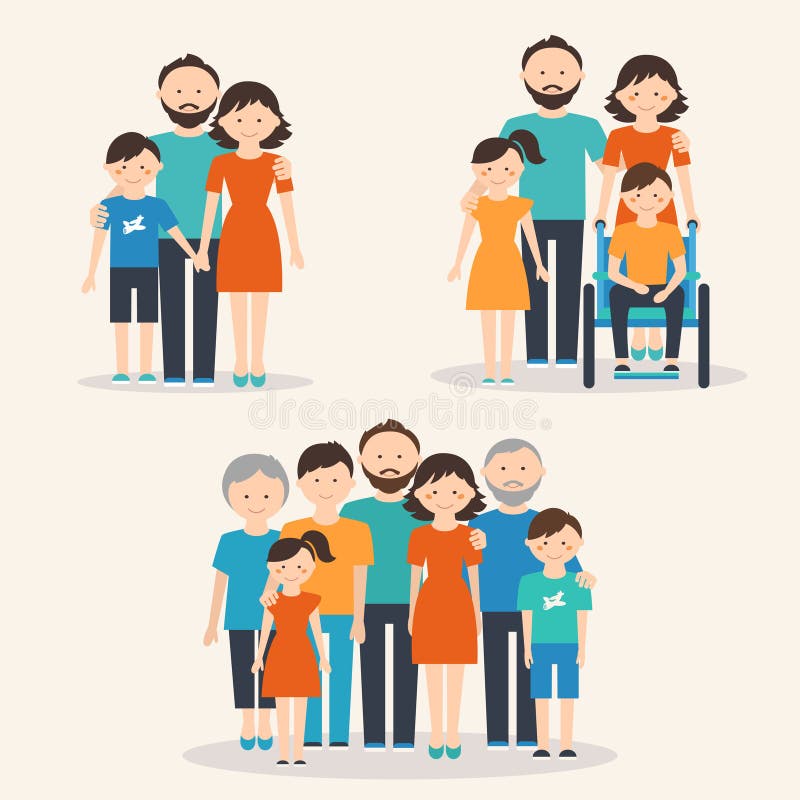



















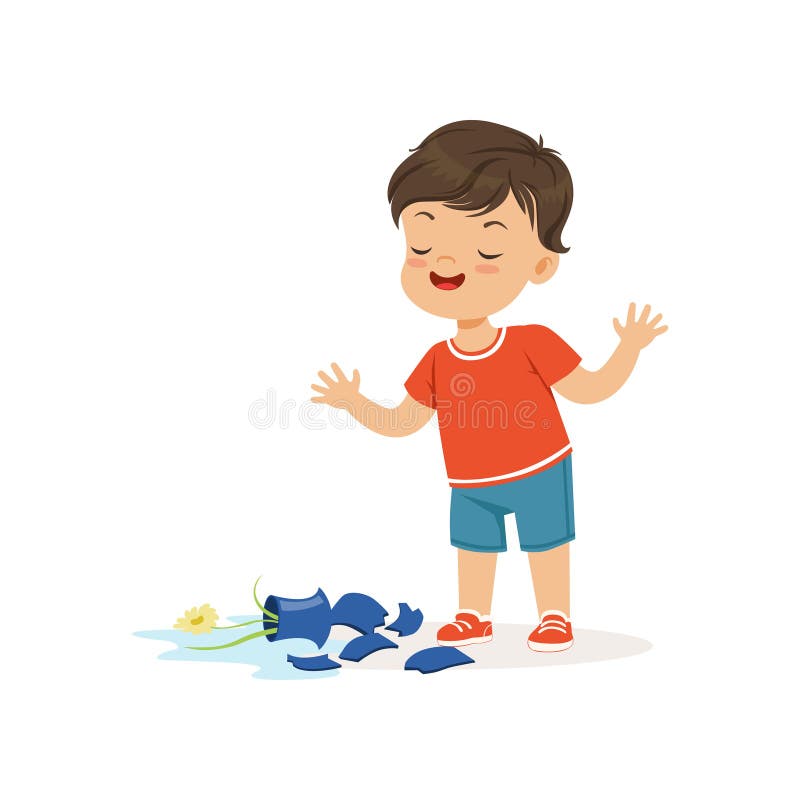

 f
f

 r
r







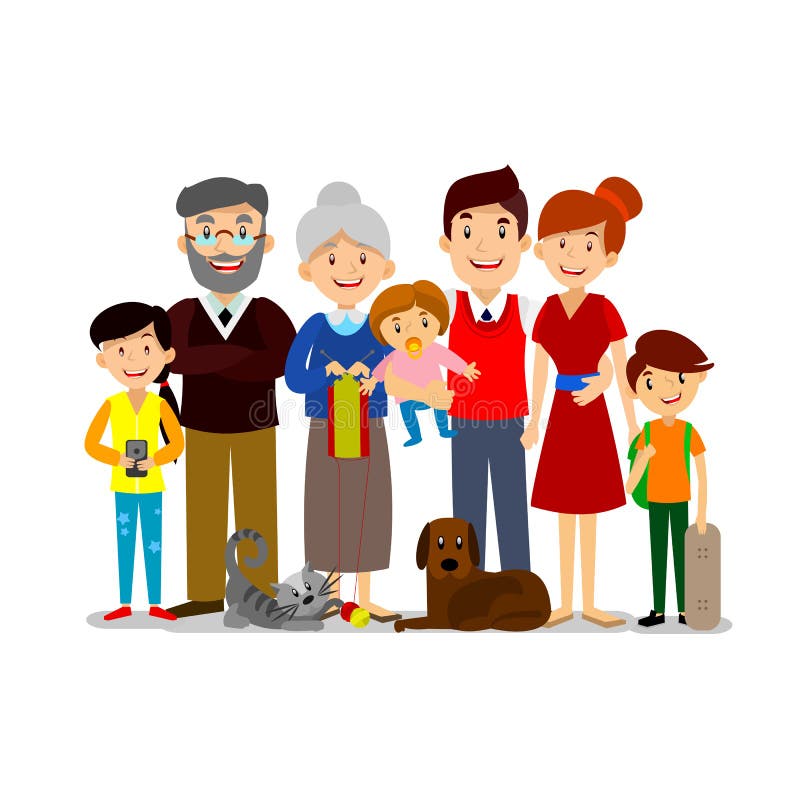
















































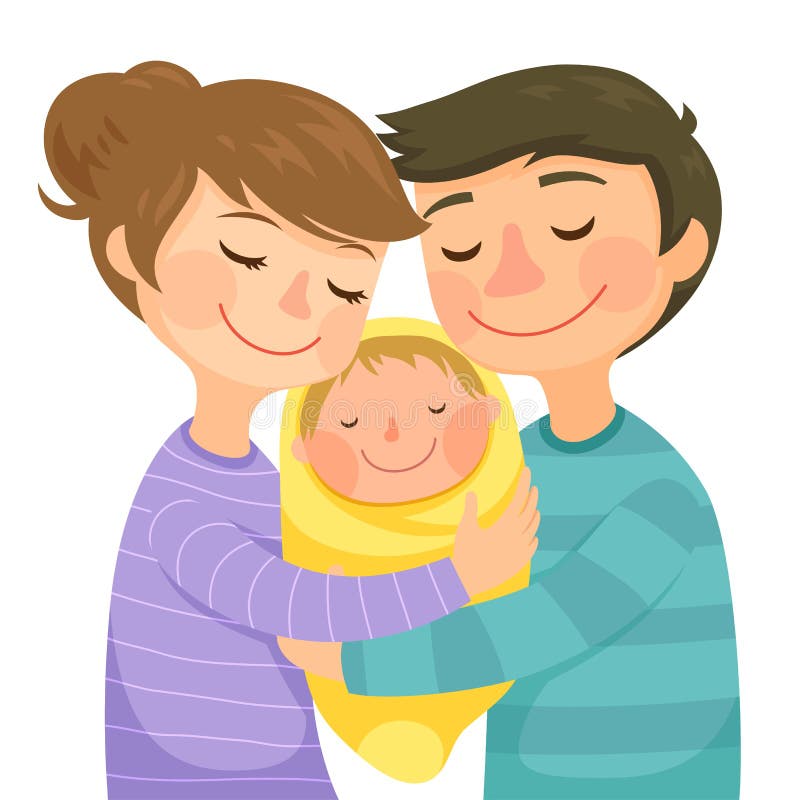
















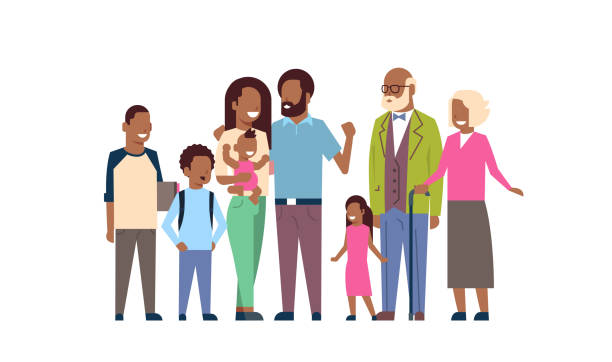























 drawing
 singing
 running
 reading