An analysis of the PowerPoint slides and the provided textbook, "Oxford Primary Social Studies 1," indicates a strong opportunity to integrate the textbook's content into Lesson 2 of the "Public Speaking with Confidence" course.
The PowerPoint's title, "Lesson 2," suggests that foundational concepts were covered in Lesson 1. The textbook's **Unit 1: Family and culture** provides simple, personal, and highly relatable topics perfect for young, weak ESL learners to build their first presentation on. This content lowers the cognitive load, allowing students to focus on the *structure* and *delivery* of the presentation rather than complex subject matter.
I have selected and adapted two key sections from the textbook for this lesson:
1. **Section 1.1: My family (pages 6-7):** This serves as an excellent warm-up and vocabulary-building exercise. It introduces the core theme of talking about oneself and one's immediate circle in a safe, familiar context. The concepts of "belonging," feeling "safe," and "loved" are simple, positive emotions that students can easily connect with.
2. **Section 1.5: Everyone is different (pages 14-15):** This section is the cornerstone of the lesson. It directly provides the content and structure for the students' individual presentations. The "fact file" activity on page 15 is a perfect scaffold, breaking down the task of "talking about myself" into manageable chunks: physical appearance, personal details, and preferences (likes/dislikes). This structured approach is crucial for building confidence and ensuring every student has a clear roadmap for their presentation script.
The following HTML integrates these selected pages. It preserves the original visual style while enriching it with detailed teacher guidance, interactive student-facing visual aids, and comprehension-checking tools, all designed to support a 30-student class of Primary 3-4 ESL learners.
```html
Lesson 2: My Family & Me - Presentation Content
Lesson Integration Guide: Using Textbook Content for Presentation
Objective: To use the simple, relatable topics of "Family" and "Me" from the textbook as the content foundation for students' first individual presentation. This lesson focuses on generating and structuring content.
Lesson Flow (90-100 mins):
(20-25 mins) Vocabulary & Phonics Builder. Use the new phonics section below to pre-teach essential vocabulary for the presentation. This is crucial for weak students.
(10 mins) Warm-up & Introduction: "My Family". Use the first section to activate students' prior knowledge and introduce key vocabulary in a low-pressure way.
(25-30 mins) Content Building: "Everyone is Different". This is the core activity. Guide students to complete the 'fact file' about themselves. This fact file becomes the script/outline for their presentation.
(15-20 mins) Practice & Sharing. Have students practice saying their fact file sentences to a partner. This builds confidence before they present to a larger group in a later lesson.
(5 mins) Wrap-up & Comprehension Check. Use the "Check Your Skills" interactive popup to quickly assess if students understood the components of their presentation plan.
Goal: To equip students with the essential vocabulary and pronunciation skills needed for their "Me and My City" presentation. This section uses a phonics-based approach to make new words less intimidating.
Method:
Introduce the Sound: For each sound group, introduce the target sound first. Use the interactive trigger ??? to show the mouth shape. Model the sound clearly. Say: "Look! This is the 'ee' sound. My mouth is wide, like a smile. Eeeee. You try!"
Choral Drilling: Point to each word card. Say the word clearly 2-3 times. Have the students repeat as a whole class, then in smaller groups or rows. Keep the pace energetic.
Simple Activity: Guide students through the quick, fun activity to reinforce the connection between the sound, the spelling, and the meaning. This keeps them engaged.
Contextualize: End with the "Let's Make Sentences!" part to show them how to use these words in their presentation script. This bridges the gap from single words to meaningful communication.
Part 1: The Long 'ee' Sound (ee / ea) ???
Listen and say the words. They have the same sound!
green
tree
beach
Peak
tea
?? Activity: Listen! Clap if you hear the 'ee' sound. (Teacher says: "green", "cat", "beach", "dog", "Peak").
Part 2: The 'ar' Sound ???
Listen and say the words. Hear the 'ar' sound!
park
star
card
car
?? Activity: Point! Which word has the 'ar' sound? (Teacher shows pictures of a CAR and a CAT).
Part 3: The Action Ending '-ing' ???
We add '-ing' to action words (verbs) for hobbies. Listen and say.
hike -> hiking
shop -> shopping
read -> reading
swim -> swimming
?? Activity: Do the action! (Teacher says "shopping", students pretend to shop. Teacher says "swimming", students pretend to swim).
Let's Make Sentences!
Now, let's use our new words to talk about you and Hong Kong!
I like the green trees in the park. ???
I like going to the beach. ???
In my free time, I enjoy reading. ???
My favorite hobby is shopping. ???
Guidance Note: Sentence Building
Goal: To move students from single words to full sentences they can use in their speech. This is the most important step.
Instructions:
Read the first sentence aloud with expression.
Have the class repeat it (choral drilling). Ensure they stress the bolded words.
Click the ??? trigger to show the pictogram. Ask students "What do you see?" to confirm understanding.
Ask students to stand up and say one of the sentences to a partner. Encourage them to use gestures!
Goal: To get students thinking and talking about a familiar topic and to pre-teach essential vocabulary for their presentations.
Step-by-step Guide:
Display the page. Ask students: "What can you see in the pictures?" Elicit words like 'family', 'parents', 'grandparents', 'sisters', 'brothers', 'baby'. Write key words on the board.
Use the Interactive Trigger. Click the ??? icon next to the large family picture. The visual aid will pop up. Use it to model pointing and naming family members. Ask students: "Who is in your family?"
Think-Pair-Share. Ask students to think about their own family for 30 seconds, then turn to a partner and share one thing about their family in English (e.g., "I have one brother.").
Families
Some children live in a family with only their parents and their brothers and sisters.
Other children live in a family with other family members such as grandparents, uncles, aunts and cousins.
???
What our family gives us
Our family is where we belong.
In our family we feel safe and loved. ??
In a family we learn how to live together.
Activities
Guidance Note: From Written to Spoken Practice
Adaptation: The original activity is written. Adapt it for speaking practice to align with the presentation goal.
Instructions:
Read the sentences aloud. Have the class repeat after you (choral drilling).
Ask students to complete the sentences verbally with a partner. For example, "My mother's father is my... grandfather!"
For question 2, provide sentence starters on the board: "I feel..." (happy, safe, loved). "With my family, I feel..."
1. Say these sentences and choose the correct word from the box.
My mother's father is my __________.
My aunt is my father's __________.
My uncle's son is my __________.
sistercousingrandfather
2. Tell a friend how you feel when you are with your family.??
1.5 Everyone is different
Guidance Note: Main Task - Building the Presentation Script (25-30 mins)
Goal: For each student to create a structured "Fact File" about themselves. This file will serve as the direct source material for their individual presentation.
Critical Steps:
Introduce the Goal: Tell students, "Now, we will make a plan to talk about YOU! This will help you in your presentation."
Model, Model, Model: Before students start, create your own 'fact file' on the whiteboard. Talk through each point aloud. "My hair colour is brown. I like pizza. I don't like spiders." This provides a clear, achievable example.
Use the Interactive Checkpoints: Go through each bullet point in the 'Activities' box. Click on the corresponding checkpoint icon for each one. The popups will provide a simple visual cue for each piece of information they need to find. This breaks the task down into very small, manageable steps.
Circulate and Support: Walk around the room as students work. Help with vocabulary (e.g., spelling of favorite foods, colors) and encourage them. Praise their effort.
People have different talents
People are good at different things. We all enjoy doing different things. A mixture of people makes life interesting.
Everybody is special just because of who they are.
Activities
1. Work with a partner. Make a 'fact file' for yourself and present it to your class. It should include:
a picture of you (you can use a photo or a drawing) ??
your birth date ??
age ?
height ??
hair colour ??
eye colour ???
three likes ??
one dislike ??
Differentiation for Weaker Students
Provide a worksheet template of the 'fact file' with sentence starters:
My name is __________.
I am ___ years old.
My hair is __________.
My eyes are __________.
I like __________, __________, and __________.
I don't like __________.
This provides maximum support and ensures every student can produce the necessary content for their presentation.
```
------------------------
```html
Lesson 2: Vocabulary & Nonverbal Communication
Phonics & Vocabulary Introduction
Goal: To pre-teach and practice the pronunciation of key vocabulary needed for the final presentation. This section builds phonemic awareness, helping weak students decode and pronounce words confidently.
Methodology: This section is modeled directly on the phonics workbook. We group words by shared vowel sounds (e.g., ai/ay) to help students recognize patterns. The flow for each sound group is:
1. Introduce the sound.
2. Learn individual words with visual aids.
3. Practice using the words in simple, relevant sentences.
Teacher's Script (5 mins intro): "Good morning, class! For our final presentation, we will talk about ourselves and our amazing city, Hong Kong. To do a great job, we need to know how to say our words clearly. Today, we are going to be 'Sound Detectives'! We will learn some important sounds and words that will help us speak like superstars! Are you ready?"
Let's Learn Our Speech Words!
Teaching Sound Group 1: 'ay' and 'ai'
Focus: Long 'a' sound.
Script: "Look here! We have 'a' and 'y', and 'a' and 'i'. When we see them together, they make one sound: 'ayyyy'. Like in the word 'play'. Can everyone say 'ayyyy'?" (Drill 3 times). "Great! Now let's look at some 'ayyyy' words."
Instructions:
Click the '?' on each word card. This will trigger a visual prompt for students to listen and repeat.
Model the pronunciation clearly for each word: "Say. Pl-ay. Tr-ain. N-ame." Break down the sounds.
After learning the words, move to the sentences. Click the '?' on the sentences to prompt students to read along.
ay
ai
...have the same sound!
?
say
?
play
?
train
?
name
?
Hello, my name is...
?
I like to play in the park.
Teaching Sound Group 2: 'ee' and 'ea'
Focus: Long 'e' sound.
Script: "Next up, 'e' and 'e' together, and 'e' and 'a' together. They make the 'eeee' sound, like you are smiling big! 'eeee'. Like in 'see' or 'beach'. Let's say it: 'eeee'!" (Drill 3 times). "Let's learn some 'eeee' words for our speech."
ee
ea
...have the same sound!
?
see
?
feel
?
beach
?
eat
?
I feel happy in Hong Kong.
?
I love the beach.
Teaching Sound Group 3: 'ou' sound
Focus: The /aʊ/ diphthong.
Script: "This is the 'ou' sound. It sounds like you hurt yourself! 'Ow!' Can you make that sound? 'Ow!' Like in 'proud'. This is a very important feeling word. When you do a good job, you feel proud." (Drill sound 3 times).
ou
...makes the 'ow' sound!
?
proud
?
about
?
I am proud to live in Hong Kong.
?
Let me tell you about my city.
Lesson Integration Note
Topic: Reviewing Nonverbal Communication (Lesson 1 recap).
Transition Script: "Excellent work on our new speech words! Now we know *what* to say. Next, we need to learn *how* to say it with our bodies! Remember what we learned about nonverbal communication? Let's be detectives again and look at some pictures."
Connection to PowerPoint: The PowerPoint slides introduce the key vocabulary of nonverbal communication (facial expressions, gestures, eye contact, posture). This adapted textbook page provides concrete, relatable scenarios for students to identify and practice these concepts. It moves from abstract words to practical application.
Objective: Students will be able to identify different types of nonverbal cues (positive and negative) in various social situations and understand how they show feelings and intentions.
Classroom Setup: This page can be projected for the whole class or printed for group work. The interactive elements are designed for a smartboard or for the teacher to control on a projected screen, clicking the checkpoints to guide the discussion.
How Do We Behave?
Teacher's Script & Activity Flow (20-25 mins)
Introduction (2 mins): "Class, today we'll look at some pictures about good behaviour. Remember what we learned about nonverbal communication? How our bodies talk? Let's be detectives and find the clues in these pictures!"
Guided Exploration (15 mins): Go through each picture one by one.
Click the '?' checkpoint for each image to reveal the student-facing visual guide.
Use the script provided in the teacher notes for each image to ask guiding questions.
Encourage students to use the key vocabulary: "What is his *posture*?", "What is her *facial expression*?".
Role-Playing (5 mins): "Great job, detectives! Now, work with a partner. Choose one picture. Act it out! Show me the good (or not so good) behaviour with your face and body. No talking!" Have a few pairs demonstrate for the class.
Understanding Check (3 mins): Click the "Let's Check! ?" button at the end. Use the summary popup to quickly review the visual icons. "Point to the happy face. What does this mean? Point to the slumped body. How does this person feel?"
Script: "Look at this picture. The mother is waking up her son. How does she look? (Happy, kind). How do you know? (She is smiling). This is a happy facial expression. What is she doing with her hand? (Touching his head). Is it a hard push? (No, it's a gentle touch). This is a kind gesture. Are they looking at each other? (Yes). Good eye contact helps show we care."
?
Say thank you when people do things for us.
Guidance for 'Thank You'
Focus: Posture, facial expression.
Script: "Here, the father is giving the girl a plate. What do you think she is saying? (Thank you). Look at her face. Is she happy? (Yes, a happy facial expression). Now look at how she is sitting. Is she slouching or sitting up straight? (Sitting up straight). This is good posture. It shows she is respectful and polite."
Script: "Oh no! What happened here? (The boy broke the table). How does the boy feel? (Sad, sorry). Look at his facial expression. Now look at his body. Is he standing tall and proud? (No, his shoulders are down). This posture shows he feels bad about what he did. His body is saying 'I'm sorry' too. How does the father look? (Angry, not happy)."
Script: "What is the girl doing in this picture? (Helping, cleaning up). This is very good behaviour! Look at how she is focused on her toys. Her posture shows she is working carefully. The mother is watching. How do you think the mother feels? (Happy, proud). This is a great way to show you care for your family."
```
------------------------
```html
Lesson: My Family Presentation
Presentation Skills: Vocabulary & Content
Let's Learn Our Words!
Teacher's Guide: Vocabulary & Phonics Warm-up
Goal: To pre-teach and reinforce essential vocabulary and pronunciation for the "My Family" presentation and the final "Me and My City" showcase. This section uses a phonics-based approach inspired by the provided workbook to help weak students grasp sounds and spelling patterns.
Rationale: By grouping words with similar sounds (e.g., `a_e`, `i_e`), students can better predict pronunciation and build confidence. The activities are designed to be interactive and repetitive, moving from single words to full sentences, directly mirroring the final presentation script.
Lesson Flow Integration:
Before the "My Family" card (15-20 mins): Use this entire section as a warm-up. This front-loads the necessary language skills.
Phonics Section by Section: Go through each sound group. For each word:
Show the picture and say the word clearly. Have students repeat (choral drill).
Break down the sound (e.g., "n-ame... name").
Click the interactive trigger for a fun, animated reinforcement. Use the call-to-action prompts.
Activity Box: Use the "Let's Talk!" section for pair work. This gets students using the new words in context immediately.
Connect to the Goal: Constantly remind them, "We are learning these words for our presentation!" This gives their learning a clear purpose.
a_e
The 'Magic e' Sound (like in name)
Teaching 'Magic e' (a_e)
Explain that the 'e' at the end is silent but magically makes the 'a' say its name (the long 'A' sound). Use hand gestures: show the 'a', then jump your hand to the 'e' and make a "shhh" sign, then point back to 'a' and say "A!"
Go through each word: name and safe. Drill the pronunciation. For safe, connect it directly to the "My Family" lesson that follows. "Your family makes you feel... safe."
name
safe
Let's Talk!
My name is . My family makes me feel safe.
i_e
Another 'Magic e' Sound (like in like)
Teaching 'Magic e' (i_e)
Use the same "Magic e" explanation. The silent 'e' makes the 'i' say its name (the long 'I' sound). Drill the pronunciation for like and live.
Common Error Alert: Hong Kong students often pronounce 'live' (as in "I live in...") as 'leave'. Explicitly contrast these sounds. "l-i-ve, live. Not l-ea-ve." Use the interactive trigger which can help model the correct mouth shape.
like
live
Let's Talk!
I live in Hong Kong. I like to .
1.1 My family
Teacher's Guide: Lesson Integration
Goal: Use this textbook content as the foundation for students' first practice presentation on the topic "My Family". This lesson connects directly to the PowerPoint slides on "Eye Contact" and "Making Eyes!" (facial expressions) and the vocabulary just practiced.
Lesson Flow:
Warm-up (Now review): After the phonics section, this content serves as the application. Say, "Great! We learned `safe` and `live`. Now let's read about family."
Content Introduction (10 mins): Use this page to introduce the topic. Go through each section, using the interactive triggers to elicit vocabulary and check understanding. Many of the words (family members, safe, loved) are now familiar.
Presentation Skill Link (5 mins): Explicitly connect the content to presentation skills. Focus on the "What our family gives us" section. Ask students, "How should you look and sound when you say your family makes you feel 'loved' and 'safe'?" (Connect back to 'Making Eyes!' slide).
Guided Practice (10 mins): Model a simple presentation using the practiced words. E.g., "Hello everyone. My name is [Teacher's Name]. I live in Hong Kong. Today I will talk about my family. In my family, I have my father and mother. My family makes me feel safe and loved. I like my family. Thank you." Emphasize clear pronunciation of the target words.
Pair Practice (10 mins): Students work in pairs to practice their own short presentation using the model.
Families
Teacher's Guide: Section 1 - "Families"
Objective: Introduce and reinforce basic family vocabulary.
Execution:
Point to the title "Families" and ask, "What is a family?" Elicit simple answers.
Click the yellow interactive trigger . The "Family Words" pop-up will appear.
Go through each icon with the class. Say the word (e.g., "Father") and have students repeat. Use TPR (Total Physical Response) by pointing to yourself or students where applicable. Ask students, "Who is in your family? Do you have a brother? A sister?"
Use the call to action: "Okay, now point and say! Point to 'Mother'. Good! Point to 'Grandfather'." This is a quick comprehension check.
Some children live in a family with their parents and their brothers and sisters.
Other children live in a big family with other family members like grandparents, uncles, aunts and cousins.
What our family gives us
Teacher's Guide: Section 2 - "What our family gives us"
Objective: Connect the topic of family to feelings, setting the stage for expressive delivery in presentations.
Execution:
Read the text aloud. Emphasize the words safe and loved. (Connect back to the phonics practice for 'safe').
Click the yellow interactive trigger . The "Good Feelings" pop-up will appear.
Explain the icons. "This shield means 'safe'. Your family protects you. This heart means 'loved'. Your family loves you."
Crucial Link to Presentation Skills: Use the call to action. Say, "When you talk about your family in your presentation, you should show this feeling! Don't just say 'My family loves me.' Show it! Let's see your 'loved' face. Look at our 'Making Eyes!' slide. Which face is good for 'loved'? Yes, the 'Happy' face or 'In Love' face. Let's practice! Smile!"
Our family is where we belong. In our family we feel safe and loved.
In a family we learn how to live together.
Teacher's Guide: Summative Check
Objective: Quickly review the key concepts (family members, feelings) before moving to presentation practice.
Execution: After covering both sections, draw students' attention to the big question mark button at the bottom. Say, "Okay, let's play a memory game!" Click the button . The pop-up will appear. Point to each icon and ask students, "What's this?" or "What does this mean?". This is a fast, fun way to assess their recall of the core vocabulary needed for their presentation.
```
------------------------
```html
Lesson Integration: All About Me!
Teacher's Guide: New Vocabulary Section
Objective: To pre-teach and drill essential vocabulary for the "All About Me" & "My City" presentations using a phonics-based approach inspired by the provided workbook. This builds pronunciation confidence before asking students to generate ideas.
Rationale: Weaker ESL students often know a word's meaning but can't pronounce it, which makes them afraid to speak. By grouping words by sound (`ou/ow`, `i_e`, `ea/ee`), we follow a familiar, structured method that lowers anxiety. This section is a crucial scaffold before the main task.
Introduce the Goal (2 mins):
"Today, we will plan our presentation! But first, let's learn some 'power words' to make our presentation sound amazing! We will learn them with sounds, just like in our phonics book."
Work Through Each 'Sound Box' (15 mins total, ~5 mins per box):
"Look at our first sound: the 'ow' sound, like in 'house'. Let's listen and say. Ready? (Click trigger for 'proud' 👆) Pr-oud. PROUD. Good! Now you say it. (Repeat for all words). Now, let's use these words. Look at the sentence: 'I am ____ to live in Hong Kong.' What word goes here? Yes, proud! Let's all say the sentence together: 'I am proud to live in Hong Kong!'"
Emphasize Physicality: Use the popups to prompt actions. When they say 'proud', ask them to stand tall. When they say 'like', ask for a thumbs up. This connects the word to a feeling and a gesture.
Pacing is key! Focus on choral drilling. Get the whole class repeating the sounds and words together. Celebrate good pronunciation with lots of praise. This is a warm-up, not a test.
🎓
Sounding Great: Your Presentation Words!
In this part, we will learn how to SAY words for our presentation:
Words about me.
Words about my city, Hong Kong.
🔊Sound Focus: The /aʊ/ Sound (like in house)
proud 👆
loud 👆
brown 👆
town / city 👆
✏️ Build a Sentence!
1. My hair is brown.
2. I am proud to live in my city.
3. I speak in a clear, loud voice.
🔊Sound Focus: The Long /aɪ/ Sound (like in like)
like👆
nice👆
lively 👆
time👆
✏️ Build a Sentence!
1. I like Hong Kong.
2. In my free time, I play games.
3. My friends are nice and lively.
🔊Sound Focus: The Long /iː/ Sound (like in bee)
features 👆
beach 👆
speak 👆
friends* 👆
*Sounds like 'frends'
✏️ Build a Sentence!
1. I like to speak English.
2. I play with my friends at the beach.
Teacher's Guide: From 'Facts' to 'Presentation'
Objective: To provide students with a simple, personal, and structured topic for their first individual presentation. This lesson adapts textbook content about personal identity into a planning tool for their presentation.
Rationale: Primary 3-4 ESL students, especially weaker ones, often struggle with *what* to say. By using the "All About Me" theme, we lower their cognitive load and anxiety. They are the experts on themselves! This allows them to focus on the *how* of presenting-the skills like using gestures, which were introduced in the PowerPoint slides.
Introduction (Bridge): Connect today's lesson to the presentation goal.
"Great job learning our new words! Now, what will you talk about in your presentation? The best topic is... YOU! Today, we will plan a presentation called 'All About Me!'"
Explore Differences (Page 1): Go through "People look different" and "People are different". Use the interactive triggers (👆) to make it fun.
"(Click 👆 next to 'look different') Everyone point to your eyes! Now your hair! Very good! (Click 👆 next to 'People are different') Are you quiet 🤫 or lively 🥳? Show me with your face! You are all special!"
Celebrate Talents (Page 2): Discuss "People have different talents". This is crucial for building self-esteem.
"Everyone has a talent! Something you are good at. (Click 👆) Maybe you like to draw 🎨, play soccer ⚽, or read books 📚. What is your talent? Let's share!"
Main Task - Presentation Planning: Introduce the "Activities" box as their "Presentation Plan". Model how to fill it out, using the interactive triggers for each point.
"This is your plan! For 'three likes', you can say 'I like...' and use a big thumbs up gesture! 👍 (Click the trigger). For 'one dislike', you can say 'I don't like...' and use a thumbs down. 👎 Let's plan together!"
Check for Understanding: Use the "Let's Check!" button at the end.
"Okay, quiz time! (Click 'Let's Check!'). What does this emoji mean? (Point to 👍). Show me the gesture! What about this one? (Point to 👎). Excellent!"
Differentiation: For weaker students, ask them to only choose one "like" and draw it. For stronger students, encourage them to add another talent or like to their plan.
👨👩👧👦
Topic Idea: Everyone is Different!
In this part, we will learn:
That every person is special.
That people are all different.
How to talk about ourselves.
People look different 👆
We all look different. We have different physical features, like our eyes and hair.
People are different 👆
People can be quiet, loud, calm or lively. People have their own personality. This is all the qualities that make them who they are.
📝
Let's Plan Your Presentation!
People have different talents 👆
People are good at different things. We all enjoy doing different things. A mixture of people makes life interesting. Everybody is special just because of who they are.
Your 'About Me' Presentation Plan
Use this fact file to plan what you will say. This will be the content of your presentation!
A picture of you (or a drawing) 👆
Your hair colour👆
Your eye colour👆
Three likes (e.g., food, sport, colour) 👆
One dislike👆
Say It: proud
Stand up tall! 💪 Say: I am PROUD!
Say It: loud
Use your big voice! 📣 Say: LOUD!
Say It: brown
Point to something brown! Say: BROWN!
Say It: town
This is our city or town! Say: TOWN!
Say It: like
Show me thumbs up! Say: I LIKE it!
Say It: nice
Smile! 😊 Say: That is NICE!
Say It: lively
Jump up and down! Say: I am LIVELY!
Say It: time
Point to a clock! Say: What TIME is it?
Say It: features
Point to your eyes and nose! Say: My FEATURES.
Say It: beach
Pretend to swim! Say: I like the BEACH!
Say It: speak
Open your mouth to talk! Say: I can SPEAK!
Say It: friends
Point to a friend! Say: My FRIENDS!
We Look Different!
Point to your EYES!
We Are Different!
Are you quiet or lively? Show me your face!
Your Talents!
What is your talent? Show me with your hands!
Picture Time!
Draw yourself. Big smile! 😊
Hair Colour
What colour is your hair? Point to it!
Eye Colour
What colour are your eyes? Blink! 👀
Three Likes!
What do you LIKE? Show me a thumbs up!
One Dislike
What you DON'T LIKE? Show me thumbs down!
Let's Check!
Teacher: Point to a picture and ask, "What does this mean?" or "Show me the action!"
```
------------------------
```html
Lesson Plan - My Presentation Content
Let's Learn the Words!
12
Lesson Goal: This page is a pre-teaching vocabulary and phonics lesson. It's designed to equip students with the essential words and pronunciation skills they need for their 'All About Me' & 'Me and My City' presentations.
Methodology: The activities are modelled after the provided phonics workbook, grouping words by sound patterns to help weak learners. Each section should be taught with a 'Listen, Repeat, Practice' rhythm. Use lots of gestures and TPR.
1. The 'Bossy R' Sounds! (ar, or)
Objective: To teach the /ɑːr/ and /ɔːr/ sounds and link them to presentation topics like places and hobbies.
Pronunciation Focus: For 'ar', have students open their mouths wide like at the doctor's: "aaahhh" then add the /r/. For 'or', make lips round like an 'O'.
Step-by-step:
Point to the 'park' card. Say "p-ar-k, park". Have students repeat.
Do the same for 'sport'.
Read the practice sentence, pausing at the blanks. Elicit the answers from the class.
Click the interactive trigger 💡 to show them HOW to use this idea in their presentation.
Let's learn words to talk about places and hobbies!
park
sport
I like to go to the park to play sports.
💡
2. Action Words! (-ing)
Objective: To teach the '-ing' suffix for describing hobbies and activities (gerunds). This is high-frequency for the presentation script.
Activity Idea (TPR): Mime each action. Say "I am singing." Have the whole class mime and say it. Then transition to "I like singing." This helps them feel the meaning.
Script Link: Explicitly tell them: "In your presentation, you will say 'In my free time, I enjoy...' and then you use one of these words!"
Let's talk about what we like to do!
singing
drawing
shopping
In my free time, I enjoy singing and drawing.
💡
My Special Presentation: All About Me!
13
Lesson Integration Goal: This page serves as the content-gathering and structuring tool for the students' "All About Me" presentation. Now that they have practiced the key vocabulary on page 12, they can start filling this in.
Connection to PPT & Vocab Page: Constantly link the content points here with the delivery skills from the PPT and the words they just learned. For example, when they talk about something they like, remind them to SMILE (body language) and use an '-ing' word (I like singing).
1. My Look 👀
Objective: To help students formulate the first part of their presentation: a simple physical description. This is an easy and concrete starting point.
Step-by-step:
Read the sentence "We all look different..." aloud.
Ask students: "What makes us look different?" Elicit answers like 'hair', 'eyes', 'tall', 'short'.
Click the interactive trigger icon 💡 to show the visual guide. Go through the sentence patterns "I have..." with the class.
Have students practice in pairs, describing their own hair and eyes to each other.
We all look different. We have different features, like our eyes and hair.
💡
2. My Personality 😊
Objective: To introduce the abstract concept of 'personality' in a simple, accessible way. Link personality to presentation delivery.
Step-by-step:
Read the text about personality aloud. Explain that 'personality' means "what you are like inside".
Click the interactive trigger icon 💡 to show the emoji options.
Explain each emoji: 🤫 (quiet), 😄 (lively), 😌 (calm), 🗣️ (loud). Connect back to the 'Making Eyes!' slide in the PPT.
Ask students to choose one that is most like them. Perform gestures for each word. A 'lively' person might jump a little, a 'calm' person might take a slow deep breath.
Crucial Link: Say, "When you give your presentation, your body language and posture should show your personality! If you say you are lively, don't slouch! Stand tall and smile!"
People have their own personality. This is who you are. Are you quiet, lively, calm, or loud?
💡
3. My Talents 🎨🎤🏆
Objective: Encourage students to identify and share something they are good at, building their confidence. This section is perfect for incorporating Total Physical Response (TPR).
Step-by-step:
Read the text about talents. Explain 'talent' means "something you are good at".
Click the interactive icon 💡 to show the popup with more options. Connect these to the '-ing' words they just learned (singing, drawing).
Ask students to think about their own talent. "Raise your hand if you are good at drawing! Singing? Running?"
TPR Activity: Say "When you say your talent, show me! Don't just tell me!" Have students stand up and mime their talent as they say "I am good at..."
People are good at different things. We all enjoy doing different things. A mixture of people makes life interesting.
💡
Objective: This is the main task. Students use this as a planner to write down the key points for their presentation script.
Guidance:
Frame this as their "Presentation Idea Map". Refer back to the words and sentences from page 12.
Go through each item. Model how to turn a point into a full sentence. E.g., For "Hair colour", you write "black". For the presentation, you say "I have black hair."
Encourage them to draw their picture first.
For 'Likes' and 'Dislike', click the 😊 and 😟 triggers to reinforce the link between the content and the expressive body language (smiling, making a face). Prompt them to use '-ing' words.
My Presentation Fact File
Use this to plan your presentation. Tell us about you!
🖼️ A picture of you
💇 Hair colour
👁️ Eye colour
👍 Three likes 😊
🎂 Your age
👎 One dislike 😟
?
Check for Understanding: After covering all sections, click this large question mark. The review popup will appear. Point to each icon and ask the class: "What's this? What do you say in your presentation for this part?" This is a quick, fun, low-pressure way to review and assess their recall of the key presentation components.
Talk about a park you like! "I like to visit Victoria Park."
What do you like doing? "I enjoy playing games."
Point to your hair. Say: "I have long hair." Point to your eyes. Say: "I have brown eyes."
🤫😄😌🗣️
Choose one. Stand tall! Say: "I am a lively person."
🎤🎨🏃♂️📖💃
What is your talent? Show the action! Say: "I am good at singing."
😄
Smile! Say: "I like dogs."
😫
Make a face! Say: "I don't like homework."
Let's Review!
😊🤔
🎨🏆
👍
👎
🎂
Teacher: Point to a picture. Ask students: "What do you say here?"
```
------------------------
```html
My Story: Talents and Values
Guiding the Vocabulary Builder
Overall Goal: To pre-teach and practice key vocabulary and sentence structures needed for the presentation plan. This builds confidence, especially in pronunciation for weak students.
Methodology: We are using a phonics and morphology-based approach, similar to the provided workbook. We break words into sounds and parts (`root` + `suffix`) to make them easier to decode and remember.
Pacing: Spend about 15-20 minutes on this entire section. Keep the pace brisk and focus on choral repetition.
Let's Learn Our Words! 🗣️
Part 1: The `-ful` Sound
Goal: Teach the suffix "-ful" and the value words "helpful" and "respectful".
Introduce the Suffix: Explain that `-ful` at the end of a word means "full of". So, `helpful` means "full of help".
Drill the Sound: Click the 👂 icon next to `-ful` and have the class repeat the sound /fʊl/ several times.
Build the Words:
Focus on "helpful". Drill the root word `help`. Then drill the full word `helpful`.
Use the interactive icons. Click 👂 for listening, 🎤 for speaking practice. Encourage them to write it in the air or notebooks when you click ✏️.
Repeat the process for "respectful". This is a harder word. Break it down: `re-spect-ful`. Clap the syllables.
Contextualize: Read the practice sentences aloud and have students repeat. Ask them to give a thumbs up if they are helpful.
Words ending in -ful👂
🤝help+ful👂🎤
I like to be helpful to my friends.
🙇respect+ful👂🎤
We should be respectful to our teachers.
Part 2: The `-ing` Sound (Action Words)
Goal: Teach the "-ing" suffix for activities/talents.
Introduce the Suffix: Explain that `-ing` can be added to action words (verbs) to talk about an activity. "I like to play." becomes "I like playing."
Drill the Sound: Click the 👂 icon and have the class repeat the /ɪŋ/ sound.
Explore the Words: Go through the grid. For each item:
Point to the picture. Ask, "What is this?"
Say the word clearly. Have them repeat.
Use the interactive icons for listen/speak practice for a few key words like `drawing` and `playing`.
Connect to the Lesson: Say, "These are all special talents! You will use these words in your presentation plan."
Words ending in -ing👂
drawing👂
playing👂
writing
singing
Part 3: Presentation Sentences
Goal: Practice the core sentences for their presentation to improve fluency and pronunciation.
Explain the Purpose: "These are the most important sentences for your speech! Let's practice them so you sound confident."
Sentence by Sentence Drill:
Read the first sentence: "Hello, my name is..."
Click the 👂 icon to show the "Listen" animation. Have them listen carefully to the intonation (voice going up and then down).
Click the 🎤 icon. Have the whole class repeat the sentence 2-3 times.
Ask a few individual students to say the sentence with their own name.
Repeat this process for all the key sentences. Pay special attention to "An im-por-tant va-lue to me is..." as it's long and complex.
Link to Final Task: "Great! Now you are ready to fill in your Presentation Plan!"
Objective: To help students generate personal and meaningful content for their presentation. This page serves as the foundation (the "what to say") before focusing on delivery skills (the "how to say it").
Connection to Lesson: This directly follows the vocabulary building section and the "Value Corners" warm-up. You are bridging the abstract idea of 'values' into their personal lives. It also represents the 7% "Content/Substance" from the Communication pie chart slide.
Lesson Flow:
Transition: Use a script like: "Great job with the words! Now, let's use those words to think about what makes YOU special for your presentation. We will look at your talents and your personal values."
Introduce "Talents": Use the first section to brainstorm. Encourage a broad definition of talent.
Introduce "Values": Use the second section to connect back to the warm-up and make it personal.
Complete the Plan: Guide students to fill out the "My Presentation Plan" at the end as their script outline.
🌟 My Story: What Makes Me Special? 🌟
Guiding "People have different talents"
Goal: Broaden the definition of "talent" beyond typical school subjects. Make every student feel they have a talent.
Step 1: Point to the pictures. Ask: "What is she doing? (Drawing). What is he doing? (Playing football). What is she doing? (Writing)."
Step 2: Say, "These are talents! A talent is something you are good at or enjoy doing."
Step 3: Point to the sparkling star icon. Say, "Let's find more talents! Click the star!" After they click, discuss the icons that appear. Ask students to point to a talent they have or want to have.
Step 4: After the discussion, click the "?" icon for the understanding check. Ask students to name the talent for each icon you point to.
People have different talents ✨
Everyone is good at different things. We all enjoy doing different things. This makes us special!
What is your special talent? ❓
Guiding "What is Important to You?"
Goal: Help students understand 'values' and connect them to their own lives, using vocabulary from the warm-up.
Step 1: Read the first paragraph aloud. Emphasize the keywords: important ideas and values.
Step 2: Connect to the warm-up. "Remember our warm-up game? We talked about being hardworking, helpful, brave, and respectful. These are values!"
Step 3: Point to the heart icon. Say, "Let's look at these values again. Click the heart!" Discuss the icons. Ask students to choose one value that is very important to them.
Step 4: Have them turn to a partner and share. "Tell your friend: 'To me, being helpful is important.'"
Step 5: Click the "?" icon to check their understanding of the value icons.
What is Important to You? (Values) 💖
If we say we value something, we mean that it is important to us. Ideas that are important to us, like being fair, honest, and showing respect, are called values.
Our values guide us to be good people.
Which value is important to you? ❓
Guiding "My Presentation Plan"
Goal: Consolidate students' ideas into a simple, structured plan for their presentation. This is the main output of the lesson.
Step 1: Introduce this section as their "Presentation Plan" or "My Story Map". Explain that this will help them remember what to say.
Step 2: Go through each part. Model how to fill it in on the board.
For "My Special Talent": "I will write 'drawing pictures'."
For "An Important Value": "I will choose 'helpful'."
For "My Story": This is the most challenging part. Scaffold heavily. "Think of one time you were helpful. A simple story! For example: 'I help my mom wash the dishes.' or 'I help my friend with homework.'" Brainstorm examples for other values as a class.
Step 3: Give students 5-7 minutes to fill in their own plan. Walk around and provide individual help, especially with the story part. Reassure them that simple sentences are perfect.
📝 My Presentation Plan 📝
Let's make a plan for your presentation! Fill in the blanks to tell your story.
Hello, my name is ______________________________.
My special talent is ______________________________.
An important value to me is ______________________.
My story is: ______________________________________________________________________.
Thank you!
What is your talent?
Kindness
Helping
Singing
Gaming
Caring
Sharing
Which value is important?
Hardworking
Honest
Brave
Respectful
Fair
Helpful
Let's Check! What is this talent?
Let's Check! What is this value?
Listen to the sound: -ful
Listen to the sound: -ing
Listen! help-ful
Your turn! Say the word: helpful
Listen! re-spect-ful
Your turn! Say the word: respectful
Listen! draw-ing
Listen! play-ing
Listen carefully: "Hello, my name is..."
Now you say it! "Hello, my name is [your name]."
Listen carefully: "My special talent is..."
Now you say it! "My special talent is [your talent]."
Listen carefully: "An important value to me is..."
Now you say it! "An important value to me is [your value]."
Listen carefully: "Thank you."
Now you say it! "Thank you."
```
------------------------
```html
Values and Good Behaviour
1.7
What is important to us?
Lesson Integration Note
Objective: To introduce the core concept of "Values" before the "Value Corners" activity from the PowerPoint. This page provides the essential vocabulary and framework for students.
Lesson Flow:
Warm-up (2 mins): Ask students, "What is important to you? Your family? Toys? Friends?" Write their ideas on the board.
Introduce 'Values' (3 mins): Direct students to the title. Explain that today they will learn about 'important ideas'. Read the first section about 'Values'. Use the interactive trigger to reinforce the meaning.
Define & Elicit (5 mins): Go through the example values: fair, honest, and respect. Use the interactive icons and simple gestures/examples for each. Ask students to give you a thumbs-up if they think being 'honest' is important.
Introduce 'Role Models' (2 mins): Explain 'Role Models' using the superhero icon as a visual aid. Ask, "Who is a good role model? Your mum? Your teacher? Spiderman?"
Transition: Say, "Great! Now we know what values are. Let's look at what these values look like every day..." and transition to the next page.
Values
Teacher's Script: "Class, look here. It says, 'If we say we value something, we mean that it is important to us.' This is a big word: Values. Let's say it together: Val-ues. Values are things we think are very, very good. Like being a good person."
If we say we value something, we mean that it is important to us. Ideas that are important to us, like being fair, honest, and showing respect, are called values.
Values in culture
Values become part of our culture because most people agree with them. Your school will encourage honesty and hard work as part of its culture.
Guiding Questions: "Look at this picture. What are these people doing? (Operating/helping someone). This shows they are helpful and they care. These are good values."
Doctors show the value of caring for others.
Guiding Questions: "Who is this? (A football player). He is trying his best! This shows hard work and perseverance (never give up!)."
Athletes show values like hard work.
Role models
Teacher's Script: "Role models are people who show good values. We want to be like them. Who is a good role model for you?" Elicit answers like 'my mum', 'my dad', 'my teacher'.
Role models set a good example.
4.1
Good behaviour in the home
Lesson Integration Note
Objective: To connect the abstract concept of "values" to concrete, everyday actions. This page provides clear, actionable examples for students.
Lesson Flow:
Bridge from Previous Page (1 min): Say, "We just learned about important ideas called 'values'. Now, let's see how we can SHOW these values. We show them with 'good behaviour'."
Picture Walk (8 mins): Go through each of the four pictures. For each one:
Ask "What is happening in this picture?"
Read the label (e.g., "greet people"). Click the trigger to show the visual cue.
Ask, "What value does this show? Is it Respect? Is it being Helpful?" Connect the action to a value word.
Ask students to role-play the action. "Show me how you greet your mum." "Show me how you say thank you."
Consolidate & Transition (2 mins): Summarise the four behaviours. Say, "See? Greeting, saying thank you, saying sorry, and helping are all ways to show good values. Now, let's learn some more value words for our game!" Transition to the new Phonics page.
At home we should:
Focus: Respect. Script: "Look here. When you wake up, you see your family. What do you do? You greet them! You say 'Good Morning!' This shows respect."
• greet people when we first meet them in the day
Focus: Respect / Gratitude. Script: "Here, dad gives his daughter food. What does she do? She says 'thank you'. This also shows respect."
• say thank you when people do things for us
Focus: Honesty / Responsibility. Script: "Oh no! The boy broke something. What should he do? He must say sorry. This shows he is honest and takes responsibility."
• say sorry if we do something wrong
Focus: Helpfulness / Responsibility. Script: "Look at this girl. She is cleaning her toys. She is being helpful. This is a very good value!"
• always be helpful and obedient in the home
Check for Understanding
After teaching both pages, use this button to launch the summary activity. This is a quick, low-pressure way to see if students can recall the meaning of the key visual icons.
Teacher's Script: "Okay everyone, let's play a memory game! I will show you some pictures. You tell me what they mean! Ready?" Point to each icon in the pop-up grid and elicit responses from the class. For example, point to the scales icon and ask, "What is this one?" Students should say "Fair!".
SP
Let's Learn Our Words!
Pedagogical Rationale
This page is designed based on the principles observed in the phonics workbook. It breaks down difficult, multisyllabic vocabulary into manageable chunks based on sounds (phonics) and word parts (morphology). The goal is to build students' confidence in pronouncing and understanding the key vocabulary needed for the "Value Corners" game and their final presentation.
Methodology:
Grouping by Sound/Pattern: Words are grouped by suffixes (-ful, -ing), r-controlled vowels (ar), and vowel digraphs (a_e) to help students see patterns.
Syllable Clapping: For long words, we use a physical, kinesthetic approach. Breaking words into syllables and clapping them out makes them less intimidating and easier to remember.
Simple Definitions & Visuals: Every new word is paired with a simple, student-friendly definition and a clear icon, catering to visual learners.
Sentence Frames: Words are presented in simple, reusable sentence frames that students can directly apply in their speaking tasks.
Part 1: Words for Our Values
Teacher's Script: "Now, for our 'Value Corners' game, we need to learn some new words. Don't worry, we will learn them together, sound by sound!"
Ending with '-ful' (means "full of...")
When a word ends in -ful, it means it is "full of" that thing!
→ He is full of respect. → He is respectful.
→ She is full of help. → She is helpful.
The 'ar' Sound (like in car and farm)
Connect this sound to words students may already know. Write 'car', 'star', 'farm' on the board. Underline 'ar' and drill the sound. Then introduce 'hard'.
When you work very hard, you are hardworking.
Let's be Brave! (the 'a_e' sound, like in cake)
The magic 'e' at the end makes the 'a' say its name! Like in game, name, cake.
Someone who is not scared is brave.
Our Super Big Words! (Let's Clap! 👏)
Instruction: This is the most crucial part. For each word, click the trigger, show the popup, and lead the class in clapping out the syllables. Do it slowly first, then at normal speed. Repetition is key. For example: "Ready? Re (clap) - spon (clap) - si (clap) - bi (clap) - li (clap) - ty (clap)! Again!"
Responsibility: This means you do your job and what you promise to do.
Perseverance: This means you never, ever give up!
Integrity: This means you are honest and do the right thing.
Part 2: Words for Our Speech
My Hobbies (the '-ing' sound)
Teacher's Script: "For your speech, you will talk about your hobbies. Many hobbies end with the sound '-ing'. Let's practice." Point to each word, say it, and have the class repeat. Ask simple questions: "Who likes shopping? Who likes swimming?"
In my free time, I like...
shopping,
dining,
hiking,
swimming,
reading, or
playing.
My Hong Kong
Let's learn words to talk about our amazing city!
Culture: This is about our food, our traditions, and how we live.
Landmarks: These are famous places, like The Peak or the Big Buddha.
Festivals: These are special holidays, like Chinese New Year!
Check for Understanding
Use this button for a final check on the new vocabulary. Ask students to match the icon to the word or concept. "Point to the picture for 'Perseverance' (Never Give Up)!"
Values = What is important! ❤️
Fair! You get one, I get one. Same-same.
Honest! Tell the truth.
Respect! Be nice to people.
Role Models! Be like a hero!
Say hello!
Say 'Thank You'!
Made a mistake? Say 'sorry'.
Help at home! Be a good helper!
Memory Game! What are these?
Respectful: Full of respect!
Helpful: Full of help!
Hardworking: Work very hard!
Brave: Not scared!
Responsibility
Do your job!
Perseverance
Never give up!
Integrity
Be honest!
shopping
dining
hiking
swimming
reading
playing
Culture (food, traditions)
Landmarks (famous places)
Festivals (special holidays)
What are these words?
Hardworking
Brave
Do your job (Responsibility)
Never give up (Perseverance)
Be honest (Integrity)
Culture
```
------------------------
```html
Lesson Handout: Our Values and Behaviour
Our Values and Behaviour
💡 Overall Lesson Goal
Objective: To introduce students to the core concepts of 'values' and 'responsibility' so they can confidently participate in the "Value Corners" discussion. This handout provides the essential vocabulary and framework for that activity.
Pacing: This entire handout, including the new phonics section, should take approximately 25-30 minutes. The phonics part is crucial for weak students, so don't rush it.
🗣️Let's Learn Our Value Words!
📋 Vocabulary Warm-up (8-10 minutes)
Goal: To pre-teach and practice the pronunciation of the four core, multisyllabic value words for the "Value Corners" activity. Students' confidence in *saying* the words is key to their participation.
Introduce the Activity: "Today, we will talk about important ideas called Values. These words are big, but we can learn them! Let's be word detectives."
Follow the Cards: Go through each card one by one. Use the "I say, you say" method (choral drilling).
Emphasize Syllables: For the long words, physically tap your arm or the table as you say each syllable. Encourage students to do the same. This makes it a physical, memorable activity. Use the interactive popups to guide this.
Connect to Meaning: After practicing pronunciation, briefly explain the simple meaning provided on each card. "Respect means be kind." "Perseverance means never give up!"
Sound Focus: /re/ and /spect/
Respect
It means: Be polite and kind.
Sound Focus: The "-ity" Ending
Integrity
It means: Be honest and do the right thing.
Sound Focus: The "-ity" Ending
Responsibility
It means: Do what you are supposed to do.
Sound Focus: The "Per-" Start
Perseverance
It means: Never give up!
🤔1. What are Values?
💡 Step 1: Introduce 'Values' (3-4 minutes)
Review: "We just learned some value words! Can you remember one? (Elicit 'respect', 'integrity' etc.) Very good! Now let's learn what 'values' are."
Read Aloud: Read the first paragraph clearly. Emphasize the word "important".
Elicit Examples: Ask the class: "What is important to you? Your family? Your friends? School?" This connects the abstract idea to their lives.
Introduce Key Vocabulary: Point to the highlighted words: values, fair, honest, respect. Say each word clearly and have students repeat it.
Use the Interactive Pop-up: Click the lightbulb icon next to values. Guide students through the visuals. "Look! 'Values' are good ideas. Like being fair... see the scales? Same-same. Like being honest... telling the truth. And respect... being kind to others."
If we say we value something, we mean that it is important to us.
Ideas that are important to us, like being fair, honest, and showing respect, are called values.
A role model is a person who sets a good example for others by showing good values.
🔎Activity: What Values Can You See?
🖼️ Step 2: Picture Analysis (5-6 minutes)
Goal: Move from defining values to identifying them in situations. This is a direct scaffold for the "Value Corners" activity.
Whole-Class Interaction: Go through each picture one by one.
Picture 1 (Family): Ask, "What do you see? What are the children doing?" (Playing, sharing). "This shows the value of sharing and love." Click the icon to reveal the visual cue.
Picture 2 (Classroom): Ask, "What is the boy doing?" (Raising his hand). "This is good. He is showing respect to the teacher and other students." Click the icon.
Picture 3 (Helping): Ask, "What is happening here? Is this a good thing?" (Yes, helping an old man). "This shows the value of caring and being helpful." Click the icon.
Consolidate: After discussing all three, praise the students. "Excellent! You can see values everywhere!"
In our family
At school
In our community
🚶♂️2. How Should I Behave?
💡 Step 3: Link Values to Behaviour (3-4 minutes)
Crucial Connection: This is where you connect the 'ideas' (values) to 'actions' (behaviour).
Teacher Script: "So, we have values - good ideas. Now, let's talk about behaviour. Behaviour is what you DO. Your actions." Read the first paragraph.
Introduce 'Responsibility': Read the second paragraph. Click the brain icon. Explain the visual: "Responsibility is about CHOICE. You think... and you choose to do the right thing. You choose good behaviour."
Connect to PowerPoint: Say, "When you find a lost Octopus card, you have a choice. What is the responsible choice? This is responsibility!" This directly links to the lesson's main activity.
Behaviour is about the things we say and do. Good behaviour shows that we respect and care about people.
Responsibility means that we choose how to behave. It is our responsibility to make the right choice.
Good behaviour in the home
📋 Step 4: Concrete Examples (4-5 minutes)
Goal: Provide students with concrete, script-like examples of good behaviour.
Picture Walk: Show the four pictures. For each one, ask "What is happening?"
Activate the Pop-ups: Click the speech bubble icon for each picture. Have the students read the simple sentence in the pop-up aloud. "Good morning, Mum!" "Thank you, Dad!" etc.
Role-Play: Quickly have a few students stand up and act out one of the scenes with you or a partner. E.g., "Give me a pen." (Student gives pen). "Thank you!" This makes the language active.
Final Check: Use the final "Check Your Actions!" button. It's a quick recap of the whole page, asking students to sort ideas (values) from actions (behaviours). This is a great final formative assessment before moving to the main presentation task.
Greet people
Say thank you
Say sorry
Be helpful
Let's Say It!
Re
spect
Now, TAP your arm and SAY the word! Re-spect! Three times!
Let's Say It!
In
teg
ri
ty
TAP and SAY! In - teg - ri - ty! Three times!
Let's Say It! (Wow, so long!)
Re
spon
si
bil
i
ty
TAP and SAY slowly! Re-spon-si-bil-i-ty! Try it!
Let's Say It!
Per
se
ver
ance
TAP and SAY! Per - se - ver - ance! Three times!
Values = Good Ideas!
Fair: Everyone gets the same.
Honest: Tell the truth. (No lying!)
Respect: Be kind to others.
Role Model = Good Example!
We learn from good people, like a hero or a teacher.
Value: Sharing & Love ❤️
They are playing nicely and sharing toys.
Value: Respect 🙏
He waits his turn and respects the teacher.
Value: Caring & Helpful 🤗
He is helping someone who needs it.
Responsibility = You Choose!
You think, and then you choose to do the right thing.
"Good morning, Mum!"
"Thank you!"
"I am sorry!"
"I can help!"
Let's Check! What do these pictures mean?
(Teacher: Ask students to point to a picture and say the value.)
Fair
Honest
Sharing / Love
Helpful
Good Ideas or Good Actions?
(Teacher: Ask students, "Is this an idea (value) or an action (behaviour)?")
Being Fair
"Good morning!"
Greeting
Being Honest
"I'm sorry!"
Saying sorry
```
------------------------
```html
Lesson 2: Values and Behaviour
Word Power Up!
Vocabulary Warm-up Guide
Objective: To pre-teach and reinforce key vocabulary for the lesson using a phonics-based approach. This builds pronunciation confidence and comprehension for weaker students before they encounter these words in the main lesson.
Methodology: This section is inspired by the 'Smart Phonics' workbook. We group words by sound patterns to make pronunciation easier. For each group, follow this pattern:
Introduce the Sound: Point to the letters and model the sound clearly. Use choral drilling (e.g., "Listen... /iː/. Now you say it... /iː/!").
Introduce Words: Go through each word card. Say the word, have students repeat. Point to the image to solidify meaning.
Interactive Practice: Encourage students to click the interactive triggers. The visual cues will reinforce your instructions (e.g., asking them to say the word aloud).
Contextualize: Read the practice sentence together. Explain that they will use these words in today's lesson to talk about values and their speech.
Let's Learn: The Long 'ee' Sound!
ee & eaThey sound the same: /iː/
Teaching Tip: Long 'ee'
This sound is common in the lesson material. Linking them helps students decode new words.
Say: "Look! 'ee' and 'ea' are friends. They make the same sound. Let's make a big smile and say /iiiiii/! Like when you see cheese!"
greet ?
meet ?
team ?
peak ?
beach ?
speech ?
💬 Let's say it together: "In my speech, I will talk about meeting my team at the beach." ?
Let's Learn: Big Idea Words!
Let's break down long words to say them easily!
Teaching Tip: Multisyllabic Words
These words are conceptually difficult and phonetically challenging. Breaking them into syllables and clapping them out makes them less intimidating.
Say: "This is a big word! Don't worry! We can chop it up. Look: Re-spon-si-bi-li-ty. Let's clap it! Re (clap) spon (clap) si (clap) bi (clap) li (clap) ty (clap)! Easy!"
re-spon-si-bil-i-ty ?
per-se-ver-ance ?
in-teg-ri-ty ?
✨ These are important values!
Lesson 2: Values and Behaviour
Lesson Integration Guide
Objective: To introduce students to the concept of 'values' and connect them to everyday actions ('behaviour'). This content serves as the conceptual foundation for the 'Value Corners' activity in the PowerPoint.
Lesson Flow:
Warm-up (You are here): Use the 'Word Power Up!' section first, then this worksheet to introduce and define "values" and "responsibility." Go through each section before starting the PowerPoint activity.
Main Activity (PowerPoint): Begin the 'Value Corners' activity. Students will now have the vocabulary and understanding to participate more meaningfully.
Wrap-up (Presentation Link): After the activity, explicitly state the connection: "Today, we learned about values. For your presentation, you will tell a story about yourself. Your story should show a good value, like respect, honesty, or responsibility."
1. What is important to us?
Section 1: Introducing 'Values' (5-7 minutes)
Goal: Help students understand that a 'value' is a 'big idea' about what is important and good.
Read Aloud: Read the "Values" section text together as a class. Emphasize the keywords in bold.
Concept Check Question (CCQ): Ask simple questions to check understanding.
Say: "If I say I 'value' my family, does it mean my family is important or not important?" (Students: "Important!"). "Good! So, values are ideas that are important to us."
Say: "Look at the list: being fair, honest, showing respect. Are these good things or bad things?" (Students: "Good things!"). "Exactly! Values are important, good ideas."
Interactive Exploration: Direct students to click on the sparkle icon ? to see what these big ideas look like. Discuss each visual representation.
Values
If we say we value something, we mean that it is important to us.
Ideas that are important to us, like being fair, honest, and showing respect, are called values. ?
Role models
Role models set a good example. They show us good values. ✨
Section 2: Values in Action (8-10 minutes)
Goal: Connect the abstract idea of 'values' to concrete, observable actions. This is a critical bridge for ESL learners.
Picture Walk: Before reading, ask students to just look at the three pictures.
Say: "Look at the first picture. What do you see?" (A family, playing). "Are they happy or sad?" (Happy). "Good. Now the second picture." (A student, in class). "What is she doing?" (Raising her hand).
Guided Interaction: Have students click on each picture one by one. As each overlay appears, read the text together. Reinforce the link: "The VALUE is love. The ACTION is playing together."
Personal Connection: Ask students to give their own examples. "How do you show respect at school? What action can you do?" (Listen to the teacher, help a friend). This prepares them for thinking of their own presentation stories.
2. Values in Action
We can see values in the things people do every day.
Section 3: Focusing on 'Responsibility' (5 minutes)
Goal: Define 'responsibility', a key value from the PowerPoint, using simple language.
Read Aloud & Define: Read the text. Simplify the definition.
Say: "Responsibility means we CHOOSE to do the right thing. It's making a good choice. Do you clean your room? That is your responsibility. Do you do your homework? That is your responsibility."
Link to Presentation: "In your presentation, you can tell a story about a time you were responsible. A time you made a good choice!"
3. How should I behave?
Responsibility
Responsibility means that we choose how to behave.
We choose to do and say the things we should, or the things we should not.
It is our responsibility to make the right choice.
Section 4: Good Behaviour Examples (10 minutes)
Goal: Provide very clear, simple, and relatable examples of responsible behaviour that students can easily understand and use as inspiration for their own stories.
Brainstorm First: Cover the pictures. Ask the class: "What is good behaviour at home? What good things can you do to help your family?" Write their ideas on the board.
Reveal and Match: Show the section. Read each point. See if their ideas match the book's ideas.
Interactive Activity: Have students click the checkmark ? for each picture. After each animation pops up, ask a student to make the sentence. For example, for the first one, a student could say: "I greet my mum in the morning. This shows respect."
Final Presentation Link: "Excellent! All of these are great ideas for your presentation story. You can talk about a time you said 'thank you', or a time you were helpful at home."
Goal: To pre-teach and build confidence with the core vocabulary students will encounter in the main lesson and need for their final presentation. Many of these words are abstract or multi-syllabic, which are major hurdles.
Methodology: This page mimics the structure of a phonics workbook. It groups words by shared sounds (phonemes) and breaks down long words into syllables. This helps with decoding, pronunciation, and memorization.
Instructions:
Introduce each sound group: Say the sound clearly (e.g., "Let's learn the 'air' sound.").
Choral Drilling: For each section, have students repeat the sound, the example word, and then all the words in the grid several times. Point to the pictures as you say them.
Connect to Meaning: After drilling, briefly explain the meaning of each word using simple terms and gestures. Use the interactive triggers 💡 to help.
Practice Sentences: Read the sentences together. Have them suggest which word from the bank fits. This puts the vocabulary into a presentation context immediately.
The 'air' Sound (like in a chair 🪑)
air
➡️
fair
fair💡
share💡
care💡
Teaching 'air' Words
Pronunciation Focus: Emphasize that 'air' and 'are' can make the same sound here. Model the sound with an open mouth. These are key "values" words.
Activity Idea: Use gestures. For 'fair', show balanced hands. For 'share', pretend to give something to a student. For 'care', hug yourself or pretend to rock a baby. Ask students to copy the gestures when they say the word.
The Short 'e' Sound (like in an egg 🥚)
e
➡️
respect
respect 💡
helpful 💡
festival 💡
special 💡
Let's Make Sentences!
My favorite is Chinese New Year. ❓
It is good to be to our friends.
respect
helpful
festival
special
Let's Clap The Big Words! 👏
Teaching Multi-syllable Words
Problem: Students see a long word like "responsibility" and give up. It looks and sounds scary.
Solution: We break it down into small, easy "beats" or syllables. The "Clap the Word" technique is very effective.
Instructions:
Show the first word, "im-por-tant".
Say it slowly, clapping for each part: "im (clap) - por (clap) - tant (clap)".
Have the whole class do it with you, multiple times. Get louder and faster! Make it a fun game.
Repeat for all the words. This physical action helps with memory and pronunciation.
Briefly go over the simple definitions.
important
im●por●tant
Means it matters a lot! 💡
honesty
hon●est●y
To tell the truth. 💡
culture
cul●ture
Our food & festivals. 💡
role model
role●mo●del
A person we look up to. 💡
1.7 What is important to us?
💖
Lesson Integration & Objective
Goal: To equip students with the core concepts and vocabulary of "values" which they will use as the foundation for their individual presentations. This page serves as the primary source material for their content.
Connection to Previous Page: Say, "Great job with the word sounds! Now let's see those words in our book. You will see 'important', 'respect', 'fair', and many more!" This bridges the phonics work with reading comprehension.
Connection to PowerPoint: This page directly follows the "Value Corners" activity. Use this to formalize the ideas students discussed. Say, "Great job in Value Corners! You were talking about important ideas. The real name for these ideas is 'values'. Let's learn more so you can make an amazing presentation!"
In these lessons you will learn:
what values are
that values are part of culture
about some values that are important to us
how some people set a good example to others.
Teaching Strategy: Deconstructing for Presentation
Frame this entire page as a "toolbox" for their presentation. For each section, explicitly connect it to a part of their presentation structure.
"Values" section: This is the 'What is...?' part of their presentation. They learn to define their chosen value.
"Values in culture" section: This is the 'Why is it important?' part. It connects the value to school and society.
"Role models" section: This is the 'Example' part. They can talk about a personal role model who shows this value.
Encourage them to highlight or copy sentences they want to use in their script. Physically model this by writing sentence frames on the board.
Values 💡
If we say we value something, we mean that it is important to us. 💡
Ideas that are important to us, like being fair, honest, and showing respect, are called values. 💡
Section 1: Defining 'Values'
Activity (Choral Reading): Read the first paragraph aloud together as a class, multiple times. Because they have pre-learned the vocabulary on the phonics page, they should be more confident. Ask concept-checking questions: "So, if something is a 'value', is it important or not important?" (Important!) "Can you give me an example of a value from the book?" (Fair, honest, respect).
Presentation Link: Tell them: "This is how you start your presentation! If your value is 'honesty', you can say: 'Today I will talk about honesty. Honesty is a value. Values are ideas that are important to us.'" Write this sentence frame on the board and have them repeat it.
Interactive Trigger Guide: Click on the 💡, 💡, and 💡 icons with the students. Have them repeat the simple definitions. Ask them what the pictures in the popups mean. This visual reinforcement is critical for ESL learners.
Values in culture
Values become part of our culture because most people agree with them.
Your school will encourage honesty and hard work as part of its culture. 💡
Section 2: Connecting Values to School
Discussion Prompt: Ask the class: "How does our school show us that 'hard work' is important?" (e.g., homework, teacher says 'good job', getting stars/stamps). "How does our school show that 'honesty' is important?" (e.g., rule not to copy, telling the truth).
Presentation Link: Explain: "This is for the 'Why is it important?' part of your speech. You can say, 'Honesty is important at school. We should always tell the truth to our teachers and friends.'" Again, write the frame on the board.
Role models 💡
Role models set a good example.
Section 3: Introducing Role Models
Brainstorming: Ask students: "Who is a role model for you? It can be your mom, your dad, a singer, a superhero. Why?" Elicit a few answers. This personalizes the concept.
Presentation Link: This is a powerful tool for them. Say: "For the 'Example' part of your presentation, you can talk about your role model. For example: 'My role model is my mother. She shows honesty. She always tells the truth.' This makes your presentation very strong!"
🤔 What values are these people showing? 💡
Using the Images as Prompts
Think-Pair-Share: Put students in pairs. Assign each pair one picture.
Instruction:"Look at your picture. Talk with your partner. What value is the person showing? Is it sharing? Caring? Teamwork? Hard work?" Give them 1-2 minutes to discuss, then have pairs share their ideas with the class. Use this to generate more value-related vocabulary.
Presentation Link: "In your presentation, you can also give examples like these pictures. You can say, 'For example, when we share our toys with friends, we are showing the value of fairness.'"
🌍
What ideas or values are important in your culture?
Concluding Discussion
Activity: Use this question as a whole-class wrap-up. Ask students to think about Hong Kong. "What is an important value in Hong Kong?" Guide them towards ideas like respect for elders, working hard, being polite (e.g., on the MTR).
Homework/Next Step:"For your presentation, I want you to choose ONE value. It can be honesty, respect, hard work, or another one you like. Think about it for next lesson."
```
------------------------
```html
My Presentation Planner: My Family & My Home
Let's Get Ready for Our Speech!
Pedagogical Rationale: This section is a crucial preparatory step. Given the students' weakness in vocabulary and pronunciation, this phonics-based approach, inspired by the provided workbook, builds foundational skills and confidence. By grouping words by sound, we make pronunciation patterns explicit and easier to master. This directly addresses the lesson objective of delivering a presentation proficiently. The goal is to pre-teach essential vocabulary for the "My Family & My Home" presentation, so students can focus on content and structure later.
Sound Focus: The Long 'ee' Sound (as in speech) 👄
ee / ea
The letters 'ee' and 'ea' often make the same long sound. It sounds like the sound you make when you smile and say "cheese"!
Teacher's Script & Actions:
You can say: "Everyone, look here! We have a new sound. It's the 'ee' sound. Watch my mouth. EEE. Like you are smiling! Let's say it together. EEE!"
Action: Use a big, exaggerated smile when modeling the sound. Have students mirror you. Do a choral drill: "ee-ee-speech", "ee-ee-feel", "ee-ee-team".
speech
feel
see
team
Let's make sentences! 💡
In my speech, I will talk about my home.
I feel happy with my family.
We will work as a team.
Sound Focus: Rhyming Words 'are' (as in care & share) 🤝
are
These words rhyme! They end with the same 'air' sound. It's a sound you make with your mouth open and wide.
Teaching Tip: Focus on the concept of rhyming as a memory aid.
You can say: "Listen! Care... Share... They sound the same at the end! They are rhyming words. Let's clap them. CARE (one clap), SHARE (one clap). Good!"
Action: Encourage students to think of other words that might rhyme (e.g., hair, pear) even if they are not on the list, to reinforce the sound pattern.
care
share
Let's make sentences!
In my family, we care for each other.
I share my toys with my brother.
My Presentation Planner
Lesson Integration Guide: This worksheet is designed to bridge the PowerPoint slides on "What makes a good speech?" with practical content creation. After the phonics warm-up, students should be more confident with the key vocabulary. The goal is for students to use this planner to brainstorm and structure a simple, personal presentation. This activity focuses on the foundational skill of organizing thoughts before speaking.
Topic 1: My Family
Objective: To help students identify the members of their family and express simple facts about them. This forms the "Introduction" and "Point 1" of their presentation.
You can say: "Everyone, look at your paper. Our first presentation topic is... MY FAMILY! We just learned the words 'care' and 'share'. We do this in our family! Let's talk about who is in our family."
In your presentation, you can start by talking about the people in your family.
👨👩👧👦
Activity Guidance: Use the images to elicit vocabulary. Point to the smaller family, then the larger one. Ask simple questions like "How many people?". Use gestures. Encourage students to point to the picture that looks more like their family. The interactive popup provides scaffolding for this.
A family also gives us feelings, like love and safety. In our family, we feel safe and loved.
❤️
My Presentation Notes:
My mother's father is my ___________________.
My uncle's son is my ___________________.
When I am with my family, I feel ___________________.
Topic 2: My Home
Objective: To help students describe their home and what they do there. This will become "Point 2" of their presentation. It moves from 'who' to 'where' and 'what'.
You can say: "Great job with 'My Family'! Now, let's talk about YOUR HOME. A home is a special place. What does your home look like? What do you do in your home?"
Next, you can talk about your home. Homes can look very different. A home is a place where a family lives together.
🏠
Families do different things at home. We eat, we sleep, and we spend time together. At home, we learn to...
👍
Care for others.
Share our things.
Show respect.
Teaching Tip: For "Care, Share, Respect", use simple gestures or quick role-plays. For 'care', pretend to help someone who fell. For 'share', offer a pen to a student. For 'respect', model bowing or listening quietly when someone speaks. This makes abstract values concrete. Connect back to the phonics section where they practiced 'care' and 'share'.
My Presentation Notes:
In my home, my family likes to ___________________ together.
My home feels ___________________.
How to say "ee"?
Say it with me: EEE... SPEECH!
Rhyming Words Action!
When you hear rhyming words, give a thumbs up! 👍
Let's be speakers!
Stand up! Say the sentence with a BIG, CLEAR voice!
Who is in your family?
Point and say the names!
How does your family make you feel?
Make a happy face! 😊
What do these pictures mean?
Point and tell your teacher!
What does your home look like?
Point to a home like yours!
What happens at home?
Eat
Sleep
Love
Share
Let's do the action!
What do these pictures mean?
Point and tell your teacher!
```
------------------------
```html
Lesson Idea Generator: My Special Fact File
Lesson Warm-Up: Phonics for Confidence
Objective: To pre-teach and practice the pronunciation of key vocabulary needed for the presentation. Many weak students are hesitant to speak because they fear mispronouncing words.
Methodology: This section is directly inspired by the provided phonics workbook. It groups words by common vowel sounds (e.g., /aʊ/, /ɜːr/, /aɪ/) rather than by topic. This helps students see patterns in English spelling and sound, making pronunciation less intimidating and more predictable. By mastering the sounds, they can approach new words with more confidence.
🎯 Skill Focus: Phonics, Pronunciation, Vocabulary Acquisition, Building Confidence
Sound Stars: Words for My Speech
Let's Learn the Words for Your Presentation!
Good speakers know how to say words clearly. Let's practice some important words together. When you know the sounds, you can speak with confidence!
Step 1: The /aʊ/ sound (ou/ow) (10 mins)
Start with this common sound. Many students struggle with diphthongs. Explicitly teaching that 'ou' and 'ow' often make the same sound is a breakthrough for them.
"Look everyone! Today we are sound detectives! Our first sound is /aʊ/. Can you make a round mouth? /aʊ/! Good! Look, 'ou' and 'ow' can make the same sound. Let's learn some words for our speech."
ou/ow
Listen for the /aʊ/ sound, like in house or cow. 💡
proud
town
brown
Let's Practice!
I am proud to live in Hong Kong.
I live in a big town called Shatin.
I have brown eyes.
Step 2: The /ɜːr/ sound (ir/er/ur) (10 mins)
This is another tricky but very common sound in English. The workbook page shows this exact combination. Highlighting that three different spellings make one sound simplifies the rule for them.
"Okay, next sound! This is the /ɜːr/ sound. Like a tiger: grrr! Look! 'ir', 'er', and 'ur' can all make this sound! Amazing! Let's try some words."
ir/er/ur
Listen for the /ɜːr/ sound, like in bird or turtle. 💡
birthday
curly
teacher
Let's Practice!
My birthday is in June.
She has curly hair.
My teacher helps me.
Step 3: The /aɪ/ sound (i_e) (10 mins)
The "magic e" or split digraph is a foundational phonics rule. The words 'like', 'dislike', and 'live' are absolutely crucial for their presentation script. Focusing on this helps them master core sentences.
"Look at this! When 'e' is at the end, it makes the 'i' say its name! It says /aɪ/! This is Magic E! Let's see..."
i _ e
Listen for the long /aɪ/ sound, like in bike. 💡
like
dislike
live
Let's Practice!
I like to play football.
I dislike spiders.
I live in Hong Kong.
Wrap-up & Transition
After finishing the phonics warm-up, praise the students for their great pronunciation work. Connect it directly to the next activity.
"Excellent work, Sound Stars! You can say so many new words. Now you are ready to talk about yourselves. Let's use these words to make our Fact File!"
Lesson Integration Guide: Content Generation for Presentation
Objective: To help students generate simple, personal, and relatable content for their upcoming presentation. This activity serves as the foundational "content gathering" step before you introduce the "Seven Steps to a Well-Structured Speech" from the PowerPoint.
Rationale: For weak ESL learners, the cognitive load of creating content AND learning a new presentation structure simultaneously is too high. By using this familiar "About Me" topic, we lower their affective filter and allow them to focus on the *structure* later, using content they have already prepared and feel confident about.
🎯 Skill Focus: Brainstorming, Scaffolding Content, Building Confidence
1.5 Everyone is different!
Your Goal: Create a "Fact File" for Your Presentation!
Before we learn how to give a great speech, we need great ideas! Let's find some ideas by talking about someone very special... YOU!
Step 1: The Hook - "Everyone is Special" (5 mins)
Start with the "People look different" section. Direct students' attention to the two pictures. Your goal is to establish the core idea that being different is good and that each student has unique qualities worth sharing.
"Look at the girl and the boy. Are they the same? No! She has curly hair, and he has straight hair. They are different. Different is interesting! You are all different, and you are all special. Today, we will talk about why YOU are special."
People look different
We all look different. We have different physical features, like our eyes and hair.
Did you know? Everyone has lines on their fingers called a fingerprint. All fingerprints are different! That's one way you are special!
People have different talents
Step 2: Introduce Talents (3 mins)
Use this section to broaden the concept of "special" from just looks to things people can do. This prepares them for the "likes" section in the fact file.
"Some people are good at drawing. Some are good at football. Some are good at writing. These are talents. Everyone has different talents. A mixture of people makes life interesting. Everybody is special!"
People are good at different things. We all enjoy doing different things. A mixture of people makes life interesting. Everybody is special just because of who they are.
Step 3: Guided Practice - The Fact File (15-20 mins)
This is the core of the activity. Introduce the "Activities" box as their "Presentation Idea Planner". Go through each item one by one. Click the interactive icon (e.g., '💡') for each point. This will bring up a visual aid with sentence starters. Model the sentence, have the whole class repeat, and then ask a few students to give their own answers. This provides repetition and structured practice.
"Okay, let's make our plan! This is your Fact File. It will help you remember what to say in your presentation. Let's look at number 1, 'your birth date'. Hmmm, how can we say this? Let's click the lightbulb... AHA! It says 'My birthday is on...' Let's say it together! 'My birthday is on...'"
Activities: Make a 'Fact File' for Your Presentation!
Use these ideas to plan what you want to say about yourself.
a picture of you (you can use a photo or a drawing) 💡
your birth date 💡
age 💡
height 💡
hair colour 💡
eye colour 💡
three likes 💡
one dislike 💡
Step 4: Comprehension Check (5 mins)
After going through all the fact file points, use the "Check Your Ideas!" button below. A popup will appear with just the icons. Point to each icon and ask students what it means or what sentence they can say. This is a quick, fun way to assess their understanding of the content points before moving on.
"Great job, everyone! You have so many ideas. Now for a quick game. I will show you a picture, you tell me what to say! Ready?" (Click the button). "What about this one?" (Point to the cake icon). Elicit "My birthday is on..."
How to say /aʊ/
Start with a wide mouth (ah)... then make it round (ooh). /aʊ/!
How to say /ɜːr/
Keep your mouth relaxed. The sound comes from your throat. /ɜːr/!
How to say /aɪ/
Smile! Say the letter name: "I". That's the sound!
Picture of You!
You can say: "This is me!"
Your Birthday
You can say: "My birthday is on the 1st of May."
Your Age
You can say: "I am 9 years old."
Your Height
You can say: "I am 130cm tall."
Hair Colour
You can say: "I have black / brown hair."
Eye Colour
You can say: "I have brown / black eyes."
Three Likes
You can say: "I like playing games. I also like drawing. I really like ice cream!"
One Dislike
You can say: "I don't like doing homework."
What do these pictures mean?
```
------------------------
Lesson Integration: All About Me!
🔊
Sound It Out! Let's Learn Our Words
Phonics & Vocabulary Pre-teaching: This section is crucial for building the foundational vocabulary and pronunciation skills students need for their "All About Me" and "My City" presentations. The approach mirrors the phonics workbook by grouping words by sound.
Methodology:
Isolate the Sound: Introduce one sound at a time (e.g., /uː/ for 'oo'). Make the sound, show how your mouth moves, and have students copy.
Auditory Drill: Use the "Listen and Say" activity for choral and individual repetition. Use the checkpoints to provide extra, fun prompts.
Reading Practice: The "Read and Choose" activity connects the sound to written words in a simple context.
Sentence Building: The "Use it!" activity provides model sentences that students can directly adapt for their presentation script. This bridges phonics with the final task.
Pacing: Spend about 15-20 minutes on this section before moving to the main "Fact File" activity. It's a warm-up and a confidence builder.
The 'oo' sound (like in moon)
Goal: To teach the long /uː/ sound.
Instructions: Start by making the sound clearly: "oooh". Have students watch your mouth and repeat. Tell them, "When you see 'o-o', it often makes the 'oooh' sound."
Listen and Say 🗣️
food💬
school💬
zoo💬
room💬
Read and Choose
Read the sentences aloud. Ask students to point to the correct picture and say the word. Then have them try to read the whole sentence. This builds reading confidence.
I like to eat yummy ______.
food / foot
We go to ______ on Monday.
school / pool
Use it! 💡
Model these sentences with enthusiasm. Explain that these are "presentation sentences". Have them practice saying them to a partner.
"My favorite food is pizza."
"I go to Sunny School."
The 'ar' sound (like in car)
Goal: To teach the /ɑːr/ sound.
Instructions: Tell students to open their mouths wide like they are at the doctor: "Say ahhhh". Then add the 'r' sound: "arrrr". "Like a pirate!" This makes it memorable.
Listen and Say
park💬
art💬
start💬
car💬
Use it! 💡
"I like to play in the park."
"Let's start the presentation!"
The 'sh' sound (like in ship)
Goal: To teach the /ʃ/ sound.
Instructions: Put your finger to your lips and say "Shhhhhh!". Tell them it's the 'be quiet' sound.
Listen and Say
shopping💬
share💬
show💬
English💬
Use it! 💡
"I like to go shopping with my mum."
"I will show you my talent."
⭐
Step 1: Plan Your Topic - All About ME!
Lesson Connection: This activity sheet is designed to integrate directly with **Step 1: Plan the Topic** and **Step 2: Write an Ideas List** from the PowerPoint. The goal is to provide students with a concrete, personal, and engaging topic: themselves! The 'Fact File' activity serves as a structured brainstorming tool that will generate the core content for their presentation.
Objective: By the end of this activity, each student should have a list of personal facts, likes, dislikes, and talents they can use to build their presentation mind map and script.
Tip: Encourage students to use the words they just learned in the 'Sound It Out!' section (e.g., 'food', 'park', 'shopping').
Everyone is Different
We are all special! Let's find out what makes YOU special. We can talk about these things in our presentation.
Section 1: Warm-up & Vocabulary Building. Use this section to introduce simple descriptive words. The goal is to get students comfortable with observing and describing themselves and others. Keep it light and interactive.
People look different
We all look different. We have different physical features, like our eyes and hair.
People are different
People can be quiet, loud, calm or lively. This is our personality.
Section 2: Identifying Key Presentation Content. This is the most important part for content generation. Help students understand the word "talent". The goal is for every student to identify at least one or two things they are good at, which will become a key point in their presentation.
People have different talents
People are good at different things. We all enjoy doing different things. A talent is something you are good at. Everybody has a talent!
What are your talents?
Activity Checkpoint: Before moving to the main activity, click the 'Let's Check!' button. This will bring up a review popup. Ask students to point to an icon and tell you what it means (e.g., "What is this? 🎉" -> "Lively!"). This ensures they've grasped the key concepts before applying them. It's a quick, low-stakes formative assessment.
Activity: Make a 'Fact File' for Your Presentation!
This is your plan! Write down ideas about yourself. We will use these ideas to make your presentation amazing.
Activity Execution:
Model First: Project this section and fill out a 'Fact File' about yourself. Be expressive and use simple language. For "three likes," say "I like pizza, I like my dog, and I like reading books." This shows them what is expected.
Guided Practice: Guide students as they fill out their own. Circulate the room and help weaker students generate ideas. Use the interactive checkpoints to prompt them with visual cues. Refer them back to the 'Sound It Out' section for ideas.
Connect to Presentation: Explicitly say, "Great! This fact file is now your idea list for your presentation. Each line can be one sentence you say. For example: 'My name is [Name]. I am [Age] years old. I like to eat ice cream.'"
A picture of you: (You can draw in the box below!)
Draw yourself here!
Your age: _______________________
Your hair colour: ___________________
Your eye colour: ____________________
Three likes:
_______________________
_______________________
_______________________
One dislike:
_______________________
Your Turn!
🗣️
Listen to the teacher. Point to the picture. Say the word LOUD!
f-oo-d... food!
🍕
Say: "My favorite food is..."
sch-oo-l... school!
🏫
Say: "I go to school."
z-oo... zoo!
🦒
Say: "I see a lion at the zoo."
r-oo-m... room!
🛏️
Say: "This is my room."
p-ar-k... park!
🌳
Say: "Let's play in the park!"
ar-t... art!
🎨
Say: "I like art class."
st-ar-t... start!
🏁
Say: "Ready, set, start!"
c-ar... car!
🚗
Say: "The car is fast."
sh-opping... shopping!
🛍️
Say: "I go shopping."
sh-are... share!
🤝
Say: "We share toys."
sh-ow... show!
🎭
Say: "Welcome to the show!"
Eng-li-sh... English!
🇬🇧
Say: "I can speak English!"
What do you look like?
Straight Hair
Curly Hair
Brown Eyes
Black Eyes
Point and tell your friend about your hair and eyes!
How do you feel today?
🤫Quiet
🎉Lively
😌Calm
📣Loud
Point to the face that is like YOU!
What is your talent?
🎤Singing
💃Dancing
🏊Swimming
🎨Painting
🎮Gaming
⚽Football
Point to your talent! Tell your teacher!
What are 3 things you LIKE?
🍕Pizza
🍦Ice Cream
🐶Dogs
🐱Cats
📚Books
🧸Toys
Choose three and write them down!
What is something you DON'T LIKE?
🥦Broccoli
🕷️Spiders
👻Ghosts
🌧️Rainy Days
Choose one and write it down!
Let's remember! What is this?
🎉Lively
🤫Quiet
Eyes
⭐Talent
Point and tell your teacher the word!
What do these mean?
❤️Like
👎Dislike
🎂Age
🎨Talent
Let's check what you wrote in your Fact File!
------------------------
```html
Teacher's Edition: Planning Your Presentation Topic
Pedagogical Rationale: This entire "Word Power Station" is a crucial pre-teaching step. For weak ESL learners, encountering too many new words during the main task (planning a presentation) can cause cognitive overload and anxiety. By isolating key vocabulary and teaching it through a fun, phonics-based approach inspired by their workbooks, we build foundational confidence.
Overall Strategy:
Introduce Sound Group: Start each section by making the target sound yourself (e.g., "Arrr" like a pirate for 'ar'). Have the whole class repeat it. This is kinesthetic and auditory learning.
Word Introduction: Say each word clearly, pointing to the visual. Have students repeat chorally, then individually. Emphasize the highlighted phonics sound.
Sentence Practice: Read the sentence frame aloud, pausing at the blank. Ask students, "What word goes here?" Guide them to use the word bank. This bridges the gap from single words to meaningful context, directly preparing them for their presentation script.
Pacing: Spend about 15-20 minutes on this entire section before moving on to the topic planning materials. It's an investment that pays off in student confidence and participation later.
Get Ready to Speak! Your Word Power Station 🚀
Sound Group 1: The 'ar' Sound (like a pirate! 🏴☠️)
Execution: Start by saying "Aaaarrrr!" like a pirate. Ask students to do the same. Explain that when 'a' and 'r' are together, they make this sound. Go through each word, emphasizing the 'ar' sound. For the sentence practice, act out playing in a park with a partner to provide visual cues.
park
partner
Let's Make a Sentence! ✍️
I play in the with my . 💡
parkpartner
Sound Group 2: The 'sh' Sound (like "be quiet!" 🤫)
Execution: Put your finger to your lips and make a loud "Shhhhh!" sound. Have the class do it with you. Explain this is the sound 's' and 'h' make together. For 'share', use gestures of giving something. For 'shopping', pretend to carry bags. Link these directly to their speech: "You will SHARE your ideas. You can talk about SHOPPING in Hong Kong."
share
shopping
Let's Make a Sentence! ✍️
I my snacks. I go with my parents. 💡
shoppingshare
Sound Group 3: The Long 'ea' Sound (like "eeee!") 😁
Execution: Make a big, cheesy smile and say "eeeeee". Explain that 'e' and 'a' together often make this long sound. Connect the words to the task: "'Teacher', that's me! You will 'speak' to your parents. You can talk about the 'beach'."
beach
speak
teacher
Let's Make a Sentence! ✍️
My helps me . I like the . 💡
beachteacherspeak
Sound Group 4: Big Words! (Syllable Power 👏)
Execution: This is for pronunciation of multi-syllable words. Say "These are BIG words, but they are easy! We just say them in small parts."
For "pre-sen-ta-tion", model clapping for each part: PRE (clap) - SEN (clap) - TA (clap) - TION (clap). Have the whole class do it with you. Do this for all three words. The interactive triggers will reinforce this visually. These are the most important words for understanding the task.
pre-sen-ta-tion
au-di-ence
fes-ti-val
Lesson Integration Point: Now that students have been armed with some key vocabulary, they will be more confident to tackle the main task. Transition smoothly by saying, "Great job with the new words! Now let's use them to plan your amazing presentation. Remember, the first step is to find a great topic!" These materials are designed to follow your introduction of "Step #1: Plan the Topic," specifically the "Time, Audience, Research" framework from the PowerPoint slides.
Objective: To use these textbook pages as a springboard for the "Research" phase. The goal is for students to explore their own lives and interests to find a personal, engaging topic for their presentation. We are moving from the abstract idea of "planning" to the concrete action of "finding something to talk about."
Key Connection: The "Audience" is their parents. Remind students of this throughout. Ask: "What would your Mom and Dad love to hear about? Your friends? Your special talents? Let's find out!"
Finding Your Presentation Topic!
To give a great presentation, you need a great topic! Let's explore some ideas about YOU that you can share with your parents.
Part 1: Exploring "My Friends" (Page 12 Adaptation)
Goal: To help students see "My Friends" as a potential presentation topic. This is a very relatable and easy topic for P3-4 students.
Execution:
Read the title and text aloud. Ask students to think about their own friends.
Activate the Interactive Triggers: Click on the 💡 and 🤔 icons. Encourage students to follow the visual prompts. The goal is to generate personal content (e.g., "I play football with Tom," "I share snacks with Mary").
Link to Presentation Planning: Say, "Look! You already have ideas for a presentation about your friend! The 'Research' is thinking about *what* you do together. This is a great topic!"
1.4
My friends
It is good to have friends
We like to spend time with our friends. We can share our feelings with our close friends. They can help us and support us.
💡
What do you do with your friends?
We do many fun things together! We play games, we talk, and we learn together at school.
🤔
Part 2: Exploring "My Talents" (Page 15 Adaptation)
Goal: To broaden the topic ideas to include personal skills and hobbies. This helps students who might want to talk about something they are proud of.
Execution:
Discuss the pictures. Ask, "What is this girl good at? (Drawing) What about this boy? (Football)". Introduce the word "talent."
Activate Interactive Triggers: Click the icons next to each picture. The popups encourage students to identify their OWN talents. This is a direct topic-finding activity.
Link to Presentation Planning: Frame this as the core of their presentation. "Wow, you can draw a superhero! You could make a presentation called 'My Talent: Drawing Superheroes'. Your parents would love to see your drawings!"
The activity box is a perfect homework task to solidify their presentation plan. Guide them to fill it out as a "mini presentation script."
1.5
Everyone is different
People have different talents
People are good at different things. We all enjoy doing different things. Everybody is special just because of who they are.
Drawing 🎨
Sports ⚽
Writing ✍️
Activities
Work with a partner. Make a 'fact file' for yourself about your topic. It should include:
Your topic (e.g., My Best Friend, My Talent)
One picture (you can draw it!)
Three fun facts to say
Check for Understanding (CFU): This is a crucial step to ensure students have grasped the concept of "presentation topics."
When to use: After exploring both the "Friends" and "Talents" sections.
How to use: Click the "Check Your Ideas!" button. The popup will show the key icons. Ask students one by one, or in groups, to point to an icon and say what kind of presentation topic it represents. For example, pointing to the two stick figures: "This is for a presentation about my...?" (FRIEND). Pointing to the paintbrush: "This is for a presentation about my...?" (TALENT/DRAWING).
This is a low-pressure, visual way to confirm they can connect the abstract ideas to concrete examples.
💡
Choose from the word bank!
💡
Choose from the word bank!
💡
Choose from the word bank!
👏
Clap! PRE
👏
Clap! SEN
👏
Clap! TA
👏
Clap! TION
👏
Clap! AU
👏
Clap! DI
👏
Clap! ENCE
👏
Clap! FES
👏
Clap! TI
👏
Clap! VAL
💡
Think of ONE friend's name!
🤔
What do you do together? Play? Talk? Eat?
🎨
Can you draw? What do you like to draw?
⚽
Do you play sports? Which one is your favorite?
✍️
Do you like to write stories or poems?
🌟
Point and tell your teacher what these ideas are about!
Lesson Context & Objective: This is a brand new, phonics-based vocabulary primer page. Its sole purpose is to pre-teach essential words for the "My Friends" and "Me and My City" presentations. Given the students' weakness in pronunciation, we are using the phonics workbook's methodology of grouping words by sound.
Placement in Lesson: Use this page right at the start of the lesson, even before the "My friends" worksheet. It warms up their pronunciation and gives them the lexical tools they'll need. Think of it as "Step #1.5: Learn the Words" before "Step #2: Write an Ideas List".
Core Pedagogical Goal: To build confidence in pronunciation by showing students that many words share the same sound patterns. This moves them from memorizing individual words to understanding sound rules, which is a more sustainable learning strategy.
Execution Strategy:
Introduce the Concept: "Today, we will become Sound Stars! 🌟 We will learn new words for our presentation by looking at 'sound families'."
Tackle One Sound Family at a Time: Go through each box (e.g., 'The Magic "e" Family').
Model & Drill: Say the target sound clearly. Then, model each word (e.g., "n-i-ce... nice"). Have the class repeat chorally. Then, ask rows or individuals to repeat. Use hand gestures to emphasize the sound.
Use the Interactive Trigger: Click the 💡 icon next to each word. This is crucial for visual learners. It connects the word to its meaning. Ask students to perform the action in the popup ("Show me a NICE face!"). This kinesthetic link is vital.
Move to Sentence Building: The final section is the bridge to the main task.
Model the Sentence Frame: Read the first sentence aloud, leaving the blank empty. "My friend is..."
Elicit Words: "What words can we use? Look at our Sound Star words! Yes, 'nice'! 'My friend is nice'."
Pair Work: Have students practice making sentences with a partner. This low-stakes oral practice is essential before they are asked to write. Use the ✏️ trigger to show them the possibilities visually.
Sound Stars 🌟
Let's learn new words for our presentation!
The Magic "e" Family (long 'i' sound)
Focus: The /aɪ/ sound. This is a very common pattern in English.
Pronunciation Tip: Remind students the 'e' at the end is silent, but it makes the 'i' say its name. You can call it "magic e" or "bossy e".
Common Error: For 'live' (as in "I live in HK"), students may confuse it with 'live' (as in "live concert"). Clarify we are using the /ɪ/ sound here for this specific word, but it's grouped with `i_e` morphology. This is a "tricky word" moment. For `nice` and `like`, focus on the /aɪ/ sound.
Teacher Script: "Look! Magic 'e'! It makes the 'i' say its name! L-I-KE... LIKE! Your turn!"
nice
💡
like
💡
live
💡
time
💡
The 'R' Friends Family (ar / or sounds)
Focus: R-controlled vowels. /ɑːr/ and /ɔːr/.
Pronunciation Tip: For 'ar', tell them to open their mouth wide like they are at the doctor, "Say Ahhhh," then add the 'r'. For 'or', make their mouth a small 'o' shape.
Connection to Topic: These words are key for the "Me and My City" presentation. 'Park' and 'sports' are very common hobbies and places.
park
💡
smart
💡
sport
💡
The Vowel Teams Family (long 'a' and 'e' sounds)
Focus: Vowel digraphs. /eɪ/ and /iː/.
Pronunciation Tip: Use the classic rule: "When two vowels go walking, the first one does the talking." For 'play' and 'say', the 'a' says its name. For 'read' and 'beach', the 'e' says its name.
Classroom Action: For 'play', have students mime playing a game. For 'read', have them pretend to read a book. This reinforces meaning through Total Physical Response (TPR).
play
💡
say
💡
read
💡
beach
💡
Let's Build Sentences!
Focus: Application. This is where phonics becomes communication.
Objective: To move students from single words to simple sentence production, directly feeding into their presentation script.
Execution:
1. Model the first sentence: "My friend is..."
2. Ask students: "Which words can we use? From the red box? Yes! `nice`!"
3. Write on the board: My friend is nice.
4. Have students turn to a partner and say a sentence about their friend.
5. Repeat for the other two frames. This is guided practice for the main task.
My friend is .
✏️
We like to together.
✏️
In Hong Kong, I like the .
✏️
Lesson Context & Objective: This worksheet adapts content from the Oxford Social Studies textbook to serve a specific goal for our presentation course. We are moving beyond the textbook's social studies objective to use its concepts as a rich source of vocabulary and ideas for the students' "My Friend" presentations.
Link to PowerPoint: This page directly follows the "Step #2: Write an Ideas List" slide. The slide provides the initial spark (a list of words like 'nice', 'helpful', 'share'). This worksheet helps students organize those ideas into meaningful categories and expand them with more descriptive language.
Core Pedagogical Goal: To transition students from simple word lists to structured, descriptive sentences. We want them to go from saying "My friend is nice" to "My friend is nice because she is very caring and always listens to me. She is also good at drawing." This adds the depth needed for a high-scoring presentation.
Execution Strategy:
Connect to Prior Knowledge: After the phonics page, say: "Great job, Sound Stars! Now let's use our new words. Remember our ideas list for 'Friends'? Let's look at this page to find even MORE ideas and make our presentation super interesting!"
Go Section by Section: Tackle each of the four main sections on this page one at a time. Read the text aloud together.
Use the Interactive Triggers: The interactive popups are your teaching tool. Click on them to introduce key concepts visually. Use the "Call to Action" in each popup to make it an active learning moment (e.g., "Show me a caring face!", "Mime playing football!"). This kinesthetic approach helps weak ESL learners internalize the vocabulary.
Model, Model, Model: For each section, provide a clear sentence model on the whiteboard. For example, for Section 4, write: "My friend [friend's name] is very [personality word, e.g., funny]. He is good at [talent, e.g., playing football]." Have students practice this structure with their own ideas.
Final Check: Use the "Check Your Ideas!" button at the end as a fun, low-stakes review. It's a gamified way to check if they remember the vocabulary from the visual icons.
1.4
My friends
In this lesson, we will learn ideas for our presentation:
What makes a good friend.
What we do with our friends.
How to describe our friends to make our presentation great!
Section 1 Focus: Qualities of a Friend. The goal here is to brainstorm adjectives. The PPT list has 'nice' and 'helpful'. Let's expand on that.
Teacher Script: "What makes someone a good friend? Are they kind? Funny? We just learned the word `nice`! Click the icon to see some more ideas!"
Action: Click the trigger. After the popup appears, ask students to make a "caring" face or give a "thumbs up". Elicit the words "caring", "nice", "helpful". Connect these directly to their presentation script: "So, you can say, 'My friend is helpful.'"
It is good to have friends
We like to spend time with our friends. They make us happy.
What makes someone a friend?
Section 2 & 3 Focus: Actions with Friends. These sections are about verbs and activities. This is where we give them content for the "body" of their presentation.
Teacher Script: "What do you DO with your friends? Let's see... (click trigger 2). Yes! We play, we read, we eat! And how do you HELP your friends? (click trigger 3). We listen, we share, we help them. Great ideas for your presentation!"
Action: Use gestures heavily here. Mime playing, reading, eating, listening, and sharing. Have students copy you. This connects the English word to a physical action, which is very effective for ESL learners.
We can share our feelings with our friends. They can help us and support us.
What do you do with your friends?
How do you help your friends?
Section 4 Focus: Adding Detail (The 'Upgrade'). This is the most important part for scoring high. We are teaching them to go beyond simple facts and add descriptive details.
Teacher Script: "Okay, to make your presentation AMAZING, we need to add more details. Let's describe your friend. Is your friend quiet? Or very funny? (click trigger 4). What is your friend good at? (click trigger 5). Maybe they are good at drawing? Or football? Or writing?"
Scaffolding: Introduce the sentence frames: "My friend is... [funny/quiet/kind]." and "My friend is good at... [drawing/football/singing]." Practice these with the whole class. This provides a clear, achievable structure for them to use.
Our friends are special and different!
Everyone is different. People have their own personality. This makes them who they are. They can be quiet, loud, calm, or funny!
People also have different talents. They are good at different things. This makes life interesting!
Activity Time: Consolidation. Use this activity to bring everything together. Instead of just drawing, prompt them to prepare a mini-presentation.
Teacher Script: "Okay, now it's your turn! In your notebook, draw your friend. Then, write three sentences using our new ideas! One sentence about what makes them a good friend. One sentence about what you do together. And one sentence about their personality or talent! Then you can share with your partner."
Example on board:
1. My friend, Tom, is very kind. (Quality)
2. We play football together. (Activity)
3. He is very funny and is good at football! (Personality & Talent)
Activity: My Friend Fact File
🎨 1. Draw a picture of your friend.
✍️ 2. Use the ideas from this page to write three sentences about your friend for your presentation.
🗣️ 3. Tell your partner about your friend!
Summative Check: The 'Check Your Ideas' Popup. This is a quick, engaging way to review the key vocabulary from the lesson before moving on.
Teacher Script: "Great work everyone! Before we finish, let's play a quick game. I will click the 'Check Your Ideas!' button. When you see the pictures, can you tell me the word? Ready?"
Action: Click the trigger. Point to each icon and elicit the corresponding word or concept from the class (e.g., Point to heart -> "caring", "kind"; Point to football -> "play together"; Point to laughing face -> "funny"). This reinforces the visual-verbal connection.
My friend is nice.
Show me a NICE face! 😊
I like my friend.
Give a thumbs up! 👍
I live in Hong Kong.
Point to the ground! You live here! 👇
I spend time with friends.
Point to your watch! ⌚
I play in the park.
Pretend to be a tree! 🌳
My friend is smart.
Point to your brain! 🧠
I like to play a sport.
Mime kicking a football! ⚽
I play with my friends.
Let's play! 🎮
I say "hello".
Wave and say "hello"! 👋
We read books.
Pretend to read a book! 📖
I like the beach.
Make a swimming motion! 🏊
Use a describing word!
nicesmart
Say: "My friend is nice."
Use an action word!
playread
Say: "We like to play."
Use a place word!
parkbeach
Say: "I like the park."
A good friend is... caring, helpful, nice!
Think! Is your friend caring? Give a thumbs up! 👍
With my friend, I... play, eat, share!
What do you do together? Mime it! ⚽️📖🍔
I help my friend... I listen!
Point to your ear! Show me you are a good listener. 👂
My friend is... funny, quiet, happy!
Make a funny face! 🤪😂
My friend is good at... sports, drawing, music!
What is your friend good at? Draw it in the air! 🎨🎶
What do these mean?
?
Teacher: Point to a picture and ask students what it means!
```
------------------------
```html
Lesson Materials: My Friends
💡 Phonics Warm-up: Preparing for the Presentation
Objective: To pre-teach and practice the pronunciation of key vocabulary students will need for their 'Friends' mind map and their final presentation. By grouping words with similar phonics patterns, we make pronunciation easier for weak learners.
Method: Follow the "I Do, We Do, You Do" model for each sound group.
I Do (Model): Introduce the sound. Point to the highlighted letters. Say the sound clearly (e.g., "eeee"). Then model each word ("sp-ee-ch... speech").
We Do (Guided Practice): Ask the class to repeat the sound and each word after you (choral drilling). Use the interactive triggers to show fun visuals and reinforce the concepts.
You Do (Independent Practice): Ask students to say the words to their partners. Have them try to use the words in the example sentence.
Connection: Constantly link these words to the presentation task. Say things like, "You will use this word, 'speech', when you talk about your presentation." or "You can use 'share' and 'care' on your mind map about friends."
🚀Phonics Power-Up: Sounding Great!
ee The Long 'ee' Sound ?
speech
feelings
peers
In my speech, I will share my feelings with my peers.
are The 'air' Sound ?
share
care
Good friends share their toys and care for each other.
ay The Long 'ay' Sound ?
play
say
We play together and say nice things.
i_e The 'Magic e' Sound ?
nice
time
like
It is nice to spend time with friends you like.
🧑🤝🧑
1.4 My friends
💡 Lesson Integration: From Textbook to Presentation
Objective: To use this textbook page as a source of ideas (an "idea bank") for the students' presentations about their friends. This bridges the gap between passive reading and active content creation.
Connection to PowerPoint: This material directly follows the "Brainstorming Rules" slide. You've taught them *how* to brainstorm; this page gives them *what* to brainstorm about. The ideas here should be added to their "Friends" mind map.
Flow:
Warm-up (2 mins): Ask students to look at the pictures on the page. "What are the children doing? Are they happy? Yes, they are with their friends!"
Guided Reading (5 mins): Read the sections aloud together. Focus on comprehension of key concepts like "share feelings," "support us," and "friendly way."
Interactive Exploration (8 mins): Guide students to click on the blue interactive triggers (?). Use the pop-up visuals to explain the ideas simply. For each one, ask: "Can you think of an example with YOUR friend?" This personalizes the content.
Mind Map Connection (5 mins): Explicitly connect this to their task. Say, "Great ideas! Now, let's add these to our mind map. One branch can be 'What Friends Do'. Another can be 'Where I Meet Friends'."
Check for Understanding (3 mins): At the end, use the red question mark trigger (?). Ask students to explain what each icon means in their own words. This is a quick, informal assessment.
It is good to have friends
❓ What makes someone a friend?
?
We like to spend time with our friends.
❓ What do you do with your friends?
We can share our feelings with our close friends. ? They can help us and support us. ?
Different friendship groups
We have friends at school. We may have friends in other places, like a club or sports team. ?
Being friendly with everyone
Not everyone is our friend, but we can behave in a friendly way towards everybody. ?
📝 Presentation Language Scaffolding
Help students turn these ideas into full sentences for their presentation. Write these on the board:
"My friend is special because he/she is nice and fun." (from popup 1)
"I can talk to my friend when I am sad or happy." (from popup 2)
"My friend helps me when I fall down." (from popup 3)
"I have friends at school and on my football team." (from popup 4)
"It is important to be friendly and say 'hello' to everyone." (from popup 5)
Encourage them to practice these sentence patterns with their own ideas.
Activities
Draw a picture of yourself with a friend. Tell the class about your friend.
Write a list of things you can do to be friendly.
?
Smile and say "eeee"!
Your turn! Point to the words and say them!
Friends share and care!
Make a caring face to your friend!
Hooray for 'ay'!
Say to your friend: "Let's play!"
Magic 'e' is quiet...
...it makes the 'i' say its name! "EYE"
A friend is... kind!
Think: Why is your friend special?
Share feelings
I can tell my friend I am sad or happy.
Friends help!
How does your friend help you?
Friends are everywhere
Where do you meet your friends?
Be friendly!
Smile and say 'hello' to people.
Let's Review! What does it mean?
```
------------------------
```html
All About Me! Presentation Planner (Teacher's Edition)
All About Me!
My Presentation Planner
Lesson Integration & Objective
Goal: This worksheet serves as the primary brainstorming and scripting tool for the students' "All About Me" presentation. It directly supports the "Think & Speak" platform and the final performance. This entire document, including the new Phonics Power-Up section, is designed to be used *before* students write their final script.
Your Role: You are a facilitator. Guide students through each section, encouraging them to think about their own lives. For P3-4 ESL learners, focus on oral brainstorming first, then guide them to write single words or simple sentences.
Opening Script:
"Hello everyone! Today, we are going to talk about someone very, very special... YOU! But before we plan our speech, let's learn some new words so we can say amazing things! This paper will help us learn the words, and then plan our ideas for our presentation."
Phonics Power-Up!
Teaching the Phonics Power-Up Section
Rationale: This new section is CRITICAL for your students. Because they are weak in English, they lack the basic vocabulary to complete the planner. They also struggle with pronunciation. This section tackles both problems head-on by grouping essential presentation words by their sounds, just like in a phonics workbook. This builds their confidence and gives them the tools they need to succeed.
General Approach: For each sound group, follow these steps:
Introduce the Sound: Point to the sound boxes (e.g., `ee` `ea`). Say the sound clearly. Have the class repeat it several times (choral drilling).
Drill the Words: Go through each word in the Vocab Grid. Say the word, have them repeat. Use the 🔊 trigger to show the mouth animation and prompt them to say it. Connect the picture to the word's meaning.
Practice with Sentences: Read the example sentences aloud. Have students repeat. Emphasize the target words.
Activate: Click the 💡 trigger. This will pop up a call to action. Get students to turn to a partner and try to make their own sentence using one of the new words. This is a key step to move from passive learning to active use.
Sound Focus: ee and ea
Listen and repeat. ee and ea have the same /i:/ sound!
🔊
eat
🔊
read
🔊
beach
🔊
feel
🔊
peak
🔊
green
Let's use the words! 💡
1. I like to eat dim sum.
2. I feel happy in Hong Kong.
3. I go to the beach to swim.
Sound Focus: ar
Listen and repeat. ar makes the /ɑːr/ sound!
🔊
park
🔊
art
🔊
smart
🔊
Star Ferry
Let's use the words! 💡
1. I like to play in the park.
2. I am smart.
3. I like to draw. I like art.
Sound Focus: ay and ai
Listen and repeat. ay and ai have the same /eɪ/ sound!
🔊
play
🔊
say
🔊
train
🔊
day
Let's use the words! 💡
1. I play with my friends.
2. In my speech, I will say my name.
3. I take the train to school.
Part 1: My Family
Teaching Part 1: My Family
Time: 15-20 minutes.
Focus: Family members vocabulary and the feeling of belonging.
Introduce: Show the pictures. Ask students "Who is this?" Point to the parents, children, grandparents. Elicit vocabulary.
Brainstorm: Ask students to name people in their family. "Who is in your family? Mother? Father? Sister? Grandma?"
Interactive Trigger: Click on the `💡` icon. The family tree will pop up. Model this on the board, drawing your own simple family tree. Ask students to think about their own.
Feeling Words: Emphasize the words `safe` and `loved`. Click the `💡` icon to show the animation. Ask: "How does your family make you feel?" Elicit "happy," "loved." You can connect this to the word 'feel' we just learned!
Activity: Guide them through the "Draw your family" activity. Encourage them to label the people. For weaker students, they can just draw. For stronger students, they can write "This is my mother."
Check Understanding: At the end, click the "Let's Check!" button. Use the popup to review the key visual concepts with the class.
Who is in a family? 💡
Some families have parents and children. Other families also have grandparents, uncles, aunts, and cousins.
What our family gives us 💡
Our family is where we belong. In our family, we feel safe and loved. We learn how to live together.
My Family Tree
Draw your family in the box. Write who they are.
(Draw here)
In my family, I feel ____________________ .
Part 2: My Home
Teaching Part 2: My Home
Time: 15-20 minutes.
Focus: What a home is and what we do there.
Introduce: Use the text to explain that a home is a special place where we feel safe. Click the `💡` trigger to show different types of homes and ask students what their home looks like. "Do you live in a flat? Or a house?"
Activities at Home: Discuss the question "What happens in a home?". Click the `💡` trigger to show the activity icons. Ask students: "What do you do at home? Do you eat? Do you sleep? Do you play?" Connect back to the phonics words 'eat' and 'play'!
Values: Focus on the words `care`, `share`, and `respect`. Give simple examples. "I share my toys. I care for my brother."
Activity: Guide them to draw their favorite room and write two things they do there. Model an example: "This is my bedroom. I sleep and I read books."
Check Understanding: Use the "Let's Check!" button to review the icons for home types and home activities.
What makes a home? 💡
A home is a place that feels special. It is where a family lives together. It is a place where we feel safe and loved.
What happens in a home? 💡
At home, we do many things. We eat and drink. We sleep. We spend time together. We learn to care for others, to share, and to show respect.
My Wonderful Home
Draw your favourite room in your home. Write two things you do there.
(Draw here)
1. In my home, I ____________________ .
2. In my home, I ____________________ .
Part 3: About Me!
Teaching Part 3: About Me!
Time: 20-25 minutes.
Focus: Self-introduction vocabulary (personal details, personality, talents, likes/dislikes). This section is the core of their presentation script.
Strategy: Go through the "Fact File" line by line. Use the interactive triggers for each part to brainstorm ideas visually before they write.
Introduce: "Now, the most important part! Let's talk about YOU!"
Fact File - Name: Easy start. Get everyone to write their name.
Fact File - I am...: Click the `💡` trigger. Talk about personality. "Are you quiet? Or are you lively?" Use gestures. You can remind them of the word 'smart' from our phonics practice. Help them choose one word.
Fact File - I can...: Click the `💡` trigger. Talk about talents. "What are you good at? Can you draw? Can you play football?"
Fact File - I like...: Click the `💡` trigger. Brainstorm things they like. "What do you like to eat? What do you like to play?" Encourage them to write one or two things.
Wrap-up: Explain that this "Fact File" is the introduction to their presentation. Practice reading it aloud. "Hello, my name is [Name]. I am [lively]. I can [draw]. I like [ice cream]."
Check Understanding: Use the final "Let's Check!" button to review all the icons from this section.
Everyone is different and special!
We all look different. We also have our own personality (we can be quiet or lively) and different talents (things we are good at)!
🎯 Page Goal: Pre-teach Key Vocabulary with Phonics
Rationale: Students are very weak and need foundational support before tackling the main content. This page uses a phonics-based approach (inspired by the workbook) to teach words related to the presentation topic ("Me and My City"). This builds both vocabulary and pronunciation confidence.
General Procedure: For each sound group, follow this pattern:
Introduce the Sound: Point to the letters (e.g., 'ee' and 'ea'). Say the sound clearly. Use the 🔊 trigger to prompt students to listen.
Drill the Sound: Have the whole class repeat the sound 3-5 times.
Introduce Words: Go through each phonics card. Say the word clearly. Use the 🎤 trigger to have students repeat. Connect the word to the lesson (e.g., "Victoria Peak is a famous place in Hong Kong.").
Activity Time: Guide students through the sentence practice. Model reading the sentence first. Use the ✏️ trigger to cue them to write or trace.
"Today, we will learn some new words for our presentation. First, let's learn some sounds. This will help us say the words correctly. Are you ready?"
Let's Learn Our Words!
The 'ee' / 'ea' Sound
📖 Section 1: The /iː/ sound (long 'e')
Objective: To teach the /iː/ sound as in 'bee' and connect it to crucial presentation vocabulary like 'speak', 'speech', and Hong Kong places like 'Peak'.
"Look! The letters 'e-e' and 'e-a' make the same sound. They say /eeee/. Like in 'cheese'! Let's listen." (Click 🔊). "Now, you say it!"
ee and ea have the same sound!
🔊
speak 🎤
speech 🎤
Peak 🎤
beach 🎤
eat 🎤
team 🎤
The 'oa' Sound
📖 Section 2: The /oʊ/ sound (long 'o')
Objective: To introduce the /oʊ/ sound, connecting it to the Dragon Boat Festival, a key cultural topic.
"Great job! Next sound. The letters 'o-a' make the sound /oʊ/. Like in 'goat'. Listen carefully." (Click 🔊). "Your turn!"
The letters oa say "oh"!
🔊
boat 🎤
showcase 🎤
road 🎤
Big Presentation Words!
📖 Section 3: Multi-syllable Words
Objective: To break down long, intimidating but essential words ('culture', 'presentation', 'celebration') into manageable chunks. Focus on the morphology, especially the '-tion' suffix.
"Now for some big, important words! Don't worry, they are easy if we break them into parts. Let's clap the parts together! First word: cul-ture. (Clap-clap). Your turn!" (Use 👏 trigger to show clapping hands). "Next word: pre-sen-ta-tion. (Clap-clap-clap-clap). The end part 'tion' sounds like 'shun'."
cul - ture 👏
(Food, festivals, and clothes are our culture.)
pre - sen - ta - tion👏
(You will give a presentation.)
cel - e - bra - tion👏
(Chinese New Year is a big celebration.)
📋 Activity: Putting It All Together
Objective: To see the new vocabulary used in context. This reinforces meaning and models the sentences they will need for their own presentations.
"Let's read some sentences with our new words! I will read first, then you read with me. Then, you can try writing the words." (Use ✏️ trigger to show pencil).
Let's Make Sentences! ✏️
1. In my presentation, I will speak about Hong Kong.
2. I like to eat at the Dragon Boat Festival.
3. Our Hong Kong culture is a special celebration.
🎯 Page 1 Goal: Introduce "Culture" as a Presentation Topic
Connection to PowerPoint & Vocab Page: This page directly supports the "Idea Splash" activity and builds on the word 'culture' we just learned. The goal is to give students a simple, visual understanding of "culture" so they can talk about their own lives in Hong Kong.
Warm-up: Start by pointing to the title. Ask students to repeat the word "Culture" three times. "Remember this big word from our first page? Let's say it again: CUL-TURE!"
Introduce the Concept Simply: Use the script below. Click on the 💡 trigger to show the visual icons. This helps them connect the abstract word "culture" to concrete things they know.
"Today, we are talking about our presentation. We will learn a new word: 'culture'. Culture means all the special things about a place, like Hong Kong. It's what we eat, what we wear, the music we listen to... Let's see!" (Click 💡 icon).
Elicit Local Examples: After introducing the concept, use the 🍜 trigger next to the food images. Guide them to name Hong Kong foods. This makes the learning personal and relevant.
"Look at these foods from different places. What about Hong Kong? What special food do we have?" (Click 🍜 icon and elicit answers like dim sum, egg tarts, wonton noodles). "Great! That is part of Hong Kong's culture!"
1.6 What is our culture?
In this lesson, we will learn:
what the word 'culture' means
how food and clothes are part of a country's culture
to get ideas for our presentation!
What is 'culture'? 💡
Culture is made up of many things, like art, music, dancing, food and clothes.
These are the special things that make a place, like Hong Kong, different and interesting!
Food from different cultures 🍜
Different foods are eaten in countries around the world.
Middle EasternMexicanAsian
Activities for My Presentation
1. Draw your favourite Hong Kong meal. 🎨
2. Talk with a friend about the clothes you like to wear for Chinese New Year. 🗣️
🎯 Page 2 Goal: Brainstorm "Celebrations" for the Presentation
Connection to PowerPoint & Vocab Page: This page is perfect for the "Idea Splash" round on Food/Festivals. It uses the word 'celebration' which students have just practiced pronouncing. It gives them concrete examples of celebrations, helping them generate content for their speeches.
Activation: Start by asking a simple question. "What is your favorite day of the year? Is it your birthday? Is it Chinese New Year? These special, happy days are called 'celebrations'. Remember that big word? Cel-e-bra-tion!"
Family Celebrations: Use the 👨👩👧👦 trigger to prompt discussion about personal family events. This helps them connect the topic to their own lives. "Families celebrate special things. What does your family celebrate? Your birthday? A new baby?" (Click 👨👩👧👦 icon). "These are great ideas for your presentation!"
National/Local Celebrations: Focus on Hong Kong festivals using the 🏮 trigger. This is a key part of their cultural identity. "Hong Kong also has big celebrations for everyone! What do we do for Chinese New Year? What about Dragon Boat Festival?" (Click 🏮 icon).
Consolidation: At the end, use the "Let's Check!" trigger (✅) to run a quick, fun review of the icons and vocabulary from all pages. This reinforces learning before they move on.
1.8 What do we celebrate?
Celebrations as part of culture
We celebrate when we feel happy, proud and excited about something. Around the world, people celebrate things in different ways.
Family celebrations 👨👩👧👦
Families often celebrate special occasions, like the birth of a baby or a birthday.
Hong Kong celebrations 🏮
Many places have a special day for celebrations. People remember important times, like Chinese New Year or Dragon Boat Festival.
Activities for My Presentation
1. Tell a partner what happens on your favorite holiday in Hong Kong.
2. Write two sentences about your favorite celebration. Why do you like it?
End of Section ✅ Let's Check!
```
------------------------
```html
My Presentation Builder (Teacher's Edition)
Teacher Access
🎯 Overall Goal: Bridging Phonics, Vocabulary, and Presentation Content
This entire lesson sheet is a step-by-step guide to help students build their presentation. It starts with the most basic building blocks (sounds and words) and moves towards creating meaningful sentences about their culture. Your role is to connect each part, showing them how learning a sound helps them say a word, and how that word helps them tell their story.
Connect to Presentation Goal: Constantly remind students WHY they are learning these words.
"We are learning these words so you can be amazing speakers in your presentation! Every word is a tool for your speech."
Model, Drill, Praise: For each phonics section, model the sound clearly (exaggerate mouth movements). Have students repeat in chorus, then individually. Praise effort loudly and often.
From Sounds to Story: Explicitly link the phonics section to the content builder. "Great job with the 'ou' sound in 'proud'! Now, let's use that word to talk about something you are proud of in Hong Kong."
Let's Learn Our Presentation Words!
🧠 Section Goal: Foundational Phonics for Key Vocabulary
This new section is the absolute foundation. Students cannot say what they cannot pronounce. We are using a phonics-based approach to teach high-frequency words they will need for their presentation on Hong Kong. Focus on the *sound* and the physical act of producing it.
ou / ow
The 'ow' sound, like a friendly ghost! "Owwww!" 👻
🎯 Teaching the /aʊ/ sound (proud, about, how, now)
Goal: Teach the crucial /aʊ/ sound for presentation phrases like "Now, I will talk about..." and expressing feelings "I am proud."
Method:
Model the Sound: Open your mouth wide as if you are surprised, then round your lips. "OW!" Have students mirror your mouth shape. Use the ghost emoji as a fun visual hook.
Drill the Words: Point to each word in the grid. Say it slowly, then at normal speed. "pr-OW-d... proud." Have the class repeat. Use the interactive triggers to show them fun, visual meanings.
Contextualize: Read the "Practice your speech!" sentences. Have them repeat. This is a direct rehearsal. Emphasize how these are the *exact* sentences they can use.
"Everyone, make your mouth big like this! Say OW! Good! Now let's say 'proud'. I am PROUD of you! Let's click the little star and see what 'proud' looks like!"
proud ⭐
about ❓
how 🤔
now ⏰
Practice your speech! 🎤
Now, I will talk about Hong Kong. I am proud to live here.
Goal: Equip students with the most essential verbs to talk about themselves and their city. This isn't a single phonic rule, but a thematic group of high-utility words.
Method:
Introduce as "I" words: Explain that these words help us talk about ourselves. "I live...", "I like...", "I visit..."
Word Drill with Actions: For 'live', point to yourself and then the floor (I live here). For 'like', give a thumbs up. For 'visit', make a walking motion with your fingers. Kinesthetic learning helps!
Sentence Chaining: Build the sentences from the practice box one by one. Say "I live..." and have students complete it. Then "I like..." and have them complete it. This builds fluency and confidence.
"These are YOUR words, for talking about YOU! Let's do the actions. Show me 'like'! (Thumbs up). Show me 'visit'! (Walking fingers). Great! Now let's make a sentence... 'I like... [elicit dim sum]'."
live 🏠
like 👍
visit 🚶♂️
is ➡️
Tell us about you! 😊
I live in Hong Kong. I like dim sum. I visit parks.
1.6
What is our culture?
🧠 Section 1 Goal: Introduce "Culture" as a Key Presentation Concept
Here, we connect the words they just learned to bigger ideas. We want students to understand that when they talk about food, festivals, or clothes, they are talking about their culture.
Define "Culture" Simply: Read the first sentence aloud. Then, use the interactive trigger to reinforce the meaning visually and simply.
"What is 'culture'? A very important word! Let's read. 'Culture is made up of many things...' Let's see what these things are. Click the blue question mark!"
Activate Prior Knowledge: After clicking the trigger and naming the items (art, music, food, clothes), ask students to give Hong Kong examples for each. E.g., "What is some music from Hong Kong?" (Cantopop). "What food is from Hong Kong?" (They will shout out answers from the warm-up and the phonics page!).
What is 'culture'?❓
Culture is made up from many things, like art, music, dancing, food and clothes.
Food from our Culture 😋
🎯 Section 2 Goal: Develop Descriptive Language for Food
This is a core part of their presentation content. We move from naming a food to describing it using the sentence patterns they are learning.
Personalize the Content: We've used Hong Kong staples. Point to each one and elicit the name.
"Look at these yummy foods! We see these in Hong Kong. What is this? (Point to Dim Sum). Yes! Dim Sum! And this? (Point to Egg Tart). Egg Tart! And this? (Point to Sushi). Sushi! Hong Kong has food from all over the world!"
Use the Interactive Trigger: Click the '😋' emoji. The pop-up provides simple sentences. Have the students repeat after you. This is direct practice for their presentation script.
"Let's click the yummy face! Repeat after me: 'My favourite food is Dim Sum.'... 'It is a Chinese food.'... 'I love egg tarts.'... 'They are sweet.' Great! Now you can use these sentences in your presentation."
Paired Practice: Ask students to turn to a partner and use the sentence frames from the pop-up to talk about their own favourite food. E.g., "My favourite food is..."
Dim Sum (點心)
Egg Tarts (蛋撻)
Japanese Food
Clothes from our Culture 👕
🧠 Section 3 Goal: Introduce the Concept of 'Old' and 'New'
This is a simple way to introduce comparative language. This skill is valuable for adding more detail to their presentation. For example, "In the past, people wore cheongsams. Now, I wear a t-shirt."
Visual Comparison: Use the interactive trigger to show the contrast visually.
"Let's look at clothes. Click the t-shirt! We see a Cheongsam. This is an old, traditional dress. And we see modern clothes. This is what you wear now. Old... and new!"
What is the same, and what is different, about the clothes people wear?
Traditional Clothes (Cheongsam 旗袍)
Modern Clothes
1.8
What do we celebrate?
🎯 Section 4 Goal: Brainstorm and Structure Content about Festivals
This section builds directly on the "Festival" part of the warm-up. It provides a clear and relatable example (Chinese New Year) and helps them structure their thoughts on what makes a celebration special.
Elicit Ideas: Before reading, ask the class: "What do we celebrate in Hong Kong? When are you very happy and have a party?" (They might say birthdays, Christmas, Chinese New Year).
Focus on Chinese New Year: This is the most culturally significant and relatable festival for most students. Use the interactive trigger to bring it to life.
"Let's look at a big festival in Hong Kong... Chinese New Year! Click the fireworks! What do we see? A dragon dance! What do we do? We watch the dragon dance. What do we get? Red packets! Yay!"
Connect to Presentation: Frame the final activity as direct preparation.
"Okay, for your presentation, you can choose a festival you love. In Activity 1, let's write three things you do on that day. This will be your three points for your presentation! For example, for Chinese New Year, I can write: 1. I eat special food. 2. I get red packets. 3. I watch a lion dance."
Celebrations in Hong Kong
We celebrate when we feel happy, proud and excited. In Hong Kong, we have many special celebrations.
Family Celebrations 👨👩👧👦
Families often celebrate special occasions, like a birthday.
National Celebrations 🎆
A big celebration in Hong Kong is Chinese New Year.
Lion Dance (舞獅)
Activities: Plan Your Presentation!
Tell a partner about your favourite festival. What do you do?
Write three things about your favourite food or festival. This can be your 3 main points for your presentation!
```
------------------------
```html
My Hong Kong Culture: Food & Festivals
My Hong Kong Culture: Food & Festivals
Lesson Integration Guide
Objective: To introduce the concepts of 'culture', 'food', and 'festivals' as foundational knowledge for the main presentation task on "Hong Kong City Life". This worksheet bridges the textbook content with the lesson's practical goal.
Connection to PowerPoint: The PowerPoint starts with a fast-paced brainstorming game ("Food/Festival", "Place/Nature", "City Life"). This worksheet should be used *after* that warm-up. It provides structure and vocabulary to the ideas generated by students. It helps them organize their thoughts for their individual presentations.
Rationale: For P3-4 ESL students, abstract concepts like 'culture' are difficult. By grounding the definition in tangible examples they have already brainstormed (food and festivals), we make the concept accessible and directly useful for their presentation task.
📣 Let's Learn the Words!
Vocabulary & Pronunciation Guide
Objective: To pre-teach essential vocabulary for the "My Hong Kong" presentation, focusing on pronunciation challenges for weak ESL learners. This section uses a phonics-based approach inspired by the provided workbook.
Methodology: We group words by key sounds ('ar', 'ea') or endings ('-ing') to help students recognize patterns. We also break down multisyllabic words to make them less intimidating. This builds both vocabulary and pronunciation confidence.
Rationale: By tackling pronunciation systematically before students even start writing their scripts, we lower their anxiety about speaking. They will have a bank of words they can say correctly, which is a huge confidence booster and key to a successful presentation.
Sound Focus: The 'ar' Sound
ar
It sounds like a pirate: "Arrr!" 🏴☠️
Teaching the 'ar' Sound
Script: "Everyone, let's learn a new sound. Look! (Point to 'ar'). This is the 'ar' sound. Open your mouth wide and say 'arrr', like a pirate! Let's try it together: ar, ar, ar!"
Activity: Go through each vocab item. Click the pronounce trigger (🔊) to show the visual guide. Have students repeat each word three times.
Connection: "You can use these words to talk about places you like. 'I go to the park.' Or food you like: 'I like egg tarts.'"
park 🔊
tart 🔊
landmark 🔊
✏️ Practice Time!
Victoria Park is a big in Hong Kong.
I love to eat egg s.
Sound Focus: The 'ea' Sound
ea
It sounds like a long "eee", like when you smile! 😁
Teaching the 'ea' Sound
Script: "Our next sound is 'ea'. When you see 'e' and 'a' together, they make one sound: 'eee'. Make a big smile and say 'eee'! Like cheese!"
Activity: Go through the words. For "Peak", mime looking from a high place. For "beach", mime swimming. Make it kinesthetic.
Connection: "These words are for famous places in Hong Kong. You can say 'I visit Victoria Peak.' or 'I play at the beach.'"
Peak 🔊
beach 🔊
eat 🔊
✏️ Practice Time!
I like to at the .
Ending Focus: The '-ing' Ending
ing
We add '-ing' for action words (verbs)! Let's do it!
Teaching the '-ing' Ending
Script: "Look at this ending: i-n-g. It says 'ing'. We put this on the end of action words. Like shop... shopping! Hike... hiking! It means you are DOING the action."
Activity: Mime each action. For shopping, pretend to hold bags. For hiking, pretend to walk up a hill. Ask students "What do you enjoy doing?" and guide them to answer with "I enjoy..." + an "-ing" word.
Connection: "This is VERY important for your speech! When you talk about your hobbies, you will say 'I enjoy shopping' or 'I like hiking'."
shopping🔊
hiking🔊
visiting🔊
✏️ Practice Time!
In my free time, I enjoy .
Let's Clap Big Words! 👏
Some words are long. We can break them into small parts called syllables.
Teaching Syllables
Script: "Don't be scared of big words! We can chop them up! Look at 'festival'. Let's clap it together. FES-TI-VAL. (Clap three times). Three claps! Easy!"
Activity: For each word, say it slowly while clapping for each syllable. Have the whole class do it with you. Use the interactive trigger to show the clapping animation as a visual cue. This physical action helps them remember the word's rhythm.
Connection: "When you say these words in your speech, remember the claps! Say it slowly, part by part. Fes-ti-val. It will sound very clear!"
fes-ti-val👏
cul-ture👏
fa-vo-rite👏
1. What is 'Culture'?
Culture is made up from many things, like art, music, dancing, food and clothes. It is the special way of life for a group of people.💡
Teaching Strategy: Introducing 'Culture'
Script: "Everyone, look here. We have a big word: 'Culture'. We just practiced it! Let's clap it: CUL-TURE! (clap twice). Culture is just... our special way of life! It's the things we all do together. Let's see what things are part of culture. Click the lightbulb!"
Activity: Activate the interactive popup. Ask students to name one type of music they like, or their favourite food. Connect their answers back to the idea of culture. "See? That's part of our culture!"
Goal: To demystify the word 'culture' and make it a familiar, friendly concept.
2. Food is Part of Culture
Different foods are eaten in countries around the world. Look at these foods from different cultures.🗺️
Teaching Strategy: Connecting Global to Local
Activity: Before showing the interactive element, point to each picture and ask "Have you seen this before? What do you think it is?"
Interactive Element: Click the map icon to show where these foods come from. Emphasize that food tells a story about a place.
Key Question (Transition): After the popup, ask the class loudly and clearly: "These foods are from other places. What about OUR special Hong Kong food? What makes Hong Kong food special?" Elicit answers like Dim Sum, Egg Tarts, Wontons, etc. Write them on the board.
This activity uses the textbook examples to build a global context, then immediately pivots to the students' local experience. This makes the learning relevant and primes them with specific Hong Kong examples for their presentations.
Middle Eastern
Mexican
Asian
3. Festivals are Part of Culture
Teaching Strategy: Exploring Celebrations
Script: "Culture is not just food. We also have special days we celebrate! We call them festivals. Let's clap that word: FES-TI-VALS! On these days, we feel happy and excited."
Activity: Discuss the pictures. For fireworks, ask "When do we see fireworks in Hong Kong?" (Chinese New Year, National Day). For the lion dance, ask "What does this sound like? What is happening?"
Goal: To connect the abstract idea of 'celebration' to concrete sensory experiences (seeing fireworks, hearing drums) that students know. This helps them generate descriptive content for their presentations.
We celebrate when we feel happy, proud and excited. We sometimes celebrate to remember important events. Many cultures use fireworks as part of a celebration.🎆
Many countries have special celebrations. People remember the history of their country, or celebrate special traditions, like Chinese New Year.🦁
Your Turn! 🎨
Draw your favourite Hong Kong food OR your favourite Hong Kong festival. Get ready to talk about it!
Consolidation Activity
This drawing task is a pre-writing/pre-speaking activity. It allows students to choose a topic they are confident about and visualize their ideas before they have to speak. Encourage them to label their drawing with key English words (e.g., "dragon boat", "mooncake", "red packet"). This becomes a visual aid for their presentation practice.
Let's Say It!
Say it LOUD! 📣
Clap the Word!
Clap with me! 👏
What is Culture?
Culture is how we live!
🎵🍜💃👕
It's all our special things!
Food Around the World
Now... think about Hong Kong food! 🥟
Special Days!
We celebrate with a BANG!
Let's Celebrate!
What do you DO?
👀 Watch? 😋 Eat? 🎉 Play?
What did we learn about food?
Food is part of our...
🌏👨👩👧👦🎉❤️
culture!
What did we learn about festivals?
Festivals are special...
🥳🎆🎊📅
celebrations!
```
------------------------
```html
Public Speaking with Confidence - Lesson 2
Public Speaking with Confidence
Lesson 2
Ms Lauren
Welcome students to the course.
Guidance: Welcome the students warmly. Start with a big smile! Ask them how they are doing. This helps create a positive and safe learning environment from the very beginning. Briefly recap that today is Lesson 2 and we will be building on what we learned last time about being confident speakers.
01 Lesson 1 Review: Nonverbal Communication
Key Vocabulary Review ?
Let's remember our important words from last lesson!
Nonverbal Communication: using your face, hands, and body to share ideas without words.
Eye Contact: looking at your audience's eyes to show you are talking to them.
Gesture: moving your hands to help explain something.
Posture: how you stand or sit. Standing tall shows confidence!
Activity Idea (5 mins): Instead of just reading, turn this into a quick game. Call out a vocabulary word (e.g., "Posture!"), and have students demonstrate it. For "Gesture," ask them to show you a "hello" gesture or a "thumbs up." This active recall is much more effective for young learners. Praise good examples enthusiastically.
02 Warm Up: Value Corners
Let's Share Our Ideas!
We are going to talk about some situations and share our thoughts. Remember to speak clearly!
Example Situation: Returning a lost Octopus card.
Sentence Frame: "This shows integrity because it is the right thing to do."
Goal: This warm-up (15 mins) activates students' speaking skills in a low-pressure, structured way. It's not about right or wrong answers, but about expressing an opinion and justifying it.
Setup: Post four posters in the corners of the room: "Responsibility", "Perseverance", "Respect", "Integrity".
Execution:
Call out a situation (e.g., "Studying for an exam when you are tired").
Students walk to the corner with the value they think fits best.
In their corners, they form groups of three and use the sentence frame to explain their choice.
Circulate and listen, offering help with vocabulary. After a few minutes, ask one or two students from each corner to share their group's idea with the class.
03 Vocabulary Power-Up: Let's Learn Our Words!
My City, My Words 🏙️
Rationale: This new section is crucial for building the foundational vocabulary students need for their final "Me and My City" speech. We are using a phonics-based approach inspired by the provided workbook to help with pronunciation and retention, which is key for these weak ESL learners. Each part should take about 5-7 minutes.
ar 🚗 or 🌽
Teaching 'ar' and 'or': Explain that these sounds are different. Model the sounds clearly: 'ar' as in 'car' (open mouth wide for the doctor), 'or' as in 'fork' (make your mouth a small 'o' shape). Have students repeat multiple times. Use hand gestures to show the mouth shape.
Activity A: Listen and Say ?
park
star
card
sport
corn
store
Activity B: Let's Talk!
I like to play in the park.
I play sports at school.
My mom goes to the store.
er 👩🏫 ir 🐦 ur 🐢 = same sound!
Teaching 'er/ir/ur': Emphasize that these three spellings make the *same sound*: /ɜːr/. It's a "surprised" sound: "errr?". Have them practice the sound first, then introduce the words. This grouping by sound, despite different spellings, is a key phonics principle.
Activity A: Listen and Say ?
teacher
partner
bird
girl
nature
culture
Activity B: Let's Talk!
My teacher is kind.
I see a bird in the tree.
I love nature in Hong Kong.
oo 📖 vs oo 🌙 (two sounds!)
Teaching 'oo': This is tricky. Clearly separate the two sounds. Short 'oo' /ʊ/ as in 'book' (a quick, short sound). Long 'oo' /uː/ as in 'food' (a long sound, like a ghost says "ooooooh!"). Use word pairs to highlight the difference: look/food, cook/moon.
Activity A: Listen and Say ?
book
look
cook
food
school
shopping
Activity B: Let's Talk!
I read a book.
My favorite food is dim sum.
I go shopping with my family.
Clap the Big Words! 👏
Teaching Syllables: Explain that big words are made of small parts. We can clap the parts to help us say the word. Model this clearly and physically. "Fes-ti-val" (clap, clap, clap). Have the whole class do it together. This physical action dramatically improves pronunciation and recall.
Fes-ti-val (3)
Land-mark (2)
Fa-vo-rite (2)
Ac-ti-vi-ty (4)
04 Script Template: Let's Plan Your Speech!
Guidance (15 mins): Now students apply the vocabulary they just learned. Go through each part of the template. Have them fill it out in pairs first, brainstorming ideas. This is the "Idea List" and "Mind Map" stage in practice. Circulate and help them turn their ideas into simple sentences.
Part 1: Introduction
Greeting: Start with a friendly greeting. (e.g., Hello everyone!)
Your Name: Introduce yourself: “Hello, my name is .” ?
Location: Share where you live in Hong Kong: “I live in .”
Part 2: About You
Personal Details: Mention your age or grade: “I am years old.”
Interests: Briefly share your hobbies: “In my free time, I enjoy .”
Part 3: What You Love About Hong Kong
Drill Down: Encourage students to pick ONE idea for each category to keep their speech focused. Remind them of the vocabulary words we just practiced (park, food, sports, festival).
Culture: Talk about your favorite food. "My favorite food is ."
Landmarks: Mention a famous place you like. "I like to visit ."
Nature: Describe a park or beach you enjoy. "I enjoy going to the ."
Festivals: Share a special festival. "I celebrate ." ?
05 Homework
Practice Your Speech: Read your script out loud to your family. Try to use good posture and eye contact!
Think & Speak Platform: Complete the next lesson on the platform.
See you next class! 下節課見!
Parting Words: End the class on a high note. Praise their hard work today. Remind them that practicing a little bit every day is the secret to becoming a great speaker. Give out stickers or team points for good participation.
🔑
Teacher Notes
Look at your friend. Don't look at the floor!
Listen to the teacher. Then, say the word LOUD and CLEAR!
Listen! er, ir, ur sound the SAME! Isn't that cool?
'oo' has TWO sounds! Be careful! Listen to your teacher!
Say your name with a big, proud voice! "My name is [Your Name]!"
Think of a fun festival! Chinese New Year? Mid-Autumn Festival?
```
------------------------
```html
Lesson Material: Me and My City - Presentation Builder
Building Your 'Me and My City' Presentation!
Welcome, Teacher! Lesson Integration Guide
Overall Goal: This worksheet adapts content from the Social Studies textbook to directly help students prepare for their "Me and My City" presentation. The goal is to provide them with a structured way to brainstorm and script the key content areas mentioned in the PowerPoint slides.
Lesson Flow: This document is structured in two main parts. First, a **Vocabulary Booster** section using a phonics approach to pre-teach essential words. Second, the **Presentation Builder** which guides students to apply this vocabulary to build their script. Use the phonics section first to build confidence with pronunciation.
Using Interactive Elements: The clickable icons (e.g., 🔊) are designed to be student-facing. Use them to introduce topics visually and generate excitement. The popups are draggable and resizable, so you can move them around the screen during your lesson. The "Ready to Check?" buttons launch a mini-quiz popup to consolidate learning for each section.
🎤
My Presentation Words!
Section Goal: Vocabulary & Pronunciation Warm-up
Objective: To pre-teach and practice the pronunciation of key vocabulary needed for the presentation. Since students are weak, this phonics-based approach helps them decode words and build confidence before they have to use them in sentences.
Methodology: The activities are inspired by the "Smart Phonics" workbook. Each section focuses on a specific sound pattern. The flow is: 1. Introduce Sound -> 2. Learn Words -> 3. Practice Activity.
Teacher's Script (Overall Intro): "Hello everyone! Before we build our amazing presentation, let's learn some super words we can use! We will learn how they sound, so we can say them with confidence! Are you ready?"
The "long i" Sound: i_e
Phonics Focus: Long 'i' sound (i_e)
Concept: Teach the "magic e" or "silent e" rule where the 'e' at the end of the word makes the 'i' say its name (the long 'i' sound, like in "ice").
Teacher's Script: "Look here! We have the letter 'i'. It can make a short sound /i/ like 'igloo'. But when we add a magic 'e' at the end... POOF! The 'i' says its name! It says /aɪ/! Listen: l-i-ve... live! t-i-me... time! Let's try it together!"
like 🔊
time 🔊
live 🔊
pride 🔊
writing 🔊
Activity: Make a Sentence! 💡
Use the words to fill in the blanks.
1. In my free , I to do my .
2. I in Hong Kong and I have in my city.
Guidance: Do the first sentence together as a class. Ask students to suggest words. For #1, guide them to "time", "like", "writing". For #2, "live", "pride". Have them write the words on the lines in their books or on the screen if possible. Then, have them read the full sentence aloud in pairs.
The "long e" Sound: ea and ee
Phonics Focus: Long 'e' sound (ea/ee)
Concept: Teach that two vowels together often make a new sound, and in this case, `ea` and `ee` both make the long /iː/ sound (like in "bee" or "sea"). "When two vowels go walking, the first one does the talking!"
Teacher's Script: "Wow, look at this! Two letters, `e` and `a`, are together. And here, two `e`'s are together. They both make the SAME sound! They make a long 'eeee' sound. Like you are smiling! Let's try: p-ea-k... peak! s-ee... see! Your turn!"
sweet
🤝
peak
`ee` and `ea` have the same sound!
beach 🔊
sweet 🔊
see 🔊
feel 🔊
Activity: Match and Say! 💡
Draw a line from the picture to the word.
sweet
beach
Guidance: This is a simple visual matching activity. Have students draw a line connecting the picture to the correct word. After they match, have them say the word out loud. "Point to the picture... what is it? Beach! Good! Now find the word 'beach' and draw a line."
1
Part 1: About Me!
Part 1: About Me! (Prepares for 'Personal Introduction')
Objective: To help students generate ideas for their personal introduction, moving beyond just their name and age. They can now use the vocabulary they just practiced (like, writing, time, feel).
Connection to PPT: This section directly addresses "1. Personal Introduction" and "4. Personal Pride".
Teacher's Script: "Okay everyone, for your big presentation, the first thing you need to do is introduce yourself! Let's find out what makes YOU special. What do you look like? What are you good at? Let's make a 'fact file' all about you!"
Activity: Guide students through the page. Use the interactive 💡 and 🤔 triggers to start discussions. Have them complete the 'fact file' activity in pairs, which they can then use as a script for the opening of their presentation.
People are Different 🤔
We all look different. We have different hair and eyes. We also have our own personality. This is what makes us special! Some people are quiet, and some people are lively.
People have different talents 💡
People are good at different things. Some are good at drawing, some are good at sports, and some are good at writing. We all enjoy doing different things. A mixture of people makes life interesting!
Activity: My Fact File ✍️
Work with a partner. Make a 'fact file' card for yourself. This will help you in your presentation! It should include:
a picture or drawing of you
your hair colour
your eye colour
three things you like (e.g., I like ice cream, I like dogs, I like playing)
one thing you dislike
2
Part 2: Our Hong Kong Culture!
Part 2: Our Hong Kong Culture! (Prepares for 'Love for Hong Kong')
Objective: To help students brainstorm specific examples of Hong Kong culture, focusing on food. They can use words like 'sweet'.
Connection to PPT: This directly supports "2. Love for Hong Kong -> Culture: Discuss favorite foods, traditions".
Teacher's Script: "Great! Now let's talk about our city, Hong Kong! Hong Kong has a special culture. What is culture? It can be our art, our music, and our FOOD! Let's talk about yummy Hong Kong food. What's your favourite?"
Activity: Use the 😋 trigger to show pictures of local food and elicit vocabulary from students (dim sum, egg tart, etc.). Adapt the "Draw your favourite meal" activity to be "Draw your favourite Hong Kong meal".
What is 'culture'?
Culture is made up from many things, like art, music, dancing, food and clothes. It's what makes a place special.
Food from different cultures 😋
Different foods are eaten in countries around the world. Hong Kong has many special and delicious foods!
Activities
Draw your favourite Hong Kong meal. (e.g., Dim Sum, Wontons, Sweet and Sour Pork)
Talk with a friend about the clothes you like to wear.
3
Part 3: Our Hong Kong Festivals!
Part 3: Our Hong Kong Festivals! (Prepares for 'Love for Hong Kong')
Objective: To help students identify and describe key Hong Kong festivals. They can use words like 'see' and 'feel'.
Connection to PPT: This directly supports "2. Love for Hong Kong -> Festivals: Mention any special festivals and what they mean to you".
Teacher's Script: "We talked about food, now let's talk about fun times! Celebrations! Hong Kong has many exciting festivals. We celebrate when we feel happy and proud. What festivals do you know? What do you do? What do you see?"
Activity: Use the interactive triggers (🎆, 🧧, 🐲) to introduce vocabulary like fireworks, red packets (lai see), and dragon dance. Ask students to share what happens during these festivals. The activity "Tell a partner what happens" is direct practice for their presentation.
Celebrations as part of culture 🎆
We celebrate when we feel happy, proud and excited about something. Around the world, people celebrate things in different ways. In Hong Kong, many cultures use fireworks as part of a celebration.
Family celebrations 🧧
Families often celebrate special occasions. In Hong Kong, a very important family celebration is Chinese New Year. Families eat together and children get red packets!
National celebrations 🐲
Many places have a National Day or other big celebrations. People remember important times. In Hong Kong, we can see special events like dragon boat races or lion dances during festivals.
Activities
Tell a partner what happens when your family celebrates a special festival (like Chinese New Year or Mid-Autumn Festival).
Write some words about a Hong Kong celebration.
Say it LOUD!
l-i-ke... LIKE!
Say it LOUD!
t-i-me... TIME!
Say it LOUD!
l-i-ve... LIVE!
Say it LOUD!
p-r-ide... PRIDE!
Say it LOUD!
wr-i-ting... WRITING!
Say it with a SMILE!
b-ea-ch... BEACH!
Say it with a SMILE!
s-w-ee-t... SWEET!
Say it with a SMILE!
s-ee... SEE!
Say it with a SMILE!
f-ee-l... FEEL!
Look! Write! Speak!
Read the words. Write them. Say the sentence!
Connect the picture to the word!
Draw a line to match!
We are all special!
What about you? Point to your hair! Point to your eyes!
What can YOU do?
Show me! Mime your talent!
Let's make a card about YOU!
Write your name. Draw your face!
Yummy Hong Kong Food!
What's your favourite? Point!
BOOM! Fireworks!
When do we see fireworks in Hong Kong?
Lai See! Red Packets!
Which festival gives you lai see?
Dragon Dance!
What festivals have a dragon dance?
What am I? What can I do?
What food is this?
What do we see at festivals?
```
------------------------
```html
Lesson Integration: All About Me & My City
Vocabulary Foundation: "My Special Words"
Goal: To pre-teach essential vocabulary for the "Fact File" and the final "Me and My City" presentation. This page uses a phonics-based approach inspired by the workbook to help weak students grasp pronunciation and meaning simultaneously.
Methodology: We group words by sound families (e.g., ay/a_e, ee/ea) and morphology (e.g., -ing endings). Each section follows a Listen -> Practice -> Use structure.
Teacher's Script (Overall Intro): "Hello everyone! Before we talk about ourselves, let's learn some special words. These words will help you make a fantastic presentation! Let's be word detectives and look at the sounds!"
Pacing: Dedicate 20-25 minutes to this page. Go through each sound group systematically. Repetition is key!
1.0
My Special Words
Phonics Focus: The 'ay' / 'a_e' sound (Long A)
Goal: Teach the /eɪ/ sound as in 'play' and 'name'. Explicitly state that `ay` and `a_e` often make the same sound.
Teacher's Script:
(Point to 'ay') "Look here. This sound is 'ay'. Like in 'play'. Everyone, say 'ay'!" (Drill)
(Point to 'name') "This word is 'name'. The 'a' and 'e' work together to make the SAME sound. 'ay'!"
Activity: Go through each word card. "This is 'play'. p-l-AY. Play." (Clap syllables). Have students repeat. Use the interactive triggers to provide visual cues for students to listen and speak.
ay
Let's learn the 'ay' sound! ?
play
grade
name
Application: Sentence Building
Goal: Put the new words into context. This directly prepares them for the presentation script.
Teacher's Script: "Now, let's use the words! Look at the first sentence. 'My ___ is...' What word goes here? Yes, 'name'!" (Write it on the board). "Let's all say it together: 'My name is [Teacher's Name]'." Have students practice saying it with their own name.
1. My name is __________. ?
2. I am in grade __________. ?
Phonics Focus: The 'ee' / 'ea' sound (Long E)
Goal: Teach the /i:/ sound as in 'see' and 'beach'. Again, highlight that `ee` and `ea` make the same sound. These words are crucial for the "My City" part of the presentation.
Teacher's Script: "Next sound! This is 'eeeee'. Like a happy mouse! `ee` and `ea` make the same sound. Eeeee. Let's look. This is the 'Peak'. P-EA-K. Peak. This is the 'beach'. b-EA-ch. Beach." (Drill each word).
ee
Let's learn the 'ee' sound! ?
Peak
beach
read
3. In Hong Kong, I like to go to the beach. ?
4. I also like to read books. ?
Morphology Focus: Action words with '-ing'
Goal: Teach students to recognize and pronounce the '-ing' suffix for hobbies and activities. This is a very productive structure for them.
Teacher's Script: "Look at these words! They all end with I-N-G. 'ing'. This means you are DOING something. Play... playing! Read... reading! Shop... shopping! Let's say them together." (Drill pronunciation, emphasizing the action).
ing
Let's learn action words! ?
shopping
hiking
5. In my free time, I enjoy hiking. ?
Lesson Introduction: Everyone is Special!
Goal: To introduce the core theme of the lesson: self-identity. This page helps students build the foundational vocabulary to talk about themselves for their presentation.
Teacher's Script:
"Good morning, everyone! Today, we are going to learn how to talk about a very important person... YOU! Look around the room. Is everyone the same? No! Everyone is different, and that makes everyone special."
Go through the "In these lessons you will learn" box to set expectations. Keep it simple: "We will learn to talk about how we are special, how we are different, and why that is good."
Pacing: 5-7 minutes for this entire slide. The key is interaction, not just lecturing. Use the interactive elements to engage them.
1.5
Everyone is different
In these lessons you will learn:
to understand that each person is special
to understand that people are all different
to understand that people should be treated equally.
Part 1: Describing Appearance ("Looks")
Goal: To provide simple, concrete vocabulary for physical description. This is often the easiest starting point for young ESL learners.
Teacher's Script:
"Let's look at how people are different. First, we can look different." Point to the first image. "This girl has beautiful curly hair." Then point to the second. "And this boy has a happy smile!"
Activate the interactive element. "Let's click the yellow button to learn more words!" Guide them through the icons. "This is for hair. You can have long hair or short hair. What about eyes? You can have big eyes or small eyes."
Application: Ask students to describe themselves. "What about you, [Student's Name]? Do you have long hair or short hair?" This prepares them for the first line of their presentation.
People look different ?
We all look different. We have different physical features, like our eyes and hair.
Part 2: Describing Personality ("Feelings & Actions")
Goal: To introduce abstract but simple personality words. This adds depth to their self-description beyond just physical looks.
Teacher's Script:
"We are not just different on the outside. We are also different on the inside! This is called 'personality'."
Point to the illustrations. "Some people are quiet and like to read or draw calmly. Some people are lively and like to talk and play a lot! Both are good."
Activate the interactive element. "Click the yellow button! What do you see? A 'shhh' face for quiet. A 'haha' face for lively. Which one are you? Sometimes I am quiet, sometimes I am lively!"
Application: This builds the next sentence of their presentation. "I am a [quiet/lively] person."
People are different ?
People can be quiet, loud, calm or lively.
Did you know? Everyone has lines on their fingers. These leave a special mark called a fingerprint. All fingerprints are different. You are one of a kind!
Part 3: Describing Skills ("Talents")
Goal: To empower students by helping them identify and name their skills and hobbies. This is a very positive and confidence-building part of the lesson.
Teacher's Script:
"Everyone is good at something! These special skills are called 'talents'."
Go through the images. "This girl is good at drawing. This boy is good at football. And this girl is good at writing. We all enjoy doing different things."
Activate the interactive element. "Let's see the talents! We have art, sports, and writing. What are you good at? Raise your hand if you like drawing! Raise your hand if you like sports!"
Application: This is a key part of their presentation. "I like to [draw]. I am good at [playing football]."
People have different talents ?
People have their own personality. This is all the qualities that make them who they are. People are good at different things. We all enjoy doing different things. A mixture of people makes life interesting. Everybody is special just because of who they are.
Main Task: Building the Presentation "Fact File"
Goal: To synthesize all the learned vocabulary into a structured format that students can use as a script for their presentation.
Teacher's Script:
"Now it's time to make a 'fact file' about YOU! This will be your special paper for your presentation. Let's do it together."
Work through the list item by item on the board. "First, 'a picture of you'. You can draw a picture of yourself here later."
"Next, 'My hair colour is...'. Is your hair black? Brown? Write it here." Model the sentence structure. Do this for each point.
For likes/dislikes, brainstorm ideas on the board (e.g., Likes: pizza, blue, dogs. Dislikes: homework, spiders). Encourage them to think of their own.
Crucial Step: After they fill it out, have a few students stand up and read their fact file aloud. "My name is Tom. I have short hair. My eye colour is brown. I like dogs..." This is their first practice run!
Activity: Make a 'Fact File' for Yourself!
Use this to get ready for your presentation. Tell the class about YOU!
A picture of you:(you can draw this in the box below)
My hair colour is
My eye colour is
Three things I like:
One thing I dislike:
Consolidation: Understanding Check
Goal: To quickly review the key visual icons and vocabulary introduced in the lesson. This reinforces learning and allows you to spot any confusion.
Teacher's Script:
"Great job, everyone! Before we finish, let's play a quick game. I will show you some pictures, and you tell me what they mean!"
Click the "Check Your Knowledge!" button. The popup will appear.
Point to each icon one by one. "What is this? Yes, hair! What about this happy face? Right, lively! And this one? Football, for sports! You know all the words to describe yourselves. Fantastic!"
This is a low-pressure way to assess their comprehension of the new vocabulary.
```
------------------------
```html
Lesson 2: My Presentation Script
My Presentation Script: All About Me
Lesson Objective & Overview
Goal: Students will learn key vocabulary through phonics and then use it to draft and practice the first three parts of their "All About Me" presentation: the introduction, a personal "fact file," and a section about their family.
Method: This handout is a complete lesson flow. Start with the Phonics Fun section to pre-teach vocabulary and build pronunciation confidence. Then, move to the script template. Model each sentence structure, guide students to fill in their own information, and use the interactive visual aids to reinforce concepts and vocabulary. The focus is on building confidence through structured practice.
Pacing:
Phonics Fun (15 mins)
Part 1: Introduction (5-7 mins)
Part 2: My Fact File (15-20 mins)
Part 3: My Family (10-15 mins)
Let's Learn Our Words! (Phonics Fun)
How to use this Phonics Section
Purpose: This section is crucial for your weaker students. It directly teaches the sounds and words they will need for their presentation script. By learning the words in sound groups, they can improve pronunciation and remember vocabulary more easily.
Instructions:
Introduce the Sound: For each unit, point to the "Sound Focus" box. Say the sound clearly (e.g., "ay makes the /eɪ/ sound"). Have students repeat it 3 times.
Drill the Words: Go through each word card. Say the word, have the class repeat (choral drilling). Then, ask individual students to say the word. Use the interactive trigger (🔊) to show a visual and reinforce the meaning.
Practice the Sentence: Read the practice sentence aloud. Have students repeat it. Ask them to think of their own sentence using one of the words.
Listen and Repeat! The ay sound
play🔊
say🔊
day🔊
Let's Practice!
I like to play every day .🧐
Listen and Repeat! The ea sound
beach🔊
peak🔊
read🔊
Let's Practice!
I read at the beach .🧐
Listen and Repeat! The i_e sound
like🔊
live🔊
time🔊
hike🔊
Let's Practice!
I like to hike in my free time .🧐
Part 1: Introduction
Teaching the Introduction
Script: "Good morning, everyone! You know some new words now. Let's use them! The first part is the introduction. It's how we say hello! Let's practice. I'll go first: 'Hello, my name is [Your Name]. I live in Hong Kong.' Now, you try!'"
Activity:
Model the two sentences clearly. Write them on the board.
Have the whole class repeat after you (choral drilling).
Ask students to pair up and practice introducing themselves to their partner. Walk around and listen, offering corrections.
Use the interactive icons (🧐) to visually explain what each part means. Click on them and ask students what they see.
Greeting:"Hello,"🧐
Your Name:"my name is."🧐
Location:"I live in."🧐
Part 2: My Fact File
Teaching the Fact File
Connection: "Great! Now let's tell everyone some cool facts about you! This is your 'Fact File'. It's like your super-hero profile. We will fill this in together."
Activity:
Go through each item one by one. For each, provide the sentence starter. For example, for 'age', say "The sentence is 'I am ___ years old.' How old are you? Let's write it down."
Encourage students to draw their picture. This is a fun, low-pressure start.
Use the interactive icons (🧐) for each point. Click on them to show the visual cue. Ask students, "What is this? Right, it's a birthday cake! So what do we say here?" This helps them connect the concept to the language.
For "likes" and "dislikes", brainstorm some simple ideas on the board (e.g., Foods: apples, pizza; Activities: football, drawing; Colours: blue, red). Refer back to the phonics words they just learned!
After filling out the section, use the final checkmark icon (✅) to review.
Let's make a 'fact file' about you. Fill in the blanks!
(Draw in your notebook)🧐
🧐
🧐
🧐
🧐
✅
Part 3: My Family
Teaching "My Family"
Script: "Everyone has a family. Families can be big or small. Let's learn two words for two kinds of families. Look at the pictures."
Activity:
Show the two family types. Use the SVGs to help. Ask: "Who is in the first picture? Mum, dad, child. Small family." Then, "Who is in the second picture? Grandad, grandma... many people! Big family."
Introduce the key vocabulary: "nuclear family" and "extended family". Have them repeat the words.
Ask students about their own families. "Raise your hand, who lives with your grandparents?" This helps them connect the concept to their lives.
Model the sentence starters: "I have a [small/big] family." and "In my family, there are [number] people: my..."
Finally, teach the sentence "In my family, I feel safe and loved." Explain what "safe" and "loved" mean with gestures (a hug, a shield). Use the interactive icon to reinforce this emotional concept.
Use the final checkmark icon (✅) for a quick review of the family icons.
Your family is special. Some families are small. Some families are big.
Nuclear Family
A family with parents and children.
🧐
Extended Family
A family with grandparents, aunts, uncles, and cousins too.
🧐
In my family, I feel safe and loved.🧐
✅
```
------------------------
```html
Lesson 2: My Introduction
Lesson Part 1: Vocabulary & Pronunciation Foundation
Objective: To teach and drill the core vocabulary and sentence structures needed for the self-introduction presentation. This section uses a phonics-based approach to help weak students overcome pronunciation difficulties.
Methodology: Following the phonics workbook, words are grouped by their vowel sounds. This helps students recognize patterns and apply them to new words. Each interactive trigger is designed to provide visual and auditory reinforcement.
Connection to PowerPoint: This page directly prepares students for the script template in Slides 46 & 47 ("Introduction" and "About You"). Complete this page *before* asking them to fill in their script.
Let's Learn the Words!
The Long /aɪ/ Sound
Teaching the /aɪ/ Sound
This is the most important sound group for the introduction.
Model the sound: Open your mouth wide and say "eye". Make it a long sound. Have students repeat "eye, eye, eye" three times.
Drill each word:
Click on the 🔊 for 'my'. Show them the mouth animation. Say "m-eye... my". Have them repeat.
Do the same for 'like', 'live', 'time'. Emphasize the final consonant sound for 'like' (/k/) and 'live' (/v/). Many students drop these sounds.
Concept Check: Point to yourself and ask "my or your?". Give a thumbs up and ask "like or dislike?". This checks comprehension.
my 🔊
live 🔊
like 🔊
time 🔊
The Long /eɪ/ Sound
Teaching the /eɪ/ Sound
Connect this sound to the letter 'A'. Say "A, B, C... the sound is /eɪ/".
Drill 'name': Click the trigger. Model "n-ame... name". Ask 2-3 students, "What is your name?".
Drill 'grade': Explain 'grade' means Primary 3 or Primary 4. Ask, "What grade are you in?".
name 🔊
grade 🔊
Let's Make Sentences!
Sentence Choral Drilling
This is the final step: putting the words together. The goal is fluency and confidence.
Model the full sentence: Say the first sentence clearly: "Hello, my name is [Your Name]." Use hand gestures.
Choral Drill: Have the whole class repeat the sentence frame: "Hello, my name is...". Do this 3 times.
Individual Practice: Use the interactive trigger for the blank space. It will prompt students to say the full sentence with their OWN name. Select a few students to say their sentence to the class. Give lots of praise!
Repeat this process for all three sentences. For "I enjoy...", elicit some hobbies from the Hobbies/Interests slide (Slide 48).
👋 Hello, my name is _______. 🎤
🏠 I live in Hong Kong.
😊 In my free time, I like to / I enjoy _______. 🎤
Lesson Part 2: Adding Detail - Personality & Talents
Objective: To transition students from listing basic facts to describing their personality and talents, adding depth to their self-introduction presentations.
This page builds directly on the vocabulary and sentences they just practiced. Now that they can say "I enjoy...", you will teach them how to describe *who they are* and what they are *good at*.
Transition Script:"Great! You can all introduce yourselves! Now, let's make your presentation more special. We will learn words to talk about your personality and your talents. This will make everyone want to listen!"
1.5
Everyone is different
In this part of the lesson you will learn:
to understand that each person is special
to find words to describe yourself
to talk about what you are good at (your talents)
People look different
We all look different. We have different physical features, like our eyes and hair.👀
Engaging with "People look different"
Activity (2 mins): Use the interactive trigger to show the visual. Then, do a quick Total Physical Response (TPR) activity. Say: "Everyone, point to your eyes! Now, point to your hair! Good!" This is a simple, low-pressure way to check comprehension of 'eyes' and 'hair'.
Language Focus: This section is a warm-up. The main goal is to introduce the idea of 'different'. Keep it brief and focused on the key vocabulary. You can ask a couple of students: "Do you have long hair or short hair?"
People are different
People can be quiet, loud, calm or lively.😃
Teaching Personality Words
Objective: Introduce simple personality adjectives that students can use in their presentations (e.g., "I am lively and I enjoy playing football.").
Procedure (5 mins):
Click the interactive trigger 😃 to show the personality icons.
Model each word with actions:
Quiet: Put your finger to your lips and whisper "I am quiet."
Lively: Wave your arms and say excitedly "I am lively!"
Calm: Take a deep breath and say slowly "I am calm."
Check Understanding: Ask the class: "Who is quiet? Raise your hand." and "Who is lively? Wave your hands!" This gets them involved and helps them self-identify.
Pair Work: "Tell your friend. Are you quiet or lively?"
Did you know? Everyone has lines on their fingers. These leave a special mark called a fingerprint. All fingerprints are different.
Connecting Hobbies to Talents
This section is the core of the lesson enhancement. Here, you will help students elevate "things I like" to "things I am good at" (talents).
Your Script:"Okay, so we know you LIKE to play football. But are you GOOD at playing football? If you are good, that is your talent. A talent is something special you can do well. Let's look at some talents!"
People have their own personality. This is all the qualities that make them who they are.
People have different talents
Drawing 🎨
Football ⚽
Writing ✍️
Activity: "Show Me Your Talent!"
Procedure (5-7 mins):
Go through each talent one by one using the interactive triggers.
After showing the "Drawing" visual, ask: "Who has a talent for drawing? Put your hand up!" Encourage them with the call to action ("Show me! Air draw!").
Do the same for "Football" and "Writing".
Brainstorm More Talents: Ask the class for other ideas. "What about singing? Dancing? Cooking?" Refer back to the Hobbies/Interests slide (Slide 48) and re-frame those activities as potential talents.
👉 People are good at different things. We all enjoy doing different things.
👉 A mixture of people makes life interesting.
👉 Everybody is special just because of who they are.
My Presentation Plan!
The "Fact File" Becomes the Presentation Plan
This is the key output of the lesson. Frame this activity as "Let's make a plan for your amazing presentation for your parents!" This is their script-writing time.
Procedure:
Model First: Draw a simple version of the fact file on the board and fill it in with your own information. Speak your thoughts aloud. "My picture... okay, I will draw myself. My birthday... it's January 1st. Three likes... I like reading, hiking, and eating ice cream. One dislike... I dislike spiders."
Guided Practice: Have students take out their notebooks or a piece of paper. Guide them through filling out each point one by one. Use the interactive triggers to help explain each item.
Circulate and Support: This is crucial. Walk around the room and help weaker students. Provide vocabulary, help them form simple sentences (e.g., "I like cats"). The goal is for every student to have a completed fact file draft by the end of the activity.
Make a 'fact file' for yourself. This is the plan for your speech. It should include:
a picture of you 🖼️
hair colour🎨
your birth date🎂
eye colour👁️
age#️⃣
three likes👍
height📏
one dislike👎
Check Your Memory!
Summative Check
Use the "Check Your Memory!" button at the end of the lesson. A panel with all the key icons will appear.
How to use: Point to an icon (e.g., the thumbs up 👍) and ask the class, "What does this mean?" (Students: "Like!"). Then, challenge them: "Good! Can you make a sentence? 'I like...'". This is a fast and fun way to review the key vocabulary and concepts from the lesson before they finalize their presentation scripts.






























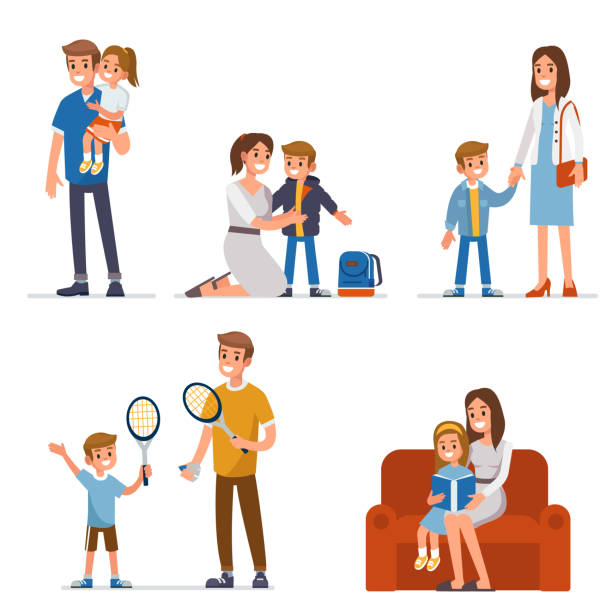


 f
f


 r
r










'/><path d='M20 30 C 0 20, 0 50, 20 60' fill='none' stroke='white' stroke-width='4' transform='rotate(-15 50 50)'/><path d='M35 55 L 65 55 M35 65 L 65 65' stroke='black' stroke-width='5' stroke-linecap='round'/><circle cx='40' cy='45' r='4' fill='black'/><circle cx='60' cy='45' r='4' fill='black'/></svg>)



' /><path d='M70 5 L 80 -5 L 70 -10' stroke='black' fill='none' stroke-width='3' transform='translate(-20, 20)' /></svg>)