Building Your 'Me and My City' Presentation!
Welcome, Teacher! Lesson Integration Guide
Overall Goal: This worksheet adapts content from the Social Studies textbook to directly help students prepare for their "Me and My City" presentation. The goal is to provide them with a structured way to brainstorm and script the key content areas mentioned in the PowerPoint slides.
Lesson Flow: This document is structured in two main parts. First, a **Vocabulary Booster** section using a phonics approach to pre-teach essential words. Second, the **Presentation Builder** which guides students to apply this vocabulary to build their script. Use the phonics section first to build confidence with pronunciation.
Using Interactive Elements: The clickable icons (e.g., 🔊) are designed to be student-facing. Use them to introduce topics visually and generate excitement. The popups are draggable and resizable, so you can move them around the screen during your lesson. The "Ready to Check?" buttons launch a mini-quiz popup to consolidate learning for each section.
Section Goal: Vocabulary & Pronunciation Warm-up
Objective: To pre-teach and practice the pronunciation of key vocabulary needed for the presentation. Since students are weak, this phonics-based approach helps them decode words and build confidence before they have to use them in sentences.
Methodology: The activities are inspired by the "Smart Phonics" workbook. Each section focuses on a specific sound pattern. The flow is: 1. Introduce Sound -> 2. Learn Words -> 3. Practice Activity.
Teacher's Script (Overall Intro): "Hello everyone! Before we build our amazing presentation, let's learn some super words we can use! We will learn how they sound, so we can say them with confidence! Are you ready?"
Phonics Focus: Long 'i' sound (i_e)
Concept: Teach the "magic e" or "silent e" rule where the 'e' at the end of the word makes the 'i' say its name (the long 'i' sound, like in "ice").
Teacher's Script: "Look here! We have the letter 'i'. It can make a short sound /i/ like 'igloo'. But when we add a magic 'e' at the end... POOF! The 'i' says its name! It says /aɪ/! Listen: l-i-ve... live! t-i-me... time! Let's try it together!"


Activity: Make a Sentence! 💡
Use the words to fill in the blanks.
1. In my free , I to do my .
2. I in Hong Kong and I have in my city.
Guidance: Do the first sentence together as a class. Ask students to suggest words. For #1, guide them to "time", "like", "writing". For #2, "live", "pride". Have them write the words on the lines in their books or on the screen if possible. Then, have them read the full sentence aloud in pairs.
Phonics Focus: Long 'e' sound (ea/ee)
Concept: Teach that two vowels together often make a new sound, and in this case, `ea` and `ee` both make the long /iː/ sound (like in "bee" or "sea"). "When two vowels go walking, the first one does the talking!"
Teacher's Script: "Wow, look at this! Two letters, `e` and `a`, are together. And here, two `e`'s are together. They both make the SAME sound! They make a long 'eeee' sound. Like you are smiling! Let's try: p-ea-k... peak! s-ee... see! Your turn!"

`ee` and `ea` have the same sound!


Activity: Match and Say! 💡
Draw a line from the picture to the word.
Guidance: This is a simple visual matching activity. Have students draw a line connecting the picture to the correct word. After they match, have them say the word out loud. "Point to the picture... what is it? Beach! Good! Now find the word 'beach' and draw a line."
Part 1: About Me! (Prepares for 'Personal Introduction')
Objective: To help students generate ideas for their personal introduction, moving beyond just their name and age. They can now use the vocabulary they just practiced (like, writing, time, feel).
Connection to PPT: This section directly addresses "1. Personal Introduction" and "4. Personal Pride".
Teacher's Script: "Okay everyone, for your big presentation, the first thing you need to do is introduce yourself! Let's find out what makes YOU special. What do you look like? What are you good at? Let's make a 'fact file' all about you!"
Activity: Guide students through the page. Use the interactive 💡 and 🤔 triggers to start discussions. Have them complete the 'fact file' activity in pairs, which they can then use as a script for the opening of their presentation.
People are Different 🤔
We all look different. We have different hair and eyes. We also have our own personality. This is what makes us special! Some people are quiet, and some people are lively.

People have different talents 💡

People are good at different things. Some are good at drawing, some are good at sports, and some are good at writing. We all enjoy doing different things. A mixture of people makes life interesting!
Activity: My Fact File ✍️
Work with a partner. Make a 'fact file' card for yourself. This will help you in your presentation! It should include:
- a picture or drawing of you
- your hair colour
- your eye colour
- three things you like (e.g., I like ice cream, I like dogs, I like playing)
- one thing you dislike
Part 2: Our Hong Kong Culture! (Prepares for 'Love for Hong Kong')
Objective: To help students brainstorm specific examples of Hong Kong culture, focusing on food. They can use words like 'sweet'.
Connection to PPT: This directly supports "2. Love for Hong Kong -> Culture: Discuss favorite foods, traditions".
Teacher's Script: "Great! Now let's talk about our city, Hong Kong! Hong Kong has a special culture. What is culture? It can be our art, our music, and our FOOD! Let's talk about yummy Hong Kong food. What's your favourite?"
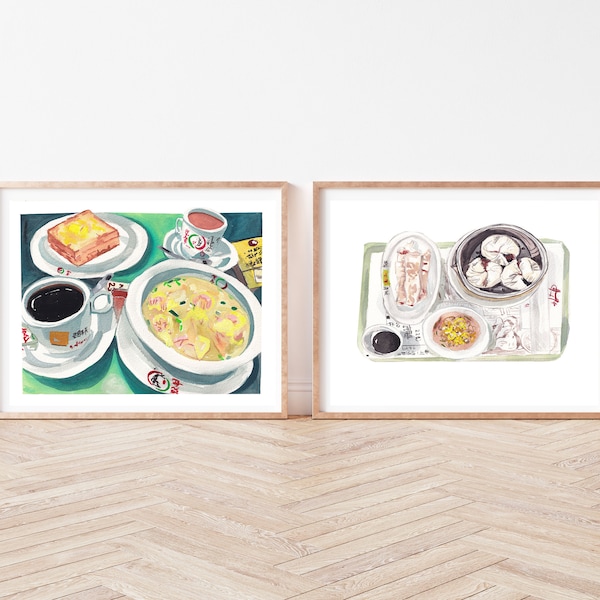
Activity: Use the 😋 trigger to show pictures of local food and elicit vocabulary from students (dim sum, egg tart, etc.). Adapt the "Draw your favourite meal" activity to be "Draw your favourite Hong Kong meal".
What is 'culture'?
Culture is made up from many things, like art, music, dancing, food and clothes. It's what makes a place special.
Food from different cultures 😋
Different foods are eaten in countries around the world. Hong Kong has many special and delicious foods!
Activities
- Draw your favourite Hong Kong meal. (e.g., Dim Sum, Wontons, Sweet and Sour Pork)
- Talk with a friend about the clothes you like to wear.
Part 3: Our Hong Kong Festivals! (Prepares for 'Love for Hong Kong')
Objective: To help students identify and describe key Hong Kong festivals. They can use words like 'see' and 'feel'.
Connection to PPT: This directly supports "2. Love for Hong Kong -> Festivals: Mention any special festivals and what they mean to you".
Teacher's Script: "We talked about food, now let's talk about fun times! Celebrations! Hong Kong has many exciting festivals. We celebrate when we feel happy and proud. What festivals do you know? What do you do? What do you see?"
Activity: Use the interactive triggers (🎆, 🧧, 🐲) to introduce vocabulary like fireworks, red packets (lai see), and dragon dance. Ask students to share what happens during these festivals. The activity "Tell a partner what happens" is direct practice for their presentation.
Celebrations as part of culture 🎆
We celebrate when we feel happy, proud and excited about something. Around the world, people celebrate things in different ways. In Hong Kong, many cultures use fireworks as part of a celebration.
Family celebrations 🧧
Families often celebrate special occasions. In Hong Kong, a very important family celebration is Chinese New Year. Families eat together and children get red packets!
National celebrations 🐲
Many places have a National Day or other big celebrations. People remember important times. In Hong Kong, we can see special events like dragon boat races or lion dances during festivals.

Activities
- Tell a partner what happens when your family celebrates a special festival (like Chinese New Year or Mid-Autumn Festival).
- Write some words about a Hong Kong celebration.